Post-it Notes from the Underground #2

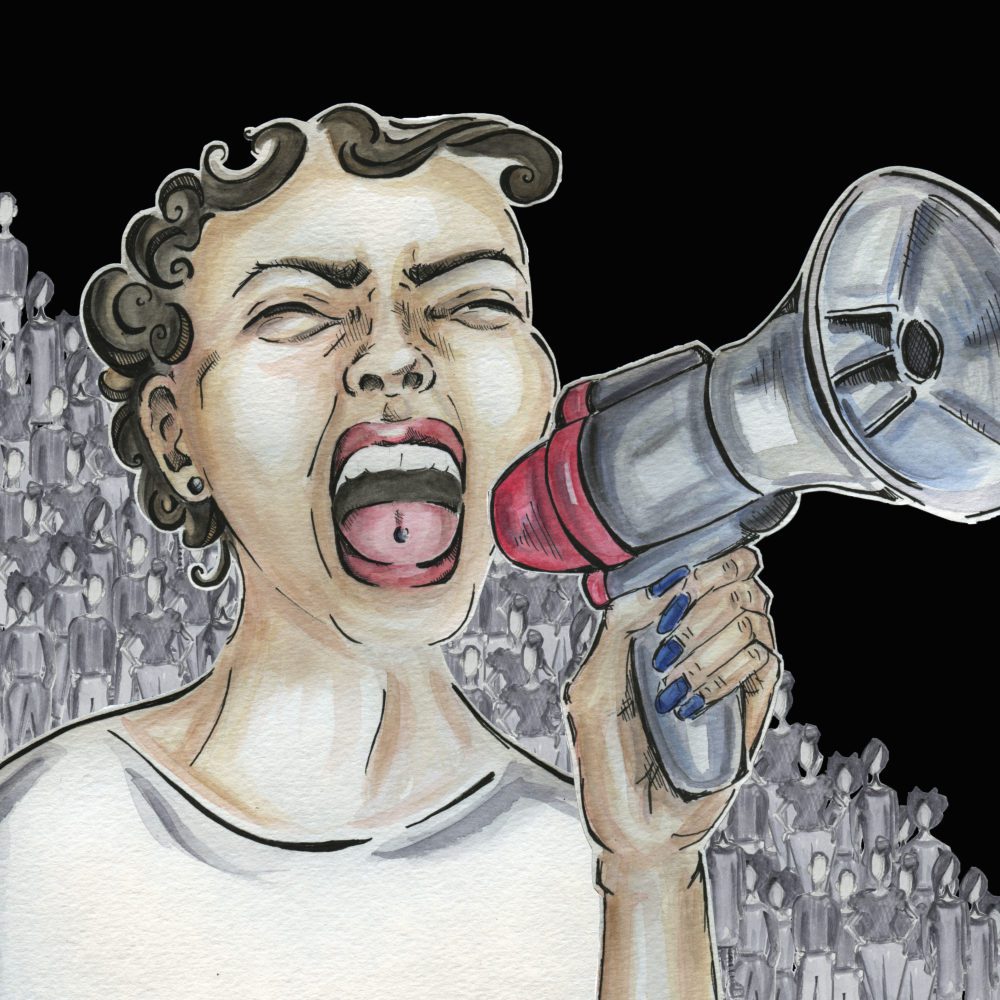
The following is a “Post-It Note record” created by writer/illustrator Joe Kloc, based on scenes he witnessed while attending Occupy Oakland. …more
The Daily Rumpus
Get Overly Personal Emails
From Stephen Elliott

The following is a “Post-It Note record” created by writer/illustrator Joe Kloc, based on scenes he witnessed while attending Occupy Oakland. …more
Steve Almond just released his third story collection, God Bless America. Among the stories, which Junot Díaz says are, “without equal in their beautiful, terrible honesty,” a couple are included in Best American and Pushcart Prize anthologies. …more
In 2007, I was put on Homeland Security’s Watch List. True, my brother had just been arrested. He had been a member of the underground Animal Liberation Front, freeing wild mustangs, mink, and lab animals for nigh on twenty years. But the Watch List? Me? Isn’t that for terrorists? It didn’t fully make sense until I picked up Will Potter’s book. …more

When I was four or five years old, my mom and dad called me and my brothers into the living room. …more
In late October 2000, Alia Malek, the American daughter of Syrian immigrant parents, started work as a civil rights lawyer in the U.S. Justice Department. She then watched the newly-elected Bush Administration re-direct …more
A prerequisite for any successful revolution is literature. …more
Do you still remember the Internet of last week, just another barrage of all-over-the-place political and cultural events in which millions of people watched, reacted and interacted online? …more
A Rumpus Lamentation on What We Lost
Say you took the long view of September 11, 2001, the view from the heavens, the view of a compassionate celestial being. From up there, you’d see that approximately 150,000 earthlings died that day. …more
Though Guantanamo Bay is no longer in the daily headlines, it remains very much open and operating. Dave Engelhardt was a pro bono lawyer for several prisoners detained at Guantanamo Bay, and spoke with Paula Whyman about his work there. …more
Every day, terrible things happen in the world. Every damn day too many people die or suffer for reasons that defy comprehension. …more
T-shirts, hats, mugs, flags, wristbands, posters, stickers, mock license plates: When I was in Cairo in March, almost every street corner seemed to offer a vendor selling January 25 Revolution souvenirs. …more
It is tempting to read the photos of last week’s renewed conflict in Tahrir Square as yet another isolated round of violence between the Egyptian youth and the Central Security Forces. But this subverts the root of the rage in Tahrir, a rage driven by the premonition that the youth who ignited and died in this revolution are being left behind. …more
Last week journalist Mac McClelland wrote a brutal, exceptional essay for Good where she plainly discussed her experience with PTSD and her desire for violent sex as one means of coping with the atrocities she had witnessed as a human rights reporter. Early in the essay, McClelland writes about being in Haiti. As a Haitian American, I immediately tensed and worried about what she might say. …more
Last month I announced my candidacy for Office of the President of the United States of America. …more
Anthony Weiner, the brash congressman from New York City, resigned this past Thursday, after it was revealed that he sent photos of himself, and sexually yearning text messages, to several women. …more
Susie Bright, sex-positive feminist, writer, revolutionary, and my first tongue-kiss with a woman recently released her memoir Big Sex Little Death.
Palestine Speaks is a San Francisco-based, Kickstarter-funded independent journalism initiative collecting stories of daily life in Palestine. Assistant editor and Rumpus photographer Timothy Faust recently traveled to Palestine with the project. This report for The Rumpus is excerpted from his travelogue. …more
Approaching the Rafah crossing on the morning of its historic opening, I pass a lone Palestinian woman in her mid 20’s holding a newborn, walking into Egypt.
Twenty yards behind her, sweltering in the late morning desert sun is a cluster of children and teens, pressed beside the black gate of boarder. Beside them, standing indifferently is a white donkey. …more
Nothin wounded goes uphill… It just don’t happen.
I got stuck rereading that sentence on the plane for a long time. …more
He drives a white Cadillac stretch limo, vintage 1970s, with whitewall tires, black vinyl roof, leather interior. Smooth ride. It’s the kind of car you might have seen ferrying newlyweds back in its day. But instead of “just married,” painted on the rear bumper, there’s a message crudely lettered in slashes of red paint. “Stop Killing One Another.” …more
So this guy I know, a guy I like, whose brain has not atrophied or anything, says to me the other night, “Books have lost their social relevance; they have been entirely subsumed by economy, and their material form is fast approaching its own demise.” …more
A week ago the labor writer and activist Jonathan Tasini filed a $105-million lawsuit in United States District Court, in New York’s Southern District, against HuffPost’s new owner AOL Inc., and HuffPost co-founders Arianna Huffington and Kenneth Lerer, seeking to “vindicate the fundamental principle that creators of value deserve to be compensated.” …more
On April 8th, Egyptians came to Tahrir Square, as they have every Friday since Hosni Mubarek’s February 11th resignation. These gatherings have become commonplace since the revolution. …more
Hello Sex Worker Hater,
So, we meet again. You’re a shape shifter and I feel like I see you everywhere I go. I’ve spotted you on police forms for recovered bodies which had two categories: human and non-human. …more
“All books about all revolutions begin with a chapter that describes the decay of tottering authority or the misery and sufferings of the people. They should begin with a psychological chapter, one that shows how a harassed, terrified man suddenly breaks his terror, stops being afraid.” -Ryszard Kapusciski …more
“Poetry never sleeps.”
-John Sinclair
The best music and art erupts from immense suffering and revolutionaries are guided by great feelings of love. …more
David Sirota writes a weekly column that appears in dozens of newspapers. He has his own radio show. And he’s a frequent guest on cable TV gabfests. These facts should qualify Sirota as a pundit.
But it feels wrong – and slightly dirty – to use that word. …more
Jess Row’s second collection of short stories, Nobody Ever Gets Lost, was published in February by indie startup publisher FiveChapters Books. In these daring stories, Row inhabits seven individuals trying to make sense of a world shaken by September 11th. …more
“…Prejudice is a kind of cartel that works best when there is no real dissent. Once one person breaks away, others who may have had doubts find it easy to speak up. Moreover, those who never really had objection–but were just kinda going along–also fall away.”
As more public figures express their support for marriage equality, Ta-Nehisi Coates analyzes the nature of same-sex marriage opposition.
Now That We Have Tasted Hope archives the “most important” primary source documents of the Arab Spring. Published by McSweeney’s and Byliner, and edited by Rumpus contributor Daniel Gumbiner, the book derives its title from Khaled Mattawa’s poem by the same name.
“From the harrowing accounts of tortured protesters to the hollow appeals of crumbling regimes and the triumphant songs of revolutionaries, these documents catalog the events of the Arab Spring in all its complexity and drama.”
“Whatever your personal opinions and your insecurities about homosexuality and the various liberation movements among homosexuals and women (and I speak of the homosexuals and women as oppressed groups), we should try to unite with them in a revolutionary fashion.”
That’s Huey Newton, co-founder of the Black Panther Party, in a 1970 speech that focused on gay rights.
At Guernica, Randa Jarrar writes about this one time when she tried to visit her sister in Palestine and she was deported by Israel.
I was so afraid of facing the guards at the airport that I had a difficult time imagining the rest of my trip. I would picture myself walking around Ramallah with my sister, or attending a concert, or visiting my aunts, or seeing the separation wall, or staying at the American Colony Hotel for an evening, and I would draw a blank. There was a wall there, too, between my thoughts and Palestine.
John Scalzi tries to explain privilege to straight white men without invoking the word privilege.
Dudes. Imagine life here in the US — or indeed, pretty much anywhere in the Western world — is a massive role playing game, like World of Warcraft except appallingly mundane, where most quests involve the acquisition of money, cell phones and donuts, although not always at the same time. Let’s call it The Real World. You have installed The Real World on your computer and are about to start playing, but first you go to the settings tab to bind your keys, fiddle with your defaults, and choose the difficulty setting for the game. Got it?
Okay: In the role playing game known as The Real World, “Straight White Male” is the lowest difficulty setting there is.
“Who will protect us in this town, I think. There are skinheads and KKK people and bullies. There are dogs that run snarling to the edge of their yards when you walk home and stare too long at them. There are jocks and racists and homophobes and Christian crazies and angry teachers and this school, this whole school is crazy and I’m burning like a bright moving speck of fire every single day.”
Rumpus contributor Conner Habib has a new series on his blog called “Guys I Wanted To Fuck in High School,” which details his “frustrated” adolescence in small-town Pennsylvania.
At Open Democracy, Adam Klein writes about income disparity, faith, and ethics.
“The things we fear are the things for which gods and governments show no promise of resolving. Every religion and every society espouses fairness and order. But the souls of the poor have swum through the net. I will not ask a beggar his name because it’s a false pretense of sharing a moment’s equality. My horror at the world is not his. Mine is the horror of conscience; his is the horror of fortune.”
To almost no one’s surprise, last night North Carolina became the 31st state to ban same-sex marriage. This is the second time North Carolina has done this–the first time was just a state law; this one was a Constitutional amendment. This Constitutional amendment, though, does more than simply ban same-sex marriage. It cancels out all domestic partnerships that aren’t marriage, it could easily remove protections for people in abusive relationships and affect things like hospital visitation and child custody for even heterosexual couples in North Carolina. And it’s expected to harm the ability of North Carolina businesses to convince talented people to move into the state.
Some people angry at the outcome of last night’s election have started a petition to ask the Democratic National Committee to move their nominating convention out of Charlotte as a result. I don’t expect it will happen, given the incredible amount of money it would cost to do so, and the logistical challenge it would pose, but I do expect that the effort by some state Democratic party chairs to have marriage equality as part of the platform will get some more support than it might have otherwise.
Something I think is important to remember about the current state of marriage equality is that even the fact that this vote took place–horrid as this may sound–is a sign of progress. Forty years ago, the idea that a majority of people would support same-sex marriage (the way they do today) would have been a pipe-dream. These votes are happening because opponents of LGBT rights and marriage equality know that they’re going to lose in the long run, so they’re throwing up as many barriers as they can to stop progress. They didn’t happen before because no one imagined it could ever happen. But anti-marriage-equality people are scared now, and they know they’re on the wrong side of history.
Who would have imagined even ten years ago that a sitting president up for re-election would come out in favor of same-sex marriage, as President Obama has just done? Maybe a lame duck president, or one who’s out of office (as former President Bill Clinton did a while back), but a sitting president in the middle of a campaign? That’s a sign of how far we’ve come.
We still have a long way to go, though, and pointing fingers or mocking or saying stupid things like “we should have let the South go when they wanted to go” isn’t the way to do it. After all, there are 31 states (including mostly progressive California) which have done just what North Carolina did. If marriage equality means a lot to you, then work hard to make sure that you elect people who support it. Change peoples’ minds and get them to support those candidates as well. Vote, but don’t just do that. Voting is the bare minimum you have to do to be a citizen. Do more than the minimum.
Harriet, the Poetry Foundation blog, reports that poet Joshua Clover and 11 students at UC Davis are potentially facing a $1 million fine and up to 11 years each in prison. Their crime? Peaceful protest.
A petition is circulating which demands that UC Davis drop all charges, and if I hear about any other plans to pressure the UC Davis administration, I’ll update this post to reflect them.
Have you heard about CeCe McDonald? The trans woman was attacked outside a bar in Minneapolis. There were racial and sexual slurs. She pulled a pair of scissors on her attackers and one of them was fatally stabbed.
Here’s an interview with Dean Spade, a legal scholar and founder of the Sylvia Rivera Law Project, about the CeCe McDonald case.
Here is the less favorable writeup in the local paper.
There is a letter writing campaign for people who want to write CeCe while she is in jail.
Check out this interactive laboratory that allows you to explore “the historical relationship between freedom and confinement in the geographic areas of the United States.” The Knotted Line reveals miniatures paintings of 50 historical moments from 1495-2025, while posing the question, how is freedom measured?
I grew up in the Deep South in the 70′s and 80′s, where unions were limited in number and power by Orwellian-named “right-to-work” laws, so I thought May Day involved kids with streamers dancing around a pole. Not that I ever actually saw that either, but there were pictures in books. (I wouldn’t have participated anyway, since being a Jehovah’s Witness generally meant that any holiday was off limits.)
This is not about the May pole or a spring festival. No, this update is about the “arise, ye workers from your slumber” May Day, the international labor day. And this year, there are a number of protests taking place around the world.
Voice of America has a slideshow of rallies. Al Jazeera has more coverage.
Occupy Wall Street has rallies planned throughout New York City today and they’re streaming some of them live.
There’s concern among some in the Occupy movement that new groups will try to turn the movement into a wing of the Democratic party.
And no surprise, The Guardian is doing terrific work covering the protests.
Tax me for fuck’s sake! Stephen King scolds the superrich, including himself, for not giving back.
What charitable 1 percenters can’t do is assume responsibility—America’s national responsibilities: the care of its sick and its poor, the education of its young, the repair of its failing infrastructure, the repayment of its staggering war debts. Charity from the rich can’t fix global warming or lower the price of gasoline by one single red penny.
Mr. King, keeping it real.
“Just as women don’t hate Samantha Brick for being beautiful, and feminism hasn’t ruined anyone’s chances to be married, and no one thinks mothers don’t work, and there is no argument between working and stay-at-home mothers, there is no contradiction between the sexual imagination of some and sexual politics for all.”
At The Guardian, Hadley Freeman skewers the strategy–at play in both politics and media–that seeks to inspire in-fighting amongst women thereby distracting from actual policies or content.
(Via Bookslut)
At n+1, Rafael Gumucio writes from within the Chilean student protests, recalling the rebellions of his generation–which grew up under the military regime–as he details the “hunger for equality” that characterizes current movements in Chile and beyond.
“Over the six long months of school sit-ins, marches, unavailing efforts at dialogue, barricades, and gunshots, everything shifted and is still shifting, an unending moral earthquake in a country that seemed to have turned away from great moral questionings, the pain of the dictatorship, the urgency of reconciliation.”
In recent months, we’ve had a couple top-notch essays about both the power and addictiveness of friendship. This weekend, at The New York Times,William Deresiewicz took up the topic, focusing on friendship “between the sexes.” Deresiewicz touches on the “surprisingly political” history of male-female friendship, how ideas about narrative influence what relationships are represented in media, and cultural attitudes toward love not “based on sex or blood.”
“We have trouble with mentorship, the asymmetric love of master and apprentice, professor and student, guide and guided; we have trouble with comradeship, the bond that comes from shared, intense work; and we have trouble with friendship, at least of the intimate kind. When we imagine those relationships, we seem to have to sexualize them. ”
Listen in as Rumpus contributor Melissa Chadburn reads from her excellent essay “The Throwaways” on American Public Media’s Marketplace.
“If we are saying “I value you” when we pay our taxes, what are the people and corporations who don’t pay all their taxes saying? Are they saying the opposite? Are they saying that all those people who do so much for us every day don’t matter?”
Sara Benincasa (who we recently interviewed) assembled a handy “Healthcare Guide for People Who Don’t Want Healthcare,” complete with insurance-free cures for migraines, menstrual cramps, and gout.
At The Nation, Melissa Harris-Perry breaks down the wider political context surrounding the Trayvon Martin killing, outlining the historical and contemporary reality in which it is “acceptable to presume the guilt” of black bodies.
“Liberal democracy—based on commitment to individual liberty and dignity—does not exist if the government legislates against particular bodies in public spaces, as it did during Jim Crow, or when it is complicit in the violent policing of those bodies by other citizens, as in the Trayvon Martin slaying.”
Writers and activists are setting up an underground library in Tucson, Arizona. The librotraficante movement is an effort to expose Tucson students to the collection of books banned when the school district suspended its Mexican-American studies program.
“The word librotraficante shouldn’t exist in America…You shouldn’t have to smuggle books.”
(Via Book Bench)
Manhattan’s Strand Bookstore is in the midst of a labor struggle. Employees have launched a blog, which contains their original press release: “Strand ownership mounts unprecedented attack on union.”
MetroFocus reports on the current causes, as well as labor issues that have arisen at Strand in the past. Socialist worker has an article on the union battle that “looms” at the bookstore.
In 2005, an anonymous Strand employee won The Village Voice’s “Best Boss-Bashing Blogger” award.