

I used to pray to be normal.
Back then I was a kid with short hair, steeple hands, and only a vague idea of who I was asking. Bargaining is the better word, I suppose, in my first of many rides on the grief —-> acceptance merry-go-round. I’d give up anything. I’d be anyone. I just wanted to get old enough to forget my dad’s greedy hands, just wanted to have a chance to grow up unbroken.
My father? I figured him a childhood-stealer, burgling my potential for sitcom-simplicity, and I wanted it back. I was on a backwards hero’s journey, looking to be returned to an earlier state, a better version of myself. I bumbled along, seeking a quantifiable substance, the antidote to my ivy-ing weirdness: the dissonant dude in the mirror being the most troubling example, but you could also eventually cite the whirlpooling anxiety pushing me to lock myself in my college dorm room most nights with a six-pack and a dozen cigarettes, or the classic fear of intimacy that hovered like Dad’s shadow, swiftly swallowing the face of every woman I loved.
“Somehow you learned that being different is wrong” –everyone.
“Being different is wrong” –everyone else.
It wasn’t until I was mugged at 29 that I stopped trying to pass as normal. In the moments right before I thought I was to die, I saw the ways I’d learned what to do in the face of unfathomable fear. This was me, gun-to-head, holding perfectly still. This was the adrenaline that blew through me as my feet hammered out an escape, the way my chest opened to breathe in everything I’d almost lost. I could never pass as someone who’d not seen the ugliest side of life, but hallelujah, I knew now that my fluency was my life fuel: I had triumphed over annihilation not once, but twice.
A year later, a month before I began injecting testosterone, I went to see my estranged father in Oregon. I flinched when he used my birth name, but I was on my way to changing everything, and the last thing I wanted to do in the soft, narrow version of my body was talk to this huddled old man. I expected defiance, so he surprised me when he launched, unprovoked, into a painfully stilted apology and accompanying white-knuckle rendering of his own childhood ghosts.
“Do you think you could forgive me?” he asked in his lilting, South Carolina accent. I don’t know if I’d seen anyone more vulnerable.
I knew then how he must have felt, hovering above me as a child.
He was 71 years old, and we both knew I’d never see him again. “I’m sorry about what happened to you,” I told him, “no one deserves that.” He nodded, smiled with a frozen, faraway look. I couldn’t give him anything but animal honesty, but I like to imagine that when we parted ways in his cold mountain town, he knew that my shaking his hand was its own kind of forgiveness.
In that moment, on a street corner in a summer coat, I was both Thomas and not. I was the child I’d been and the skin I was in and the man waiting me out on the other side, breathing fog and watching my dad shuffle away, not passing for anything but myself.
***
Now here I am, unicorned in the body testosterone unlocked, the person in the mirror only now beginning to show up in my dreams. When I’m plagued with just the sort of terror I imagined would disappear when I Became Myself, I’m most comforted by envisioning a naked, muscular man moving freely thorough scenic landscapes, Adam-like in his joy, but with anatomy that mirrors my own. That’s me, I realize, shocked somehow, that my most yearning subconscious ideation could really be a happier version of the body I’m in, belonging.
The truth about passing: sometimes it’s necessary, efficient. It’s an ugly word, and yet something about its crudeness is accurate, like fucking is not the same as sex. In an exact inverse of my former queerness, difference is the destination, passing the invisible cloak that allows me to move through the world, locating myself.
I knew I was a man when I stopped fearing men. I knew I was a man when a guy with a gun made me see that my defining trait was my not my failure to be normal but the space between the poetry of my mechanics and the narrative I’d constructed to bridge that gap. That opening is where I changed the story, and as I ran I could feel that I was no longer who I thought I was, but who I’d been quietly as I passed for someone less affected.
I was nothing if not affected, running gratefully away from a man who looked like death with an engine-heart and a rush of hormones that knew exactly how to guide me.
***
“What do you mean?” The therapist said, his teeth small, his smile irksome. He meant about the running, how I said that I found myself because the two traumas collided, and it was like a wrecking ball. The only thing left once the cops showed up was me, exposed and facing a choice: pass or don’t. It was a repeat of a moment I had when I was 10, except then I’d prayed to disappear. So the backwards hero’s journey started again. This time I knew the elixir wasn’t located in the hallowed halls of therapists’ office, or the meaning made by sitcoms.
“It’s like your life flashing before your eyes,” I offered, ever the translator. “I just knew, in the escape, everything I’d been hiding from myself.”
He didn’t believe me, I could tell. Never matter. I left his office and folded myself into the busy foot traffic below; one of many black-haired, tattooed men with a story in his heart and not a stranger to tell it to.
***
Passing. There’s an uncomfortable implication, a suggestion that I’m not “real,” that the politics of my body are public, that I should announce myself like a debutante at a ball.
And sometimes I want to, because being male is a forcefield. Look, here I am de-boarding the rush hour train at Ruggles, six inches of space on all sides. Women jostle beside me but no one breaches my perimeter. No one wants to touch me.
These are my muscles, my hairy thighs, my broadened face. This is my relationship with myself. If you crack me open, I’m pink muscle and heartache and hormones still seeking homeostasis. I’m not my father, or my mugger, but I carry the weight of their crimes because I’m a son in their world; our world—it’s my world, too.
Passing is what happens when expectation meets body. I smile at another dude and quickly pull my mouth back to neutral. When the friendly man at American Apparel holds my gaze a beat, I look away, clip my tone.
So much of being male is about space: protecting it, making it, asserting it, projecting it. So much about being me is wanting to close the gap between us.
I don’t want all this room, I tell Michael.
She wants it, she says. A guy followed her down Broadway, yelling from his car; he said stuff so abusive she doesn’t want to repeat it. That’s what she talks about when she talks about being a woman—not being given any room to move.
“I mean by cis guys,” she’s quick to clarify. But. We both know what propels the high-heel clicks to quicken ahead of me on an empty street: my body is the push-end of the magnet. I may have passed as a woman for 30 years, but I’ve never known what it is to be one.
Naked, my power shifts. I’m my brothers who’ve been denied care for breast and ovarian cancers, or who’ve been held in the medical and legal limbo of our unrecognized bodies by systems bent on destroying anything that defies it.
I want you to understand that it’s not about passing.
When I put on a pair of pants and walk outside, passing is the side effect of being my body in space. The world parts for me but it eyes me—it eyes us all—carefully.
***
Everybody passes. You’re a tomboy in woman’s clothes, a functional alcoholic, a mother afraid she’s losing herself. You’re passing as something more than human because we are all walking through life as if what mattered most were the symbols of our acquisitions and not the fluttering flags of our hearts.
I don’t pass when I’m alone. Different as I am, the elixir wasn’t hidden behind a many-headed monster; I didn’t need to destroy something else to become myself. The privilege of masculine space and its attendant expectations are troubling and erasing, as gender expectations are for most of us. I don’t want this much space.
Nothing can disappear whatever toxicity we carry, whatever bad dad or hollering psycho or bruising fingers or state-sanctioned threat you defend with whatever armor lines your heart. We pass because the world asks it of us, a baseline of small talk, a frustrating reduction of what makes a person vibrant is now what I see in the space I once mistook for normalcy. Give me your tattered, scarred, lonely selves; your small forgivenesses, your holy contradictions.
Because now I pray for something else: may I be the light enveloping my father’s shadow, interrupting its long reach. May I know the truth of who you are and not the person you want to be. May we get the chance to move through the world defined by the boundary of where our darkness meets our light, invisible then, yes, but only in passing.
***
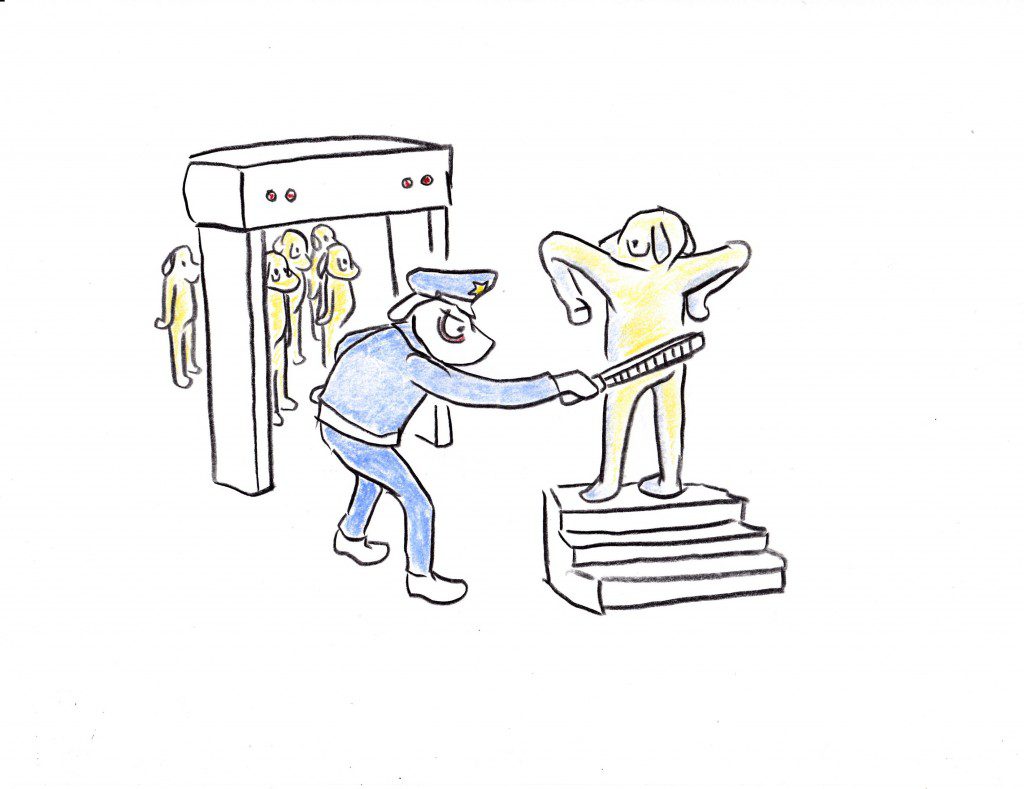
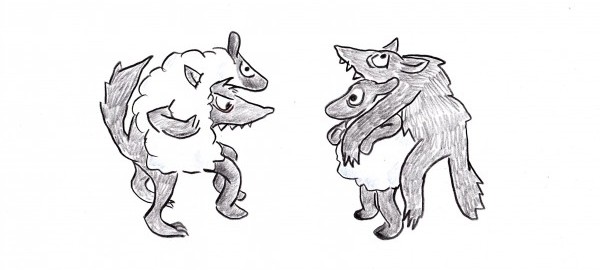
Rumpus original art by Jason Novak.



5 responses
This is so true on so many levels. I hear it in the phrase “fake it until you make it”. Except most forget to stop faking or continue to fake it because this is as real as it gets. I’ve done this, but it never lasts. Something is missing. The genuine “me”. Faking is not the same as “passing” as in the difference between sex and fucking as you mentioned. Though I remember being confused and lured into believing the definition of someone else…which ended up, as you have said,
“Somehow you learned that being different is wrong†–everyone.
“Being different is wrong†–everyone else.”
I’m just beginning to come out of my shell after casting off that mantra of “faking it” or “acting, as if…”. This is not me. I “pass” by keeping silent, being quiet or making idle rapid-fire chit-chat of nonsense in contrast to my silence. I’d be more happy in a cave or on an island in solitude. However, there is a life to be lived, children to give love to, relationships to be made, broken, mended, and cherished. I keep moving forward and into the next moments, and the next…
Thank you for what you have written and will write. One day, soon, I will not have to “pass” and forget how to “fake it”. I will just live as naturally as I am breathing. A beautiful zen moment :).
Namaste 🙂
“Passing is what happens when expectation meets body. I smile at another dude and quickly pull my mouth back to neutral. When the friendly man at American Apparel holds my gaze a beat, I look away, clip my tone.”
It’s an interesting thought that the spaces which were unsafe for me as a “woman” because I “invited sex” (smiling or maintaining eye contact with men) are often times unsafe for me when I pass as “man” because in repeating the same movement I’m facing a different safety concern (being read as non-normatively male/gay, which I hate putting together).
These things are painful but as I sit at my workdesk and read your pieces I feel a little bit more comfortable in my own skin, which is not always perfect or passing or wanting to. Thank you for that.
wow, that’s a beautiful piece. thank you!
“in passing”… doesn’t that smack of something fleeting? liminal? transitional? when i was in the process of transition, i worried about passing, but the more i thought about it (and the more i passed) the more i realized that *that* wasn’t what i was really doing, or what everyone was doing to me (blessedly.)
gendering myself, and being gendered, is not quite the same thing. and that, that is what i truly craved — not “passing,” as though this were some kind of test (though i’m good at tests) but “being” all the way down to the core, in every fleeting moment. i look in the mirror today, and i unambiguously gender myself female. i’m gendered female by everyone in my life, by every stranger, and this is what people do to each other all the time, without thinking about it, we gender each other and that drives so much if not everything else in how we interact. only i think about it, though less, it seems, as the years pass.
and it’s fluid, this gendering. being gendered female isn’t quite the same as it used to be, and it’s different being thin or overweight, young or old, single or married, pretty or plain. so many inflections. being female isn’t quite what it used to be. being male isn’t what it used to be either, and yet in both spheres so much remains the same, still. always something to navigate, regardless of what side you’re on.
i don’t pass anymore. i used to pass for a man, but i gave that up. eventually, so did everyone else.
Unbelievably raw and so well written. Please don’t ever stop writing.
Kol tuv,
A noun
Click here to subscribe today and leave your comment.