
Taylor’s arms are around me and I haven’t yet realized that the first boy I’ve ever loved is teaching me how to hate.
I untangle myself from the hefty mess of arms and legs and down comforter that is Taylor’s bed. It takes some effort, but he rests peacefully through all of it. When I break free just long enough to roll over, I feel his solid arms fold in on me again. No matter how much I want to let myself be perfectly blissful and hope I could go on like this forever, I can’t, because John Lennon’s profile looms over my head. The lyrics to “Imagine” are the first thing the light shines on when it cuts through Taylor’s striped curtains, almost as if he’s planned the placement of this poster so Lennon’s is the face he wakes up to every morning, not mine.
I dig an elbow into Taylor’s side and he releases me from his grasp, but pulls on my shoulder so that I’m forced to roll back over and face him. He plants a kiss on my forehead and his beard tickles my nose.
“Good morning,” he sings. “Enjoy the morning breath while it lasts.”
I don’t even notice how disgusting it is that neither one of us has used a toothbrush in over twenty-four hours. I don’t taste the beer we drank last night or the cigar he’d smoked; I only know that when this kissing stops, the hangover starts.
As if he can sense it, Taylor’s on a mission to find me water and ibuprofen as soon as our lips part. He leaves me alone with John.
Maybe it’s because he got shot by a lunatic, or maybe it’s because he advocated world peace more than any Miss America pageant contestant who ever lived, but John Lennon has somehow wormed his way into the hearts of millions of Beatles fans. A Beatles-lover myself, the sight of him shouldn’t make me this acutely uncomfortable, but it does; I don’t have the heart to tell Taylor why.
“Would you feel better if I let you hang up a picture of Paul next to him?” Taylor asks, handing me a glass of water and two tiny red pills.
“Not even Paul McCartney can change the fact that your role model was a raging hypocrite, an abusive husband, and a shit father.”
“He was a great father.”
“Not to Julian.” I hand the water back to Taylor. After a pause, he sets the glass down on his nightstand and falls onto his pillow.
“He made some mistakes. Is that what we have to remember him for?” he asks as he pulls me toward him.
“I’m just mad that no one cares enough to remember.”
“You just hate Yoko.”
“Everybody hates Yoko.”
In the time we spent together, Taylor and I never wasted a moment arguing unless it was about the Beatles. We didn’t have the time to waste. I was leaving for England soon, and we knew that the dreaded long-distance hardships would take their toll on us the minute I boarded the plane. However, neither of us could resist a good-natured squabble over who the best Beatle was.
Taylor loved Lennon. To him, Lennon was God. He kept a copy of a Lennon bio on his bookshelf and used to stuff it in his bag right before he left his house for work (though I never actually saw him reading it). He quoted John and spat Lennon trivia at anyone who would listen.
His obsession with Lennon took over his entire lifestyle. Taylor grew out his hair and his beard and wore tinted hippie sunglasses at parties. He was a self-proclaimed musician, but he never produced any music on his beat up old acoustic because he only knew five chords. He picked up the banjo for a whole five hours after he found out John Lennon first played banjo chords when he learned to play guitar. He did whatever Lennon did and took interest in Lennon’s interest.
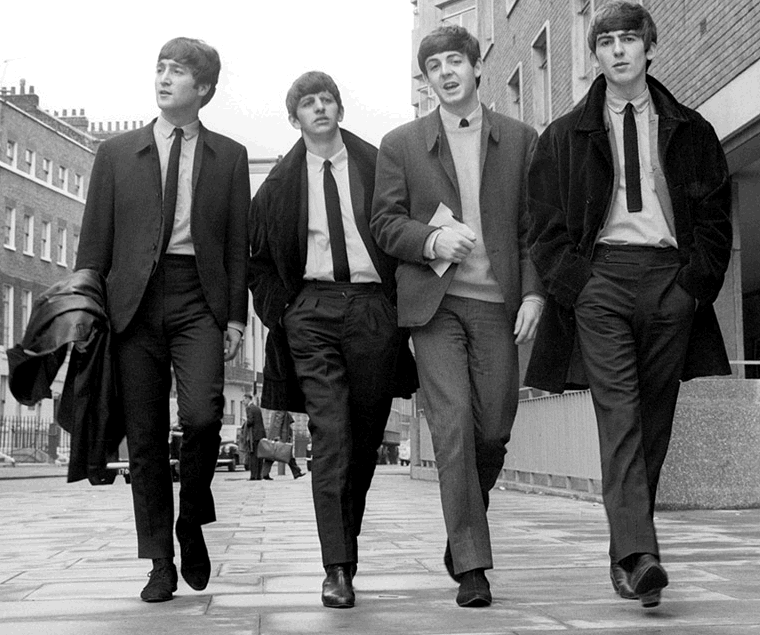 Taylor liked protests and demonstrations. Just like Lennon, he never actually did anything whatsoever of note in the political realm, other than sign a few petitions and manage to worm his way into the photograph of a rally as he was passing by the crowd. The extent of his political activism was quoting various radicals of the 1960s and posting marriage equality campaign posters on his own Facebook wall. He was a part of the Occupy Wall Street movement that staged sit-ins on our university’s campus, but couldn’t articulate why he was doing so. To my knowledge though, Taylor never did anything completely counteractive to his image, like Lennon did when he made generous donations to groups like the Black Panthers and the Provisional Irish Republican Army, neither of which seemed to be particularly interested in peace, love, or understanding.
“I could totally be John Lennon,” he told me all to often.
“Would that make me Yoko?” I asked.
I didn’t want to be Yoko Ono, because nobody wants to be Yoko. But I knew what was even more unsettling to me than being comparable to the woman who the world blames for ripping apart the world’s greatest musical collaboration was being the woman John left for her.
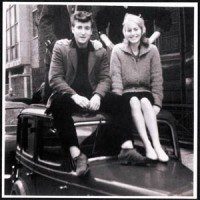
Cynthia Powell: she was John’s first wife. Of what I’ve read about her marriage to John, I gather that she suffered through countless nights of emotional and physical abuse. John left permanent marks on the same body that nurtured and carried his first son, Julian. He rewarded her further with infidelity and eventual abandonment.
Imagine my concern, then, when my boyfriend told me he wanted to be John Lennon.
I suppose, on some level, he ended up getting what he wanted. I went to England and by the time I returned, he’d found someone else. Her name was Anna.
I call her Yoko Anna.
When Taylor and I broke up, no one but me was all that shocked to find out he’d been unfaithful. Nor was anyone but me surprised to see he had no interest in working things out. No one denied that, after he never responded to a single letter or postcard I sent him, constantly stood me up on Skype dates, and then forgot my twentieth birthday, he’d been a shithead and I had every right to be hurt. Yet, even though he was guilty of betrayal and deceit, no one seemed particularly interested in blaming him for our split.
I can’t tell you the number of times I’ve been told that I should have seen it coming—that I was too good for him and we were headed down separate paths. I was told not to cry over the inevitable.
“Did you honestly think you’d last forever?” friends would ask me. I was chided for pining for him after he cut me so deeply. I was told not to give him a second thought.
I suppose they were trying to help, but after enough times hearing that Taylor and I were never right for each other, I began to see a deficiency within myself—the inability to detect when someone wasn’t good for me. My trust had already been broken in a huge way, but I took it a step further when I stopped trusting myself. Whatever faults I’d overlooked in Taylor, everyone else had seen so plainly.
It’s been two years now since Taylor and I broke things off, and I still haven’t heard the end of it from my friends and sometimes, even strangers. They say things like, “How could you stand to sleep next to that?” and, “What did you ever see in him?” A friend is still upset with me for scrawling Taylor’s name onto the wall of The Cavern Club in Liverpool (where The Beatles got their start) and not hers.
“I like The Beatles, too,” she says. “Maybe you should have thought of me instead of your cheating ex-boyfriend when you decided to add some graffiti to that wall.”
More than wonder how I could have been so blind about Taylor, I wonder why my friends continue to berate me for how in love with Taylor I’d been, and maybe still am. Love is messy—especially a first love—and though I’m perfectly rational about my feelings for him when he’s not around, my chest still stings a little every time I see his face.
I think of Cynthia Powell. I ache when I think what it must have been like for her, watching everyone adore the man who caused her years of physical and emotional pain, how she must have felt when John’s adulterous relationship with Yoko was all anyone could talk about. I wonder how she made it through the day when Rolling Stone released that photo of a naked John Lennon embracing Ono, or for that matter, any day that John and Yoko were front-page news, spreading their love for all the world to see. I think about how many newsstands she had to walk by with her hands over her son’s eyes, or if she made the decision to tell him that he and his father would never share the kind of love it took to get your picture featured on the cover of a magazine. I think about these things because I know how it feels to watch someone else receive the love you never got but thought you deserved. Cynthia Powell should hate us all for the kind of love and support we’ve shown her.
Most people forget Cynthia. Of those who remember her and what happened to her, many can forgive John for eventually realizing the error in his ways and dedicating the rest of his life to promoting peace, love, and understanding.
Some even place blame on Cynthia for being unfaithful herself, and others point out that John never wanted to marry her in the first place.
“He was a rock star; what was he supposed to do—stay monogamous?” they say. “She should have known better.”
Where’s the peace in that?
Where’s the peace in telling a woman who’s been battered and bloodied by the hands of a man she loves that she should have seen it coming? If love is blind, how the hell would she have ever noticed? Where’s the peace in pardoning the behavior of such a man simply because he’s somehow convinced everyone he’s talented? Where’s the peace in forcing a woman to take on the guilt of her own heartache because as long as that man smiles for the right cameras and acts like a half-decent human being the rest of his life, no one will ever make him feel it?
I can’t forgive John Lennon, and I’m done letting everyone believe that what he did—what the world lets some men get away with every single day—is okay.
I’m not going to abandon Cynthia Powell.

12 responses
Wow. I really enjoyed this. Thanks for writing it, Shelby.
it’s an interesting take, but why do we keep holding artists up as role models who have failed? he was a brilliant artist who spun his own narrative, with a little help from his friends.
This is a great piece. I had a similar issue with my first love…cheating, manipulative, etc. By the time my forties hit, I was able to see him as a “bullet dodged”.
I guess it is also easy for people to tell you how wrong you were….but I think we all want to believe the best of the people we love, and there is nothing wrong with that.
“I didn’t want to be Yoko Ono, because nobody wants to be Yoko.”
Wow. I sure don’t feel that way. Not want to be a creative and fascinating artist who had her own career before she met John? Not want to be an artist who’s still considered important enough to have solo shows? What a short sighted view.
@lizzie – maybe she meant she wouldn’t want to be the one everyone blames for the beatles’ break-up. me, i’d definitely want to be yoko. she did the world a favor.
Yoko Ono is a huge role model for me, and I regret all the years I spent blaming her for John’s missteps when I was young and ignorant. (Why is she to blame for his pursuit and overshadowing of her? Yoko is a true genius, dedicated to expanding people’s minds via art, and could have been far more appreciated if she’d never gotten involved with John.) Even so, the “Yoko Anna” bit made me giggle. I am a sucker for puns.
PS. I often think about how horrible it would be to have one’s heart broken by a celebrity for just these reasons. (Although, with social media, every one of us can potentially feel this sort of pain.)
PPS. I did enjoy this essay.
I’d rather be a vibrant 80 year old artist and activist tirelessly promoting peace and positivity despite her own horrendous difficulties than a woman still carrying a detrimental anger. What I admire most in anyone is the ability to accept that the hard shit is what makes us who we are, and that we must remain open regardless.
@Lizzie Seriously! Yoko Ono is fascinating!
Not to defend John Lennon, who did indeed behave incredibly callously toward his family, but describing him as an abusive husband is rather inaccurate. Cynthia has said that he hit her only once when they were both teenagers. In general, Lennon was more neglectful than he was abusive (which, again, is not to be defended). It’s also important to note that Lennon changed considerably in his later life and devoted much time to refuting his earlier sexist, chauvinistic views.
This writer’s slighting of Yoko Ono is also rather thoughtless. Yoko has suffered through decades of incredibly abusive, sexist, racist treatment for the “crime” of falling in love with someone. “No one wants to be Yoko” indeed.
Well, no, nobody wants to be the Yoko that the media showed us in the late 60s, the Yoko who seemed so submissive, blank, and timid. No personality, no talent, *and* a predatory homewrecker? No thanks.
Of course there’s much more to Yoko’s story and more to her, and I agree that her presentation in the media has been spectacularly inaccurate and unfair. But you know–here we are, not talking about Cynthia. Again.
“I wonder how [Cynthia Powell] made it through the day when Rolling Stone released that photo of a naked John Lennon embracing Ono.” Unless I’m mistaken, the photo appeared on the Rolling Stone issue that was released on January 22, 1981–John Lennon was shot and killed in front of his Manhattan apartment on the December day the photo was taken. So, while that was likely a difficult day for Cynthia Powell, I suspect that it wasn’t due to the reasons implied by the author.
Click here to subscribe today and leave your comment, or log in if you’re already a paid subscriber.