

Spoiler Alert: This review will give away what happens in the film, and also this film might spoil your lunch.
All of us have fallen from grace. Luckily for most of us, it hasn’t been captured on film. The leading lady of Blue Jasmine, Woody Allen’s latest depiction of human unworthiness, doesn’t get off so easy. Instead of off the hook, this is a portrait of a woman skewered and dangling from the tip.
Jasmine French, the pathetic, effete, self-absorbed, crazy and fragile protagonist, played by Cate Blanchett in one of her best roles to date, is a former upper-crust-east-side wife of Hal (Alec Baldwin), a Madoff-modeled crook. Together they have swindled money from many, including Jasmine’s adopted sister Ginger (Sally Hawkins). Upon learning of Hal’s affairs and plans to run away with a teenage French au pair, Jasmine does the almost unthinkable (considering her involvement): she calls the FBI.
Once the call is made, she realizes you can’t really take a phone call to the FBI back. She’s turned Hal and her money in over an affair, revealing her fragile sense of self and desperate need to be partnered. The scene where she confronts Hal about his affair with au pair, she is portrayed in classic Woody Allen “hysteria” but really she’s only responding naturally to a horrific scenario. My friend Larry pointed out that while watching this scene he couldn’t help but wonder if this wasn’t more or less the exact exchange between Woody Allen and Mia Farrow when he told her he was leaving her for her daughter.
Without her “society” and money and homes (plural), all Jasmine has left is a few Chanel dresses to get her by. She suffers a breakdown that doesn’t stop breaking, and though she’s penniless, she books a first-class flight, arriving completely destitute at the doorstep of her adopted sister Ginger who lives in San Francisco. Ginger, played with affectionate normality by Hawkins, lives in a modest apartment on South Van Ness Avenue, that Jasmine calls homey, by which she means horrific. Populating Ginger’s San Francisco life are her ex-husband Augie (Andrew Dice CLAY people!) and her boyfriend Chili (Bobby Cannavale). Both men have thick Jersey accents and work as grease monkeys, and you have to wonder if Allen ever bothered to leave his hotel and see what San Francisco is like, or rather defer to someone who could help him get it right. Ten years I’ve lived in San Francisco, and I couldn’t find a Jersey mechanic if it was the $100 clue on a scavenger hunt. But he’s probably not interested in getting place right. In fact aren’t all of his movies New York set in somewhere he feels like traveling to?
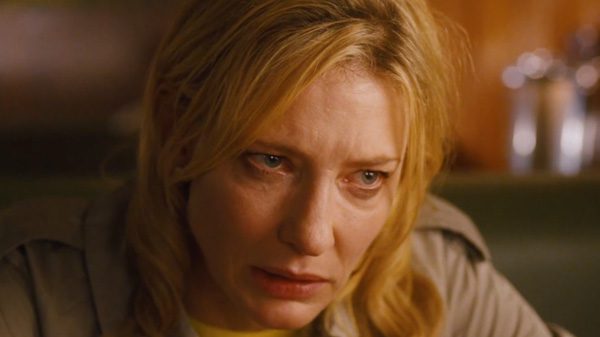 Back to Jasmine: vodka is drinking her, she’s using Xanax to toe the line, and is often found talking to herself. Because who is she now that she is not a wife and a person whose entire aim in life is to shop? She doesn’t know, but gets the idea, based on her great taste in clothes, that she might be destined to be an interior designer. She takes computer classes (in 2013 that’s quite a statement about her level of entitlement or Allen’s out-of-itness) and has to take a job (heavens no!) as a receptionist in a dentist’s office to get by.
Jasmine is pathetic and loathsome; she has no remorse for anything she’s done or for the way she has judged her sister’s lifestyle. But, and this is almost wholly due to Blanchett’s acting abilities, she’s also likeable and easy to empathize with. After all it’s hard not to have empathy for a woman who is so unmoored and suffering from both alcoholism and mental illness. She has lived a life of dependence and now is standing on the corner talking to herself. But what’s the statement here? She’s the one who turned them in over a romantic affair. Is the point that without money or a man a woman becomes insane and turns to the sauce?
And more importantly why this subject matter? Why is Allen choosing to make a movie about this particular character? Is it to support a modern fable of our economic fall from grace? Or is there something more insidious at play?
Every ten minutes I experienced a wave of illness at the presupposition of the film’s position: that the world view begins as a central-park apartment rise, and that anything outside or beyond that is a step down. Allen’s depiction of lower and upper class people in his films, and this one in particular, are so downright condescending that one has to wonder if he meant to be satirical. Ginger, Jasmine’s sister, works in grocery store, dates “losers” and wears her hair in a most unfashionable style. Jasmine on the other hand is all hermes. Is there nothing in between?
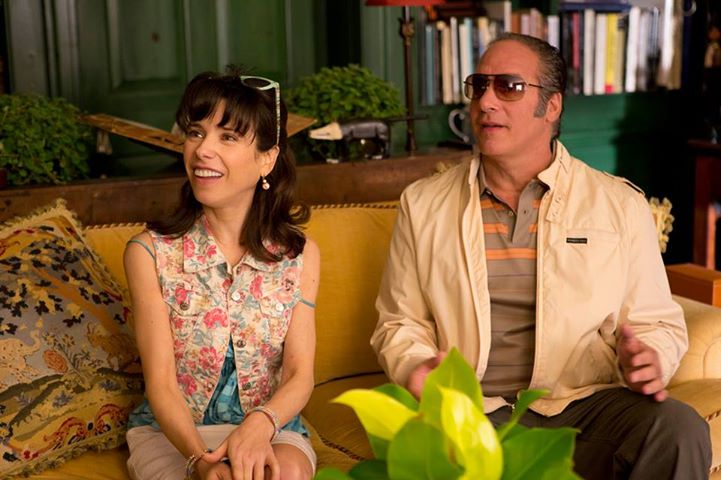 Despite the odds against her, Jasmine’s sister Ginger, the modest checkout girl, is the only one who seems to have an appropriate amount of happiness. She’s seen throughout the film laughing, dancing and hosting game nights. She has children. She understands the compromise needed in realistic human relationships. Sure her boyfriend may be a hard-drinking grease monkey but they have this crazy thing called love. A concept lost on poor Jazzy.
The film’s title comes from the fact that when Jasmine met Hal “Blue Moon” was playing:
Blue Moon
You saw me standing alone
Without a dream in my heart
Without a love of my own
That’s what’s missing: Jasmine doesn’t seem to know what love is or have any experience of it. Like she says, that she knows the tune but can’t ever remember the words. No one is on her side. The only man who potentially cares for Jasmine is an aspiring politician played by Peter Saarsgaard, and it seems he wants to marry her for her appropriate politician’s wife’s looks and perhaps because she will allow him to be gay. Unfortunately, without anyone to love her, Jasmine is wide open to the torturous turns that Allen takes with her character.
To watch Blue Jasmine was a test of nausea’s limits. Throughout the film I felt compelled to both root for Jasmine and simultaneously anticipate her going further and further into the abyss. How confusing to loathe and love someone who seems both a victim and a perpetrator; it’s simultaneously what’s interesting and horrifying about the film. To watch Blue Jasmine is to watch Blanchett rise up and out of the mediocrity of the film and to carry her own torch among an otherwise dimly lit journey, only to have her character be quickly and repeatedly taken down. It’s almost as if Blanchett suffers Allen’s film, much in the same way as the Jasmine plays is tortured by the other male characters on screen.
Peter Bradshaw’s review in the Guardian writes about the relationship between Jasmine and her brief time working as a receptionist in a dentist’s office, where the creepy mouth-doc (Michael Stuhlbar) makes a pass at her: “Stuhlbarg’s bespectacled dentist is arguably the quasi-Woody character in the cast, and his calamitous sexual lunge is very like one Woody tried in that other San Francisco-set movie Play It Again, Sam – though here resolved with a bitter, downbeat seriousness.”
Bradshaw’s right. This is Woody, lunging again at a woman, who isn’t interested in his advances. Sure, the doctor is hapless and a neurotic, but that seems merely a clever way to make misogyny seem innocent. In fact Allen’s self-effacing, aw-shucks shtick may in fact just be that: a shtick to distract us from the deeper subtext at play. Why so many movies “about women” that are merely thinly veiled vehicles for movies “about Woody”? How many movies can you make, where you lunge at women, drive them to the brink, take away their only comforts and watch them go mad? It seems now written in stone; after 46 movies, we can see that Woody’s career is nothing more than a lunge, at that creature that eludes him. It seems that Allen tries to understand himself through “the other” – but that his investigations of self are more easily done through women, so he avoids taking himself to task at all.
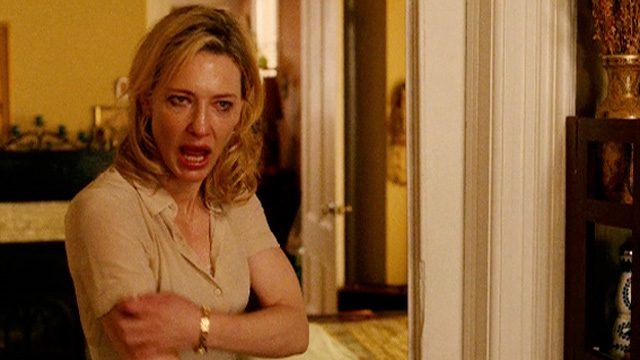 In truth, so many of Allen’s leading ladies are treated with something that borders on cruelty. Jasmine is stripped of everything, subjected to things that further deleterious circumstances, and eventually takes a job where she’s sexually assaulted. That’s what we’re going to give her? And for what? And to what end?
Blue Jasmine is a clear homage to (or rewrite of) A Streetcar Named Desire, that famous tale about a southern belle’s fall from grace. In that story it’s also a man’s cruelty that drives the leading lady to a nervous breakdown. Again confirming the idea that a woman without a man is just a plaything left defenseless to the cruelties and battery of the world around her.
Everyone has always told me how much I’d love Woody Allen’s films. As a budding young neurotic I was encouraged to watch Annie Hall, Manhattan, and then the rest of them. Since the beginning I’ve hated his films, but never been able to figure out why. There has always been, despite the occasional likeable humor, something that has bothered me long after the film ends.
I suppose I take issue with the tone of haughtiness, the feeling that as I walk to the subway, I’m being looked down upon from someone having a lox bagel on the balcony of their 5th avenue apartment. The feeling that women exist only as a figment and plaything of a man’s existential Freudian probing. Allen’s films are people-hating, self-hating things. And he’s not the only director, obviously. Let’s take Lars Von Trier as another kind of example of consistent misogyny, yet his works are more blatant, obvious, and extreme. But what I appreciate about Von Trier’s fraught vision is that his misogyny isn’t veiled; it’s exposed and honest. How can I respect, much less enjoy, Allen’s choices when he’s trying to trick me into laughing or catching a tune or looking at pictures of beautiful cities, when what he’s really saying is he’s going to make me watch a woman being hated and judged, usually for interfering with his creativity, or more subtextually, for aging.
So many people I respect and admire, critics and friends, love Allen’s films. While there are certain films of his I enjoy (or rather endure) more than others, they consistently repulse me. I’m not sure what I am missing, or what I am choosing to read in them. But this I know: I would never want to end up as any of the women characters in any of Allen’s films.
Perhaps I’m just tired of being lunged at.




16 responses
Might want a spoiler warning, since we don’t know about the call to the FBI or its full context until almost the end.
Or the spoiler warning could just be “don’t go see this movie because you will hate every single character and want them to die and none of them will” which is how I felt while I was watching it.
Sometimes Woody Allen reminds me of George Bush Sr., seeing groceries “scanned” at the checkout, like magic, because he hasn’t done his own grocery shopping in years. A Mission District where working class people can still afford to live (and they’re all mechanics from Jersey). A dentist’s office where the appointment book is still an actual spiral notebook. People still have phones in their homes with the long curly cords that connect them to the walls. (I guess Woody thinks only rich people buy cell phones.) The rich “nice guy” was skeezy even by 80’s standards.
Hated everything about it. Cate Blanchett’s performance blah blah blah. If the story sucks and the dialogue sucks, performances can’t save it.
But he’s my favorite misogynist…
Okay Ray – I added a spoiler alert! Thanks.
Oh, awesome piece by the way.
Thanks for sitting through this so I won’t have to. Woody says, “I hate myself for loving you” to women in general. Well, maybe “need” more than love. Most men find healthier ways to deal with this, like liking females for one example. But Woody(ironic name) is short.
Rich people don’t know how not-rich people live. That’s a problem with art, and it’s a problem with our politics.
That said, I did feel one moment of relief in the film at its depiction of someone who was just constitutionally unable to “adapt” to a high-stress job. Yes, I mean clerical. Those jobs are hard, hard, hard.
Some people see great art, don’t understand it, and attack the maker to deflect their ignorance. Written And Directed by Woody Allen is what I saw, and he got great preformances, told a fairly complex psychological story in 90 minutes (with some very nice bits of humor), and like Warhol, he held up the mirror for us to see ourselves in as we think back upon our memories and impressions of his film. A grand slam, in my opinion.
Dunno why I wade back in when a simple disagreement about art so quickly devolves into calling fellow Rumpus readers “ignorant”, but my take: Blue Jasmine had two-dimensional, unsympathetic, implausible characters, was largely not funny, was a relatively simple story told more complexly than necessary, and I certainly didn’t see myself in any mirror in any of it. It was a sub-par riff on A Streetcar Named Desire, placed in a setting that Allen does not understand, with characters that he seems to have no real compassion for. Great performances will never save a bad story. Not if you think story is important. Not if you think story is the reason film exists.
When I saw Midnight in Paris, I spent the first fifteen minutes thinking “oh God, am I going to have to spend two hours with these miserable people?” And then the magic happened, and I loved it. With Blue Jasmine, I got the full two hours that I dreaded.
For complex psychological stories of recent vintage that were created with grace and subtlety and respect for the characters and the audience, I’ll take Short Term 12, The Spectacular Now, Smashed, Amour, The Attack, The Hunt, Being Flynn, Shame, Melancholia, A Separation, Weekend, Terri…but I’m back to being done with Woody Allen.
detail..Mia Farrow found out about the affair between Woodie and his daughter by seeing photos of them together at her daughter’s apartment. He didn’t have the balls to talk with her about it before she inadvertantly discovered it in her own. Mia continued the last few days of filming with Woodie to save the film He was directing.
Marcia Tewell – Yes, but also in Blue Jasmine, she finds out about the affair herself as well. Hal doesn’t have “the balls” to tell Jasmine. But I’m sure Mia had words with Mr. Allen.
In the ninth paragraph of this essay the author writes, “one has to wonder if he (Allen) meant to be satirical.” Wonder? This whole movie is a Satire, because Woody Allen is a master satirist. Of course if one approaches this film expecting a Comedy, a Romance, a Tragedy, well, I imagine one may be disappointed. Or if one is unfamiliar with Allen’s techniques in the use of certain “types” of characters, or other various devices to tell a story, (think Van Gough’s impasto brushworks, the swirls, etc.) then one may be feeling just so, so insulted that he dares to not be a sensitive politically correct soul, well, yes, then by all means, be relieved to dismiss Allen’s work due to what we know through hearsay of his personal life…hey that sort of thing got Bill Clinton impeached.
Your review reminds me of what I disliked so much about Allen’s MATCH POINT – the high moral tone and way he used his 2D characters to deliver his nihilistic message (isn’t that an oxymoron?), a message he already conveyed to perfection with one joke in ANNIE HALL (by far my favorite of his films). I actually feel a bit ashamed of the review I wrote (it’s here: http://brightlightsfilm.com/53/woody.php#.Um2n7jBLMaA ), because I took Woody to task so ruthlessly (he probably never read it). Unlike you I used to LOVE Woody, and hell hath no fury like a fan spurned, and all that. Your piece expresses a similar kind of distaste, even outrage, and you also point out how Allen’s films (I would say especially his “serious” ones) serve as a kind of auto-therapy or even unconscious confessional (DECONSTRUCTING HARRY was another highly dislikeable exercise in self-loathing cinema). When David Lynch or Lars von Triers does it, it can be inspired, and cathartic for audiences as well as the filmmaker. But when Woody does it, the result is somehow nausea-inducing. As for it being Satire, capital “S,” a wide definition of the word = “work intended to ridicule vice or folly.” I haven’t seen BLUE JASMINE (and I don’t plan to), but I’d say that description fits well with some of his other works, and they are invariably his WORST films (tho often critically praised) — CRIMES AND MISDEMEANORS, HARRY, MATCH POINT — I think precisely because Allen DOESN’T DO “Satire” (well, at least). His best films show an affection for his characters and their folly, and when Woody tries to be scathing, he comes off (IMO) as plain mean.
Another terrible B rated Film from Woody. The over acting and the direction was terrible. Anymore flash backs would kill a person.
Weren’t there more comments before? I disagree, I think with Blue Jasmine Woody Allen finally got the balance right between comedy and serious; it was
light, but also painful. I did wonder if there was an element of vindictiveness
in his destruction of the Blanchett character (stand-in for Mia?), but even as I wondered at it (in
those final moments) my heart cracked for her. Much as one (? I mean I) wanted
to see her destroyed, when it came it was too real to be satisfying. Maybe Woody
found his own compassion also in the last moments?
I thoroughly enjoyed reading your review. I too felt nauseated after watching Blue Jasmine – great acting by Blanchett but what a sad portrayal of an aging woman.
Blue Jasmine is a movie about two women, jasmine who has chosen to play innocent inorder to get what she want, and when she finds out she is not in control she lose her grip on the fairy tale she created. Ginger is also with issues, why is it when a woman doesn’thave a career. That it accept able for her to date a hard drinking emotionally unbalanced man. Woody Allen gave us a movie that ask questions that most peolple would rather not think about or gloss over. We should stop ignoring these women. And ask how can I help or be honest and tell them the truth. Your actions will hurt in the end.
Click here to subscribe today and leave your comment, or log in if you’re already a paid subscriber.