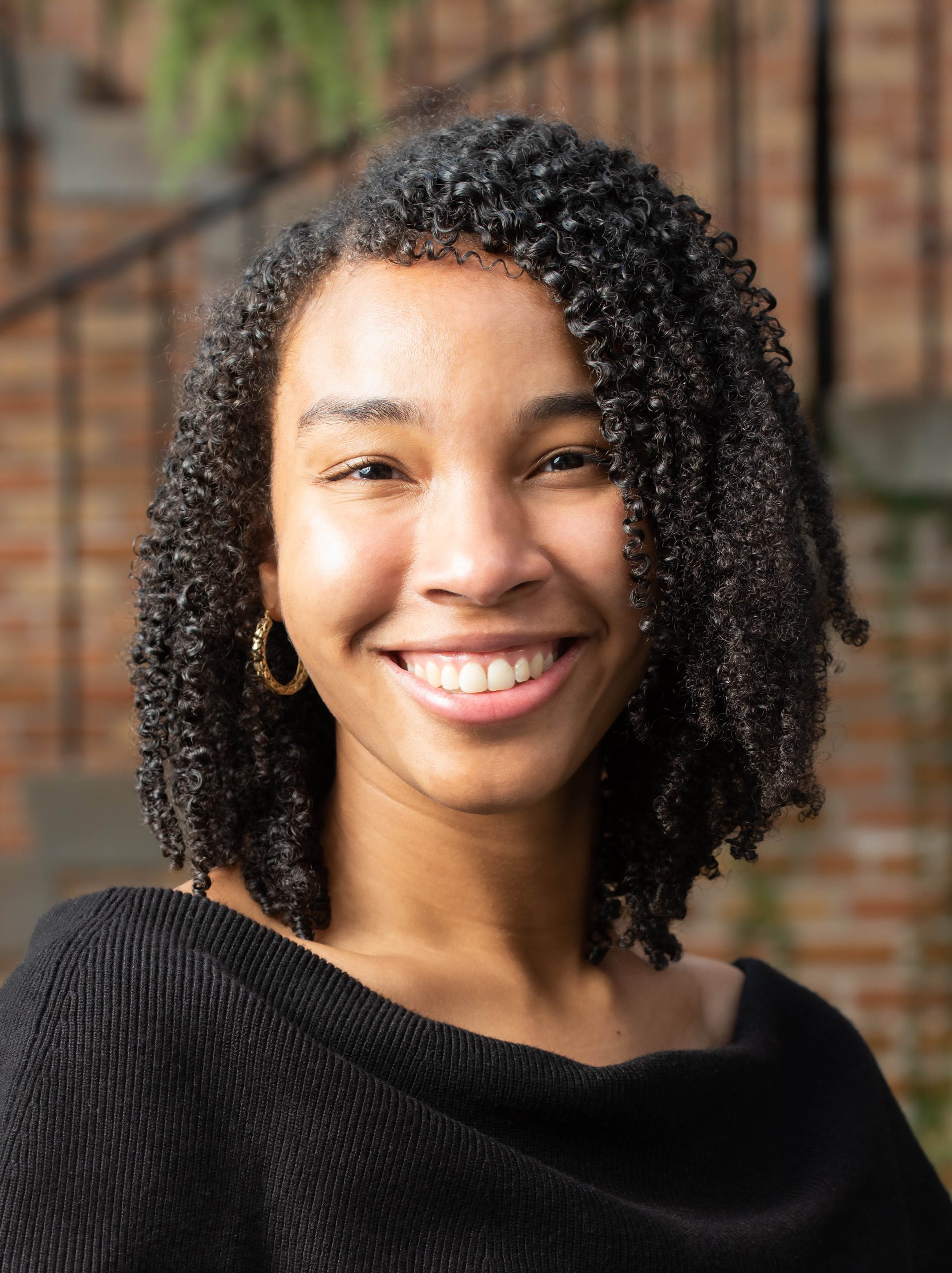
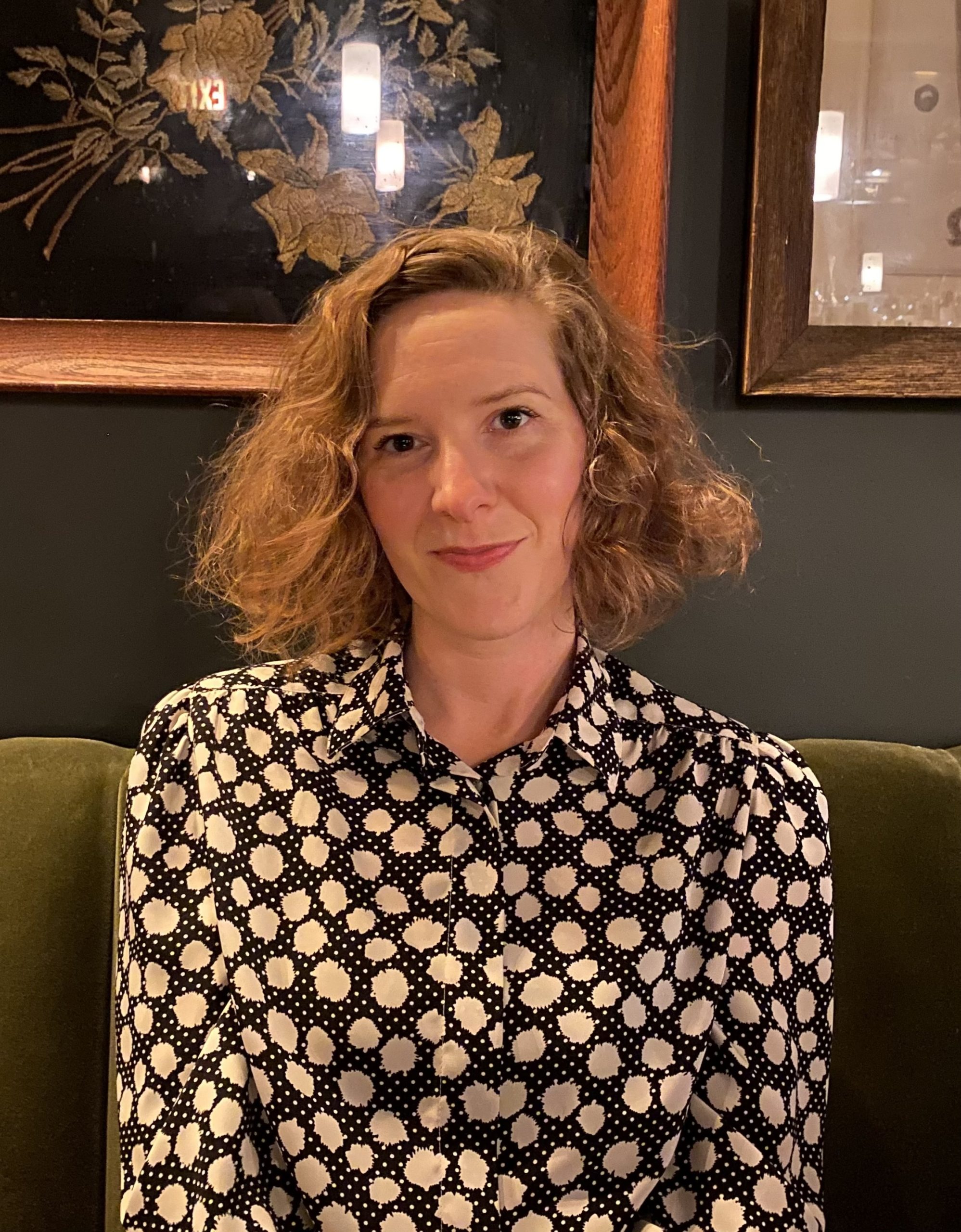
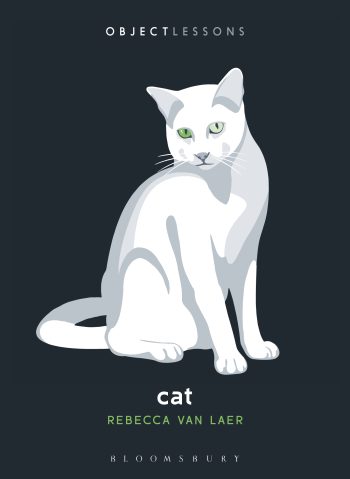
As part of Bloomsbury’s Object Lessons series, Rebecca van Laer’s second book Cat blurs the lines between memoir and academic writing. Parts of the book read like personal essays based on van Laer’s life with her beloved cats, while others delve into facts about cats and our relationship with the species throughout history. Ultimately, however, Cat is a book about love and relationships. Through the lens of her relationship with her partner and their cats, van Laer wonders: what constitutes a family? She shreds the patriarchal-based stereotypes of “childless cat ladies” or “crazy cat ladies,” composing a raw and emotional narrative that illustrates the complexities of the choice to procreate versus remain a cat person.
I was excited to talk with Rebecca van Laer over video chat about cats, writing craft, and maternal choice. This interview has been edited for length and clarity.
The Rumpus: How did this book come to be? Was your short story “Les Chats” published in the New England Review the spark for what would ultimately become Cat?
Rebecca van Laer: As soon as I wrote that story, I knew I wanted to go further. I had a working title for a manuscript: Psychoanalysis for Cats. I worked on it as a break from a novel I was writing. I felt that I needed to write something commercial, but I’d cheat on it with the cat project. I kept writing little bits, almost like flash pieces, about life with cats.
At first it was, in my mind, fiction, which is funny in retrospect. There was no novelistic structure to it, no plot. And it was almost entirely true. But that framing started to feel wrong after one of our cats died. At that point, the material I’d wanted to hold at a distance suddenly seemed like it needed to be transparently personal, in memoriam for my cat. That’s how it became nonfiction—first in my thinking and then in my pitch to Object Lessons.
Rumpus: Your first book How to Adjust to the Dark (Long Day Press, 2022) is described as “a hybrid of prose, poetry, and theory.” Similarly, Cat rebels against the rules of genre, blurring the lines between memoir, auto-fiction, and academic writing. Would you describe your writing as rebellious or genre-defiant?
van Laer: I’m always trying to write something with a conventional narrative, and it’s seemingly never working. At the same time, I’m drawn to work that is transgressive in terms of genre and form, so it’s a little silly that I’m always getting distracted by commercial concerns.
In many ways, it wouldn’t be “me” to write something that’s pure memoir. In my writing and in my personal life, criticism and theory are always seeping in. It’s the most natural thing for me to probe at the margins of genre. Still, I worry that readers prefer a conventional, plot-based structure. So there’s always an internal struggle as to whether I do the thing that’s more defiant—and more true to myself—versus the thing that I think people want. I’m always negotiating that.
Rumpus: How did you approach research for Cat? Did your research shape the narrative? Or did you weave research into the book?
van Laer: Very much the latter. I thought: “People are gonna wanna know some facts, and now I have to go learn cat facts.” I was lucky my editors suggested some books that are more on the informative side, like Jonathan B. Losos’ The Cat’s Meow and Katharine M. Rogers’ Cat. Those were a great starting point. I also have an annotated volume called Literary Cats, a survey of cats in literature that’s quite comprehensive.
Reading these books was helpful in two ways: one, in giving me facts, and two, in showing me that there were already plenty of books that were absolutely stuffed full of cat facts. If someone wants to learn about cats, they can go there. I didn’t have to cover it all! So I could focus on bits that fit with my narrative or allowed me to propel my thinking forward. I only wrote about the things I was most drawn to and found most interesting.
Rumpus: Attempting to work with cats has driven you “close to madness” and your fights with your cat Toby were “personal.” He’d stand in front of your computer screen for hours, demanding attention, knocking objects off your desk. Can you talk about the logistics of your writing process? How do you get any writing done with cats?
van Laer: They can make it difficult, for sure. They have their quiet times, and those are really good to take advantage of. I get up very early, before Steven, and feed the cats right away. Then I have 90 minutes to two hours before I start my day job. I use that as my writing time. I’m lucky that, having just eaten, Milton stops bothering me until around noon.
So much of life with cats is learning to work around them and to live with respect for their autonomy and try to carve out your own. I’m lucky the constraints of my day job have allowed me to write in a time that coincides with their naptime.
Rumpus: Throughout Cat, you wrestle with the idea of parenthood. Your ultimate decision not to have children and remain a “cat person” is a complex, emotional journey. What was it like to be so vulnerable on the page?
van Laer: A friend texted me after reading it for the first time, “Are you scared to share so much of yourself?” My kneejerk response was, “Did I?” I’m maybe a bit of an oversharer. One way people deal with trauma is to compulsively disclose everything, so if rejection is going to come, it happens quickly, or to express certainty to ward off other people’s uncertainty. In some ways, that’s a tendency of mine.
On another level, it became clear to me, in writing, that maternal choice was at the center of the book, and with that, I considered how much I shared on the page. Cat ends in a place of certainty. There is certainty, but at the same time, the book goes from 2020 to 2022. I’ve lived more years of life since then. There’s still ambivalence. There’s still the loss of a path not taken in the future, which the book can’t fully cover. Knowing that, knowing it’s only part of the picture, makes me feel more comfortable with it.
Rumpus: You wrote, “I usually call everything ‘fiction,’ not because it isn’t true, but because I want plausible deniability.” How did writing Cat compare to how you approach writing fiction?
van Laer: I think fiction feels safer. If I’m writing a short story, I don’t usually call up my friend and say, “Hey, I’m thinking about putting this line you said in there.” There was initially a scene from my life that I’ve written about in a few different contexts. There was a version of it in the novel that I stopped working on, and when I abandoned that, I had the impulse to put in Cat. I talked to my brother about it, and he said no. I never would have asked with the novel. I had a greater responsibility to the people who are still in my life to represent our shared experiences in a way they were comfortable with. With fiction, I don’t care, which is also a complicated thing, and there’s plenty of discourse about it. But I don’t!
There was also a period before publication where I kept saying, “People are gonna read this book and they’re gonna know exactly how neurotic I am.” I don’t know if the narrator here seems more neurotic than the narrator of my first book, but the narrator of my first book has a different name. When it’s simply, transparently me, there’s more discomfort. There’s less freedom.
But working within that can also make things easier. It was a lot faster to write this book than any of the fiction projects I’ve ever worked on simply because I didn’t have infinite options for the plot.
Rumpus: After Toby passes, you confess: “I write down everything I can remember about Toby’s last hours on earth. I know it is important—but for what? What am I trying to write?” Can you elaborate on the limitations of language as a way of communicating our feelings?
van Laer: That was one of the most intense experiences of my life, even as someone who’s lost family members. The days of crying—over this cat! Not over a human being! On one hand, everyone who’s loved an animal and lost them has had this experience. On the other hand, anyone who’s not is like, “This is a cat?!” Conveying the particularity of your personal attachment to another living creature and the depth of love—I don’t think language can do that. The best it can do is try. It felt important to try.
Rumpus: Anything else you’d want someone to know about Cat?
van Laer: It’s a book about cats, but it’s also very much a book about maternal choice. Most broadly, it’s a book about love and how you navigate that with your family, whatever it looks like, and whichever members are in it, human and non-human.