
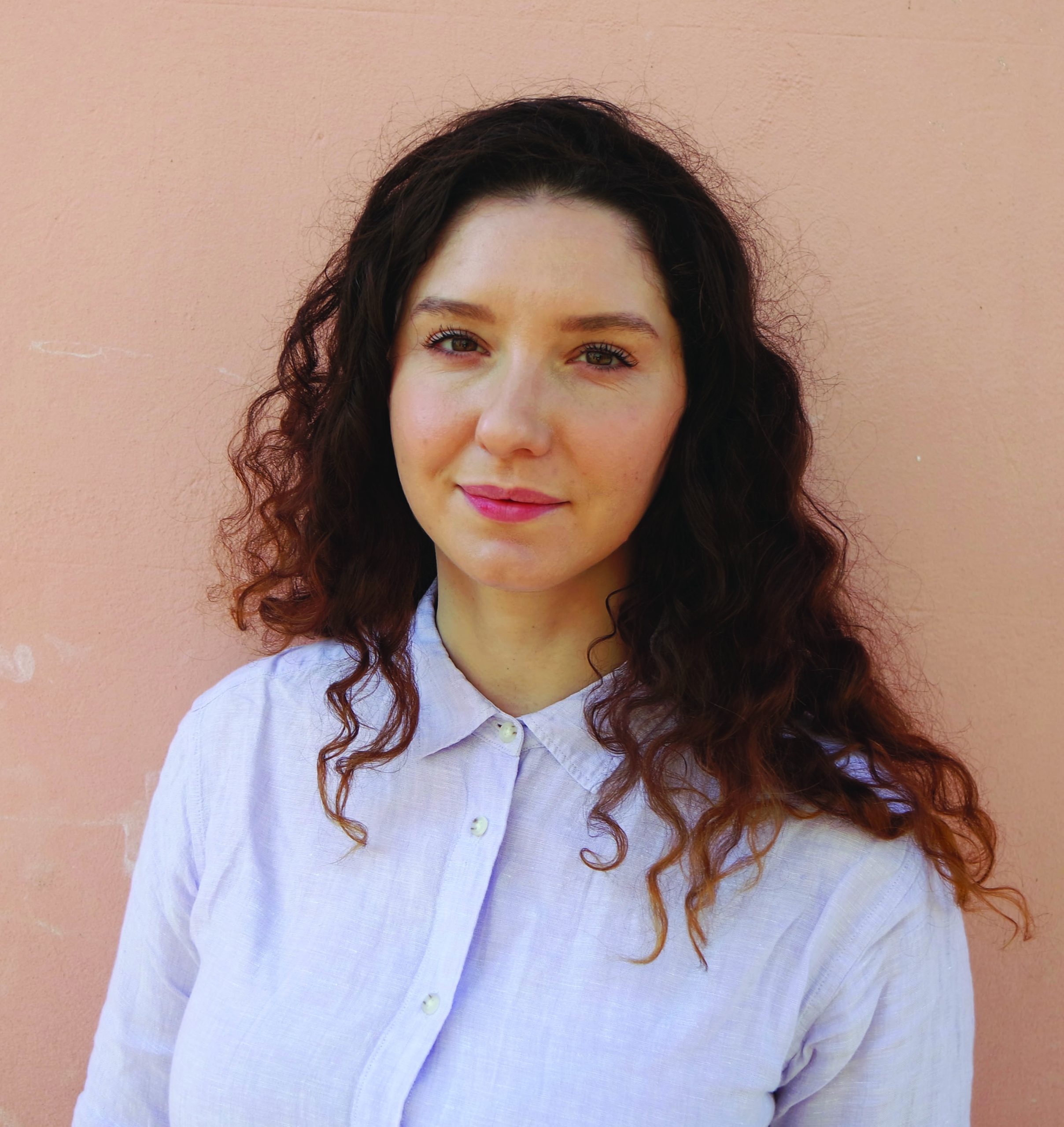
When Marta, an Edinburgh-based marine biologist is sent to a small island off the coast of Scotland to excavate a Victorian shipwreck, she is too consumed by her own ghosts to notice that something is haunting the rural community too. Thus opens The Salvage, Anbara Salam’s fourth novel.
It’s not until Marta’s first dive, where she comes across a dark figure crouched in the wreckage of the ship, that she starts to question what she’s walked into. With the help of a local woman, Marta sets off to find out if what she saw was real, or just her past catching up with her. What follows is a ghost story that’s as chilling as the sea Marta must return to again and again. Using a timeless structure to examine the ways that religion, ghosts, and grief shape a community, this gothic tale wrestles with themes of redemption and resolution.
I sat down with her over Zoom to talk about the ways in which she approached the sapphic ghost story and the ideas that shaped the novel.
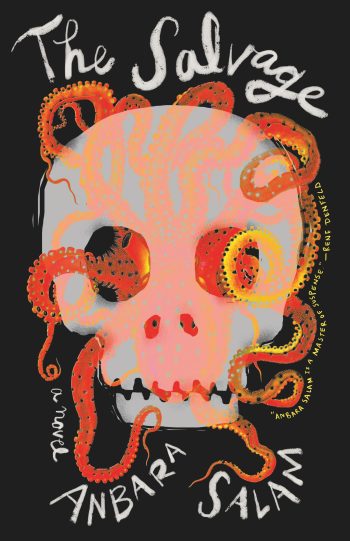
The Rumpus: The Salvage reads like a classic maritime ghost story. It had the same eerie quality I’ve experienced while reading Daphne du Maurier. Where did the idea for this structure emerge from?
Anbara Salam: I was thinking of The Hound of the Baskervilles. It’s one of my favorite stories. I was thinking about that classic gothic formula of something spooky happens in the hills or the forest or wherever, and you’re with a friend or colleague that you have sexual tension with—depending on how you want to read Sherlock Holmes—and one of you thinks that there really is something spooky going on, and the other one is more of a skeptic. I’ve got no evidence of this, but my theory about this formula is that without The Hound of the Baskervilles, we wouldn’t have The X Files. It’s a classic recipe for a supernatural investigation. I guess that’s the kind of classic, haunting story that I was trying to capture the flavor of—Spring-heeled Jack too—another classic British story. He was a Victorian creature that no one could see, but he terrorized the Victorian urban population of London. And the way you knew you’d been visited by him, is that—oh god, I’m getting chills just thinking about it—on many occasions, you’d see his wet footsteps on the ceiling, and you’d know he’d been in your room just watching you. He didn’t do anything. He just observed you while you were sleeping. That story was so horrifying to me.
Rumpus: The sexual tension in the novel was such a reprieve from the eeriness of it. It was refreshing to read a book set in the 1960s that features a queer couple who aren’t punished for their queerness. It’s not even the focus of the book.
Salam: I appreciate that because I always wanted it to be a love story. I think for a lot of historical fiction readers, sometimes what they’re coming to historical fiction for is a specific kind of accuracy. And that’s not exactly what I was interested in. What I wanted to do was to have a queer love story at the heart of this novel where the obstacles that they have to overcome, or the angst or the suffering, has nothing to do with their queerness and all to do with their relationship dynamic, or the environment and the supernatural—or not so supernatural—things that they’re dealing with. I know that sometimes readers find that a little bit frustrating. But for me, that was really important—as you said—to juxtapose against this unforgiving environment, this brutal winter, something potentially out there roaming about.
Rumpus: This novel is very female-centric overall, not just in its romance. And these women vary in their age, race, and economic background. I loved watching them interact.
Salam: I’m so glad you noticed that. That’s what I was going for. My second novel is actually set in a convent in Italy in the 1950s. Now, you can’t write about convents for every novel; I’m not saying I wanted to. But I’m interested in creating environments that are just on the edge of plausibly real, and the dynamics and stories between women. It was deliberate that the book be anchored by three women: Marta, Elsie, and Sophie.
Rumpus: What was particularly fun about Marta and these other characters was their messiness. They had space to be complicated. It made for a more interactive reading experience. You encourage us to decide how we feel about these people.
Salam: I write the kind of books I like to read, and what I like is the dynamic between writers and readers where you’re in a position to create intimacy with a character that you may not usually want to spend that much time with. I’m interested in exploring the level of complicity that a reader has with a character who maybe is making bad choices or has made bad choices or who is perhaps not the most likable, and really pushing at those points of tension.
There’s something really powerful about challenging readers’ conception of what it means to connect with a main character. I mean, I always thought—and this book, obviously, is not like Ripley at all—but I always thought that Patricia Highsmith was such a genius at this in the Ripley books. Ripley is such an unlikeable person, but you so desperately want him to get the things that he wants, even though he’s this horrendous, inexcusable, unforgivable, murdering psychopath. She does it so subtly. It says something about you, the reader, as well as the character. When I write characters like Marta, who is quite problematic, and has made terrible decisions, I’m thinking about that. How do I invite a reader to participate or empathize or support the decisions and actions of somebody who needs a bit of a wakeup call.
Rumpus: It’s refreshing, this lack of trying to convince the reader that a character is good, or their actions are justified and a sign that the writer trusts the reader to grapple with the text in the way I assume you’ve intended here. Did writing Marta in first person allow you to sink more deeply into that?
Salam: I knew I was going to write her in first person. I didn’t know it was going to be first person present. That just completely came out by accident. But having only Marta’s perspective, it allowed me to guide the reader’s point of view and to concentrate on Marta’s worldview. Marta is a particularly petty, quite an unpleasant and paranoid person. But the thing about being paranoid is that just because you’re paranoid, doesn’t mean that they’re not out to get you. It allows you to appreciate her, her paranoia and self-pitying qualities, while also understanding that they’re maybe legitimate.
Rumpus: This book is as much about trusting yourself as it is about the mystery and what haunts us. It’s particularly stressed because Marta is this queer, brown, female marine archeologist. Trusting herself during this time means going up against a lot of discrimination.
Salam: I was thinking about Marta’s experience of feeling slightly gaslit in the sense that she really feels that this one thing is true and everyone is telling her it’s not true, and she’s living in a reality where nobody believes her. And so, she can only trust her instincts when really, her instincts have let her down before. She’s maybe not the most credible person and yet she is convinced that she is right about this. I wrote this deliberately so that you can read it in one of two ways. I leave it to the reader to decide.
Rumpus: Those are the kind of reading experiences that stay with you. When you finish the book, you can’t help but debate what may or may not have happened.
Salam: That’s part of the process of meaning-making too. The characters have their reality and their meanings made for them, but then, as a writer, at least for me, you also want to make sure that your readers are also participating in the meaning-making as well.
Rumpus: Marta’s complicated grief was effective in inviting the reader to participate in this way. It’s a tangled grief. She’s making sense of the loss of someone as well as her role in that loss. Did you always know she was going to bring that kind of baggage with her to the island?
Salam: I did, yeah, because the book’s interested in redemption, these themes of something hidden resurfacing, which is a fundamental part of the gothic fabric. Obviously, Marta is struggling with her own desire for absolution and redemption. And when she comes to an environment where there’s a very particular kind of religious perspective about redemption and resolution, it was a useful way to examine her psyche in reaction to that, because the religious fabric of the island is such that you’re either saved or you’re damned, and there’s nowhere in between. Marta is stuck in this limbo where she almost wants someone to tell her what she is, either way. Is she saved? Is she damned? She’s just craving some kind of resolution about this guilt and this grief that she’s carrying.
Rumpus: You have a PhD in theology. Here, the island is shaped by Calvinism. I imagine incorporating religion into your work is a natural process.
Salam: I’m interested in religiosity, and it’s something that I’ve looked at in all my books. My first one was about missionaries. My second novel was about convents, Catholicism. My third was about spiritualism in the 1920s. Obviously this book has a hyperbolic representation of a very specific kind of Calvinism. Part of the reason that I studied theology in the first place is that I started as a historian, and the more I thought about it, the more I realized you can’t really study history meaningfully without having a thorough understanding of the way that religion shapes the world and people’s perspectives.
I approach historical fiction in the same way. Writing novels, particularly historical fiction, it makes a lot of sense to critically interrogate the religious imaginary that is shaping the environments you’re writing. Those two things are always intertwined. Now this novel, set in 1962, no one really is like, “Oh, 1962. Classic moment in Calvinism.” But I’m very drawn to looking at those moments just before rather than the turning points. I was thinking about all the changes that 1963 was going to bring to the world—culturally, socially, politically—and the moment just before that, and the characters inhabiting a perspective that would almost be the most resistant to that transformative change. I suppose that’s kind of how those two things intertwine, along with these themes of redemption, salvation, fate, destiny and agency really, like, “How far can your personal agency affect the state of your soul?” That is a question that Calvinism is very interested in, and it’s a question that Marta is very interested in.
Rumpus: That makes me think about the book’s use of the ship. Its arrival, or return, feels like this collision of past and present. And its presence is this unsettling examination of how we experience, interpret, or display historical artifacts.
Salam: Exactly. And who gets to excavate those items, who gets to use them, and who gets to tell those stories and how accurate are those stories that we tell? Another theme that I was interested in was myth making and interrogating how we deal with those heroes. Once you scrape back the layers and layers and layers of myth, what stories do we have left to examine? Culturally, we’re asking ourselves these questions a lot more these days.
Rumpus: Marta’s profession is an entry point for that kind of conversation. Can you talk about how you familiarized yourself with marine archeology and deep-sea diving.
Salam: I can barely swim. I’ve never dived, never done anything like that. I don’t know that I ever would. I just find it so compelling, shipwrecks too, as a trope, because they represent human hubris and the power of nature. And then they have that time-capsule element in the sense that, in as far as it is possible to—and I really don’t want to use the word objectivity but—consider material artifacts from a quote-on-quote objective lens. Shipwrecks are a snapshot of everything that’s happening at that moment in time. I did a lot of reading. I interviewed a marine archeologist who talked me through some of her experiences, and that was incredibly helpful for thinking about the narrative for Marta. Really though, a lot of this is just invention because I don’t mess with the sea.
Rumpus: Can you talk about teasing out all the different parts of the book. Did it happen naturally or emerge during the editing process?
Salam: There was a certain point when I was writing when I thought, “What am I doing? What have I done?” When I explain this to people now, I realize it’s a lot, you know, a sapphic gothic sort of literary mystery about a maybe haunted shipwreck during the Cuban Missile Crisis. It’s a lot. I understand that all of those disparate elements don’t seem to make sense together. But I just fully committed. Honestly, I wish I had a more poetic, a more kind of craft orientated answer to that, but I really just committed to holding all of those different elements at the same time, at every point. One of the things that I think was quite important to me, from a crafting perspective—this is purely my own personal preference—even though there’s this intertextual element of Captain Purdie’s diaries, when I’m personally reading a book and we switch to a second perspective and you get a wall of text and it’s all in italics, it takes me out of the narrative. That was something that was important to me, to fragment those diary entries. They’re little snippets that allowed me to weave those elements without sacrificing too much attention. One of the diary entries is just two words, for example. And that was important to me to keep that very light.
Rumpus: Did your agent or editor try to pull you away from that?
Salam: Both. Actually, there was a suggestion at one point that I should not include the Cuban Missile Crisis. I really, really fought for it because, to me, you can’t talk about October 1962 without also talking about the missile crisis. It shaped people’s perspective on the future. It clearly delineates the insider/outsider dynamics of the island; it placed Marta’s worst, most paranoic constraints, because she’s actually been proven correct. It sets her in opposition to everybody else on the island instantly. So that was one element, for example, that was suggested to me, like, “Why don’t you start the story a little bit later and just not have the Cuban Missile Crisis?” I absolutely couldn’t. I really fought for that.
Rumpus: The island itself is a character in the novel. It breathes on every page. Was it based on one island in particular or a combination of islands in the area?
Salam: I wouldn’t say it’s a combination. I was inspired by my time on the islands. I’ve got family on the islands around Scotland. I mean, my mom grew up in Scotland. She grew up in a mining town, an old mining town, and she had quite an industrial upbringing. One of the things that I wish I could have brought more of into the book was to not have the island be entirely stereotypically Highland Scotland with heather and roaming deer. Now there is heather and there are roaming deer, but there’s also a coal mine and miners, and there’s a colliers and mining village. Having that little element of industrialization was something that I really wanted to lean into, perhaps even more than I did in the end—not just for the sense of realism, I suppose, but because I felt it was more representative of a particular kind of Scotland that I’m familiar with.
Rumpus: It’s hard for an island to exist without some element of industrialization. And it added to this story of nature versus civilization, and the ways that people grasp for control despite nature’s plans.
Salam: You’re so right. That’s exactly it, and that’s kind of what a shipwreck is, right? Like we were saying, it’s nature versus civilization. That’s something I’m quite interested in. My first novel was also set on an island, this time in the South Pacific in the rainforest. And I’m interested in that power struggle between civilization and nature, and the human endeavor to survive when the environment does not actually want you there at all. In many ways, it’s kind of a climate novel because it is about this really intense environmental experience, and the ways in which that ruptures community and the way that it forges community, and just the basic struggle to survive in the face of the power of climate, I suppose.
Rumpus: Speaking of the community, they provided this very natural and fun opportunity to include a bit of small, rural island humor, which I say as someone who lives on a small, rural island, particularly how these communities navigate small talk.
Salam: That was deliberate. This book didn’t give me as many opportunities for levity as maybe I would have liked. So, I did try to incorporate a little bit of lightness and dark humor. I have to say, a lot of Scottish small talk is about reminding you of people that you used to know and them telling you that they’ve passed away. Those moments are probably lifted straight from real life conversations.


