Here we stand, on the high cliff of a new year, with uncertainty about what the future holds—depending on individual circumstances, uncertainty might be the wrong word. Perhaps fear fits better. Can poetry allay our mounting fears, act as a salve? If so, what pressure that creates to interpret poetry better, open it up and let it strengthen us. What if poetry itself is part of our fear—an intimidating puzzle box that seems too “academic,” too out of our reach?
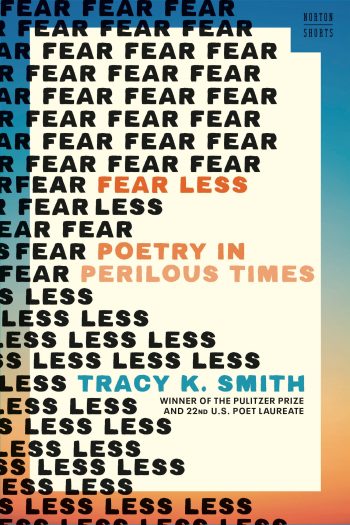
Tracy K. Smith’s new book, Fear Less: Poetry in Perilous Times, addresses these fears head on with patience, kindness, and an endless supply of relatable examples. She discusses poems from poets like Robert Hayden, Joy Harjo, Danez Smith, Natasha Tretheway, Anne Spencer, and more. But Smith also examines song lyrics, Bible verses, military posters, letters, and African American spirituals to show that this act of interpretation, opening the puzzle box, is something not only attainable, but grounded in our everyday practice.
The foundation for this book was laid in 2017 amidst the aftermath of George Floyd’s murder. Fear was certainly among the dominant emotions then. Is it possible people felt too consumed by fear to consume art during such a delicate time, what about now? “Maybe all times are delicate,” Smith tells us. After all, we stand here on the high cliff of a new year, and Fear Less arrives right on time. There is a reason that, historically, during upheaval or socio-political disorientation (nightmare), we look to the poets. We need to be reminded, even while the world crumbles, “a poem is a voice offering to build the world anew.”
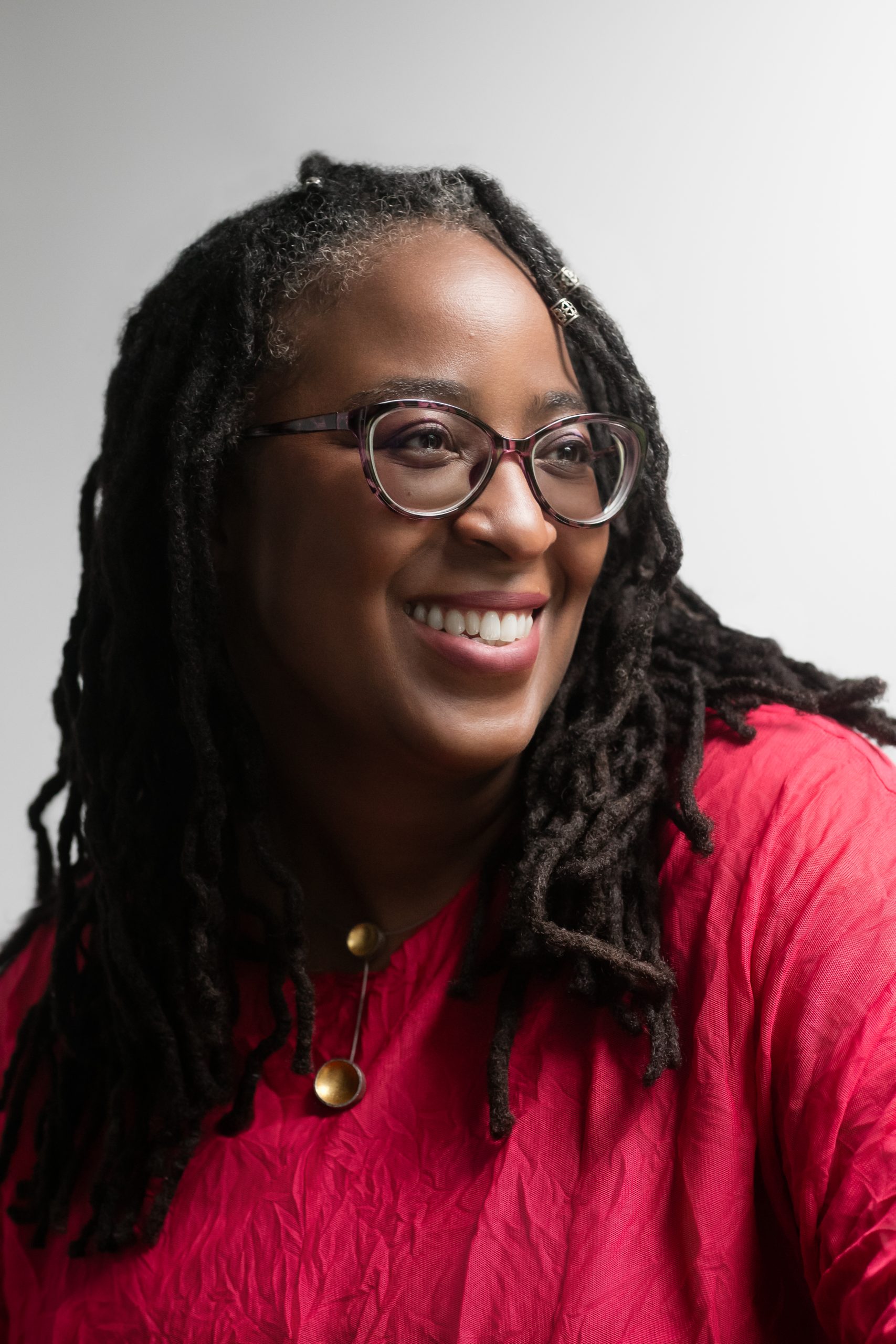
I recently sat down with Tracy K. Smith via Zoom to discuss her new book, the danger of hierarchies, and why it’s important to have conversations that demystify poetry.
Rumpus: In the Acknowledgements, you reveal that the original concept of this book was to expand on a lecture you gave at the close of your US Poet Laureateship: “Staying Human: Poetry in the Age of Technology.” Did the laureateship intensify your desire to de-fear-ify poetry for all?
Tracy: Oh, definitely. I was going into communities and talking to people, some of whom were writers and some of whom had a relationship to poetry, but many people were not and admitted that they had anxiety about poetry or just didn’t get it. And it was really exciting to be in a space where they were willing to listen, and listen to other people’s responses to the poems, and then sometimes leap in and say, “Okay, this is what’s coming to me,” or “This is what the poem is causing me to remember.” And quite frequently, once they reach that point, they would say, “Oh gosh, we used to memorize poems in high school,” or “I actually used to write poetry.” So there they would get to a place where some of the barriers, memories, came out.
Not only in the laureateship, but often, if I’m on an airplane, or if I’m at a dinner party, or if I’m meeting my children’s friends’ parents, and they ask what I do, and I say, “Oh, I’m a poet,” that nervous apprehension comes up. And I’ve always wanted to absolve people of that, not just because I love poetry, but also because I think it’s an artificial worry that is projected onto us, sometimes by the ways that literary insiders talk about poetry. The shop talk can make it feel extremely intellectual and niche, and in many ways it is, but that’s not the only dimension of the art form. And so, yeah, I really wanted to say, “This is something that we humans have needed since the dawn of time, and you’re invited. And guess what? You have everything you need to have a really deep engagement with just about any poem that you read.” And so in some ways, it became a conscious mission the more I found myself learning that people felt that way and how quickly they could get over it.
Rumpus: You were talking in rural America, you were talking in libraries and detention centers and churches, and you describe kind of a profound discovery about poetry based on those conversations. Did those exchanges, with such a wide cross section of folks, influence your keen attention to the accessibility of this book? What impacts do you hope Fear Less can and will have?
Tracy: Well, the first question definitely. I wanted this to be a book that could be similar to a conversation for a reader, partly because I wanted it to hit home in a place that wasn’t guarded, but also because I really do feel like that’s the dynamic that a poem creates with its willing reader, one of having contact with a candid, generous confidantewho wants to give you time to adapt to the peculiarities of their imagination, but who also just wants to tell you something really important. And I love that feeling. I think it makes us feel—it makes me feel—needed. It makes me feel necessary and important in the life of this other person, even if they’re a total stranger—even if they’re a figment of someone’s imagination. And that feeling also strikes me as really important, because we have so many habits in our interactions with the world and with other people that do the opposite, that kind of reinforces all these social hierarchies that have been instilled in us.
Putting people on the defensive or making people feel like maybe you know more than they do, I’m tired of all of that. I feel we are in the end stages of what that does to civilization. So I wanted this book to be helpful to poets, to readers, to lonely people, to people who know that we have better ways of relating to one another, but also in my very idealistic mind, I’d like to imagine that it’s possible for a poem or a book like this to help our culture. You know, maybe one reader at a time. That’s actually my wish.
Rumpus: In some places Fear Less feels simultaneously like acceptance of, and maybe resistance to, the sometimes intimidating shadow of academia. You share and expound on poems but still leave room for the reader to discover their own interpretation and connection to each poem. This is now one of my top recommendations to share with folks who find themselves in workshop settings but are nervous about their own ability to analyze poems. More than that, it’s an opportunity for the reader to deepen their relationship to poems.
Tracy: I appreciate that. Yeah, I think academia is one of the most hierarchical places in the world, probably second to the military. That’s what I’ve come to decide. And I think it inhibits a lot of the gifts that we have to offer one another. And going back to that sense of insecurity and defensiveness, it’s kind of baked into a system where you’re constantly told you’re not good enough yet, but if you work hard, you might advance. And also now students are constantly being told about job scarcity. So, “ollow this dream and this passion. You’re brilliant, but you’re probably never going to get it.” You know, it’s this crazy set of conflicting emotions that are constantly activated when really at heart, what it’s about is offering the gift of learning and dialogue and teaching the lesson of hard work and its rewards to people. I think those are great things. I have faith in academia, but I feel like we are at a crossroads right now, and as awful as it is in some ways, perhaps it’s an opportunity to rethink what our values are, what mission we’re serving, and how we can become willing to do that in different ways.
Rumpus: I think we all recognize how important the existence of poetry is to the world, our society. We often think of this in terms of the poet or the poems. In reference to the reader, why is it more important than ever to demystify poetry?
Tracy: I think poetry operates as a tool with which we can actually solve a lot of our problems because the biggest problem that I can imagine is not being able to bring something into language, not being able to name what you feel or know what you feel, or name what you need and state what you need. Not even being able to identify what has happened to you in terms that allow it to make sense. And I think that’s what poems do, they use narrative. They use language that we live in, but they also leap up into the lyric imagination, which is intelligent in a very different way. That allows us to be really resourceful in characterizing what is inside of us and around us, and also tapping into all of these wonderful counter logics that we actually live with. Dream is one that comes to mind almost instantly—things that allow us to realize we have more skills and more forms of power than our pedestrian experience often encourages us to believe. We always need that kind of reminding. Language and popular culture has always had a lot of goals, and one has always been to market things to people, make them pliable consumers, make them submissive to something, make them distracted.
I think this is what is sitting at the surface of so much of our interactions with the world. Because so much of the world that reaches us is corporatized or has a corporate imagination, or is invested in corporate systems of value and worth, and I think that turns us into tools. Poetry sits outside of that value system and, if we let it, it offers us a new way of identifying, naming and even arguing against it, even just to ourselves. And so that feels really important. So many of our problems right now are steeped in notions or the fallout of power acquisition, like territory and all of these borders and barriers that make our living feel very circumscribed. Even the ways that we’re encouraged to think about strangers and others as either threats of some kind or these inscrutable villains or monsters or non-entities. And if we don’t do something about that, I think we’re kind of at the end of the road. And I don’t think tech is going to solve that, because tech is invested in a lot of the imagination that I described as part of the problem.
And so poetry seems like it sits at the other end of the spectrum. It’s about creation. I think it’s a lifeline for many people who already love it, but I think it could also be a life-saving medium, because it reminds us that we’re really large beings, and that we’re not just strong, we have spirit. We have imagination. We have memory. We have a language of wish, and all of those things produce effects that are powerful.
Rumpus: One of many quotes in the book that I come back to is, “Where do poems come from? From struggle… from needing to better understand or better accept or better believe…” Is there an overarching struggle/question/obsession that you are conscious of trying to solve at this moment?
Tracy: Sometimes I say that I really have one question, or a couple questions, that drive my work, and I’ve been moving those questions from context to context throughout my career. And it’s really simply what do we do to one another, or what are we doing to one another? And it’s very easy to ask that question at the scale of a nation, or at the scale of even family sometimes, and also in terms of the individual, and the ways that we sometimes can be our own worst foe in a way. Poems allow me to work toward momentary clarity or to see a problem through a metaphor that makes it something I can work upon or live with in a way that always feels like a blessing or some kind of revelation when I can name something by way of what it resembles, and understand that that thing which it resembles is something I’m comfortable dealing with and processing, makes the large problems which seem unsolvable, a little bit more approachable.
Rumpus: You’ve produced, famously, books of poems, memoir, and translation. Was writing this book, which is prose but maybe more focused on craft, a vastly different experience for you?
Tracy: I want to say yes, but I have to say that—and I’m speaking about writing prose—the prose books are always a confusion to me until they’re most of the way done. It was very hard for me to say what Ordinary Light (Vintage, 2016), my first memoir, was about until it was most way done. I knew it was about family. I knew I wanted to write about my mother’s death, but there were so many other things that were involved in it that I just had to sort of chase after them and understand what the through line was by looking back at it. And in many ways, that’s how I feel about life as well. Life makes sense in retrospect.
This book, because it had its origins in that other topic, “Poetry In the Age of Technology,” there was a lot of consternation about how I should write it. And the first stab that I took at it a few years ago involved really trying to take up the question of technology and its effects upon our use of language, our attention and our gaze at the natural world and at other people. I watched hours of videos of people playing these really violent video games, and I was trying to define my own theory of, you know, language, the marketplace, and what feels like these larger and larger blinders that go up when it comes to other people. But I didn’t have my heart in that book. I also knew I wasn’t the most qualified person to write about tech, because I don’t want to learn a whole lot more about it.
To be very honest, I actually had a dream one night that I had finished that book, and a man was walking around, and he was reading it to me, and it read like an instruction manual for putting together a bookcase or something. And I was like, “Oh, I failed.” I failed, so I had to stop. And in fact, I wrote to Jill Bialosky, my editor, and I said, “I just can’t give you the book that is coming out right now. This isn’t the book I want to write, but I do have another idea of how to approach this.” And so moving away from that apparatus toward “What do poems offer us? How do we live with them? How do they affect the ways that we look at the world?,”I just started writing about poems. I literally just started writing about poems and seeing what themes and questions they led me to, and what one poem gave way to in terms of the next poem I should pick up, and the book came together in a very, I guess, trial and error slash organic way, and that finally made sense.
I hope that never happens again, (it was really painful,) but I’m sure it will. And it probably has to do with the fact that when I sit down to write a poem, I don’t have a plan, I just have a problem. What is on my mind? What is under my skin? What am I chasing after? And then you move forward and you make all these decisions and see what they allow you to do. And sometimes you start over and privileging that process, as I have for decades now, I think it just means that’s probably how my prose is going to come out. And so it means it takes a long time to write a slim little book.
Rumpus: Do you have other projects that you’re already working on, or are you kind of taking a sabbatical after getting this out into the world?
Tracy: I have another book of poems that is coming out in early 2027 that kind of was what came out after this, you know. I was really fortunate to have a lot of travel, a lot of time in nature, and a lot of time to reflect and meditate, which has become a really important part of my living. And these poems have come so I’m really grateful for that, but I have other commitments, and to be honest, sometimes it’s a commitment that makes me write a book of prose, a commitment to write a memoir. I had a commitment to write this book. And so there’s a book on Emily Dickinson for Library of America, one of their short volumes, which is short essays on 20 different poems. I’ll be working on that, and a similar book, maybe not exactly like that, but a book on Lucille Clifton’s poetry and her spiritual commitments. Those are the next things that I’ll struggle through and delight in and all of that stuff.
Rumpus: I can’t wait for that.
Tracy: I think it’s going to be exciting. I mean, I’ve been thinking a lot about these poets, and teaching Clifton in particular. And I know that when I was translating Yi Lei, the Chinese poet that I was working on and with for a time, it was like being a student of another artist. And I know that’s the feeling that I’m going to take away from these projects once they’re further underway.