At twenty, I worked overnight at the circulation desk checking out laptops to students in mechanical emergencies and alphabetizing holds beneath the primordial gleam of fluorescent light. When I took a break at three in the morning, provided there was nobody hanging around outside offering to pass a joint, I favored a certain desk on one of the tall library’s highest floors. Literally sleep deprived and spiritually strung out on fanciful notions of The Academy – of some rarified, imaginary world ruled by writing and reading and thinking, a mysterious land of intellect and great art just beyond my reach – I found it hard to learn much; I swanned. Already, my short scholarly career was marked by one despair-induced crackup, a return to my parents’ home, and a year spent stonewalling a well-meaning therapist while completing courses in creative writing and remedial math at the local community college. Remade with cellophane tape and having rejoined the world, I was desperate for someone to convince me that I did, in fact, exist.
Though neglectful of my studies, I was deathly serious about, for example, the notebooks in which I wrote fevered odes to my art history professor – descriptions of the way her dark ponytail arched away from the river-washed rock of her skull, smooth and shining, of the way she fingerpainted in midair while speaking from behind the lectern, of the candy red Nike Air Yeezys she wore with wool skirts and trenchcoats. I’d only recently learned that my hair would curl if I didn’t brush it out. I stopped brushing, grew hair to my waist, wore it tangled all the time, and attributed to this, the simple result of my own shoddy grooming, an air of grim romance which colored much of my thinking then. I was annoying, basically, in a lot of stereotypical ways and in a few of my own invention. I wore red rubber rain boots to parties where I met people I kept up with for three or four weeks before going to ground again. I’d recently jettisoned most of my high school friends for reasons both salacious and boring. There was little room in my life for company. An eating disorder occupied the bulk of my time and energy, a truth about which I felt, intermittently, the wry superiority of one so severely ill that illness itself becomes a trance state, a sort of ecstatic escape from the real. In steadier moments, I was soaked in shame. Yet, pursuant to my gender studies minor, I began to lay in bed with girls. Still and silent, at first, like praying. Men circled the periphery, baring teeth, smiling without sentience. In my matriarchal dream world of sad girl misadventure, men were ogres and knights from a fairy tale, strange, threatening objects to run at or to hide from, but not people at all. Obviously, I was on Tumblr.
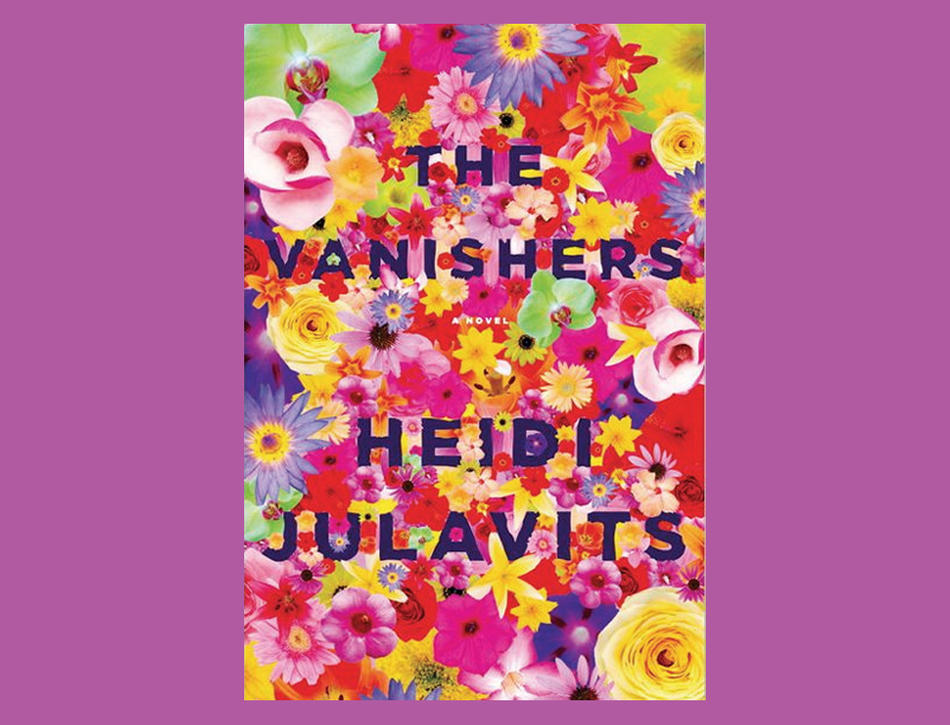
That girl is a ghost in my attic, a flickering outline of sensation whirring, not painlessly, at the edge of my vision. She existed briefly, grandly, and unhappily, a half-formed, transitional thing, and is most accessible through what detritus remains in her wake. The Urban Outfitters mini dresses and silk headbands have long since hit the donation bin and, shortly thereafter, presumably, the landfill. The tubes of lipstick dark as blood have disappeared. The hunger for attention from old men was mercifully outgrown in favor of proper dykedom. That sharp-elbowed ghoul read a lot of books, many of which have likewise fallen into the great sinkhole of discarded interests where, I imagine, exes and unswung kettlebells and stepped on cigarette packs marinate together in perpetuity. We forget so much, over and over, that once seemed important, so as to go forward. But I never forgot The Vanishers by Heidi Julavits. And in reading it again this month, I felt a communion with the inscrutable child I used to be which I can only call a haunting.
Julia Severn is a promising psychic. She’s studying at the Institute of Integrated Parapsychology, or “the Workshop”, a New Hampshire based grad school of sorts for the clairvoyant. Julavits wastes no time explaining the presence of real psychics in the realistic world of her novel. Magic is not a metaphor here, though it is at times, of course, a way through which to externalize emotional struggle. But Julia is a real psychic. That’s a fact. Her mother committed suicide when Julia was just a month old. That’s another fact. And on we go. The book balances a literary tone and more speculative themes with a casualness that makes the reading experience breezy and propulsive in a way I most associate with childhood days spent reading whole books in one go, pausing my page-turning only long enough to rearrange numb limbs.
The first of the book’s six parts introduces us to Julia, her school, and her enigmatic professor, Madame Ackerman. “We were all of us–the female initiates more than the male ones–in some form of love with her… And thus we tried, as girls in confused love with women will do, in every superficial way to mimic her. We were rapt apprentices of the twisted cowl neck, the peevish cuticle nibble, the messy, pencil-stabbed chignon.” This is, to me, the most pleasurable portion of the novel, and it clearly establishes, without great heaps of expositional scaffolding, identity, ego, jealousy, lust, and coded, subterranean communications between women as the story’s primary concerns. Miserable, horny psychics vying futilely to be the special favorite of their manic pixie dream bitch professor was catnip to me in 2012, and I found that I was no less charmed as I reread these pages and blushed, still, with self-recognition even from the safe distance of my thirties.
Madame Ackerman chooses Julia as her stenographer. The die is cast. Neither woman will emerge from the arrangement unscathed. In The Vanishers, psychics use a technique called regression to, essentially, time-travel while reclining on a couch. Unlike past-life regression, a fairly established pseudoscience (I use the term generously and without judgement; my partner is constantly horrified by what I am willing to believe could be real.) wherein one is guided backwards toward their own former selves, these psychics, if they’re powerful enough, may gallivant through any time, place, and life they choose. Unfortunately for Julia, however, Madame Ackerman is blocked. Or washed-up. Or a self-important, lying fraud. And the professor handles these frustrations with all the grace we might expect from the vain big fish in a teeny, cloistered pond. Tension mounts as she repeatedly fails to regress during their sessions. Julia, ever more edgy beneath the yoke of Madame Ackerman’s resentment, begins to take liberties at work. Leaving her boss to nap, Julia wanders the chilly house. She reads Madame Ackerman’s emails, studies the taut soup bowl of her concave stomach, and drinks from the bottles in her refrigerator. In a moment of unhinged indiscretion, Julia bends to touch the other woman. “I turned my head and put my mouth atop her mouth. To inhale her life force, I told myself. To thieve the last spark of vitality from her. I kissed her… Whatever she needed, whatever she possessed, I blocked it. I stole it.”
This physical transgression, Julia’s attempt to kiss or to kill or to subsume Madame Ackerman into her own being, comes immediately after a more fateful psychic transgression. Julia herself regresses to find information which Madame Ackerman was hired by a French academic to retrieve. Julia wakes Madame Ackerman and cheerily presents these findings as if the professor had succeeded. But the older psychic isn’t fooled. And she will have her revenge.
Or maybe not. We can never know how clearly we are being seen by another, nor how clearly we have seen them. Undoubtedly, we contaminate one another. Autumn dawns and there is a party, a party game. Madame Ackerman demands attention and Julia falls ill. Later, Julia will diagnose her mystery illness as the result of a psychic attack by Madame Ackerman, the heartthrob recast as a covetous hag.
Enfeebled both physically and psychically, Julia takes leave from school. She moves to Manhattan and gets a job pretending to answer a telephone in a showroom-cum-art installation. She meets the French academic who sought Madame Ackerman’s help with his work regarding a controversial performance artist dubbed “The Leni Riefenstahl of France”. Agreeing to work on this project, Julia ships off to first one and then another European psychic rehabilitation facility. These places are somewhere between a mental hospital and an expensive spa and are populated by both the paranormally infirm and clots of rich women recovering from plastic surgeries. As we drift away from Madame Ackerman and the Workshop, from the hot house of lust and treachery that any group of people living in close quarters can become, the book loses some of the frisson which so tantalizingly animates the opening scenes. This is not to say that these plot-dense segments of the book are uncompelling. They are undergirded by interesting ideas about feminism’s inherent matricide, and are often funny, but can feel like something of a deviation from the main event. Thus, when Julia comes face to face with Madame Ackerman again and learns that she, too, has been weathering psychic blows, and holds Julia responsible for them, the story’s puzzle pieces are electrified and jitter into place. Being around Madame Ackerman, wanting her, wanting to be her, wanting to be mothered by her, wanting to destroy her– these wolfish desires helped Julia as much as they harmed her. She was so alone. To slam up against the blazing lifeforce of Madame Ackerman, and to find herself a creature of no less fire power, made Julia sick. But she got better. And better.
Julia returns to New Hampshire the ambivalent conqueror. The psychic community is titillated by her alleged toppling of Madame Ackerman, as communities dependably are when disasters befall their exalted. Impressed and frightened, the leaders of the Workshop offer Julia a teaching position. She glides into the place vacated by this woman who, one puny year before, had been the sun in her solar system, replacing her professionally and socially almost overnight. The arrangement disorients Julia, torments her, the absence of pain calcifying into a new ache entirely, but she doesn’t stop. She pretends.
Once, back at the hospital, a colleague had looked at Julia, who did not begrudge her mother for her leaving, whose passivity was a kind of permissiveness, with disgusted awe. ““What does a woman have to do,” she said “to be classified by you as a monster?”” Julia had no answer.
In The Vanishers, living is an ailment which not even death can cure. Those of us without psychic abilities may take heart in eventual peace beyond the veil, but the fact remains that there is no escaping one’s self. “This is what being a person means, to be sickened by the illness known as you.” The notion could, maybe should, be depressing. I find it freeing. People I have known and people I have been exist forever in the cosmic marshland, and this presence has an impact. That stranger from the old world is me. We will transform ourselves and be transformed. But the past is only a regression away.