
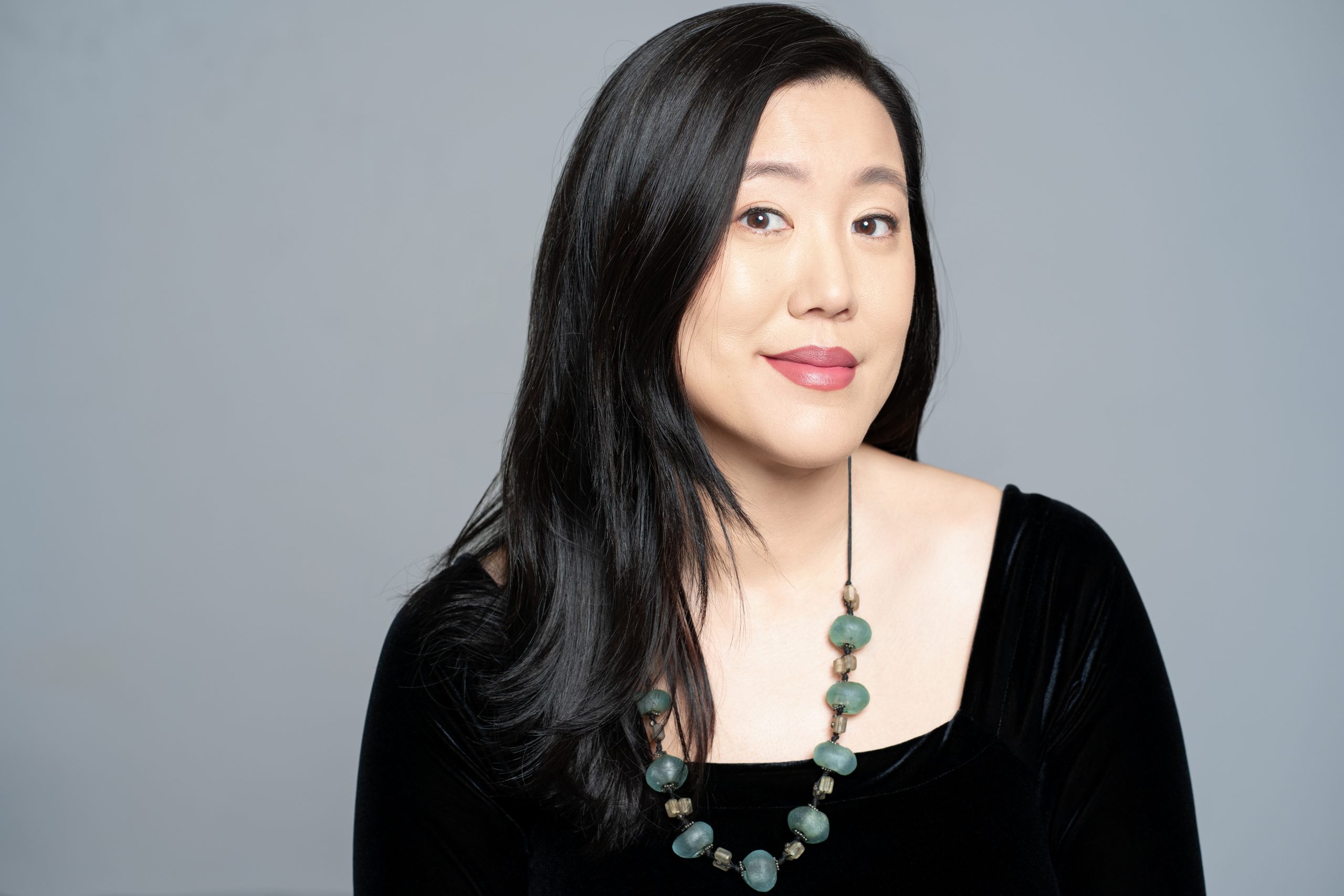
An adult child of immigrants becomes a doctor or lawyer and sends a portion of their paycheck home. The child is obedient and grateful, they never express the weight of familial obligation. The nuclear family gets bragging rights, so does the family overseas in the homeland. This is where a textbook immigrant success story would end. What happens to the high-achiever? Where do they put their learned ruthlessness, their appetite to succeed? Inheritance by Jane Park begins there.
The debut novel focuses on a Korean family in Crow Plains, Canada, and the cost of over-the-top sacrifice and honor. Anne is a tax lawyer in New York and Charles is the son who failed. This binary does not serve anyone. When the family patriarch dies, Anne returns to Canada to reunite with Charles and their mother, facing the Confucian values that strained the family.
My editor asked me to interview Park without knowing it was kismet. I am an immigrant, I was a tax lawyer. Like Anne, my parents decided I’d be a lawyer because I like to read. I shape-shifted to become everything I needed to succeed; yet after law school, I was surprised when I didn’t know who I was. The moments in between are underdeveloped memories, and Park offers gentle clarity: gradual and sudden loss of an ancestral language, incorporating new English words into sentences, teachers and friends who tried to nurture art and writing and self-identity. Of course, I was overjoyed to ask Park about her novel.
Park called me from her home in Calgary. On the phone, she talked about how Confucianism and Korean culture can imbue families with scripts they didn’t ask for. This interview has been edited for clarity and length.

The Rumpus: Let’s start with the cover of Inheritance. It features the eunjangdo, a Korean knife, which is a mystery that unfolds in the novel. What drew you to the eunjangdo?
Jane Park: In the mid-80s, I visited Korea and my cousin gave me a plastic replica of this [eunjangdo] as a gift. I asked what it was for, and he crumpled his hand into a fist, beat it into his chest, gave a pained expression, then smiled. Later, I found out that Korean noblewomen would wear this as a decorative accessory with their hanbok. What most Korean people I speak to say is that if the woman were ever raped, it was their duty to take this knife and die by suicide.
I’m obsessed with this knife. I actually don’t think I’m done writing about it yet. Because Korean culture is rooted in Confucianism, it is extremely shame-based—an individual’s shame is considered the family’s shame, and there is a big emphasis on saving face to preserve family honor. This may be a big factor why South Korea consistently ranks as having one of the highest rates of suicide among developed countries. What does it mean when killing of the self, rather than self-defense is considered the highest form of honor? This plays out symbolically in my novel, that the most virtuous thing you can do is deny yourself for the sake of preserving the family’s honor.
Rumpus: The heaviness of the eunjangdo is contrasted, on the cover, with an idyllic prairie landscape. Can you speak to the importance of this landscape to the novel?
Park: When you’re an immigrant in the 70s and the 80s and you don’t have [the] internet, and you finally arrive in Canada, it could feel like you’ve been plopped into the middle of nowhere. I grew up feeling that I came from the most boring place on earth, but after living in New York for over a decade, I realize what a privilege it was to come from here. I wanted to show my readers the beauty of the prairies. Maybe because there is so much farmland and grassland, the sky displays so much emotion.
To me, one of the most spectacular things to behold is a prairie thunderstorm. It’s so beautiful: suddenly, the sky turns black, you hear thunder, see cracks of lightning, then the sky unleashes its fury pounding water everywhere, then it all disappears, and the sun comes out.
Rumpus: That sounds magical to experience, and it reflects the emotions of the novel, too. I want to ask you about the opening scene. Anne shows the reader how her mother tells stories absent of emotion and resolutely with fact, starting with the death of Anne’s father. How did you decide to begin with this scene?
Park: This novel started as a stream-of-consciousness with me feeling possessed by a voice. It was 2006, and I hated where I was in life. Then, I heard this really unhappy tax lawyer [in my head]. I followed her voice and my opening scene was one of the first things I wrote. Her father has just died, her brother is in rehab, the mother doesn’t seem fully reliable, but neither does Anne. This is how the family first introduced themselves to me, and it took years to realize how they all got there. It’s like a thread that I was given and I kept following.
Rumpus: I love hearing how this novel started. Maybe I visited you when I was an unhappy tax lawyer—
(laughter)
Park: Complaining about your job!
Rumpus: Yes! Soon after the opening, a translator tells Anne about his experience with Koreans, saying, “I felt they were constantly saying one thing yet meaning another. I never fully understood what people actually meant, if their ‘no’ really meant no or was really a yes and that it was my responsibility to keep insisting.”
Park: Whenever I meet someone from Korea I am always wondering what they truly want because, going back to Confucianism, there is such an emphasis on preserving group harmony that I find people don’t express their needs or talk directly. There’s a great word in Korean called “nunchi” which literally translates to “eye-measure” and it means reading the room to figure out another’s mood and desires, which is so important when group needs, not the individual need, is paramount. I do get stressed in Korean settings because of how easy and quickly you can offend someone unknowingly.
Rumpus: Thanks for teaching me that term. It encompasses how Anne moves in the world! I relate to this, too, from growing up in an immigrant household. Can you share how Confucianism impacts Anne?
Park: Confucianism doesn’t really allow us to write our own stories because they’re given to us from our parents. “You’re going to be a lawyer because you like reading,” and you kind of accept it, and miss out on the chance to write your own story. The script is handed down to you, when deep down inside, it’s not the life you want.
Rumpus: Most of the characters don’t know what they want, at least until later. Charles knows earlier on what he wants. How did you explore his desire over the others?
Park: He adopts the Western way of valuing individuality and chasing after his dream. That doesn’t work in this family system. You have to listen to the patriarch, accept the script that is handed to you, and keep your head down.
I’m fascinated with the parable of the Prodigal Son; the clash between the younger son who rebels and the elder son who obeys and stays. Through Anne, I wanted to explore a sibling who fully takes up her Confucian duties and contrast that with Charles, who embraces Canadian and American values and attempts to write his own story. Obviously, Charles will cause a lot of friction.
Rumpus: This reminds me of the comic you posted on Instagram about the tension of Confucianism, specifically the group needs over the individual. It sounds like you knew this would be a dividing line within the family.
Park: I’ve been reflecting on what my book is about—a central tension is between a Confucian patriarch and his son who tries to assert his Western values.
It’s expected that we listen obediently to whatever our parents say. And the immigration experience adds another layer of guilt. When you see your parents struggle, and you work side-by-side with them, it’s hard to walk away and say “screw you, this is my life.” There are many familiar tropes I see in Korean immigrant kids and it’s heartbreaking. Even if you become a successful lawyer or doctor and everyone is proud, there’s a cost. Confucian family structures are about over-the-top sacrifice.
If you sacrifice, you’re virtuous—you’re noble; you’re thinking about the better good. But are you really? You could live your life sacrificing, but where does that get you? Or is this [an] outdated philosophy that needs to be changed?
Rumpus: Adult Anne is trying to figure out whether the sacrifice was worth it, but there’s no room in Confucianism for her individual reflection.
Park: She [Anne] has no idea of all the cultural baggage she’s born with. Couple that with being emotionally neglected during your childhood and you get a very stunted person. Also, many Koreans who immigrated during the 70s and the 80s froze in time with their Confucius values while South Koreans continued to modernize and innovate. I was told that kyopos [diasporic Koreans] were more traditional and old-fashioned because we never evolved and held fast to our parents’s 1970-80s morality.
Rumpus: You contrasted Anne’s experience with her friend, Meredith’s experience. The things that don’t weigh on Meredith because of her parents, her socioeconomic class, her physical chest of inherited treasures.
Park: If Anne is going to be the ideal, obedient, immigrant daughter, what’s the one thing that would piss her off? It would probably be a BFF who has a carefree attitude. Meredith has a lot going for her. She’s pretty, she’s rich. But the thing Anne really envies is how carefree Meredith is.
Rumpus: Yes! She hates Meredith, but she loves being near her.
Park: I think she’s fascinated with this other alternative to a childhood she knows she’ll never have. In the 80s, I used to watch a lot of sitcoms and for the most part, it was about happy, white families. After meeting Meredith, Anne realizes that families do live like this—
Rumpus: Families who eat dinner together!
Park: (laughter) And fathers who say, “Do whatever you want, follow your dreams!” She’s like, “W-T-F, this is real?” It’s more fascination and entertainment for her [Anne], like she’s watching a TV show that she knows she’ll never experience in her own life.
Rumpus: I loved her perspective, how she learned to have dinner with Meredith’s family.
Park: Eventually she becomes a part of that… present day Anne has dinner with [her boyfriend] Richard’s parents. She can play the part, but deep inside she’s always that immigrant kid with a chip on her shoulders.
Rumpus: Anne plays so many parts through observations. This is also how she starts to see her parents differently. She silently judges and criticizes them. For example, how her father carefully packaged groceries and handed receipts to customers with both of his hands. I see Asian Elders move like this and now it makes me want to cry, but as a kid I would’ve wanted them to stop.
Park: Yet, she can’t embarrass her parents. There are always different layers she has to filter through, unlike Meredith, her carefree friend, who can say whatever comes to her mind. Anne can’t. If she sees her father packaging like that, she has to wait until the customer leaves. Then, she has to phrase it in a way where he doesn’t feel humiliated or embarrassed. You don’t go from A to B. You go from A to B to C to D—all around a circular mental map to get to your point.
Rumpus: You show how all these layers build onto each other. It creates this loneliness within every character. You build layers of age, gender, socioeconomics, culture, filial piety, and more. If we focus on Anne, can you talk about how that loneliness evolves for her?
Park: She reminds me of a prize horse that’s been trained since a child to win at all costs, and now this drive has become her core identity. For present day Anne, there’s a learned ruthlessness that’s become central to who she is. She is unable to maintain her intimate relationships because she doesn’t know how to emotionally give or, tragically, to even understand its importance. She doesn’t really have friends. Her whole life, it’s all about achievement, not about relationships or building character and she carries this loneliness. There’s hope that she’ll change. But there’s also an understanding that she might revert back to her old ways.
Rumpus: Your choice to end on that note is special, too. It’s not the Western arc where a character is changed forever after visiting their hometown once.
Park: It ends with this hope that everybody’s headed towards a better place. I don’t think she [Anne] has ever lived her own life… so it’s very tragic that even though she’s finally giving herself that chance, she doesn’t know what she wants. The ending is purposely ambivalent yet hopeful. She’s not opening the door to sunshine, and firmly closing the door to her fully understood past. My book ends with an understanding that there is a door in that house that she can open.
Rumpus: And she’s accompanied by her mom asking if she’ll stop being sad.
(laughter)
Park: There’s no discussion about mental health. In Confucian cultures, if someone is mentally ill, it’s such a taboo, so you keep silent because you’ll not just out yourself, but you’ll embarrass the whole clan.
Also, with the mother’s direct and insensitive questions, I wanted to explore the ajumma, which is a middle-aged or older Korean woman who is often married. I’m now an ajumma. They’re the backbone of Korea. After the Korean War, South Korea was one of the poorest countries in the world. Now it’s become an economic and cultural powerhouse. The ajummas are the unsung heroes. They often raised kids as married single mothers while their husbands were out cavorting with their male coworkers, getting drunk at room salons. The ajummas strived to give their kids the best the world could offer despite their oftentimes impoverished upbringings. They expressed love pragmatically, through action. They also lacked a vocabulary for processing emotion and trauma, so there is a ruthlessness in how they communicate. I loved writing the mother’s dialogue because she’s always saying things where you’re just like, should I laugh or cry because that was mean but also funny?
Rumpus: Absolutely! What methods did you use to explore the mother’s perspective?
Park: I feel like these characters just came to me. There are two approaches to writing a novel. One is plotting and the other is “pantsing”—flying by the seat of your pants, where you sit in front of a computer screen and write whatever comes to your mind. I don’t want to sound woo-woo, but these characters came to me and I was like, “Oh, who are you?” That’s why it took so long [to write].
I’m harping on cliches I’ve heard in other writer interviews, but you end up really loving your characters. Even at their worst moments, you feel so much compassion for them. I remember when Charles’s life falls apart, I started sobbing at my desk because I didn’t want bad things to happen to him. But I couldn’t stop him either… he had to go through with his journey.
Rumpus: It was hard to watch him hurt people and be hurt in so many ways.
Park: And that’s life. When you have family members or friends that you love and they hurt you and you hurt them… I wanted to make this as lifelike as possible.
Rumpus: You succeeded, truly! I’m wondering how you stayed connected to the story and characters as you changed over the years.
Park: When I first wrote this, it was very stream-of-consciousness. My story had no plot. It was just dysfunctional people. There were also many multi-year stalls where I stopped working on it, but each time I returned, I could read it with fresh eyes. As I grew older, I had more life experiences that helped shape the plot. I became a mother and that really deepened my understanding of all the characters. In that sense, I changed a lot as a writer, and my novel changed for the better. These characters organically evolved over time and it became clearer who they were and what the conflicts were.
Rumpus: I’m sending my love to the characters of Crow Plains. Can you share what you’re most proud of in writing Inheritance?Park: I feel like this novel has had a two-decade gestation in my brain, even though there were many multi-year stalls. As a writer, when the book goes out into the world, you’ve raised your child to the best of your ability and now that child has to fend for themselves. I’m trying to create this detachment because it’s done. I am proud that I am presenting the best that I can write. I can no longer do revisions on it. This novel is complete. And just like a fretting mom, I’m hoping the world will receive this book with kindness.

Click here to subscribe today and leave your comment, or log in if you’re already a paid subscriber.