From our roof in Salfit, I look across the valley to Ariel Settlement, sitting on the other hill, a colony of one color: pale, uniform limestone. My father still calls that hill “our fields,” even though the fence cut them off before he was born. I balance a tin cup on the ledge and set my heel on the cool shadow it makes, shifting when the sun finds me again. I am home from school early because of another protest. My father had told me to stay away from the city square, so I watch from the roof instead. From somewhere down our hill, the chants roll like a tide toward Ariel’s fence, footsteps and voices swelling as if the whole town were sliding down the roads I can’t see. The echo climbs up the valley in waves, then falls back like water against a breakwall. I know what happens when the tide meets the wires—everyone here does. That’s why my father didn’t want me to go, so I keep my eyes on the valley instead. I don’t let myself imagine the Border Police (the Magav) soon lining those new roads behind the fence, the soldiers waiting for the crowds where the asphalt turns raw.
I am standing barefoot on the roof as if this is my watchtower. In my pocket there’s the short, blunt pruning knife Sido forgot on our kitchen shelf the winter before he died; the hinge is stiff with rusty wire wrapped around it. The houses across the valley are light cream and capped with red. In the sun, they flare as if the valley had been tiled in a single sweep. For a second I think about raising the knife and pointing it across the valley, not to threaten but to signal, and then my hand stays in my pocket.
Below the red roofs, a new strip of pale earth cuts across the hill where last year olive trees still stood. The fence has crawled lower, closer to our side, and from up here it looks like a fresh wound in the soil, new roads curling out from it like gray snakes between the houses. From far away—from right here—the houses and the roads look empty. Sometimes I think if I stare hard enough, the emptiness will break, and someone will step into view. I want it to break, but I’m afraid of what might come with it. That’s when I imagine a soldier lifting a scope, a rifle glinting, my stillness mistaken for something else.
I run my thumb along the knife’s nicked spine, the way my Sido used to test its dullness before trimming a branch. A pulse of heat rises in my chest, as if the dull blade still remembers where it cut. It makes my fingers tremble; I press harder, trying to tell myself I’m not scared, only waiting. But for what? I catch myself tracing the settlement’s fence line and the houses beyond it the way Sido once traced irrigation lines in the soil of our garden below, my eyes fixed on the far hill where everything seems paused. I don’t see people walking. I don’t see cars moving. Everything seems frozen. Even the shadows between the houses in Ariel look hard, like dark water that has turned to glass.
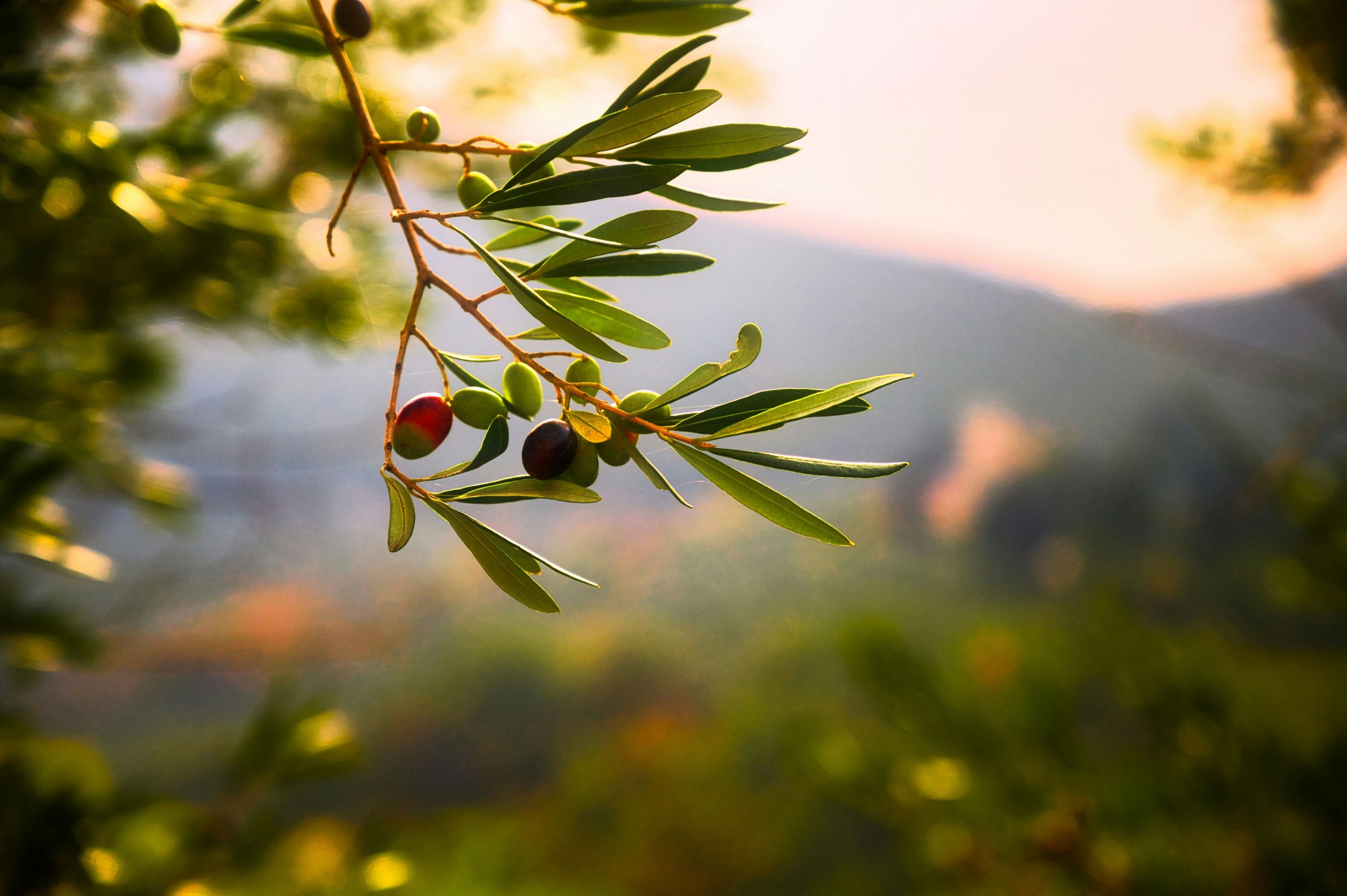
Our side of the hill is full of olive trees—the trunks, twisted and low, and the leaves, silver flashes when the wind hits them. When the sun is hot, the smell of crushed olives drifts up from the groves. On my way back from school I grabbed a leaf and shoved it in my pocket; now I rub it between my fingers until the green smears my skin; I lift it to my face, trying to catch the smell from my Sido’s. His hands always smelled like sap. He always said the same wind carried the scent of our own groves from Ariel’s hill. I close my eyes for a moment and breathe until the smell steadies me, pretending the wind can still cross the fence and reach us.
Near the settlement, the trees have been cut. The ground lies dry and pale. A fence cleaves between us, its thin metal poles topped by cameras that glint like insects’ eyes. Bright green sprinklers tick like a clock on a lawn just behind it, spraying arcs of water into the air even though no one is outside. Sometimes a jeep crawls along the road, or a soldier stands by the watchtower for a while before disappearing again. High above, a small drone hums in slow circles, moving as if it knows its path without anyone steering. The drone’s shadow scrapes over the fence like a hand wiping a line. I follow it with my finger in the air, tracing where the metal slices the hill. A torn plastic bag has been caught on the wire for days; it flutters a little when the wind comes, then hangs limp again. I imagine grabbing that bag, tearing it free, throwing it back across—then my arm drops to my side. In my head it’s the last thing left that can cross the fence and reach where my grandfather’s trees used to live.
The heat presses against me. Dust rises from the path below our house when anything moves, and I can smell it—a warm, chalky scent mixed with weeds and wild thyme growing between stones. If I press my hand to the low wall of our roof, the stone burns my palm. Across the valley there’s no dust at all; the air looks scrubbed and still. I hold my breath for a moment, as if my stillness might match the settlement’s. Sometimes a piece of glass catches the sun and flashes once, like a signal from a hidden life, then goes dark again. Every few days new walls appear on the edge of the hill, pale and raw, like new teeth waiting to bite into the earth. Sometimes a bulldozer crawls along a dirt track, its blade moving even though no driver is visible from here, and it feels like the machines work by themselves. I wonder if they’re digging up the last roots of my Sido’s trees. I look down at my palm; there’s a thin white scar from when he taught me to trim suckers from the base, “not too deep,” he said, “let the tree keep its voice.” I press my thumb to the scar, as if to feel his voice again. For a moment it’s like pressing a bruise that isn’t mine but still hurts. When I lift my eyes again, beyond the rooftops, a strip of bright green grass stretches like a carpet under the sprinklers, a thin line of color fed by water we no longer have access to, a first sign of life.
There are other small signs that should prove real people must live there—a shirt hanging from a balcony, a normal white car parked under a pine tree, a plastic slide near a building that might be a school or a hospital. Once I saw a dog on a balcony. It looked like it was barking but I couldn’t hear it; its head jerked up and down, like it existed in a silent movie. Another time, a thin gray ribbon of smoke rose from a chimney into the hot sky, curling and uncurling like a shy hand that wanted to wave, and I wondered who was behind it and what they were making for dinner, and if the fire under their pot was fed with wood from one of my Sido’s trees. I caught myself imagining the smell, trying to build a kitchen in my head on the other hill. But from here all of these things sit behind the fence and the cameras, looking as small and fragile as toys—like precious pieces on a board, hemmed in by the wires, the watchtowers, the soldiers, the gates, the jeeps, and the houses that surround them. Sometimes I can’t tell whether these glimpses of life are held in or kept safe.
And above everything—our hill and theirs—stretches the ancient sky, pale blue at noon and deeper at the edge. Clouds move across our side but seem to stop before they reach Ariel. I watch them hesitate, like they’ve hit an invisible ceiling. By late afternoon the light turns orange and the red roofs glow darker, but the place still looks silent. When the muezzin calls from the mosque across our house, the sound travels across the valley and seems to fade before it reaches the other hill—no echo, just a thread thrown across that never gets caught. I whisper “Allah Yarham Sido” and the wind lifts it for a moment, as if it were carrying my voice to the trees—but only the fence, the cameras, the drones, and the buildings stand to catch it.
The tiles under my bare feet burn hot, and the railing leaves a powder of stone on my fingers when I lean on it. A neighbor boils coffee below and I catch a faint cardamom scent between gusts of air. The wind brings the sound of birds and I stay a little longer, watching for any sign from across the fence—but there is only silence. The fence glints once like a blade and then goes still. I curl my toes against the heat and hold my gaze on the other hill, refusing to blink first.
The settlement looks new, but also like it has always been there. Close, yet very far away. Sometimes I think a blink might make it vanish, but when my eyes open again, it is still there, big and bright and heavy on the other hill, watching me back through the heat of July—watching from the ground where Sido planted trees, the hill my father still calls ours.
Somewhere behind me the crowd still moves, a low roar rolling toward the other hill. I know I will stand here again tomorrow, and the day after, counting fences and roofs as the valley between us fills with more fences, cameras, buildings, watchtowers, soldiers, jeeps, bulldozers, slides, dogs, smoke, real people, until the wounded earth beneath it all cries out for the hands that planted the trees that once grew there—until it remembers the bodies that will fall today and tomorrow and the day after, refusing to close over the roots and bodies still bleeding beneath it.