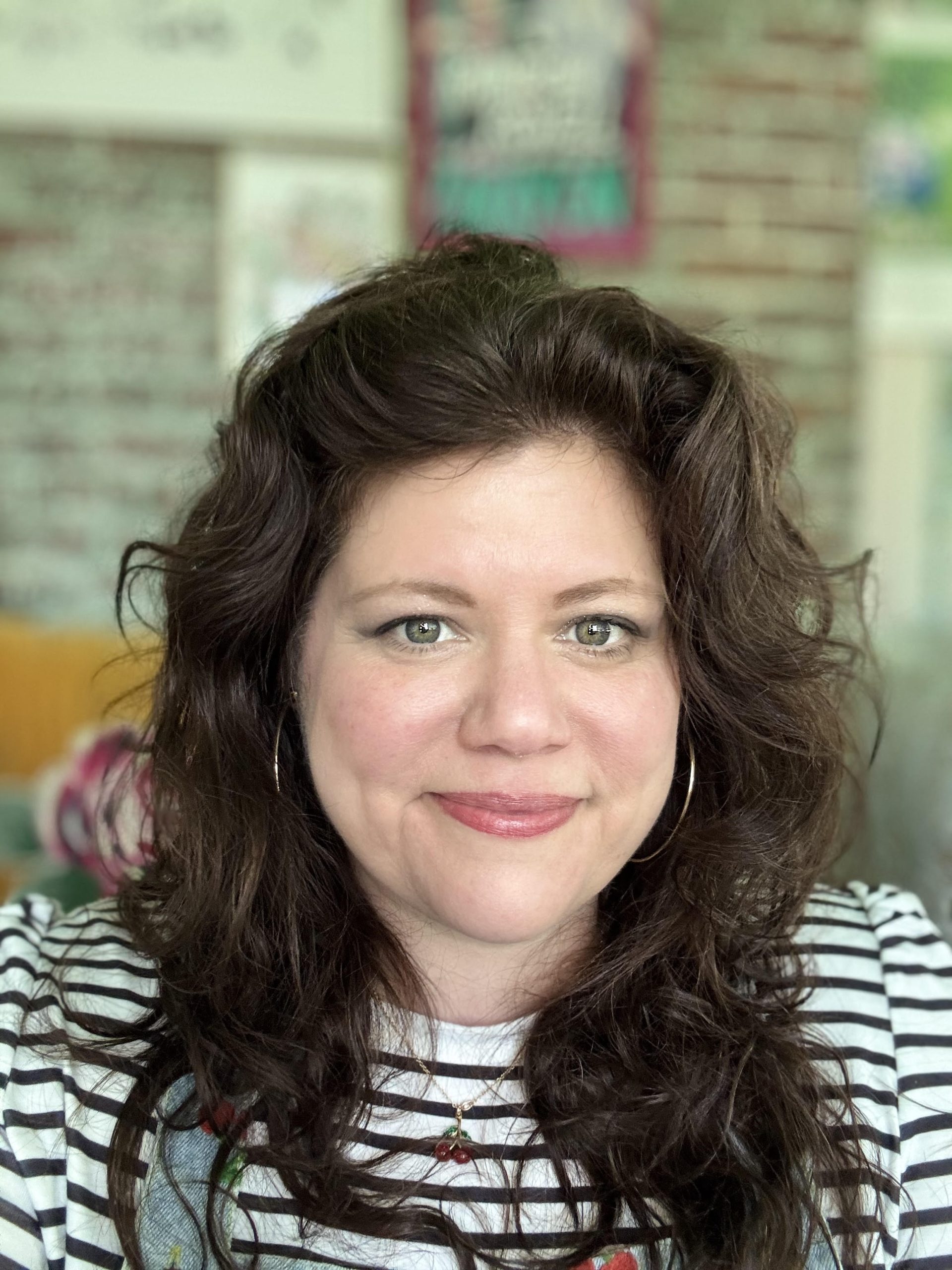
Rainbow Rowell writes a lot of things—comic books, graphic novels, fantasy stories with a distinct Drarry undertone (yeah, Harry Potter and Draco Malfoy kiss in certain corners of the internet)—but she doesn’t write “romance.” At least, not in the traditional sense.
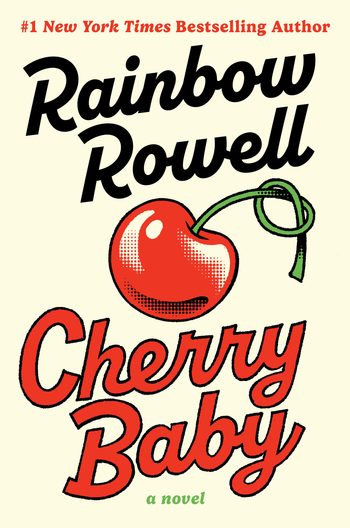
In her newest book, Cherry Baby, Rowell returns once again to Omaha, Nebraska, where vintage dress-loving and reluctant dog-owner Cherry is in the middle of divorcing her husband, Tom. Unfortunately for her, Tom is the creator of the most famous webcomic-now-turned-movie in the world, and the character he based on her has made it impossible for Cherry not to get recognized wherever she goes. Cherry Baby is a commentary on art in the modern age, what it means to borrow inspiration from the lives of other people, and how we can never entirely shed the skin of who we used to be, no matter how much we wish we could.
But it’s still a love story. In a discussion over Zoom, we broke down Rowell’s appreciation of fanfiction, her tendency to deconstruct pesky little things like genre, and why she’s still committed to telling real stories about real people—especially when it feels like a risk.
The Rumpus: Cherry Baby feels like your most contemporary romance yet. You’ve worked with plot points lots of us are discussing at present, like the morality behind weight loss drugs and how we put other people into art and content we create. Why did you decide to go in this more “in-the-moment” direction?
Rainbow Rowell: I got very tuned into the news about GLP-1s earlier than most people around me, so I found myself being kind of like a fortune teller, you know? Telling people, “The whole world’s going to change! Please listen to me!”
At one point I told myself I couldn’t think about them because I am a fat person, so of course I’m thinking all the time about taking these drugs. I was so weighed down, telling myself I couldn’t think about them. And I think that’s when I wrote a lot of this book. The book is not about weight loss drugs. But it takes place in a world where the drugs exist. Because of that—I often write plus size characters, but I usually don’t make that “the thing.”
Rumpus: It’s why I think your works are so refreshing—because weight is just a neutral fact about a lot of the people you write.
Rowell: That’s exactly right. It’s just a thing about them. It is more foregrounded in this book because Cherry is a fat person who has made peace with her weight and now has to question that peace which is where a lot of us are.
As the book opens, Cherry’s in the process of getting a divorce from her husband, who’s written a famous web comic. And he’s accidentally made her famous because there’s a character in the comic named Baby who looks so much like Cherry that pretty much everyone in her hometown knows and sees her at the grocery store points and says, “It’s Baby!”
So Cherry’s in the process of losing her husband, but even though he’s gone, she has to live in the world that he has wrought for her, where she’s the most famous fat person in the world because of this cartoon character. And because he has made the cartoon character fat to reflect that she is also fat, she feels like her life is a fat joke.
Rumpus: It’s this interesting exploration of being visible in the world—Cherry is both someone who’s not only fat in a world that prioritizes thinness but also a person who’s the real-life inspiration for this incredibly important moment in pop culture. But neither of those are really her complete self.
Rowell: And honestly, neither of those are her biggest problems.
Rumpus: It’s another reason she’s so compelling. Cherry feels so specific. What’s your process for writing a character that feels deeply relatable to people from lots of different angles?
Rowell: The more specific you make the character, I think the more real the character feels. It’s a compliment to me when someone says, “This doesn’t feel like a book character—this feels like someone I would know.”
Rumpus: You’ve talked before about how in your writing, bits of your life will show up in whatever you’re crafting. How do you decide which parts of your life get on the page?
Rowell: One of the things that made it into the book is the question of, “How much of other people am I allowed to write about?” Cherry’s drama is that her husband has used her for his art. And he hasn’t done it with a plan or manipulatively. He’s just an artist making art from his life. I don’t think you can be an artist without stealing from your own life and from the people in your life.
I always have this feeling that I’m exposing and betraying people, even as I’m trying to sort of bury them in fiction. I’m taking from my life, but my life touches my husband’s life, and my kids’ lives, and my mom’s life. I think fiction lets you do that maybe a little more kindly than nonfiction—maybe I want to think it’s more kindly.
Rumpus: I think you have at least leeway with the truth when it comes to fiction.
Rowell: There’s more set dressing, right? A few friends have read this book and been very mad at Tom for using Cherry in his work. And as they’re yelling at me about it, I’m thinking, “That’s me. I’m the Tom. I’m the one who steals from everyone.” I’ve probably stolen from the person who’s yelling at me.
Rumpus: Are those friends artists themselves?
Rowell: No. I think maybe they got lost in the fiction of it and didn’t see that I was so clearly dealing with my own issues.
I’ve asked my husband to stop reading my books. He used to make a real effort to read them and give me some encouragement. But a couple books back, I said, “I know you’re going to recognize us in some of these scenes. And I don’t want you to think that I’m drawing the same conclusions as the character because I’m taking it out of myself and giving it to the character.”
Rumpus: Does it ever get lonely writing these deeply human, deeply personal stories that you’ve asked some of the people closest to you not to engage with?
Rowell: My husband’s the only person I’ve asked not to. I write a lot of love stories and relationships, and there’s no way I’m not going to be cutting and picketing little things or feelings or experiences. He’s probably the person who is going to take the most collateral damage. The other people I think most about are my kids.
As far as feeling lonely, it’s more like I feel in their debt. I’m making their lives a little harder. If I had a different job, this would not be a concern. I’m writing really emotional stuff. I’m grateful that they are so generous. I don’t think anyone in my house has ever said to me, “Don’t put that in a book.” I say that all the time to friends of mine who are authors.
Rumpus: Do you say that in the moment as something’s happening?
Rowell: Yeah—I’ll say, “Don’t use this in your books.” Authors are like—what do you call it— things that just devour things.
Rumpus: That’s a very deep sense of self-awareness. For good or bad, do you feel like that awareness has evolved as you’ve developed your craft?
Rowell: I was a newspaper columnist, and I’ll bet it started there. I had to consciously choose not to write about certain things. But people are less concerned about the book. There’s something about fiction, where sometimes you steal from people and they don’t recognize themselves and you kind of can’t believe it.
Rumpus: Has that ever happened to you?
Rowell: Recently, an old friend gave me a bunch of letters I’d written to them when I was in high school. And it was fascinating to me how I couldn’t remember most of the memories that were in those letters. It’s so similar in books. Sometimes I think when I put experiences in the book, did I then lose them,because I don’t have them now. They’re in the book, but I don’t have them anymore. And only by reading the book do I remember.
Rumpus: Is it so much a feeling of loss or is it a feeling of, “I’ve put these here for safekeeping?”
Rowell: No, I think it’s a feeling of loss. I think it’s a feeling of, “You can’t keep every memory.” And so your brain is constantly sorting through and throwing things out. And it’s strange to think, “Wow, I can’t believe my brain threw that away. That seems like an important detail.”
Rumpus: This is a theme that appears in a lot of your books. Landline (St. Martin’s Griffin, 2015), Slow Dance (William Morrow, 2025), and Cherry Baby have you writing about the same characters years apart. What’s compelling to you about that?
Rowell: One reason I do that is I’m married to someone who I met in junior high. I mean, we didn’t date until after we got out of college, but when you’ve known someone that long, you have this pathway. If you think of your oldest friends, your story really starts long before your story starts. I’m interested in relationships like that and how they change—how you have several relationships with the same person.
I also still live in Omaha. I never left the place where I grew up. I have some of the same friends who I have known all along. More than most people, I’m surrounded by people who I go way back with. And I do think that makes me more interested in long-term relationships.
Rumpus: You kind of return to this idea of a “second chance” romance. But, I don’t know—would you classify Cherry Baby as a second chance?
Rowell: I don’t think I’m ever writing “romances.” But I am writing something very adjacent to it. What I write gets called “romance” a lot, but I think romance readers don’t necessarily buy it. Slow Dance has a very similar beginning to Cherry Baby structurally. And I sort of thought, “What if I wrote this as if it’s a second chance romance, and the first two chapters are going to be every trope? And then how can I split it apart and break it open and turn it inside out by the end of the book?” That was one of the goals I had—the story is one thing and then I break it as much as possible.
Rumpus: Tropes become the easiest way to sell a narrative; it’s how you guarantee readers and oftentimes people don’t necessarily care about the setting or the characters—they’re coming for the tropes. Choosing to subvert that feels like a little bit of a risk.
Rowell: It’s a certain way of reading when you’re reading for tropes. And I’m a big fan fiction reader—
Rumpus: Big same, actually.
Rowell: —and so I can see how it’s a similar vibe in fanfiction. Some people just want certain kinds of stories, where you’re like, “I’m in the mood for comfort.” It’s more of a reading for reassurance, and I’m not that kind of reader.
When I was a kid, I loved taking things apart, seeing what things are made of. So with a story, I’m always looking for ways that I can take it apart. I take something that I’ve watched a million times and do it differently. How many left turns can I make? Is it still romantic? And are you, the reader, still along for the ride?
This book was a real challenge because it has a very unusual structure. There will probably be a lot of people who don’t like it and I won’t blame them. But for me, that was really fun to write and hard to write and interesting to write. I hope it’s interesting to read, but I know it’s a little bit strange.
Rumpus: That also feels like a fanfic thing. Part of fanfic is tropes, but the other part is about taking characters that are very familiar and then putting them in situations or scenarios that make the reader go, “What have you done?”
Rowell: Yes! For me, it’s not the tropes that make me want to read fanfiction. It’s fantastic writers who don’t have to follow the rules of standard publishing and can do whatever they want.
Rumpus: How do you term what you’re writing, then? Do you have a bucket that you feel better about putting yourself into? Or do you feel it’s kind of extended beyond the constraints of genre?
Rowell: I don’t know. I don’t have a bucket and I wish I did—what I really need is a shelf. It’s a problem for me because I’m not writing in one genre. I’m not writing for one audience. I’m not writing in one media. I’m just, like, all over the bookstore.
Rumpus: Do you still consider it a problem, though, as you’ve gotten further in your career?
Rowell: It’s not a challenge for the people who like my books, but my readers can’t always follow me. There are people who like my contemporary stuff who don’t want to read fantasy or comic books. There’s always a feeling that I’m leaving people behind who I don’t really want to leave and that I’m having to win over new people. It’s this feeling of having clothes that never quite fit.
Rumpus: How does that apply to sex in your books? Cherry Baby is your most “open door” story so far. It’s not that you haven’t written sex before. You’ve had it in a lot of your books. But this felt markedly different.
Rowell: If you’re in a relationship, the growth of your relationship doesn’t stop when you’re having sex. Actually, a lot happens when you’re having sex. With this book, it really made sense because Cherry is in her body all the time. There’s something so vulnerable for her about taking her clothes off for someone who’s never seen her before versus someone who’s seen her a thousand times.
Rumpus: One of the things that remains a constant for you is Omaha, Nebraska. What purpose did that setting serve for this particular book?
Rowell: North America’s biggest railroad is still located here in Omaha. Cherry’s the head marketing person for the railroad, and it was fun giving her a job that’s very important, but still having her be in Omaha. I worked in advertising and did work for the railroad myself, and it kind of just gave me a setting I hadn’t played with much. I wish I had had more jobs before writing books. I’ve already plowed through them.
Rumpus: What other jobs would you have wanted?
Rowell: Oh, I would’ve been a Disney Imagineer. I would love to do it even now.
Rumpus: Now a one-off, kind of selfish question—as someone who enjoys the “Rainbow Rowell extended universe,” can I get confirmation on the cameos at the Goldenrod concert in the early chapters? Is it Park and Beth?
Rowell: God, it totally could be—I wasn’t thinking that.
Rumpus: It was just fun to get to say, “I think I’ve met these people before.”
Rowell: I think it’s fun when it’s not distracting, so that only the right people notice.
Rumpus: You can stay with the people in the current book while knowing the other characters are in good hands. It’s like, “They went to a safe and loving home.”
Rowell: Yes, it’s like that.
Rumpus: Now that you’re well into your writing career, what’s the biggest difference in your process from when you were starting to now?
Rowell: The difference is I know I can pull it off. At the beginning, you’re not even sure you can finish a book. And you don’t know that you can write a book people will want to read or care about. And now I know I can get to the other side of the book, but you’re more afraid of losing what you have. Sometimes I’ll look back at the early books and think, “This language is so beautiful. I don’t think I can write as beautifully anymore.” Or if I do write something that’s beautiful, I think, “Gosh, I can’t believe I still wrote that.” And once you’ve won a couple people over, I am so afraid of losing them. I like to take risks but then I actually don’t like to disappoint people.
Rumpus: How do you maintain the courage needed to keep taking those risks?
Rowell: I tell myself that my biggest successes are—and this is true—the books that I took the hardest left turns with. So when I’m doing something big and scary, I try to tell myself, “In the past, the only time anything good has happened is when you took a risk.”