It’s a given now that the five stages of grief don’t really exist. Or maybe they exist, but not in the linear fashion in which they’ve been marketed for years. Often, grief is much wider of a force, much less predictable. It stretches and constricts and then balloons again, larger than before, larger than ever, and swallows you, only to spit you back up as a different person in a new form. And that cycle, the swallowing and the emerging, continues over and over again.
Eleanor, the protagonist in Kim Fu’s latest novel, The Valley of Vengeful Ghosts, is caught in the cycle after her mother dies. Hastily, Eleanor purchased a home with the money her mother left her, and is forced to reckon not only with the death of a person but also with a new state of being. Eleanor believes that a new home, a new environment will be what saves her, when it only engulfs her–first financially and then spiritually. I mentioned to Fu how this novel reminded me of Russian dolls: Eleanor, a broken woman, moves into a decomposing home which sits inside of a decomposing environment. Unending rainstorms cause her new home to deteriorate slowly at first, and then quickly, mirroring the internal calamity that is grief. We try to move on; we move out, only to be consumed by waves of memory, presence and hurt.
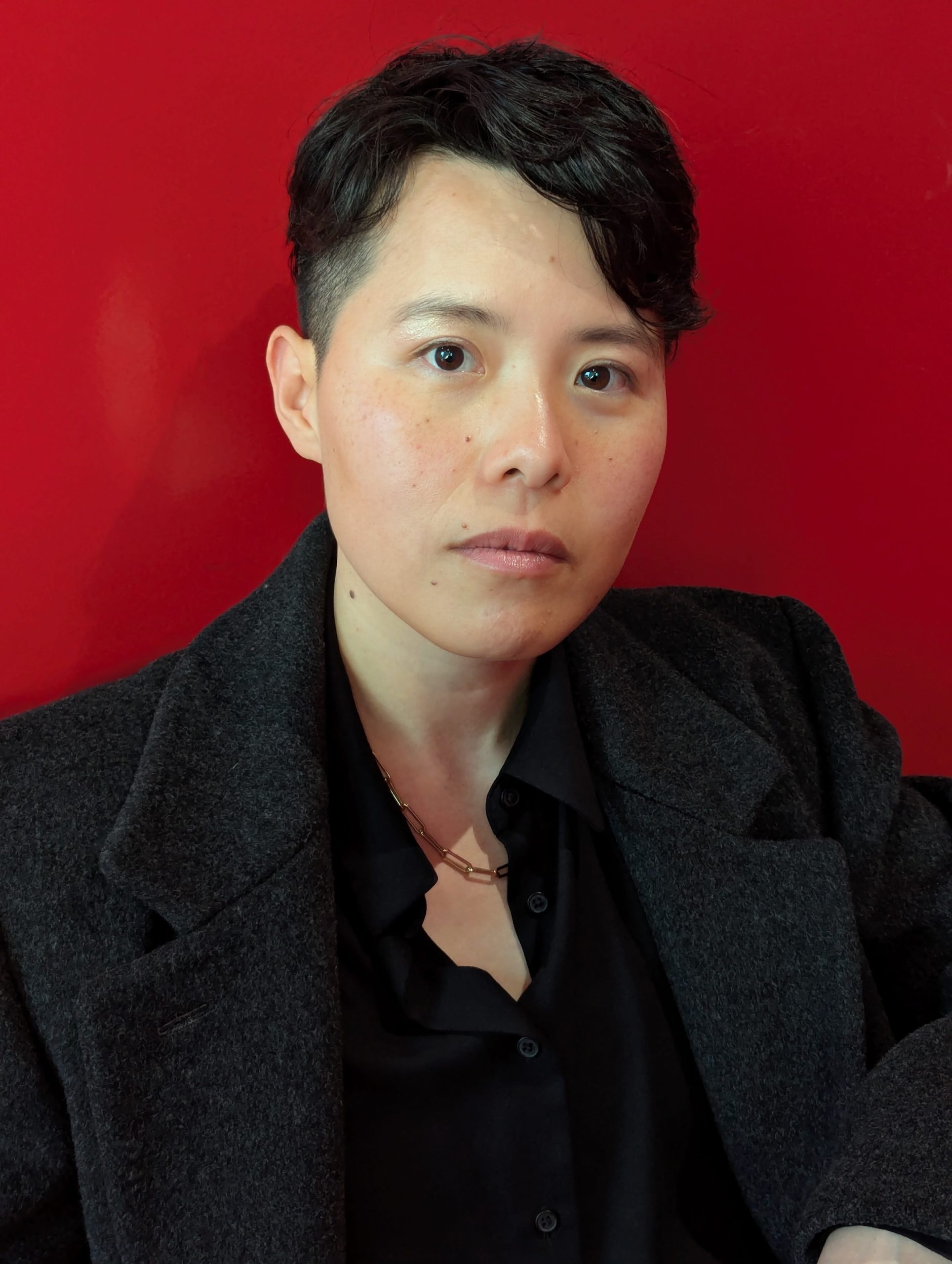
Fu and I talked over video for an hour. We discussed writing place as a feeling, rather than as an assemblage of physical structures and how Eleanor’s own cycle of making and unmaking leans on familiar creation myths. This interview has been edited for clarity.
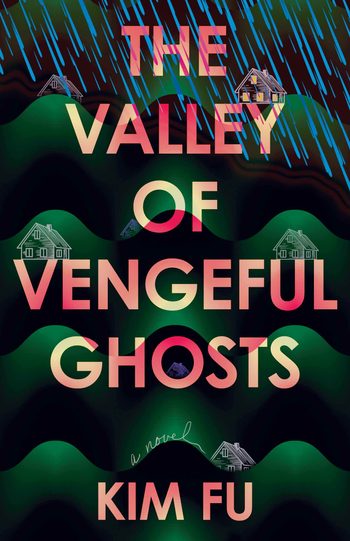
The Rumpus: Eleanor is a licensed therapist who previously worked in an office, but has since moved to providing therapy online. I have my own theories about why you chose this particular profession for the protagonist, but I’d love to hear from you.
Kim Fu: Her interactions with her clients offer a chance to explore some of the same themes of loneliness and coping from different directions. Her clients are living under the same conditions and experiencing the same systemic problems as she is but it’s manifesting differently for them
then it is for her. They are coping in different ways; they are entangled in different kinds of relationships.
There is also something particularly eerie and surreal about video calls and especially ones that are supposed to be intimate, where a relationship and deep connection is important. It’s like you’re living in a different reality if you’re only interacting with people in this mediated, two-dimensional way. A few people have been making horror in this space—there is something unreal and inherently frightening about it. It feels unnatural and difficult for our brains to process.
Rumpus: You are commenting, maybe, around the wider societal shift of easily consumable, commodified care, rather than therapy being an imperfect, often dynamic experience.
Fu: Yes. One of Eleanor’s clients is very isolated and has a child and the only people in that person’s life are people she pays. There is the impression that you can pay for childcare and pay for therapy and you’re supposed to do everything by yourself. These animized services, that are also increasingly run by big third party tech companies and platforms, make everything seem even more commodified and isolated. Today, it’s uncomfortable to ask someone to drive you to the airport—we live very expensive, isolated lives without community and I feel like digital therapy is a strong example of a larger problem.
Rumpus: There are such detailed descriptions of what goes into a home being built, but also what occurs when homes are destroyed or decomposing. You write, when the water damage from a neverending rain is worsening, “The paint around the leaking windows had bubbled, the outer layer sagging like the skin of a popped blister.” What kind of research went into this novel?
Fu: Writing the way the home decomposed, fell apart and revealed its shoddy workmanship was quite easy. In 2022, there were windstorms that came through Seattle and revealed how shoddily my home was built. It flooded over and over again from multiple vectors—there was water coming in through doors and windows, piping burst and took out the ceiling and then the water heater exploded. There were a lot of visceral details I had access to, especially the slow decomposition from water.
As far as Eleanor’s job, my undergraduate degree is in psychology. There are also therapists who talk about online therapy platforms and their experience with the backend and concerns they have about it.
I also read reports about flyby night house builders and contractors and the mechanisms by which they manage to build these shoddy builds and then disappear. It’s common for them to form LLCs for projects that they then dissolve and no one can be held liable. Even though there are state laws against warranties, none of that means anything if you can’t find anyone. In particular, there was reporting around Philadelphia where a lot of housing had shared foundation slabs. Developers would want to buy out all the houses on the slab, but if some people refused, they would just start doing work on another part of the slab and it would slowly destroy these peoples’ homes. The development would upset the foundation of the neighboring homes and the residents would have no choice but to sell to the developers.
Rumpus: How do you feel about research in general when starting a project?
Fu: I find that overresearching gets me in trouble sometimes. I can get overly fixated on some mechanics and details and then my creative interest in a project will die. It works better for me in the other direction—I try something out that feels intuitively correct and then fill in the gaps later with research and details. I feel like taking an imaginative first pass that feels real and true is key.
Rumpus: There is a constant thread throughout the novel of doubles, dualities, reality versus dream—even the home that Eleanor is living in is facing a mirror of itself. For you, how do these dualities shape Eleanor’s understanding of herself?
Fu: Eleanor, like me, thinks a lot about the ways things could have been or the ways things could be. She’s living in both her reality and in a fantasy. I also think that this is useful from a writing and reader relationship perspective—the reader is also thinking about the ways things could be and I am acknowledging those possibilities while winnowing down to what is happening in the story.
I also think it’s good for emotional texture—if the reality of the story is relentlessly grim, then fantasy and possibility and these alternative realities offer a different emotional texture for the reader. It’s difficult to stay locked in a relentlessly grim place forever as a reader.
Also, doubling is inherently scary. There’s something unnatural about that—there’s never exact duplicates of things in nature and seeing that is unsettling to our animal brains.
Rumpus: Was there a particular duality that felt most compelling to you? Why?
Fu: I’ve noticed in a lot of narratives at the bottom of the second act, there’s a moment where everything could be solved—where a solution to the problem is offered that then gets yanked away. Even though this is a common feature of a narrative, it always gets me emotionally.
In Edith Wharton novels, when someone is in a financial tailspin, there’s always someone in the second act who offers them a job and the character says no out of pride and things get worse. But this fantasy of the happy ending is like a ghost to the story. Reading a story and feeling these happier alternatives is emotionally powerful to me. I am telling two stories—the story itself and then what could have been. It functions almost like a shadow duality.
Rumpus: I like to think of this novel as a set of Russian dolls—a destroyed woman surrounded by different layers of destruction–social, psychological, environmental. How do you navigate writing about environmental anxiety without overwhelming the reader or yourself?
Fu: By keeping it so close to Eleanor. It is difficult and overwhelming to think about what’s happening to the whole world at scale and the forces that are at play. But telling the story of one person and the points at which they are interacting with these systems and disasters is, I believe, the domain of fiction. I think there are other formats in which to talk about the larger forces of the whole world. Fiction garners emotional access to this experience.
Rumpus: What role do you think fiction, in general, plays in helping readers process their own environmental anxiety?
Fu: I wanted this novel to make people feel less alone. Eleanor is an extreme character with extreme flaws. Relatability has never been something I’ve been concerned with before, but with this book, I wanted to say: “You’re not alone in feeling this way, in feeling this overwhelm and this dread. The odds are so stacked against us.” That is something that fiction can do.
Rumpus: Where did that shift come from? The emphasis on having a relatable character?
Fu: I think the world seems very lonely to me right now. People seem isolated in general—we are losing community, our emotional and social needs are being poorly met by the Internet. I want my writing to be more connective. Fiction is a connective medium—it is a thing that writer and reader do together. The reader makes this shared reality in their head based on the words you use to prompt them. I’ve found myself more interested in engaging with this interrelation.
Rumpus: The protagonist, Eleanor, is complexified through multiple narrative techniques, but also through the male characters present in the novel. Each one’s presence or memory changes her behavior, influences her thought process. I’m thinking about the locksmith, Richie, who hulks around downstairs, or her client, David, who suffers from climate anxiety. When you were developing Eleanor, how conscious were you of using these male characters as mirrors or pressures that shape her interior life?
Fu: For one of my earlier novels, someone said to me that all the male characters seemed auxiliary to the female characters and I remember thinking, “Yeah, that’s fine.” That didn’t bother me. With Eleanor, there are a lot of necessarily terrible men around her from both a plot and thematic perspective. I also am writing from my experience of life under patriarchy and attempting to depict the world accurately in that way.
For this novel, though, I wanted to make it more complex. I wanted there to be men who serve a more complicated role in her life, who are going through their own lives offscreen—I realized that was important to me as a whole. There are a lot of minor characters who are their own protagonists in their own stories who intersect with Eleanor tangentially. She’s a minor character in their story too. And that became important in thinking that everyone she encounters is having this big, off-page life. There was a point where I didn’t want the book to be populated with villains, and there were specific changes I made to make certain characters more complicated.
For example, Kurt, the contractor, changed a lot over the course of writing. He’s motivated by his own best interest, as any person is, but that doesn’t make him a bad person. It doesn’t make him cruel or selfish or out to get her. He is just a whole person looking out for himself.
Rumpus: We’ve discussed environmental anxiety, but there also is a narrative technique of utilizing the environment as characterization, essentially, who Eleanor is in relation to her surroundings. Did Eleanor’s character shape the environment, or did the environment shape her as you were writing—what came first for you?
Fu: They are intricately tied together. This book is rooted in the Pacific Northwest landscape. The specific setting itself is never named, but the landscape is obviously recognizable as being in this region. As a landscape, it is surreal and dangerous in particular ways and it has an atmosphere and a mood that can get under your skin. It can be beautiful and powerful and feel like this huge force that is affecting your life that is different from being a human in a human environment that is controllable. Nature is uncontrollable.
I grew up in Vancouver and lived in Seattle for thirteen years and I do find the landscape dynamic and dramatic and narratively interesting. I like not naming it, too, at the same time. I like being able to write the way it feels, or even the way it feels in a dream, like the nightmare logic of this landscape without being locked into street names and landmarks and highways and towns. It built all of these characters. It feels like a grand force in the novel.
Rumpus: Many of the scenes with Lele, Eleanor’s mother, take place as flashbacks. Was this a constraint that you set for yourself? Were there any other narrative constraints you had when you embarked on this novel?
Fu: My previous book was a short story collection and I was starting to believe that I’m constitutionally a short story writer, which is strange to say because I’ve written three novels. My brain works like a short story writer, and I was interested in the idea of a novel that felt like a short story.
A short story is always forward-moving because of the lack of space—it requires momentum and concision. The author is not allowed to tentacle out in all directions in the way you can in a
novel. In a novel there is also the expectation of knowing characters’ entire lives deeply and I was interested in challenging that notion.
I believe there are a lot of things in Eleanor’s life that are not addressed in this novel. The novel is sticking very closely to one incident in her life in a one-shot way: we don’t know anything about her father, we know very little about her childhood. There are all these parts of her life that are absent because we are locked tightly into one timeline. I wanted any deviation from the linear timeframe to feel important. With the flashbacks, I had to restrain myself. There are things that could have been there or things that I knew off the page, but I didn’t want to drift too far.
Rumpus: Lele continues to visit Eleanor, as a presence, even after she’s died, a kind of ghost haunting her. What role does Lele’s presence after-death play in revealing Eleanor’s emotional or psychological state?
Fu: Eleanor was so accustomed to doing what her mother told her that her absence has become unbearable. Both real people and fictional characters exist across time and Lele’s ghost/presence is every person she’s been over the course of her life jumbled into one. All of Eleanor’s fears and anxieties and projections are packed into this one presence, and this presence can be menacing and frightening and unexpected because Eleanor is unsure which version of Lele she is getting.
Eleanor tells herself at the beginning that Lele’s presence is just a projection of her mind, but that’s frightening too. It means that all of these projections are her own thoughts manifesting in this way, and it’s also profoundly lonely. It’s a projection of her psychology and a projection of their entire dynamic across time packed into one vision. I hope it’s scary!
Rumpus: Do you believe in ghosts or presences or spirits?
Fu: My gut instinct is to say no, but I love hearing other people’s ghost stories. I believe they believe it and that’s enough. I also feel that when my father died or even when my dog died, there was some magical thinking involved too. I like thinking that they are somewhere happy or somewhere in which I’ll get to see them again. I hold a lot of contradictions on that question in my head at once.
Rumpus: I could be reading into it, but there seems to be, at times, a religious element to the overarching story. You even write, when Eleanor is lucid dreaming, “She was god on the third day of Genesis; she had made the heavens and the earth, light and darkness, called forth the dry land from the seas, but she had yet to add flora and fauna, craft a little Eden for mankind.” The novel plays with creation and decay themes throughout—building, eroding, dissolving. Was it intentional to echo Biblical creation myths as a way of framing Eleanor’s own cycles of making and unmaking?
Fu: I was once a Baptist Christian and now I would describe myself as aggressively atheist. I do think there’s something compelling about the grandeur of religious imagery. And also something that is, for better or worse, baked into Western readership and iconography. It’s a foundational story that runs underneath stories in the traditions I’m familiar with and the traditions I’m writing from.
As stories and as images, they are grand and beautiful and terrifying and I have access to that. I do inevitably end up writing about it—structurally and symbolically. I think it underpins, unconsciously, a lot of feelings around climate change. One of the issues is that things feel so big that they couldn’t have anything to do with you—like how could your choices and actions be affecting a global calamity on this scale? I feel like religious narratives underpin that feeling too. It incites awe in a negative way. I’m not surprised it’s an undercurrent of the book and a lot of things that I write.
Rumpus: Do you think there are other latent symbols that cropped up in the book?
Fu: Eleanor, in a way, is watching her world end. There is something religious in the language of talking about that. I also think there’s something religious in the way we want to abdicate responsibility. A lot of people think “Someone else will fix this. Someone else will save us. Science will develop a new energy source. Someone else will do something and I won’t have to do anything and we’ll be saved somehow.” I think there’s something religious in that narrative too. That feeling is a big part of the book—the abdication and feeling of helplessness. It’s real and also something we need to examine and overcome.