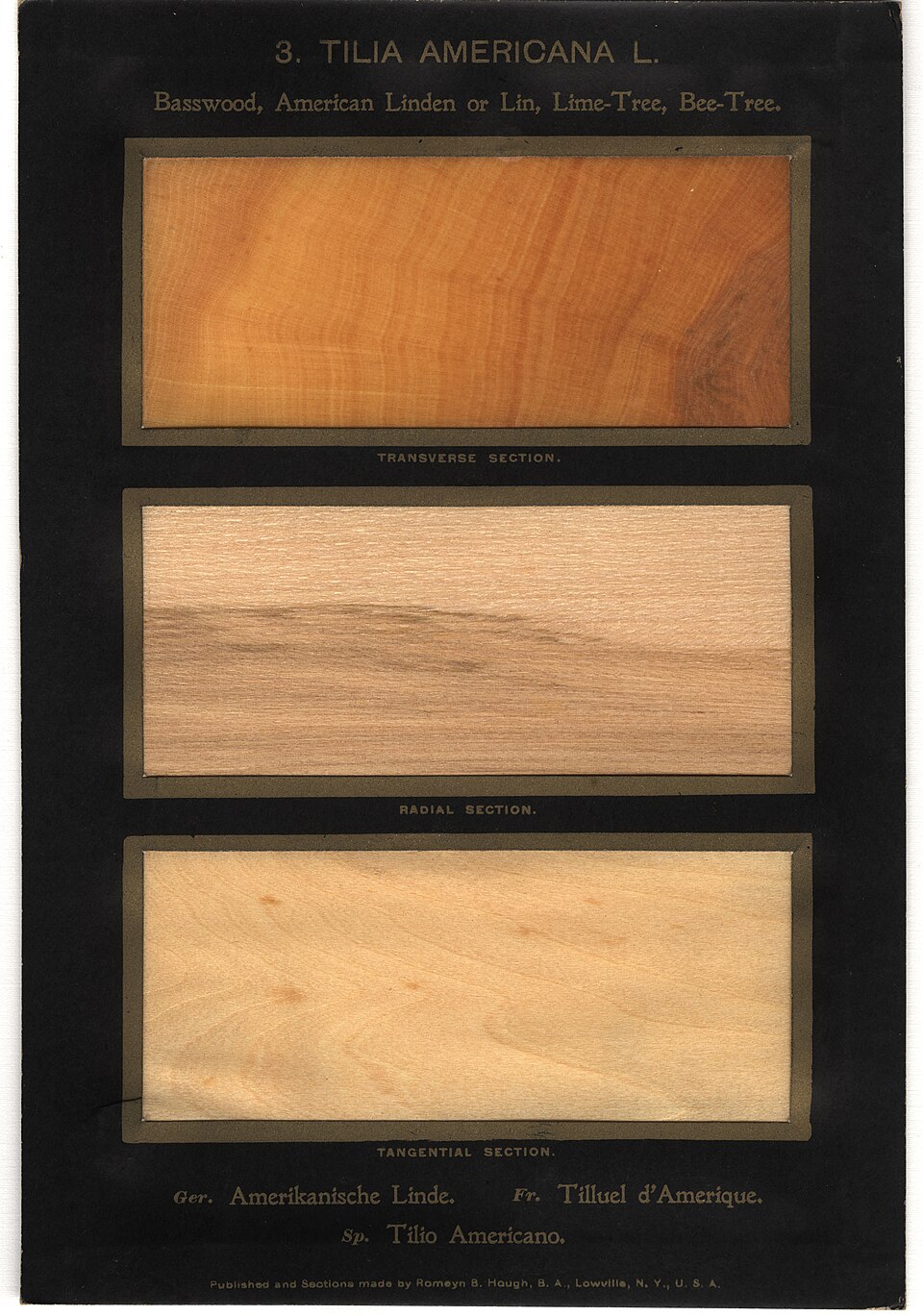
“American basswood, its scientific name, tilia americana, can be found all over North America,” ba said. His leg was drumming against the floor as he sat on the low plastic stool. “In Nebraska, Oklahoma..” ba listed the names of places I had never heard of before. “Ne–bruh–skah,” I said. I repeated it, as if to shape it into some meaning. Ne–bruh–skah. His cigarette smoke, combined with the smell from the mopeds passing by our food stall, was familiar, like home. Ba took over the family food stall after ông nội and bà nội. The food stall had been passed down for three generations until eventually it was passed down to ba. Its many iterations taking form (over and over again). Originally, it took form as a small walking street stall that served bánh bèo and homemade nước mắm chấm to the neighborhood. Bà cố nội used to carry the food stall on her shoulders. The food stall’s original form looked like a balancing act as she carried two woven baskets made of seagrass and water hyacinth, full of bánh bèo and nước mắm chấm, hanging off of a yoke made of bamboo wood (đòn gánh). Its next two iterations became more convenient, functional for the daily work commute, a street food stall serving cơm tấm for customers to mang đi on their way to work or on their way home from work. The food stall changed alongside our changing streets and neighborhood, taking form as a fixed food stall on the corner of an otherwise busy street, right outside of our family home. By the time it was passed down to ba, the food stall had become stationary.
During the downtime between the rush hours, ba collected books—English ones. Some of the books he would find discarded and often outdated by some years, in trash bins outside of the language learning centers down the street. Our street, which was once lined with family owned bánh cuốn & bún riêu restaurants, food stall vendors, and convenience stores, with colorful tarps and tin roofs, was now lined with English centers. English is an industry, the way death is an industry. During his breaks ba would attempt to read and sound out the names of things, trying to bring meaning to the sounds. Ah–mer–i–kha. Ne–bruh–ska. Oh–klah–hom–a.
There were times where I would watch ba behind the food stall, sweat forming on his brow, and wonder: is the food stall ba’s dream? I don’t know what ba’s dreams were, because he never told me. I imagined him behind the food stall—around my age (probably slightly shorter than I am now) when ông nội and bà nội initially passed down the food stall to him. I imagined him in what must’ve been the beginning of his youth—greeting customers on mopeds, cooking their orders of cơm tấm, and watching as the customers went onward with their lives. Was this ba’s dream? Somehow, I failed to imagine ba at my age and dreaming.
Did ba have dreams?
***
Ba ơi, ba có mơ không? I thought.
Translation:
Ba ơi, ba do you dream?
***
Ne–bruh–skah sounded magical. I didn’t really know jack shit about Ne–bruh–skah, only that the American basswood sometimes grew there. Thanks ba. I thought the sound of Ne–bruh–skah was cool, the way it rolled off my tongue. Its foreign letters, becoming, forming on my tongue. On my 18th birthday I decided I wanted to go to America, and more specifically, Ne-bruh-skah. The morning started off how it normally did—with ba smoking his cigarettes, putting them out in a plastic bottle, while the coffee dripped slowly from the phin. Ba set up the food stall, all with a cig hanging out of his mouth.
We watched customers pour in and out of line at the food stall, the morning breakfast rush, before people headed off to work on their mopeds. “Một tô cơm tấm mang đi!” called out one of the customers. A regular. I grew up seeing her come to the food stall, religiously, each morning. Her name, Hà, meant river. She wasn’t much like a river. She swore lousily, left and right, and was often in a rush. Well, now that I think about it, maybe she was like a river in a way. I helped ba prepare the cơm tấm for Ms. Hà who, to no surprise, was in a rush. Hà began to honk her moped at us. Beep, Beep! The language of mopeds is various. “Beep, Beep!” could mean a lot of things, usually it meant to hurry the fuck up or get out of the way. Other times, it was softer, it could mean I’m here outside waiting, I just got here, I’m home. With Hà it almost always meant to hurry the fuck up. And I got the message, my body quickly kicked into gear, moving around various plates on the food stall (as if that could change the amount of time it would take to cook the cơm tấm). Secret: it didn’t change the amount of cooking time needed but it sure made it look like I was doing something while I was waiting for the cơm tấm to fry in the pan. It gave the illusion of speeding up time, even if time remained linear. I don’t care what those theorists say about time being non-linear. Time sure felt very linear behind the food stall, especially during a breakfast rush. Finally, Hà’s cơm tấm was fried, and ready to go in a plastic bag with a plastic spoon inside. She grabbed the steaming cơm tấm, homed in its plastic bag with its matching plastic spoon, placed it on her moped, and drove off to her life. As Hà sped off on her moped, she became smaller and smaller until she was no longer visible anymore. I couldn’t help but wonder, what were Hà’s dreams? I thought of customers as people, on mopeds, speeding off towards their lives. The food stall as a pit stop.
I want to go to America, I thought. I want to see Nebraska and the American basswood. Really, anything to get me out from behind the food stall. Ne–bruh–skah. Even its syllables felt freer, less linear. I liked saying the word, feeling each turn in my tongue, forming and forming.
That was my last summer in Vietnam.
***
The morning I arrived in Nebraska it was colder than I had imagined. December in Ne–bruh–skah. I found the airport to be loud and underwhelming all at once. Still, I was excited. I was finally in America. I took a taxi to meet with the work exchange host I would be staying with. Tom White from Nebraska, born and raised (said his profile). The taxi driver was scrawny, pale, and his car smelled like cigarettes. He played songs I didn’t recognize. He called them worship songs. I liked the worship songs. I didn’t really understand what they were saying but the melody was nice and easy to follow along with. It was freezing and cold and my teeth clattered in my mouth.
“Where ya from, kid?” the scrawny driver asked. I wondered if it had been my accent when I said hello that gave away the fact that I wasn’t really from here. Or maybe it was how I looked.
“Vietnam, Sir,” I answered. I added the sir in because I had practiced saying it in English class at school. It was one of those things you were taught first when learning English. Sir. Ma’am. Hello. Goodbye. Thank you. Sorry. Y’know, those words.
Tom White was exactly everything and nothing like what I had pictured America to be. He was nice enough, sensible, and didn’t speak much. He only talked to me in small words, words he knew I would recognize. Farm. Clean. Lawn Mower. I familiarized myself with those words, they became a part of my English dictionary, alongside Sir. Ma’am. Hello. Goodbye. Thank you. Sorry. I did my work as I was told each morning, till dinner time, then I was allowed to have a break.
I spent all day pulling out crabgrass (also known as fingergrass) from under the snow, and out of the soil. Tom called it an aggressively invasive species. He used small words he thought I would know: bad, alien, everywhere. The crabgrass had been dead and sienna’d when I pulled it out. Crabgrass, I decided, was an invasive miracle. The kind that could almost survive the winter. The kind that kept growing even as I pulled it out of the soil, from under the snow. I knew that despite my efforts the crabgrass would be back by the spring. Which to me seemed like a miracle. Americans were so specific about their plant semantics: good plant vs. bad plant. A plant can be many things, I thought. A miracle being one of them. I hummed the same tune of one of the worship songs I had heard in the taxi. Hallelujah. I thought, what a strange word.
During the American New Year in Cherry County, Nebraska, Tom gave me the day off. I took a walk in the cold, looking for the same American basswood I had seen many times before in my father’s books. I wandered around as the landscape stretched itself out before me, its blankets of white, and not much else. The snow was endless, biting, and sorry. The cold had a bite to it. I was reminded of the biting heat and oil from behind the food stall while the pan heated up the oil, then the cơm tấm (first the thịt sườn, then the chopped hành lá, and finally the trứng), then, consequently, me alongside the pan. I can almost picture the oil splattering, in all of its biting heat as the smoke rose from the pan and scattered with the breeze. What exactly were my dreams?
Nebraska was once a dream of mine. The American basswood, too. Ne–bruh–skah had eaten my heart. I failed to find the American basswood that I had followed all the way to America, but in front of me was a silver maple, so tall it conceded to the sky. Acer saccharinum, its Latin name, I had recognized it by its brittle wood, breaking in the cold. A fact from one of ba’s books. Standing in the cold before the silver maple, I felt small in comparison to the maple and the blankets of white around me. I pictured ba reading his books, sounding out the words he saw on the page. Nebraska. American basswood. The foreign words forming and shaping as they rolled off the tongue. I looked at the snow ahead of me, the silver maple covered in it, as I pictured ba. Ba with his cig hanging out of his mouth as he stood behind the food stall, the mopeds speeding by him. I thought coming here would make me feel freer, like how the word Ne–Bruh–Skah felt forming on my tongue. I was wrong. It turned out America wasn’t freer, nor was it non-linear, like I had thought it would be. During the final stretch of my walk, I came upon an empty, treeless field. I could hear sounds from the highway. The beep-beeps and the rush of the cars passing by, each sound lonely and distinct. As the cold continued to bite at me, I could almost hear the beep-beeps from behind the food stall, the various language of mopeds. A beep-beep behind the food stall had many meanings: I have to go now but I’ll see you later, I’m here outside waiting, I’m off to work, I’m home now, I’m in a hurry, I just got here. My thoughts were interrupted by a greyish-brown streak in the sky catching my peripheral. I watched as a golden eagle (aquila chrysaetos) dove and grabbed its kill. The snow blanket and its sudden red splotch. How American, I thought. I remembered the drawing of the golden eagle from one of ba’s books. Back then, it had looked strange to me, alive even in the picture. The next morning they found me belly up, my hands like crabgrass in the snow of it all. I followed the American basswood all the way to America. In America everything is an industry, even death.
The park rangers found me, by the time they finally decided to call it in, I was essentially frozen. For me, time really did stop. I was a splotch on the white snow, much like the red splotch from the golden eagle’s kill, just a day before. There was a lot of speculation around my death. The official report ruled my cause of death to be from natural causes. Local newspapers had spun a story about a J[ ] Doe who was invasive and alien, not too different from the words Tom had used to describe the crabgrass I had been tasked to pull from under the snow and soil. Crabgrass I decided was an invasive miracle. The locals had their theories. No one seemed to agree on how I died. Some speculated I had committed suicide, while others speculated something more nefarious. How American to speculate death, I thought.
***
When I was small. Ahem. Excuse me. Smaller. Ba said I reminded him of a small rabbit. Rah–bit. Small and eager, jumpy and alive. What he had meant was that I was a bit of a jumper, I liked to hop around, and couldn’t sit still. Something inside of me called on me. It hadn’t been primordial. It was something simpler, more modern. I had wanted to see the American basswood in Nebraska. My dream was simple. I wanted to see the American basswood from ba’s books.
Suddenly I am small again.
I watch as the sweat forms on ba’s brow, a hot and humid day behind the food stall. Ba’s leg bounces as he sits on the low plastic stool. “The Golden Eagle’s wings span approximately 2 meters wide, its body weight is approximately 6 kilograms.” Ba reads. He turns the page. “The tilia Americana can be found all over North America, in Nebraska, in Oklahoma…” ba continues reading, “The American Basswood tends to grow upwards 18-24 meters, some can even exceed 30 meters.” I couldn’t sit still. I wanted to see it. I wanted to see the American basswood with my own eyes. I jumped up and down as ba read from his book. I wanted to know what was so special in the books ba had collected and read during his breaks. I wanted to follow the words in ba’s books: American basswood, Nebraska, North America. I wanted to see the words in ba’s books. I wanted to ask ba, “Ba ơi, ba có mơ không?” But instead, I continued to listen as he read word after word, and I hopped and jumped around. “Con thỏ bằng tiếng Anh là Rah–bit,” ba says. “In Ne–Bruh–Skah,” ba says, sounding out each syllable, “The Eastern Cotton Tail Rah–bit is vital prey for a wide variety of predators.” I continued to jump up and down. “Con thỏ nhỏ của ba,” ba laughs. He calls me his small rabbit to remind me to sit down, to stop jumping for a moment, while he reads. Con thỏ nhỏ của ba, translation, my little rabbit.
Did ba have dreams?