All posts by Rick Moody

April 27th, 2009

The Interactive Playlist

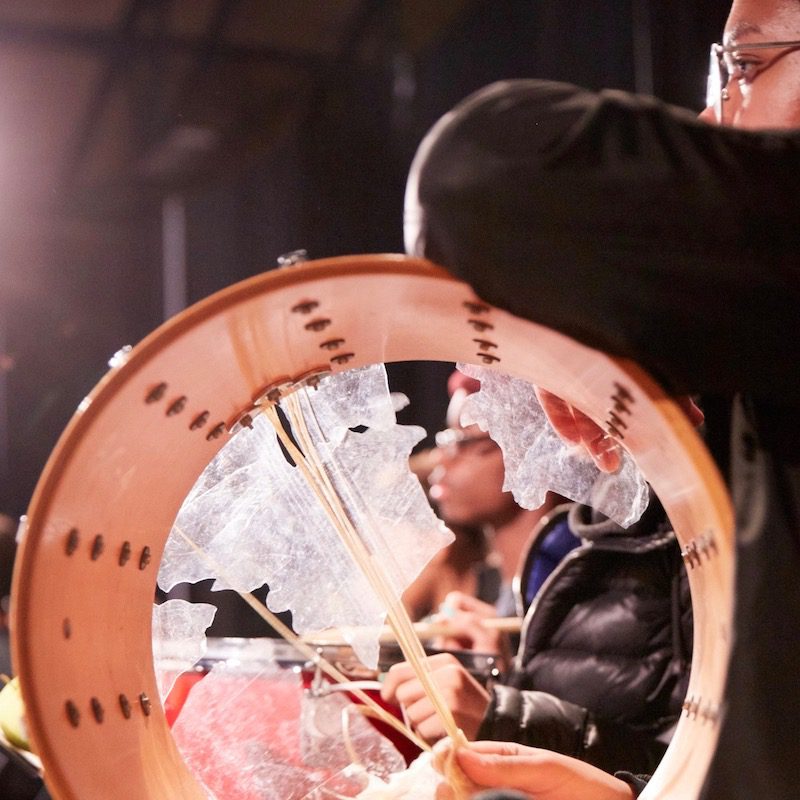
464539482_543167181eThe original idea for this blog was to find my way to things that were unreleased, self-released, and unsigned, and in this installment I’m going to take my mission seriously for a change. Since I’ve been writing these notes, I’ve been polling friends near and far—as well as complete strangers—for interesting music, and a great many people have written in with suggestions. I have to say, I really love the aspect of blog-writing that makes it possible for people to write in almost immediately to respond to what I’m thinking about, and I like the interactivity of the medium. That said, many people wrote in to suggest exactly the kind of thing that this blog resists, which is to say bands of boys with Marshall stacks and double kick drummers. Or pop bands that are just, as yet, unlucky enough to be well-known. There are probably many music writers out there looking for this kind of next big thing, but my feeling is that the next big thing is what makes pop music dull these days. I offer instead a playlist that is somewhat against the grain as far as “indie” music goes these days, the obscure, the experimental, the ancient, each devoted to the project and the vision instead of the results.

l_4bf0a88104dc6fff8f9794d6356dde6cTwi the Humble Feather

It’s really interesting how influence works in contemporary popular music. Somehow I assume that influence will always be predictable, verifiable, that people will be influenced by certain indelible voices: Dylan, Neil Young, Joni Mitchell, The Beatles. Maybe some artists come back into fashion, like Leonard Cohen, and suddenly they make a mark. But otherwise things proceed in an unsurprising way. How can you fail to be influenced by these seminal bodies of work? It’s pretty arresting instead to hear a new band that is completely indebted to Animal Collective, and not just the Animal Collective as we know them now, but a very specific period of Animal Collective, namely their earlier incarnation as sort-of psych folk band, as indicated, e.g., on Sung Tongs. I could go on at some length about Animal Collective, and probably will some day, but that would, in this case, fail to account for Twi (which rhymes with why, and, yes,on the list of band names, this will go down with Toad the Wet Sprocket as one of the more bizarre and inexplicable). Twi are very compelling in a lovely and subtle way. They are largely acoustic, pointillistically so, and are really great players (and I’m never sure about this with Animal Collective—I often think that it’s Animal Collective’s laptops that are the good players), and the sound amounts to a fusion of contemporary folk-influenced independent stuff with serious new music, West African music, Balinese monkey chant, and so on. This is a rich stew of indigenous music, then, with the barest of pop veneers. Influences get digested, you know? Remember when everyone sounded like Nirvana? A couple years later none of those bands sounded much like Nirvana anymore. Individuation is inevitable, in music, and when an inclination is followed to its conclusion, there is the uniqueness inevitably discovered. I assume this is what’s going to happen with Twi. They appeared on my horizon via Alec Bemis from Brassland (who also led me to The Clogs, a new-music side project of the members of The National whom I really like a great deal). I expect Twi will only get better. And they are already very very good.

(More about Twi at Friendly Ghost, the collective that is releasing the album, or, I suppose, helping the band to release it.)

1170358061_mThe American Opry

This amazing find came courtesy of my friends Laura and Tim, who ran into this guy at a Will Oldham gig. I understand that Will Oldham is powerful force in contemporary music, and I too like those early Palace albums (especially Palace Brothers), but let us set aside Will Oldham and speak instead of this American Opry guy. The concept seems to be, based on what I can dig up on up MySpace, a newfangled approach to the field recording idea made popular by Alan Lomax. Chris, I think that’s his name, just goes out and records regular people singing and playing. He also seems to work as a fieldhand. (His note on the MySpace page is a pretty incredible combination of manifesto and critique of self.) As with Lomax, Chris seems to be attracted to the regional and the indigenous (I mean, he’s not going out to record electronica at some club), and therefore to preservation, but with a slightly postmodern spin on the whole thing: it’s not the 1930s anymore, and lots of these players have satellite tv and a wifi connection, and maybe they have their acoustic guitars wired up to their Facebook pages. Still, the field recording concept is noble and sublime, now as ever, and I am often as moved by music played by “non-musicians” or hobbyists as I am by music played by virtuosi. I guess it’s the whole range of possible musics that make listening such a way of life. This guy, Chris, the American Opry guy, seems to have that kind of spirit, the listening spirit.

Dan Friel

Electronic music is challenging these days. I suppose it is challenging because most of it just does that one thing, the house music thing, and we have just gotten used to it being used according a rigid template of clichés. All those faceless house music compilations with semi-clad Brazilian beauties on them and names like Techno From Rio, or some shit, the same fucking breakbeats in the same fucking places, and the same boring sine waves being played on the same sampled analogue synths. It’s a dead medium, and it does nothing but delude people with too much disposable income or too much ecstasy, into believing they are having a spiritual experience. When they are not. They are just getting separated from their cash. Don’t get me started. That said, when an electronic artist comes along who doesn’t traffic in these cliches (Mouse on Mars, or Oval, or Matmos), it’s so refreshing. The secret, I figure, is melody. When the electronic beeps and blips come closer to having actual melody, then they become, well, sort of funny. And when they are funny, they are so much more interesting. Joelle Sun, whom I met on Facebook, and about whom I know nothing but that she likes robots, told me to listen to Dan Friel, and I was really delighted by the encounter. He has another band, I am told, and perhaps that band is more conventional. But this is electronic music that sounds like what your Casio would play if it drank a cocktail of battery acid, absinthe, and crystal meth. I don’t think there’s a sample on the whole thing. (I think sampling is not really very defensible at this late date. I know that an accelerated culture prefers collage, blah blah blah.) Friel engages the Indian, raga-like component of early electronica, the part that produced the early Tangerine Dream albums, and Terry Riley, but he also seems to like roller rink music, and guitar feedback, or things that sound like guitar feedback, and free jazz. He lists Sun Ra and John Fahey as influences, and you can hear it.

The Mercantillers515400869_m

John Domini, a very interesting novelist who teaches at Grinnell College, pointed me toward his daughter’s band, and my feeling is that his daughter’s band is good and is well on their way. Not long after, he included me on an announcement for a gig by his cousin’s bar band in New York City. I don’t think he was under the impression that I was going to be seriously interested in the bar band. But wait! This is not a bar band, except in the way that the Pogues were (are) a bar band, which is to say that the Mercantillers have that reckless, out of control quality that can be calibrated only with a lot of heart. By their own account, they mix country and traditional Americana with sea chanteys and some originals, but such a description doesn’t quite capture the punk rock uptempo quality of their emotional register. The instrumentation consists of a brace of guitar players and 515493807_lrhythm section augmented by banjo, accordion, and some horns. The vocals sound, uh, not overrehearsed—in a very agreeable way. Intonation is not considered an essential quality of the singing. Guys go ARGGGH in the background now and then. In short, this is the kind of band that plays for all ages at neighborhood cultural centers, as well as at bars. The Mercantillers have a couple of albums out, and I hope they make many more–without ever encountering a click track or any other studio invention that slicks up their sound.

Less the Band

Adam Rapp, who I think is mostly the singer here, and the uniting force, is best known as a playwright, and an extremely good one at that. As I understand it, he made this band to do some live performing in the course of a play that he wrote, after which the band kind of took on a life of its own. The doubt one might have about such an endeavor was that is was too performative, you know, rock and roll in that Broadway kinda way. Like Meatloaf or Ellen Foley. Maybe Adam or the others would sing too well, you know? On the contrary, there’s something refreshing about this band, or what I have heard of it. They really have a band sound, and it’s an old kind of band sound. I mean, they are a little bit slick, but slick at sounding like a CBGB’s band circa 1979. There’s a little Velvets in here, and a little X, a little Wire Train, a little Mink DeVille, a little power pop (Plimsouls), and a little Tom Jones. You could do a lot worse. And here’s the best part! They self-released the album! This band plays at Mercury Lounge, opening for this hip band and that hip band–they are extremely well connected, as they would be—but they released the album on CD Baby themselves, and they have stayed true to a pretty stripped down and self-generated career model. I am willing to bet there aren’t any managers or publicists breathing down their necks. They do what they do because it’s pleasing them to do it. In fact, you could say that about just about every band on this list, and that’s something to be honored and appreciated, self-determination.

dd/mm/yyyy

My friend Emily went to see these guys at SxSW, just because she liked the name, and you have to admit that this is a very good band name. They are from Toronto, which seems to be a place that has generated some fine music recently, and this band is no exception. I suppose that they are post-punk, making use of some of that same late seventies, early eighties stuff that has motivated a number of British bands a few years ago (I’m thinking of a set of influences that includes Wire, Pere Ubu, P.I.L., early XTC, etc.). But dd/mm/yyyy are so concerted, so hell-bent, that they sort of transcend that era in their relentless devotion to tricky tempo changes, vintage analogue synthesizer (sounds like one of those homemade oscillator kits), slapback echo on the vocals, and sheer noise. Everyone seems sing, or lots of people in the band sing, so they get away with nice counterpoint, or what passes for counterpoint when you’re shouting a lot. The arrangements, in the kitchiness, are not unlike another great Canadian band, Do Make Say Think, but since Do Make Say Think are an instrumental band, dd/mm/yyyy carve out some space by virtue of being song-oriented. There’s a cartoon-y earnestness to the eccentricity here, as if they just discovered how to play in 5/8 or in 9/8, but as a result the whole feels incredibly enthusiastic, new, and unpretentious. In a way, dd/mm/yyyy are already too well known for this blog, but since they were new to me, I’m including the recommendation here. This is the best new band I’ve heard in a while.

Blind Buddy Moody

He’s really blind, and his name is really Moody, and I don’t think he’s any relation to me, but you never know. Most of the Moodys go back to one British wastrel from the 16th century, who fished King Henry (can’t remember which one) out of a lake. Anyway, Buddy is from Tampa, and he plays old country and western music, which is the only kind that makes any sense, and his originals sound as old and written in stone as his classics. He yodels a little and plays acoustic guitar and harmonica and dobro, and his voice is a rich baritone with a little microtonal warble that recalls Tennesse Ernie Ford. On MySpace there’s a fair amount of audience talking during the live numbers, and that gives the recordings a very historical feeling. You can imagine this guy playing by himself on some busy thoroughfare, and I guess that’s how Randy Polumbo, an old friend of mine from college days, heard Buddy. Outdoors, at some art fair in Florida, as I recall it. As with The American Opry (see above), this is a music of an actual person playing an actual guitar, and summoning up a genuine time and place and locale. (I recommend, especially, his stunning recording “Mule Train,” replete with simulated mule calls). This is how human beings make music when their musical inclinations are not being concealed or cosmetically surgered by machines. You can learn a lot about civilization from listening to this kind of thing.

Bonus find: Grand Duchyl_a41d2a0d3d7142c1a96039131691fed9

This is a unrestrained shout-out for a record that was until recently only released in the EU (I think that situation has now been remedied by Cooking Vinyl records). It’s the newest project from Black Francis (of the Pixies)–here collaborating with his wife Violet Clark. It’s the most interesting side project Francis has ever done (I have always found Frank Black solo work a little challenging for some reason–as if he wants to resist what makes him great in the first place). These are pop songs–with a lot of Pixies resonances. But there’s something else going on here too, and

it’s not only Violet Clark’s voice, which has a sultry sixties girl group quality. The chemistry between the singers is palpable, e.g., and you start to realize, upon considering this chemistry, that what made the Black Francis/Kim Deal partnership great was not the friction, it was more that Black Francis’s intensity just sounds really great counterposed with a woman’s voice. At one point Kim and Francis must have had really good chemistry too. Meanwhile, a lot of this record borrows from eighties Britpop. There’s a Cure/New Order/Jesus and Mary Chain quality to the way the keyboards work, and to the way the melodies are constructed. But the whole thing is also really ragged, as if a lot of it were made at home, or by the two of them without much interference from producers or other musicians. There’s a lot of drum machine on it, in fact, which is the sine qua non of cheapness these days. And yet the offhandedness is charming and Francis sounds fully engaged, exalting in working with someone he really cares about, and the songwriting is great, and both singers are allusive and complex (it’s not a Black Francis album, that is, on which his wife merely appears), and the hooks really grow on you. I count myself as a passionate Pixies fan somewhat disappointed by how that band has been treated by history (and I think the band is its own worst enemy and this is part of the problem), but this album kind of makes the old magic apparent all over again.

In conclusion, let me say that these are all provisional listening experiences, and I don’t entirely trust provisional listening experiences. It’s better to listen to something for a long time, and, in fact, I often like albums better when I resist them at first. When there is work associated with understanding songs, their treasures are more valuable. Nevertheless, these are artists that were suggested by friends and readers of what I’m writing here, and that informal circulation of enthusiasms is part of what makes avid listening exciting–coming upon the buried treasure without knowing anything about it–so I offer this grab-bag of surprises that have passed the irritation test recently, with the hope that those of you out there will continue to send me suggestions. Lots of swinging modern soundsthem. It’s a big part of what makes this blog fun.
**

April 1st, 2009

SWINGING MODERN SOUNDS: The Means of Production

jwh_covMakers and consumers of music, there is no other conclusion but that the future of the medium lies in your hands. …more

March 19th, 2009

SWINGING MODERN SOUNDS: Black Napkins

zappa_frank2Frank Zappa was a gateway drug for me. …more

February 27th, 2009

SWINGING MODERN SOUNDS: On Repetition

3104537010_6429b00da4The intractable problem of the moment in the arts—in music, in books, in movies, in almost every area of contemporary culture—is the problem of inattention. …more

February 21st, 2009

An Interview with Julie Vanderburg, Obsessive Reader

1030081614Julie Vanderburg is a painter, jewelry designer, and mother of three from Seattle, Washington, who is distinguished, among these other things, by the fact that she has been reading the same book over and over again for a very long time. …more

January 29th, 2009

Swinging Modern Sounds: Heliotropism

I love the city of Tucson, Arizona, because I like places that have run out of luck, and I think running out of luck makes for good music. Running out of luck makes for a lot of good things, in fact. Good writing. Good sunrises. Complicated futures. Everything easy is dead inside somehow. I assume that Tucson doesn’t think it has run out of luck, but you only have to visit to know what I mean. Maybe Tucson never had any luck in the first place. Many places have none, and yet people relocate to these places nonetheless.

Among Tucson’s areas of especial bad luck: it has virtually no water. It’s drier than almost anywhere in the USA. The aquifer underneath it has been sucked mostly dry and is on the point of collapsing, or so the doomsayers say, and the pools outside of town that are supposed to replenish the underground aquifer are just evaporation pools, or so it is said, and the doomsayers are probably right. Then there is the nearness of the border and the country to the south. This makes for a brisk trade in undocumented people coming and going, bringing about the complicated and ambiguous and electrifying border culture phenomenon. Which around Tucson is noteworthy, in part, for its hard luck and poverty. While it is true that South Tucson is its own city, that can’t disguise the fact that the struggling South Tucson and the struggling south side of Tucson proper are one and the same thing, dangerous, with lots of gang activity, lots of crystal meth, lots of people who are having trouble finding work, lots of people who don’t speak English and who don’t have much to lose, making Tucson, this city I love so fervently, a hive of car theft activity and violent crime, much more so than the city where I nominally live, New York City. (I should also say that the south side is more colorful, literally, and has amazing food.) If all of that weren’t enough, Tucson is startlingly hot much of the year. It’s also paved over in amerciless way. The heat shimmers off the blacktop, you see it when you’re driving, which you are bound to do a lot, and reality goes all hallucinatory, shimmery, as if they put mescaline or peyote in the water supply; you move slowly from curb to vehicle, because there is no other approach to life that makes sense, in summer, and the animals from the desert, as desperate as the residents, crowd into town, the coyotes, and the javelinas, the overly tanned homeless population, and occasionally, the mountain lions crowd in too, especially in that rich neighborhood up by

the canyon, up there the mountain lions get out into the carefully xeroscaped yards of the rich people, and they get habituated to trash-picking, and then they will attempt to take out the occasional jogger or overly tanned homeless person. Anyway, a lot of Sonoran Arizona is like this, is like nowhere else in the USA, and that’s why I like it, because it’s crime ridden and physically dangerous and poisonous, what with all the snakes and cacti. I like Tucson because it seems like it just can’t go on this way. Oh, and it’s a college town, too, so it has its share of kids with purple hair and fishnets and jump boots. These kids look like they are part of the indigenous landscape.

Probably for all these desertified reasons, Sonoran Arizona has produced its share of interesting and rather strange bands. Among my favorites is the Tubes. The Tubes, you may recall, were a kind of boring band from the early MTV era who produced a mediocrity called “Talk To Ya Later.” I think I can say without fear of contradiction that we should be suspicious of any song with “Ya” in the title. But this is not an exemplary Tubes song. “Talk To Ya Later” comes from a period when the best songwriter in the band, Bill Spooner, was already fallen on somewhat delinquent times. On the other hand, the first three albums by the Tubes (The Tubes, Young and Rich, and Now) from when they had first moved from AZ to San Francisco, are remarkable and strange. There was no genre the band could not burlesque and reinvigorate, and they were such great players that they could do all this while flourishing with the occasional brilliant lick and bizarrely ornate arrangement—just enough to show that they knew how, without sounding showoffy. Their live shows were legendary. Their first album is remarkably hilarious and singular, with its science fiction synthesizer blips and nihilistic lyrics and choral arrangements.

Another unusual Arizonan band was the Meat Puppets. Again here, you have to locate the earlier material. Which glistens with a stoned, offhanded quality— Meat Puppets II, e.g., or Up On the Sun, or Huevos Rancheros—somewhere between Captain Beefheart, Black Oak Arkansas, and Rush, but with less professional credibility. Along the same lines, and perhaps from the same moment, were the Sun City Girls, a real favorite of mine for their world music fixations and their bad attitudes. Torch of the Mystics, their best album, manages to sound pyrotechnically dazzling and international without sounding like a Ry Cooder project. It also manages to preserve some of the punk rock creepiness and menace of their earlier albums. In this case, the band got older and stopped touring without losing what they once had, though I believe one of them, the drummer, recently passed away. They also started the Strange Frequencies label of “found” world music, any release of which is completely fascinating for those who want to get beyond the rigid formulae and predictable gestures of Western pop.

In Tucson itself, there is the two-headed monster of local popular music, viz., Giant Sand and Calexico. Calexico is perhaps the better known now, having sundered itself from Howe Gelb of Giant Sand with whom they earlier collaborated. But to my ears Calexico, while having all the requisite skills and a charming Mexicali inflection, is the less interesting of the two. They are very skillful musicians, sensitive renderers, but they are not writers. Whereas Howe Gelb has vision, and the vision is deeply melancholy, and slow-moving, in a really Tucson-like way. You can imagine that it takes Howe a fair amount of time to get started in the morning; Howe could easily abandon the project, no matter what the project is; Howe understands the complexities of life in the Southwest, and thereby he understands some of our national difficulties, entire, because (arguably): as the Southwest goes so goes the nation. The Southwest suffers cruelly under the lash of the Big Collapse of Capital, the Southwest had a speculative real estate market, the Southwest is a bellwether for what comes next, in immigration, in environmental policy, in water rights.

Now, when I began composing these notes for this site, I remarked that I was interested in hearing from people out there about some of their favorite unsigned and unreleased musicians, and in the course of this attempt to reach out I fell into communication with a musician from Tucson called Maggie Golston. I don’t know very much about Maggie Golston, except for one tantalizing fact: she used to operate a very good bookstore. One thing about Tucson that is consistent with its desperate qualities (as catalogued above): it has nowadays a wealth of mediocre bookstores. The best bookstore in town, actually, is the used bookstore, called Bookman’s. (Which also does a fine business in used CDs.) For new books, you are basically shit out of luck in Tucson, unless you want to go to one of those fucking horrible paved over strip malls that have raped much of the town, where you will no doubt find an understaffed and underserved Border’s or Barnes and Noble, and a few lonely souls pawing over the latest murder mystery. Anyway, Maggie Golston had this bookstore, and no longer does, and this I assume has to do with the cruel realities of mercantile life in a town that balances its budget by selling condos to retirees.

I investigated further. Golston has some songs up on her MySpace page, and these are good, but when I wrote to her that I was liking some of the songs there, she told me that the “best song” on her album, her words, was not available on MySpace (though it is now). I got myself a copy. As to the song, let me first say that one thing a lot of desert music is not: Goth. The Goth thing just doesn’t seem to play well in Sonoran Arizona, maybe because layers of black clothes are contraindicated in overpowering dry heat. There’s hardcore in AZ, there’s twang, there’s the skatepunk stuff, but not so much Goth. Maggie Golston, however, writes, and therefore she has a writer’s interest in song forms that leave a lot of room for the words, and mood, and that means that she likes people who have Gothic aspects to what they do, like Nick Cave. Maybe there’s a little Leonard Cohen in her diet of influences, too, and some Tom Waits.

Because of her strange stew of influences, and the way these go with her local landscape, “Black Capsules,” the best song according to Maggie, is, yes, very, very interesting, very compelling. First, Maggie has a really alluring (and nicely uninflected) voice. It’s alto, slightly smoky, and with an urgent prosody to it, sort of like Debora Iyall from Romeo Void. Or maybe she’s a more urgently feminine Carla Bozulich. In “Black Capsule,” she has lots and lots of reverb ornamenting her voice. Sounds almost like it was recorded through an intercom or in the echoing interiors of a semi-demolished mall corridor. “Black Capsules” is structured according to rules derived from the Bob Dylan school of multiple verses, lots and lots of verses (9:02!), without feeling a great need to develop rapidly. The ensemble is small and simple—acoustic guitar, drums, accordion (mixed way back)—and the percussion, which was apparently recorded late at night by a battery of infrequent drummers, slips in and out of the pulse, giving the whole thing that woozy, slightly drug-addled feeling that I associate with Tonight’s the Night, by Neil Young. Upon repeated listens, the song only gets better, more grim, especially as it slips into some scalding white noise toward the end of its momentous journey. And that is before you gaze upon its allusive and unsettling lyrics:

I can still see the dashboard that carries your face past the checkpoint
You’re bending your words with the frequencies I had to teach you
I can follow your trace with machines whose long names will escape me
A machine is a heart is a galaxy trying to reach you

You’re an engine with pistons that kick up the dust of a presence
You’re a laser that cuts me to ribbons from light years of distance
You’re a mirror, a pistol, an airplane propeller that hisses
You’re the space where I put all that matters, you’re only an absence

These lyrics, as I understand them, are full of Neruda’s brokenheartedness, Hispanic and Latin American fatalism, admixed with the strange desertified hallucinatory quality, of which you should now consider yourself informed. The results are sometimes like a Goth version of Garcia Marquez, or maybe a Hispanic version of P. K. Dick. The narrator alludes again and again to the black capsules in her pocket, though we are not always sure of their particular chemistry, their makeup (could be NASA-prescribed cyanide, could be something with a more sedative purpose). There are also ghosts in virtually every verse, and what of the “spaceman” and the “checkpoints,” of which we hear so much?
It all reminds me of a couple of a trip I once made to Portal, AZ, a town on the New Mexican border, a town with almost no one living in it. I love towns with almost no one in them. They can see you coming from a great distance. On the way to Portal, I stopped in the last berg with a Safeway. The big city, comparatively speaking. This berg, whose name I am excising, was a true ghost town. The roads there were still. There were people living there, somewhere, because someone was going to that Safeway and the drive-thru MacDonald’s, but all the trailers had tinfoil in the windows to reflect away the violence of the topography. A great place for a meth lab, and there were billboards dotting the empty roads warning about the horrors thereof. There were the occasional border patrol guys, parked, leaning out of rolled-down windows, looking lost and bored. Actual tumbleweeds. The dirt roads led from there up into the mountains, but in such a winding and irresolute way that no car could ever have made that passage.

What did the desert offer the residents of that town? Did they know anymore of their surroundings than they tuned in on their satellite televisions? Did they know only empty spaces and an absolute paucity of economic opportunities, or, the extermination of their people for the greater glory of European expansionism? Did they long for families back on the other side of the border? Crystal meth? Safeway burros that you just throw in the microwave? Did they, these heliotropes, wander out into their landscape, and glory in the expanses, or were they so used to these expanses that they didn’t even see them?

Golston’s song, with its uncanny lyrics, so full of desert resignation and, as she puts it, “bad excuses,” is a great artifact of this lonesome Southwest. If you offer her money for her songs, on MySpace, maybe she can amass the capital to reopen her bookstore.

About

Rick Moody's newest novel is THE FOUR FINGERS OF DEATH, from Little, Brown. He has a new solo album out, called THE DARKNESS IS GOOD, released on Dainty Rubbish Records. Moody also plays music with The Wingdale Community Singers, whose recently released album is called SPIRIT DUPLICATOR. Both albums are available at Amazon, iTunes, and CDBaby.com.

Subscribe

Subscribe to this author's blog via RSS

Other Blogs

PoetryAll Past Was Once Now   ...moreMay 25th, 2012

Last Book I LovedLydia Melby: The Last Book I Loved, The Cat’s Table   ...moreMay 24th, 2012

Book Club BlogPoetry Book Club News   ...moreMay 22nd, 2012