cities
-
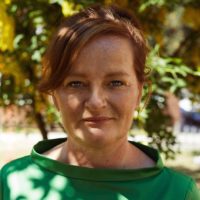
A Certain Way of Singing: Talking with Dorthe Nors
Dorthe Nors discusses her newest novel, MIRROR, SHOULDER, SIGNAL.
-
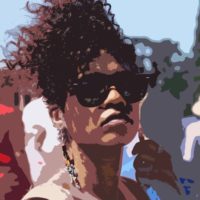
The Rumpus Poetry Book Club Chat with Nikki Wallschlaeger
Nikki Wallschlaeger discusses her new collection Crawlspace, why she chose to work with the sonnet form, and how segregation in American never ended.
-
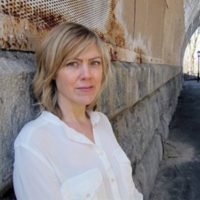
The Sunday Rumpus Interview: Amy Benson
Our American obsession with the personal and individual has made us the tremendous resource consumers we are in the world.
-

The Rumpus Interview with Lauren Elkin
Writer and academic Lauren Elkin discusses her latest book Flâneuse: Women Walk the City in Paris, New York, Tokyo, Venice and London, the freedoms and constraints of urban space for women, and the power of first person.
-

Urban Poetry
In a modern world where hyper-connectivity often results in disconnection from our immediate surroundings, creating the space to explore poetry can make us more reflective and engaged citizens. Over at the Guardian, Rosie Spinks writes about how poetry can both…
-

The Saturday Rumpus Essay: Twenty-Three Pieces of the Sunset Bowl
[A]ll over town, pits in the ground stayed pits in the ground. Those cavities were my consolation. For the moment, we were all in the hole.
-
Weekly Geekery
Boy meets lichen, proves 150 years of science textbooks wrong. Want to improve your social skills? Try fiction, not speed-dating. How wasps gave us Shakespeare. In psychology, American undergrad = caveman. Birds lose sex appeal when singing over city noise.…
-
Sidewalk Stanzas
Boston’s City Hall and Mass Poetry, a Massachusetts-based poetry nonprofit, has embarked on an urban art project: They’ve stenciled poems onto Boston’s sidewalks using paint that only appears in the rain. Sara Siegel, the program director at Mass Poetry, says:…
-
Home Sweet Brooklyn
It’s very easy to be anonymous in Brooklyn, but it’s not as easy to make genuine, human connections, or even to form strong connection to this place, because things are constantly changing and constantly moving. In Meet the Regulars: People…
-

Jen Fitzgerald’s Poetry Mixtape #1: Poetry That Moves Like a City Street
I’m spending National Poetry Month at the Millay Colony, former home of Edna St. Vincent Millay. My colleague and friend, poet and writer Jen Fitzgerald, will be writing the Mixtape column this month—and we are all lucky for it. Enjoy…