
<?xml version="1.0" encoding="UTF-8"?>
<rss version="2.0"
	xmlns:content="http://purl.org/rss/1.0/modules/content/"
	xmlns:wfw="http://wellformedweb.org/CommentAPI/"
	xmlns:dc="http://purl.org/dc/elements/1.1/"
	xmlns:atom="http://www.w3.org/2005/Atom"
	xmlns:sy="http://purl.org/rss/1.0/modules/syndication/"
	xmlns:slash="http://purl.org/rss/1.0/modules/slash/"
	>

<channel>
	<title>The Rumpus.net &#187; Cullen Thomas</title>
	<atom:link href="http://therumpus.net/topics/cullen-thomas/feed/" rel="self" type="application/rss+xml" />
	<link>http://therumpus.net</link>
	<description>Books, Music, Movies, Art, Politics, Sex, Other</description>
	<lastBuildDate>Sat, 25 May 2013 20:25:40 +0000</lastBuildDate>
	<language>en-US</language>
	<sy:updatePeriod>hourly</sy:updatePeriod>
	<sy:updateFrequency>1</sy:updateFrequency>
	<generator>http://wordpress.org/?v=3.5.1</generator>
		<item>
		<title>Conversations with Literary Ex-Cons: Matthew Parker</title>
		<link>http://therumpus.net/2013/02/conversations-with-literary-ex-cons-matthew-parker/</link>
		<comments>http://therumpus.net/2013/02/conversations-with-literary-ex-cons-matthew-parker/#comments</comments>
		<pubDate>Wed, 13 Feb 2013 21:16:55 +0000</pubDate>
		<dc:creator>Cullen Thomas</dc:creator>
				<category><![CDATA[books]]></category>
		<category><![CDATA[comics]]></category>
		<category><![CDATA[rumpus original]]></category>
		<category><![CDATA[Spotlight]]></category>
		<category><![CDATA[Cullen Thomas]]></category>
		<category><![CDATA[graphic memoirs]]></category>
		<category><![CDATA[Larceny in My Blood]]></category>
		<category><![CDATA[Matthew Parker]]></category>

		<guid isPermaLink="false">http://therumpus.net/?p=111032</guid>
		<description><![CDATA[You know what struck me about Matthew Parker, one-time homeless wanderer, former drug addict with more than ten years of prison under his belt, between his ears, now a writer and graphic author?]]></description>
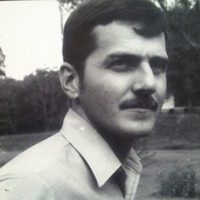
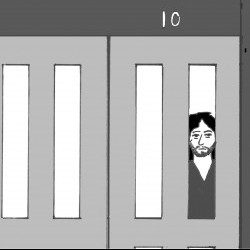
				<content:encoded><![CDATA[<p><span id="more-111032"></span><a class="lightbox" title="Parker_in_prison" href="http://therumpus.wpengine.netdna-cdn.com/wp-content/uploads/2013/02/Parker_in_prison-e1360791078376.jpg"><img class="alignleft size-full wp-image-111039" title="Parker_in_prison" src="http://therumpus.wpengine.netdna-cdn.com/wp-content/uploads/2013/02/Parker_in_prison-e1360791078376.jpg" alt="" width="250" height="250" /></a>You know what struck me about Matthew Parker, one-time homeless wanderer, former drug addict with more than ten years of prison under his belt, between his ears, now a writer and graphic author?</p><p>A basic decency.</p><p>We met in the New York Botanical Garden in mid-January. The Bronx River was frozen with rich swaths of emerald in it. At times, Matt looked carefully out into the main space of the café where we finally sat. We were safe, against a brick wall and with a full view of the room. But I wondered if it wasn’t the ex-con in him warily peering out at the world.</p><p>When we left, Matt asked the young guy working the register if it was all right to leave him a tip. It wasn’t that kind of place. Matt’s money was already out. This wasn’t the only instance, I realized. He’d asked the young girl working the ticket kiosk at the front gate if she was warm enough. Basic. Decent.</p><p>He’s over fifty now, balding on top, which is a recurrent image in his graphic memoir <em>Larceny in My Blood: A Memoir of Heroin, Handcuffs, and Higher Education. </em>I told him that his depiction of this bald spot made me think of the top chakra at the peak of the human form, the top of the head, an open conduit for forces from above—a scrappy, working-class, everyman enlightenment.</p><p>He laughed.</p><p>But it’s there, as sordid and messy as his story is: that humble decency, a hard-fought humanity.</p><p style="text-align: center;">***</p><p><strong>The Rumpus:</strong> For a memoir especially, where the character in there is also the narrator, if it’s too angry and too bitter&#8230;</p><p><strong>Matthew Parker:</strong> Nobody wants to hear it.</p><p><strong>Rumpus:</strong> You feel like the Columbia MFA program helped bring you out of that, from a writing standpoint, or just personally?</p><p><strong><a class="lightbox" title="Larceny-in-my-blood-cover" href="http://therumpus.net/?attachment_id=111038"><img class="alignright  wp-image-111038" title="Larceny-in-my-blood-cover" src="http://therumpus.wpengine.netdna-cdn.com/wp-content/uploads/2013/02/Larceny-in-my-blood-cover.jpg" alt="" width="300" height="450" /></a>Parker:</strong> Yeah, from a writing standpoint. Well, maybe from both. I was never really angry about doing time. I never had a problem with that because it was a part of my lifestyle: <em>okay, I’m a junkie and this is part of being a junkie. I’ll have to go to prison every couple of years, so be it.</em> Prison’s not that bad, you get your own TV. Once you get out of county jail.</p><p><strong>Rumpus:</strong> What struck me in your descriptions of all these places—county, state, and federal—you seemed to have a lot of physical freedom, relative to other systems—going out on the yard.</p><p><strong>Parker:</strong> The only place you don’t have physical freedom is in the county jails. And you’re locked up with a lot of really bad people—people who deserve to be there, frankly. I was locked up with a guy who cut his girlfriend’s head off.</p><p><strong>Rumpus:</strong> Jesus, really?</p><p><strong>Parker:</strong> Really sick shit. And you have to sit down and eat with this guy.</p><p><strong>Rumpus:</strong> Where was that?</p><p><strong>Parker:</strong> Maricopa County Jail.</p><p><strong>Rumpus:</strong> That is fucked up.</p><p><strong>Parker:</strong> Yeah. And he was a vicious guy. I saw him assault a guy in the pod, you know, really fucked him up, backstabbed the guy: waited &#8217;til the guy turned his back and attacked him that way.</p><p><strong>Rumpus:</strong> What kind of guy was he: old, young, white, Hispanic?</p><p><strong>Parker:</strong> White guy. He was a little nuts. You kind of don’t know what people are in for. I found this out after. I knew he was in for some serious shit. You’re in there in maximum security. A lot of them are murderers. A lot of them have nothing to lose.</p><p><strong>Rumpus:</strong> You never know, because all you get is their version of it. Maybe some rumor and gossip.</p><p><strong>Parker:</strong> Yeah and then they ask you, “What’re you in for?”</p><p>(<em>muffled</em>) “Shoplifting.”</p><p>(<em>louder</em>) “What are you in for?”</p><p>(<em>louder</em>) “Shoplifting.” And they’re like, “Aw, fuck.” It’s like that Arlo Guthrie song where they all move away from you.</p><p><strong>Rumpus:</strong> I appreciated the way that you seemed to hold yourself outside the nonsense and the craziness, all the little trivial shit, resisting the pressure to join the White Brotherhood, staying independent, just minding your own time. Do you feel like that has helped you out here?</p><p><strong>Parker:</strong> Yeah, definitely, with the cliques and the groups—especially at Columbia. I was able to just kind of laugh at it. You know how in my book I compare the genre gangs to the prison gangs. It was even worse between the film people and the theatre people and the writing people. In the School of the Arts at Columbia you’ve got four disciplines. You have your little cliques in the writing group, but then you have the bigger cliques outside. Last night when you called me, I was doing alcohol proctor on campus.</p><p><strong>Rumpus:</strong> What does that mean?</p><p><strong>Parker:</strong> I basically check people’s IDs, or if it&#8217;s a grad student event I make sure no one gets out of hand. It’s basically a bouncer.</p><p><strong>Rumpus:</strong> But they call it alcohol proctor?</p><p><strong>Parker:</strong> Yeah.</p><p><strong>Rumpus:</strong> Make sure people aren’t boozing. Do you drink?</p><p><strong>Parker:</strong> A little bit, but not to get drunk. I only have a couple of beers or a glass of wine.</p><p><strong>Rumpus:</strong> And a while back, Columbia fired you from that job because they found out you had all these convictions?</p><p><strong>Parker:</strong> Yeah, they fired me from all my jobs.</p><p><strong>Rumpus:</strong> And this is Columbia, bastion of liberalism, human rights.</p><p><strong>Parker:</strong> What happened—what I think it was—you remember when that girl got killed at Yale? This was a few years back. She had a lab and there was a guy, a civilian worker, who worked in the lab with her and he killed her and he stuffed her in the wall. So right after that happened, Columbia decided to do background checks on everybody. Before that, when I first started applying for jobs at Columbia, I would tell them, “I’m a convicted felon, blah blah blah.” Nobody gave me a job. Except for the law school. The law school didn’t care. Law school still doesn’t care, because I still work for them.</p><p><strong>Rumpus:</strong> Why are they different? Just because they have a better sense of crime?</p><p><strong>Parker:</strong> Yeah, because they’re the law school. They see it as, <em>This guy’s a petty thief with a history of drug abuse</em>, that&#8217;s it. So I’m working at the law school. I’m also alcohol proctoring, and they do a background check. Of course I lit up the computer, <em>bing</em> <em>bing</em> <em>bing</em>, like a pinball machine. And I got an e-mail from Human Services and a letter in the mail saying Columbia can no longer employ you anywhere on campus because of your felony convictions. So I went to the Dean of the School of the Arts, and some professors I’m in tight with, and they all went ballistic on Human Resources, and they ended up hiring me back.</p><p><strong>Rumpus:</strong> Maybe it was just an overreach in response to the Yale murder. But that’s the power of crime.</p><p><strong>Parker:</strong> Well that’s what I think happened.</p><p style="text-align: center;">***</p><p><em>We’re above the frozen Bronx River.</em></p><p><strong>Rumpus:</strong> I’ve been up here to the Gardens, but have not walked around like this. How often do you come here?</p><p><strong>Parker:</strong> Two, three times a week. You can be isolated here. It clears my head.</p><p><strong>Rumpus:</strong> You were talking earlier about anger and writing in a didactic way.</p><p><strong>Parker:</strong> To me it was all about the system, right. In my mind, if drugs were legal I wouldn’t have a problem. All right, that’s how I thought because of course I was a junkie. I was fucked up. To me, they shouldn’t be locking people up for drugs. It’s just a personal choice. It&#8217;s a prohibition thing. It’s really all just business. So I was very angry about it.</p><p><a class="lightbox" title="Running" href="http://therumpus.net/?attachment_id=111042"><img class="alignnone  wp-image-111042" title="Running" src="http://therumpus.wpengine.netdna-cdn.com/wp-content/uploads/2013/02/Running-768x1024.jpg" alt="" width="600" height="800" /></a></p><p><strong>Rumpus:</strong> You’re right about that. An easy and important distinction can be drawn between violent and non-violent, and they just don’t do it.</p><p><strong>Parker:</strong> Nah, they don’t do it because they figured how to make money off it. They figured how to employ people. They figured out how to bring these ghost towns back to life.</p><p><strong>Rumpus:</strong> You were in some ghost towns out there in Arizona? Name some of them for me.</p><p><strong>Parker:</strong> Winslow is a big prison town. There’s a place called Buckeye, Arizona—big prison town. Florence, the whole thing revolves around prison. Douglas.</p><p><strong>Rumpus:</strong> Did you feel those spirits out there, in the middle of nowhere?</p><p><strong>Parker:</strong> I never got the ghost sense you got. I remember you wrote about that. Because most of the Arizona prisons were new. The closest I came to that was Terminal Island Federal Prison. That was an old, old prison, with the rack cells. You really get the sense there’s been a lot people in this place.</p><p><strong>Rumpus:</strong> That was on your first bid, in the late &#8217;80s?</p><p><strong>Parker:</strong> Yeah, that was the Fed beef.</p><p><strong>Rumpus:</strong> In your story, all the relationships come and go—all these different girls, your brothers, those tragic moments, which really hit me—but your mom is always there. She always seems to come through for you. But I could see where some readers would be like, <em>Well, she’s the root cause of it all</em>, because she was counterfeiting money. She was smoking weed all the time. She brought this whole &#8220;larceny in my blood&#8221; to the family.</p><p><strong>Parker:</strong> &#8221;Larceny in my blood&#8221; is basically an advanced degree in street sense. It doesn’t necessarily have to do with thievery. A lot of it just has to do with knowing how to survive on the streets. Now my mom is definitely culpable of certain things. But my mom’s redemption came in 1978, two years before my brother was murdered. When my mom moved to Arizona, that was it. She shut down everything. They wanted to start cooking speed because the counterfeiting thing fell through, and she said, “You know what, I’m done.” And she got a job and she’s pretty much been clean ever since.</p><p><strong>Rumpus:</strong> Has she ever been to prison?</p><p><strong>Parker:</strong> No. No, no.</p><p><strong>Rumpus:</strong> That’s amazing, though. I mean, with the way you describe all the stuff they were into. She’s the luckiest one in the whole book.</p><p><strong>Parker:</strong> Lucky and smart. The main reason I went to prison is I was high all the time. When you’re high, you’re not thinking too clear.</p><p><strong>Rumpus:</strong> One of the blurbs on the back of the book talks about your story as a portrait of being desperate and lost. Through the course of it I got that feeling, like a lot of American lives maybe. You’re in Bridgeport, then you’re in Pennsylvania, then you’re out in Arizona, then you’re back in Bridgeport; then you start doing these prison stints, from one girl to the next. There’s this wandering.</p><p><a class="lightbox" title="From_Bridgeport" href="http://therumpus.net/?attachment_id=111043"><img class="alignnone  wp-image-111043" title="From_Bridgeport" src="http://therumpus.wpengine.netdna-cdn.com/wp-content/uploads/2013/02/From_Bridgeport-828x1024.jpg" alt="" width="600" height="800" /></a></p><p><strong>Parker:</strong> Yeah, a lot of it is just self-marginalization, straight nihilism.</p><p><strong>Rumpus:</strong> Not giving a fuck?</p><p><strong>Parker:</strong> Yeah, you know. It’s a cop-out.</p><p><strong>Rumpus:</strong> Another phrase related to your story: false protest. You came to this realization that a lot of your rebelling was hollow. I wanted to hear your thoughts on that.</p><p><strong>Parker:</strong> It’s like that old James Dean line—or is it Marlon Brando? “What are you rebelling against? Well what do ya got?” It was kind of like that, especially growing up at the tail-end of the &#8217;60s, the violent end of the &#8217;60s. The way I chose to rebel against society was, “Well, I’m just gonna be a junkie.” Really, when you’re holding yourself that much outside of a group, you’re saying, “I’m better than the group,” which really makes you no better than the group. It comes full circle.</p><p><strong>Rumpus:</strong> You think some of that is the ex-convict’s burden? I ask because I recognize this self-marginalizing, as you’re calling it, in myself. Something about the isolation, the ostracizing, that prison breeds in people?</p><p><strong>Parker:</strong> Some of it. A lot of it is I don’t like crowds, for obvious reasons, because American prisons are very crowded. You’re never alone, ever—maybe when you’re in the shower, but even when you’re in the shower whacking off, on the other side of the curtain there’s twenty guys brushing their teeth—you know what I mean?</p><p>So my mom’s redemption came twenty years before mine. Then my older brother died, then my younger brother died, and her third son was in and out of prison constantly. My mom liked it when I was in prison. She knew I was safe. She knew I could take care of myself. Nothing was going to happen to me, whereas on the street, she found me OD’d a couple of times.</p><p><strong>Rumpus:</strong> It’s seems amazing that you beat heroin, in 2002, right? How did you beat it? Is it still tempting?</p><p><strong>Parker:</strong> No, not at all. For the first couple of years after I got out it was.</p><p><strong>Rumpus:</strong> Why not now?</p><p><strong>Parker:</strong> Well, I did a lot of research on it. It’s very clinical. What I found out is your brain is inherently lazy, so if it can get chemicals artificially, it’s gonna shut down making them by itself. Like endorphins. So once you stop doing the heroin, you may have convinced yourself that you don’t ever want to do it again, but your brain is screaming for you to send up more heroin, or else you’re gonna die. That’s what your brain is trying to convince you. Same with smoking, same with overeating, same with any kind of addiction on the planet. These receptors open up in your brain.</p><p>So I have a million heroin receptors screaming to be filled.</p><p><a class="lightbox" title="Homelessness" href="http://therumpus.net/?attachment_id=111044"><img class="alignnone  wp-image-111044" title="Homelessness" src="http://therumpus.wpengine.netdna-cdn.com/wp-content/uploads/2013/02/Homelessness-649x1024.jpg" alt="" width="600" height="800" /></a></p><p><strong>Rumpus:</strong> Understanding that gave you control over it?</p><p><strong>Parker:</strong> Yeah, to a point, because those receptors close down in a year. Takes about a year, then they close up.</p><p><strong>Rumpus:</strong> So you knew that and you thought, <em>If I can just get through a year&#8230;</em></p><p><strong>Parker:</strong> Yeah, that was one part of it. The other part was the rebellion thing. Nobody’s gonna tell me what to do, and if going to prison every two years is the price I pay for my freedom, then that’s it. I’m gonna shoot all the fucking heroin I want, and fuck everybody. Nobody’s gonna control me, nobody. And then I’m standing in county jail. This guard walks by and says, “Parker, what are you doing in here? You’re a smart guy. Why do you keep coming back?” And I couldn’t answer him. It was right around when I turned forty, and the judge had told me earlier that junkies usually get clean when they’re forty or they go all the way. They end up in prison or they end up dead. I realized that there was nowhere on the planet I could be in less control of my life, than I was in that fucking jail cell.</p><p><strong>Rumpus:</strong> So you weren’t even living true to your conviction.</p><p><strong>Parker:</strong> No, I realized it was all a lie. That guard kind of tripped it. And the judge kind of tripped it, because she told me eight years earlier, “Junkies don&#8217;t get clean until forty. You’ve got a good eight years left.” By me being a junkie, I was playing into the hands of the government, because I wasn’t being rebellious in any way that meant anything. Nobody gave a fuck that I was a junkie. I wasn’t changing anything. I wasn’t being active. I wasn’t political. My writing sucked. And basically nobody cared about me. That’s basically what it was. It was all bullshit, a sham. I realized that by me being a junkie, I was playing right into their hands, just like almost everybody in prison plays into their hands. Gangbangers on the streets play into their hands.</p><p><strong>Rumpus:</strong> The same dynamic I thought you describe really well in terms of how you were trying to master your dick, not let your dick dictate your behavior.</p><p><a class="lightbox" title="Joblessness" href="http://therumpus.net/?attachment_id=111045"><img class="alignnone  wp-image-111045" title="Joblessness" src="http://therumpus.wpengine.netdna-cdn.com/wp-content/uploads/2013/02/Joblessness-828x1024.jpg" alt="" width="600" height="800" /></a></p><p><strong>Parker:</strong> Exactly. It’s kind of the same thing.  You know, I never really thought of it that way. That’s interesting.</p><p><strong>Rumpus:</strong> It dovetails with your intellectual curiosity in evidence in the book. You getting into evolutionary psychology, biology, instincts, Darwinism. You dug into that stuff and it sounds like it opened doors for you. You realized, <em>Wait a second. My brain is trying to trick me and I don&#8217;t want to keep doing the dope and I can’t just let my dick run wild.</em></p><p><strong>Parker:</strong> Right. I have a girlfriend I love and that wouldn’t be right. When I first got out of prison, though, it was very hard. My brain was still screaming, <em>Send up the heroin! What are you doing?!</em> The way I resisted that was also through music.</p><p><strong>Rumpus:</strong> I love that theme in your book. Talking about the biological insight you had into addiction and the way that helped you; talking about the biological insight you had into sex and lust, and how that’s helped you. Those are earth-bound, biologically-bound. It’s not a spiritual healing. But sometimes when you talk about music, the way it healed and helped you all through your life, that almost has a spiritual aspect to it, a magic.</p><p><strong>Parker:</strong> Darwin had a theory about music being naturally-selected. Music makes you feel good just like drugs do. It’s a rush. You get a rush when you hear a good song that you haven’t heard in a long time, and it just washes over you. That&#8217;s like heroin, not as intense and it doesn’t last as long. It’s very natural. It’s just a boost of endorphins.</p><p style="text-align: left;"><a class="lightbox" title="Hopelessness" href="http://therumpus.net/?attachment_id=111046"><img class="alignnone  wp-image-111046" title="Hopelessness" src="http://therumpus.wpengine.netdna-cdn.com/wp-content/uploads/2013/02/Hopelessness-768x1024.jpg" alt="" width="600" height="800" /></a></p><p style="text-align: center;">***</p><p><em>We’re in the café now, out of the cold but still surrounded by the peace of the park. Lady Day is soothing us sweetly over the speakers.</em></p><p><strong>Parker: </strong>I was brought up going to all these concerts. We went to all these concerts when I got out of prison the last time and I was trying to stay clean. Remember I used a few times when I got out. Every time you use you go back twenty steps. Same thing with quitting smoking. I still haven’t quit smoking. It’s basically the same thing. You need to quit for a least a year, then all those receptors in your brain shut down naturally. So all of a sudden you don’t have nicotine receptors in your brain, you don’t have heroin receptors in your brain. They’re ways to speed it up. Exercise. Exercise is the best and surest way.</p><p><strong>Rumpus:</strong> Amen to that.</p><p><strong>Parker:</strong> Music is another way. Getting you the natural high you need to maintain an equilibrium without saying, “I need heroin! I gotta fucking have heroin!” It’s a way of telling your brain, “We’re not doing any heroin. Here’s some music.” Or, “You want some heroin? Let me go run around the block like fourteen fucking times. How’s that, motherfucker?” Then your brain is too tired to do anything.</p><p><strong>Rumpus:</strong> I think most people don’t do what you’re doing, being able to recognize you’re your own worst enemy.</p><p><strong>Parker:</strong> It took me a long time to come to that conclusion. In court-ordered rehab, it was all about God and all these abstractions. The whole point with me and the God thing: if God’s got nothing better to do than help me kick heroin, I mean, God’s got a million other things to do. Go feed some hungry kids. Go stop a war somewhere. I’m cool. Don’t worry about me.</p><p>So when the people in rehab told me the only way I’m gonna get clean is to link up with this higher power, I just couldn&#8217;t buy it. I had to look for other reasons. I had to look clinical. I started looking at what psychiatrists said. Starting looking at what scientists were saying. And what they were saying is that you can get addicted to anything. You can get addicted to beating your wife—where you’re not gonna feel that sense of equilibrium until you beat your wife and that’s really sick, but that&#8217;s basically how it works. Your brain thinks, <em>I need to do this to feel good.</em></p><p><strong>Rumpus:</strong> To snap that pattern is very hard, right? The patience and wherewithal to hold off.</p><p><strong>Parker:</strong> Right, so I’m out of prison. I’m living with my mom. She finds me stark fucking naked, half OD’d, in a heroin stupor. My mom’s like, <em>This is it. This is gonna be his life until he dies.</em> This was 2002.</p><p><strong>Rumpus:</strong> You do say that the prison time did serve you in the sense that you would clean out.</p><p><strong>Parker:</strong> Yeah, you could clean out to the point that you weren’t strung out, but you could still fix on the weekend if you wanted to. There are plenty of drugs in prison.</p><p><strong>Rumpus:</strong> But once you got out you knew you were just gonna tear it up.</p><p><strong>Parker:</strong> &#8221;Out the gate at eight, in the spoon by noon.&#8221;</p><p><strong>Rumpus:</strong> Where did you get that?</p><p><strong>Parker:</strong> It’s just a prison saying, a prison cliché. I wrote a short story called that. I don’t like reading addiction memoirs, though. According to Billy Cioffi, who is a musician and a friend of mine, you can write an addiction memoir in one sentence: <em>And then I puked</em>.</p><p><strong>Rumpus:</strong> That’s hilarious. Right, with prison stories in general, how do you get past the clichés and stereotypes. How do you get past “And then I puked.” One thing I did admire in your story is how you let it hang. You really revealed yourself.</p><p><a class="lightbox" title="Tolstoy_WarPeace" href="http://therumpus.net/?attachment_id=111047"><img class="alignnone  wp-image-111047" title="Tolstoy_WarPeace" src="http://therumpus.wpengine.netdna-cdn.com/wp-content/uploads/2013/02/Tolstoy_WarPeace-828x1024.jpg" alt="" width="600" height="800" /></a></p><p><strong>Parker:</strong> I shot too straight, to where people are holding it against me. One critic said there’s no redemptive arc. Another critic in the <em>New York Journal of Books</em> said, “Oh, he’s still exactly the same person that he was when he went to prison.”</p><p><strong>Rumpus:</strong> Maybe it’s just that you don’t couch it in moral terms that they’re used to.</p><p><strong>Parker:</strong> Yeah, I mean after prison I got two college degrees. I graduated with honors. You know how hard it is to graduate with honors from ASU? Then I graduated from Columbia. I got a book deal. I wrote, drew, and lettered an entire, two-hundred-and-eighty-page book. One critic said that &#8220;he’s still gaming the system.&#8221; My book is gaming the system.</p><p><strong>Rumpus:</strong> That you’re making money off crime, drug addiction?</p><p><strong>Parker:</strong> That I’m just a cheap liar. I didn’t meet his standard of redemption, whatever that might be.</p><p><strong>Rumpus:</strong> The ex-con narrator is a real double-edged sword. Did your editor ever want you to be more explicitly anti-drug?</p><p><strong>Parker:</strong> No.</p><p><strong>Rumpus:</strong> Did your editor ever talk to you about wanting more redemption notes in there?</p><p><strong>Parker:</strong> No. The only thing my editor didn’t like is I had a lot of politics in there. He made me take all that shit out.</p><p><strong>Rumpus:</strong> I thought the recurring fantasy of you kidnapping Rush Limbaugh was funny.</p><p><strong>Parker:</strong> But see that tied into the story because you can’t get a student loan with a drug conviction, but you can get a student loan with a &#8220;kidnapping Rush Limbaugh&#8221; conviction.</p><p><strong>Rumpus:</strong> That’s fucked up.</p><p><strong>Parker:</strong> It’s insane. There was another scene right after that where I kidnapped Ann Coulter and sewed her mouth shut. He cut it out.</p><p><strong>Rumpus:</strong> Arizona certainly lends itself to some political conversation.</p><p><a class="lightbox" title="books_prohibition" href="http://therumpus.net/?attachment_id=111049"><img class="alignnone  wp-image-111049" title="books_prohibition" src="http://therumpus.wpengine.netdna-cdn.com/wp-content/uploads/2013/02/books_prohibition-768x1024.jpg" alt="" width="600" height="800" /></a></p><p><strong>Parker:</strong> Going back to, “And then I puked.” That was kind of the problem I had and the problem my agent had.</p><p><strong>Rumpus:</strong> You yourself saw the limitations of what you’d written?</p><p><strong>Parker:</strong> Yeah, especially after <em>A Million Little Pieces</em> came out. The addiction memoir is getting kind of tired. How are we gonna make this different? One day me and my agent were having lunch down in Greenwich Village. I was done with course work at Columbia. I had three years to complete my thesis. I showed him this little five-page graphic memoir I did for a cross-genre class at Columbia. I’ve been drawing all my life. It was a hustle in prison. If you gave me a picture of your girlfriend, I could draw her and you pay me. What I found out is that you had to bullshit ‘em a little. Someone gave me a picture of his girlfriend and I drew it in one night and gave it to him the next day. And he didn’t like it, and the reason he didn’t like it is ‘cause it was done overnight. After that, if somebody gave me a picture I would draw it and then sit on it for a week and then bring it back and tell them, “Oh, I really worked hard on this.” And they would love it every time.</p><p>My agent said, “All right, I’ll get back to you in a few weeks.” By the time I got back to my apartment uptown, he had called me like six times. He said, “Drop everything. This is what we’re doing. We’re gonna make your memoir a graphic.”</p><p><strong>Rumpus:</strong> Were you resistant to that?</p><p><strong>Parker:</strong> Yeah, I told him, “You’re outta your fucking mind.” I didn’t know how to do a graphic story. I read <em>Persepolis—</em>that was it. But then I read <em>Maus</em> and said, “Ohhh, now I get it,” because I really didn’t get it with <em>Persepolis</em>, although I think it’s a good book. It was more comic-y and childish to me. Then I read <em>Maus</em>. I kind of based my book on a <em>Maus</em> format.</p><p><strong>Rumpus:</strong> Do they still call it a graphic novel? Which isn’t precise. It should be graphic memoir.</p><p><strong>Parker:</strong> Yeah. In fact, in <em>Publisher’s</em> <em>Weekly</em> it’s listed under graphic novel, under fiction.</p><p><strong>Rumpus:</strong> For me that further blurs the line, and I think those lines need to be clear. Obviously in a graphic narrative there’s much less text. Did that force you to be much sparer and sharper? What are some of the advantages?</p><p><strong>Parker:</strong> Well you can show a lot of things, but you have to be very sparse, very clever. It has to grab you, ‘cause you’re not just reading anymore. You’re looking.</p><p><strong>Rumpus:</strong> On the other side of it, what gets lost?</p><p><strong>Parker:</strong> A lot of detail is lost, a lot of background information. Telling a memoir in a graphic form, the reader is having to work harder in some ways to figure out what’s going on, even though you’ve got a lot of visual clues. The reader is still gonna have to do a little more work. You ever read <em>Fun</em> <em>Home</em>? <em>Fun</em> <em>Home</em> is kind of the same way. You don’t have pages and pages of background detail, and maybe the reader is gonna have to cut you a little slack at some point.</p><p>The writing part is hard. Getting through the editing is a nightmare. Then I got to the point where I had to handwrite all the lettering and do all the art, but that is very therapeutic, just sitting there doing the lettering. You wonder why people do calligraphy until you actually have to sit down and do it. It’s soothing. Just doing the art, you’re not writing anymore, so it’s not as tiring.</p><p><a class="lightbox" title="Tolstoy_treasure" href="http://therumpus.net/?attachment_id=111048"><img class="alignnone  wp-image-111048" title="Tolstoy_treasure" src="http://therumpus.wpengine.netdna-cdn.com/wp-content/uploads/2013/02/Tolstoy_treasure-768x1024.jpg" alt="" width="600" height="800" /></a></p><p style="text-align: center;">***</p><p><em>We take a break. Matt goes outside to smoke a cigarette on a hillside.  </em></p><p><strong>Rumpus:</strong> How are Vonnegut and heroin related?</p><p><strong>Parker:</strong> The postmodern thing. Vonnegut’s characters are always these geeky, off-the-wall guys, like Billy Pilgrim. He just didn’t fit in. I still self-marginalize myself, living in the Bronx. The Bronx is like the anti-Berkeley. Brooklyn is kind of artsy-fartsy, liberal, but the Bronx is the Bronx. I have a soft spot in my heart for it, always have.</p><p><strong>Rumpus:</strong> Why? Is it the realness, the grit?</p><p><strong>Parker:</strong> Yeah.</p><p><strong>Rumpus:</strong> So heroin is postmodern, just because it’s outlaw and fringe?</p><p><strong>Parker:</strong> The whole postmodern thing is life is really a random thing. There’s no heaven or hell. Basically you just live your life, then you die, and that’s it. You can turn your life into a struggle, which is what I did. By trying to escape you’re making it harder on yourself.</p><p><strong>Rumpus:</strong> Escape what, the system?</p><p><strong>Parker:</strong> Right. You don’t want to be like everyone else. The thing about prison is you’re right there in the middle of the system. You’re putting yourself into that position where they can victimize you. You’re playing into their hands. My way of not being bourgeois was being a junkie, living on the other side of the law. My nihilism was the destructive bent was turned inward. So you’re basically living out that postmodern thing, that Vonnegut character.</p><p><strong>Rumpus:</strong> Were you trying to be that?</p><p><strong>Parker:</strong> Yeah, in a sense, in a very real sense. I was trying to be a Billy Pilgrim. I was trying to be that person who didn’t fit. I didn’t want to fit in their system. I wanted to be outside. I buried two brothers. Everything was all fucked up. The whole system was skewed towards the poor and minorities.</p><p><strong>Rumpus:</strong> Still is.</p><p><strong>Parker:</strong> Still is. There’s a great book I just read, <em>The New Jim Crow</em>. Michelle Alexander. Once I figured out that by being in prison I wasn&#8217;t doing anything to hurt the system, being critical of it, like Alexander’s book, all I was doing was being a part of it. I was playing into their hands. I was just a number, just another convict.</p><p><strong>Rumpus:</strong> Is it just a matter of not getting caught and not going in there or using your energy differently?</p><p><strong>Parker:</strong> Using your energy differently to try to effect change. So by being a writer, maybe, but being a convict&#8230;</p><p><strong>Rumpus:</strong> Being a convict you can’t do shit. You’re just banging your head against the wall, driving yourself crazy.</p><p><strong>Parker:</strong> And my writing was just angry and didactic—the system sucks.</p><p>Yeah, well, we know the system sucks. Tell us something we don’t know. There’s a lot of things you could say about prison, like there’s a million non-violent drug offenders, but everybody already knows that. Everybody with any kind of a social conscience knows that.</p><p><strong>Rumpus:</strong> When you read Solzhenitsyn’s <em>The First Circle</em> in prison<strong> </strong>you<strong> </strong>say, “I’m surprised it didn’t make more of an impact on me at the time.”</p><p>What did you mean by that?</p><p><strong>Parker:</strong> When you read <em>The First Circle</em> they were very intellectual, and I wasn&#8217;t. I thought I was. It should have encouraged me to turn to writing rather than heroin, that writing was a better outlet, that you can be rebellious in the writing. You can be everything that a junkie is by being a writer. You can be self-marginalized. You can be rebellious. And you can effect social change in writing. What I was writing in prison at the time was stuff that everybody had heard. Yes, you’re a junkie and you’re in prison, so what. Join the club. There’re a million of you.</p><p><strong>Rumpus:</strong> And then I threw up.</p><p><strong>Parker:</strong> And then I puked.</p><p style="text-align: center;">***</p><p><strong>Rumpus:</strong> Your brothers. I got to tell you, I found that really affecting. I’m reading the story and it’s gritty, a kind of American picaresque, there’s this guy who is aimless and lost, drug-addled, and then I got to those moments where your brothers die. I was shocked. <em>Fuck, now it’s for keeps,</em> I thought. And it wasn’t just John—then it&#8217;s Mark later on. It adds a depth to your story. You can’t get any more dramatic than life and death, of course. It hit me hard, but I thought you did a good job with it, that there’s no self-pity in it.</p><p><strong>Parker:</strong> No, I was just the opposite. I used my brothers dying to go further into heroin. Rather than lightening the burden on my mother and my sister and other family, I made it worse. I just made it worse.</p><p><strong>Rumpus:</strong> When you reached the age at which they both died, twenty-three, did you think about that? That this was as much time as they got?</p><p><strong>Parker:</strong> Yeah, but not enough that it would do anything to make me change. I OD’d the next day.</p><p><strong>Rumpus:</strong> I was thinking of the line you’re fond of, where the doctor told your mom, “Go home and grieve.” Did you finally grieve or are you still?</p><p><strong>Parker:</strong> You grieve a lot. But in prison you can’t show any kind of weakness, ‘cause they’ll eat you alive. If you have suicide scars, they don&#8217;t want you around, ‘cause they figure if you’re weak enough to commit suicide you’re weak enough to snitch.</p><p>Same with being a junkie. My younger brother was a total shock. What’s ironic about my older brother John dying was he was everything that I was becoming. He showed me that it’s kind of a dead end, even though he never used needles or anything. I didn&#8217;t learn anything from him, because I kept doing the exact same thing.</p><p><strong>Rumpus:</strong> I really admire the piece you wrote for the <em>Times<strong> </strong></em>about John’s murder. The grace you showed.</p><p><strong>Parker:</strong> <a title="The New York Times: Wanting to Kill" href="http://www.nytimes.com/2012/08/05/opinion/sunday/wanting-to-kill.html" target="_blank">“Wanting to Kill.”</a></p><p><strong>Rumpus:</strong> The resistance and refusal to hate. Is that a fair way to describe what you wrote?</p><p><strong>Parker:</strong> Yeah, it was a very bizarre incident in my life.</p><p><strong>Rumpus:</strong> I think that was a really powerful piece to put out there. I think that for a lot of readers that is a way to talk about revenge and hate and murder in a way that they&#8217;ve never heard before.</p><p><strong>Parker:</strong> Yeah, that was kind of what it was all about. When I’m sitting in Arizona state prison and they told me you have a Do Not House in your jacket with this guy who murdered your brother. Well, if you believe in the death penalty, here it is. I believed in the death penalty at the time. It’s very easy to say, <em>If they put me in the same yard as this guy, I’m gonna have to kill him.</em> Because of my sense of duty, my own sense of revenge, my belief in the death penalty at that time, and my own sense of self-preservation, because he could come after me.</p><p><strong>Rumpus:</strong> You’re such an anti-establishment guy, why would you believe in the death penalty?</p><p><strong>Parker:</strong> Because my brother was murdered. In my little mind that’s gonna bring me closure. When really there is no closure. You never forget, ever. I don&#8217;t care how many people they killed. It doesn&#8217;t do anything.</p><p><strong>Rumpus:</strong> Where is that dude now?</p><p><strong>Parker:</strong> He got out. In fact I didn’t know he got out until I wrote that <em>New</em> <em>York</em> <em>Times</em> piece. The <em>Times</em> fact-checker found out. I knew people in prison who knew him. They called him Heart Attack Fred because he was always faking having a heart attack.</p><p><strong>Rumpus:</strong> Any chance he read your story?</p><p><strong>Parker:</strong> All’s I know is he did twenty-five years almost to the day.</p><p><strong>Rumpus:</strong> It sounds like you’re pleased about that.</p><p><strong>Parker:</strong> Well twenty-five years ain’t no cakewalk. What pissed me off about this guy most was that he was unrepentant. He’s got to be in his sixties now.</p><p><strong>Rumpus: </strong>What was the response to that piece?</p><p><strong>Parker:</strong> I did <a title="The Takeaway: Can Personal Experience Change Your Views on The Death Penalty?" href="http://www.thetakeaway.org/2012/aug/09/can-personal-experience-change-views-death-penalty/" target="_blank">an interview</a> with <em>The Takeaway</em>, on NPR. The response I got was all from anti-death penalty people. The death penalty really is just about revenge. What I realized is, <em>Hey, if I don&#8217;t want to kill this guy physically, then I sure as hell don’t want the state to do it.</em></p><p><strong>Rumpus:</strong> However fucked up people might take you to be, as fucked up and crazy as they might view your family and experiences, you never seemed down with the knee-jerk hate and the racial shit in the prisons and society at large. You have a tolerance about you.</p><p><a class="lightbox" title="prison_racism" href="http://therumpus.net/?attachment_id=111050"><img class="alignnone  wp-image-111050" title="prison_racism" src="http://therumpus.wpengine.netdna-cdn.com/wp-content/uploads/2013/02/prison_racism-1024x662.jpg" alt="" width="600" height="400" /></a></p><p><strong>Parker:</strong> If you think you’re better than someone else, it’s easy to look down on them and fling shit on them. And you’re not being any different than the white supremacist in prison. One thing I found out in prison is it’s easy to hate.</p><p><strong>Rumpus:</strong> Easy to hate?</p><p><strong>Parker:</strong> Hate is the easiest emotion in the world. See, they bring these kids in and they convince them. It’s very Machiavellian. See that twenty-year-old kid coming in doing a five-year beef. He’s never done heroin before. Within two weeks he’s shooting heroin, ‘cause that&#8217;s the easiest drug to get in there. And he’s also being taught that there’s going to be a race war. I can’t imagine what it’s like now with Obama as president, because they hate black people so much.</p><p><strong>Rumpus:</strong> You were also in a very white part of the country. Has a Hispanic population, too.</p><p><strong>Parker:</strong> In every prison in America you have to stay with your race. It’s self-segregating.</p><p><strong>Rumpus:</strong> Even though you were an independent you had to play by white-boy rules.</p><p><strong>Parker:</strong> You can’t even play basketball with them. There’s still that myth that if you touch a black man you’ll catch something. I got in trouble rooting for Serena Williams in a tennis match once. I couldn&#8217;t even watch <em>Seinfeld</em> because of the Jewish thing.</p><p><strong>Rumpus:</strong> That&#8217;s just crazy. Are prisons that bad, or is it Arizona in particular?</p><p><strong>Parker:</strong> I did time in California and it was the same there.</p><p><strong>Rumpus:</strong> Did you feel awkward having to behave like that, not letting guys of other races ever sit on your bunk, for example?</p><p><strong>Parker:</strong> Yeah, but there’s nothing you can do. They’ll kill you otherwise. That&#8217;s what’s different about the mythos of &#8220;larceny in my blood,&#8221; the family thing. We may be criminals, but we don&#8217;t hate each other. It’s like the Bronx. It’s very communal. It’s kind of what people miss in my story, because even though we were shoplifters and into drugs, we weren’t racist assholes. We weren’t religious fanatics. We weren’t judgmental. We were always close as a family.</p><p><a class="lightbox" title="Me_and_Matthew" href="http://therumpus.net/?attachment_id=111041"><img class="alignnone  wp-image-111041" title="Me_and_Matthew" src="http://therumpus.wpengine.netdna-cdn.com/wp-content/uploads/2013/02/Me_and_Matthew-1024x963.jpg" alt="" width="600" height="540" /></a></p><p>***</p><p><em>All art © 2012 and 2013 by Matthew Parker. Excerpts from</em> Larceny in My Blood, <em>reprinted by arrangement with Gotham Books, a member of Penguin Group (USA), Inc.</em></p><p><em><a href="http://therumpus.net/2013/02/a-taste-of-larceny-in-my-blood/">Click here</a> to read excerpts from </em>Larceny in My Blood<em>.</em><br /><h3 class='related_post_title'>Related Posts:</h3><ul class='related_post'><li><a href='http://therumpus.net/2013/02/a-taste-of-larceny-in-my-blood/' title='A Taste of &lt;em&gt;Larceny in My Blood&lt;/em&gt;'>A Taste of <em>Larceny in My Blood</em></a></li><li><a href='http://therumpus.net/2012/10/conversations-with-literary-ex-cons-piper-kerman/' title='Conversations With Literary Ex-Cons: Piper Kerman'>Conversations With Literary Ex-Cons: Piper Kerman</a></li><li><a href='http://therumpus.net/2012/09/conversations-with-literary-ex-cons-j-m-benjamin/' title='Conversations with Literary Ex-Cons: J.M. Benjamin'>Conversations with Literary Ex-Cons: J.M. Benjamin</a></li><li><a href='http://therumpus.net/2012/08/conversations-with-literary-ex-cons-neil-white/' title='CONVERSATIONS WITH LITERARY EX-CONS: Neil White'>CONVERSATIONS WITH LITERARY EX-CONS: Neil White</a></li></ul>]]></content:encoded>
			<wfw:commentRss>http://therumpus.net/2013/02/conversations-with-literary-ex-cons-matthew-parker/feed/</wfw:commentRss>
		<slash:comments>1</slash:comments>
		</item>
		<item>
		<title>Conversations With Literary Ex-Cons: Piper Kerman</title>
		<link>http://therumpus.net/2012/10/conversations-with-literary-ex-cons-piper-kerman/</link>
		<comments>http://therumpus.net/2012/10/conversations-with-literary-ex-cons-piper-kerman/#comments</comments>
		<pubDate>Tue, 23 Oct 2012 19:01:31 +0000</pubDate>
		<dc:creator>Cullen Thomas</dc:creator>
				<category><![CDATA[books]]></category>
		<category><![CDATA[rumpus original]]></category>
		<category><![CDATA[Conversations with literary ex-cons]]></category>
		<category><![CDATA[Cullen Thomas]]></category>
		<category><![CDATA[Orange Is The New Black]]></category>
		<category><![CDATA[Piper Kerman]]></category>
		<category><![CDATA[prison]]></category>
		<category><![CDATA[women's prisons]]></category>

		<guid isPermaLink="false">http://therumpus.net/?p=106673</guid>
		<description><![CDATA[Piper Kerman is the author of the memoir <em>Orange is the New Black</em>, a story of how, years after running money for an international heroin gang, she was indicted, convicted, and did time in a federal women's prison.]]></description>
				<content:encoded><![CDATA[<p>I took a tall seat at the Old Town Bar, next to the front doors, opened on that sunny fall day to the street. Old Town, been here forever almost, on New York City’s 18<sup>th</sup> Street, just above Union Square. It’s proud and lived in. You can feel it. No doubt many a lost soul or saved woman has sat here amidst the drink and the story-soaked wood.</p><p>In walked Piper Kerman to join me. She is the author of the 2010 memoir <em>Orange is the New Black</em>, a catchy title for her story of how, years after briefly running money for an international heroin gang, she was indicted, convicted, and served roughly a year in the federal women’s prison in Danbury, Connecticut.</p><p>Piper is certainly what I mean, when I speak of what is to be gleaned, from a man or woman who&#8217;s done time, and yet for that has prospered in the mind: The Literary Ex-Cons.</p><p>The investigation continues.</p><p style="text-align: center;">***</p><p><strong>The Rumpus:</strong> I want to talk to you about the strange ways that crime and punishment stick around.</p><p><strong>Piper Kerman:</strong> A few months before I went to prison, self-surrendered, a friend of a friend of a friend knew someone, a young woman about my age, who had served about a sixteen-month sentence in Illinois, and she agreed to talk to me on the phone. She talked to me for hours, gave me all kinds of advice. She’s an artist, and she was working on a graphic novel about prison, and she said something to me that struck me then and has stuck with me ever since. She said, “Not a single day goes by that I don’t think about prison in some way. In some small way, every single day, whether it’s a positive or negative thought.”</p><p><strong>Rumpus:</strong> That makes sense to me. A lot of times for me it’s very positive. I recognize it as a nostalgia even, which is strange because it was the most challenging thing I’ve ever been through. Do you find that?</p><p><strong><a class="lightbox" title="orange is the new black" href="http://therumpus.net/?attachment_id=106872"><img class="alignright  wp-image-106872" title="orange is the new black" src="http://therumpus.wpengine.netdna-cdn.com/wp-content/uploads/2012/10/orange-is-the-new-black.jpg" alt="" width="300" height="450" /></a>Kerman:</strong> Not sure I would use the word &#8220;nostalgia.&#8221; When you think about or talk about why stories of prison or prisoners are relevant to many people, people definitely talk about redemption. It’s an incredibly strong theme. I think that almost every prison story that I’ve ever heard or read is a survival story. Especially when I talk to people who had much worse prison experiences that I did. I mean, I was not raped, physically abused, or locked up for years. Other people experience far worse things than I did, but even for folks who are talking about brutalizing experiences there is a survival story aspect to it, which is relevant and resonant to other people, but also is incredibly important to the person who did the surviving.</p><p><strong>Rumpus:</strong> I like that, because that comes before redemption. Gotta survive first to have any shot at the redemption. In class we come back to this a lot. We look for these large dramatic arcs, because if you have it in your story might as well highlight it, put it into relief, that archetypal journey. But a lot of times it’s just a very humble resolution, just surviving.</p><p>Do you get this? I always have people recommend prison books to me. In a welcome way, it’s almost like they trump you: “Oh, yours is interesting, but, wow, man, this one will really blow your socks off.” I saw this happening in responses to your book, even when they were very positive. Do you find that?</p><p><strong>Kerman:</strong> Definitely. Particularly in the long-form, there’s less writing by women about the prison experience. There are a lot of remarkable short-form anthologies but not that many full-length memoirs.</p><p><strong>Rumpus:</strong> About women in prison?</p><p><strong>Kerman:</strong> Writing <em>by</em> women in prison, or who’ve been there. There’s a really important distinction between writing <em>about</em> prisoners and writing <em>by</em> prisoners.</p><p><strong>Rumpus:</strong> I have very slim experience of prison here in the United States.</p><p><strong>Kerman:</strong> Lucky you.</p><p><strong>Rumpus:</strong> Yeah. Thank god.</p><p><strong>Kerman:</strong> It’s so not necessary.</p><p><strong>Rumpus:</strong> One part of my story that people often seem to respond to was that after a certain amount of my sentence, there was a possibility I could have lobbied for and perhaps won, with the help of the U.S. Embassy, a return to serve out the rest of my time in the United States. And I thought, <em>Hell no</em>. <em>Absolutely not. I know this language now.</em></p><p><strong>Kerman:</strong> I figured it out. I figured out how to do time here, even at incredible odds, with an incredible learning curve. It seems to be a universal experience among many prisoners I know, if not all, or former prisoners I know, that there is this incredible learning curve, but then you figure out how to do your time and then anything that threatens the way you’ve figured that out is catastrophic.</p><p><strong>Rumpus:</strong> Very interesting. Makes me think of how regularity and habit calm the human soul. I keep getting into all these contradictions. Like that: you’re treated like an animal, you’re warehoused, but at the same time, what we’ve just stumbled on here, there is a comfort in the evils you do know.</p><p><strong>Kerman:</strong> That’s the negative dividend. Can you have a negative dividend? Maybe not.</p><p><strong>Rumpus:</strong> Literary math. You’re allowed to do that.</p><p><strong>Kerman:</strong> That’s the tragedy for folks doing serious, serious time. Many of them get to the point where their comfort zone is now in prison and it’s difficult to come home. I found it difficult to come back home even after my short little bid.</p><p><strong>Rumpus:</strong> Concerning nostalgia and contradictions: reading a response to your book, I saw that someone had mentioned this dissident Russian poet, Irina Ratushinskaya, who’d been imprisoned in a Soviet labor camp back in the &#8217;80s. I read an interview years after her release where she talked about, in the same breath, it seemed, how horrible and difficult it was and at the same time how she wished she’d kept her <em>zek </em>uniform, how there’d be so much treasure in that somehow.</p><p><strong>Kerman:</strong> For me and many people who’ve written about being a prisoner, as you’ve said, it’s a crucible. The journey of the sentence, everything around it, transforms them in some way. After, you’re left with the memories and other vestiges. I think going to war is probably that same type of crucible experience. Soldiers who survive combat wear medals, they have signifiers that are memorializing the experience.</p><p><strong>Rumpus:</strong> Honoring it.</p><p><strong>Kerman:</strong> Honoring it, exactly. There’s nothing honorable about committing a crime and going to prison, but it’s still a crucible experience.</p><p><strong>Rumpus:</strong> A book maybe can be our&#8230;</p><p><strong>Kerman:</strong> Well, the act of documenting your story and telling your story the way you want to tell it is really important, especially for folks who are outcasts and have been shamed.</p><p><strong>Rumpus:</strong> Did you have a sense of the underdog before prison?</p><p><strong>Kerman:</strong> How could I? I mean, look at me. I’m a blonde, blue-eyed, middle-class, educated&#8230;I’ve had a lot of chips in my favor, so it’d be ludicrous to think of myself as an underdog in the world.</p><p><strong>Rumpus:</strong> Not you yourself, but in the larger sense. There are many people who have a lot of privilege who are benefactors and philanthropists and have a beautiful sense of it. I was talking the other day about those lines I love from Rudyard Kipling’s famous poem, “If.” Don’t know if you’re familiar with it. Kind of masculine and patriarchal, as Kipling gets accused of being, but there’s some beautiful stuff. “If you can walk with kings nor lose the common touch.” Certain people have it, that ability to empathize and connect.</p><p><strong>Kerman:</strong> A sense of the humanity of other people?</p><p><strong>Rumpus:</strong> Right. To what extent did prison instill more of that in you?</p><p><strong>Kerman:</strong> It instilled more of that by an exponential factor. I think one of the reasons that I was able to navigate my sentence relatively unscathed was by observing pretty early on that there were certain types of prisoners who were in incredible conflict all the time. Middle-class women who got to prison and said, “Oh my god, this isn’t me. I don’t belong here. I’m not like <em>those</em> <em>people</em>.” Often they sort of empathized with or gravitated toward the staff, the prison guards, as though they had more in common with the guards than with the other prisoners, which I thought was ludicrous. I saw how unhappy those women were. Another category of prisoner I saw being in serious conflict a lot were really young women, teenage women, eighteen, nineteen years old, who came in, just so angry, and they might have a lot of conflict with prison staff; they might have a lot of conflict with other prisoners, and it took those young women a long time to accept the situation. Of course I paid significant attention to that first group. It was obvious how miserable they were. That attitude, “I’m not like you people.” I thought it was ludicrous, thinking, <em>Of course you’re like them, look where you are.</em></p><p><strong>Rumpus:</strong> To extrapolate out from that, that’s what society as whole makes the mistake of doing with convicts, isn’t it, saying, “We’re not like them.” Not recognizing their own dark side. About what you were just saying, those younger women, did they predominate, population-wise?</p><p><strong>Kerman:</strong> There were certainly plenty of them, but there were plenty of old ladies, too. One of the fascinating things about prison is that you’re living in close, tight quarters with teenagers and seventy-year-olds and women of every color, every religion. The sad truth is that there are very few contexts in most American lives where you live cheek by jowl with people who are dramatically different than you, whether it be by age, by race, or economic group. But of course overwhelmingly, most people in American prisons are poor people.</p><p><strong>Rumpus:</strong> It’s a curious thing for us. I say <em>us</em>, meaning white, middle-class, suburban, northeastern, educated—we weren’t the typical inmates. Do you find that a real bugbear, that it’s impossible to transcend?</p><p><strong><a class="lightbox" title="Piper Kerman" href="http://therumpus.net/?attachment_id=106869"><img class="alignleft  wp-image-106869" title="Piper Kerman" src="http://therumpus.wpengine.netdna-cdn.com/wp-content/uploads/2012/10/Piper-Kerman-768x1024.jpg" alt="" width="300" height="400" /></a>Kerman:</strong> I think that if you set out to write a story about the biggest mistakes you’ve ever made, the worst things you’ve ever done as a person, you have a responsibility to be honest. But also the inherent challenge of writing is you have to have a protagonist that the reader wants to stay with. So that’s the challenge as a writer. In the U.S., which is the biggest prison system in the entire world by far, the vast majority of the people who are incarcerated are not people exactly like me but are people of color, poor people from poor neighborhoods who are beset by problems I’ve never faced. So one of the things I know people say about my book is, “Why should we listen to this story as opposed to a story that’s more reflective of a typical prisoner?” And my answer is, of course those prison stories should be told and should be championed and paid attention to. One of the things that’s unfortunate is that outlier stories are more interesting to the press and sometimes more interesting to readers. And that’s a really tough thing to contend with if you’re trying to depict not only your own narrative but also a narrative that’s relevant to a much bigger experience.</p><p><strong>Rumpus:</strong> Your story is an outlier.</p><p><strong>Kerman:</strong> That’s how it’s often read by people. They often read the book and they come to readings or engage with me in some way, and they seem to come away with the impression that I was the only middle-class white woman in that prison, which is far from true.  In minimum-security prisons, there’s always a good handful of middle-class white women.</p><p><strong>Rumpus:</strong> How do minorities—those not of your broad brushstroke demographic, ilk—how do they respond to your story? Do you ever get provocative comments?</p><p><strong>Kerman:</strong> I have not received a lot of direct communication that was negative about my book: <em>I didn’t like your book and here’s why</em>. I think most folks that are deeply concerned about the criminal justice system in this country are excited for anything that brings attention to a group of people who are often portrayed in the mass media in ways that are very narrow and not really reflective. When you have the biggest prison population in the world, you’re going to have a lot of diversity, diversity of everything. Broadly, in terms of folks who are deeply concerned about what has happened in the criminal justice system in the last thirty years, they’re psyched for anything that brings more attention to it.</p><p><strong>Rumpus:</strong> Do you do a lot of work in this area?</p><p><strong>Kerman:</strong> Yeah, I’ve been fortunate. I was working in public communications already, and since the book came out I’ve been fortunate that I’ve been able to work on indigent defense reform, juvenile life without parole, other types of criminal justice reform.</p><p><strong>Rumpus:</strong> The Supreme Court ruled in a good direction on that, juvenile sentencing.</p><p><strong>Kerman:</strong> They did. They’re starting to trend us back toward where most of the rest of the world is.</p><p><strong>Rumpus:</strong> Bernie Kerik, the former New York City police and corrections commissioner—now federal inmate—quoted something to me. I did <a title="The Observer: What The Klink Taught Kerik: The Jailhouse Interview" href="http://observer.com/2011/04/what-the-klink-taught-kerik-the-jailhouse-interview/" target="_blank">an exclusive interview</a> with him for <em>The</em> <em>Observer</em>.<strong> </strong>Went and visited him down in the federal camp in Cumberland, Maryland, and he quoted a great line from Justice Kennedy, from a speech Kennedy gave to the National Bar Association: “We should know what happens to the prisoner when he is taken away.” The physicality of that moment. So often that’s where the cameras turn away, that’s where the story stops.</p><p><strong>Kerman:</strong> That’s right.</p><p><strong>Rumpus:</strong> Do you speak at conferences or write op-eds?</p><p><strong>Kerman:</strong> I work directly with organizations to help them communicate more effectively. It’s really not about me or my story.</p><p><strong>Rumpus:</strong> And these are criminal justice, sentencing-reform organizations?</p><p><strong>Kerman:</strong> Yeah, public defense reform. When you look at the subterranean, hidden things that would make a really big difference, whether you talk about recidivism&#8230; There are specific things that would make a really big difference. Everyone can wrap their heads around the fact that if kids who are getting in trouble are able to change their lives that would be good for everyone. Something like public defense. If people who are accused of crimes in fact received the same quality of defense that I paid for, fewer people would be going to prison and for shorter periods of time.</p><p><strong>Rumpus:</strong> It can feel overwhelming. It’s such a sprawling, massive chaos of a problem. It can easily lead people to say&#8230;</p><p><strong>Kerman:</strong> That it’s unsolvable.</p><p><strong>Rumpus:</strong> Yeah. I was driving myself crazy while I was in there, doing that same old dance of trying to figure out why human beings treat each other this way. I went through that, and the shortsighted foolishness of it. I ended up, in part for my own sanity, saying, “I’m not going to solve this. I wouldn’t want their job, figuring out how to deal with people like this: the very violent, the sociopathic. Who has the time for it? Who has the energy? What can I do?&#8221; But I like what you’re saying; there are small specific things that can be done. I admire what you’re doing. For me the idea of giving back keeps tugging at my sleeve.</p><p><strong>Kerman:</strong> You’re after some redemption, huh?</p><p><strong>Rumpus:</strong> Yeah, not because I believe in a heaven and hell, but to honor the experience, to use it somehow for a greater good, if possible. Is it personally satisfying to give back to that world?</p><p><strong>Kerman:</strong> Of course. One thing I think about every day in relation to that experience is equity, the lack of equity.</p><p><strong>Rumpus:</strong> Thinking of Kerik again. You know he’s a conservative culture warrior, but I found common ground with him. He wants to write books about this; he’s gonna come out very soon and be a force for this, and work toward it—sentencing reform, reform of the system. In fact, there’s this phrase, jailbreak conservatives. Have you ever heard that?<a href="#_Anchor1">[1]</a></p><p><strong>Kerman:</strong> No, that’s a great term. It’s like the Right on Crime people.</p><p><strong>Rumpus:</strong> Right on Crime?</p><p><strong>Kerman:</strong> It’s the name of an organization, a nonprofit basically advocating for conservative arguments for reform. The real politics side is you don’t get criminal justice reform without conservative action. I’m serious. It’s literally a nonstarter. It doesn’t move forward otherwise.</p><p><strong>Rumpus:</strong> Stories like Kerik’s, in particular, have resonance, I think. This guy who was a cop and head of the NYC police, prison commissioner before that. He used to arrest people, lock them up, and now he’s in federal prison saying, “This is a waste, on many levels.” It’s not about being weak or soft, all those same arguments against reform. The other one that&#8217;s been flooring me lately because of the election and the wild national conversation that’s so valuable, however ridiculous at times and even if it only happens once every four years: how people can be so pro-life and anti-abortion and yet steadfastly love the death penalty? That there’s no cognitive dissonance for them in that.</p><p><strong>Kerman:</strong> Cognitive dissonance is a really important term in all of these matters. It’s one of the biggest obstacles and challenges around the idea of punishment. The idea that harsh punishment doesn’t necessarily yield the results that you want. There’s an emotional drive behind that desire to punish, which predominates any intellectual response.</p><p>People make their decisions emotionally and back them up with reasons. The cognitive dissonance that the harshest punishments don’t give us the results that we want and we have to think about that. On a gut level it creates that dissonance. That’s a real challenge to reform.</p><p><strong>Rumpus:</strong> You’re trying to reason someone out of an emotion. It’s very hard to do that.</p><p><strong>Kerman:</strong> The emotional desire to hold people accountable when they’re transgressive is something, I think, that we can all understand.</p><p><strong>Rumpus:</strong> But the way in which it’s done makes all the difference. Do you see any positive movement in this fight?</p><p><strong>Kerman:</strong> Yes, definitely. The trend is positive. It’s driven really very much by economics right now. In other words, state governments particularly just can’t afford the prison systems that they’ve built.</p><p><strong>Rumpus:</strong> The privatization of state systems is a bad direction, though.</p><p><strong>Kerman:</strong> It’s treacherous. Private prisons are like a cancer on democracy.</p><p><strong>Rumpus:</strong> That’s like a Margaret Atwood story. You could get some crazy shit&#8230;  It’s fascinating from a literary standpoint, where you have all the power in this closed world; you call all the shots; there’s no oversight, no balance of powers.</p><p><strong>Kerman:</strong> There are state governments that are making commitments to private corporations that they will keep their prison beds filled. It’s very scary.</p><p><strong>Rumpus: </strong>What’s said publicly even about the reasoning behind it is so grossly crude.</p><p><strong>Kerman:</strong> It’s disgusting. What’s fascinating is that there are companies that have been upfront in a lot of ways about how they’re going to make their bottom line and it’s essentially about monetizing poor people, turning poor people bodily into property. Right now state governments can’t afford the prison systems that they’ve built and everybody knows it.</p><p><strong>Rumpus:</strong> So for reformers it affords an opportunity to jump in there right now.</p><p><strong>Kerman:</strong> Right now.</p><p><strong>Rumpus:</strong> Pocketbook solutions.</p><p><strong>Kerman:</strong> Pocketbook solutions have driven all of the reforms. There’s actually been a lot of reform in the last couple of years. Six or seven states have passed, not comprehensive reform, but a beginning, including things like sentencing reform, which is always the hardest nut to crack politically. Sooner or later the economy will improve and some of those incentives will lessen. When governments can better afford to incarcerate people there’ll be less incentive for them to stop doing it.</p><p><strong>Rumpus:</strong> Who do you see as most effective in the world of NGO’s and nonprofits in this field?</p><p><strong>Kerman:</strong> Like you said, it’s incredible overwhelming. You could talk about reforming policing, so that policing is more equitable, and there are great organizations working on that, including right here in New York City. You can talk about the courts, one of the more subterranean and ignored areas for reform. You can also talk about public defense reform, providing robust and competent defense. The conditions of confinement are actually one of the toughest things to change. Rehabilitation is something that a lot of prison systems explicitly gave up on a long time ago and they just warehouse. The key is minimizing the number of people who get sentenced in the first place.</p><p><strong>Rumpus:</strong> Are there still things that affect your life because you did federal time? Are you allowed to vote?</p><p><strong>Kerman:</strong> I am allowed to vote in New York. Every state has different rules. If I lived in Florida and Virginia, which are big swing states of course, I wouldn’t be allowed to vote there. If you have a felony conviction, it’s a state-by-state decision. And it’s no coincidence that states with high African-American populations are more likely to have felony convictions that bar you from voting.</p><p><strong>Rumpus:</strong> The new Jim Crow.</p><p><strong>Kerman:</strong> Yup.</p><p><strong>Rumpus:</strong> And like you said, they’re not even surreptitious about it. It’s blatant. That is fucked up. Who was instrumental in the victory of the Supreme Court decision, to the degree that outside influence is possible, about juvenile life sentences?</p><p><strong>Kerman:</strong> Graham and Miller [the Supreme Court decisions in Graham v. Florida, 2010, and Miller v. Alabama, 2012]<em>.</em> There’s the Campaign for Fair Sentencing of Youth, which is a national campaign, and they are very effective.</p><p><strong>Rumpus:</strong> They did some heavy lifting?</p><p><strong>Kerman:</strong> They did the heavy lifting, not all the lifting. I mean, it’s a combination. You have to have litigation strategy, the folks who bring the suits. How do you actually get to the Supreme Court, affect national policy? But the Campaign for Fair Sentencing of Youth is the linchpin with all the folks out of the states. They bring together the juveniles who&#8217;ve been charged, heavily. They bring together families of those kids. They also bring together the victims of the crimes with the families.</p><p><strong>Rumpus:</strong> That holistic approach is excellent: instead of cutting all of those cords and leaving that wrongdoer out there to just waste away in some time capsule spinning out in space. Keep it all connected. Make them face the victims. Some of the worst punishment I saw was the torture in people’s own minds, the guilt and the knowledge of what they’d done, the wreckage that they’d created. You couldn’t compare any other punishment with that one, and that one’s not very expensive!</p><p><strong>Kerman:</strong> One of the common things that victims of crime or the families of victims of crime say about the current justice system is that it ironically shuts them out, an adversarial system of justice. Once the wrongdoer is charged, the voice of the victim or the victim’s family is removed. There’s not a lot the system does to make them whole. A sentence that gets you shipped away upstate doesn’t cause you to confront the deed. Maybe some prisoners do the personal work, but there’s nothing actually inherent in confinement, being locked in a cage, that causes you to really think about what you did. Either people do the work themselves or they don’t, and the prisoners, they see that in each other.</p><p><strong>Rumpus:</strong> It’s an accident. No credit to the system. But interestingly, a common denominator I’m finding, that’s emerging from these interviews with literary ex-cons, is that for all of us, despite the system, it seems to have worked.</p><p><strong>Kerman:</strong> Depends on what you mean by working. Brings me back to the question of what society expects from prison.</p><p><strong>Rumpus:</strong> That somehow it was positive, productive, benevolent, leads to insight, leads to personal growth. Does it mostly have to do with books, education, reading, introspection? What would you say to that?</p><p><strong>Kerman:</strong> Perhaps the people who really want to examine the experience are inclined to look for the positive. I would push back on the idea that incarceration quote-unquote works.</p><p><strong>Rumpus:</strong> What particular books did you read in prison that really affected you?</p><p><strong>Kerman:</strong> A book by Steven Johnson called <em>Mind Wide Open</em>. It’s about how the brain works. He starts by writing about September 11th, the fight or flight impulse. It really resonated with me while I was in prison. There were so many new signals that were coming in to me. Stakes were high. I didn’t read a lot of prison literature. One that I did read while there was <em>The Man Who Outgrew His Prison Cell </em>by Joe Loya. While I was incarcerated, I suddenly began to receive letters from this guy I didn’t know. Joe Loya. He was the friend of a friend. Joe was a bank robber. He did about seven years of fed time, several California state sentences, a big chunk of his adult life. And he wrote this incredible book about his experiences and his transformation. He was also one of four men who were studied in this incredible documentary called <em>Protagonist</em>, which every writer should see. Joe started writing me these letters, saying, “You and I probably don’t have a lot in common. I’m a Latino man from California. I did a lot of hard time and there are some things I want to share with you.” He let me know that I was going to make it through, that I was going to be a stronger, better person at the end.</p><p><strong>Rumpus:</strong> He was one of your angels.</p><p><strong>Kerman:</strong> He was totally one of my angels. You have to be very careful about what you say and who you confide in in prison. There are certain things you have to handle yourself. There were times, as I detail in my book, where I didn’t feel like I could even reach out to my family. Joe was one person on the outside who would understand what I was going through. You gotta talk with him.</p><p><strong>Rumpus:</strong> As you’ve said, the female prison world is an understudied area, or at least it doesn’t get the attention that the male prison world does, outside of B and C exploitation films and male fantasy. I’d gathered from things I’ve read from you that there’s less violence among women prisoners than men.</p><p><strong>Kerman:</strong> Certainly in a women’s minimum-security federal prison there are few or no violent offenders. Most are low-level drug offenses, insurance fraud, bank fraud, stock fraud. I myself never witnessed a crime of violence. I was doing work with this organization here in New York called the <a title="Women's Prison Association" href="http://www.wpaonline.org/" target="_blank">Women’s Prison Association</a>, which has been around since the 1840s. We do all kinds of work with women who are returning home, women who’ve been incarcerated and want to become advocates around these issues. They learn about lobbying, the legislative process, how to tell their stories effectively. It&#8217;s a widely held fact that females are less likely to be incarcerated for crimes of violence in the first place or to use violence to get what they want in prison.</p><p><strong>Rumpus:</strong> That’s basically true in the world-at-large, isn’t it? One thing I noticed, not just for me but for the overwhelming majority of the guys I was in with, the people maintaining contact with us were women. It was the women who maintained contact and who showed me their compassion and their kindness and their connection. Overwhelmingly women, and I saw the same for the Korean men around me. Is there something there?</p><p><strong><a class="lightbox" title="PiperKerman reading" href="http://therumpus.net/?attachment_id=106871"><img class="alignright size-medium wp-image-106871" title="PiperKerman reading" src="http://therumpus.wpengine.netdna-cdn.com/wp-content/uploads/2012/10/PiperKerman-reading-300x199.jpg" alt="" width="300" height="199" /></a>Kerman:</strong> There’s totally something there. And I think that’s one of the tragic things for women who are locked up: there aren’t the same lifelines to the outside world. First of all, for a lot of women who get locked up, their husbands and boyfriends are locked up, too. More importantly, the vast majority of women prisoners are moms, and many of them are mothers of young children. I did not have a baby when I was locked up. I have had a child since I’ve been home. I think if you’re going to take a parent away from a small child, it should be for a freaking heinous crime, because the effect on that kid is devastating. It’s not that men don’t love their children, but the mother has a primary responsibility for caring for the child. A lot of people say, “Well, the kid is better off without them,” and I don’t think that’s necessarily true, unless the parent is abusing the child. That maternal relationship is this heavy factor for the vast majority of women prisoners, the impact that their sentence has on their children.</p><p>As much as you think about guilt or shame around if your crime has a victim, there are all these additional people, innocent people, who are hurt by your sentence. That’s very heavy. Something about women’s reproduction and sex; they’re powerful themes. The vast majority of prison guards are men. There’s this very weird power dynamic. The majority of the authority figures that have near-total control over your life are men and there are all these women coming from tough circumstances. It’s just a fascinating and really bizarre thing.</p><p><strong>Rumpus:</strong> I wanted to ask you about sex in prison. I felt like if I didn’t talk about sex in my book it would be a huge omission. If I’m a reader, I’d be wondering what happened. How does that play out among women prisoners? Obviously we know in men’s prisons there’s a huge problem with rape. How does it play out with the women?</p><p><strong>Kerman:</strong> Human beings are sexual beings. No one can survive the desert forever. I really hesitate to make generalizations, but I think relationships may be less coercive than they are in a men’s prison. I don’t know. One of the things I reflect on a lot is that I attended a women’s college. These two very different institutions that I’ve been housed in: one an elite all-women’s college, designed for a specific kind of person; the other a women’s prison, designed for a really specific kind of person. On some level the relationships didn’t seem any more shocking to me than what I witnessed at the women’s college. Why do women come together as a couple? What does than mean and how does that play out in a larger community? Perhaps in a women’s prison, the general group is more accepting of those kinds of relationships. I really don’t know.</p><p><strong>Rumpus:</strong> So there were plenty of romantic relationships, but there’s more of a mutual agreement, not so much based on a power dynamic?</p><p><strong>Kerman:</strong> Sure, though it might be based on seduction. In every relationship there are some power dynamics.</p><p><strong>Rumpus:</strong> You hear about male prisoners seducing female guards. Did you see any of that in reverse?</p><p><strong>Kerman:</strong> The power dynamic is a big factor. You definitely saw some strange interactions that were complicated. But at the end of a day, a correction officer, you know, it’s against the law; it’s grounds for firing, though they almost never get fired.</p><p><strong>Rumpus:</strong> I read on your website that women are the fastest growing subset in the burgeoning prison population.</p><p><strong>Kerman:</strong> Women are between seven and ten percent of the population.</p><p><strong>Rumpus:</strong> And only getting larger?</p><p><strong>Kerman:</strong> Only getting larger and getting larger quickly. Still a small percentage but rapidly, rapidly growing. And generally prison systems don’t know how to deal with that. Prison systems are built for men. The health issues, societal issues, maternal issues—these are all different for women. Also, the vast majority of the women who get locked up have endured a history of sexual assault.</p><p><strong>Rumpus:</strong> Does the experience of prison still haunt you in any way?</p><p><strong>Kerman:</strong> Sure, of course. In choosing to write the book, you give the experience legs.</p><p><strong>Rumpus:</strong> Right. Did you feel like you had to, that you had a responsibility to stay within this arena and fight for reform?</p><p><strong>Kerman:</strong> Yes. A lot of folks come home from prison and must deal with really big survival issues. I’m much more fortunate that that. I have my education. I can help support my family in a way that many folks returning to the outside can’t. I’m not saying I speak for those people, but I have an opportunity to speak about this experience in a way that other folks don’t because they have to deal with their daily survival.</p><p><strong>Rumpus:</strong> I think about that a lot—the privilege of reading, writing, the arts, indulging in creative pursuits.</p><p><strong>Kerman:</strong> Absolutely.</p><p><strong>Rumpus:</strong> The act of writing can obviously be such a powerfully positive element for inmates. Were there writing programs where you were? Are you involved in that at all?</p><p><strong>Kerman:</strong> I have not been involved in that. There were none in Danbury.</p><p><strong>Rumpus:</strong> Someone mentioned Wally Lamb to me.</p><p><strong>Kerman:</strong> Yeah, he published two anthologies of writing by women prisoners. Two great anthologies. In York, a prison in upstate New York. Those are great books.</p><p><strong>Rumpus:</strong> Because of the way writing makes you sit down and reason through what happened and take responsibility for each word, each thought, the value of that. In particular memoir, I think, because it asks for that introspection; it asks for self-accountability; it fails if you don’t hold your feet to the fire. Writing programs in prison could bear so much fruit. Were you writing while you served your sentence?</p><p><strong>Kerman:</strong> I was not. I’ve never been a very active journaler. What I did write is copious amounts of letters. I got a lot of mail and I wrote a lot of mail. One of the valuable tools in the writing of my book is many of my friends had saved my letters and put them in chronological order.</p><p><strong>Rumpus:</strong> I see a divide. Seems to me there are a lot of people who don’t read prison stories, that don&#8217;t go into this dark corner. Do you find that?</p><p><strong>Kerman:</strong> Part of my hope in writing my book is that I might reach some people who might not be inclined to pick up such a story. The ultimate responsibility of the writer from my point of view is to connect with the reader. It’s not self-expression. I’m sure there are writers who would vehemently disagree with me.</p><p><strong>Rumpus:</strong> What’s the series you mentioned that’s being made from your book?</p><p><strong>Kerman:</strong> It’s being produced as a series by Netflix. It’s thirteen episodes and it’s in production now.</p><p><strong>Rumpus:</strong> Telling the story that the book does?</p><p><strong>Kerman:</strong> Yeah. I mean, it’s an adaptation. It’s fictionalized.</p><p><strong>Rumpus:</strong> Have they thrown in other elements to raise the drama: rapes, escapes?</p><p><strong>Kerman:</strong> No rapes as of yet. There may be some escapes. It’s an interesting thing to talk about in a minimum-security facility, where there are no walls essentially. You sort of think about that and talk about that when you’re there. How come this never happens?</p><p><strong>Rumpus:</strong> Because it’s a mostly hidden world, a secret world, the prison story lends itself to fabrication. Do you know of Jimmy Lerner, the guy who wrote <em>You’ve Got Nothing Coming</em>?</p><p><strong>Kerman:</strong> I read that before I went to prison. It was comforting in the way that all survival stories are comforting, telling the reader that you can overcome it. He lied in that?</p><p><strong>Rumpus:</strong> He definitely fabricated parts of it, invented stuff about the real guy he killed. Even <em>Papillon</em> was probably invented, a collection of different parts, not just Charriere’s story.</p><p><strong>Kerman:</strong> I’ve been surprised by how many people have said to me, like it’s just expected, “Well, of course you made some stuff up.” I was meticulous in my first draft. I can’t imagine creating composite characters. There were so many outsized personalities. I remember during the writing process being so scared and paranoid about being called to account.</p><p><strong>Rumpus:</strong> To your credit. I stress that in my classes, being faithful to the form. It’s creative nonfiction; it’s not fake nonfiction. Are you writing about prison still, or other things?</p><p><strong>Kerman:</strong> I have a baby and so the last year and half has been pretty packed.</p><p><strong>Rumpus:</strong> I read that your husband Larry [Smith] does a Six-Word Memoir reading series. You know that great Hemingway one: “For sale: Baby shoes, never worn.” Do you have one for your story?</p><p><strong>Kerman:</strong> I do. &#8220;In and out of hot water.&#8221;</p><p><strong>Rumpus:</strong> You were too well-prepared for that. I’m completely unoriginal in that question. Do you have an alternate?</p><p><strong>Kerman:</strong> I have one about Larry and me: &#8220;Found fellow cliff-diver, best risk ever.&#8221;</p><p style="text-align: center;">***</p><p style="text-align: left;"><a name="_Anchor1"></a>[1] Just days after I transcribed this, Kerik was all over the news, mostly being mocked and derided further for the sins of his past. Nowhere in any of the press on him did I see mention of his transformed views on the criminal justice system—views he shared with me and that I publicized in my article on him. Of course it’s easy to dismiss—a liberal is just a conservative who&#8217;s been indicted, and a conservative is a liberal who&#8217;s been mugged. But it’s a mistake to ignore the chance for the man to reinvent himself as an unlikely voice joining the call for positive change.</p><h3 class='related_post_title'>Related Posts:</h3><ul class='related_post'><li><a href='http://therumpus.net/2012/08/conversations-with-literary-ex-cons-neil-white/' title='CONVERSATIONS WITH LITERARY EX-CONS: Neil White'>CONVERSATIONS WITH LITERARY EX-CONS: Neil White</a></li><li><a href='http://therumpus.net/2012/09/conversations-with-literary-ex-cons-j-m-benjamin/' title='Conversations with Literary Ex-Cons: J.M. Benjamin'>Conversations with Literary Ex-Cons: J.M. Benjamin</a></li><li><a href='http://therumpus.net/2013/02/conversations-with-literary-ex-cons-matthew-parker/' title='Conversations with Literary Ex-Cons: Matthew Parker'>Conversations with Literary Ex-Cons: Matthew Parker</a></li><li><a href='http://therumpus.net/2012/12/when-schools-use-the-police-station-as-a-principals-office/' title='When Schools Use the Police Station as a Principal&#8217;s Office'>When Schools Use the Police Station as a Principal&#8217;s Office</a></li><li><a href='http://therumpus.net/2012/10/a-close-look-at-solitary-confinement/' title='A Close Look at Solitary Confinement'>A Close Look at Solitary Confinement</a></li></ul>]]></content:encoded>
			<wfw:commentRss>http://therumpus.net/2012/10/conversations-with-literary-ex-cons-piper-kerman/feed/</wfw:commentRss>
		<slash:comments>0</slash:comments>
		</item>
		<item>
		<title>Conversations with Literary Ex-Cons: J.M. Benjamin</title>
		<link>http://therumpus.net/2012/09/conversations-with-literary-ex-cons-j-m-benjamin/</link>
		<comments>http://therumpus.net/2012/09/conversations-with-literary-ex-cons-j-m-benjamin/#comments</comments>
		<pubDate>Wed, 12 Sep 2012 07:01:33 +0000</pubDate>
		<dc:creator>Cullen Thomas</dc:creator>
				<category><![CDATA[books]]></category>
		<category><![CDATA[rumpus original]]></category>
		<category><![CDATA[Cullen Thomas]]></category>
		<category><![CDATA[J.M. Benjamin]]></category>
		<category><![CDATA[literary ex-cons]]></category>
		<category><![CDATA[prison]]></category>

		<guid isPermaLink="false">http://therumpus.net/?p=105465</guid>
		<description><![CDATA[J.M. Benjamin spent more than twelve years in state and federal prisons in New Jersey, New York, and Pennsylvania. But he read and read in prison, and eventually wrote more than a dozen urban fiction novels.]]></description>
				<content:encoded><![CDATA[<p>Back in 2007, I read a <a title="Ex-Con Back in The &quot;Hood, Hustling His New Novel Now" href="http://www.nytimes.com/2007/11/25/nyregion/nyregionspecial2/25colnj.html" target="_blank"><em>New York Times</em> article</a> that told the unlikely story of a recent ex-con who had given up the drug game and was now hustling his own books. The story struck me.</p><p>J.M. Benjamin grew up on the streets of Plainfield, New Jersey. He spent more than twelve years—most of his adult life—in state and federal prisons in New Jersey, New York, and Pennsylvania.</p><p>But he read and read in prison, and eventually wrote more than a dozen urban fiction novels; got signed for his debut, <em>Down in the Dirty;</em> got out in 2006; started publishing and selling more of his gritty stories through his own outfit, A New Quality Publishing; and began writing nonfiction books, including <em>From Incarceration 2 Incorporation</em>, offering transformational lessons to guys still hustling in the hood or in prison.</p><p>I went down to Plainfield recently, and visited J.M. at his little storefront bookstore where he sells his <em>Ride or Die Chick </em>series and other titles. We carried chairs out front and sat facing the street.</p><p>I needed to know more about how a man could go from “pumpin’ crack and smack, to pumpin’ paperbacks.”</p><p style="text-align: center;">***</p><p><strong>The Rumpus:</strong> Tell me about the J.M. as a younger man coming up.</p><p><strong>J.M. Benjamin:</strong> Actually, my dad grew up in the streets. My mother didn’t. It was a good-girl-being-attracted-to-bad-boys type of story. I was the product of that. My father spent more than half of his life in prison. The only relationship I had with him was phone calls, visitations. Contrary to what many may think of people growing up in the projects, my parents were married. So my mother would lug me and my siblings down to the prison to visit him.</p><p><strong>Rumpus:</strong> Where was he?</p><p><strong>Benjamin:</strong> He was in various different prisons, but the one that stands out the most was Rahway, East Jersey State Prison. I remember it being like a mini-vacation. It was designed that way. I mean, you got ice cream, cake, candy, burgers, hot dogs, games, music, all of these&#8230;</p><p><strong>Rumpus:</strong> They fool you.</p><p><strong>Benjamin:</strong> Absolutely. This fancy façade that kind of brainwashes a child. The parents really playing a part in that, the father not really wanting you to know what he’s going through, nor the mother. So all you’re thinking is, Dad is here, Mom’s taking us to see Dad, we’re having a nice time, and we look forward to it the following weekend.</p><p><strong>Rumpus:</strong> Were you into reading back then?</p><p><strong>Benjamin:</strong> Aside from having a dad who was incarcerated, I was an above-average student. I can remember being active and interested in academics. But growing up with the type of friends I had, it wasn’t cool to talk about grades, poems, any talents that you had that were positive, other than basketball, baseball, football. We didn’t sit around saying, &#8220;I just got an A+&#8221; or &#8220;I just aced that test.&#8221; We were talking about what was going on in the community. &#8220;Did you see so and so’s new car?&#8221; &#8220;Did you see that outfit?&#8221; &#8220;Who&#8217;s not gonna be fortunate to get the brand new Nikes?&#8221; But my mother encouraged us to read. I come from a generation where parents read to their children. Contrary to the stereotypes of African-Americans not reading enough, or they don’t read; all of those misconceptions, you know: put it in a book if you want to hide it from a black person. I don’t come from that. My mother’s in college as we speak, going for her third or fourth degree.</p><p><strong>Rumpus:</strong> How old were you when you first visited your father in prison?</p><p><strong><a class="lightbox" title="MemoirsofanAccidentalHustler" href="http://therumpus.net/?attachment_id=105500"><img class="alignright  wp-image-105500" title="MemoirsofanAccidentalHustler" src="http://therumpus.wpengine.netdna-cdn.com/wp-content/uploads/2012/09/MemoirsofanAccidentalHustler.jpg" alt="" width="300" height="460" /></a>Benjamin:</strong> He was in and out since I was born. Actually my book, <em>Memoirs of an Accidental Hustler</em>,<em> </em>opens up with my experience of visiting him in prison. Describing the night before, my mother slaving over the stove making my father’s favorite meals, us packaging up the food, the excitement. After eating healthy all week we get to have junk food down at the prison; Dad’s gonna let us do what we want. So prison was actually an adventure for us kids.</p><p><strong>Rumpus:</strong> Did that all make it kind of attractive?</p><p><strong>Benjamin:</strong> Absolutely. It played a significant part in the perception that I had about prison. Even when I started hustling, I remember guys coming home from jail. They would go in, 120, 130 pounds. Come home 250, shining. Their car is bigger. They’ve got more money. Their jewelry is bigger. Their clothes are fancier. I was always a little guy—110, 115 pounds. I remember guys used to say, &#8220;Man, get your weight up.&#8221; And I would say, &#8220;I’m gonna wait &#8217;til I go to the prison to get my weight up.&#8221; Rather than thinking that I could just join a gym and get bigger. Prison was not spoken about as a bad thing. If you hustled and got caught, you went to jail, you come home, you go harder. A guy would go in; he’d be gone five, seven, ten years, and when he came back he would have more than when he went in.</p><p><strong>Rumpus:</strong> Why, just because of his contacts?</p><p><strong>Benjamin:</strong> No, just because of the love that he was shown. It was a badge of honor. There are certain things that catapult your status in the streets.</p><p><strong>Rumpus:</strong> Cred.</p><p><strong>Benjamin:</strong> Street cred. Carrying a gun, shooting someone, going to jail. Someone who comes home from jail receives more love, recognition, and status than someone who comes home from the service or from college.</p><p><strong>Rumpus:</strong> You still see that?</p><p><strong>Benjamin:</strong> It’s happening right now, in this city, all around, worldwide. I’ve seen it since I’ve been home. Right now as we speak someone just came home from spending over a decade in prison, and for the last couple months that’s the only name that you hear. He’s on a pedestal right now. These are the things for young people looking in, not really seeing or hearing behind the scenes, the things we need to talk about today. Someone that comes from what I come from, rather than coming home and giving you the reality of the prison, they get caught up in the hype of being home. He wants to tell these magnificent stories about how he was living large in prison, you know: &#8220;my commissary stayed piling; yeah, the women CO&#8217;s [Correctional Officers] was on me; I had to knock a joker out to rep the town; I was lifting the gym up; all I did was eat, play cards; I had all these cigarettes.&#8221; He paints all these pictures, jumps down on the ground, does a hundred pushups in one set. Young kids are looking. He’s got the tank top on, muscles bulgin’. You’ve got a circle of people hanging on his every word. And for someone like myself as a kid watching, just thinking, &#8220;Wow.&#8221;</p><p><strong>Rumpus:</strong> You remember that from when you were young?</p><p><strong>Benjamin:</strong> Absolutely. But after my experience of prison, I realized that he came home frontin’. He should have come home and said, &#8220;Prison was the worst experience of my life. I hated every day of it. It was the most degrading time of my life.&#8221; If he would have just come home and said that the food was horrible, the shower&#8217;s dirty, that I’ve seen people OD in there, I’ve seen people get stabbed in there, get killed, seen a guy get raped in the shower. I saw all of that. But no one comes home and tells these stories, because no one wants to seem like they couldn’t handle what was going on.</p><p><strong>Rumpus:</strong> So how did you make that break? It’s gotta take some courage. I imagine there’s got to be resistance to what you’ve done. Maybe some people say, &#8220;Oh, he’s gone soft.&#8221; Do you ever get that?</p><p><strong>Benjamin:</strong> No, I don’t, because when you come from the hood, they always root for the underdog. And that’s what I represent. I represent the minorities. I represent the underdog. I give those that come from what I come from hope, inspiration, motivation—especially those who are incarcerated—to be able to say, &#8220;I grew up with him, I used to hustle with him.&#8221; I come from that, but I made it out.</p><p><strong>Rumpus:</strong> Not just out, you made yourself a positive example now. Like Iceberg Slim and Donald Goines, setting this other example through their writing. There’s this other avenue.</p><p><strong>Benjamin:</strong> Those guys are iconic figures in urban fiction. They come from what I come from. The difference between how they carried it and the path that I’m on is that they wrote through their addictions. They were still full-blown and active in the thing that they wrote about. I use my writing as my outlet. I don’t live it anymore.</p><p><strong>Rumpus:</strong> Those guys were heroin addicts, right?</p><p><strong>Benjamin:</strong> Yes, heroin addicts, pimps, hustlers, a variety of things.</p><p><strong>Rumpus:</strong> Their material came from what they went through.</p><p><strong>Benjamin:</strong> The same for me. There’s no way I could write the depths that I do now had I not experienced the many things that I have. I’ve been up close and personal. So you’d be able to read something I wrote and from the details know that this is real. No yeast put on it, no embellishing. This is exactly how a gun sounds or a gun feels when you pull the trigger. This is how it feels to get shot. This is how you feel internally when you’re about to pull a caper. This is how you feel when you’re in a vehicle with a death sentence in the trunk. This is how it feels when you go to a foreign territory and set up shop.</p><p><strong>Rumpus:</strong> What about <em>My Manz and ‘Em</em>, your story of friendship, the criminal life, betrayal, redemption. How much of that is autobiographical?</p><p><strong><a class="lightbox" title="MyManzAndEm" href="http://therumpus.net/?attachment_id=105498"><img class="alignleft  wp-image-105498" title="MyManzAndEm" src="http://therumpus.wpengine.netdna-cdn.com/wp-content/uploads/2012/09/MyManzAndEm.jpg" alt="" width="300" height="460" /></a>Benjamin:</strong> It’s not my story, but there are some elements that I experienced. I try to stay away from writing my story and keep it universal. They’re billions of J.M. Benjamin&#8217;s out there, who I was before incarceration. I use it as a reminder. When I was speaking about Donald Goines and Iceberg Slim, those guys were still struggling with their addictions. My addiction was criminality. I was addicted to the streets, and I keep that at the forefront of my mind. That’s what keeps me from going back. I have no desire to go back to that.</p><p><strong>Rumpus:</strong> Do they try to pull you back in?</p><p><strong>Benjamin:</strong> In the beginning there were a couple of situations where I may have been, not necessarily tested, but offered the opportunity. But if you’re consistent with something eventually the craving for it goes away. There are times I may go out, and guys who are still in it, you know, they’re popping bottles at the club, making it rain, and I see it. But I’m at a place in my life I can say I don’t have to get it on the block. If I want to pop a bottle, I can. I work just as hard as them. People, places, and things—that’s what I had to watch when I came home. This is very important when you’re dealing with addiction.</p><p><strong>Rumpus:</strong> Those triggers.</p><p><strong>Benjamin:</strong> Yeah, all of those trigger trippers.</p><p><strong>Rumpus:</strong> So take me back. How did you start hustling in the first place?</p><p><strong>Benjamin:</strong> Eleven years old, I was an innocent kid. Twelve years old, I was on the block. That one year of difference. Thirteen years old, I was driving. Fifteen years old, I was being charged as an adult for drug trafficking in North Carolina and went to an adult prison.</p><p><strong>Rumpus:</strong> You were crossing state lines.</p><p><strong>Benjamin:</strong> Yes, drug trafficking across state lines. At sixteen, you’re an adult in the South. Even if you’re younger, depending on the severity of the crime, the judge will wave you up. So he waved me up. They put me in an adult prison and I became a worse criminal.</p><p><strong>Rumpus:</strong> You did two years?</p><p><strong>Benjamin:</strong> I did two years. Came home, I was seventeen. After me leaving home at a young age and us not speaking for a while, I remember my mother coming to see me in the projects and her only request was that I afford her the opportunity to see me walk across the stage and bring her my diploma. I was in school while I was hustling, that’s the irony. I was still getting A’s and B’s, but drug trafficking. I would go to New York City on my lunchtime, catch the train over there, cop my drugs, come back before school was over, go to the project.</p><p><strong>Rumpus:</strong> Clothes, cars—you must’ve been rolling in money.</p><p><strong>Benjamin:</strong> Absolutely. The average kid growing up in an urban community, they always have good intent when doing bad. The commonality with myself and the guys I grew up with is that there were no father figures or positive male role models. There was about thirteen of us, and out of thirteen I may have known one of my friend’s fathers. So in the midst of that, the intent was: I’m gonna get this money and move my family out of the projects, to be the man of the house. The irony of it all is that we never knew criminality was an addiction. We started making all of this money, but our parents and grandparents were still in the projects. None of us moved them out of the projects! We lost focus of our main objective because the streets just swallowed us up.</p><p>Two years later I had charges trumped up, case after case, and I went on the run at age 20. I relocated to the South, ran from New Jersey. And it was then that everything spiraled downhill. There were so many things; I call them signs. There were so many signs. They’re in front of you every day you just have to pay attention to them.</p><p><strong>Rumpus:</strong> Reminds me of my arrest.</p><p><strong>Benjamin:</strong> I’m sure there were things that were taking place that you disregarded.</p><p><strong>Rumpus:</strong> Yeah, there were. I could see those later, looking back. I remember it distinctly. There were all these little signs, things my girlfriend was saying to me, a feeling I got, something about the package, someone said something funny, these guys in suits behind me. You’re right about that. If you don’t listen to those signs you can be in big trouble.</p><p><strong>Benjamin:</strong> Absolutely. That’s what wound up happening. The final sign before the final charge was from my mother. She’s very spiritual. She’s a minister. My entire life since I’ve been in the streets, my mother has always called me when something has happened, or is about to happen and she’s had a dream. So this one particular time I had a young lady bring me from the South to New York. We were on our way back and it was pouring down raining. I was asleep and my mother called me and said, &#8220;Are you okay?&#8221; Now I’m coming through the New Jersey turnpike. I’m on the run.</p><p>I said, &#8220;I’m okay.&#8221;</p><p>&#8220;Where are you?&#8221;</p><p>&#8220;I’m down South, Mom.&#8221;</p><p>&#8220;No, you know, &#8217;cause I had one of those dreams.&#8221;</p><p>I said, &#8220;No, Mom, I’m good.&#8221;</p><p>I hung up with her and dozed back off. When I woke up I see these lights coming at me. I really didn’t know what it was. It was pouring down raining and the car was hydroplaning. The girl had hit the breaks and we flipped over on the turnpike and were thrown into a ditch on the side. I got about two keys of coke in the trunk, couple pounds of weed and all of that. The only thing I can think about is how can I get to the trunk to get this stuff up out of here, to get up off of this highway so I don’t go to jail. I’m not thinking about, <em>Is she hurt? Am I hurt?</em> I’m thinking about the drugs and getting up out of here.</p><p><strong>Rumpus:</strong> Have you ever used that scene?</p><p><strong>Benjamin:</strong> Something like it in<em> Memoirs of an Accidental Hustler</em>.</p><p><strong>Rumpus:</strong> One thing I like about urban fiction, something we teach, is the way that it drives forward so steadily. I’m noticing this in <em>Whoreson </em>right now.</p><p><strong>Benjamin:</strong> I’ve read that one. Read all of Goines.</p><p><strong>Rumpus:</strong> Every scene, every chapter, there’s some kind of major conflict, major drama, either a fight or someone’s getting fucked. The main character’s situation is getting shaken up.</p><p><strong>Benjamin:</strong> And that’s what urban fiction is all about.</p><p><strong>Rumpus:</strong> That’s what you need in a story. Yeah, you might say these are just popular books, made for easy entertainment, but there’s that mark of narrative craft.</p><p style="text-align: center;">***</p><p><em>A guy comes from across the street and walks up to J.M., shakes his hand, thanks him. They press chests and the man walks off.</em></p><p><strong>Benjamin:</strong> That’s what I love. I was out of town working on a new book and he was down there, him and his lady. He didn’t have enough money to get home, so I lent him a little bit. It’s a blessing to be in that position because we broke bread in prison together. At one point, I was hustling in jail and he was my enforcer. He was a notorious stick-up guy here in town, got convicted of manslaughter. But now he uses that truck he’s driving to collect scrap metal. Every Sunday he pulls up and we just talk about what we overcame.</p><p><strong>Rumpus:</strong> Amazing how things turn&#8230; Going back to the idea of keeping stories action-packed, making that character want something, go after something, scene after scene. I notice you doing that in your stories. Were you taught to do that or just learned from reading?</p><p><strong>Benjamin:</strong> I learned how to write novels from reading a lot of novels. I was an avid reader. I mean, aside from Donald Goines and Iceberg Slim, books from the &#8217;60s, this genre of urban fiction wasn’t booming like it is now. So I read Patterson, Koontz, Grisham, Deavers, Dan Brown, from Danielle Steele, Jackie Collins books on down, the Harlequin novels. I was just reading. Reading, reading, reading.</p><p><strong>Rumpus:</strong> They know how to shape that story arc.</p><p><strong>Benjamin:</strong> Absolutely. I actually try to put a little Grisham-Patterson in an urban tale, you know—the suspense, deception. I’m very much into deception. Who dunnit.</p><p><strong>Rumpus:</strong> Deception in terms of characters fooling each other?</p><p><strong>Benjamin:</strong> Me fooling the reader. Putting it in front of you, but camouflaging it. Then when you get to it, you say, &#8220;Ah, man, that’s what that was in the beginning.&#8221;  That’s a J.M. Benjamin coin when I write.</p><p><strong>Rumpus:</strong> The big reveal. This is in prison that you’re reading all of these authors?</p><p><strong>Benjamin:</strong> Yeah. I’m gonna tell you something. Urban fiction is so huge because of the prison audience.</p><p><strong>Rumpus:</strong> Is that right? What percentage of your readers are in prison?</p><p><strong>Benjamin:</strong> I’m gonna say that seventy percent are women here, on the streets. The other thirty percent is incarcerated men.</p><p><strong>Rumpus:</strong> Huh.</p><p><strong>Benjamin:</strong> Absolutely. There are times I sell more books from prison orders to my PO Box, than I do in my store or at a book signing. When you put your bag in the back seat of my car you probably saw a bunch a mail. That’s all prison mail.</p><p><strong>Rumpus:</strong> So how do you run your publishing operation? How exactly do you sell your books?</p><p><strong>Benjamin:</strong> This is what I did. I took the blueprint that I used in the streets, and now use it in the publishing game. The same way of starting with one package, taking that package, pushing it, pushing it, pushing it, getting known for having a good product, paying my dues in the streets, being up under someone, and then busting out on my own with a new product, which was <em>My Manz and ‘Em.</em></p><p><strong>Rumpus:</strong> Your first novel was <em>Down in the Dirty, </em>right?</p><p><strong><a class="lightbox" title="JM Benjamin 2" href="http://therumpus.net/?attachment_id=105507"><img class="alignright size-full wp-image-105507" title="JM Benjamin 2" src="http://therumpus.wpengine.netdna-cdn.com/wp-content/uploads/2012/09/JM-Benjamin-2.jpg" alt="" width="300" height="200" /></a>Benjamin:</strong> Let me give you the history of my writing. I started writing when I was in lock-up, in solitary confinement, in federal custody in Pennsylvania.<strong> </strong>I was given a year and a half in lock-up. Like I said, I was hustling in jail. I was fighting, things of that nature. But I used to attend all of the programs, just as a form of manipulation, for the state or federal boards, the supervisors, you know, just to look good in my jacket, my folder. So I would attend these programs, and there was this Caucasian woman, sixty-plus years old. She loved the way I could take the curriculum and break it down into layman’s terms for the hood in there, who couldn’t comprehend what she was saying because they made all this money in the street but they were illiterate. That wasn’t my story. You may know that there are many kingpins, big-time drug dealers who can’t read and write. That was one of my pastimes. I used to write love letters and poems for guys who couldn’t write ‘em to their lady friends. That was a hustle of mine.</p><p><strong>Rumpus:</strong> Nice. I used to do a little of that.</p><p><strong>Benjamin:</strong> You see what I’m saying. This counselor loved me. When I went to lock-up, she was hurt. She was one of those people who believed in me when I didn’t believe in myself. She saw the good in me, like my mom and my grandmom. This stranger.</p><p>She told me that the CO&#8217;s asked her why she would always talk to me. She told them, &#8220;Benjamin’s a good guy.&#8221; They said, &#8220;Benjamin’s a bad guy. He’s faking you out.&#8221; So when I went to lock-up, she came to see me. I remember laying on my bunk and hearing her voice ask the officer, &#8220;What cell is Benjamin in?&#8221; I felt embarrassed and ashamed and I didn’t really know why. I got up, came to the window, and she had this look on her face, this look of disappointment, but sadness as well. Of all the things she could have said to me, like, &#8220;You faked me out. You really are a bad guy,&#8221; all she said was, &#8220;What happened?&#8221; That’s all she said. &#8220;I told you, I’m not gonna let anyone disrespect me,&#8221; I said. She answered, &#8220;Remember what I told you in the group. Disrespect is only what you perceive it to be. If a guy calls you a punk and you’re not a punk, then what does it matter.&#8221; This is one of those things that keeps me very humble and very focused. It enables me to block out a lot and to not entertain a lot.</p><p><strong>Rumpus:</strong> Keeping yourself out of all those little battles.</p><p><strong>Benjamin:</strong> Absolutely. I call those prison politics. You got street politics, prison politics. The codes, the laws, the rules you feel you must abide by—live by—in order to be respected. That’s something I got caught up in. This is the thing I always convey to young people. There’s no right way to do wrong. I was in those situations of trying to protect my respect because I was indulging in things I shouldn’t have been indulging in. I put myself in the line of fire to be challenged. So I cut out all these things to focus on my writing. I had to make sacrifices. I stopped playing ball. I stopped watchin’ BET. I stopped listening to the radio. This is why I was able to write sixteen books. I stopped playing cards, stopped playing chess. I stopped watching television. All of these distractions that are put in place. I stopped hustling in jail. All of the vices that help the time pass. If you indulge in those, then finally the door opens, it’s time to go home, and you haven’t worked on yourself. So I wasn’t in the TV room where guys fight over changing the channels. When you found me, you found me in my area, my circumference, writin’ stories.</p><p><strong>Rumpus:</strong> At what point did you start disciplining yourself like that? How long were you in before you flipped it?</p><p><strong>Benjamin:</strong> I was already in for a few years. Here’s the thing: we all have our limitations. We just have to know what they are. I’ve always been an extremist. It’s either all or nothing. Another thing that pushed me to reevaluate myself, aside from that counselor, was my mother. She discovered that I was in lock-up and she said, &#8220;I can’t do this anymore. When are you gonna get it together?&#8221; That&#8217;s when I realized that my mother had been incarcerated with me the entire time. I’m always asked what is the difference between me and those that go back to prison. And this is really what it is: often we talk about what we’re gonna do when we get out. But seldom do we talk about what we’re gonna do while we’re still in. That’s what it was for me. I knew that I was in love with the streets. I could tell someone, &#8220;Man, I’m done.&#8221; But in my mind I knew I wasn’t really done. I would have came home, worked for a little bit, you know, showed my mom that I appreciated it, but the moment that it got hard or difficult, I would have resorted back to what I was most comfortable with, which was the streets. And the streets will always welcome you with open arms, no strings attached, no questions asked. This I knew. The counselor said, &#8220;Something in your past has you so angry. Maybe you should sit down and write.&#8221;</p><p><strong>Rumpus:</strong> I read somewhere that for Iceberg Slim, during his last prison stint, he did the final ten months in lock-up and that solitary got to him so much that he became a writer there and then. He decided he had to do something other than pimping.</p><p><strong>Benjamin:</strong> I was just telling this to the director of my upcoming film of <em>My Manz and ‘Em</em>. When I was in solitary, I was going insane. As strong as I felt or believed I was, as much as people thought I had it together, I was falling apart in lock-up. Something about being isolated from everyone and everything, not knowing if it’s day or night, that whole feeling of not having communication with the outside world. That’s when I embraced Islam. Islam gave me that peace of mind. It restored my sanity. There were times I was sitting in my cell thinking that everybody was against me.</p><p><strong>Rumpus:</strong> That&#8217;s the madness.</p><p><strong>Benjamin:</strong> The madness. The insanity is just enhanced. I was thinking, &#8220;I’m gonna get out, take over the projects. Anybody get in my way, I’m dropping ‘em. F’ everybody.&#8221;</p><p>But that’s not who I was. When I started writing I had to take a look in the mirror. I realized that the things I thought I loved I really didn’t. Example: I used to think that my favorite color was blue. It wasn’t. That was my brother’s favorite color. I love him. He was a father figure to me. But my favorite color was brown.</p><p><strong>Rumpus:</strong> You have to de-program almost.</p><p><strong>Benjamin:</strong> That’s what it is. You have to de-program, unlearn and relearn a new behavior. I had to strip myself down.</p><p><strong>Rumpus:</strong> Would you have been able to do that out here? Or did prison do it for you, as fucked up as prison is? I mean, I know it personally only from South Korea. While there I did read <em>Soledad Brother</em>, George Jackson. Reagan’s California prison system in the &#8217;60s. Blew my mind.</p><p><strong>Benjamin:</strong> One of the classics, one that I’ve got under my belt. Another book that I loved was <em>Man Child in the Promised Land </em>by Claude Brown. Here it is society had stereotyped him as a menace. He was gonna spend the rest of his life in prison or die in the streets. He was in and out of reformatories, just a menace. But there came a point in his life where he turned his life around. He became this scholar and professor, just became this positive brother before he passed. It’s a true story to show that it’s never too late.</p><p><strong>Rumpus:</strong> What you’re describing is that solitary, prison, somehow worked. Would you say that?</p><p><strong><a class="lightbox" title="JM Benjamin 1" href="http://therumpus.net/?attachment_id=105499"><img class="alignleft size-medium wp-image-105499" title="JM Benjamin 1" src="http://therumpus.wpengine.netdna-cdn.com/wp-content/uploads/2012/09/JM-Benjamin-1-300x177.jpg" alt="" width="300" height="177" /></a>Benjamin:</strong> There’s a saying that &#8220;some are arrested and some are rescued.&#8221; I believe I was rescued. Prison was inevitable for me. The graveyard or prison. My life was spared. I was given one more opportunity, one more shot to get it right. Why do guys go to jail and become Muslim, jailhouse Muslims? I hear that a lot. And I say to them that the prophet became Muslim during a time of seclusion. He came out of seclusion a changed man and he stayed the course. And then I take Malcolm X. It was in prison that Malcolm X had this spiritual awakening. So a lot of times I share that with people to say that sometimes it takes seclusion and isolation to discover a power greater than yourself, and to discover yourself.</p><p><strong>Rumpus:</strong> My mom sent me something like that when I was in prison, about character being built in solitude. I came to respect and love that isolation because it was so far away from all this noise and distraction.</p><p><strong>Benjamin:</strong> When it came time to get out of lock-up, I wasn’t even ready to go back into [the] general population. Word had spread that I had gotten signed to Flowers in Bloom, the small independent publisher in Brooklyn. I became like the writing guru. My name was at the facility as a writer.</p><p><strong>Rumpus:</strong> That must’ve been a strange feeling.</p><p><strong>Benjamin:</strong> It was cool because people would come and say, &#8220;I heard about it. Can I read it?&#8221; So I was printing up copies to distribute amongst the inmates. <em>Down in the Dirty</em> was released four months before I came home. I wrote all those in prison: <em>My Manz and ‘Em, Ride or Die Chick, Memoirs of an Accidental Hustler</em>.</p><p><strong>Rumpus:</strong> Do you think they have a special flavor, having been written in there?</p><p><strong>Benjamin:</strong> I used to think that. I used to think I couldn’t write a book when I was home. That was one of my greatest fears: I’m a jailhouse writer. I’m not gonna have any time to write. I’m gonna get out there; world’s moving at a rapid pace. The first book I wrote on the streets was <em>On the Run with Love, </em>and people loved it and I realized I was a real writer. I might write ten, fifteen pages on the plane, another thirty pages in the hotel, might write some at my store here. I’m gonna buckle down the next two weeks at home. My dad’s gonna watch the store.</p><p><strong>Rumpus:</strong> What about writing programs in prison, state or federal?</p><p><strong>Benjamin:</strong> There weren’t any. What they used to allow, and they stopped it, is college correspondence classes. People were taking creative writing and things like that, but they stopped that some years ago.</p><p><strong>Rumpus:</strong> Are you actively involved in bringing any kind of writing to prison?</p><p><strong>Benjamin:</strong> No, although I’m J.M. Benjamin, author, motivational speaker, they’re still some restrictions being an ex-offender that the prisons won’t allow me to do it. I try to do what little I can. I get letters all the time from inmates asking how to start a book, how to go about getting published, and I respond back.</p><p><strong>Rumpus:</strong> You said seventy percent of your readers are women out here, and thirty percent guys in prison. What are the guys inside getting from your stories?</p><p><strong>Benjamin:</strong> I started writing urban fiction because the majority of it was a misconception and a misrepresentation of where I come from and why I did what I did. They were painting this picture as if we grow up around the projects saying, &#8220;When I grow up, I want to be a drug dealer or a gangster or a killer.&#8221; No, they weren’t painting the real picture. So I started writing about the parents of the main characters in my stories, and I started spinning tales where the bad guy doesn’t get away, because that’s not my reality. These guys are readers, they say, &#8220;Man, this guy comes from what I come from.&#8221; They read <em>From Incarceration 2 Incorporation</em>. That’s not just a jail book. It speaks about the home you were raised in, the type of friends you have, your parents, your education background, the decisions and choices you make that lead you there, to prison, and then how you spend your time there, what can happen if you make better choices. So someone who comes from what I come from can say, &#8220;That’s the real stuff right there.&#8221; It’s a reality check for them. I represent all those who don’t have a voice.</p><p><strong>Rumpus: </strong>How do you sell your books in the prisons?</p><p><strong>Benjamin:</strong> I put order forms in the back of my books for inmates to rip out or make copies for other inmates. As my collection expanded I began sending in order forms. I came up with something where if a guy referred other guys to my book you could get either books or credit. Someone spends fifty dollars or more, says your name, you get ten dollars credit. I can give you the cash or you could let it build up or you can order more books. Same thing I did on the block: you can get paid every week or you can come get it when you get more pack. It’s the same blueprint.</p><p><strong>Rumpus:</strong> You give them some incentive.</p><p><strong>Benjamin:</strong> When the recession came, a lot of people that I knew had lost their jobs, so I was giving people books to sell to family and friends. I would give them five dollars from every book of mine they sold and they would give me ten. I became stronger because I had people working for me, pushing my books.</p><p><strong>Rumpus:</strong> This is fascinating to me, your blueprint. I went through a major publisher with my book, but I’ve always felt that despite my efforts I could have done more to hustle it, like you do. That’s how I first heard of you, Kevin Coyne’s piece in the <em>Times </em>in 2007. You weren’t riding the trains were you?</p><p><strong>Benjamin:</strong> No, that was Randy Kearse, my partner on <em>From Incarceration 2 Incorporation</em>.<em> </em>He rides the train everyday. That’s his only source of income. That’s his job. He’s sold over one hundred thousand copies in the subway stations, just riding trains. I ran off 7,500 copies of <em>My Manz and ‘Em </em>and we sold those in three and a half weeks, going up and down the highway, in the street. Urban fiction is so successful because of the nontraditional ways in which it’s packaged up, promoted, marketed, and sold.</p><p><strong>Rumpus:</strong> Damn. I gotta pick up my publishing game. I think you’ve far outsold me. I did a lot of press—<em>GQ, NY Times</em>, a TV show, national press—but I still don’t think I ever sold like that.</p><p><strong>Benjamin:</strong> Imagine this: there was a point in time when I would do over two hundred book signings in a year. Let’s just say I sold only ten copies at each book signing.</p><p><strong>Rumpus:</strong> And you’re doing it all yourself? Calling these places, introducing yourself, setting it up?</p><p><strong>Benjamin:</strong> I used to do that, but I don’t have to anymore. Because when a J.M. Benjamin book drops, everyone’s gonna know. The independent booksellers. This is one of the advantages that urban fiction has over mainstream. We have independent distributors, who deal with just black authors’ books, in addition to mainstream distributors. So here Baker and Taylor and Ingram and all of these places—Amazon—will distribute my books, but I also used to go to New York myself and sell a thousand books and get the money that day.</p><p><strong>Rumpus:</strong> From independent bookstores?</p><p><strong>Benjamin:</strong> Also from the vendors. You go up on 125th street in Harlem and you see those African guys out there with the books. They buy directly from us. There are book vendors in all five boroughs.</p><p><strong>Rumpus:</strong> This is flooring me. It’s such a different set-up. I need more of this in what I’m doing even if it’s through a mainstream publisher: the footwork, the hustling, spreading the word. So you’re driving around, dropping off boxes of books.</p><p><strong>Benjamin:</strong> I still do it now. I’ve done that since I’ve been home. Over six years I’ve been driving to the city. I’m there about four days out of the week. There was a point where I used to go everyday.</p><p><strong>Rumpus:</strong> You said the majority of your readers are women. What are they getting from your stories? Is it just because women read more in general?</p><p><strong><a class="lightbox" title="Ride or Die Chick" href="http://therumpus.net/?attachment_id=105508"><img class="alignright  wp-image-105508" title="Ride or Die Chick" src="http://therumpus.wpengine.netdna-cdn.com/wp-content/uploads/2012/09/Ride-or-Die-Chick.jpg" alt="" width="300" height="460" /></a>Benjamin:</strong> Absolutely. The thing I tell men, writers in general: you have to find your audience. I know who my audience is. It’s women. Women come out to my book signings. There is this mystique, I think. They’re thinking, I’m gonna go there and see if he’s like the character in the book. Also, I write strong women characters and they see that. That’s a J.M. Benjamin trademark. I write about strong women. I grew up with strong women, my mom, my grandmom. In <em>My Manz and ‘Em</em>, there’s Meesha and Malik’s mother. <em>Ride or Die Chick</em> is a Bonnie and Clyde story where the women go harder than the men. In <em>Memoirs of an Accidental Hustler,</em> there’s the grandmother, the mother, struggling to keep their kids off the street.</p><p>Guys often make men the bigger characters. I get a lot of submissions from prison about the male hero. I don’t accept those. That’s played out. I tell them to write for a female audience. I mean, men love my stories, but I don’t write for men. I write for women. Jail cells alone aren’t enough for sales. Women are consistent readers. I also do literary consultation. I’m responsible for over thirty self-published authors having their books in print. The majority are women who had journals and wanted to turn their literary dreams into a published reality.</p><p style="text-align: center;">***</p><p><em>It started to rain, so we brought our chairs back inside. J.M. locked up the store and drove us down to the New Projects. We passed a row of storefronts on the way, and he pointed out a barbershop that his friend owns, where he did his first reading after prison. We pulled up to a scrappy brown apartment building with several people sitting out front.</em></p><p><strong>Benjamin:</strong> Five Twenty-Four. This is the cover of <em>My Manz and ‘Em</em>. As you can see, the hood is in full throttle. These guys are me. I’m them.</p><p><strong>Rumpus:</strong> This is where you grew up, where you were at eleven, twelve, getting into stuff, as you described.</p><p><strong>Benjamin:</strong> Right here.</p><p><strong>Rumpus:</strong> I’ve never been to Plainfield before. It looks pretty diverse.</p><p><strong>Benjamin:</strong> The town is segregated into east and west. On the east end, that’s where you’ve got the politicians, lawyers, upper middle class, Netherwood train station. That’s a lot different than down here. This is the &#8216;hood.</p><p><strong>Rumpus:</strong> Not too far away though.</p><p><strong>Benjamin:</strong> No, not too far.</p><p><strong>Rumpus:</strong> Reminds me of that area of Manhattan with Columbia University, and then just to the east of it you’ve got Morningside Heights. You literally just walk down the hill and it’s a dramatic shift, such a switch.</p><p><strong>Benjamin:</strong> We’re sitting in the midst of it right now. If you would’ve just watched you would’ve seen a lady, that lady in brown. She walked up, went into the building. One of the young guys got up, followed her in there. She came out. She went that way. He went the other way. This guy here, he’s another one. These people have been getting high since I was a kid and stared hustling. I used to serve them. I know them by first and last name. They ate at my grandmother’s house. I remember when they weren’t getting high. I remember when they started getting high. And I look at them now, decades later, and they’re still getting high. That’s a story in itself.</p><p><strong>Rumpus:</strong> No doubt.</p><p><strong>Benjamin:</strong> When I first came home, the murder rate in Plainfield was record-breaking. And the murders were between the ages of fourteen and twenty-five—these were the shooters and those who were getting killed. At the time, one of my daughters was living with me. I had to hear my daughters and their friends come to the house and tell their stories. Then I hear the guys from the hood tell their version. Then I hear the working class folks tell their story. So I’m getting all of these perspectives of what’s going on in the city.</p><p><strong>Rumpus:</strong> Is it worse than when you grew up?</p><p><strong>Benjamin:</strong> Absolutely. It’s worse now than ever, because of the gangs.</p><p><strong>Rumpus:</strong> You’re pushing out so much positivity. Is it upsetting to you, to see this?</p><p><strong>Benjamin:</strong> Yeah. They’re talking about tearing down these projects. It’s been in the papers. They’ve called me to ask my opinion, my views, on it. That&#8217;s another thing: to be viewed as someone who’s a voice to speak on behalf of this community. It was a community, still is. You see this girl right here? I grew up with her. She was beautiful. She started getting high and it took away from her beauty.</p><p><em>J.M. honks his horn a couple times at the woman as she walks past. She looks back warily at us, but doesn’t stop or respond.</em></p><p><strong>Benjamin:</strong> See that? She’s scared &#8217;cause she sees you.</p><p><strong>Rumpus:</strong> I already thought of that when we rolled up. &#8220;What’s this white guy with a tape recorder doing here?&#8221;</p><p><strong>Benjamin:</strong> I know their parents. Now they’re out here. They’re making the same poor choices I made when I was around here.</p><p><strong>Rumpus:</strong> If someone asks, &#8220;What does writing mean to you,&#8221; what do you say?</p><p><strong>Benjamin:</strong> Writing was my outlet, out of this. I don’t know what I would be doing if I wasn’t writing.<br /><h3 class='related_post_title'>Related Posts:</h3><ul class='related_post'><li><a href='http://therumpus.net/2012/10/conversations-with-literary-ex-cons-piper-kerman/' title='Conversations With Literary Ex-Cons: Piper Kerman'>Conversations With Literary Ex-Cons: Piper Kerman</a></li><li><a href='http://therumpus.net/2012/08/conversations-with-literary-ex-cons-neil-white/' title='CONVERSATIONS WITH LITERARY EX-CONS: Neil White'>CONVERSATIONS WITH LITERARY EX-CONS: Neil White</a></li><li><a href='http://therumpus.net/2013/02/conversations-with-literary-ex-cons-matthew-parker/' title='Conversations with Literary Ex-Cons: Matthew Parker'>Conversations with Literary Ex-Cons: Matthew Parker</a></li><li><a href='http://therumpus.net/2012/12/when-schools-use-the-police-station-as-a-principals-office/' title='When Schools Use the Police Station as a Principal&#8217;s Office'>When Schools Use the Police Station as a Principal&#8217;s Office</a></li><li><a href='http://therumpus.net/2012/10/a-close-look-at-solitary-confinement/' title='A Close Look at Solitary Confinement'>A Close Look at Solitary Confinement</a></li></ul>]]></content:encoded>
			<wfw:commentRss>http://therumpus.net/2012/09/conversations-with-literary-ex-cons-j-m-benjamin/feed/</wfw:commentRss>
		<slash:comments>12</slash:comments>
		</item>
		<item>
		<title>CONVERSATIONS WITH LITERARY EX-CONS: Neil White</title>
		<link>http://therumpus.net/2012/08/conversations-with-literary-ex-cons-neil-white/</link>
		<comments>http://therumpus.net/2012/08/conversations-with-literary-ex-cons-neil-white/#comments</comments>
		<pubDate>Wed, 08 Aug 2012 07:01:36 +0000</pubDate>
		<dc:creator>Cullen Thomas</dc:creator>
				<category><![CDATA[books]]></category>
		<category><![CDATA[rumpus original]]></category>
		<category><![CDATA[Conversations with literary ex-cons]]></category>
		<category><![CDATA[Cullen Thomas]]></category>
		<category><![CDATA[Neil White]]></category>
		<category><![CDATA[prison]]></category>
		<category><![CDATA[writing]]></category>

		<guid isPermaLink="false">http://therumpus.net/?p=104207</guid>
		<description><![CDATA[<p><strong></strong>Fifteen years after serving my time, I still think about prison and the ways in which it might have affected me. <span id="more-104207"></span>I still struggle with time management—for the sake of my sanity I’d learned how to expertly kill time. Fantasies can still overwhelm.</p>]]></description>
				<content:encoded><![CDATA[<p><strong></strong>Fifteen years after serving my time, I still think about prison and the ways in which it might have affected me. <span id="more-104207"></span>I still struggle with time management—for the sake of my sanity I’d learned how to expertly kill time. Fantasies can still overwhelm.</p><p>I wrote a book about my prison experience in South Korea. I’ve certainly referenced that story, directly and indirectly, in other things I’ve written. Understandably, I think, the themes abide. I’m fascinated by prison narratives. Law and order, crime and punishment, continue to compel me: from James Ellroy’s <em>My</em> <em>Dark</em> <em>Places</em> and the film “A Prophet” to Scott Anderson’s recent provocative New York Times Magazine piece on the man-child who killed his parents when he was 14.</p><p>They’re stories on the edge, in the crucible. But beyond the fascination they help me to answer the questions I still have. In a strange way I think these narratives comfort me, with their new perspectives on something deeply personal, their insight into these mysteries of the human condition.</p><p>And so I’ve been seeking out other writers and thinkers on these themes, including people who’ve written effectively about their own prison experiences—literary ex-cons. I hope they can shed light for me on how prison and matters of crime and punishment affect the way we think, the way we write.</p><p>Here is Neil White, author of <em>In the Sanctuary of Outcasts </em>(2010), a vivid and popular account of the year he spent, in the early 1990s, in the federal prison in Carville, Louisiana, which also held within its walls one of the last leper colonies in the United States.</p><p>I spoke to Neil by phone as he whipped through the back woods of Alabama.</p><p style="text-align: center;">***</p><p><strong>The Rumpus:</strong> Congratulations on <em>Sanctuary, </em>as you call it. It’s a great read, colorfully told. But in many ways this is a severely handicapped genre, isn’t it? Even with the archetypal crucible, and the sometimes very real redemption, the changes, that the protagonist undergoes, readers and viewers just seem so worn by that in this context. So many stereotypes and clichés. I knew that going into my story. In yours you had this amazing element of the leprosarium, so you were able to transcend many of those clichés. Were you conscious of that when you were writing it?</p><p><strong>Neil White:</strong> Absolutely. One of the things I didn&#8217;t want to fall into was calling the guards hacks and doing the typical prison lingo that you see in so many of the books in the genre. I waited a long time to write this. I mean, I could’ve written who said what to whom the day I left. And did in fact. But it was the first time I had a story that I thought was worth telling and so I went and studied the craft. I studied with Barry Hannah, studied with Larry Brown, studied with Lee Gutkind.</p><p><strong>Rumpus:</strong> Where was that?</p><p><strong>White:</strong> A lot of them were visiting and came through Old Miss. I was taking these classes. This was the mid-1990s. There were no creative nonfiction classes offered, so I was taking fiction classes. I was just using the techniques of fiction to write a true story. Then about 2003 I discovered Lee Gutkind’s group, creativenonfiction.org and started going to those workshops. The clouds were parting. I found this group and resources on how to do this story justice.</p><p><strong>Rumpus:</strong> You have a lot of vivid scenes that power the book forward.</p><p><strong>White:</strong> Well, for example, this black crack dealer from New Orleans just found me incredibly funny because I was still using manners and being polite and all those things we did in society outside the prison. He was always asking me questions and laughing at my answers. The way I revealed to the reader what I did was through this conversation I had with him.</p><blockquote><p>What the hell you in here for, you look just like Clark Kent?</p><p>I’m in here for bank fraud.</p><p>He says, ‘You’re a damn bank robber?’</p><p>No, no, bank fraud. I was kiting checks.</p><p>Well, I don’t know anything about checks, but did you take money from a bank that you weren’t supposed to have?</p><p>Well, yes.</p><p>Then you’re a damn bank robber.</p><p>How much did you get?</p><p>I didn’t get any.</p><p>How much did the banks lose?</p><p>750,000 dollars.</p><p>How much of that do you got?</p><p>I don’t have <em>any</em> of it; I was keeping my business afloat.</p></blockquote><p>I could have just told the reader what I did, but I had the benefit of this scene.</p><p><strong>Rumpus:</strong> I have my students do that: let other characters describe you. It takes the burden off yourself. And I think it can speak to the credibility of the narrator. You let other characters take a shot at you. Is that something you did naturally, or learned how to do in those writing classes?</p><p><strong>White:</strong> Five years after I was out, I wrote a full-length play called “Lepers and Cons” and it was produced in Oxford before I wrote the memoir. It worked all right. It was a funny play, but I didn’t have the literary skill to do it well. So I was writing these scenes with dialogue for the play all along. In a memoir you’ve got some telling to do, you can’t show everything, you have to get some information across. But I tried to get across every bit of information I could to the reader in scenes. I wrote about 150 scenes, anywhere from three paragraphs to five pages. Then I strung them together. Then I put in the transitions and the exposition. So it’s a scene heavy book, and that worked best for me.</p><p><strong>Rumpus:</strong> Gives it that novelistic appeal, no doubt. Did you ever think about fictionalizing the story?</p><p><strong>White:</strong> All the fiction writers were telling me, ‘Fictionalize it. It’ll be even better.’</p><p>I just couldn’t bear to composite these characters and create scenes that didn’t happen because the experience was so rich for me. Now that said, I had been given the greatest story in the world as a writer, to have these characters dropped in my lap. But to do the story justice, to accurately portray these characters, to address the social stigma of leprosy, and wrap it all up in a meaningful experience, that was a tall order. And so I really spent years and years and years working on it.</p><p><strong>Rumpus:</strong> Now I think about ways to fictionalize bits and pieces of my prison experience, but back then it felt like a responsibility to tell it as truthfully as possible, to try to capture the essence of it. Sounds like you felt the same.</p><p><strong>White:</strong> Dinty Moore was a real mentor. He wrote <em>The Accidental Buddhist</em>, a bestseller in the 90s. I had thousands of pages of notes, thousands of snapshots, those Polaroids you have in your mind. To go back and make sense of these, to match the disease leprosy I studied afterwards with the patients I remembered walking through the hallways—the process was so wonderful. It was like discovering what really went on, because at the time we were not supposed to talk to the leprosy patients. Of course when the guards weren’t around we did. You might pass in the hallway and you might see the man with a newly amputated foot and you couldn’t say anything; you couldn’t ask him anything. This really heightened the drama and the mystery of these people we lived with.</p><p><strong>Rumpus:</strong> Why wouldn’t they let you guys talk?</p><p><strong>White:</strong> There was just a rule against fraternization. How about for you, could you communicate, were you fluent in the language?</p><p><strong>Rumpus:</strong> Took me quite a while to learn enough Korean. That was something I tried to chart through the story. It was powerful for me, the challenge and the reward of it. I wanted to ask you again about stereotypes you might have been consciously trying to avoid.</p><p><strong>White:</strong> The black comic relief Eddie Murphy-type character who everybody loved.</p><p>There was this guy named Link in Carville who <em>was</em> that person. I left him the way he was. I knew he may in fact be seen as that stereotype, but he was such a foil to me—a young black crack dealer from New Orleans and me, a young white guy, white collar, with this façade of perfection. He just kept poking holes in my white-man’s societal mores. And he was right, he was right. So I fell into that one, but it was also true. I was writing a true story.</p><p><strong>Rumpus:</strong> You were a writer, a publisher, prior to prison, right?</p><p><strong>White:</strong> Yeah, I had a weekly newspaper and I was the editor and premier writer.</p><p>I covered the city reports, the government beats. I was always looking for the quirky stories. So yeah I was practicing journalism before I went to prison.</p><p><strong>Rumpus:</strong> What paper was it?</p><p><strong>White:</strong> It was called <em>The</em> <em>Oxford</em> <em>Times</em>. In Oxford, Mississippi. It was a paper that I actually owned. That was 1985 to 1988.</p><p><strong>Rumpus:</strong> Were you writing in prison, taking notes?</p><p><strong>White:</strong> I took notes the whole time. I was not a creative writer, but as a publisher and journalist I knew that at the core of every good story was conflict. This place was riddled with it. But initially my attitude about what I was going to write was skewed and off. I was thinking that I would just write it soon after I left and get back on my feet. But by the time I left Carville, other than the birth of my two children it was the most significant event of my adult life. So I couldn’t do the sort of expose I had been thinking of; that wasn’t the real story.</p><p><strong>Rumpus:</strong> You weren’t able to tape record any of it, were you?</p><p><strong>White:</strong> Well tape recorders aren’t allowed in federal prison because some guy figured out how to make a tattoo machine out of one of them.</p><p><strong>Rumpus:</strong> That’s great. You heard that story in Carville?</p><p><strong>White:</strong> I did. But we had freedom of movement, no bars on the doors. I could take notes all I wanted.</p><p><strong>Rumpus:</strong> Were you thinking of publishing the story even then?</p><p><strong>White:</strong> Gosh yes. I was a huge George Plimpton fan. It occurred to me about a week in that even George Plimpton couldn’t weasel his way in to a federal prison with a leprosarium. It was immersion journalism at its best.</p><p><strong>Rumpus:</strong> Your appreciation for that is why you were able to tell such a good story.</p><p>But on the other hand, and again I speak from my own experience with this, I feel like people somehow think that it takes away from your guilt, or away from your true contrition, because you still have this active appreciation for the wonder of the experience and you’re not thinking and saying, ‘I’m a scumbag and I’ve done wrong and I’m doing penance.’</p><p><strong><a class="lightbox" title="51Tp01PHH2L" href="http://therumpus.net/?attachment_id=104212"><img class="wp-image-104212 alignright" title="51Tp01PHH2L" src="http://therumpus.wpengine.netdna-cdn.com/wp-content/uploads/2012/08/51Tp01PHH2L.jpg" alt="" width="300" height="471" /></a>White:</strong> I went through a terrible period and feeling great guilt, great remorse, wanting to make it right, to make amends, to make sure I didn’t do this sort of thing again. I went through a great deal of that. But in writing a story, to wallow in that, doesn’t make it interesting. I think for the sake of a narrative, to move it forward, to make it interesting, I skipped over a lot of that. It may not have made me look like the nicest guy in the world or the most remorseful guy, but my primary concern was not to get people to like me. It was to tell a good story.</p><p><strong>Rumpus:</strong> Even that sense of adventure, as a motivation, perhaps for both the original crime and the spirit of the written story, can strike some readers wrong. Because it’s not saying, ‘Well, let me think twice about this. It wasn’t right.’ The sense of adventure, for some people, makes no mention of the morals involved, the stuff they want to hear from the inmate, the ex-con. It’s a kind of requisite they can’t get past, with some reason, even with nonviolent crimes like ours.</p><p><strong>White:</strong> It doesn&#8217;t happen that often, but I was in the grocery store a couple of weeks ago, and this woman from Great Britain who was visiting Oxford for a year, who’s at the university and is in a book club, says to me, ‘Oh we read your book.” And I say, “Oh great, thanks,” you know, I never take that for granted. And in this proper British accent, she said, “You didn’t seem very remorseful to me.” I said, “Well okay, it’s been a long time, I was trying to keep the story right, and you have every right to feel that way.”</p><p><strong>Rumpus:</strong> I had a few people on my guestbook say that I should’ve been hanged.</p><p><strong>White:</strong> What’s wrong with people? Mine was fraudulent. It was taking something from others that didn’t belong to me. I mean, a hundred years ago, what you did wasn’t a crime. I know that you broke the law and all that, but saying that you should be hanged for that? My God.</p><p><strong>Rumpus:</strong> Even though it’s been, thankfully, just a very small minority overall, it’s still disappointing, in terms of a story that you try to tell, that you’re sure has some deeper, broader interest, and people dismiss it on that moral ground.</p><p><strong>White:</strong> Yeah, I’ve gotten lots of those. I have a website where people can make comments. For the most part, ninety-nine percent of them are positive, but I get the occasional, ‘I can’t wait to see what you come up with for your next scam, way to make a quick buck off of the suffering of others, you elitist asshole.’</p><p><strong>Rumpus:</strong> Naturally, the ex-con narrator is dubious, right? There’s a reliability, credibility, issue front and center.</p><p><strong>White:</strong> Absolutely, I don’t think there’s any doubt about it.<strong> </strong>But if you come right out in some fashion, in a way that works for the story, to be honest about what you did, you can get past it. It’s like the guy who opens up the essay saying, “I’m a liar.” Well, I’m gonna be leery of that, but I’m also amazed that he’s been truthful enough to tell me that.</p><p><strong>Rumpus:</strong> That’s an interesting compensating contradiction. For a reader, which one of those wins out, the knowledge of his cheating past or the trust he might have earned through his candor?</p><p><strong>White:</strong> I think absolutely the confessional, if it is in fact true, if it’s heartfelt, and if it’s not manipulative to get the reader to like you, then for the most part, for most readers, that honestly I think will win out.</p><p><strong>Rumpus:</strong> You describe your experience in Carville prison as “wonderful.” I relate to this. But I think this attitude must throw some people for a loop. Reminds me of the Milan Kundera quotation about the glow of nostalgia and the guillotine. Do you deal with any nostalgia for the experience, something I’ve dealt with and have seen as a challenge to relay to readers without them thinking you’re nuts or disingenuous?</p><p><strong>White:</strong> That was a danger from a craft point of view. I not only felt nostalgia for this time and place and the people, I felt a real sense of reverence and gratitude and I had to be careful not to make it too wonderful, to make every leprosy patient a saint, because they weren’t. Couple of them were, in my opinion. It was absolutely a factor for me. One of the great things about writing scenes as opposed to exposition, first you don’t have to draw any conclusions. You just have to paint this picture. Let the reader experience it and hopefully they will get it. When I came back to Oxford after prison, my ex-wife said, “You know I’m glad that’s over.” And I said, “It was one of the best things that’s ever happened to me.” She said, “Well it was one of the worst things that&#8217;s ever happened to me.” I heard a black woman in the visiting room of Carville say, “Y’all are in here playing handball, walking on the track and lifting weights, getting fed three times a day. It’s the mammas outside that are doing the hard time.” And, well, they were right. I didn’t have money to deal with, the stress in my outside life, other than of just missing my kids, was gone. Prison was this simple life that you described. I rediscovered many of the values I’d lost touch with out here in this world where they’re so many temptations, so much excess. So yeah I felt incredible nostalgia about my time in Carville. Still do.</p><p><strong>Rumpus:</strong> I started finding myself really drawn to prison accounts, people’s stories of crime and punishment basically, all over the place. Obviously that was borne out of my experience with it. I wasn’t like that beforehand. I’m wondering if it was the same for you: do you find yourself drawn to prison stories?</p><p><strong>White:</strong> Yes, but not modern day prison stories. I was reading essays by people who’d been imprisoned, but I didn’t want my story tainted in any way by any recent accounts and so I didn’t read a lot of what would be considered the modern works, including yours. It was intentional on my part because I wanted this for me to be as fresh as possible. Of course you always run the risk of writing something similar to what someone else already did, but I didn’t worry about that because it was through my eyes. But that said, I was fascinated and read every account, every book that was in English, about leprosy. There were so many things there, about being an outcast, about being in prison, about being separated, about being put away. But they committed no crime, they did no wrong and that was what fascinated me. That’s why I wanted to weave a narrative that eliminated any of that self-pity and wallowing. I was there for less than a year for mishandling three quarters of a million dollars and I was standing in front of a woman with no legs that had been there for 68 years because she was susceptible to a bacterial infection. That was where I wanted this story to go.</p><p><strong>Rumpus:</strong> Yeah, amazing. When I was put in the Seoul Detention Center, there were these two guys, two Pakistanis, who had death sentences. I was reeling from the situation that I’d put myself into, I was scared of that and the prospect of being there for years, and whenever I felt that overwhelming self pity and pathetic sadness I would think of those guys. I would look over there, just a couple of cells down the hall, and there was an example to snap you out of it.</p><p><strong>White:</strong> And I think that&#8217;s important and, boy, the people who didn’t do that weren’t able to look around and see the richness and the tragedy and the humor in these experiences. I knew a guy in Carville who had a five-month sentence and he cried more than anybody else there. He kept saying that if he’d gotten another month he would have gone ahead and shot himself. And I’m like, “James, you’re saying that to a guy who’s been in here for nine years, for God’s sake.” Self-pity, not only does it have no place on the page, it doesn&#8217;t do any good in real life.</p><p><strong>Rumpus:</strong> You said you don’t read too much prison literature, what about prison movies? I want to know if, like everyone else, you’ve seen <em>The</em> <em>Shawshank</em> <em>Redemption</em>.</p><p><strong>White:</strong> Sure, I know those and I do find those fascinating. <em>The Green Mile</em>, that whole series that Frank Darabont directed. I think both of them based on Stephen King short stories. <em>Shawshank Redemption</em> was an incredibly well made movie. Maybe even ahead of it, if I had to pick one, but certainly neck and neck, is <em>Cool Hand Luke</em>.</p><p><strong>Rumpus:</strong> What struck you most in those?</p><p><strong>White:</strong> What I find fascinating in both of those stories is that you have people who are in charge of a group that is compromised, and the power that those in charge have over these institutionalized folks—again not all guards are bad, not all wardens are bad; most of them are pretty decent people—but when you do have the real criminal in charge, what they can do is absolutely horrendous. They have all of the credibility. If there’s ever a conflict, they’re the ones that will be believed. They can manipulate paperwork. They can coerce other inmates to do bad things on their behalf with promises of benefits. What you have are these groups that are so susceptible to corruption and they have virtually no recourse, and I find that fascinating.</p><p><strong>Rumpus:</strong> The abuse of power, in the prison setting?</p><p><strong>White:</strong> Yes. In both those movies they were using inmate labor to profit and anybody that got in their way, they kill ‘em. I’m not saying that it goes on that often, but the potential is there.</p><p><strong>Rumpus:</strong> I remember really banging my head against the system like a fool. It took me a while to get past that. One of the things was that they’re so good at the strength part; the harder part is the smarts. Strength comes easy to authorities. If you can combine that with intelligence, it’d be a better world.</p><p><strong>White:</strong> Yeah, I agree.</p><p><strong>Rumpus:</strong> You told me that you’re working on a novel. What’s it about?</p><p><strong>White:</strong> There was an incident in my book that exposed for me a flaw in the federal system. There was an inmate who happened to be a twin, and the way you’re counted in the federal system is it’s just a count. They count you at 4 o’clock everyday and everybody in the prison stands up, then they count you at night at ten, two, and four. All you have to do is just be in bed. You don’t have to stand up. They don’t have to see your face. They just need to see a body part. What the federal system never imagined is that someone would break into the prison and switch places with an inmate while the inmate went out for the night. This guy’s brother, the twin, did that and he would be counted and before morning the inmate would slip back into the prison, climb through the window and trade places with his brother and no one ever knew.</p><p><strong>Rumpus:</strong> That’s a true story?</p><p><strong>White:</strong> It’s a true story. That happened in Carville, at this leprosarium, federal prison. There were no guards with guns out front, just a hole in the fence. What I realized is there are so many stories, much like <em>Shawshank</em> <em>Redemption</em>, where there’s an innocent person in prison and shouldn’t be, but there are very few stories about someone who is out of prison and free and nobody knows it. To make a long story short, what happens in the novel I’m working on is the guards find out this inmate knows something he shouldn’t know and they decide to kill him. What they don’t know is that it’s his twin brother they end up getting. So the real inmate comes back to switch places and he can’t do it, can’t call the FBI, so he has to use all these ex-cons in New Orleans to get justice, to get the bad guy. The only story that I know that’s like that is <em>The Count of Monte Cristo</em>.</p><p><strong>Rumpus:</strong> That’s a classic. I think he spends, what, 14 years in prison?</p><p><strong>White:</strong> He switches places, is cast off for dead, and he’s outside and free.</p><p><strong>Rumpus:</strong> This goes back to what we talked about earlier in terms of trying to overcome the pitfalls, the easy stereotypes and clichés of these stories.</p><p><strong>White:</strong> Yeah I’m excited about writing it. Essentially this one warden is taking inmates who have no children, no spouse or parents, and testing their blood and matching them up for organ donations.</p><p><strong>Rumpus:</strong> Reminds me of the story of Holmesburg state prison in Philadelphia, infamous for its medical experiments on inmates. Drug testing. Your scenario isn’t far-fetched—getting inmates to volunteer even, getting them to do some crazy stuff.</p><p><em>Acres of Skin</em>, that’s the book about Holmesburg. Lurid title for a graphic true story.</p><p><strong>White:</strong> Right, and the prison guards said there was informed consent when there really wasn’t.</p><p><strong>Rumpus:</strong> Do you feel like the prison experience, listening to such flawed, complex men, guys who had done a lot of hard living, made a lot crazy choices and wrecked lives, do you feel that this gives you added insight into character?</p><p><strong>White:</strong> Absolutely. First I would say, you don’t lead a simple, balanced life and follow all the rules and end up in prison. Or very rarely. You have rich, rich characters in the people who end up there. So yes, I learned a lot about psychology and pretty much started reading about it there. It was first with my own: Okay, how could I end up here? I was a guy who never cheated at games. If somebody drops a ten-dollar bill on the sidewalk I’d chase them down and give it back to them. How did I end up in this prison? And I started studying the psychology of people who tend to step over boundaries. I’m gonna give you an oversimplification here. The vast majority of the world falls into two circles: neurotics and character disorder. Now there are updated names for them. Neurotics generally have this view that if something goes wrong in the world, it’s my fault. I should have been better. I should have been smarter. People who suffer from character disorder, if something goes wrong in the world, they generally blame the world or somebody else: If they had left me alone I would have been fine; this guy’s a dumb-ass, he shouldn’t have done this and I would have succeeded. I would say that 90 percent of the men I met in prison were that way, they blamed other people; they didn’t take responsibility for themselves.</p><p><strong>Rumpus:</strong> They wouldn’t make good memoirists.</p><p><strong>White:</strong> No, that’s right, they wouldn’t. Taking the time to explore my own tendencies and consciously try to do better, to make sure, you know, that I put a pinch of neurosis in my cereal every morning to try to see the world in a way that doesn’t make me a dangerous person. But what’s fascinating is that it’s not inherently bad, inherently good. Those same people with personality disorders, they ignore boundaries. They fly to the moon. They go the South Pole. They climb Mount Everest. They start big businesses like FedEx. They can do good things in the world, but they’re so self-assured they ignore all the signs that reasonable people would encounter. Understanding that personality, I think, helps you pick the scenes that will give the reader the insight into what makes this person click.</p><p><strong>Rumpus:</strong> The motivations.</p><p><strong>White:</strong> Absolutely. What motivates them, why they are the way they are, what drives them, what pisses them off. To paint a character in four or five paragraphs and have the reader say, I know that person, that’s a tall order.</p><p><strong>Rumpus:</strong> Do you think you’re better at that having been to prison?</p><p><strong>White:</strong> Absolutely. No doubt about it.</p><p><strong>Rumpus:</strong> You said psychology books were a big influence. Was there one in particular?</p><p><strong>White:</strong> A book called <em>The Road Less Traveled</em>, a bestseller by M. Scott Peck. He followed up with <em>People of the Lie</em>, which was the first mainstream book that addressed the issue of evil, what makes someone evil. Of course, there’s no easy answer. Those books were and still are gems to me.</p><p><strong>Rumpus:</strong> Another thing I was very interested to ask you, something I’ve noticed about myself, related to my prison experience somehow, is this question of amorality. I think I’m very good at being able to rationalize something, rationalize it all away and compartmentalize. Knowing that at heart you’re a good guy, as I felt, still feel, at bottom a decent individual, do you feel more in touch with the moral ambiguity in the world, the grey area?</p><p><strong>White:</strong> Yeah, I’m with you, I realize that I have the ability, if I’m not paying attention, to convince myself of anything that I want to that&#8217;s convenient to me, as long as it’s not too far-fetched. I’m very careful and examine why I’m doing what I’m doing. I think there are a lot of people who are like that. People who end up in prison are generally good salespeople and they do their best sales job on themselves. It&#8217;s a real common trait among people that get off course.</p><p><strong>Rumpus:</strong> Were you always self-reflective or did prison make you so?</p><p><strong>White:</strong> That’s an interesting question and I don’t have a good answer for that.</p><p>I certainly lost my way. To be honest with you, I don’t think I’d ever been held accountable. People overlooked missteps because I was going to do so much good in this other area. I had been given a pass my entire life and so I was never forced to make those decisions and do this kind of self-analysis. I never had the opportunity to really do what I did until I got into prison and, I think, thank god I was there. I compare it to my kids, when they get in trouble they get put in time-out for ten minutes. My kids were 6 and 3 when I went to prison. And when fathers break the law they have to go away and it’s kind of like time-out for daddies, for a long time.</p><p><strong>Rumpus:</strong> Is that what you told them?</p><p><strong>White:</strong> Yeah, that’s what I told them. Turned out to be accurate. I was so competitive and so dead set on reaching goals I set for myself I never slowed down enough to take advantage of even thinking about these sorts of things.</p><p><strong>Rumpus:</strong> No doubt. It was an incredible stop-time, to borrow Frank Conroy’s excellent memoir title. Despite the system’s lack of intelligence, and the warehousing—and of course the issue of prison in the United States is a festering wound—but to listen to you and me, it sounds like prison works. Does it?</p><p><strong>White:</strong> The problem is everybody needs something different. To legislate from above, this is what all inmates need, is crazy. What I got, what are the odds of a guy who is so consumed with his own image going to the one place in America where outward image meant nothing. That was a great place for me to be. But Link, the crack dealer, he was just biding his time till he got out. I can’t presume to know what he would need. Prison worked for you, it worked for me, but Lord, everybody needs something different.</p><p><strong>Rumpus:</strong> That’s the complexity that makes it such a beast. I remember doing a lot of thinking about authority, the way I was treated, the way I felt degraded and resisted it, but I got over all of that. It was a very important part of my process mentally and spiritually. I kind of just stepped away from it all and wasn’t going to try to figure it out, because it did seem like what you needed was a system that was different for each guy. You needed an approach that was so malleable and flexible that it could tailor the experience to that person. To do that though, you&#8217;d need more time and energy and who the hell has that?</p><p><strong>White:</strong> People ask me all the time, what would you change in the penal system, and I say, I have no idea. I couldn’t begin to tell you.</p><p><strong>Rumpus:</strong> From your book and the way you talk about Carville, it’s obvious that your time was hugely positive, but does it haunt you in any way? Are there any lingering side effects?</p><p><strong>White:</strong> Sure, Especially in my dreams. I dream about Carville, or some kind of prison-type facility, all the time. In the dream, I’m always back, for a second time. It’s generally restricted to my subconscious. Of course, a therapist might have a field day with that answer.<br /><h3 class='related_post_title'>Related Posts:</h3><ul class='related_post'><li><a href='http://therumpus.net/2012/10/conversations-with-literary-ex-cons-piper-kerman/' title='Conversations With Literary Ex-Cons: Piper Kerman'>Conversations With Literary Ex-Cons: Piper Kerman</a></li><li><a href='http://therumpus.net/2012/09/conversations-with-literary-ex-cons-j-m-benjamin/' title='Conversations with Literary Ex-Cons: J.M. Benjamin'>Conversations with Literary Ex-Cons: J.M. Benjamin</a></li><li><a href='http://therumpus.net/2013/05/exploring-the-redwood-forest-journals-and-the-private-self/' title='Exploring the Redwood Forest: Journals and the Private Self'>Exploring the Redwood Forest: Journals and the Private Self</a></li><li><a href='http://therumpus.net/2013/05/david-biespiels-poetry-wire-follow-your-strengths-manage-your-strengths-and-dont-let-your-babies-grow-up-to-be-cowboys/' title='Poetry Wire: Follow Your Strengths, Manage Your Weaknesses, and Don&#8217;t Let Your Babies Grow Up to Be Cowboys'>Poetry Wire: Follow Your Strengths, Manage Your Weaknesses, and Don&#8217;t Let Your Babies Grow Up to Be Cowboys</a></li><li><a href='http://therumpus.net/2013/05/funny-women-100-writing-the-next-great-american-womans-novel/' title='FUNNY WOMEN #100: Writing the Next Great American Woman&#8217;s Novel'>FUNNY WOMEN #100: Writing the Next Great American Woman&#8217;s Novel</a></li></ul>]]></content:encoded>
			<wfw:commentRss>http://therumpus.net/2012/08/conversations-with-literary-ex-cons-neil-white/feed/</wfw:commentRss>
		<slash:comments>1</slash:comments>
		</item>
	</channel>
</rss>