
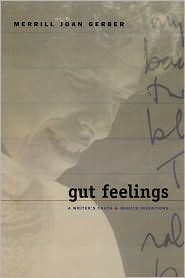
 First let me say I’ve been a dedicated writer for half a century. I’ve published twenty-five books, and I’ve even won some prizes. I know a real writer is supposed to write for the art itself, yearning only toward self-expression and the joy of creation, ignoring the fickle heart of the market place. I know all about papering the office walls with rejections. I’m not a quitter, not a cry-baby (though I have cried a few times and once I crept into bed for a few weeks till a certain violent literary shock wore off). Looking back on my writing life, I see that some warning moments stand out. In 1967, when my first novel, An Antique Man, was published, Joyce Carol Oates wrote: “I’ll be reviewing your novel for the Detroit news, and I’ll send you a clipping…” Three months later she wrote again: “…it is a most moving and painful novel, beautifully done, and I will retain certain scenes in my mind for a long time. If the long newspaper strike in Detroit ever comes to an end, I will certainly review the novel.”
I don’t know when the strike came to an end, but there was never a review. There were other hints to me about the nature of the writing life. William Shawn, at the New Yorker, read An Antique Man, and wrote to me that he and his staff had tried hard to find a section to stand on its own but they hadn’t succeeded. Two months later, one of his staff wrote me: “Mr. Shawn can’t get your book out of his mind, so please send it back to us so we can try again to find an excerpt that will work.”
Again, I took the trip to the post office with my mss. Some weeks later Mr. Shawn sent back the novel a second time. He was sorry, he had tried very hard, but he just couldn’t find a section to stand alone. The second rejection was much worse than the first —a kind of brutal blow to the delicate strand of hope that had been fluttering in my mind.
Modern psychology tells us that when a relationship feels wrong, we’d do well to focus on a single issue that’s manageable—not to list all the old insults, failings and faults of the beloved. But the list of the failings of my beloved art continues to grow longer. I feel I can no longer live with them.
Recently, I found a letter from a publisher written to me in 1986. “Thank you for sending me your novel. I think you would have to be dead not to think this manuscript is funny and lively. The only problem with it is a certain lack of discipline…”
For four months I worked to insert certain disciplines the editor felt were essential. Then she wrote again. “I think that your revisions are excellent, and that you have successfully integrated the fantastic and the real. However, difficulties arise after our heroine leaves the hospital. So now what? Can I say to you that I think you have aimed your plot in a misguided direction? I don’t know if I can, but I certainly think so. If these very real difficulties can be resolved we can discuss a book.”
What difficulties did she mean? How was I to guess at them? We had no further discussions and my novel was never published.
In 1989, an editor from Little Brown wrote me about my longest novel, a 650 page family saga called The Victory Gardens of Brooklyn: “I found this novel to be wonderfully engrossing, full of the marvelously realized characters whose personalities propel them into their individual predicaments. But midway though the mss, I felt that the chronological sequence precluded the sort of definable story line that would give each character’s subplot satisfying form and substance. If you decide to rework the novel, I would very much like to read it again.”
Rework 650 pages? On speculation? With no contract? All the while trying to guess what the editor’s vision might be? I wrote, asking if she could be more specific. Well, she could not really point the way for me. I’d have to figure it out for myself. But I had already figured out the way the book should be constructed, that’s what had taken me several years of work. I put the book in the closet where one day I listened in to be sure its heart had stopped beating.
The New Yorker, after publishing two of my stories, returned a story set at a family Thanksgiving dinner and told me the problem with it was that it was told in present tense. I rewrote it in the past tense and sent it back. Apparently they had second thoughts. “It turns out to be one of those common family event stories. We have too many of these in our inventory.”
An editor at Esquire asked me to revise a story three times, then gave up on it saying, “Sorry, but less is more.” An editor at Redbook “loved” a story up to the point where the narrator, who is depressed, decides to consult a therapist. The Redbook editor felt that that therapy might suggest insanity to some of their readers. “What should I have her do, go to Italy instead?” I asked, and the editor said that would be perfect. I made the changes and Redbook published the story.
In the 1990s, I sent my novel King of the World to twenty-five publishers. The letters of response to it showed real visceral distress: “This book is so powerful it reminds me of spoiled meat,” and “This makes me very uncomfortable to read, how do you know how men think?” It was one of the early novels about domestic violence, and all the female editors said of the heroine, “Why doesn’t she just leave him?” Finally, an editor at Atlantic Monthly Press sent me a letter saying he felt the novel was stunning and he wanted to publish it. However, he had to get support from each of five other editors. The process took five months. Each month he would write me that Editor Two loved it and it was now going to Editor Three or Editor Four. I hardly left the house. I kept the phone free for a possible call from the press. Then I learned that Editor Five also loved it. Editor Six now had the mss. I was unable to sleep. I had heart palpitations. I couldn’t eat. And then I got the final letter. Editor Six said it was very impressive but he didn’t see how they could market it.
That was the time I took to my bed. For some weeks I was ill. Cynthia Ozick suggested I send it to Pushcart Press, which did not have six editors, but one man, Bill Henderson, in charge of the decisions. Bill chose to publish the book and gave it the Pushcart’s Editors’ Book Award. The reviews made me hopeful. Publishers Weekly wrote, “A mock coronation opens this brilliant novel about the harrowing but erotically charged 15 year marriage of Ginny and Michael.” Bill Henderson called me and said, “I think it’s going to happen. New American Library wants to do a mass market paperback.” But somehow it didn’t happen. I never learned why. And what does it matter, since we all know “almost” doesn’t count.
I had a number of agents, all of whom worked in my behalf. One finally urged me to “put a little more sunshine in your typewriter,” and another fired me, saying she could earn more money by selling cookbooks.
For twenty-five years I applied for NEA and Guggenheim grants. The Guggenheim turn-down letter always came on my birthday, March 15th. I gave up applying when I realized I had asked four esteemed persons each year to write about my impressive qualities. A hundred letters! And all for naught.
My last six books have been published by university presses, which, once peer reviewers give approval, blessedly leave the author to his vision and his architecture.
What does it all mean? Is the writing life all about luck, or about talent, or about plain accident? Should a writer hope for posthumous comfort? When I told one of my daughters that I was tired of “begging and being bludgeoned,” she said, “Those are violent words, aren’t they?” But when a writer has given away great chunks of her life, and all her understanding of it, and all her knowledge of it, when she has risked losing friendships and the love of family members, when she has typed ten million words (but never had a job as a typist, never had a real income, never will have a pension), when her books are published but often not reviewed and even less read, and when she finds that bitterness is overtaking hopefulness, isn’t it time to stop?
I think I’ve written all I want to say. I did want to write this.
***
See Also: The Fine Art of Rejection Letters
Purchase Merrill Joan Gerber’s books from Powell’s.
This essay is a Rumpus Reprint and was originally published in The Sewanee Review. For more information on Rumpus Reprints please see our About page.



17 responses
this is heartbreaking, lovely, sad, beautifully written. it also leaves me with longing, wanting, and a deep sense of loss for the rest of us — if you stop writing.
ph
What a great essay on writing. You are the definition of perseverance. As a young writer shooting to get her book published, I will take your story with me.
Oh yes, I hear you Merrill Joan Gerber, and thank you. The conglomeration of publishing means so many fewer chances to publish, so many fewer quirky houses willing and interested in taking a chance. The Internet was supposed to provide us with whole new ways of making a living, but most sites are built on unpaid writing – it has killed what sporadic income I had as a journalist.
But it did give me blogging and my blog is where I can write what I want to write. No one pays me, but no one rejects me. So I haven’t stopped writing – I’ve just stopped feeling confident I can pay the rent.
Good luck, Merrill,
Sue Katz, author
Thanks But No Thanks: The Voter’s Guide to Sarah Palin
http://www.suekatz.com
It’s horrible that editors play with people’s feelings like that, and just make them work so hard and waste so much of their time for nothing. I’m beginning to understand the so-called pride of some authors who refuse to alter a single line they’ve written — take or leave it, they say.
Merrill Joan Gerber’s story almost made me cry. Why are publishers so insane? And what’s up with this ‘acceptance by committee’ stuff? Are the editors so chicken that they have to spread the blame-potential around? Moreover, most editors don’t even know what they want. They just want it ‘changed a little,’ like Merrill indicated. If it wasn’t so pathetically sad, it would be risible.
Only a fool every wrote, except for money. – Samuel Johnson
When I feel like this, I go back and read this from an Andre Dubus essay. Most of the time, it helps. “A first book is a treasure, and all these truths and quasi-truths I have written about publishing are finally ephemeral. An older writer knows what a younger one has not yet learned. What is demanding and fulfilling is writing a single word, trying to write le mot juste, as Flaubert said; writing several of them which becomes a sentence. When a writer does that, day after day, working alone with little encouragement, often with discouragement flowing in the writer’s own blood, and with the occasional rush of excitement that empties oneself, so that the self is for minutes or longer in harmony with eternal astonishments and visions of truth, right there on the page on the desk; and when a writer does this work steadily enough to complete a manuscript long enough to be a book, the treasure is on the desk. If the manuscript itself, mailed out to the world where other truths prevail, is never published, the writer will suffer bitterness, sorrow, anger, and, more dangerously, despair, convinced that the work was not worthy, so not worth those days at the desk. But the writer who endures and keeps working will finally know that writing the book was something hard and glorious, for at the desk a writer must try to be free of prejudice, meanness of spirit, pettiness, and hatred; strive to be a better human being than the writer normally is, and to do this through concentration on a single word, and then another, and another. This is splendid work, as worthy and demanding as any, and the will and resilience to do it are good for the writer’s soul. If the work is not published, or is published for little money and less public attention, it remains a spiritual, mental, and physical achievement; and if, in public, it is the widow’s mite, it is also, like the widow, more blessed.”
My publishing war stories sound similar. I feel so small and insignificant sometimes. I have taken a vow not to write another novel several times and then I do it again. I guess I enjoy the moment, getting up in the pre-dawn hours and playing with language and feeling. But sometimes I wonder if my life would feel more relaxed, more at ease, if I just lived it instead of writing about it. Since there’s little to be gained from having files of unpublished work and snotty messages from publishers.
I understand and sympathize with her pains, but from many writers’ positions, including mine, your career is exemplary and something to be envied.
i have read the article. my comment is only that ms. gerber got mixed up in imagining that agents and editors have any importance whatsoever. they are only part of the industry referred to as “publishing.” their project has nothing to do with the process of art. also, i suspect ms. gerber is a needlessly slow learner because she persisted in reverting to old behaviors, already proven in her case to be unsuccessful. it took her some time to change her strategy by appealing to university presses. i notice she’s very close-lipped as to how to pursue this new and for her better strategy.
her third mistake was to allow persons of power but not of any proven talent to tell her how to re-write her stuff. when you need craft advice, it’s best not to go to the bailiffs.
my own stance (if it’s of any interest) about this passing through the eye of a needle problem is to be realistic (and not depend on writing to provide any significant life support). if ms. gerber exercised due diligence, she would observe that most “successful” and therefore “published” authors are male. that’s the first tip off. the second is that most agents are female. if she consults the NYR or the NYT she would have noticed that in any given issue, the proportion of male-written books to female-authored books is fairly overwhelming. she would also have noticed that many published female writers have a built-in means of support. they have either married wealth or inherited it.
there is another factor which bears looking at: editors buy the stories which in their infinite wisdom, they imagine the american readership (whatever piss-poor thing that is) wants to read. Updike on his death bed was still writing about blow jobs and female protagonists cheeks all aglow with jism. Who buys that kind of “art?” And who likes it enough to want to publish it. here’s a tiny factoid: when simon schuster refused to honor their contract with brett easton ellis to publish american psycho, sonny mehta at knopf jumped on it because he knew rats in a woman’s vagina would make knopf a killing. and it did. part of this american ethos is that everyone can be a millionaire. editors buy stories that tend to confirm images of wealth, and lack of industry. how many fictional protagonists actually work for a living?
so the question to ask yourself—if you fancy yourself a writer—is what society are you writing for? do you like its psyche? do you subscribe to its values? if you do, then you can legitimately aspire be its scribe.
the next question is: for whom do you write? it seems to me ms. gerber may be confused on this issue. she may never have imagined she was writing for herself.
–Updike on his death bed was still writing about blow jobs and female protagonists cheeks all aglow with jism.
This is so ridiculously untrue that it effectively erases your credibilty. And I’m not an Updike fan, either.
–that most “successful†and therefore “published†authors are male.
See the above. It’s not 1966.
I am close to jacking it all in. I haven’t written as many novels as you, but the constant chants of, ‘Reads well, but not commercial enough,’ have driven me into the dirt.
I blog. It’s like snacking; it fills a hole. It doesn’t line the pockets though, does it?
Yeah, I guess you’re right. You put all that effort into something you love, and people who don’t have the same vision as you weren’t into it. You should just give it all up.
Really? Come on. Aren’t you doing this for you in the first place? If all you want is fame and riches, then you know what, I encourage you to give up.
Meanwhile, you HAVE been given encouragement with being published at all.
Just write.
beautifully composed, please don’t stop writing because we need you. We need you a lot more than we need the psycho-editors and nasty types who control the printing industry. I know what you mean, we end up so poor on the outside, but enriched within, because completing a novel or a story is very enriching in a personal sense, even if there are many bridges to cross.
I’d like to read one of your novels and i hope you keep writing. I’m a man and I’m a lot poorer, a lot less published and a lot more ignored than any writer I’ve heard of male or female, so I don’t know if it’s strictly about gender. Good luck sweetie 😉 Dave
I, too, have given up on writing! At first, I was so excited. So excited about crafting wonderful stories on paper…coming up with just the perfect word…making characters come to life (I write, excuse me – WROTE – children’s books). However, multitudes of rejections later – from both agents and publishers and even magazines (I got desperate!) – I am through!
I kept “re-working” and “tweaking” and “honing.” It didn’t matter. The slush piles just keep growing higher, and the publishers are starting to lock their doors. Unless, of course, you are previously published, or a celebrity. And self-publishing? Please. Who really makes money with that…especially when it comes to children’s books?
So what’s the point? I’m so tired of telling myself, “If I just make my manuscript PERFECT, they can’t say no!” Well, first of all, there’s no such thing as perfect. Second of all, yes they can say no, even if I could make everything perfect! It’s a terrible feeling, an awful feeling, to create a product that NOBODY WANTS!!!
Everybody thinks they are a writer these days. There’s just too much competition. I’m sick and tired of it. I’m done..and I’ve never felt better! It’s like a big heavy black cloud has been lifted off my head. YAY!
This sounds like a pity party to me. You should be grateful that God gave you a talent! Youve been published for heavens sakes. Not a lot of people can say that, including me. Stay positive, grateful and in the Now, and in the most loving way, F the editors and critics! You rock!
So you disappointed in us, Merrill? 🙂
Click here to subscribe today and leave your comment, or log in if you’re already a paid subscriber.