
A few weeks ago, a slim catalog from JCPenney arrived in our mailbox. It floated around the house for a few days. On its cover are printed these words:
littleredbook
fall trends 2010
I hadn’t noticed this until just the other day. Should I have? The Little Red Book, as its known in the United States, a collection of quotes from Mao Zedong, was an instrumental mechanism of the Cultural Revolution which, by some estimates, cost upwards of 3 million lives.
I mentioned the use of The Little Red Book as a clothing marketing campaign to my friend, and he said, maybe JCPenney didn’t realize what it referred to. This is possible, but I doubt it. But if JCPenney did know, does it matter? Maybe there’s some secret calculus that determines when historical tragedies are okay to use to sell products. Number of people killed ÷ years since tragedy occurred x number of miles away from the homeland. I can imagine a Saturday Night Live sketch where a bunch of marketers pitch their ad campaign to JCPenney. It begins with a powerpoint presentation showing Chinese wearing dunce caps, being beaten, publicly tortured, cannibalized, interspersed with statistics about all the intellectuals and teachers who were tortured and murdered, and all the art that was destroyed, and this interspersed with the smiling face of Mao Zedong. The lights come up, and everyone in the room is sort of sick to their stomachs and then, ta-da!, The Little Red Book slogan and design is unveiled. Funny!
Does it matter? Rather than try to convince you it does, here are 8 items for consideration.
1. “Our purpose is to ensure that literature and art fit well into the whole revolutionary machine as a component part, that they operate as powerful weapon for uniting and educating the people and for attacking and destroying the enemy, and that they help the people fight the enemy with one heart and one mind.”
–From The Little Red Book, chapter 32, Culture and Art
2. The JCPenney catalog from my home:

3. “Communist party leadership was in the forefront of this campaign of brutality through the ‘model demonstrations of killings.’ They wanted to show to the masses how to apply maximum cruelty to the prospective victims. This became a widespread forced massacres, which culminated in ‘obligatory cannibalism.’ This process began with the accusation and denunciation of the selected ‘class enemies,’ continued with their bludgeoning and dismembering, and ended with their partial consumption. After having been bludgeoned to death, some of their organs—their hearts, livers, and occasionally their genitals—were cut out, sometimes even before the victims died. Then these body parts were cooked and eaten by the assembled dignitaries in what were labeled ‘human flesh banquets.’”
–From “Cannibalism in Stalin’s Russia and Mao’s China,” available here.
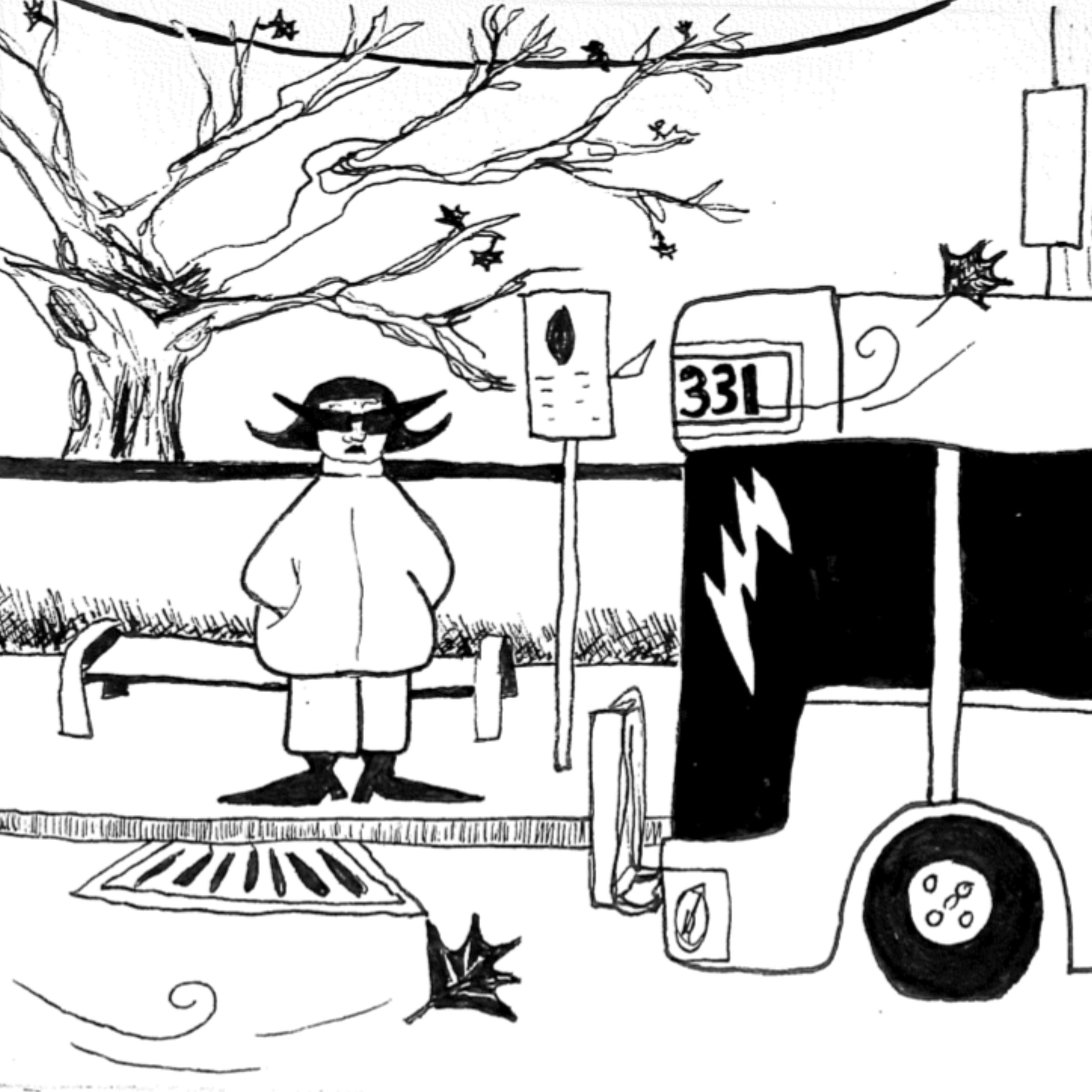
4. An example of “jet plane” torture:

5. “A Tale of Red Guards and Cannibals,” by Nicholas D. Kristof, from The New York Times.
6. There were several methods of public torture during the Cultural Revolution. Here is number six: “Whipping with copper-buckled leather belts. The typical outfit of Red Guards was a yellow military uniform with a leather belt, plus a red armband. The belts were also used to whip people. The copper buckle could cause serious damage. It was said that using the belt required special skill. Several interviewees mentioned the fact that some Red Guards talked about and exchanged their experiences on how to use the belt, including the direction and angle of the whipping.”
–From “Student Attacks Against Teachers: The Revolution of 1966,” by Youquin Wang, available here.
7. “Behind the Scenes of a Trend,” a short video by JCPenney, here:
8. JCPenney and the little red book:


5 responses
I would like to note here this is the same company that had a line of clothing called “ana” targeted to young women. Apparently they were unaware that this is a popular nickname from anorexia. I would vote Team Stupid on this one, not Team Evil.
It took me a minute to sort out why I found this post troubling or, at least, myopic. First let me say that as an anarchist I’m opposed to all forms of state-sponsored violence.
That said, JCPenny knew exactly what it was doing when it named their current catalog the LittleRedBook. They are simply joining the common marketing trend of co-opting an abstract concept of “Revolution”, not accidentally celebrating the Cultural Revolution (a sprawling, complex historical event). Like the current Levi’s campaign, or Nike and countless others before them, the thrust of the campaign is to find another way of linking their products to the abstractions of “new”, “fresh”, “youth”, “edgy” and any number of other post-counter-culture associations the word revolution conjures up in the American psyche.
This isn’t a minor point. JCPenny is operating under the probably-right assumption that little or nothing is known to their consumer base (or the executives who approved the design, or the designers of the book) about the realities of China pre- or post-revolution. And as with all campaigns targeted at a “mainstream” (read: white or assimilated) consumer, the voices of any immigrant communities with first hand and possibly traumatic experience with the Cultural Revolution don’t matter, or at least aren’t given ‘voice’ or expression.
What underlies your criticism, either intentional or not, is that the Cultural Revolution, and by extension the collected ideas of Mao Zedong, and by further extension an oversimplified idea of Communism (as in the common American dichotomy of Communism-vs.-Capitalism) is “bad”.
It would be just as easy to create a post taking the writing of Milton Friedman to task for the horrors exacted by capitalism post-publication, including everything from Vietnam to the Iraq Wars, the children who die each year from a lack of universal healthcare, the Afghan civilians we continue to bomb via Drones, the soldiers we trained at the School of the Americas on US soil who went on to kill Oscar Romero, those executed here by a legalized death penalty, or the torture at Guantanamo Bay. Sadly the list is endless and it’s ours.
This isn’t hyperbole. The use of ‘Revolutionary’ imagery for marketing is insidious and vile. It can be argued that each use of “revolution” removes a little more content from a word our world needs to embrace if we have a chance to overcome the environmental destruction or global violence we as Americans create, export and sanction every day. But it’s an oversimplification and conceit to look at JCPenny and see the violence of the Cultural Revolution/Communism without also pointing out the violence perpetrated by it and every other multinational in the name of Capitalism/Democracy.
In fact it’s a good bet that a percentage of JCPenny’s clothing is produced in Chinese sweatshops for export to our market, and is published in that very same big LitteRedBook.
I know, not every post can cover every issue, but like the late, great poet Sekou Sundiata said on his disc “Longstoryshort”, “People be droppin’ revolution like it was a pick-up line / You wouldn’t use that word if you knew what it meant/ It ain’t pretty Its bloody / It overturns things”
mzza,
Thanks for the comments. I think we agree that JCPenney–like many other corporations–seizes on the generalized concept of “revolution” to try to create a desire in consumers to buy products, etc. The Cultural Revolution, of course, wasn’t a revolution at all: no power structures were overturned. Instead, it was, among other things, a carefully calculated plan by a sociopath to wipe out those whom he perceived as threats, such as teachers, artists, and intellectuals. It was murder and intimidation through murder, not revolution.
The post is not about how numerous other corporations have yoked their marketing to the concept of revolutions, etc., but about how this specific company, at this specific time, has done this. In terms of whether I think the Cultural Revolution was “bad,” I’m willing to make that moral judgment, for sure. But I wouldn’t choose the word bad, which comes off as pretty thin broth. Monstrous is more like it. And even that doesn’t come close.
As a law student currently studying both Art Law and Consumer Issues this semester, I am sad to say that this is yet another history lesson I’ve added to the ever growing list of things I should have been taught in high school history (or in the four years of undergrad that came after), especially considering the institution from which I received my diploma touted itself as a college preparatory school. I also often pride myself on uncovering similarly inappropriate or historically insensitive marketing campaigns or sales pitches. I appreciate this discussion as well as the history lesson. Thank you.
I doubt that little red book would resonant with many. For me (a 58 year old) there is a Mao connection, but I didnt link it to the cultural revolution. On one level the tee shirt that says “communism killed 100 million people and all I got was this lousy t-shirt” sums up the whole evil that this system inflicted on its own people. But we really don’t dwell on this with Che chic and glossing over Castros or stallions crimes.
Under those circumstances it is not fair to gig JCPenny for their catelogue. But it was a good reminder of what evil men can do, especially in a totalitarian system. Thanks.
Click here to subscribe today and leave your comment.