
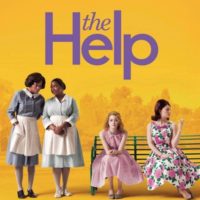
When my brothers and I have a particularly frustrating day rife with racial insensitivity, we’ll call and say, “Today is a Rosewood day.” Nothing more needs to be said. Rosewood, is a movie set in 1923, and tells the story of Rosewood, a deeply segregated, primarily black town in Florida. A married white woman in nearby Summer, having an affair, is beaten by her white lover. With no other way to explain the marks on her body to her husband, she cries rape and when the townsmen ask her who has done this terrible thing, the white woman, predictably, shrieks, “It was a nigger,” her voice pitched in a way that makes your skin crawl. The white men proceed to lose their minds, surrender to a mob mentality and create a lot of havoc, lynching an innocent black man and tormenting the townsfolk of Rosewood. The angry mob destroys nearly every building, house, and structure in the town. There are some heartbreaking subplots but mostly the story hinges on a little white lie, so to speak. It’s all very distressing and the injustice of what happened in Rosewood is, at times, unbearable because it is based on a true story. The first time I saw Rosewood, I turned to my friend, and said, “I don’t want to see a white person for three days.” She said, “That’s not fair.” Fortunately, it was a Friday so I locked myself in my apartment and by Monday, I was mostly ready to reengage with the world.
If Rosewood demands a three-day window of voluntary segregation, The Help demands three weeks, maybe longer.
*
Watching historical movies about the black experience (or white interpretations of the black experience) have become nearly impossible for the same reason I hope I never read another slave narrative. It’s too much. It’s too painful. It’s too frustrating and infuriating. The history is too recent and too close. I watch movies like Rosewood or The Help and realize that if I had been born to different parents, at a different time, I too could have been picking cotton or raising a white woman’s babies for less than minimum wage or enduring any number of intolerable circumstances far beyond my control. More than that, though, I am troubled by how little has changed. I am troubled by how complacently we are willing to consume these often revisionist stories of this country’s complex, and painful racial history. History is important but sometimes the past renders me hopeless and helpless.
*
When I first saw the trailer for The Help several months ago I was not familiar with the book. The moment I saw the first maid’s uniform grace the screen, I knew I was going to be upset. By the end of the trailer, which contained all the familiar, reductive elements of a movie about the segregated South, I had worked myself into a nice, frothy rage. In the following months, I continued to see the trailer only now it was plastered all over the Internet and on television and the reprinted tie-in book version was heavily hyped, even climbing back to the top of the Amazon bestseller list because this is one of those books nearly everyone seems to love. Last week, I borrowed the book from a friend, read it, raged more.
*
The Help is billed as inspirational, charming and heart warming. That’s true if your heart is warmed by narrow, condescending, mostly racist depictions of black people in 1960s Mississippi, overly sympathetic depictions of the white women who employed the help, the excessive, inaccurate use of dialect, and the glaring omissions with regards to the stirring Civil Rights Movement in which, as Martha Southgate points out, in Entertainment Weekly, “…white people were the help,” and where “the architects, visionaries, prime movers, and most of the on-the-ground laborers of the civil rights movement were African-American.” The Help, I have decided, is science fiction, creating an alternate universe to the one we live in.
*
Hollywood has long been enamored with the magical negro—the insertion of a black character into a narrative who bestows upon the protagonist the wisdom they need to move forward in some way or as Matthew Hughey defines the phenomenon in a 2009 article in Social Problems, “The [magical negro] has become a stock character that often appears as a lower class, uneducated black person who possesses supernatural or magical powers. These powers are used to save and transform disheveled, uncultured, lost, or broken whites (almost exclusively white men) into competent, successful, and content people within the context of the American myth of redemption and salvation.” (see: Ghost, The Legend of Bagger Vance, Unbreakable, Robin Hood (1991), The Secret Life of Bees, Sex and the City, The Green Mile, Corinna, Corinna etc.)
In The Help, there are not one but twelve or thirteen magical negroes who use their mystical negritude to make the world a better place by sharing their stories of servitude and helping Eugenia “Skeeter” Phelan grow out of her awkwardness and insecurity into a confident, racially aware, independent career woman. It’s an embarrassment of riches for fans of the magical negro trope.
*
The theatre was crowded for the screening of The Help I attended. Women came in groups of three or four or more, many of them clutching their well-worn copies of the book by the same name. As we waited for the movie to start, and a long wait it would be because the projector was malfunctioning (a sign?), I listened to the women around me, certainly well-meaning, many of them of the Golden Girls demographic, chattering about how much they loved the book and how excited they were and how long they had been waiting for this movie to open. I wondered if they were reminiscing about the good old days, then decided that was unfair of me. Still, they were quite enthusiastic. My fellow moviegoers applauded when the movie began and they applauded when the movie ended. They applauded during inspiring moments and gasped or groaned or clucked their tongues during the uncomfortable or painful moments. Their animated response to the movie was not mild. My faith in humanity was tested. I was the only black person in the theatre, though to be fair, that mostly speaks to where I live. As I walked to my car I came to the bitter realization that The Help is going to make a whole lot of money and will be really well received by many.
*
If you go to the theatre without your brain (just leave it in the glove compartment), The Help is a good movie. The production is competent. The cast is uniformly excellent and includes the immensely talented supporting cast of Cicely Tyson, Allison Janney and Sissy Spacek. I would not be surprised if stars Viola Davis and/or Octavia Spencer receive Oscar nominations because not only do they do excellent work in the movie, Hollywood loves to reward black women for playing magical negroes. While I wondered how so many talented people signed on to this movie, the cast is not the problem here. As others have noted, The Help is endemic of a much bigger problem, one where in 2011, the best role available for a two-time Tony Award and one-time Oscar winner like Viola Davis is that of a maid.
Davis, who is always sublime, brings a great deal of intelligence, gravitas and heart to the role of Aibileen Clark, an older maid who has just lost her only son to a mill accident and has worked her whole life as maid and nanny, raising seventeen white children. When we meet her, Aibileen is mourning her son and working as the maid for Elizabeth Leefolt and her daughter Mae Mobley, a chubby, homely girl who is often neglected by her mother. Aibileen’s magical power is making young white children feel good about theyselves. Whenever Mae Mobley is feeling down, Aibileen chants, “You is kind. You is smart. You is important.” She showers the child with love and affection even while having to listen to young white women discuss black people as a subhuman species, deal with the indignity of using a bathroom outside of the main house, and while trying to cope with her grief. Magic, magic, magic. At the end of the movie, Aibileen offers her inspirational incantation to young Mae Mobley even after she is fired for an infraction she did not commit because that’s what the magical negro does—she uses her magic for her white charge and never for herself.
Spencer is also formidable as Minny Jackson, the “sassy” maid (where sassy is code for uppity), who works, at the beginning of the movie, for the petty, vindictive and socially powerful Hilly Holbrook (Bryce Dallas Howard), president of the Junior League. Hilly Holbrook’s claim to fame is among other cruelties, proposing an initiative ordering all white homes to provide separate bathrooms for the “colored” help. When Minny is fired from that job, where she uses her negro magic to look after Hilly’s elderly mother, she goes to work for Celia Foote. The women of the Junior League in Jackson ostracize Celia because she was pregnant when she married, is considered white trash and has committed other petty social sins. Minny uses her mystical negritude to help Celia cope with several miscarriages and learn how to cook and at the end of the movie, the narrative leads you to believe that Celia indirectly empowers Minny to leave her abusive husband as if a woman of Minny’s strength and character couldn’t do that on her own. Then Celia cooks a whole spread for Minny and allows the help to sit at her dining room table just like white folk, aww shucks. Minny asks, “I’m not losing my job?” and Celia’s husband says, “You have a job here for the rest of your life.” Minny, of course, beams gratefully because a lifetime of servitude to a white family, doing backbreaking work for terrible pay is like winning the lottery and the best a black woman could hope for in the alternate science fiction universe of The Help.
Emma Stone plays Eugenia “Skeeter” Phelan who has just returned to Jackson after graduating from Ole Miss. She gets a job as an advice columnist for the local paper but she has bigger aspirations and a whole lot of gumption. We know this because she sasses her mother and doesn’t make finding a man her first priority, no. Her first priority is to give grown black women a voice. Being back in Jackson forces Skeeter to confront many of the social norms she has taken for granted for most of her life. While her friends baldly treat “the help,” terribly, Skeeter sits silently, rarely protests, but often frowns. Her frown lets us know that racism is very, very bad and that good Southern girls should be nice to their mammies. Skeeter gets the bright idea to tell the stories of the maids who spend their lives cleaning white people’s houses, raising white people’s babies. Stone is charming and believable even if the character she plays is willfully ignorant. The charm, though, grates because it is fairly obscene to imagine that this wet behind the ears lass would somehow guide the magical negroes to salvation through the spiritual cleansing of occupational confession. When Aibileen reminds Skeeter they shouldn’t be seen together, Skeeter briefly educates herself on Jim Crow laws and then ignores whatever she learned, imposing herself on Aibileen’s bewildering good will, urging Aibileen to share her story about what it’s really like to be a maid in Jackson, Mississippi, as if the truth were not plainly obvious. At the end of The Help, Skeeter offers to turn down her dream job in NYC so she can stay and “protect” Aibileen and Minny. We’re supposed to see this as a heartwarming gesture but it only brings the movie’s overall condescension into bitter relief.
*
The Help is, in the absence of thinking, a good movie, but it is also an unfairly, emotionally manipulative movie. There are any number of times during the interminable two hours and seventeen minutes running time when I felt like my soul would shrivel up and die. I was devastated by all of it. Everyone around me cried openly throughout most of the movie. My eyes were not dry. I am certain we were often crying for different reasons. Every transgression, injustice and tragedy was exploited so that by the end of the movie it was like the director had ripped into my chest, torn my heart out and jumped up and down on it until it became a flattened piece of worn out muscle—cardiac jerky, if you will.
The movie is emotionally manipulative but in a highly controlled way. The Help provides us with a deeply sanitized view of the segregated south in the early 1960s. There are many unpalatable moments but they are tempered by a great deal of easy humor or contrived touching emotional moments. The movie gives the impression that life was difficult in Mississippi in the 1960s for women, white and black, but still somewhat bearable because that’s just how things were.
The implausibilities in the science fiction universe of The Help are many and wild. Certainly, that happens in most movies, especially these days. What makes these implausibilities offensive in The Help is that most of us know better. We know our history. There is not enough height in the atmosphere for us to suspend our disbelief.
*
If you do bring your brain to The Help, the movie is worse than you might imagine. Seeing The Help through a critical lens was excruciating. At one point, while teaching Celia Foote to make fried chicken, Minny says, “Frying chicken tend to make me feel better about life.” That a line about the solace found in the preparation of fried foods made it into a book and movie produced this decade says a great deal about where we are in acting right about race. We are nowhere. That line was one of many that made me cringe, cry, roll my eyes, or hide my face in my hands. To say I was uncomfortable is an understatement. Little things also grate. The over-exaggerated dialect spoken by the maids evokes cowed black folk shuffling through their miserable lives singing Negro spirituals. In Aibileen’s home, for example, there are pictures of white Jesus and her recently deceased son. After Medgar Evars is shot and JFK attends his funeral, the camera pans to the wall where a picture of JFK joins the other two, not say, a picture of Medgar Evars himself or another civil rights leader. In another subplot, of which there are many, Skeeter’s childhood nanny, Constantine (Cicely Tyson) is so devastated after being fired by the white family for whom she worked for over twenty-seven years, she dies of a broken heart. The gross implication is that her will to live came from wiping the asses and scrubbing the toilets of white folks for most of her life. It’s this kind of white fantasy wish fulfillment that makes the movie so frustrating.
Men, black and white, are largely absent from the movie. White men are absented from any responsibility for race relations in 1960s Mississippi. The movie is devoid of any mention of the realities of the sexual misconduct, assault and harassment black women faced working for white men. We see nary an unwelcome ass grab. I don’t think lynching was brought up once. We don’t know how Aibileen came to have a son so we’re left to assume, because she is magical, that her child’s conception was immaculate. Minny’s husband, who we never see, is abusive. We hear her being abused during a phone call and toward the end of the movie, we see Minny’s bruised face, but we never see the man, Leroy, who has committed these acts of violence. There is also the bizarre subtext that the woman with sass is the one who has to be kept in line through brutality. As in most popular portrayals, black men are dealt with in depressing, reductive ways when they are dealt with at all. This movie shamelessly indulges in the myth of the absent black man. The actual consequences of black women consorting with a young white girl were glossed over as merely inconvenient instead of mortal. The white women are portrayed as domestically tyrannical while living highly constrained lives as desperate Southern housewives (so we can sympathize).
I could go on and on and on. I won’t. It has been twenty-nine hours since I saw The Help. I am still in isolation.
*
Race is handled ineffectually in movies and fiction all the time. I have become accustomed to this reality. And yet. I have struggled with writing about The Help because there is something more to my anger and frustration.
At first I thought I resented that a deeply flawed book has sold more than three million copies, spent more than 100 weeks on the best seller list, and is a major motion picture. The reach of the malignant message of The Help is far indeed but books I don’t like do well all the time. I don’t lose sleep over it. I also cannot deny that the book and movie have their moments. There were times when I laughed or was moved, though certainly, those instances were few and far between.
I think of myself as progressive and open-minded but I have biases and in reading and watching The Help, I have become painfully aware of just how biased I can be. My real problem is that The Help is written by a white woman. The screenplay is written by a white man. The movie is directed by that same white man. I know it’s wrong but in my heart, I think, “How dare they?”
Writing across race (or gender, sexuality, and disability) is complicated. Sometimes, it is downright messy. There is ample evidence that it is quite difficult to get difference right, to avoid cultural appropriation, reinscribing stereotypes, revising or minimizing history, or demeaning and trivializing difference or otherness. As writers we are always asking ourselves, “How do I get it right?” That question becomes even more critical when we try to get race right, when we try to find authentic ways of imagining and re-imagining the lives of people with different cultural backgrounds and experiences. Writing difference requires a delicate balance and I don’t know how we strike that balance.
I write across race, gender, and sexuality all the time. I would never want to be told I can’t write a story where the protagonist is a white man or a Latina lesbian or anyone who doesn’t resemble me. The joy of fiction is that in the right hands, anything is possible. I firmly believe our responsibility as writers is to challenge ourselves to write beyond what we know as much as possible. When it comes to white writers working through racial difference, though, I am conflicted, and, I am learning, far less tolerant than I should be. If I take nothing else from the book and movie in question, I know I have work to do. For that reason alone, I don’t regret engaging with these texts.
I don’t expect writers to always get difference right but I do expect writers to make a credible effort. The Help demonstrates that some writers shouldn’t try to write across race and difference. Kathryn Stockett tries to write black women but she doesn’t try hard enough. Her depictions of race are almost fetishistic unless they are downright insulting. At one point in the book, Aibileen compares her skin color to that of a cockroach, you know, the most hated insect you can think of. Aibileen says, staring at a cockroach, “He big, inch, inch an a half. He black. Blacker than me.” That’s simply bad writing but it’s an even worse way of writing difference. If white writers can’t do better than to compare a cockroach to black skin, perhaps they should leave the writing of difference in more capable hands. In The Help, Stockett doesn’t write black women. She caricatures black women, finding pieces of truth and genuine experience and distorting them to repulsive effect. She makes a very strong case for writers strictly writing what they know, not what they think they know or know nothing about.
141 responses
thank you so much for writing this. i read the book, wincing through most of it, and refuse to see the movie. this article is amazing – incredibly passionate, well-written and compelling.
Jesus, Roxanne. Thank you.
Thank you for every little thing you’ve written here.
I can barely contain my rage at this whole phenomenon, but you’ve articulated much of it here.
Thank you.
Thank you for all that you’ve written here. You’ve strengthened my resolve to avoid this media phenomenon with all the resources I can muster.
Hanne overheard some folks talking about this movie at our local gym, “The Help? White people don’t need any help telling themselves they aren’t racist. I ain’t paying money for that.”
Thank you. Amen! Thank you.
Found myself nodding along as I read this. Vividly remember the cockroach line from the book. This is a terrific essay, Roxane: thank you!
Roxanne, There’s nothing more to say–you’ve said it all. I read this book for a book club and I was sick with rage. Sadly, there’s enough identification with the oppressed that many don’t see the horrors of the book. I’ll just note, too, that the use of southern dialect for the African American characters but not for the white characters, who would have spoken much the same way, is not only condescending but very bad writing. You’re right–malignant is the word for this book; it’s a plague.
thanks, I guess, for admitting you realize your own lack of tolerance. Everyone’s a little bit racist- and there’s really no way around it. I never planned on reading The Help (and I still don’t) because I figured it would be exactly as you found it to be- utter tripe. But I have to agree with your friend’s statement: “That’s not fair.” it’s not. It’s stupid and wrong that years have passed since the events that allowed desegregation to become (mostly) reality, and yet still a white person like myself is made to feel guilty for slavery they had no part in, and a black person reading a book can’t help but be enraged at the historical events it glosses over in favor of ‘the magic negro’. What are we to do, though? Ignore the multiple elephants in the room? It’s a catch 22 no matter how you look at it.
…and man I knew this book was gonna suck.
Thank you, thank you, thank you for articulating so well the causes for the fury that has been growing in my gut since I saw the first trailer for this film.
I realize it’s outside the scope of your review, but I’d love to see you tackle the appropriation issues around the lawsuit brought by one of Stockett’s consultants (the ‘real’ Aibileen). As an anthropologist interested in the ethics of ethnograpic reciprocity, I’m incensed by the hypocrisy of Stockett’s treatment of her consultant.
All of this, yes. I keep having well-meaning people shoving this book at me, and I keep politely changing the subject. Now it’ll just be more efficient to point them towards this link.
@Serah: You write, “and yet still a white person like myself is made to feel guilty for slavery they had no part in.” The problem is that the impact of slavery, and the racism that justified it, is still alive and has dire consequences in little and big ways every day. And that racism doesn’t live and breathe separate from the people who perpetuate it. And, yes, that is mostly white people. All of us white people. And guess what? It is totally fair. Every white person I have asked would rather feel that guilt than trade it for black skin. That’s all we need to know about how far we have yet to go.
Sadly, it doesn’t surprise me at all that the book and movie have done well. Things that make white people feel good (or less bad) about the real impact of racism tend to draw more positive attention than things that try to portray reality. Not long ago I saw a great discussion between Angela Davis and Tim Wise about race, class, otherness and social justice. The group putting on the event videotaped it and is putting out a DVD in the near future. If I can find the link for the organization I’ll post it.
I never comment, but I really loved this article and feel compelled to chime in here. Serah, this column was not designed to make white people feel guilty about the slavery they had no part in. It was arguing that white people should treat racial difference in a responsible and informed way, because the legacy of slavery and the persistence of racism in our society still privileges their voices. It is a lack of nuance and complexity that paints literary treatments of black women into caricatures. It is also a lack of nuance that drives the problematic black-and-white statements as yours (“it’s stupid and wrong that I am made to feel guilty about slavery”). I agree that we shouldn’t ignore the many elephants in the room, but serious self-examination is probably a good first step to addressing them.
Thanks for the details, because I refuse to touch this book, discuss it, or see the movie. Ever.
I enjoyed your writing as always Roxanne, and although I don’t have a basis to work off of (not having read the book or watched the movie) I find little reason to disagree with your assessment of either.
However, I do see where Serah is coming from, although I think she wrote her comment a little charged up much like when this column was written. That you acknowledge your bias and the work you have to do approach these things from a more “fair” perspective, there is still the ever present notion of the “white devil” lacing it’s way in and out. I think the general sentiment that Serah is expressing is that the open endedness of your points essentially lays the burden of a bad author, a bad screenwriter and a bad director on the shoulders of white people in general (why else would you need to self segregate?). As if we have any control over how some hack writer turns black, civil rights era women into caricatures or that wine sipping, book club biddies will eat it up.
There is still a lot of work that needs to be done in regards to racial equality, but a great first step would be to stop pretending that it’s simply the ‘white man’s burden.’ In the end all that does is reinforce stereotypes of a different variety, no one should be pigeon holed if we ever want to get anything accomplished.
I don’t really think promoting the sanctity of otherness helps any of us.
Roxanne, I wonder what you thought of a very similar film (in tone, at least) The Blind Side. I found myself in the minority in that I couldn’t sink into the narrative largely from the not so subtle inherent racism of the story (only thanks to his RICH white benefactors is he able to rise above and achieve something). Well, that and Tim McGraw’s acting is terrible.
@Serah: “still a white person like myself is made to feel guilty for slavery they had no part in”
That guilt is something you heap upon yourself and for whatever reasons you carry inside you. I feel no guilt whatsoever because, as you say, I had no part in it. I may be white, but I grew up hands in the dirt absolute poor in the rural South and I have worked every day of my life since I was six or seven years old. My family was every bit as much “the help” as anyone else. Likewise, I grew up around some pretty hardcore racism (like two mangy dogs fighting to the death over the one measly scrap of bone thrown to us both by our RICH white masters).
The ones most plagued by guilt are always the RICH whites. Wonder why that is?
Actually, Nate, the burden of racism has fallen almost exclusively of people of color, then and now. Why is the “great first step” you mention also doing the same? The author admits to a lot more than you do in terms of bias and you imply that first you should be assured that the fundamental problem we are talking about is not racism by white people. But that is *exactly* the uncomfortable truth we are talking about.
A “great first step” would be to simply admit that you have benefitted from racism and have, whether on purpose or via the privilege of cluelessness, contributed to racism. I have for sure. Being honest about the uncomfortable (for white people) truth does more to move forward discussions on racism than trying to flip the conversation into something else.
Nate, it’s not a question of lack of talent. It is the despicable wallowing in fantasy which puts white people at the top of the pyramid, and black people at the bottom, but charitably gives the black people the opportunity to make the good white people even better. It is printed junk food, and can rightly be criticized for its deathly effects.
Serah, I don’t think anything in my essay suggests that white people should feel guilty about anything nor do I invoke slavery save to mention I’m tired of reading slave narratives. White guilt is driven internally more often than externally. If you (generally speaking) feel guilty, it’s important to examine why. Discussions about race are difficult because everyone gets defensive. It’s easy to see why. I absolutely own my bias when it comes to bad writing about race by white writers. They shouldn’t do it. I’m working on my bias and I’ll get better. There are also white writers who nail race or do a damn good job. One example is Tony Kushner with his shamefully underappreciated, brilliant musical Caroline or Change. In writing about The Help am pointing out some very real problems in a book and movie that are recent texts. These problems of representation are current problems, not past problems. I’ll also add that one of the things I edited out of the beginning of the essay, because it didn’t feel as relevant, is that after my brothers and I say, “It’s a Rosewood Day,” we joke about how going home might be a problem. We have white grandparents, many other relatives and all three of us currently are or have been in relationships with white people and have biracial children. The sentiment of wanting voluntary segregation comes from a place of fatigue and frustration rather than malice.
Nate the need for self segregation is not about white devilhood at all. It’s about being tired and frustrated and not wanting to have to deal with any race-related BS for a few days. This is not to say that all encounters with white people are infused with BS, not at all, but rather to say, the potential is there and after certain experiences, you want to avoid engaging with that potential. It’s also totally a personal thing, Rosewood Day. It’s a bit tongue in cheek and it’s also not about casting blame. I voluntary segregate for any number of reasons not related to race as well. After a long day of teaching, for example, I voluntary segregate from students.
Alyc, the lawsuit is a complicated thing. I don’t know enough about it to have an informed opinion beyond thinking that Stockett did appropriate from the real life Aibileen’s life and it wouldn’t kill her to offer that woman some compensation. I was sad to learn, today, that the case was dismissed. I will also say that a small part of me thinks fiction writers draw from their real lives all the time and it would be really difficult to compensate everyone who might see glimpses of themselves in fiction. It’s an ongoing conversation, the one about where writers should draw the line between inspiration and appropriation. Based on what little I know (based on reading a handful of articles), it seems like Stockett crossed deeply into appropriation territory but it’s so hard to know.
Jason, oh The Blind Side. On the one hand, I love sports movies, I love Sandra Bullock, and I am a sucker for inspirational stories. I enjoyed the movie but I see the movie’s many, many problems too. The Blind Side exploits the magical negro trope in its own way and also, the whole save the poor illiterate black kid thing is troubling and also, the movie took some real, silly liberties with the true story. The movie played, shamefully, on the poverty angle and the aww shucks woe is me stuff while glossing over a whole lot of the racism that was part of the true story. That said, it is actually based on a true story so it’s not like some writer imagined up the rich white family taking in a black kid out of nowhere. This NPR article actually talks about The Blind Side in ways that speak to many concerns people had with the movie: http://www.npr.org/blogs/monkeysee/2009/11/the_blind_side_how_do_you_tell.html
Great, smart essay, Roxane. Thank you for writing it.
Fuck yeah Roxane. This is excellent. Thank you for speaking the truth. And I know EXACTLY how Rosewood days go haha. I might have to appropriate that term. 🙂
I am really glad that I read this article. I have not read the book or seen the movie, even though just about every woman I know has recommended it to me. Not my thing. But this article did move me, make me ask questions of myself and gave me food for thought. I will probably never be invited to book club again because the ladies I know LOVE this book and even had a special night out to see the movie. I just posted this article on the club’s facebook page and recommended each of them read it.
Great piece. As for white writers writing across race, are you familiar with Susan Straight? She was a former professor of mine, and her novel A Million Nightingales was on a list of suggested readings by the Association of Black Women Historians, in a press release about The Help.
Roxane–
I’m not sure the “magical negro” concept applies here. Davis’s and Spencer’s characters gave, sure, but not blindly — and in the end, the fact that they aided their own cause seemed much more significant (to me) than their assisting a young white writer who might only have been inconvenienced by their refusal.
I live in South Carolina, and was one of the few white people in a theater packed with black women who laughed and sniffled along with me. As a screenwriting student, I’m smart enough to know this isn’t the best film in the world; it’s a potentially disastrous adaptation of a pop-lit novel unexpectedly buoyed by one of the strongest ensemble performances I’ve ever seen. But labeling it “science fiction,” I think, hints at denial.
Black women who were taught to expect nothing more than a subordinate housekeeping job actually existed, as did white women who were told it was sacrilege to aspire to be anything more than someone else’s wife. Many of them grew emotionally distant from (or even resentful of) their own children. My mother grew up in the 50s, and was raised by a black maid whom she loved much more than her own, rather hateful mother. I’m guessing some of the middle-aged women you saw in your theater — “reminiscing about the good old days” — were remembering the only women who ever set an example for them, not yearning for their own water fountains.
It doesn’t surprise me that so many of the most talented black actresses have, at some point or another, been forced to play a maid. What about the brave young people who fought on the front lines with the SCLC and SNCC? Aren’t there more riveting stories waiting to fictionalized? Of course there are. But authors like Stockett have obviously overextended themselves as it is. At some point, it falls on the shoulders of black filmmakers to show — not tell — white filmmakers what they’ve inevitably been getting wrong. Davis knows this, and has already announced she’s co-producing the next film she plans to star in. And frankly, my expectations the result are already much higher than they were when I walked into The Help.
Roxane, I really value how completely and articulately you’ve expressed your thoughts. I’ve read the book and seen the movie, and I heard *clunk* at many of the points you mentioned (the cockroach thing is atrocious. What was she thinking?). But, where you were biased toward the author, I mustered some sympathy for her. The reason is that I’m a white writer, and in my current novel, I’m busting my ass trying to write several authentic African American characters. But, it’s difficult to know how effective I’m being. I can’t even know that I’m not being horribly offensive. I can research, I can read effective novels with African American characters, I can read criticism such as this. But, at the end of the day, how do I really know if I’ve been effective? I’m working my ass off, but I realize that someone someday could still suggest what you have with Kathryn Stockett, that I “didn’t try hard enough.”
My question is this: what do I do? Do I give up? Do I never try? Do I only write about white characters?
I don’t really believe that you honestly think writers should only write what they know. Isn’t it better for a white authors to attempt to understand an African American character’s situation at all, even if they fail? To me, this indicates progress in itself.
I’m coming from the perspective of a children’s book author. Traditionally, in children’s literature, white authors write about white kids and black authors write about black kids. Unfortunately, there are comparatively few African American protagonists in children’s literature. To me, this is a travesty. I’m also an elementary school teacher, and I can say with certainty that children and teens don’t discriminate in their reading choices–if there were more books with African American protagonists, they would be consumed by children of all races. Authors are responsible for the lack of diversity in young people’s literature. More to the point, white authors responsible for the lack of diversity. My thinking is that, if more white authors at least attempted to write African American characters, great progress could be made. We wouldn’t need to tolerate poorly-executed books like The Help. If there were greater quantity and greater variety, readers would be given the opportunity to learn, to become discerning.
The way to eliminate lazy or stereotypical portrayals of African American characters is not for white authors to quit attempting to write African American characters altogether, it’s for more white authors to try. This is the only way to flush out ineffective portrayals and to encourage authenticity.
Now, I can’t really comment on The Help specifically, since I have not seen the movie or read the book. But why do so many movies about race made by white people treat the white characters as if they are the ones that really matter? White people who are racists who realize they were wrong and become not-racist, white people who help the negroes with their civil-rights thing, brave white people who, at relatively minimal but bravely borne cost to themselves, help the black people in their time of need, white people served by saintly black maids – do my fellow white people really think those are the interesting stories about race? Because I don’t.
thank you. we all have to pick and choose our battles and I’ve been on a thousand different front lines. And I’ve had a Rosewood day which unfortunately for me was termed a Shreveport day named after a day I was refused service at a restaurant in Shreveport Louisiana. And on those days I find myself looking up at something somewhere asking “Really?” as in “You want me to fight Now?” Unfortunately it weighs heaviest on me that the question was never if to fight but when to fight. here is a statement put out by the Association of Black Women Historians on The Help http://www.abwh.org/images/pdf/TheHelp-Statement.pdf You’re brilliant and gorgeous and tough and it’s great to know that we can all take turns or be side by side or triage our Rosewood days or just have some afternoon chisme and when the hour comes take pen to paper.
Roxanne –
I think you’re absolutely right that people get defensive when talking about race – I also think they don’t know how to start, especially when the person who would like to start the conversation is white. I don’t deny anyone’s right to be angry – as a woman, I definitely feel some rage toward men in general from time to time, which is unfair to direct at all men and unproductive as well. But it is sometimes difficult to start a conversation not knowing if you’re going to say something offensive or being unaware of historical facts and risking being written off as ignorant. Not every white person, obviously, has a genuine desire to learn or to grow, and not every black person has ever automatically shut me down when I do start asking questions. I get your anger – I share it in a sense everytime I flip through an episode of, say, The Girls Next Door – but perhaps a companion piece might be also to point out how it could have been done right. Viola Davis said in an interview that she doesn’t have a problem playing “the help” because black women in the South commonly WERE maids back then. I see from your piece that there was some anger toward showing black women as maids and cooks, but – and no sarcasm meant – I would really like to know HOW ELSE this could have been depicted. I understand many of the things that are wrong, and I am lucky that in my work environment there are a lot of black women who remember that era and allow me to ask questions about how they think I can make an attempt to get things more right, and they never make me feel stupid, and they never make me feel like a closet racist for not seeing the world through their eyes. One in particular stayed up with me until 1 am during a conference this summer, talking about race, what she grew up seeing, what I’ve grown up thinking, where our thoughts converge and where we could do better to understand each other. I’m so lucky to have such an open person as a friend.
People mean well. You mean well. The ladies in the theatre where you saw the film mean well. But we have to remember that progress is about more than just pointing out where things go wrong. I don’t want to be told that I can’t write from the perspective of a black person, just as you don’t want to be told you can’t write in the voice of a man. And I don’t assume that I know all the nuances of race, either. But I can’t begin to understand them if all I ever hear is how I can’t understand.
Also, I got all caught up and forgot to say that your piece did make me think, so thank you for writing it. I haven’t seen the movie nor have I read the book, and I’m interested, given your perspective on the story, to know whether you’d recommend that I do either. I haven’t decided – I adore Viola Davis, and yet there are some undertones that you made clear that I would hate to spend my money endorsing.
Roxane, I like what you said to Serah about the desire for voluntary segregation coming from a place of fatigue. We should write about that more often, we outspoken types.
Serah, one of the problems with this film and book is that they are apparently more concerned with assuaging white guilt than depicting the violent reality of white supremacy in the 1960s. Stockett’s narrative also fails to honestly portray the AGENCY of black people in the Civil Rights movement.
Thank you for these gems:
– “magical negro” (taking due note that it originates with Matthew Hughey)
– “mystical negritude”
– “science fiction”
– “alternate universe”
and for all the good quality thinking. What a bracing piece. Incandescent. For the record, I didn’t feel I was being made to feel guilty for slavery.
Thank you for putting words to a phenomena. I once edited someone’s work which also contained a magical negress who miraculously put aside mourning for her dead child in order to selflessly do for a white character who was old enough to do for herself. Needless to say I quite strongly suggested alterations. Anyway, you’ve put the rage on the page for me, and I’m white. That being said, I have also tried to cross racial lines and have not been convinced I wrote in a way that avoided that magical scrim of the “other.” An incredible empathy is required. I am sure not all of us have the amount of empathy required to this very hard work. I’m happy for the strength and honest feeling of the last line of your essay.
p.s. I have no interest in the book or movie, never have. If you’ve read/watched one of these things, your read/watched them all.
Oops, yes, “phenomenon.” I edit!
Minny asks, “I’m not losing my job?†and Celia’s husband says, “You have a job here for the rest of your life.â€
Pardon me while I grind my teeth.
Skeeter’s childhood nanny, Constantine (Cicely Tyson) is so devastated after being fired by the white family for whom she worked for over twenty-seven years, she dies of a broken heart.
Okay, that’s it. HULK SMASH!
It’s this kind of white fantasy wish fulfillment that makes the movie so frustrating.
I’ll bet. Can we call for a moratorium on white people making movies that appropriate the experiences of POC? I refuse to see Avatar for the same reason.
Amazing! Thanks, Roxane!
Serah:It’s stupid and wrong that years have passed since the events that allowed desegregation to become (mostly) reality, and yet still a white person like myself is made to feel guilty for slavery they had no part in…
That’s not what we white folk are being asked to do. We’re being asked to remember that, when we fret about the racial gap on standardized tests, our culture has 400 years of not encouraging black literacy. It’s about checking privilege and listening when other people are talking, not “feeling guilty about slavery”.
Also, way to take a rant about how the black experience is portrayed in movies and make it about whites. High-five!
Roxane,
Thanks for putting it so aptly. There were so many times that I flinched, grimaced and groaned, while reading the book and watching the movie. But, I had to read it and witness the movie in the way that I watch really bad reality shows. I read and watched with disbelief, but I guess in someways it wasn’t surprising at how little the dominant culture does not get us, but that is what privilege is all about and Stockett gets awarded for just the attempting to go there, when many capable and talented black authors have, but the world is not ready to digest the truth. Stockett implicates herself time and time agin in the book and the movie at how little she does know about the black race. The cockroach line was one of many faux pas. Again thanks for keeping it honest and real.
I’m a white guy and a writer and I was wary of this book/movie to begin with…..but wow, the stereotypes and caricatures are even worse than I suspected.
It makes me especially sad and angry that the men of color are either absent or abusive. That to me is one of the worst and laziest sins of these writers….I loved The Color Purple (the book) which spoke to me on so many levels….and was very disappointed when the movie really condensed and/or eliminated Mister/Albert’s journey and relationships – and made him a cardboard cutout villain.
The pop culture attitude may be “Oh, it’s just a book/movie.” But films (and TV) feed perceptions of reality.
Nightsky: We’re being asked to remember that, when we fret about the racial gap on standardized tests, our culture has 400 years of not encouraging black literacy.
Yes, yes, yes. This.
Malcolm, I do think we should talk more about fatigue. If I can find a way into the topic, I will do my best. Because that’s truly, truly what it is most of the time, this overwhelming sense of exhaustion.
Rina, thanks for your comment. The term magical negro didn’t originate with Hughey. I used his definition because it was one of the strongest I’ve read. Many say the term originated with a lecture Spike Lee gave at Yale in 2001 (http://www.yale.edu/opa/arc-ybc/v29.n21/story3.html), though I am sure the term was used in some form or fashion before then too.
Awesome post, thank you for writing it. I hope you can come out of isolation soon.
“I don’t expect writers to always get difference right but I do expect writers to make a credible effort.”
YES. Like, you know, maybe asking some people of that group how well you did? Soliciting feedback? Learning some Racial Stereotypes 101?
Curious to know which is more exhausting – if such things can even be measured – the inaccurate portrayal of life at the time (the “alternate universe of the Help” of which you write) or the tired trope of Plucky White Heroine?
I have not read the book or seen the movie. When I first read a description of the book, my initial reaction was “Ugh” and I tried to avoid it.
In reading the basic plot of this garbage movie/book, it strikes me that in actual historical fact, there were white people of good will who were interested and allied with the Civil Rights movement in the 50s and 60s, who took part in it, but unlike the blithely successful characters in the book/movie, they paid for it.
Six months ago I read a book called Terror in the Night by Jack Nelson, about the Klan’s campaign against Jews in Mississippi 1964-68 (as part of the wider Civil Rights movement and in retaliation for Jewish participation in the Freedom Rides, even though the local Jewish communities in the south were by and large neutral or opposed to the Civil Rights movement). I’m mentioning this because it’s fresh in my mind, though there are other examples.
In Real Civil Rights era Mississippi, a white woman from roughly in the same social strata as the white protagonist of this movie – the editor of a local magazine – made a public statement in favor of Civil Rights. As a consequence, her magazine was boycotted until it collapsed and folded, her husband lost his job, her children were harassed at school, and a cross was burned on her lawn. She wound up leaving the state.
Obviously, this doesn’t compare to being shot down like a dog, as Medgar Evers was, or tortured to death like lynching victims were. But stupid movies like this and the tired tropes of Great White Savior and Magical Negro do grave injustice to the very brave people who fought and died for social change in this country less than a generation ago.
Startled, oddly enough, I remember reading somewhere that they screened the movie in front of black people because they were worried. I wish I could remember where I saw that. The alternate universe is vastly more exhausting but that’s mostly because I rather enjoy pluck and there’s nothing wrong with it. I don’t blame Skeeter. I blame the woman who wrought her.
Thank you. As a Latino male who works as a social worker and educator on race and multiculturalism, you give a powerful and eloquent voice to the whitewashing (pun intended) of history that people of color have had to endure and still struggle against.
Gina, absolutely. The consequences for white allies of the civil rights movement were damn serious. In the movie, Skeeter loses her friends and boyfriend, but she’s moving to NYC anyway so it’s all fine. That they don’t show what the repercussions really would have been for both Skeeter and “the help,” is but one of this movie’s glaring omissions.
Mac, I definitely don’t have a problem with the idea of help or the reality that black women were and very much still are the help in the South. It’s a very legitimate subject for storytelling. With some genuine consideration, this book could have been amazing. My frustration is strictly with how the help were portrayed not that they were portrayed. I also voice some frustration re: Viola Davis playing the maid and that’s because her roles are limited. Jennifer Aniston played a maid in Friends with Money but she plays the leading lady, romantic gorgeous go getter in every other movie. Davis never gets that chance. She plays a DA or a mother or some other occupationally focused role. Part of this is because of her age (and Hollywood has severe issues with women over the age of, say, 30), but mostly it’s because she’s black. This is the black actress’s lament. There are just so few options so for an actress like Davis, The Help is probably the best script she read last year. I will definitely see what I can do for a companion piece because there are better ways. Avoiding comparing skin color to cockroaches is a good start. And that’s the thing–getting it right isn’t that hard. The missteps are ridiculously, ridiculously obvious things.
Mac, also, as for whether or not I’d recommend seeing the movie or reading the book, that just depends. They’re great examples of…what not to do so in that regard, they are a useful educational tool.
Jake, in order for black filmmakers to show not tell, movie studios have to be willing to support their efforts. Movies cost money and time and again, black directors have been shown that when it comes to wanting to tell their own stories, the financial support is not there. I do think the magical negro trope applies and just because black women were taught that working as a maid and getting married was the best they could do in no way means they were happy about it.
Steph, that you are even asking these questions indicates to me that you’re doing the necessary work. Writing is hard, no matter what and I don’t read thinking, “oh this writer better get it right.” A good book is a good book is a good book, no matter who the writer is. The Help is not a good book on any level–writing, plot, characterization. That is strictly my opinion.
Of course I don’t believe writers should only write what they know. If I only wrote what I know, my stories would generally involve characters from General Hospital. The thrill of writing is exploring what we don’t know and finding ways to convince our audience that we know everything and are everything, at least on the page. I do, however, think that if you lack basic common sense (cockroach), the ability to conduct basic research (Jim Crow), or the heart to characterize people, from any race or gender appropriately (exaggerated dialect, fried chicken, etc.), then yes, you should only write what you know, if you dare to write at all.
So no, of course you don’t give up. That accomplishes nothing. You just try to do better. Maybe you will succeed and maybe you won’t but damn, at least you will have tried. As a writer that’s always what I’m trying to do. To be better. To work harder. To reach further.
re: children’s literature, maybe it would also be great if publishers were willing to publish more books by black authors. It’s not like they don’t exist.
I find this article odd to say the least. I’ve read the book and seen the movie and as I black women, I actually enjoyed the book. I feel at times people are so quick to criticize books and movies that are “historical fiction.” Finding fault in issues that should have been addressed but wasn’t addressed, but it’s fiction. The movie followed the book, but as movie usually do, it left parts of the book out. Both the movie and the book, are giving a glimpse of how life was during a certain time period for both black women and white women.
There are issues and events that were going on during that time period that this book/movie did not address and there were issues that were briefly addressed. The author wasn’t trying to write a non-fictional, historical piece of literature, which is something you need to keep in mind.
As far as the line of frying chicken, yes it is a simple line and when you only say it or just type it out…it can be an utterly ridiculous statement. Considering Minny was a great cook, she was known for being the best cook in Jackson, she took great pride in the meals that she fixes and that would give her joy. That has nothing to do with race, talk to any chef out there, they love what they do, and they find great joy and comfort in fixing food and they find even more joy in knowing that others like their food. Frying chicken made her feel better about life. That’s fine, take out the word chicken and insert it with something you are great at or find comforting and relaxing, I think that is the point that was being made. Are you more upset because she was frying chicken and it’s a stereotype that all black people like fried chicken? It’s the south! I’m from the south, southerner like fried chicken, hell we like anything fried. If Paula Deen made that same statement on her cooking show would you be outraged?
I can understand how you may find it horrifying that Minny could be so happy when Cecia Foote’s husband said she had a job there for a lifetime. Anyone would be happy if they were in her situation regardless of race. This is a person who had no high school education, she doesn’t have a lot of options of what she could do, white or black. A person with no high school education did not have a lot of options as to what they could do, not to mention it was the 1960s, the options that were available to women were still very limiting.
Stockett did nothing wrong, all she did was write a book. She never claimed that it is the best book out there or that it depicts accurately what was going on in the South during that time period. She wrote something that she could identify with, which was she grew up in the south and had a black maid that took care of her. She wanted to try writing a book from the view point of the maid. She herself even says that she doesn’t presume to think she knew what it felt like to be a black women in the South in 1960s and she even admits that she could never understand it. So why are you so upset with her and this book/movie. She didn’t make it successful, it was society that made the book successful. There are many educated black women that read this book and enjoyed the story. There are black women who grew up in the South during this time period who were they help or their mothers were the help and enjoyed the book because there was something that they could identify with.
So obviously there is something more to this book….that is just my opinion.
Thanks so much for this review. Your description of the outright manipulation in the movie reminds me of my reaction to seeing “Pay It Forward.” I felt like I needed a shower afterwards and was outraged that the rest of the audience wasn’t as outraged as I was.
As for the book/story, the phenomenon reminds me of the fervor brought forward by The Secret. There seems to be a widespread, shallow hunger for the appearance of depth that books like these seem to fill. Da Vinci Code, the Twilight books… It is nauseating but there is an audience who seem to cry out for these things, but they seem to have a great deal of disposable income.
Heather, we simply disagree and I appreciate your perspective even though I wholeheartedly disagree. I’d also add that black people aren’t of the same mind about anything because…it doesn’t work like that unless The NAACP orders it. Of course there will be people from all walks of life who enjoyed this book and movie and found merit in it. I’m just not one of them.
I think it’s absurd to assume that there is any “right” way to write about an entire group of people, manage to encompass all of the levels of complexity of that group (and/or individuals) in any novel, historical or any other genre. I don’t exactly get outraged when I read a piece of fiction about a bunch of white people when the group of characters doesn’t accurately represent what my family and I experienced as white northerners. Should I be outraged that Jersey Shore doesn’t accurately depict Italian American’s in Jersey? Do I think it’s irresponsible on the producers’ parts? Absolutely not. The people I associate with don’t make judgements of the Italian-American-Jersey life based on that show. They’re not that shallow. I feel like you’re trying to protect us from making judgements about what black-white relationships were like in the 1960s based on this movie (and others). Am I not trusted to perhaps look beyond the obvious to make those assertions? Does that make me ignorant and shallow to perhaps still enjoy the book/movie even though I know it’s not “REAL”? Do you find movies about whites (or men, or women, or Jews, or fill-in-stereotyped-group-here) equally cringeworthy because they did not show the “true essence” of that particular group? (Whatever the heck that is.)
My goal isn’t to say that there aren’t inaccuracies within the book or movie. Or to say that your critical evaluation is even flawed or wrong. But to then throw this movie and book (as well as it’s author) out as another case example of the “white person getting it all wrong” trying to write a black person’s story is so frustrating. How, exactly, does anyone write a novel (again, historical or otherwise) that adequately portrays the emotion, struggle, and potential happiness (gasp! critics hate happy!) of any group of characters? Is there any way around this shallowness?
thank you. omg thank you. I am going to write about this myself in a larger context of how movies warp our vision. This is the best I have read on the Help – and you are White. oh thank you. some of us white women do know better.
BYW – Happy Women’s Equality – the actual anniversary is today. August 18, 1920
Stephanie, Jersey Shore is an offense to humanity, however amusing that offense might me. You simply cannot use it as a comparison to the inaccuracies in The Help. Come on. I’m not trying to protect you from anything. Race relations in the 1960s are what they are. I don’t expect that people use movies to inform their opinions of much about anything because I know people are smart. My argument is pretty clear here. It’s not that Stockett got it wrong. It’s that she got it irresponsibly, desperately wrong. I am not expecting that she or any writer get a whole group of people right. This book is a snapshot. It holds a historical moment, not the whole of humanity. The way this snapshot was taken, the way this moment was captured was so far off base as to raise ire in many corners. I am but one voice in a pretty loud chorus of people denouncing the book and movie. Worry not. The universe remains in balance. There are plenty of people who think The Help was just wonderful. Life goes on.
Zoe thanks! But I’m not white.
Thank you for this thought provoking post. There is a lot to discuss here: the persistence of stereotypes, cultural appropriation, and the dilemma of authority – who is telling whose stories and who is not. Some of the comments speak to the need for a change in the discourse about race and the need for recognition and understanding of the persistence of white privilege and covert racism. There are multiple currencies in our inequitable culture and race is one of them.
I liked what Encantada responded: “one of the problems with this film and book is that they are apparently more concerned with assuaging white guilt than depicting the violent reality of white supremacy in the 1960s. Stockett’s narrative also fails to honestly portray the AGENCY of black people in the Civil Rights movement.†I also found it disquieting that the movie seems to offer a kind of catharsis for white guilt, a forgiveness.
The notion (noted in one of the comments) that this movie is simply a piece of historical nonfiction is misguided. It is important to examine who is constructing history, who is not being allowed past the gate keepers, who the gate keepers are, and which characters have agency and more than two dimensions.
Again, a complex topic and I admire your patient responses to the comments that have been inspired by your post.
I’ve read a few opinions on this film and the book it was based on, and a lot of your feelings on it mirror others I’ve read. While some of the points made are incredibly obvious – the cockroach thing is insane – I’m having trouble understanding others. Maybe it’s because I’m white, maybe it’s because I’m English and this is another country’s history. Nobody mentioned Jim Crow in our schools and the only images of the American South I had growing up came from Huckleberry Finn and that one episode of Quantum Leap that apparently ripped off ‘Driving Miss Daisy’.
I’d really be interested to know what you think would have made this film work – by which I mean, taking the same basic story, how should it have been done? What would have made this a good film, without making it a different story entirely?
I don’t understand. I’m white. I read the book and saw the movie and didn’t think it was “heartwarming” at all – I loved the book because I thought the book was IMPORTANT. I thought white people should read it to remember or learn how unbelievably cruel and inhumane we were and if we don’t learn from our mistakes we are at risk of repeating them. And I know people who are still treating others as property or worse. I cringed at the movie trailers worried they had missed the point of the book and would just pick out the entertaining parts where Hilly is made to look stupid and small. But I thought the movie still accurately made me cringe and feel unspeakable things had been done to innocent others (still are being done), however I did think the movie minimized the angst of the black “help” by making it look like the bathroom issue was the worst thing they faced.
I find it amazing that every where I go where there is discussion of the The Help, a lot of people making the comments haven’t read the book or seen the movie. How can you judge something you’ve never seen or read?
If we are a people are so tired of whites writing our real stories then why don’t we do it? Why do we spend money to support stereotypical Tyler Perry movies and not independent film makers who are trying to tell the real story? We should stop complaining about this kind of stuff and do something about it.
Oh, thank you, thank you. Linking to this far and wide.
I’ll probably reiterate what many people have already said–65 comments is too many for me this morning–but thank you for writing this. I haven’t read the book or seen more of the movie than I can’t avoid from the constantly-cycling clips on the Goodreads sidebar. But it all seems so complicated and fucked-up and squicky and infuriating to me. I don’t really want to invest the time or money to engage with it, to be honest. I think I know enough about Hollywood and the publishing industry and the best-seller list to know what’s going on here. And it’s not like we haven’t seen this happen before.
The only valuable thing I think I can take from this work is the lesson of writing across difference. It’s hard to do well, it’s easy to do badly. It’s serious stuff. Especially in this country, with this country’s history. I’m just amazed at how far our willed ignorance seems to go, and how far we’ll go to preserve it.
Great piece.
I’m slightly embarrassed to say that when I first read The Help about a year and a half ago, I was drawn in by its inherent readability without putting much thought into the material (indeed, my brain was quite turned off. At the time, I wasn’t doing much ‘serious’ reading). Not in the “look at these racist people, I feel much better about myself now” sense (as a white male), but in the sense that it was a page-turner with some warm moments.
As the movie’s release approached, I thought a bit more about it and realized there was a lot to which I should have paid more attention. A couple of my friends who read and enjoyed it wanted to go see it, so I went earlier this week. It’s been too long since I’ve read it, so I can’t remember anymore if the novel provided the same patronizing feel as the movie, but needless to say I thought about many of the issues you bring up in this article.
One particular moment that really got me was the one you refer to where Celia’s husband tells Minny she has a job for life, which made me groan magnificently (on the inside anyway). I made the mistake of attempting to analyze it afterward (with another friend who hasn’t read the book or seen the movie, the friends with whom I attended the movie both really liked it) and came up with many more points that disturbed me.
I guess its fans are mostly well-intentioned, but it’s a bit alarming to see little attempt to think critically about it.
Just adding a note to say: this post was linked in the Shelf Awareness e-newsletter today. Seems like the discussion here is getting (and will get) lots of attention.
Thank you for this. I read the book because so many women I know were raving about it. The first thing I hated about it was the misuse of dialect — I think Stockett was reading too much “Huck Finn” or something. Cringe-worthy. However, the fact that a huge conversation is happening around “The Help” this summer is really amazing to me, and very hopeful. Some clueless white folk might learn something… (!?)
I recently saw “The Green Mile” and was absolutely horrified and enraged by the Magical Negro theme. I could not believe anyone had lauded this movie – it was one of the worst films I have ever seen. But I’ve been thinking about it and I think that the Magical Negro character is one who did and does exist in real life as a POC who manages to sublimate their rage and behave with extraordinary dignity and graciousness. That IS magical, but not in a good way. What America needs now is to recognize and acknowledge the emotional, spiritual, physical, political and economic cost to the “magical Negro” — and work toward a world where no one is required to sublimate their own humanity in this way for the sake of survival. I look forward to the day when the Magical Negro character is properly regarded as a truly tragic figure.
Thank you for articulating my feelings about this lazy piece of fantasy. I, being an idiot, actually purchased this book because I hadn’t done any research and mistakenly believed it was a piece of non-fiction, which blew my fucking mind, I was shocked to think that there would be any existing autobiographical accounts from that era. Picture my disgust and embarrassment when I realized what I had paid for.
About white guilt, I always think of a bit by comedian Louis CK. He says:
Louis: You can’t take people’s historical context away from them. Everybody always want us to. Like, White people are like come on it wasn’t us. Like they want Black people to forget everything. Like every year, White people add a hundred years to how long ago slavery was. I’ve heard educated people say that slavery was four hundred years ago. No it very wasn’t. It was a hundred and forty years ago. That’s two seventy year old ladies living and dying back to back. That’s how recently you could buy a guy. And it’s not like slavery ended and everything has been amazing.Â
Stephanie:But to then throw this movie and book (as well as it’s author) out as another case example of the “white person getting it all wrong†trying to write a black person’s story is so frustrating.
It’s not “white people getting it all wrong” so much as “white people getting some very specific things wrong in the exact same way that a lot of other white people have done, which is problematic because it reinforces tropes that do not need reinforcing”. Using black characters and the black experience of the Jim Crow era as a vehicle for expiating white guilt is a problem. Portraying the civil rights movement as something that whites fought for on behalf of blacks is a problem. Using black people as props for white people to achieve enlightenment is a problem.
It would be one thing if “The Help” were the only movie that did these things. But it isn’t–that’s what I mean when I say that “The Help” gets some specific things wrong in a specific way. None of its problems are new. “Mississippi Burning” used two heroic whites to fight the KKK on behalf of the timid, downtrodden blacks. “Long Walk Home” used the Montgomery bus boycott to show how a white woman becomes a better person by understanding her black maid better. All too often, black people don’t “matter” in stories–they’re there to inspire the people who do matter: whites.
THAT’S the problem.
Roxane, thank you! For the nuances expecially, because they matter so much.
I discovered my own racism (as a participant in the white women’s movement in the 80s) when Kitchen Table: Women of Color Press started to release books. I was stunned** by how different the writing style and content could be when The Women Of Color Owned The Publishing Company. 30 years later and in _The Help_ the protagonists of color are being written ABOUT (and from what you say, ineptly) – it’s frustrating that each generation has to re-fight this. (I bought the book but had to skim because it was too painful.)
** and so that was when I first realized that I was a racist. And then Ricky Sherover-Marcuse (upon whom be peace) reminded me that the solution was NOT to find a black woman friend and ask HER, on top of her other work, to ‘magically’ fix ME (why are many black feminists tired? that phenomenon might be one among many reasons!), but instead to do my own work to re-learn what I had got wrong…
Speaking of being tired and having to withdraw for awhile: one time I called Alice Walker to ask her to speak and she said, “I’m going have to say what Sojourner Truth said: ‘I am tired for the foreseeable future.’”
Anyway, thank you Roxane and everyone discussing this, too.
I grew up during the period in which this movie was set (I would have been closer to Mae Mobley’s age than Skeeter’s), not too far from Jackson, and though I often wince at Hollywood’s clichéd portrayals of the South, and especially the botched accents, I did not wince this time. Not to say I “enjoyed” the movie, but I did think it a fair portrayal of things I remembered from that era and area.
Could it have been more? Sure. Are Mississippi’s race problems much more complicated? Without a doubt. But, to expect a two hour and seventeen minute Hollyood production to address what hasn’t been solved in over 400 years might just be expecting too much. Especially if you are trashing it without having read the book or seen the movie as many posting here admit.
I just downloaded Rosewood and am going to watch it since you referenced it. I paused it to post this comment when barely minutes into Rosewood Jon Voight used “y’all” to refer a single person. Wincing.
Gee, I thought the movie was about some brave ass women. In their own small world they stepped up to do their part, risking more intimate abuses as well as mortal threats from a larger surrounding world to reveal their own stories of racial discrimination. Yeah sure, it was smooth jazz, not hard bop, but the vehicle got me to pay attention with fine acting. I can rip apart any thought system or art form – so what? I didn’t read the book. But I was amazed to go to a Monday afternoon show to a packed theatre of women of both the races shown in the movie. And it was not the “santaclausification” of a moment in history, it was only one take.
Thank you for your passion and for speaking from your heart. I have seen the movie and went in with no expectations other than the cast looked amazing and I am a fan of the leading actors. What I was moved by was the relationships between friends (Minny and Aibileen) and caretaker/children (Constantine and Skeeter & Aibileen and Mae).
I do not pretend to understand what it is to be an African American or to have to watch a movie or read a book from your perspective especially surrounding something as painful as slavery/prejudice.
However, I can only speak for myself in saying, I would like to know more from your perspective.
There was plenty of judgment and shame poured out in this movie even among all of the white girls in the Junior League. As a person who went to the college in the south, that portion of the movie was painful for me. So I can only imagine how painful that was for you to sit through the entire movie. And for that I am sorry.
I do believe the movie has led to dialogue and I am a firm believer that dialogue and communication is key- even when there is disagreement. Thank you for sharing your heart. I do hope one day we can all live without labels and stereotypes. They suck.
I must admit to not skimming the comments, but I remember someone mentioning that it’s always rich white people who feel white guilt. In my experience I disagree; I find that it’s more often the lower middle-class, educated but not well-off, like myself. I’m a blonde haired blue eyed white girl, and I experience white guilt sometimes and then worry if that makes me a racist. In thinking about where these feelings come from, the what I’ve worked out so far is that in order to feel guilty (without having done something tangibly wrong, i.e. participating in slavery or committing an act of violence or prejudice), there must be some empathy. For me, white guilt is having faced personal hardship, then looking around and seeing just how much hardship others have faced simply by virtue of being born a different race and feeling guilt for perhaps not appreciating how much easier things are for me over-all because both of my parents are white. It’s seeing how far we still have to go before racial equality exists in the way most people pretend (or worse, really think) it does. It also, for me at least, comes from resentment that the world can be such an ugly place that when I talk to or befriend someone whose skin color is different from mine, there is always the possibility that the underlying social and political context of race could complicate that relationship in unexpected ways. I do have to say though, that in reading this article and the discussions it’s facilitated, that it’s heartening to see everyone participating with thought, respect, and consideration.
When you said the author doesn’t write black women, but ‘caricatures’ them, I really got it. Everyone raved about this book and I was struck by how simplistic it was so it’s good to read this.
Hi,
With regards to the term ‘magical negro,’ I wanted to point you and your readers to this 2004 essay by author Nnedi Okorafor-Mbachu: Stephen King’s Super Duper Magical Negroes (http://strangehorizons.com/2004/20041025/kinga.shtml). It’s a detailed exposition on the term as it applies to some of Stephen King’s work and as well as other media.
Thank you. And I agree: “I firmly believe our responsibility as writers is to challenge ourselves to write beyond what we know as much as possible.” But the writers of The Help and The Secret Life of Bees and The Constant Gardener weren’t interested in working through racial difference or writing across race or writing beyond what they knew. They used Race–the stock images have shifted with time, but they were using Race. It makes me sick and agitated to know white people are out there praising this film with its celebration of The Tolerant White Folk and the Magical Negro who bestows upon them a gold star for Goodness. Not all white people fall for this tenderizing schlock.
While I have not seen the movie (nor do I plan to), I can see your point. Racism was and is a terrible thing… but a huge component surrounding the issue of domestic service isn’t just race, it’s class. I grew up in a town where class dictated whether a woman raised her children, or someone else did. As far as frying chicken, in a life where you are up before dawn working, scrubbing, washing, cleaning, taking care of yardwork or farmwork, nursing sick people, sewing up falling apart clothing, repairing what you can, scraping together for what you can’t, taking care of your children and other peoples’, possibly expecting yourself.. standing quietly at a stove doing easy labor can, indeed, make you feel a little bit better about your day.
This sort of life did not die out during the Civil Rights Movement or with Women’s Lib, and it certainly isn’t only women of color living this sort of life.
After second grade, in 1963, I transferred from an all-white public school, in an all-white Cleveland neighborhood, to an integrated “major work” program nearby. When I got there I made friends with the first two African-American boys that I’d ever met, Lawrence Johnson and Stanley Livingston. One day Stanley offered me his fried chicken lunch for my peanut butter and jelly sandwich. “Sure,” I said. When I got home and told my parents about my great trade, my Mom panicked. She asked my Dad, “Should we take him to the hospital?” I had no idea what all the fuss was about. … That was a different time. … I was later invited to Lawrence’s birthday party. I wanted to go, and my parents drove me there, introduced themselves to Mr. & Mrs. Johnson, who assured them I’d be OK. It was the best birthday party ever! They had a magician! And after his show, a couple of the white doves that he made appear and disappear got loose in the house, and we chased them all over! It’s the only birthday I remember from childhood. I played with Lawrence at his house often after that — and my Mom enjoyed visits, too.
I thought the movie was pretty cartoonish, especially in its depiction of the white characters. I can’t believe any of the black women would have trusted Skeeter with their stories. One thing that struck me about The Help, which I haven’t seen discussed much, is the extent to which women of color are still the ones in our society who take care of the elderly and small children.
Thank you for this. When someone asks why I won’t see the movie I’ll direct them here.
“Like Judgment Day” is a book about Rosewood, the event, the aftermath, and the film.
Roxane, thank you so much for writing this article. I am a middle class educated white woman, and I really identified with what you mean about fatigue. I get very tired of being the one in groups of my peers where everyone says something like, “Lighten up! It’s just a joke, etc”. Like I enjoy being the person who says, “that’s racist. I don’t want to watch it. That’s sexist, and I’m angry now. I don’t buy that product, because I know it’s made by bad bad people who do bad bad things to vunerable workers.” I hate that there is so much money to be made from aesthetically cleaning up gaping oozing wounds, and then making that appreciation of the artistry its own type of fetish. And I’m not also a minority on top of being a woman, so I can barely begin to wrap my head around all the justification and rationalization you must be subjected to. We haven’t come as far as everyone wants to pretend, and this isn’t all ancient history. My grandmother was born only 2 years after women got the right to vote. My parents were teenagers at the time of Loving V. Virgina.
Even more troubling to me is the way that people with privilege, be it racial or sexual or class, just really want to be assured that everything is okay. They only want to watch a movie about Rwanda or Civil Rights, if it ends with the white narrator escaping the chaos and thinking back thoughtfully, maybe starting a charity filled with the grateful smiles of children. Pointing out how horribly sanitized and congratulatory something is, gets you the “well it’s better than nothing” defense. Which seems to go something like, “because I could have picked from a thousand books by white men, dealing not at all with racism or sexism, I should be commended by picking up a book that was by a woman and mishandles racism! I’m more enlightened than most,” instead of thinking, “hmm it’s troubling that most of these books are by white men and deal not at all with race, while movies and books by black authors get separated into their own slots in netflix queues and on bookstore shelves.”
Ugh. Yes. Thank you for writing this wonderful article. I’m going to put this link in my purse and the next time someone asks me what I thought of The Help, I’ll just hand the link to them.
What a beautifully written article. What you say is true. I am 60 years old, from South Carolina and I have to say that the book is true as far as it portrays whites and especially as it portrays a white young woman trying to see a way out of the horrors of reality for black people then. I think you are much younger than I? I loved a black woman who was kind and loving as my mother was not and inasmuch as love is all that matters when life is over, I say that love must be honored. The times were horrible, the way blacks were treated is more that a sin..and when I think back to the misery I still can see a superior soul named Addie.
I am a 60 year old educated white woman from NJ and I would like to thank you
for articulating my feelings exactly. None of my white friends understand why I could not get through more than 5-6 chapters before putting it down.
I refused to give it away and just trashed the dammed thing. I was embarrassed by such a weak effort and the fact that it became so popular
just boggles my mind.
I have linked this article on my fb page with the hope of spreading some
understanding.
This book would be a great tool in the middle school and high school classroom. (Jaws dropping? Relax and read on.) Many educators are teaching students to read with a critical lenses (feminist, sexuality, cultural, Marxist…). While this wouldn’t coincide with Stockett’s intentions when writing her book, it would allow students to see in granular detail how African-Americans are misrepresented. The view of the premise can be shifted to that of “misrepresented cultural references” and therefore open up a dialogue. As a white female, I can honestly say, many people of all cultural backgrounds could have a better awareness around these topics. I believe the conversation will be more effective if it is peaceful and understanding from all ends. One shouldn’t be surprised if people have yet to wake up to these realities, so a gentle lesson can be taught. We must not chastise those who have yet to learn of these sentiments, but educated them!
FYI, many many black people had images of white Jesus and JFK on their walls. Images of black Jesus or even MLK were not around for several years to come. That was the ubiquitousness of racism. There seemed to be no need to produce (profit from?) images of black people until the death of MLK. JFK was associated with promoting the Civil Rights movement, even though his actions were not until his back was against the wall and the tide was turning toward the black protestors. That was not widely known until later. All of these things are more complicated than they look at first glance. Thorough research is required before making assumptions.
C Gaiter, I am actually aware of what you say but I am also certain images of MLK were available in the 1960s, certainly not in the way they are now, but they existed. People of all races continue to have images of white Jesus on their walls and really, I have no problem with that. It is not each of these individual concerns or observations that frustrates me as much as it is the collective effect of so many missteps throughout the book and movie, some of them small and some of them grave. And of course, these are just my opinions.
I admire this essay; cheers!
Thank you for this. Someone linked me to here after I made a post about how I thought the movie seemed less progressive than the book, using Mammy and Magic Negro stereotypes. I’m glad I wasn’t the only person to feel that way.
Brilliant, Roxane. Thank you. I loved your essay and look forward to diving into the comments as well.
Roxanne, you make compelling arguments in your eloquent and heartfelt essay. I have to agree with Heather J, though: it’s not right to single out Stockett. That her book has been so warmly received (and the movie is making a lot of money) reveals the biases of the public, not just the writer who was trying to imagine the experience of people she loved, however much injustice she did it. At worst you can say she has a limited imagination. On the bright side, at least she didn’t try to make more of the civil rights movement setting – she would certainly have been out of her depth then.
Perhaps what’s infuriating is that the people who published the book, optioned the rights, hired the screenwriter/director, etc. – the system that saw the book through to widespread success – obviously saw nothing wrong with perpetuating the stereotypes and simplifications therein. This was Achebe’s problem with Conrad’s Heart of Darkness, so he proceeded to correct the imbalance with Things Fall Apart. His fellow Nigerian, Chimamanda Ngozi Adichie, also warns against reading “the single story,†taking any one person’s or system’s version of any experience, imagined or not.
To go with Jayfarer’s suggestion of A Million Nightingales, and of course classics by Alice Walker and Toni Morrison, etc., what would you recommend as an antidote to The Help?
Does anyone know of any children’s literature to recommend for me and my daughter with a young heroine of color? I recently read “Zora and Me” which was pretty good, but not great. I would love to read any type of novel that is good, fantasy or science fiction, with a young woman of color as the main character that kicks ass. If not, would someone please write one? I’ve been trying, but I’m not sure I have the talent or the experience yet, and I want to feed my daughter stories that will encourage her to be the truest and most amazing being that she can be.
I don’t have time to go through everyone’s comments here, and it’s possible someone has pointed this out already, but I just wanted to draw your attention to the fact that we -do- learn that Aibileeen’s son was fathered by one of the white workers on Skeeter’s parents farm. Also, the immaculate conception refers to Anne’s conception of Mary without original sin, not Mary’s virginal birth of Jesus. I really appreciate the article overall, however…
Eliza, that disclosure doesn’t happen in the movie. As for immaculate conceptions…it’s a saying and most people get the phrasing without getting all biblical about it. Glad you were able to appreciate the essay nonetheless.
Great commentary, Roxanne. It’s interesting to look at “To Kill a Mockingbird”, also written by a young white woman,and compare it to “The Help” then to ask if there are signs of progress evident in the two books published 50 years apart.
I don’t think Stockett wrote her book to be serious commentary on race relations or that it be seen as history, but the more interesting question is where in the mainstream are the books that do try to do that?
I have to check ‘white’ and ‘male’ when filling out forms for (fill in the blank) bureaucracy. These movies make me sick. They do nothing to advance what is probably the most important conversation all Americans need to have. What is amazing is that (mostly) intelligent “white” people continue to flock to these movies and shed empty, condescending tears and walk out feeling as though they have done something as significant as any of the historic protests that took place in the south in the 50s and early 60s, before spoiled, middle-class “white” college kids got high, stopped cutting their hair, and decided that things in this country were, indeed, not quite balanced with respect to ‘race’ and economic class. Of course, taking a firehose to the face or getting gnawed on by German Shepard (s.p.) attack dogs is hardly the same as sitting in the multi-plex and sharing kleenex with your ‘sisters,’ Tricia and Missy. The answer is, of course, non-whites and ‘white’ people who are impoverished (known by the bourgeoisie as “white trash” or the insidious term “redneck”) need to STOP giving money to Hollywood and use new technology to make their own stories, their own films. That’s the way it has always been. That’s the way it will, probably, always be.
Lgacsad, I don’t lay the blame solely at the feet of Stockett. The Help is certainly part of a much larger problem where representation is concerned but I do think Stockett’s work can and should be approached critically. As an antidote to The Help? Nothing is coming to mind set in that time period, but I love what Tayari Jones is writing these days. Her books Leaving Atlanta and Silver Sparrow are really lovely. Percival Everett is an outstanding writer and his book Erasure is brilliant. I enjoy Edward P. Jones and was really moved by The Known World. The book is flawed but Wench by Dolen Perkins-Valdez is quite interesting.
So glad you wrote this. It adds to the work of the Assoc. Of Black Women Historians and others who, like me, are sick of people being ignorant and lazy. We have lots of books that accurately describe the ways black women and other working class and poor women survived domestic employment. That Stockett and the screenwriters seem to have skipped learning anything from that detailed historical work is telling. It is lazy to fall back on the magic Negro crap.
I heard Viola Davis on NPR, and she said the movie isn’t about civil rights; it’s about relationships. True that– and I don’t need to see another movie glorify the paternalistic, unequal relations between upper class white women and black servants. No matter how good Davis might be, I won’t submit to these kinds of films anymore. My grandma was a domestic worker, and she was thrilled when FDR made it possible for her to work at the post office for a living wage and not in a white family’s home for a pittance.
Really enjoyed this discussion!
@ Sonja: some books for children and picture books you might start with (disclaimer: I am white but these are books where my daughters and I strongly identified with the main characters): The Stories Julian Tells by Ann Cameron is fun collection of family stories (but about brothers). Liza Lou and the Yellow Belly Swamp by Mercer Mayer focuses on a clever young girl (author/illustrator is not black but Liza Lou is delightful), Winter Poems illustrated by Trina Schart Hyman is a collection of great poems from many cultural sources about quiet daily life, illustrated with paintings of the talented illustrator’s biracial grandchildren. Hyman also illustrates The Fortune-tellers – a fairy tale set in West Africa. For older kids: A Girl Named Disaster by Nancy Farmer (white author) – fantastic heroine Nhamo is a Shona girl in Mozambique. And for even older: Their Eyes Were Watching God by Zora Neale Hurston – which you probably already know – a true classic written by one of the geniuses of American literature.
I have been more than mildly annoyed with most criticisms of “The Help†that rest on the arguments that the novel is not a fair political statement, that it does not sufficiently accommodate the point of view of a black woman, or that it does not afford a historically accurate picture of the time in which it is set. The book is a novel, after all, and it deserves to be treated as a novel, a work of fiction. Anyone concerned for freedom of artistic expression should be concerned when any art form is treated as the handmaiden of any ideology or political point of view. And however slight Ms. Stockett’s achievement might be in “The Help,†the book is a novel, not a political tract.
And so I take exception to your arguments about its historical accuracy and inclusiveness and a few other things.
But Roxanne, I could not resist your commentary. From title to last line, it is a reminder of what Pope and Swift knew so well: if you want to defeat the shallow or the wrong-headed, don’t club them to death with rage and fury; just laugh at them. Nothing is more effective than satire in showing up foolishness.
I confess I have not purchased “The Help.†I’ve not wanted to contribute to the delinquency of southern letters. I read most of one chapter and scanned some others in one of the big bookstores, but found I needed the immediate refreshment of “Fine Gardening†magazine to ward off an attack of biliousness.
I am white. I am conservative. I have spent my life in the South. I was born into a segregated world with a large black population, and when I was in graduate school in Alabama and Georgia during the sixties and early seventies, I learned all too well the terrible things of which both whites and blacks are capable because they are both human beings and flawed. I have no illusions about noble savages or color as an index to a person’s character or quality.
Unlike many of your respondents, I live in the South, confront the problems that are the legacy of human slavery (and they are not limited to segregation, I assure you), and cannot indulge myself with idealistic visions. I had to smile at the writer whose parents fled schools with one or two black children. In the Deep South blacks and whites must deal with the realities of our situations, and those are complex and sometimes difficult to sort out. Strange as it may seem, for instance, not all black people want to live in mostly white neighborhoods and some even prefer their children attend school in historically black schools. Many are frustrated by the high crime rate among black youths, children being reared by grandmothers because there is no father in sight and mama is on drugs. In the parish where I live, both blacks and whites opposed integration of schools because each group held such strong identification and pride in their schools. The Superintendent of Schools once told me he never knew if he was going to be shot by a Kluxer or a Black Panther, but he figured he would be shot. Because we live so closely, have routine contact, both black and white people here generally recognize we are dealing not with mainly with skin colors or culture groups, but with human beings, people with distinct personalities and characters. That precludes a lot of preaching and self-congratulation.
Perhaps because I am a southerner and feel so betrayed by the role, I detest what I call Suthen Gulls, those fragile flowers of the Deep South who live in the lap of luxury and depend on beauty and guile for what success they have in the world. They are travesties of white southern women, just as the mammy is a travesty of black southern women. They deny the strength and dignity of women like myself who came from families that valued capability, intelligence, hard work, duty, and an independent spirit, plain people devoted to family and church who had made their way through education and work, not hereditary wealth that extended from plantation slavery. The southern middle class is made up of such people. Ms. Stockett’s little protagonist, on the other hand, is a Suthen Gull, a gull who has finally had an idea and is so enchanted with it, she feels constrained to share it with the world. Her provincialism betrays her into thinking it a daring idea. Ms. Stockett finds pat answers to complex questions, and the conclusion of her book is one of those. “Silly,†my mother would have said, with a rueful shake of her head. And that is what is wrong with “The Help.†It’s a poor novel. Its characters are not fully developed. They are stock characters.
Even without reading the dust jacket of this novel, I knew Ms. Stockett grew up in Mississippi. Not because Mississippi has given America some of its greatest writers (and it has) or one of its greatest female writers (Eudora Welty), but because in my experience a larger proportion of the women in that state seem tied to a myth of an Old South that never existed. Given any middle-class group of Mississippi women, half of them will be likely to have had black “nurses†to whom they describe endearing closeness and to whom they attribute their own good character and manners. I live in a state on the other side of the river, and I can tell you somebody is making something up.
Certainly many Mississippians had more access to black help because of the high proportion of black people in the state as a result of slavery. And since it was a buyer’s market and human nature includes a tendency toward selfishness, it can be assumed more women of ordinary means there employed black women to help with household work. But there are not enough black women in Mississippi and Louisiana combined to account for the number of dear, dear old black nurses claimed. In Anglo North Louisiana and East Texas, you would be hard put to find a group of women with one person who laid claim to a black nurse. They had mamas.
Why the fascination with this vestige of the plantation South over there? Hard to say. But even today, there are a lot of moonlight and magnolias and happy darkies on the levees singing about the many delights of slavery. And “The Help†grows out of that mythology. A world filled with black nurses is but an updated version of the old plantation, the world of the Mississippi Delta. But it’s important to note that not only black people are cardboard in such a world: everyone is cardboard. Magical Negroes and Magical Caucasians. Happy, happy, happy world.
Good stories that deal with southern black people and white people trying to bridge the gap of race are finally stories about people trying to transcend long-established roles. In that regard, they are timeless. Roles are essential in life. One might argue that a aperson cannot exist without them. Yet roles have the potential not merely to define but also to isolate. Therein lies the problem, the surface of which Ms. Stockett’s novel barely scratches: how to modify and transcend roles without losing the stability they give.
I’d like to suggest two stories that develop this problem and the complex relationship between black servants and white families with sensitivity and intelligence. Peter Taylor’s short story “A Wife of Nashville†and “A Long Fourth†are the best I know. Taylor’s protagonists work their way past their historic roles to recognition of their commonality as women. Taylor’s stories are antidotes to Magical Negroes and also to pat and happy endings. I also recommend an extraordinary memoir, “Landscapes of the Heart†by Elizabeth Spencer, a native Mississippian of great talent . In it one sees the alienation that results from seriously questioning segregation in mid-twentieth century.
These works reveal the real problem with “The Helpâ€: it’s a bad novel. Its development of character and conflict is flat and pat, unconvincing if one has read or lived much.
But let’s not confuse art and history, art and politics. If you don’t like the novel, look to its artistry to see why you don’t. A good novel will pull a reader away from his prejudices and into its world—unless, of course, he is so doctrinaire he cannot open his mind and heart.
Bless you, Alexander Pope. Bless you Jonathan Swift. Bless you, Roxanne Gay.
Thank you, Roxanne and others, for your recommendations. say let’s use Goodreads and other social-reading websites to try to push these books up on Amazon’s and NYT’s best-seller lists. Not being black, white, or even American, I have to actively seek out such stories, as they get no media coverage at all. But with these other ways to speak up, I think it’s high time readers like us promote the writers, publishers and filmmakers who do compensate for the single simplistic, feel-good, “leave your brain in the glove box” story. (I love that line, Roxanne.)
Thank you for writing this. I completely related to your line about not wanting to see a white person for 3 days, because I have felt similarly on so many occasions. You are the only person who has ever conveyed the utter despair, contempt, anger and distraught feelings that I have gone through when reading about racism world wide against people of color. I am South Asian, and it disgusts me to read about colonialism by the British in that part of the world. I also felt like this after reading ‘Bury My Heart At Wounded Knee’ by Dee Brown. I will never look at American history the same, and feel like I didn’t learn American history until well into adulthood.
As for the African American experience, everything about the “The Help” is disgustingly racist, ESPECIALLY since it is written by a white person.
Great essay. Didn’t buy the book. Didn’t see the movie. There’s a part of me that wonders if this is just sour grapes since my book came out the same year as The Help and, to put it mildly, didn’t sell as well. But I think along with the envy there’s genuine outrage in my refusal to jump on the still-rather-segregated bandwagon. I couldn’t forget the sick taste I got in my mouth when I flipped the book open one day in the bookstore and scanned some dialogue.
All the black people sound exactly alike.
Am I the only person who considers this not merely bad writing, but racist to boot? It seems just inches away from saying “They all look alike to me.” I’ve been mystified by how widely the book has been embraced with so few people looking beyond the feel good gloss on the surface to the very disturbing assumptions beneath that surface.
Thanks for this post. You nailed it.
GR, thanks for your response. You touch on a lot of really complicated issues and it’s very valuable, for me at least, to hear the perspective of someone who lives in the South and has to deal with these issues differently than those of us who live elsewhere. I will definitely check out those stories you recommend.
“The Help is billed as inspirational, charming and heart warming. That’s true if your heart is warmed by narrow, condescending, mostly racist depictions of black people in 1960s Mississippi, overly sympathetic depictions of the white women who employed the help, the excessive, inaccurate use of dialect, and the glaring omissions with regards to the stirring Civil Rights Movement…”
You read my mind…except you were able to explain much more eloquently than I could have. I’ve never read the book because I was offended by the premise of the story for the reasons you described above. I tried to read it…but the awful accent and first few pages were such a turn off to me that I closed the book and put it back on the shelf (at the bookstore.) When I heard people talking about this book, I was silently horrified it made their reading lists…when I heard people praising the book, I was more horrified…and when I saw the movie trailer, I about threw up.
To be fair, I did not read the book and did not see the movie (and certainly have no plans to do either) so I cannot criticize anything except the synoposis and writing style (but only to explain that I was totally turned off and put the book down.)
I am a white woman and was totally turned off by the book and movie. I’m certain I’m not the only one.
I hate to push the point, but isn’t it racist to remark, “Everything about THE HELP is disgustingly racist, ESPECIALLY since it’s written by a white person”? Would it be better if it had been written by a black person? Roxanne addressed the issue of writing across boundaries. It can be done and done well. But it takes vision and artistry.
It is no better to hate all white peoples or Europeans than it is to hate all colored peoples. In each case the judgment is race, an abstraction that deracinates the individual . If you think all black people are good, I know a writer who will make you rethink that assumption –– Toni Morrison, whose characters all transcend race and attain humanity. Morrison’s great achievement is that her stories awaken hatred, pity, and love for the same individual: they broaden and humanize our views of others. The Greeks knew it: great writing changes the individual at the most fundamental level; it awakens empathy. They saw this transformation as therapeutic. My own experience with books convinces me they were right.
Consider Eudora Welty’s ” Phoenix Jackson in the short story “A Worn Path.” Welty is white and Phoenix is black, and the story is written from a selective third-person point of view, focusing on Phoenix. But there is no more dignified, no stronger female character in American literature than Phoenix Jackson. Welty sets the novel in the Mississippi countryside because that’s the terrain she knows, the way Homer knew the eastern Greek isles and Alice Walker knew Middle Georgia. Welty’s characterization is flawless, her plotting precise and sure, and as a result, the reader is pulled out of his world and into the world of the story. We can’t take our eyes off Phoenix.
I invite readers to steer clear of racism in their judgment of this and any other book. Examine “The Help” by appropriate artistic standards.
Read one page of “A Worn Path” and one page of “The Help.” Look at character development. Look at how Welty develops plot. I think you will see that the problem with “The Help” is its artistry. (see: anhttp://www.theatlantic.com/past/docs/issues/41feb/wornpath.htm)
The popularity of this book is not very different from other “women’s novels.” Perhaps we should educate people better in our schools, expose them to great works like “The Iliad,” “The Scarlet Letter,” “Absalom, Absalom!” “Beloved.” Only in that way can we expect to create in them a taste for quality and depth of thought and good writing.
Roxanne, I’d enjoy knowing your response to Taylor’s stories, in particular, especially “A Long Fourth.” Taylor’s standard for judging characters there as in his other stories is their openness to love—their ability to identify with other people, regardless of their role. And the stories demonstrate that such an achievement is just hard to come by. One must abandon stereotypes about role, beautiful sounding but tough to manage sometimes, whether the stereotypes are racial, gender, or otherwise. I don’t think people can lynch people with whom they identify personally; they lynch stereotypes.
A sidenote. Someone remarked there would have been no photographs of MLK available in early sixties. Au contraire: they were all over the place, hanging on walls right beside JFK and Jesus in Gethsemane. King’s face was iconic; it short-circuited the need for words. One of the craziest signs I think I’ve ever seen was a huge billboard on the Louisiana side of the Mississippi River at Vicksburg. Just as you came down the bridge going west, there was this giant photograph of a sea of faces, with MLK’s enlarged. Its title was “Martin Luther King at a Communist Meeting.” The picture was taken at the Campbell Folk School in eastern Tennessee, it turned out, and the Campbell School was identified with leftists. But it could have been taken anywhere. Nothing in it identified the setting. It proved nothing; it just affirmed the beliefs of those who were already convinced that King was unAmerican. Stereotypes, again.
The great thing about living in the American South is that it’s hard for a thinking, fair-minded person to generalize about race. One just knows too many idiots and well-intentioned people of varying colors to seriously believe that goodness is a quality of any race. We’ve had to live with the results of what was an American sin–slavery. And that can be salutary, even if sometimes painful. It’s denial that threatens everyone. I confess I get irritated by the affected pieties and finger-pointing of the offspring of all those New England shippers whose ships transported slaves to American, many of them living in restricted subdivisions that exclude not merely black people but also Jews and southern European people. Southerners black and white have been fortunate to share a religion that commands us to love our neighbors—those who are nigh to us—as we love ourselves. More than anything else, I believe, that religion helped us all survive the great upheavals of the Civil War and the Civil Rights Movement. That and daily proximity.
GR. I printed the story out from The New Yorker just now. If you e-mail me (roxane at roxanegay dot com), I will let you know what I think.
And yes, I’m glad you pointed out, as someone who was in the South at the time, that pictures of MLK were, indeed, widely available. I wasn’t there but I’ve seen countless images from there era where homes and business had images of King.
Hmm, my comment has been totally ignored. Guess there’s no room in this discussion for a white male’s opinion. Nothing racist about that!
Bob, what makes you think that? I read and appreciated your perspective. I didn’t have anything to say in response. It’s the first week of classes so I don’t have time to respond to every comment.
I’ve never posted a comment before, but I have to this time. A couple of years ago, just after the book came out, I heard a review of The Help on NPR and knew, right then and there, this would not be a book I would be reading. I have no need to have white people interpret the black experience for me. It’s great to have some validation for my perspectives and instincts. Many thanks.
Roxane, thank you for expressing yourself so passionately and with such conviction. I couldn’t agree more, and am so glad that I politely refused all enthusiastic entreaties to, “Read “the Help!”
I couldn’t adequately express my discomfort with the book to these well-meaning folks, or explain to them why I refused to read it, or go to the movie. Now, I can point out your essay to them. Thanks for writing what was in my heart, Roxane.
WOW! I’m not sure how I should feel after reading your article. I guess I’m too unenlightened and should not have enjoyed the book; I haven’t seen the movie yet. As a college educated, 65 year old woman, from GA, who clearly lived during the time depicted in the book, I saw the scenes that you despised very differently. I am what I am today because my mother, at one time, worked as a maid. She came home and told us stories of the ridiculous things that happened where she worked. Women like my mother, were proud of their jobs and were grateful for the work because, unlike you, they had no choices. They were especially grateful when they worked for a “nice white family”.
I saw this as a novel of fiction about the dynamics between women of means and their maids. During the course of the day, men were seldom a part of that day-to-day dynamic since the home was the woman’s domain. I did not expect it to be an historical accounting of what went on during the Civil Rights movement. Not to dismiss the instances of sexual abuse by the “men of the house”; not EVERY maid had this experience. I doubt if either one of us has any real idea of the frequency of this problem, because it absolutely existed. I can think of a few white women just like “Skeeter” who genuinely wanted to be helpful and could have caused a lot of trouble for us in their naivete.
You said so much in your article it’s difficult to respond properly without going over each point. I wish I had a dollar for every black home that had a picture of a white Jesus and John F. Kennedy. I never saw a picture of Medgar Evers in anyone’s home; although, Martin L. King easily made the cut. I’d make a bet that was also true of homes in MS.
Like you, I had trouble reading the dialect, just as I did while reading Roots. Although I have often heard it just as it is depicted, it sounds different in your head when you’re reading it. It does not make it any less accurate. I have heard many uneducated people speak exactly as depicted in the book, even in the 1960’s. I went to a segregated school and rode in the back of the bus, so I think I have some credibility here. Some truths are just painful.
As for the “magical negro” comments, frequently maids performed acts of magic. They were often asked for advice and you’d better believe they gave it both solicited and unsolicited. 🙂 They truly did love the children that they bathed, clothed, fed, protected, played with, taught life-lessons and sometimes, disciplined, and sometimes acted as a “wet nurse”. They delighted in the subterfuge that they frequently had to use to get through the day with a minimum of stress.
The book was recommended to me by my high school girlfriend when it first made the best sellers list. We both enjoyed it and wondered what our mothers would think of the movie. My bet is that my mother would be proud that great actresses like Viola Davis and Octavia Spencer thought enough of their story to participate in the film and she would probably say to you, “honey, sometimes you just want some light reading, but I enjoyed reading your article and I would love reading an accurate depiction of the time written by you.”
I think your reaction to the film in the theater was much like mine when I have been the only black person in a class where the topic of discussion is slavery. Very uncomfortable! Although you are aware that we still hold positions as maids, it makes you cringe. The good news is that my mother’s work made it possible for me, like you, not to HAVE to do it. It is still and honest day’s work that even in 2011, people are still grateful to have.
Saying “we whites” or “we blacks” or “white people” or “black people” (or Asians, Hispanics, women, men etc.) and saying how any of us should feel or should react to situations is not helpful or useful except to blow off steam. I agree with a fair amount of the original article but the moment the essay (and subsequent comments) stray into the “this is the only truth and you must feel it or you are ignorant and evil” lecture path, it loses its power and becomes another generalized rant.
I didn’t particularly love the book for various writing/plot/interest reasons but it was recommended to me at different times by two older black women who enjoyed it (and the movie which I have not seen), both of them with southern roots. It seems the implication in the comments above is that they are so oppressed that they cannot see that they are oppressed? I don’t think they would agree with that and it is insulting to people you don’t even know to think you know how they should feel.
Susan, I don’t take that “you must feel it or your are ignorant” path. I offer one take on the movie and book and then discuss the challenges of writing across difference.
Connie, I wrote about how I feel about the book and movie. Some people agree with me and some don’t. There’s room for multiple perspectives. I have several friends who enjoyed The Help and they are the most enlightened people I know so saying things like, “I guess I must be unenlightened,” I mean, what’s the purpose of that? You know that’s not true about yourself. As for the rampant sexual abuse this is not a secret. It didn’t happen to every maid but it happened to many maids and to offer not one inkling of that reality I found frustrating. Countless critics have pointed out the pretty serious inaccuracies in this film so I’m not just… imagining things out of misplaced outrage. There are indeed things to admire about the book and movie but that doesn’t make The Help okay for me. Just my opinion. Finally, my reaction to the film is not about discomfort that black people were maids or are maids or anything like that. Please. A job is a job is a job both in the 1960s and today. As my father says, I could be a street cleaner and I’d hold my head high and make sure I have the cleanest damn street in town. I appreciate your sharing your insights.
Roxanne, while I may disagree with some of what you expressed (and agreed with a good deal of it), what I neglected to add was that I applaud you for putting it out there – and fiercely! You spoke your mind where others refuse to engage in the conversation and just turn away.
One more thing – for the people who weigh in with comments and then add “but to be fair I didn’t read the book…”. Really? Not even the Cliff Notes?
As a white women, I want to say that it is long past time for white people to stop resenting what they are “made to feel” when they read a critical view of whiteness from a person of color. It is our task, as anti-racist white people, to read/see THE HELP and then think about why it is that we create Magical Negroes; why we put ourselves at the center of every story about race; why the salvation of white people’s souls is always the story, instead of the salvation of the LIVES of people of color. THE HELP comes from a potentially good place, I think: the yearning for women’s collaboration across color lines. But that project is fraught with complication, and it’s important that we talk about what those complications are.
All history is revisionist. And yes, it is good to acknowledge in a positive way the changes in most peoples lives in regards to black/white relations since the times depicted in “The Help”, even if it is infuriating that things still are not where they should be, or shouldn’t have been in the past.
Movies however have to be reductivist (time constraints) as well as manipulative (even documentaries are, in reality) in order to be an art form. I disagree with your blanket dismisal of the characters in the movie as racist, but that is your take, and I won’t try to change your mind. Unless you yourself have spent some time in the small town/rural deep south (not as a tourist) even in the 21st century, you would see that this dramatization is not “science fiction”.
I do not pretend to, or can even imagine walking in the shoes of a black person (or Native American , Chinese, etc.) in day to day life or inhabit their conciousness. I have the blood of a few ethnic groups, and with a good tan have been mistaken usually for the ones I have no blood in. So I have some feel for your running and hiding away take.
I grew up in New England, lived in N.Y.C. East village for 13 years, and moved to the “Heart of Dixie” 20 years ago. I can say that living here has opened my eyes to many things I only read about in my Yankee days.
Boy oh boy, southerners love to talk and tell stories, personal history,&etc…once they get to know you. My wife (an O.T.) helps older folks and has taken on the work of writing a short oral history of an Anna Laura H., from Point Clear, Al. She is a white lady (93), and her family was in the ferry business on Mobile Bay. She is in a nursing home. Lots of stories. Met Clarence Darrow, all her various husbands… Another woman in our lives is Miss Willa N., a black lady (74) who came from N. Carolina, following her older sister, to work as the women in “The Help” did. My dentist, whose family also owns a local hardware store was Miss Willa’s charge. She “raised that boy”. The dentist still picks her up on Fridays to help for a few hours every week, and although in the movie version, that sort of thing may be seen as condecending, that is not the case here. Willa lived in a small trailer she owned (had the recipt in her purse always, since 1968) under some big live oak trees, on rented land. My wife met her when grocery shopping , and Willa needed a ride back home (no car). So they became at first shopping buddys, then closer friends. I fixed her roof a number of times, winterized her windows, bought propane, etc..got paid usually with some candies and a few dollars (in fancy new coins and bills specially wrapped up). She would hardly ever look at my face when speaking, and we gave up trying to get her to eat at our table when she came to visit our home. So “The Help” with all it’s percieved faults “helped” me to understand lots of things I thought were peculiar in Willa and my relationship, and that out of respect I could not broach in conversation. Miss Willa has since moved into a senior apartment complex (intergrated), with air conditioning, good heat and a solid roof. She was very proud of her home and gardens but she finally had to give them up. Even at her age stories about complaints of injustices are few (but I’m sure there are many) and her tales are spun in mostly the present.
I also have a friendship with what I always thought of as a “cracker”, not a redneck, who was mayor of the small town we live in (Silverhill), and is also the town cemetary custodian and grave digger. Mr. Elvin E. (77) is full of stories of growing up as a boat builder’s son in Orange Beach, Al. We met when I was building my house, he helped clear the land, and we now dig graves (and fill them) together. His family had no electricity or indoor plumbing until his junior year in high school. He told me of when (during WW II) there would be target practice over the Gulf using big pieces of fabric to shoot at—then all the folks with small skiffs would go out and get the fabric—you could go in peoples houses and see table cloths and curtains with patched bullet holes in them…so the poor white folks made due too.
My question to you is—which one of these peoples’ stories do you feel I would be qualified to write about ? And if it became a succesful book or movie would there be any chance of not offending someone, somewhere?
Ps–“The Warmth of Other Suns” is in my opinion, a great book. If it could get the backing –a great movie too.
My mom is one of those Golden Girls as she and some of her other white friends in their 60’s went and saw “The Help” a few days ago. I have not been able to express to her my disapproval of the IDEA of both the book and movie (since I’ve neither read nor seen either). Because I haven’t been exposed to the material itself, my main objection as a white woman is that I want black women to be able to tell their stories; this is not the story of Aibileen and Minny, this is the story of Skeeter and the two other women are plot devices. I could be wrong because I haven’t seen it, but I don’t plan to rectify my ignorance by doing so. Somehow I feel it will just add to my ignorance… Thank you for a great essay.
Darkness cannot drive out darkness; only light can do that. Hate cannot drive out hate; only love can do that.
– Dr. Martin Luther King, Jr.
There is a book called The Color of Water where the author’s mother, a Jewish woman married to a black man, who explained to her son when he asked what color God is – that God is the color of water. It takes on whatever color in is on, it is everything. I was raised to believe that God is in everyone so to think of someone as less than anyone else is to insult God. I have taught my children that, we are fortunate enough to live in a town that is multicultural. I think it would be very uncomfortable to be the only black person in the movie theatre, to be the only anyone anywhere is difficult. But, while I am sure this will be viewed as simplistic, I really believe we have to start with that attitude, not blame or hatred or guilt or anger. Start where we are now with all the humanity and love we can muster. Honor everyone, even the little ladies clutching their books in the movie theatre – they have lives and a story as well and no one knows what is in another person’s heart unless they ask. And I think as writers – you are allowed to write about anything, any topic. Men write female characters, women write male characters, a white person can write a black person’s story. Maybe not well in some cases, maybe the mark will be wildly off target at times (and really, this whole line of thought is about a book that is not even very good), but as a writer, you cannot limit yourself or ask anyone else to either.
Bravo, Roxane.
I have to thank you for writing this. I am a white mother to a precious black baby girl. I have not yet read/watched The Help, but I am thankful that I read your review first. I am just learning the definition of “white priviledge” and am newly becoming aware of my own skewed upbringing. For the sake of my daughter, I need to understand the perspecitive of blacks in America.
When we chose to adopt, we were open to any race. We do not have fertility issues and had one biological daughter already, but we wanted to give a child a home who wouldn’t otherwise have one. But it was never a “rescue mission,” and we’ve always known that this is OUR JOY and PRIVELEGE to come home with a precious child. Now that we’re home with a BLACK child, I see the condescension you’re talking about. People assume we must have extra big hearts. They think SHE is a lucky little girl, which is crazy — especially if you meet her and see how remarkable she is and how blessed beyond words WE are to GET to be her parents.
It’s overwhelming now to see how much I never knew about different racial perspectives. I have so much to learn if I am going to raise her well and not cause her harm by my own misconceptions. Thank you for writing. I need your perspective, and my daughter needs for me to hear it.
I finally got time to write my piece on The Help
http://www.onlinewithzoe.com/2011/09/get-me-a-piece-of-vanilla-milquetoast-bs-pie.html
Love yours – its the best. I have posted it twice on my facebook page.
I have been avoiding the book and the movie for these very reasons. Even looking at the movie poster at the theater I knew the film would make me very angry, and I’m a white New Yorker. I am a history graduate student right now and am already surrounded by sloppy historical scholarship and ignorant classmates who refer to blacks as “those people.” Coincidentally, for next week we are deconstructing race in my Early America class and I am both looking forward to it and dreading it horribly.
I hope that the way things are in Hollywood are not an accurate reflection of American general mentalities… but it’s a very faint hope.
I am sorry to say this, but I completely disagree with your post.
I had read this post, and others, before I saw the film. As a Critical race scholar who hated “Monster’s Ball” and “The Blind Side”, I was preparing myself for the worst before I saw the film two days ago. I was still skeptical even when two of my African American students in class said they adamantly disagreed with the Entertainment Weekly article you cited in your post. Their argument was that black scholars have a difficult time accepting work written by white people on the Civil Rights movement, and that the article had gotten a few key facts wrong. Even then, I was skeptical. Then I actually went to see the film.
I loved it. And not because it deftly balanced emotion with comedy, but because I believed it really made an effort at depicting the Civil Rights in a sensitive way. I don’t want this post to go on and on (though I could), but I really can’t think of many films that portrayed the movement -in all its subtleties-so well.
First of all, I think you miss the point when you critique its exclusion of the KKK, men, etc (though there was a key climactic scene in the film when it is revealed a black man was shot by a KKK member). The book is a novel, and to try to encompass all of the struggles of the Civil Rights movement in 2.5 hours would be ridiculous. And what it reveals is that racism during that time was not just about poor white trash lynching black folks…it was present and real in the homes of upper-class white people who were holding charity functions for Africans abroad!
What I found encouraging in this film is that the black maids were not just depicted as uneducated black people with little aspirations. The woman who got fired for stealing the ring wanted her two sons to go to college, and I think that is another subtlety that is revealed in the film…not all white racists were poor white trash, not all black maids were poor without any desire to want better for themselves or their family.
What I think it did SO well…is that it doesn’t just stop at focusing on these “racists” who were throwing around the “N” word. Skeeter’s mother and boyfriend were arguably “good” people with “good” intentions (it was implied that the mother treated Constantine and her daughter well since Constantine’s daughter made it clear she had always been able to walk through the front door like a member of the family). But what they lacked, and why injustice in the South was prevalent for so long, was the courage to move forward and take a stand for what they believed in. Skeeter in that sense represented those white people in the Civil Rights movement who were able to help move it forward, and she also represented what happens to people who inevitably DO take a stand…they often lose those who they were close to (such as when her boyfriend dumped her).
But let’s be clear here…”The Help” was not about Skeeter. And the Civil Rights movement didn’t start when Skeeter decided to write a book. Minnie was fired from Tilly’s house for using her toilet before that, Abileen made a mark on the table, and the movie made it clear that resistance was beginning to happen and threaten these upper class white folks to the point where people like Tilly were introducing proposals for “clean bathrooms.” Skeeter was just there trying to document it. In this case, SHE was the Help, and while it is unfortunate that she was the one with the connections to get the book published, that speaks to the time and I thought it was realistic. That being said, without the many black maids who came forward to describe their experiences, there would have been no book!
Which brings me to Constantine. I can’t even begin to imagine how difficult it must be as a black woman to sit in a movie and imagine that 40 years ago, it could have been you. I can only begin to understand the discomfort you must feel, the horror of it all. But to dismiss the idea that Constantine might not have loved Skeeter’s family because it makes YOU uncomfortable, is, in my opinion, intellectually dishonest. First of all, most of the maids who came forward were revealed to be deeply unhappy in their situations, and were already beginning to resist their families in the way they could (quitting, the stealing of the ring, etc.). But I don’t think that we can honestly say that every black maid who worked for a family hated that family. It was made clear in the film that Skeeter’s family, up until the day she was fired, treated Constantine well and was loved by them. Yes, she was a domestic servant, but we can’t assume that because someone works as a maid that they are automatically degraded. Of course, Skeeter’s mother was at huge fault for not having the courage to stand up to the society of southern women, and this is where the film illuminates how change happens and why it doesn’t happen-even if people are well-intentioned, if they don’t take action, nothing will change.
“The magical Negro” is a concept that I am familiar with, but I don’t really agree with you here either. Sure, Minnie helped that ditzy blond by cleaning and cooking for her, but let’s not forget that the blond helped her as well. She gave advice to Minne on how to stand up to her husband, and she helped protect her from Tilly (and Minnie protected the blond from Tilly as well!) Theirs was a truly mutual relationship, reinforced with the scene where the blond’s husband helped Minnie pick up her groceries and thanked her for her help. He then reciprocated by offering her a job. As for the stereotype of black people loving fried chicken, I don’t think Minnie’s love of fried chicken was depicted as being rooted in blackness, it was rooted in Southerness! Let’s not forget that white people in the film were eating and loving fried chicken as well!
In the end, it was Abileen’s story though…and that’s what I loved about it. HERS was the last voice-over we heard…and it is her story that is left lingering in our minds as we leave the movie theater. What will happen to her? I don’t agree that the movie ends with a “happy, pat ending.” She gets fired and we don’t know how she ends up or what happens to her family and friends! But the Civil Rights movement is in full force, and when Abileen says that the little girl “was her last”, it is a metaphor for the oppressive life she is leaving behind, even if she is not sure of the future.
Of course, do I find it somewhat problematic that a movie which depicts such a huge African American cast is about maids? Of course? But it’s also been a huge hit, and my students who saw it have been talking about it on our online page for the last week. Any movie that encourages discussion of racism is a plus in my book, especially one that is done so well. Of course, there is always a fear with these kinds of texts that racism will be treated in these discourses as a “thing of a past,” and that is what is most troubling. But how else can we depict these movies which try to capture a very certain time period? It’s definitely a challenging question.
In summary (Whew!), while I appreciate your opinion, I respectfully disagree, and I will have to side with my two black students who criticized black scholars discomfort with white writers depicting African American struggle. Though my guess is that your discomfort stems more from a “closeness” to this text that makes you uncomfortable and less able to judge a piece of work like this objectively. It’s certainly understandable…I’ve had to question whether my dislike for “Mad Men” is intellectually valid or whether I simply feel uncomfortable hearing men disrespect women for three straight seasons…
What a very articulate and well written post. It has been very nice to see that there are still people out there who are capable of critical thinking, and don’t buy all the bullcrap and hype surrounding this book and movie.
The reactions to this film have been as predictable as day following night. Broadly speaking white people like it (Oh its the best movie, and funny, I recommend it wholeheartedly) and black people curse under their breath “not another DAMN mammy film againâ€.
The fact that the majority of African Americans feel uncomfortable with the “The Help” whilst the vast majority of white Americans LOVE it (calling for an Oscar and describing it funny, witty etc) shows the reality of race relations in America couldn’t be more different from the rosy veneer of a post racial world that the Obama presidency would have us believe.
Lets be clear, simply liking a film does not make you a racist. BUT, fawning over it and saying its the best movie you have seen, funny, witty etc and FAILING to notice the repetition of the same old tired stereotypes and themes DOES suggest that you are perhaps too “comfortable†(and thus not challenging enough) of those images and the status quo.That unfortunately DOES make you complicit in maintaining the veneer of living in a “post racial†world despite the glaring inequalities (if you care to look) that still exist.
The book (and the movie) “The Help” is nothing more than a self congratulatory, patronising (and possibly misandric) work of fiction that tells us nothing new, other than panders to old stereotypes.
A movie purportedly about racism afflicting an oppressed community, but actually about the experience of the affluent white person defending that community. “To Kill a Mocking birdâ€, “Cry Freedom.†“Mississippi Burning.â€, “The blind Side†the list goes on, and now The Help.
Having said all that, I fully expect “The Help” to receive at the very least, an Oscar nomination or similar accolade. We’ve been down this road sooo many times before.
The links below discuss why (most) white people tend to like films like “The Help”:
http://stuffwhitepeopledo.blogspot.com/2010/07/warmly-embrace-racist-novel-to-kill.html
http://stuffwhitepeopledo.blogspot.com/2010/07/force-non-white-students-to-read-great.html
http://stuffwhitepeopledo.blogspot.com/2010/05/rewrite-us-history-so-that-white-people.html
There are a few eye openers there that may help take off the blinkers most of us have on, when we choose to fail to see what is happening around us – as a few people still don’t seem to see “what all the fuss is about”.
I forgot to add, the best review of “The Help” I saw was from a white lady – when asked her view, she answered: I’ll say its great ONLY when the black folks who had to live through the 60’s say its great.
Now that’s EMPATHY for you.
I’m a white person from up North. I see racism constantly around me. Well, at least up here we are exposed to many different races a lot. Eventually that does have an effect on people’s tolerance… some people…
This book was easy to read and I swept through it. By the end of it I had many negative thoughts about how it portrayed white and black people. I had to rush online to read reviews of other unhappy readers and that lead me to this article.
I love you called it Science Fiction, that was priceless.
I am concerned how the USA and Canada’s media, including the publishing and movie world is controlled by the white 1%; they are the reason trite like this book The Help was pushed on us so much. They are the reason it was turned into a movie. My God, they couldn’t find a black person to even HELP on the screenplay, what a load of pie. Oh yeah, that pie story was the most ridiculous thing I ever read about in my life, total nonsense. Reading this book is the real sh!t pie. Eat it and weep 99%ers.
♥
@nadia says:
“Though my guess is that your discomfort stems more from a “closeness†to this text that makes you uncomfortable and less able to judge a piece of work like this objectively.”
Is judgment not inherently *subjective*? Who judges “objectively”? And especially who could critique art “objectively”? Objectivity is hardly even possible, much less a virtue, in criticism.
And the repeated reference to your two African-American students echoes the timeworn trope of expecting one or two individuals to represent for the whole race. But the privilege/burden of judgment does not rest on these two students. Their specific perspective is valid and interesting and adds to the conversation, but the way you deploy it here suggests “you are one black person who dislikes this, but I know TWO black people who like it, therefore you are wrong, it is not racist.”
I’m sure you are a very enthusiastic and caring teacher and you certainly put a lot of energy into writing your response, these are just a couple of things that struck me as a little problematic/needing some further consideration.
By the way, I think this essay is brilliant. I read it twice and have forwarded it far and wide. Kudos, Roxane Gay, you are now my favorite movie critic.
I started reading the book and stopped. I started watching the film and stopped. I’m a Russian Australian Jew living in Los Angeles and I do not presume to understand the black experience but I could not handle the tone of either. Thank you for putting it so eloquently – redactive, condescending, simplistic- the plucky white girl seeking to understand her servant? Please. I will watch the film on cable (maybe) for the performances, and it’s good to see Ms. Davis win the Oscar but that’s it. I appreciate that you commended the film on its production value etc. because I do feel that people too often criticize a film without being appreciative of how difficult it is to make one, and what a team effort it is. I would be curious to know what you think of Tyler Perry, and especially For Colored Girls.
A notice of a new comment to this discussion brought me back to it. I haven’t looked at it since last summer.
I was disappointed to see that most of the discussion has continued to be racist and political, not literary. Respondents demand a specific view of black people and condemn the book and movie because they do not hue to a line set down chiefly by some black academics—most of them not, by the way, people who study literature, but those who study sociology—and that has been deemed politically correct.
Good novels are not propaganda. They are explorations of the human heart in conflict with itself. They pull us into the lives of people who have mixed characters, imperfect people in whose hearts good and bad qualities battle for dominance every day of the week—-just as they do in ours. In that, good fiction differs from propaganda, which deals in stereotypes and dogma.
The movie “The Help” is bad for more reasons that bear listing in this forum, but chiefly because its characters are stereotypes. All the “good” people are black or have chosen to ally themselves with black causes. All the white people are stereotypical—the stereotype of the Sorority Girl, of the Junior Leaguer, of the “enlightened” white woman who sees in identifying with black causes a way to advance in the world beyond her home, of the local newspaper editor and the NYC Jewish editor who talk like characters out of a bad 1920’s novel. Flat characters, predictable plot, no real struggle. That is why the movie is bad. It would not necessarily have been better had it had a black director. It would have been better if it had a good director and a good book.
The novel is considerably better than the movie because the characters of Minnie and Abaline are better developed there (one senses they got away from the writer), but it is still a summer read, at best. It deals mainly in stereotypes, both black and white. And its designated lead character is so self-congratulating and flat that nobody cares what happens to her, just as parts of it (e.g., the law requiring separate bathrooms for the help in private homes) are so implausible, they defy the literary requirement for plausibility. But, as I commented earlier in this discussion, the book has some good moments, even though it is generally shallow. So far as this goes, lots of folks read books of this calibre regularly and never complain—sadly.
The value of good fiction is that in it, we identify with people we might never encounter or with whom we might not identify in our daily lives, and we see in them things we see in ourselves. And that vision changes something in us. Richard Wright’s “Black Boy” is good because it accomplishes that. Toni Morrison’s fine story “Everyday Use” is good for the same reason. Faulkner’s “Absalom, Absalom!” and Melville’s “Moby Dick” are great because of the skill with which they pull readers into identification with characters’ experiences. The ethical or moral value of good fiction lies in its ability to provoke thought and self-examination. In good fiction all “lessons” are implied, not explicit, and are above all, are human, not limited to any given group. We live in the bodies of other people and experience life as they experience it. And having done that makes us more compassionate, more aware of our own frailties as well as our own possibilities for good.
And with any novel, this one included, that is the final test of its quality. If we leave a novel feeling smug, we can pretty well be sure it’s not a good novel.
I see this discussion as representative of much that passes for “dialogue” in America today, but that is really cant, and endless repetition of politically correct views with the sense that such repetition is virtuous. Virtue derives from action, not talk. I once found all those Ivy Leaguers who came South for spring or summer school holidays to “help” Southern black people generally repugnant. They entered situations so complex they did not understand them; they lived among themselves and selected groups of black people and so did not come to understand their complexity; and then they returned to their privileged campuses and their racially and ethnically segregated suburban homes and country clubs feeling virtuous and congratulating themselves on being broad-minded. Meanwhile, back in Mississippi, the natives were left to their own devices to deal with hatreds that had been engendered or increased. (That is pretty much what happens in this book, isn’t it?)
It is insulting to any people to suggest that fifty years after legal barriers to their advancement removed, they still require special treatment, that we must defer to their special experiences, must consider them more valid than our own. Fawning is not flattery. Far from it.
So don’t read “The Help” if you can’t bear the depictions of a period in which black people were demeaned because of their race. Don’t read “David Copperfield” or “Hard Times” if you can’t bear depictions of a time in which children (white) were permanently bent by age 12 from working long hours in factories. I don’t read novels set at sea if I can help it. My father’s reading Robert Louis Stephenson’s novels to me when I was a child and sick in bed created a real prejudice that I find hard to overcome in reading. One lap of the sea against a ship, and I’m out of there. I recognize that as a limitation, however.
But if one reads a book, he should judge it as a book, not a political tract or current political correctness.
May I commend a book that gives a compelling picture of the world that human slavery creates for both white and black people—-“Property” by Valerie Martin. I don’t know Martin’s race, but I know the world she created in her book. There are no “good blacks” or “good whites.” There are human beings struggling to survive and to find valuable lives while in the grips of an institution that effectively precludes both survival and good lives.
Dearest – went to this review when I read your comments on DJANGO UNCHAINED – and I agree with and have compassion for all of your thoughts – but as a white person who grew up in the midst of the Detroit riots and read Faulkner as a girl and lived with the horror of our history while I watched our beloved MLK gunned down – I wanted to right wrongs.. and so support my white brothers and sisters in their awkward attempts to do the same. Please, please cut us white folks some slack… we don’t “get it” obviously – but we do mean well. I certainly look forward to black filmmakers taking on the mantle of our history – maybe your frustration stems from the fact that they are not allowed to…. and in Hollywood that’s probably true – but otherwise – your complaints are lame. Y’all can write and produce whatever you want now – if you’re brave and talented. Tyler Perry has proved that the audience is there… and they’re waiting for more refined stories… Spike should do the stories of negroes who rose up independently – or at least his ‘progeny’ should. (I know, I know, I’m not supposed to use that word, either, but damn… let’s stop being so upset about PC and TELL THE STORIES that need to be told about the real dignity that African Americans carved out – maybe a movie about the upper class black enclaves that never let themsleves be known – for fear of reprisal… the doctors and lawyers and rich farmers who lived in ‘gated’ communities and still carry on with their black blue-blood social scene would be nice for others to see – instead of the gang-bangers we’re introduced to nightly – there’s so much about Black American history that has not been told… and if you don’t like the way “we” tell it – then tell it to us yourselves! We’re listening – and many of us have been – for a very long time….
Thank you so much for this article. It was very well written and engaging, and I appreciate your deconstruction of The Help’s shortcomings from root to stem. I only watched this film for the first time last night, and like you and many of the previous commenters, I deeply struggled with many aspects of the movie. I too felt like the film trivialized race relations in the South, and was uncomfortable with the film’s depiction of black women and black families. I did, however, appreciate that Aibaleen was given the last word in the film. For this reason, I think you cannot argue that The Help was entirely misguided.
I also want to provide some insight into the white audience you described sitting with you while you viewed the film. I am a young white woman from a small city in the South. I heard about this book many times in passing, mostly among women from my mother’s generation. My mother confessed to me that she and her sisters were deeply affected by this book. They were raised by a black maid, Ella, whom they were very close with and loved dearly. While my grandmother was not evil nor tyrannical like the Junior Leaguers in The Help (she certainly had no issue with sharing her toilet with Ella), my mother and her sisters said the book made them realize how terribly Ella and the many other black maid were treated, and how no one in their community was questioning it. My mom and her sisters and friends were excited to see the movie because they were fans of the book, but they weren’t reliving the good old days. Like you, they laughed and enjoyed many of the lighter-hearted scenes in the film, but they also cried as they reflected on the terrible, countless ways their mothers and grandmothers mistreated these women.
I find that perspective is a difficult concept to approach in many socially-conscious works of art. I often remind myself of this as I watch well-intentioned films about Africa center around the perspective of a white protagonist (The Last King of Scotland, Blood Diamond, etc). The Last King of Scotland brought to light the horrors of Idi Amin’s regime- a devastating period of Ugandan history that far too few Westerners are familiar with. The author of the book used a fictional, white foreigner to give his audience someone to relate to and to better understand Amin’s political fallout from an outsider’s perspective. Of course, it would have been ideal to portray this story from one of the hundreds of thousands of families that were broken by Amin’s dictatorship, but would this kind of book have resonated with millions of readers, enough to strike a deal for a Hollywood film version? I hate to suggest this, but I’m not sure it would have.
I grew up learning that the road to hell is paved with good intentions. I wish The Help could have been written entirely from a black woman’s perspective, and with the kind of accuracy, courage, and poise that characters like Aibaleen and Minny truly deserved. But rather than dismiss the book and movie altogether, I laud The Help for its contribution to the 21st century “post racial” dialogue that exists today. This story caused many otherwise complacent white women to reevaluate their mothers’ morality and to question the experience of their black caretakers as a consequence of deep-rooted racism, not merely the economic disparity between whites and blacks. The white women you sat in the theater with were likely–overwhelmingly–well-intentioned. The Help failed in providing them with a cultural lens to criticize racial relations beyond the 1960s into the “Obama era,” and this was the missed opportunity that disappointed me the most.
Thank you again for sharing.
Thank you so much for this review and the comments. I really wanted a more critical perspective after watching the movie — I caught some but not all of the things mentioned in this review. I know this is just one small moment, but the scene where “Aibileen offers her inspirational incantation to young Mae Mobley even after she is fired for an infraction she did not commit because that’s what the magical negro does” is I think also about contrasting good and bad mothers. Mothers, and their maids/nannies/babysitters/daycare providers have to put aside their personal feelings for the sake of the child under their care all the time, no matter how hard the personal circumstances. Mae’s mom did the opposite, by not making sure Mae was out of the way before the conversation started.
Yes, thank you. It’s not that no white person can ever write black characters (though they should be careful). It’s that Stockett seemed to have read NONE of the fictional or historic accounts of relationships between white women and their black domestic workers. Nor had she read any of the literary criticism about fictional portrayals of that relationship. And that fiction, history, and criticism has been written about thoughtfully, intelligently, and seriously by black women and white women. And the movie version of The Help was worse than the book.
Thank you, Roxane. I watched The Help years ago when I was younger, and I truly enjoyed the movie back then, convinced that this was just a touching, entertaining movie that speaks about racism in a milder way. I cannot agree with all the points you brought up in this article (frankly and personally speaking, many of them were way too peripheral or aggressive), but it did give me a new perspective of how The Help should be viewed in a critical lens. As a South Korean, I was well aware that racism was prevalent in the United States of mid-twentieth century, but never had a chance to deeply understand what life was really like for people living back then. Thank you for broadening my paradigms.
This comment:
“After Medgar Evars is shot and JFK attends his funeral, the camera pans to the wall where a picture of JFK joins the other two, not say, a picture of Medgar Evars himself or another civil rights leader.”
is false.
We aren’t watching Medgar Evars’ funeral on TV. We are watching JFK’s funeral. It makes sense when you are watching the president’s funeral for the camera to pan to a photo of the president. Medgar Evars’ death in the film is separated by plenty of other scenes from the scene where we are watching a funeral.
Click here to subscribe today and leave your comment, or log in if you’re already a paid subscriber.