
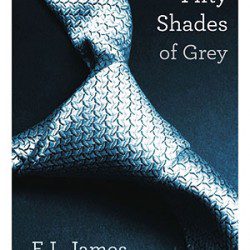
We all know the common fairy tale. There’s a man and a woman—rarely, if ever, do we see stories about a woman and a woman or a man and a man—who must overcome some obstacle to reach happily ever after.
There is always a happily ever after.
I enjoy fairy tales because I need to believe, despite my cynicism, that there is a happy ending for everyone, for me. The older I get, though, the more I realize how fairy tales demand a great deal from the woman. The man in most fairy tales, Prince Charming in all his iterations, really isn’t that interesting. In most fairy tales, he is blandly attractive and rarely seems to demonstrate much personality, taste, or intelligence. We’re supposed to believe this is totally fine because he is Prince Charming. His charm is supposed to be enough.
The Disney versions of fairy tales, the ones with which we are probably most familiar, don’t offer much in the way of Prince Charming. In The Little Mermaid, Prince Eric has a great woman right in front of him but is so obsessed with this pretty voice he once heard he can’t appreciate what he has. In his ignorance, he nearly lets the right one go. In Snow White, the prince doesn’t even find Snow White until she is already dead; he is so lacking in imagination he simply falls in love with a corpse. In Rapunzel, the prince lacks the ambition to find a better way for Rapunzel to escape her tower like, I don’t know, building a ladder. Belle is given away by her father in Beauty and the Beast, to the Beast himself, and then must endure the attentions of a man who essentially views her as chattel. Only through sacrificing herself, and loving a beast of a man can she finally learn that he is, in fact, a handsome prince.
The thing about fairy tales is that the princess finds her prince, but there’s generally a price to pay. A compromise of some kind is required for happily ever after. The woman in the fairy tale is generally the one who pays the price, which is such a rotten deal. This seems to be the nature of sacrifice in most matters.
Look at Twilight. The four books of the series are about vampires and werewolves and the sweeping love story between Bella, a young girl and Edward, an old vampire. Really, though, the Twilight series is a new kind of fairy tale. Is there anything particularly compelling about Edward Cullen? He sparkles. He’s theoretically attractive but only seems to have one interest: loving Bella and controlling every decision she makes. We’re supposed to believe his obsessive control and devotion are somehow appealing. We’re supposed to believe he is Prince Charming, albeit flawed because he needs to drink blood to survive. Accepting Edward’s controlling obsession and vampirism is the compromise required of Bella. Eventually, becoming a vampire, becoming undead, is the price Bella must pay for her happily ever after. We’re supposed to believe she’s fine with that. We’re supposed to believe Edward is worth that sacrifice.
It really is insulting, what we are supposed to believe about love and happiness; but there’s no denying that there is something satisfying about fairy tales, about the fantasy of the perfect hero, the Prince Charming who offers a woman a perfect life no matter the price she must pay.
***
Fifty Shades of Grey, Fifty Shades Darker, and Fifty Shades Freed by E.L. James, are a modern fairy tale with a dark, erotic twist. The trilogy began as fan fiction—fiction written by fans of an original series without actually being a part of it—inspired by Twilight. While grounded in the fairy tale tradition and rising out of fan fiction, Fifty Shades of Grey is also one of the few books that could be categorized as erotica and that has been embraced by the mainstream, if you forget, of course, Anne Rice’s The Sleeping Beauty trilogy.
Fan fiction and erotica are not new but there is something about Fifty Shades of Grey that has piqued the popular imagination. The books are erotic, amusing in their absurdity, and disturbing in their cultural implications about just how much trouble Prince Charming can be.
***
In Fifty Shades of Grey, a bright, young college student, Anastasia Steele, is forced to take the place of her student reporter best friend Kate who has fallen ill. Anastasia, or Ana, travels to Seattle to interview Christian Grey, a handsome, reclusive, and enigmatic billionaire, for the student paper. Of course. During their initial meeting, Ana stammers her way through an uncomfortable interview, distracted by Christian’s extraordinary good looks. Of course. He encourages her to come work for him. They banter. True love is born but there is a catch. There has to be a catch, an obstacle. This is the way of fairy tales.
Over three books, Ana and Christian try to have a relationship but they are impeded by Christian’s abiding interest in BDSM, or at least E.L. James’s fantasy version of BDSM, his unwillingness to engage in a “normal” relationship, and Ana’s desire for a “normal” relationship. There is all kinds of drama, and with each book, that drama becomes increasingly absurd but strangely addictive. A crazy former submissive! An older former lover and mistress who earns the nickname Mrs. Robinson! A sexually harassing boss with a chip on his shoulder! Family drama! Helicopter crashes! Arson! Oh my!
Ana is, conveniently, a 21-year-old virgin who has never even masturbated when she meets Christian. Of course. He gets to show Ana the ropes, so to speak, in a very dramatic scene where he grabs her by the wrist, and leads her to his bedroom to properly deflower her. The kinkiness can wait but her vagina cannot. As he sweeps Ana off her feet, Christian says, “We’re going to rectify the situation right now,” which is surely what every woman wants to hear when she has sex for the first time. The virginity situation—it must be rectified. In a seemingly never-ending scene, Christian makes their first lovemaking encounter all about Ana. He makes her come by stimulating her nipples. They fool around some more and finally, Christian can no longer control himself. He takes off his boxers and tears open a condom wrapper while Ana stares at his enormous cock, bewildered because she is so innocent and pure. Of course. Christian says, “Don’t worry… You expand too.” You haven’t lived until you’ve read prose like this. Before long, Christian “rips through” Ana’s virginity, they both come, and her virginity situation is, indeed, rectified, pleasantly for all involved.
The books quickly devolve into passionate(ish) sex scenes interrupted by arguments about their different desires, Christian’s recalcitrance for normalcy, and the ridiculous drama, both within the relationship and beyond.
Fairy tales aren’t what they used to be.
***
Whenever women do something in significant numbers, the media immediately becomes frenzied as they try to understand this new mystery of womanhood. If that something involves female desire (as if female desire is universal), the frenzy takes on a sharper pitch. Women openly expressing their sexual desires is so damn heretical. Nearly every major publication has written at least one “think” piece about Fifty Shades of Grey. The books have been labeled with the condescending term “mommy porn,” because the trilogy has found a great deal of success with a certain demographic. Once that happens, we have to call it a trend and then we need to write trend pieces that exhaustively analyze something that probably isn’t very worthy of analysis. Is it really newsworthy that a number of women have finally found something that turns them on or is the response to Fifty Shades of Grey a depressing commentary on the state of modern desire?
A great deal of the conversation about these books focuses on the erotic elements—there is so much explicit, highly implausible sex to be found in Fifty Shades of Grey and it always ends in the most amazing orgasms ever. Ana and Christian have sex on an airplane and in an elevator and in a car. They have sex in several different beds and they have sex in Christian’s play room which Ana calls the Red Room of Pain—a dungeon so outlandishly equipped, when she first sees it, Ana thinks, “It feels like I’ve time-traveled back to the sixteenth century and the Spanish inquisition.” Inside, she finds deep burgundy walls, a large wooden cross, an iron grid hanging from the ceiling, lots of ropes and chains and paddles and whips and crops and other toys as if real BDSM is borne solely of the extravagant display of toys.
This analogy might help illustrate the difference between BDSM in the real world, and BDSM in the world of E.L. James—Fifty Shades of Grey : BDSM :: McDonalds : Food.
I understand why these books are so popular, beyond the underlying fairy tale. There are hot moments. Chances are you will be turned on by something in these books. The trilogy tries valiantly to make the reader believe female pleasure is the most important part of a sexual experience despite Christian Grey’s dominant proclivities. In nearly all of the sex scenes, Christian is meticulous about pleasuring Ana. He lavishes her body with all manner of sexual attention. The book is generous in detailing lady orgasms that make it clearly Christian Grey is the best lover ever. It’s a nice little fantasy.
When you look deeper, though, which is challenging in a trilogy with the depth of a murky wading pool, these books are really about Ana trying to change/save Christian from his demons— she is the virginal, good girl who can lead the dark bad boy to salvation as if, historically, trying to change a man has ever worked out well. At one point during their courtship, Ana thinks, “This man, whom I once thought of as a romantic hero, a brave shining white knight—or the dark knight as he said. He’s not a hero; he’s a man with serious, deep emotional flaws, and he’s dragging me into the dark. Can I not guide him into the light?” I wanted to take Ana aside and say, “Girl, you cannot lead this man into the light. Let that dream go.”
After all the trials this couple faces, and after all the hot sex, we’re supposed to think this trilogy is about a young woman and her happily ever after. It’s not. Ana’s sexual awakening is a convenient vehicle for the awakening of Christian’s humanity. Fifty Shades of Grey is about a man finding peace and happiness because he finally finds a woman willing to tolerate his bullshit for long enough.
***
Fifty Shades of Grey is engaging in that simplistic, formulaic manner of romance novels or fairy tales but the books are terribly written in really delightful ways. I embraced the absurdity with open arms and laughed and laughed and laughed.
Ana has no gag reflex, which is so very convenient. On those rare occasions she goes down on Christian, Ana has no problem orally accommodating Christian’s girth. She even swallows, so she’s obviously a keeper.
Christian is one of those chatty lovers who, throughout all three books, spends a great deal of time narrating what he is doing, wants to do, and/or will do to Ana, adding at least an extra ten thousand words to each book.
In one of the books, Ana asks for a glass of “white Pinot Grigio.” Whenever I reconsider that phrase, I die laughing because it is the laziest mistake possible. There is product placement by Audi—Christian drives an Audi, gives his favorite submissives Audis and gives Ana, over the course of their relationship, two Audis. His generosity truly knows no bounds. Christian gives Ana expensive clothes, La Perla underwear, a MacBook, an iPad, a Blackberry, expensive rare books, a honeymoon on a yacht, and on and on. If you have a materialistic fantasy, this book will curb that edge.
Swaths of the story are told via reproduced e-mail exchanges. That is, we literally see the e-mails Ana and Christian exchange with all the annoying banter you might expect from a couple falling in love and much more. These e-mails, alone, are worth the price of admission.
In the first book, when Christian is trying to introduce Ana to his lifestyle, James reproduces Christian’s Dominant/Submissive contract three or four times, as if we couldn’t get the gist the first time. The contract is clearly something James found hanging around the Internet. It dictates all manner of supposedly submissive behaviors including personal grooming, sleep hygiene, wardrobe, diet, comportment, and sexual activity. An exhaustive amount of the first book is given over to Ana and Christian negotiating this contract, what they each will or won’t do, only Ana never signs the contract so mostly this is a device to show us how different the lovers are, over and over.
Ana says or thinks, “Jeez,” more times than I can count. There are so many repetitive tics, this trilogy would be ideal for a drinking game where the aim is to destroy someone’s liver. Drink every time Ana thinks, “Jeez.” Drink every time Ana bites her lower lip, which, by the way, makes Christian want to ravish her. Drink every time the palm of Christian’s hand twitches because he wants to spank Ana. Drink every time Ana thinks of Christian as enigmatic or mercurial. Drink every time Ana reflects on his extraordinary good looks. Drink every time Ana gets possessive of Christian because every single human woman in the world eyes him lustily and becomes instantly tongue-tied. Drink every time the narrative continuity goes wildly off track. The game goes on and on.
To hold all this nonsense together, Ana has two little friends throughout the books—her subconscious and her inner goddess, both personified. These ladies glare at Ana. They peer at her over their glasses. They twirl and swoon and sigh and grin and nod and otherwise reflect Ana’s state of mind. For example, toward the end of the first book, Christian and Ana are about to get freaky and there’s this gift: “My subconscious is frantically fanning herself, and my inner goddess is swaying and writing to some primal carnal rhythm. She’s so ready.”
I live for this kind of terrible. Like Ana’s inner goddess, I was so ready for these books.
***
There are times when Fifty Shades of Grey is amusing because the writing is terrible and fun and then there are times when the book is terrible and infuriating in its irresponsibility and wrongness.
As Prince Charming, Christian fits the bill. He is ridiculously wealthy and handsome but utterly lacking in imagination. E.L. James decides to complicate her Prince Charming. She gives the reader a little something more than the average dullard we generally have to yearn for in fairy tales—Christian has a tormented past. His mother is a crackhead, you see, which he casually discloses after a night of kinky passion. Ana is falling asleep next to him and he says, “The woman who brought me into this world was a crack whore, Anastasia. Go to sleep.” He seems to expect his confession will satisfy Ana’s curiosity but eventually he begins to disclose his dark past—abuse by his mothers’ boyfriends, neglect, hunger. There’s a lot of trauma there and he wears it openly. As you might expect, Christian’s past shapes his present in significant ways and provides a great deal of the incessant drama throughout the books. Forgive my indelicacy, but Christian Grey is a man who loves to run the fuck and he’s not afraid to show it. His need to be a Dominant rises out of his need for control.
In the second book we learn Christian Grey enjoys dominating women, always beautiful brunettes, because they remind him of his mother. He’s working on it with his therapist, Dr. Flynn, who makes the occasional appearance in the book in ways that contradict the tenets of modern psychotherapy. There are any number of reasons why people engage in BDSM but for James to so flagrantly pathologize the BDSM lifestyle as strictly a way for fucked up people to work out their emotional issues, is beyond the pale. It is not an accurate portrayal of the community. It sends a wrong and unfair message about kink.
The Fifty Shades of Grey books have also opened the door for pundits, including Ellen Degeneres, to treat the BDSM lifestyle with derision, mockery, and outright ignorance. Whips and chains are so very funny, or they are freaky and weird. For those who don’t understand different expressions of sexuality, humor seems to be the easiest coping mechanism unless, of course, you are critic Katie Roiphe who concludes that the popularity of Fifty Shades of Grey merely proves that independent women today secretly yearn to be dominated by men but are afraid to admit their submissive desires. Roiphe takes her typical anti-feminist stance by supporting her argument with an odd range of vaguely related texts. Take Secretary and The Story of O and a few other texts et voila: irrefutable proof that women want to surrender sexually. At no time does Roiphe actually speak to submissive women about their desires. At no time does she try to understand the complexity of submissive sexual desire, instead making a tenuous connection between a popular, highly fictional series of books and the state of modern female sexuality.
Very little of the conversation about Fifty Shades of Grey has included people who actually participate in the BDSM lifestyle and can speak intelligently and ethically on the subject even though these people exist and are easy to find. Instead, people who know not of what they speak have made wild, lazy, insulting, or inaccurate conjectures about BDSM all because a writer, who is not terribly familiar with the lifestyle (she did a lot of online research, don’t you know), thought kink would be a nice hook to hang her Twilight fan fiction on.
***
My amusement with Fifty Shades of Grey only goes so far. The books are, essentially, a detailed primer for how to successfully engage in a controlling, abusive relationship. The trilogy represents the darkest kind of fairy tale, one where controlling, obsessive, and borderline abusive tendencies are made to seem intensely desirable by offering the reader big heaping spoonfuls of sweet, sweet sex sugar to make the medicine go down.
We can certainly credit the source material. Twilight offers similar instruction. Edward goes to absurd lengths to control Bella, all in the name of love. In Fifty Shades of Grey, there are no limits to Christian’s need to control Ana’s life, her decisions, and their relationship. Even before they date he conducts a background check. He tracks her movements via her cell phone in a way that is never quite explained but that we’re supposed to go along with because he is wealthy and stalking people electronically is simply what wealthy people do. He tries to control when and how much Ana eats, the kind of alcohol she drinks, how she behaves around him, who she allows in her life, how she travels and we’re supposed to believe this is all fine because he has issues, because he loves her.
In addition to the highly restrictive contract Christian wants Ana to sign, he also makes all his submissives sign a Non-Disclosure Agreement limiting what Ana is even legally allowed to share with her friends and loved ones about her life with Christian. Ana inexplicably signs this agreement because, as she tells Christian, she wouldn’t have said anything anyway. She’s a good girl. That’s a common tactic of abusers—isolating their victims, but we’re supposed to think the way Christian isolates Ana in luxury is romantic. A prison is still a prison when the sheets are 1200 thread count.
In the first book, Ana decides to visit her mother in Georgia. Christian offers to travel with Ana but she refuses because she, understandably, needs a little time and space to clear her head so she can decide if the BDSM lifestyle is one she can handle. Christian has to have some control over the situation so he upgrades her to first class. We’re supposed to think this is romantic but mostly it’s creepy because he has gone to the trouble of figuring out her itinerary and changing it without consulting her. Then he simply flies down to Georgia to join Ana because he cannot bear to be apart from her. He’s a man who knows what he wants; his needs are the only needs that matter.
As the story proceeds, Christian is jealous when Ana is merely in the presence of another man. He gets angry or pouts when she won’t pay enough attention to him. During a visit to his family’s home, Ana defies Christian in some obscure way so he drags Ana off to the boathouse to punish her. Her first instinct is to whisper, “Please don’t hit me.” This fear of being hit will come up more than once throughout the trilogy. He hires a security detail for her after one of his “crazy” (read: heartbroken) former submissives has a mental breakdown after her boyfriend dies, but mostly it’s an opportunity for him to control the boundaries of Ana’s world in every possible way. When Ana gets a job, Christian buys the company where she works to “protect” her. In the third book, on their honeymoon, Ana decides to sunbathe topless at a nude beach. Christian, of course, does not appreciate his woman revealing herself to the world. She’s not his submissive, but by God, she is his wife. He makes a scene. Later, they are making love in their hotel room and he leaves hickeys all over her breasts so she cannot wear a bikini top for the duration of their honeymoon. He literally marks his territory like a sixteen-year-old boy.
Christian Grey uses sex as a weapon. He is more than willing to throw a punishment fuck at Ana and he takes real pleasure in fucking her into submission when he cannot otherwise will her into submission. Nearly every sexual encounter between the young couple ends with Ana drowsy and unable to move, her limbs heavy and satiated with pleasure. In a consensual BDSM relationship this dynamic would be fine, welcome even, but the overarching premise of the trilogy is that Ana doesn’t want a BDSM relationship, at least not the kind Christian wants. She certainly enjoys their kinky sexual relationship but she consistently clarifies her overall disinterest in serving as Christian’s submissive. Their relationship is beyond refractory; Ana is, like Bella in Twilight, the vanquished, the undead, and Christian Grey is the proud vanquisher.
After each instance of abusive, controlling behavior, Ana gets righteously indignant but never for long. Time and again, she chooses to sacrifice what she really wants for the opportunity to be loved by her half-assed Prince Charming. We’re supposed to believe Ana is independent because she “defies” Christian by having very reasonable expectations and boundaries. He willfully ignores these boundaries, though, and she allows him to. She forgives all his trespasses.
The trilogy also relies heavily on the trope of the imperiled woman—in each book, Ana faces some kind of danger, either innocuous or quite serious, that allows us to remember she is a woman, and therefore in need of rescue by her Prince Charming. After each crisis, Christian clutches Ana desperately and says he doesn’t know what he would do if anything happened to her. If you look up the word codependent in the dictionary, this couple’s picture will be featured prominently.
I’m all for reading for pleasure. I’m a fan of dirty books and kink. I am down with female submission. By the end of Fifty Shades Freed, however, where Ana acknowledges that Christian is as controlling as ever even though they have found a happily ever after, his pattern of abusive, petty, and at times childish behavior is exhausting and far too familiar. This Prince Charming has lost all his charm.
When considering the overwhelming popularity of this trilogy, we cannot simply dismiss the flaws because the books are fun and the sex is hot. The damaging tone has too broad a reach. That tone reinforces pervasive cultural messages women are already swallowing about what they should tolerate in romantic relationships, about what they should tolerate to be loved by their Prince Charming (see: Chris Brown).
Fifty Shades of Grey is a fairy tale. There’s a man and a woman, and an obstacle that eventually they are able to overcome. There is a happily ever after, but the price exacted is terribly high. It is frightening to consider how many women might be willing to pay that price.

62 responses
I fear it’s too much to hope that everyone who reads the Grey books reads this essay, too.
Roxane, you’ve outdone yourself. My God, I was so gratified to read this. I forgot to tag you, but I re-posted this and I know many, many of my friends will appreciate it.
The thing about fairy tales is almost all the versions available now are sanitized romanticized versions. The originals are not at all romantic. “Sun Moon and Talia” is a good example to look up.
Roxane, you amaze me. <3
You have the eye. No, no one seems to want to ask those who engage in these relationships their opinion. Not many want to stop putting baby in the path of peril so Daddy can rescue her, either. Not a big turn on for me.
All of this: well said. I have mind to print fifty copies of this out and go stick them in copies of the books on bookstore shelves.
Incredible, Roxane. Saw a mom reading this in the ortho office today.
I just wanted to answer you: Fifty Shades of Grey a depressing commentary on the state of modern desire. Yes. You know someone really told me this book is the new must-read today. Yet, I am so greatful to chance this article before taking any actions. I am one of the people who (though I love the tales) believe fairly tales are deceptive and harmful to young girls. Although my theories are not so distinct as your own, you have taken the words out of my mouth.
(Prince Charming used to be fast, but now he’s half-fast.)
Nice work Roxane. I was worried you wouldn’t leave fairly tales with
much of a pulse after this. That horror made the commitment to read
through the pain all the more enjoyable. Heh. Well, nice work.
Oh, this is fantastic. I would quibble a bit with the reduction of fairy tales to the romantic formula (especially since I’ve been reading the lovely/creepy/cool ones lately like The Girl Who Trod on a Loaf), but otherwise, this is perfect. Ever since these books came around I’ve been both snickering and horrified at the writing, and wishing that we could have a reaction to the books that didn’t just involve kink-mockery. You’ve hit it exactly on the head— it’s not the spanking that’s disturbing here, but Christian’s abusive behavior, and the way the book dresses it up to look like romance. Brilliant.
Thanks for this! I see so many friends put up with so much to maintain relationships, and I think cultural pressures and myths that value relationships and “prince charming” have a lot to do with it.
I am fast becoming a Roxane Gay superfan.
Im with you Heather. Absolutely superb article
This is absolutely brilliant in every way. Someone up there mentioned printing copies off and leaving them in the books at the stores. I have never wanted to do that before, although I’ve heard people talk about that with other articles and other books. This needs to be read.
I have been waiting for an intelligent commentary on 50 Shades. And here you have a most excellent one. Thank you for this. I felt my brain slipping back into the stone age until your essay knocked some sense into me. The fairy tale theme has been a carrot on a stick that I’ve followed for a very long time (or at least it feels like it). The hype of these novels nearly sucked me in and I knew there was something familiar, something redundant about it. The same old, same old passing itself off as new. Is there anything new? What would be new is the examination of the fairy tale in light of an emotionally and mentally whole human being, flaws and all. No pretense or walls to hide behind (though I adore my walls and decorate them accordingly). There is such a thing as happy. I believe that in the core of my being. It is not, however, a happy at the expense of or depending upon another in an everlasting, ever-after kind of way (my opinion based on experience). The responsibility is within each individual. It is difficult to see this in the 20’s (again, my opinion based on experience) because life has just begun to be lived as an adult (so it has been said). By the time one gets to the 30’s and 40’s, to look at the life one is living (in a healthy way, emotionally/mentally…does one ever get to that place?…the self-actualized place?…that is my personal goal though I’ve met people who are there), then life is seen, in hindsight, what being human, being real, what it means to love truly is. Since I’m in the middle of transcending the fairy tale image myself, it is hard to see what this actually looks like in real time, to not get caught up in the hype. Your essay shakes me up, actually shakes the shit out of me. Sometimes the jolt is necessary and your writing does just this.
Finally! Hells to the yes. I didn’t know anything about these books until a friend bought the first one for several of us to read together on vacation. I finished it, yes, but I was finished with the series after that one. I immediately thought, hmmm, Twilight sexified for adults? I’m gratified to read that yes, this is exactly what it was. You echoed the concerns I had about the story, and the so-called fantasy wherein the woman enjoyed being second to a whiny, demanding, and controlling man. Really? Is this what America gets all hot and bothered about these days? Blechh.
Great essay, Roxane! I haven’t read these . . . they just don’t seem very, you know, GOOD, so my interest isn’t high. I think I was the last person in America to learn that these books were a huge cultural phenomenon or whatever. But I’ll tell you what: my tween daughters have read the TWILIGHTs, and while I pretty much agree with every point you make here, I do think you’re too easy on the Bella character. Which is maybe an arbitrary thing to say since really Stephanie Meyer writes both Bella and Edward, so it’s not as though either character is “acting on his or her own” or something–both are really Meyer’s expression of what she wants the books to say, etc.–but my point here is that Edward sure never seems to need to twist Bella’s arm to basically want to become a vampire or live her entire life for his creepy love. If he’s guilty of having no interests other than loving her, the same certainly seems true of her re: her obsession with him. The two characters seem equally gross, narrow, obsessive and uninteresting. Bella seems, though it’s not a BDSM dynamic per se sexually, far more “willing”–even eager–to submit than the way you describe Ana in the FIFTY SHADES trilogy. Even my daughters, who are eleven, kept saying to me, “Geez, if the two guys who liked you were a vampire and a werwolf, wouldn’t you maybe just go to a new school or move away and meet some different, normal guys?” Bella’s behavior depresses even them. It’s hard to read TWILIGHT with a lens of Edward seeking to dominate Bella when she is so above and beyond eager to BE dominated and lose all sense of self that she should, as such a young woman, still be developing. Whereas Edward and Jacob at least get some “monstrous” traits to make them marginally more engaging, Bella seems a wholly blank slate. It certainly is a far leap from other YA heroines like Katniss, and it definitely doesn’t make me salivate to read books that originated as Twilight fan fiction, even with the promise of some fun kink . . . although your analysis does somewhat make me want to read the thing you’re analyzing, but that, I believe, has much more to do with your talents than with anything else . . .
I thought the first two sections of this essay were a little weak (I think you can talk about Prince Charmings without dragging us through Disney history) but when you finally got to analyzing 50 Shades, I really appreciated your analysis that BDSM in the book is not the BDSM of life, that it is merely a tool James uses to make the book ‘hot and steamy’ but still manages to deceptively uphold perceptions that “the BDSM lifestyle as strictly a way for fucked up people to work out their emotional issues.”
Not to give Twilight a ton of credit, but I do think we should recognize that Bella is not Ana. She wants to be a vampire in spite of Edward’s fear for her soul, wants to keep the baby in spite of Edward’s fear for her life. While I don’t like that Bella is a loner who gives up her world for Edward’s, I think that is part of the whole destiny trope where protagonists realize they never really belonged in the world they were born to. Bella as a kind of ‘changeling’ figure, I guess. Meanwhile, Ana never belongs in the world Christian wants them to occupy, never sets firm boundaries (Bella insists that she still hang out with Jacob, and Edward can’t do anything about it). A thought to ponder.
The myth of the passionate virgin lives again.
Gina, thanks for your comment. I hear what you’re saying and agree. Bella is equally obsessed with Edward. I kind of forgot about that. As I think about the deep depression she goes into when Edward leaves Bella “for her own good,” I am reminded of how dysfunctionally preoccupied they are with each other. That said, I do still think Edward displays many of the controlling behaviors that Christian Grey does (like taking the battery out of Bella’s car, etc). I would say Ana is as obsessed with Christian, too. She can’t stay away. In both books, though, the Prince Charmings’ actions take a lot of agency (nonconsensually) from their women, “for their own good.” I find that abusive and infuriating.
Susana, Bella is not Ana but there are strong parallels. Bella sets boundaries but she’s not always great about maintaining them, much like Ana. Bella does have some strains of the changeling but I also feel like there was a lot of pushing her in that direction from Edward. Ana is quite similar in that she finds a way to live in Christian’s world, or she at least tries.
Thanks all, very much for your comments.
Roxane’s essay and Gina and Susana and other comments just made me sit here and ponder what we read for. I am very conflicted about whether to read these books. I read one and a half twilights when my daughter read them in middle school and when I got to some passage about “Edward is the only person for me in the world” or some such drivel,I threw the second one halfway across my family room. That being said, I have nothing against anyone reading anything they want for pleasure, or to give a little jump to their sex lives between working, taking care of kids, etc. And I think we are all too judgey about people’s taste in reading… I am of the mind that reading is sort of like eating well. 80 percent of the time you need to get your nutrition and your antioxidants and the other 20 percent of the time you get to eat chips and salsa and drink margaritas. BUT, when kids are involved as in the Twilight model, do they know they are reading a fantasy of two bland and impossibly dumb “people” manipulated by exposition to romantic “fantasies” which in no way can exist in people if they are in a relationship over say, three years? It’s sort of like when people read Ayn Rand when they are a teenager and become an asshole for five years because they think they are profound. I’m not making any sort of nuanced argument here. Just wondering if what people are looking for in their entertainment versus their literature impacts content in any way… or if it is purely authorial choice… or the deep human desire to escape reality. 🙂
Telaina, that’s a great question. I absolutely got pleasure from reading FSOG because I had the critical awareness of the ways in which the books are a hot mess and downright irresponsible. I am a big believer in reading for pleasure. I read all kinds of stuff including mass market paperbacks and romance novels and the like. When it comes to books for children, though, I do think we have to consider both pleasure and the kinds of messages children are consuming. Like, I can read Twilight and laugh but what does a young girl take away? That’s something to think through.
Roxane,
excellent article. You bring up a lot of fantastic points that are disturbing in these books, but you forgot one of them. The fact that a pedophile gets away with seducing and then abusing a young, troubled boy without ever having to face the music for her actions is one of the things that disturbed me most in this story.
Thanks for writing this.
Thank you for writing this intelligent, insightful article. You have articulated nearly every issue I had with this “book.” I am really grateful that you emphasized the fact that it is fan fiction and that the relationship depicted very much does reflect Bella and Edward’s relationship. It’s ridiculous that people are so myopic that they don’t see vampires and therefore cannot see the glaringly obvious parallels in characters and plot points between this fanfic and Twilight. If only other outlets would discuss how unethical this whole thing is I could rest.
But that, however, isn’t the point of your article and you did a beautiful job pointing out the disturbing, abusive nature of the relationship depicted and the irresponsible, absolute insult to BDSM and those in the lifestyle. These are things I have pointed out to people in the past, and I am glad I now have such a well written article to link to people. Especially those who think the only thing that matters is that something is “fantasy.”
Great article! These books have disturbed me on many levels. (I wrote a blog post about the ethics of the fan fiction angle.) But you really captured the emotional aspects of the story.
I write paranormal romance and urban fantasy with romantic elements. One of my stories is about a dominant male with all his needs to control, etc. As I was reading this article, I was ticking through my plot points to make sure I hadn’t fallen into this twisted fairy tale trap. I’m proud to say that I don’t think I did. 🙂
Not to contradict the central point of this article, because I *do* agree with most of it, but I’m guessing it’s been a while since you’ve visited the Disney versions of those fairy tales? Belle doesn’t even begin to fall in love with the Beast until he’s already proven he has a side that deserves it and starts treating her with respect. Snow White and the Prince DO meet at the beginning of the movie (although it’s very briefly, so it’s not like it makes their relationship that much deeper).
I’m not sure what point you were making in your description of Rapunzel, but it didn’t seem to be reflecting Disney’s Tangled, which doesn’t even have a traditional “prince” and ends with the princess willingly cutting her own hair.
Steve, it’s been about three weeks since I last saw Beauty & The Beast. He does end up proving himself but Belle has to tolerate a lot of BS before that. In terms of Rapunzel, I wasn’t referring to Tangled. I just neglected to pull that away from the Disney reference. My overall point remains that Prince Charming, in his variations, isn’t really that awesome.
Thank you… I will NOT be bothering to buy these books to read – I was thinking about it.
My daughter talked me into reading the first Twilight book. It bored me to tears– at that teen angst and whining. Not to mention that vampires sparkled. Yuck. It just was too much. Then recently I heard all buzz on 50 Shades. I love erotica. I both read and write it. SO, what the heck? I went to Amazon and gave it a shot. For the life of me, I couldn’t get into it. It was silly. It felt like something a teen would dream up. Then I learned it was written as fan-fic for Twilight and it sorta made sense, in a weird way. That series has a very definite target market– a specific emotional block, so to speak. (I am trying to be nice here.) We may not like what she wrote. Hell we may not like how she wrote it or what she put in it. But I will be the first to admit, I wish like hell that I had thought of hooking into a ready built fan base like she did to launch a book. It sure has worked like gang busters for her.
I loved your review, up till the very end when you said: “If you look up the word codependent in the dictionary, this couple’s picture will be featured prominently.” Please don’t perpetuate the myth that women being abused and controlled by their partners are codependent.
Judging from your article, I think you’d like the book _Why Does He Do That_ by Lundy Bancroft. Actually I think this book should be required reading in general, but given your clear-headed approach to the subject of partner abuse, I think you especially would appreciate it.
Elisabeth, thanks for your comment. I’m not perpetuating a myth. In these books, the couple is codependent which is a separate issue from the abusive tendencies. Sometimes both of these issues are present in a relationship. Christian wants Ana around all the time, and not in a romantic way. When he wants her to be with him and she insists on going to work, this guy pouts. That’s just one example.
Thanks so much for your reviews! You have saved some of my valuable time. I think I’ll skip the books and try to find a red pinot grigio! 🙂
Thanks for your reply. I haven’t read the books, so it may be that this couple *is codependent. But the example you gave still doesn’t fit the bill, because those are just tactics he’s using to control her. He wants her around, makes it hard on her when she goes to work, not just in a romantic way – those are all classic methods of abuse on the part of a controlling partner. His choice to act dependent on her, when in fact he’s controlling every aspect of her life – that’s not dependence, that’s abuse; and even if it were real dependence, I don’t see the “co” in it.
I’d love to hear what you think, seeing as you’ve read the books and I haven’t.
I hope a lot of people get to read this article, you have said everything i have wanted to say and more about this series. A well-informed, intelligent and eye-opening piece.
I just can’t abide bad fiction. If people want to read erotica with the issues that 50 shades so clumsily deals with PLEASE opt for ‘Venus in Furs’. You will then see how ’50 Shades’ is a very poor copy of a literary classic. Plotwise it is very similar (even the contract bit!).
You spoke for me: What women put up with to get what is is they supposedly want. Maybe this is why it makes this material a kind of porn for some women: None of the work – and here, what I mean is never questioning the self, not doing the work of leaving the man – and yes, all of the sex, abusive though it is. It is a dangerous thing to put before the passive. (Read: submissive)
(I don’t think most readers, even adults, read critically and I do think popular works drive culture.)
I love this essay, but I want to defend fairy tales.
The way we see fairy tales today in the US and beyond, has been defined, for the most part through the eyes of Walt Disney (I remember reading an essay by Jane Yolen about this many years ago, where she discusses the Disneyfication of many old old folk and fairy tales). These stories were what people used to tell each other for entertainment for centuries, before TV and radio were even a theoretical idea in anyone’s mind. I personally encourage people interested in fairy tales to read a translation of the famous Grimm’s Fairy Tales from the early 19th century, and you’ll find many princes other than Charming, you’ll find women surviving on their wits because of the lot into which they’ve been placed, sometimes with the help of magic, sometimes not. It’s all very non-Disney. Jakob and Wilhelm Grimm intent was to *gather* the stories that people were telling each other for entertainment into a volume of German folktales, but even then they couldn’t help but apply their cultural mores during the editing process. Ironically, it turns out that the Germanic character was there, but many of the tales they collected were not that different from what Charles Perrault had published in the 17th century, in his literary adaptation of common tales of his era (perhaps this was the first “Disneyfication” of oral tales in Western European history). Perhaps one of the greatest, in my opinion, adapters of oral tale is William Shakespeare in the late 16th century – his KING LEAR, for example, is a cousin of the Cinderella tale, it turns out.
But the thing is, I recognize my nerddom here. Disney HAS had a profound influence on, if not completely redefined, our view of fairy tales. Prince Charming is still problematic, but to me, he’s always been a contemporary figure in adaptions of these old old stories.
Ken, definitely. The most popular modern fairy tales do little to reveal the depth and complexity of their origins.
Thankyouthankyouthankyou! Now I know I should not buy this book. Acutally you accurately described a lot of the things that bother me about most erotica, especially the bdsm genre and I have read a lot of them. Here are some observations I made:
1.When women submit, they are control freaks in real life it is patological and they need to let go of their control during sex (or/and in other aspects of her life depending on the extent of his domination). When the hero is a control freak in real life it is ok and only natural that this extends to the bedroom and he is a Dominant.
2.When the submissive heroine makes a mistake she is punished by the dominant hero (like spanked) while he doesn’t make mistakes – usually it turns out to be the heroine’s fault somehow.
3.BDSM equals therapy: if the heroine has been raped or abused, she just needs a loving and caring Dom who will work with her and make it all go away ( actually I noticed that a lot of bdsm erotica authors, like Cherise Sinclair, write stories with heroines in it that were raped or abused. Since I read your post about sexual violence and language I have realized why that bothers me so much and really avoid those books, thanks for that, too)
4.Furthermore if you read the reviews on such books you’ll notice that it is not only young adults reading Twilight one should be worried about. If the heroine sets limits, she is often described as selfish and bitchy. And strength equals willingness to sacrifice. So when the hero is a sadistic (not in the literal sense) unfeeling asshole, she is perceived as strong because she endures and forgives him.
And thank you Ken! I come from the land of the Brothers Grimm (Hesse, Germany) and I grew up with the originals. I loved Cinderella because she commanded the pidgeons, had a magic tree and didn’t let her bullying step siters get the best of her. Not to forget the wonderful poetic language and the little rhymes a lot of which I still know.
And by the way,I should mention the “original” story about the Frog King (as I know it): The frog does not become a prince because the princess kisses him. He changes when she throws him against the wall after he got insolent (wanting to sleep in her bed). 😉
I’m the only male in a book club with four other females. They all wanted to read this book, so I got outvoted. I just wanted to thank you for clearly articulating what I found so wrong with this book but was having trouble describing myself.
I made it to the end of chapter seven, the first instance of Christian’s “contract” and said I was done. I could obviously tell the book was terribly written before that point, but I can deal with terrible writing. What I couldn’t deal with was a book that was so terribly offensive. I’m not talking about the sex scenes, I’m talking about everything you’ve described here.
When I expressed my refusal to continue reading after I read the contract, one of my friends replied, “No, keep reading. It gets better. He changes.” I was skeptical. It’s good to know I wasn’t wrong. I simply don’t understand how people (intelligent, independent, and feminist women especially) can read this and not get offended, and think this is just some campy romance novel.
I’ve decided that I’m going to finish the first book so I can adequately shred this book during our next meeting. I will also be sharing this article.
Best review of the series I’ve yet seen. Pinpointing the crux of the issues with this series and exploring it intelligently and succinctly.
Fantastic essay. I actually just finished reading “Twilight” because a bunch of people I knew were talking about how horrible “Fifty Shades of Grey” was, and I started to get curious as to just how bad the whole mess of books were. I found “Twilight” pretty terrible in a compulsively readable way, like a really crappy Dean Koontz novel or something, but what bothered me more than anything was reading these books and thinking about how many women and girls had become obsessed with the idea of having an Edward-like lover, and also how many women and girls I know who have been in abusive relationships at some point in their lives (myself included). It would be easy to dismiss the books as mind-candy if I didn’t believe they weren’t part of an overall cultural atmosphere that frames abusive, controlling behavior as romantic and evidence of just how much someone loves and desires you. I don’t know, I guess it’s hard to turn off that internal critic when you’ve had direct experience of that kind of behavior in your life and you found it terrifying and traumatic and pretty much anything but romantic.
I agree with all that this is eloquently stated from someone who’s read the book and can properly articulate the pros & cons. Your piece isn’t dismissive of Fifty Shades as others may be but does analyze points.
While I have been curious to read I fear I may just get really irritated and rip the crap out of the book or throw it at someone on the subway. I just cannot deal with badly drawn female characters because I feel like there are already way too many out there perpetuated in all forms of media/entertainment. And I would hope that even if this is a fantasy that the main character gets a lot bolder by the end to actually END this cycle and not continue to put up with it. If Ana’s the impetus for Christian to go good than that should be reflected not tolerated.
Thank you for this excellent review. I too read the first FSOG and found it lackluster at best. I have always been an extremely avid reader, and read many different books in many different genres. Many of the women I work with are reading this book, and I beleive it makes them feel like they are edgy or being dangerous somehow. FSOG was a harlequin romance that used a “bondage-light” gimmick to hang a very poorly written story on.
Thank you, this article is well thought out and written. You described perfectly how I feel about this disturbing trend in must-read books.
Now, if only the book had been about the male protagonist wanting to be the submissive, THAT would be worth reading.
Brilliant. That you for writing this. I want to print it out and post it at work so I can point to it every time someone tries to convince me to read those damn books.
I was so glad to see somebody writing this kind of dissection of the books.
Said things that needed saying and points out the dangerous trend these novels support in the mindsets of the people who read these novels and seek to emulate the “ideals” espoused in them
Extraordinary analysis. My least favorite fairy tale is the Disney version of “The Little Mermaid,” because she gave away her voice for legs, but that compromise is a lose-lose for her. She has no voice and now also has lost what makes her a mermaid, thereby relinquishing the only means of sustaining any meaningful contact with her family and love ones. For some guy. She isolated herself making her more vulnerable to controlling behavior. Ugh.
I also read “50 Shades of Grey” fully expecting to hate it. I found it surprisingly readable as bad as the writing was at times, and couldn’t figure out why I didn’t hate it–because I know that I should.
Your analysis was dead-on, and I couldn’t say it better myself. And it does make me worry about other women might read it and believe that this heightened level of controlling behavior characterized in these books is ever acceptable.
Very interesting. However, your third paragraph where you reference Disney’s Beauty and the Beast, is flat out wrong. Belle offered of her own free will to take her father’s place and he tried to stop her. It’s even done with dialog and he says “Belle, no!”. She does it anyway. If you can past feminist hangups about Beauty and the Beast, it really is a beautiful story about sacrifice, with many lessons hidden in it that women need to know.
Of course it’s a fantasy. So were Fanny Hill and Lady Chatterly’s Lover, both runaway best sellers in their day, both also receiving the same kind of excoriation although for different reasons. When you’ve had to struggle your whole life, overcompensating for the inadequacies of lame men, an alpha male starts to look really good. Maybe that’s what needs to be the next runaway best seller, featuring an older woman who finally gets to experience melting vulnerability.
Excellent… and yet: in the REAL Little Mermaid story, she dies!
I should also add that – as someone involved in BDSM – this series, the attention it’s getting, and the hugely negative responses to the lifestyle it has encouraged in people in my own life, are both infuriating and upsetting to me.
I agree with all of your article, but one thing: the sex scenes aren’t even remotely hot.
Even if they were, “Ana” would ruin it solely with saying/ thing stuff like Jeez, Holy crap, Holy whatsoever… and let’s not forget she fears another orgasm in at least one scene.
That’s basically sh*t. Please forgive my rude language, but I’m really furious about this so called books.
What angers me the most is that E.L. James describes abusive relationship and physical violence as BDSM.
IMO, some more flaws of the story are:
– every character calls Ana bright, smart, intelligent… while she doesn’t show any behaviour that could be called smart.
– we are supposed to think of Christian as a smart businessman… while he’s making business decisions based on his need for control over Ana
– there are small unimportant details which were perfectly researched… while important details are totally neglected
– if the man is a billionaire, why does he drive Audi? If I had his money (lol), I’d own at least a Maybach, a Maserati, a Ferrari or even better a Bugatti Veyron (even the most basic version costs more than a million)
I could go on endlessly with this list, but it’s not really needed.
What I greatly enjoy about the series are the recaps written by Jennifer Armintrout (jenniferarmintrout.blogspot.com).
She writes them with wit, sarcasm and intelligence.
Same can be said about your article here.
You approach it from a different angle. I’ve never thought about that fairy tale them before.
I want to thank you for that, because I am the mother of a 20 month old daughter and the time for bedtime stories will be soon.
So I’ll have to check on appropriate material, becaus I don’t want my daughter to grow up with such an opinion on relationships.
Please excuse my absolutely not perfect English, but it isn’t my native language.
Have a nice day!
Like what Rachel Smith?
What are these important lessons only WOMEN should know? I’m just curious at identifying the difference between female lessons and male lessons. What about human lessons?
Rachel Smith Says:
June 30th, 2012 at 12:59 pm
feminist hangups about Beauty and the Beast, it really is a beautiful story about sacrifice, with many lessons hidden in it that women need to know.
I loved your thorough analysis of this horrible excuse of a trilogy. I will never bring myself to call James an author.
I loved that you mentioned about the abusive, controlling man that is Grey.
I was also reading an article talking about what these ‘books?’ are really about.
Think about it: Ana needs to be told what to do, when to eat, pee, sleep, exercise, orgasm and everything else in between. She needs to be told what to do or else she’s lost. He punishes her when she goes against him. Don’t parents punish children when they smart off? Parents actually do most of the things that Grey does to Ana. Doesn’t Ana even have a curfew? She’s a virgin who’s never been touched or has even touched herself. She’s supposed to be 21! I don’t know of any 21 year old women who hadn’t at least tried it a few times. I think she wears pigtails and skips, too, if I’m not mistaken. She has a subconscious and inner goddess telling her things.
She blushes and bites her lip far too often. She has the vocabulary of a preteen.
Now, what do you think of her? Do you see her as a working woman who is 21? I see her as a child.
Her inner goddess? I think children call them ‘imaginary friends’.
I truly believe these books glorify rape and abuse and is really about pedophilia. James portrayed BDSM as something dirty and meant for people with mental issues. Ana didn’t want to be ‘punished’. I can’t even remember is she was allowed a safe word. If not, that should’ve been a red flag. But Ana is too simple minded to put two and two together. Couples into the real BDSM find all this enjoyable and they totally consent to the lifestyle. This seemed more like a one way street.
Before you defend the book–though I don’t see anyone on here calling these books a literary classic–read the article.
http://theulstermanreport.com/2013/02/27/revisiting-the-50-shades-of-grey-backlash-pedophilia-hiding-in-plain-sight/
I enjoyed reading your opinion of James’ trilogy but I do not entirely agree with your assessment. My take is this — it is a fairy tale; it is an extreme fantasy. But what is so wrong with that? Real life is hard. I was married for 50 years before my husband died. Some years were great and some were terrible. I enjoyed reading how Christian and Anastasia solved big problems in their relationship. What relationship doesn’t have problems to overcome. And of course in real life probably they couldn’t have stayed together — but isn’t it wonderful that in fiction they can find a way. What is wrong with that? It was tough accepting Christian’s abusive nature toward women, but didn’t Anastasia help him find another way? Will he be forever punished and reviled because he acted one way but was helped to find a loving empathy toward Ana and changed who he was sexually? Isn’t there such a things as redemption? And just because Ana says “Oh jeez!” a number of times — is that ‘bad writing?’ I say “Oh jeez!” a lot — am I dumb and dumber? My Big Point is that the 50 Shades of Grey trilogy is fictional fantasy that portrays how a young man and young woman find love and redemption by overcoming serious difficulties. It’s a woman’s dream — to change a man. It’s a man’s dream — to find a beautiful woman who desires sex with him all the time. What’s wrong with that? It’s better than reality…..sometimes. lol
I don’t know about abusive, I get mad with the sex slave commentary but I do enjoy the fantasy. It is E. L. James fantasy but I enjoyed it.
Fantastic article. Thank you, THANK YOU, for pointing out what I’ve been wanting to say but was never able to organize in such a coherent, eloquent manner. I’m the one who gets outraged, so I’m called a crazy bitch. Yes, how dare I have standards? I’m just so glad that you wrote this. Excellent writing!
In case it’s relevant here, I was born a girl and am female identifying. I haven’t finished the entire article (I will) but I have to respond as I go. If she addresses this, I’ve erred. It upsets me when people don’t recognize that the gender roles and stereotypes put forth in fairy tales in which men tend to fit a mold are also very damaging to our notions of masculinity and the affects this has on men. I’m not suggesting Roxanne wouldn’t agree, but I think it good to recognize these points side by side. Can you tell I’ve tried not to offend anyone?
To me, it seems worth differentiating between sexual fantasy and reality. In the context of a sexual fantasy, it seems reasonable that people might fantasize about things they wouldn’t *really* want to happen to have done to them. In that sense, I understand Fifty Shades as fan fiction or erotica. I tI wish it were made more clear that this is just fantasy and erotica, which means that Christian might be kind of asshole (some people’s fantasies involve assholes of varying types). It bothers me, I guess, that it’s being marketed as more of a novel, which implies that it’s based in reality instead of sexual fantasy. I think there’s a line to draw there, and that as long as this was somebody’s bad fanfic on a crummy Twilight archive somewhere, it was fine. It reads like a lot of bad fanfic reads. It’s when they tried to bring it out into the light, and it became a bunch of people’s “intro” to BDSM that it becomes troubling, because it makes a shitty intro to BDSM.
Sorry for the first post, I accidentally hit submit before I was finished.
To me, it seems worth differentiating between sexual fantasy and reality. In the context of a sexual fantasy, it seems reasonable that people might fantasize about things they wouldn’t *really* want to have done to them. In that sense, I understand Fifty Shades as fan fiction or erotica because there is a LOT of sheer fantasy going on in these stories (all the ridiculous orgasming, for example). I know that I’ve had detailed fantasies about things I wouldn’t actually want done to me, like someone having full control of every aspect of my life, as Christian seems to wish he could do with Ana. That part is actually a turn-on for me even as I know it’s not something I would actually want. I hope I’m making sense.
Anyway, I just wish it were made more clear that Fifty Shades is simply fantasy and erotica rather than a primer on BDSM or some sort of intro to sub/dom sexual play. It bothers me, I guess, that it’s being marketed as more of a novel, which seems to imply that it’s based more in reality than sexual fantasy. As long as this was somebody’s bad fanfic on a crummy Twilight archive somewhere, it was fine. Nobody would read it and give it’s brand of sexuality too much credence. A lot of fanfic is bad and it’s read just for fun. It’s when they tried to bring it out into the mainstream, and it turned into a bunch of people’s “intro†to BDSM that it became troubling to me, because it makes a shitty intro to BDSM. I also think it’s badly written, but then I would say that about 9/10 of the fanfic in the world is badly written.
In my opinion, this is fan fiction that never should have made the big time, and when it did, it should have been marketed more as erotica, or been edited to be more appropriate for a mainstream marketplace that has no experience with BDSM.
Click here to subscribe today and leave your comment, or log in if you’re already a paid subscriber.