
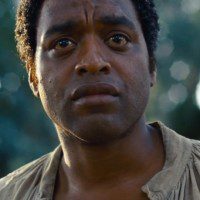
As the cars rolled by on Sunset Boulevard, my friend and I had a post-film debrief. We had just finished watching Steve McQueen’s new film 12 Years a Slave. Only, neither of us really said anything. We were both moved—I know that much—but we were also totally overwhelmed. I pretty much spent the rest of my Saturday on edge. 12 Years a Slave is based on a true story, and unlike Django Unchained, there were no KKK interludes or spurious Mandingo brawls swirling around in my head when the lights came back on. British-Caribbean director Steve McQueen presents slavery as it happened with a camera that hangs on shots long after we’re comfortable looking. The only choice is to engage with what’s on screen. Even in primary historical texts, there’s often a feeling of distance between the past and the present. In 12 Years a Slave, somehow period piece transforms into drama without distance and intellectual arguments about slavery’s connection to the present become experienced. I know these plantations and the perilous ways out of them.
The set up of 12 Years a Slave plays out like a fairy tale gone bad. Bright and rich colors suffuse the backdrop of the 1841 Upstate New York countryside, where Solomon Northup (Chiwetel Ejiofor), a free black fiddler, resides with his wife and two children. He appears to be well respected in his mostly white community, insulated from the harshest realities of race in a way that W.E.B. Du Bois was in Great Barrington, Massachusetts. One day, Northup’s wife and two children go on a three-week trip. Before Northup even has the chance to feel the empty nest, he’s approached by two dandy circus men, who lure him to Washington for a chance to play his fiddle.
Over the next few weeks, Northup goes through hell as he is “broken” into a slave; a paddle is brought down on his back until he denies that he is free and accepts his new name of Platt. In the standout sequence of the film, McQueen adeptly paces Northup’s descent into the antebellum South through extreme close-ups of the churning propellers of a ship. Slavery, in a sense, was about energy, and the mechanics of the inanimate boat parallel nicely with exploited energy of human beings. The institution, indeed, was a well-oiled machine.
At last Northup arrives at a private slave auction in Louisiana. Unlike in Roots and other depictions, 12 Years a Slave’s auction is chillingly intimate. Here, Northup encounters his first master, William Ford (Benedict Cumberbatch), a pious “better than some” white man of the day, who browses through the fresh stock of slaves as the auctioneer (Paul Giamatti) talks them up.
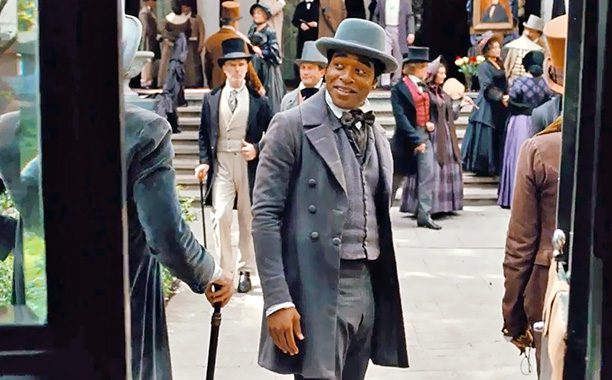
At the Ford plantation, Northup has it relatively good. His intelligence and education make him an asset, and he spearheads a couple of construction projects to add to Ford’s estate. This upsets overseer Tibeats, an insecure man who can’t stand to see a black man who subverts everything he was told. One day, Tibeats goads Northup into a fight. Northup easily overtakes Tibeats and starts whipping him, setting up the most disturbing scene in recent movie history.
Northup is strung up on a tree, about to be lynched. Only another overseer who scares Tibeats and his goons away interrupts the lynching. But this overseer doesn’t cut Northup down. Instead, he leaves Northup hanging and waits for Master Ford to return home. For what seems like days, the camera holds as Northup dangles on his tiptoes, in a state of semi-strangulation. As the moment continues, slave life resumes as normal. Slaves dare not look at the sight. I turned away within the first twenty seconds. Yet the camera did not move.
I’ll admit my first reaction was to walk out. I felt the scene was exploitative, more indicative of a camera trick than anything else. But the more I started thinking about it, the more the scene moved me. One of the most compelling things about 12 Years a Slave is its use of time. The title reveals that Northup’s travails are temporary, and yet in the thick of it, the hell seems never-ending. Traditional Hollywood period films like The Butler use supers to mark years or time gone by, as well as a lot of makeup. McQueen gives us the authentic barebones of how time would have passed for a man like Northup, without the benefits of knowing how it ends.
The Founding Fathers left the contentious matter of slavery for future generations. Sixty years later in Spielberg’s Lincoln we saw the long protracted deliberations over the institution brought to screen. In the first scene, President Lincoln talks to two black soldiers with two different approaches. One is deferential and accommodating, the other demanding and impatient, not wanting any more time to go by. Even in the present, we weigh the promise of Obama against the reality of Trayvon, wondering how much more time has to pass. The first tragedy was Northup hanging from that tree. The second is that he hung there for so long. I don’t think there’s ever been an image that sums up the history of race in America so well.
After his near-lynching, Northup is sold to a new owner, a brutal man named Edwin Epps (Michael Fassbender). In Epps, Northup finds someone who sees him purely as subhuman property, yet paradoxically—a microcosm of the institution itself—is afraid of an educated slave. Everyday slaves are judged by how many bales of cotton they pick. Those who don’t meet the mark get the lash. One slave, Patsey (played remarkably by Lupita Nyong’o) routinely outpicks everyone, male slaves included. Much as Django nailed the psychology of the slave class, so too does 12 Years a Slave. Epps is transfixed by Patsey’s uniquely “savage” strength and beauty. He forces himself on her, much to the ire, jealousy, and shame of Mistress Epps (Sarah Paulson).

Northup and Patsey develop a strong relationship, one which is depicted primarily through visuals rather than through dialogue. Indeed most of the feedback we get of Northup is nonverbal, and Ejiofor shines with the most challenging material. There are other difficult scenes on this plantation too, like when Northup is forced to whip Patsey at gunpoint, a scene that is almost as protracted as the lynching scene. There’s a lighter scene where Northup starts singing along to a spiritual, first uneasily then as loudly as any other slave. In that one moment, Northup finds transcendence by accepting his station. I could have used a couple more of these scenes, which show the ways in which slaves survived and retained their humanity. Moreover, these kinds of scenes, in contrast to the more violent ones, put Northup front and center. At times in the other scenes, Northup feels a bit upstaged.
Earlier this year, I wrote a film review on Django Unchained. I feel like I didn’t sufficiently describe what was at stake in that film. For many black Americans, there’s not only a sense that history “did us wrong,” but that the memory of that history has been done wrong (or not at all). I got into filmmaking precisely because of this feeling. I wanted the stories I had in me to serve as a corrective. In many ways, 12 Years of Slave is a corrective. The near-lynching scene in particular counters every sugarcoated and flat out false depiction from Birth of a Nation and Gone with the Wind to Legend of Bagger Vance and The Help.
In terms of slavery depictions, I still feel like I was more moved by Roots, which did not shy away from reality but also had more of a heart than this film did. There’s a lot I liked about 12 Years a Slave, but I’m not comfortable calling it definitive at all. Fortunately, there’s a lot more to choose from now.



8 responses
Mr. Adeniji nails 12 Years a Slave! I, like so many who experienced, as he says, this film believed myself to be on those plantations. I “knew” how to get from the Epps Plantation to the Shaw Plantation. I “knew” how to get to the general store where Platt/Northrup was sent to fetch items for Mrs Epps. I experienced this reviewer’s writing and critique as I did 12 Years a Slave: I was present. I was compelled by my conscience — and intellect — to look. Most of all, this reviewer’s writing, like the film, forced me to “know” as powerfully as to “feel.”
Just to say that I hope you read the book; I was introduced to it back in the 1980s and it is stunning. I re-read it. The movie is powerful but doesn’t follow the book in all cases, which often happens when the visual is the communicative arm and not the written word as originally was the type of communication. I liked your review. It was personal, fair and captured the essence of the story in the film.
Congratulations on your fine depiction of the screenplay of “12 Years A Slave.” A reminder, though, this is a movie based upon Northrup’s autobiography of his life on numerous plantations. It is not a story that parallels “Roots” in any way; in that he was a free man and his story is not nearly as heartwarming– as “Roots” was able to endear us to its characters. In this story we are glad he is once again free but I had the sickening realization that the circumstances of his entrapment remind me of today’s tragedies where very often a black man will be innocently and abruptly jailed for an eternity, often never getting released. Northrup worked as an abolitionist when he came home and I suspect died on the Underground Railroad since no one ever found his body or was able to record his death. This is a harrowing story and a great film that leans heavily on his script with first rate acting and the authenticity of being filmed on a working plantation in Louisiana. I am proud to have been a
part of the musical contribution of the film–as small or as inconsequential as this may have seemed (music) while this horrific story played out on the screen.
I have not seen this film nor Django (though I am familiar with Turantino’s work). The review is well written and invites the reader to share the writer’s perspective and emotions. I look forward to seeing the film as a result. I’ll forward the review to friends.
Thoughtful piece. I was pleased to find your mention of the churning paddle wheel. I found it yet another example of McQueen’s excellent filmmaking, and what you’ve written about its symbolism rings true. In the same way, I like how you’ve considered the lynching scene. I hadn’t thought of it quite that way, but I think you’re right. It can “sum up the history of race.”
I also appreciate the other comments here, and I’m now even more interested in reading the book.
My only issue is with the references to Django Unchained. I don’t see the connection. That film did practically nothing for me, and I don’t see it as being worthy of this conversation. Roots? Well, that’s a different story. Foundational. To this day, among the best, if not THE BEST book I’ve ever read.
Excellent review. I think McQueen is one of the great directors of our time for dealing with difficult material, because of his willingness to hold onto a scene or a shot long after it has become uncomfortable for even the most hardened viewer. He did the same with Hunger, and (to some extent) with Shame. There is so much happening in the near-lynching scene, physically, emotionally, symbolically, and for him to hold on to it as long as he did was brave and necessary.
A careful and reflective piece; forwarding!
Great insight. Northrup thought he made it. It should be a modern day lesson to African people everywhere -Never get too comfortable, Never let your guard down!
Click here to subscribe today and leave your comment, or log in if you’re already a paid subscriber.