

“If you’re in the con game and you don’t know who the mark is… you’re the mark.” —David Mamet
“Never pay an entry fee. If they won’t give you a waiver they aren’t interested in the film.” —Major film festival programmer.
***
Update: In response to the overwhelming support received by this article, The Rumpus has decided to throw its own film festival July 30 in Los Angeles.
***
Note: This article is about narrative feature films and doesn’t make any assumptions about the festival experience of short films or documentaries.
How do film festivals decide which movies to program, and why are film festival submission fees so high? I interviewed more than 100 filmmakers and festival programmers trying to find out.
I knew that the overwhelming majority of films were rejected. I wanted to know about the ones that weren’t.
The average festival submission fee is $65. But for many festivals it’s even higher, especially if you miss the early submission window. Cleveland, San Francisco, Seattle, and Chicago, all large regional festivals, charge $100 and receive from 800 to 1,500 feature film submissions. Larger premiere festivals—like Los Angeles, Tribeca, or Slamdance—get over 2,000 narrative features, while Sundance gets over 4,000. If you know someone, or if a movie of yours has played the festival previously, or you have a big celebrity in your movie, or if your movie has already played a prestigious film festival, a festival will often grant you a submission fee waiver. Sales agents and distribution comp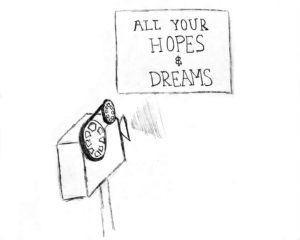 anies also don’t pay submission fees. The more independent your film actually is, the more likely you’ll have to pay a festival to apply to an independent film festival.
Does receiving a fee submission waiver impact the odds of playing at the festival?
It’s safe to say that less than 10% of the movies applying receive submission fee waivers, but they make up a disproportionate number of the feature films selected. Here is the data on submission fees for narrative feature films that got into film festivals. If the number on the left is larger than the number on the right you might want to reconsider your odds on your entry fee:
(Click here to expand the data set).
Almost all of the movies surveyed played at film festivals in 2015 and 2016. We were not able to get in touch with every indie feature that played at every festival. The fact that sales agents and distributors wouldn’t give us data means that there are actually many more movies that don’t pay submission fees and play festivals than the numbers indicate.
Of all of the filmmakers I spoke to, everyone who played Dances with Films and Slamdance paid the submission fee. I only found one film that had received a waiver at Cinequest. A Cinequest programmer told me that while they gave waivers on occasion their policy was to program those last, only if they couldn’t find enough movies they liked in the paid submission pile. More than half the directors who played South By Southwest paid a submission fee. Virtually no other film festival, except for really small ones, programmed more than 20% from blind submissions, ie. filmmakers who had paid submission fees, preferring instead the movies that applied for free or were invited. Perhaps most alarmingly, out of 37 festivals—for which I had more than one data point—there were 17 that didn’t program a single paid submission, including Bend, Denver, Portland, and TriBeca.
About a week before publication I started emailing the data to festival programmers asking them to confirm, or help me find more filmmakers that paid. We’ll update the data set as new information arrives (it updates automatically here from the working spreadsheet). At some point we’ll announce the data set closed. You can always talk about your own festival experiences in the comments (which we prefer to keep civil).
Nancy Collet was the director of programming for the AFI Film Festival for ten years and has been a film festival consultant for other fests since 2007. “At a certain point most have to choose between quality and premiere status,” Nancy says. “A programmer is always making an effort to discover new filmmakers. This is one of the most exciting challenges of the job. At the same time they’re trying to give the audience films they’ll enjoy and attend and it’s often a delicate balance.”
What that often means for programmers is attending other film festivals over the course of the year—particularly the larger, premiere-only ones like Sundance, Slamdance, South by Southwest, Toronto, and Tribeca—and inviting their favorite films and the ones they think will resonate best with their audience to play at their festivals as well.
One programmer said they often know if they’re going to program a movie before it’s even finished. “There’s an eco-system,” he says. “We’ll almost always know a producer or editor or actor, even if we don’t know the director.” He pointed out that it’s gotten so cheap and easy to make a movie that submissions have more than doubled. “In the last five years it’s become harder to find a movie of quality buried in the slush pile. It might be cheaper for mediocre films to submit to festivals if the filmmakers are connected but the most important thing should be making a great movie.”
The programmers I talked to felt that great movies always find their way. But if you’re charging $100 per submission, taking in tens of thousands of dollars, do you have a responsibility to the movies that pay? And how would the people who paid to submit to your festival feel if they realized all the movies being programmed didn’t pay?
“Without submission fees most festivals would disappear immediately,” said Josh Mandel, a programmer at Slamdance Film Festival, the only top-tier festival that doesn’t grant fee waivers. He said there aren’t many festivals that could get by on sponsorship alone, at least in the US. Outside the US, many festivals get government funding and corporate sponsorship that minimize or eliminate the need for submission fees.
A successful director who had three movies play Sundance and Venice in the 90s told me, “They didn’t used to charge. Now there are thousands of film festivals, many for profit. I don’t believe in film festivals anymore. Better to go straight to DVD.” He also said, “You could make another movie for what it costs to apply to film festivals now.”
One director, expressing frustration, said even after playing at some pretty good festivals, “It used to be the studio system that was set up as gatekeepers keeping out independent films. The film festivals were a way around that. But the festivals have become the new gatekeepers. Sure there are exceptions but for the most part if you don’t know how to play the game, if you’re not connected, if your movie doesn’t have big stars, your odds of making it on the festival circuit are a lot worse than you think.”
There are other good festivals that hold the line, but they’re in the minority. Dances With Films, which is rapidly becoming one of the top film festivals, doesn’t grant fee waivers. When one prominent film producer asked for a waiver from the Austin Film Festival she received this response, “In the interest of fairness, we cannot waive entry fees for any film entered into our competition. It’s important to us that the same rules and entry fees apply to all applicants so no one film is favored over another.”
Some of the smaller, more underground film festivals also only program movies that pay submission fees. Though it might not be worth it to apply to festivals like Williamsburg since they charge $75 ($50 for students) and don’t get much media attention and the audience isn’t as large. But at least you know everyone who applied paid the fee; it’s a level playing field.
Russell Brown has made four low-budget independent feature films including this year’s Search Engines. “I’ve had certain experiences where a mid-level film festival charged a high submission fee but then didn’t actually watch the whole movie,” he said. “When you pay a lot to submit a movie, what guarantee are you getting? Even if you only pay $30, what level of consideration does the festival guarantee in return? What are you paying the submission fee for exactly?”
Russell says he’s learned to always request a waiver or a discount. He believes if the festival is truly interested in considering a film, they will grant this.
Leah Meyerhoff’s I Believe in Unicorns had a legendary festival run. I Believe in Unicorns played at scores of festivals, including South by Southwest, Sun Valley, Dallas International, Brooklyn, Nashville, Edinburgh, Portland, Bend, etc. Leah rarely paid a submission fee.
Leah insists you don’t have to lose money submitting to festivals. She also says that filmmakers can request a screening fee from the festivals they play at. Distributors often do this with films they acquire. Independent filmmakers can too, according to Leah. But if you don’t ask for it, don’t expect the festival to offer.
New York Film Festival sidesteps the entire process by only programming movies by invite. Traverse City Michigan Film Festival, founded by Michael Moore, doesn’t charge a submission fee.
Nancy Collet says not charging any submission fee turns out to be a bad idea. When you don’t charge a submission fee you may find yourself inundated by movie submissions, many of which aren’t even eligible to play. She advises film festivals that can afford to not charge submission fees to still charge something small, just to be sure the filmmakers take the time to read the festival rules. But she thinks it’s excessive when festivals charge up to $100 for a submission. “When your prices are too high, you end up narrowing the field of submissions to just those filmmakers who have the funds to pay, and you can lose some great talent if you price your entry too high.”
Anthony Kaufman, a journalist and programmer at the Chicago Film Festival, says if a filmmaker can’t afford to apply to festivals they should reach out and ask for a waiver. “I think part of the issue is, as a filmmaker, you should feel free to communicate with the festival, ask the questions, and sometimes programmers will say yes.”
But in speaking with filmmakers I heard of two incidences where someone had requested a fee waiver from Chicago and gotten no response. “They have to already know you, or see your work play somewhere else,” one said, “otherwise they won’t get back to you. Maybe when they didn’t respond I should have heard what they weren’t saying.” Both filmmakers (Chicago natives) decided to pay the $100 submission fee. One was rejected and one is still waiting to hear.
I asked David Nugent, the artistic director of the Hamptons International Film Festival, if movies that don’t pay a submission fee have an advantage. David admitted that if he requested to see a movie he was going to watch it, while a movie that comes from a blind submission would have to go through at least two layers of programmers before it got to him. Still, he insisted, the best movies always make it to him.
“The people that get waivers have generally earned them,” David says. “They’ve already made great work which itself started as a blind submission. They’ve paid their dues.”
“What about celebrities?” I asked. I pointed out that The Adderall Diaries, based on my memoir, had played many big festivals including Cleveland, Woodstock, and Tribeca (where it premiered). It had a bunch of celebrities but a first-time film director.
“I might play devil’s advocate on that one,” David said. “When you have well known actors everything is easier. It’s easier to get financing, easier to get distribution. It’s not just the film festivals.”
Bar Songs is a low-budget independent feature by first time director Ryan Collins. Ryan didn’t have a festival strategy, he didn’t know other filmmakers or work with a well connected producer. He says he spent $4,000 dollars applying to festivals. His movie played at only six: St Tropez, The Art Of Brooklyn, Hoboken, Manhattan, Williamsburg, and Kansas. Ryan had no idea the game was rigged.
Most festival programmers would say a movie that pays a submission fee has just as much a chance at being programmed as one that doesn’t, despite the data that suggests otherwise. At the very least it’s a much cheaper and easier process for many of the films, the ones that tend to get programmed, than for the ones that don’t. And is it okay to fund a festival based on exorbitant submission fees and not program the movies that are paying the fees? It’s as if the losers were throwing a party for the winners.
Both programmers and filmmakers point out the importance of having a strategy. For some that means submitting to a few big festivals and, if you don’t get in, only targeting festivals that are really relevant to your movie.
“There’s no point in applying to a hundred festivals when only twenty-five are a good fit,” Josh Mandel says. “It’s easier now than ever for filmmakers to research festivals, getting to know their taste and the kinds of films they’ve programmed in the last couple or few years. All the data is online. There’s no way for filmmakers to ever know with 100% certainty whether their film will fit the festival’s taste, as that can change year to year based on the submission pool, or changing of the guard in the programing team. But, filmmakers can greatly increase their chances by taking the time to get to know a festival through its previous editions.”
I started writing this article out of sadness. I submitted my last movie, Happy Baby, to more than fifteen film festivals and didn’t get into any of them. After publishing six books with small presses, and my first four without even having an agent, I thought I was used to rejection. But I was wrong. The rejection was crushing. I finally cut my losses and released the movie through Vimeo Video On Demand. I didn’t think I would make another one.
Once you know how it works it’s not too hard to see if a film festival is serious about programming movies that pay to submit, but it does take a little digging. Most (though not all) of the directors I spoke to who had a film premiere at a marquee festival—Sundance, SxSW, Tribeca, or Toronto—told me they never paid a submission fee for an American festival after that. I would have avoided the Hamptons if I had been more diligent in my research, seeing how many of their movies had already played larger festivals. And I would have seen that the only narrative features playing at the Miami Film Festival that might have paid a submission fee were in the “Florida Focus” section. Applying only to the right film festivals will save you money; it will also save you self-esteem.
Cleveland Film Festival will give you back the comments on your submission, so you can see why your movie wasn’t accepted. Cleveland has three volunteers watch each movie submitted and write up their thoughts, at least for movies that aren’t invited. The only thing is, when one filmmaker got the volunteer’s thoughts they seemed to love her movie. They didn’t mention anything wrong. Russell Brown had a similar experience with a movie he submitted to Cleveland. So why didn’t they get in? Do the volunteers opinions matter if the programmers are only watching movies that have been invited to apply?
Tony Castle of the Lower East Side Film Festival says, “Our pricing is affordable, but enough to encourage people to only submit their best work.” The Lower East Side charges $50 for feature submissions, $75 for feature submissions submitted late. I point out that it appears only 20% of their narrative feature programming, if that, comes from paid submissions. $75 is a lot to compete with over a hundred other narrative features for one spot. He says the LES Film Festival champions low-budget filmmakers. “If someone emails us and can’t afford to apply and wants a waiver, we’ll often grant one.” I know of at least one instance when that wasn’t true.
Each movie, book, art project, needs its own strategy. But you want to create that strategy with knowledge of the landscape. If your movie doesn’t get into one of the big festivals you can’t automatically assume it will play at smaller festivals. Some of those festivals—since they’re considering blind submissions along with filmmakers they have relationships with and all the best movies that have played at festivals in the past year—might actually be harder to get accepted to than the larger festivals.
The larger festivals come with bigger pay-offs, too. Katharine Emmer paid $100 to submit her ultra-low-budget movie Life in Color to South by Southwest. After she got in the movie received more than fifteen waivers to apply to other festivals. In other words, the risk/reward might make more sense with a festival like South by Southwest than Lower East Side.
Often it’s about knowing your audience. Many great, smaller films premiere at the identity-driven festivals, like Frameline in San Francisco and the Asian American Film Festival in New York.
Sometimes it makes more sense to save your money. Look and see just how many indie films a festival is programming. Some are only programming one or two, or are only playing local indie features with all the other feature spots reserved for large, spotlight films. Don’t apply to any festival without spending at least twenty minutes going through last year’s program, which is almost always readily available online. With only a few exceptions, apply only to festivals that will give you waivers, or are highly targeted to your particular movie, and use the money you save to set up your own screenings, maybe even your own film festival. It won’t be easy, but give yourself a shot.
If you are going to pay a submission feel make sure the movie is finished and submit early. The difference in price is often enormous. An early submission to the Hamptons, nine months before the festival, is $30. Six months before the festival the submission fee rises to $90.
“Everyone wants to think their film is so good,” said Ryan Collins. “It will get in no matter how late it’s submitted. But that’s not usually going to be the case, especially if your submission is unsolicited.”
I try to imagine if a publisher charged a fee to look at books but only published books by authors who didn’t pay the submission fees. I know if they did that to poets there’d be blood in the streets. It would be the French Revolution and the Reign of Terror all over again. I do think most, if not all, of the programmers just want to program the best movies for their audience, and that might require granting a lot of waivers. And those programmers are truly excited when they find a movie they like that they didn’t now about. Championing an unknown filmmaker can make a programmer’s reputation.
In the end, 25% of the surveyed independent movies that played at festivals did pay the submission fee. Festivals like Los Angeles and Sundance were offset by Dances with Films, Slamdance, and Cinequest. And some of the really small festivals offered fewer waivers. The larger, second-tier festivals, like Seattle, Chicago, and Cleveland, were the hardest to get into and the most expensive. If I was doing it again I would not have applied to those festivals.
The film of The Adderall Diaries, based on my memoir, premiered at Tribeca in 2015. I had nothing to do with the movie other than writing the book it was based on. The experience of seeing myself portrayed on the screen (falsely, but whatever) was inspiring.
Suddenly I wanted to make another movie. Less than a year after seeing The Adderall Diaries I had a movie inspired by that movie called After Adderall.
A movie about James Franco making a movie about me? Every festival would want that, I thought. But I was wrong. The rejections started rolling in and I had the sinking feeling of deja vu. I didn’t want to go through what I went through with Happy Baby but I could see it was happening.
When I started this article I was ready to admit defeat. But now my regret is not having a more targeted approach. I wish I had paid the fee and entered Cinequest and Dances With Films. It’s also worth thinking about alternative venues to screen your movie, other types of festivals. After Adderall is playing at the Brooklyn Book Festival and the Sanibel Island Writer’s Conference, as well as four universities and a special screening in Provincetown.
I think The Rumpus will start its own film festival. Also, I’d like a refund from these film festivals I submitted to that have not yet announced their decisions: Chicago, Cucalorus, Bend, Philadelphia, and Santa Cruz. Oh wait, I didn’t apply to Santa Cruz, but I really want to play there.
***
Notes: This is about American and Canadian narrative feature films and doesn’t take into account the film festival experience of short films, world films, or documentaries. Also, submission fees quoted for festivals are often for late submissions and might be $25 more than earlier submissions. All films tabulated are from 2011 forward, but the vast majority are from 2015 and 2016.
Extra Notes: The Los Angeles Film Festival responded, “For the US FICTION, LA MUSE, and NIGHTFALL categories (2016) (24 films total)—13 paid, 9 were granted waivers for hardship or diversity. 2 are alumni and got waivers for that.” We haven’t been able to verify this. All 10 of the filmmakers we spoke with that played at LAFF got fee waivers, including 4 from this year, 4 from 2015, and 2 from 2014. As we contact more filmmakers and more get back to us we’ll update the data set.
David Nugent of the Hamptons Film Festival says they programmed at least 2 feature narratives from blind submissions last year, but I haven’t been able to find them. Also, 2 is a low number.
Out of 100 movies one anomaly keeps standing out in stark contrast to almost everything else in this article. A movie called Embers by Claire Carré continually achieved what seemed impossible. Without Hollywood connections or big stars (though Jason Ritter is awesome) Embers paid a submission fee, and got in, to Chicago, Atlanta, Ashland, Dallas, and Cleveland film festivals among others. It was often the only film I found that paid a submission fee to these festivals, or at best one of two. It also got programmed at Slamdance midway through its festival run as a special screening, despite the fact Slamdance almost exclusively programs premieres. What Embers achieved, over and over again, was far more impressive and unlikely than being picked from the slush pile at Sundance. The festivals that programmed Embers from blind submissions were frequently taking the bulk of their programming from the award winners at the marquee fests. What Embers did strikes me as about as impressive as winning an Academy Award. Embers will be available on video on demand in the fall.
***
Research by Julia Mok, Beverly Parayno, Adam W. Keller, and Kyle Williams.


35 responses
Another issue is that festivals should share the box office with filmmakers – absolutely! They have become “platforms” that take “content” for free but make all the money from it. That maybe — only maybe– made some sense when a small film without big names had a chance to land a distribution deal and some MG but nowadays that’s almost completely impossible – it’s just a scheme to skim money from young kids without experience shooting DSLR films off their entry fees. Festivals have become launching pads (at least the bigger ones) for celebrity actors’ pet projects and “specialty” releases of big studios, with the smaller fests picking up the same fare + some local choices.
Great article, really interesting insight to that world.
The whole set-up reminds me of screenwriting competitions. Pay an exorbitant entry fee for a slim chance of winning some small prize.
Frankly if you’re going to do that much work you’re probably better off just writing a book. Even if a publisher doesn’t bite you can self-publish on Amazon and make a bit of cash with it for little outlay.
Just in regards to Bud Spencer’s comment, almost all of the festivals I have dealt with are non-profit, and probably would also not exist, if paying fees for films. I know it sucks, but I know they are struggling just to maintain the ability to screen the works they and their audience love.
David, I’m definitely not saying that festivals shouldn’t charge a submission fee. I’m just saying if their major source of funding is submission fees then a reasonable percentage of their program should come from the people who pay them. At least as far as U.S. narrative films, it doesn’t, and the people submitting those films should know that.
This article is absolutely correct and festivals such as the Hamptons should say publicly that 90% of their selection comes from other more prestigious festivals or directly invited films. One precision: Claire Carre ‘Embers’ is not an exception and didn’t come ‘out of nowhere’ as it was nurtured by the IFP Narrative Filmmaker Lab (Same for ‘I believe in Unicorns’). It premiered at Oldenburg then screened at Chicago and New Orleans film festival where it was seen by Eric Kohn who wrote an elegiac article about it. After this article all doors were open. Carre wrote about it herself here: http://www.ifp.org/resources/how-i-learned-to-stop-worrying-and-love-film-festivals/#.V08SYCMrJz8
Todays’ problem is the enormous amount of time spent by filmmakers in hustling, and the discouragement of some seeing mediocre films getting in through connections. This is why film curators have more than ever a huge responsibility in finding talents.
A very useful article, thanks very much! I wish I had possessed this information long ago; I figured out some portion of it on my own due to my frustrating personal experiences with festival submissions.
But what the article doesn’t cover — and perhaps this is a topic for another article — is whether festivals are worth your time at all. 90% of festivals are not going to get you enough publicity or attention to get you a distribution deal. And if festivals don’t function as an effective marketing tool, then entering them is purely an exercise in vanity, in addition to a huge waste of time and money. Hundreds of films are programmed in major festivals every year, and most of these titles you will never hear from again, nor even see distributed in any mainstream fashion. After the festival circuit, they simply vanish.
I made a 25-minute film that didn’t get into festivals (and to be fair to festivals, 25 minutes is a difficult length to program), but because it’s been up on YouTube, it’s been seen by more than 10,000 people, and without any promotion at all on my part. Since my intent was not distribution but to find an audience, my goal was accomplished without the help of festivals.
In addition to having a festival plan, which you mention, a marketing plan is far more important, and should be created as soon as the script is done. If you understand how and where you want to sell a movie, and have a specific audience in mind, then a) it will help you create your festival plan, and b) it may help you sell the film — and can even allow you to skip festivals entirely.
If you really want an eye-opening learning experience about film distribution, then go to a film market and see how films are actually sold. It will either make you a better and more business-oriented filmmaker, or it will scare you away from the process entirely!
Stephen (and research team) – really great data-driven article! I’m sure it was a lot of work to do this, but it’s a great service to both filmmakers and film festivals alike. It’s particularly gratifying to see your findings on Slamdance – which I co-founded, and am happy to say that even I pay entry fees when I submit my films. Yes, one of the reasons we picked Embers was in defiance of the premiere-only obsession of so many festivals. Why was it such an anomaly at other fests? Hard to say, but it’s a good and original film, and has very nice filmmakers who are supportive of their fellow filmmakers. That word does travel. As a companion piece, readers might want to check out the article I wrote for Filmmaker Magazine a couple years ago called “12 Steps to Avoid Going Broke Applying to Film Festivals.” ( http://filmmakermagazine.com/76069-12-steps-to-avoid-going-broke-applying-to-film-festivals/ )
There are at least two sides to every tale. Here is the situation from the festival’s perspective. http://j.mp/whyfees
Thank you so much for this, Stephen. Film festivals are as secretive as just about anything in Hollywood, which is maddening. I have been on both sides. After my feature documentary, Sir! No Sir!, premiered at the Los Angeles Film Festival and won the Audience Award, I was essentially invited to dozens of festivals. On the other side, I made a short documentary this year, Untold, that has not been programmed at a single festival I have submitted to. It is 28-minutes long, and I have learned through this process that while every festival says shorts can be up to 40 minutes and is more than happy to take your “reduced” submission fee, they rarely (if ever) program a short that is longer than 15 minutes. In frustration, I wrote the following “Honest Rejection Letter.” Enjoy.
Dear Independent Filmmaker,
We would like to take this opportunity to thank you from the bottom of our hearts for your generous contribution of $50, $75, or $100 to our festival. It is the contributions of thousands of filmmakers like yourself that have made this such a successful and prestigious festival.
We understand that you also had hoped that your film would be accepted as part of our festival. An understandable misconception given how we promote ourselves. But allow us to offer you a reality check. Your film was not recommended to us by any of the people whose opinions we pay attention to; it was not seen at the other festivals our programmers attend to find films; we did not invite you to submit your film without paying the submission fee. So of course it wasn’t among the 50-75% of programmed films we invited. And with thousands of submissions, you are frankly lucky if the screener who saw your film watched more than ten minutes before rejecting it. Hey, it’s not our fault digital technology has made it possible for thousands of films to be made–but who are we to turn down all those submission fees?
(And while we’re at it, we want to thank Withoutabox and Film Freeway for making it so doggone easy for you to spend hundreds, even thousands of dollars submitting to festivals you probably don’t have a chance in hell of getting into).
On the other hand, had your film been programmed in a lot of other festivals, chances are we turned it down because of “overexposure†even though no one in our city has ever seen it. We are sure you understand how important it is for us to maintain our status in the Festival World.
Be that as it may, thank you again for your contribution. We are sure your film was wonderful, but if you really want to get into our festival we suggest you take Sundance Director Trevor Groth’s advice given in a moment of blessed honesty: get an A-list actor. After all, true “independence†can only take you so far.
Sincerely,
A Very Important Festival
Thank you for your post and starting a conversation around the topic. I can only speak for my festival – the Buffalo International Film Festival. Certainly there are festivals that do take advantage of filmmakers and others that do make it difficult for a submission to come through the open channels. As a festival of filmmakers we vow to program at least half of our selections though blinds submissions and have at least two screeners watch each film from frame one to through the closing credits. We also have a few backstops in our process – if I feel based upon the narrative information provided by the screens an entry hasn’t been given a fair chance, I will assign it to someone who may be receptive (this may be key for long form experimental work or other works that might be challenging or polarizing for whatever reason). A juried award winner from last year actually caused some argument amongst our staff.
With that said – fee revenues represent a small slice of the pie for any reputable film festival – information regarding non-profit festivals can be decoded from their IRS filings (if they have revenues over $25,000) and I can tell you our fee revenue makes up a small fraction of our overall budget (this year it’ll be under 5% if our projections hold true).
With that said – we’re in the business of serving both audiences and filmmakers – it’s a necessary symbolic relationship and the key to a great festival. For a smaller festival like ours having good reviews from previous festival runs builds momentum – it helps us tell our story (we’re less caught up on premiere status although we prefer to host the regional premiere of our films – and films available on VOD are a no-go for us). Some films we’ve declined to program have gone on to play elsewhere and to some success – there’s a festival for every film – it’s just not always the top tier festivals that will launch your career.
I personally think filmmakers can ramp up to bigger festivals with a captivating short or a body of work – a short film we screened last year (Night of the Slasher) went on to play at SXSW a few months later after playing at many festivals (I’m sure they also received rejections too). For filmmakers it’s important to find festivals that are comparable to the quality of your film which is not always easy to asses (as a filmmaker myself you can’t always get honest feedback from your inner circle nor can you really trust yourself to provide honest feedback). From a festival perspective we’re often dealing with very limited real estate and have to make decisions based upon those factors – and quite frankly we’d prefer not to screen everything sent to us, we’re curators – we’re not an infringement festival.
Our process first has us assess the film based upon the filmmaking quality and then for fit (especially our shorts) we currently have many great shorts films – some can play with shorter features, others may find their way into thematic shorts blocks. We try desperately not to have quality films fall by the wayside but unfortunately we do have to pick and choose the best of the best – it’s a good problem to have but it does skew things towards films that have both great stories and great tech specs (although sound mixing has become less of an issue this year I’ve noticed, thankfully).
Regarding fee waviers – we have offered a few as well as discount coupons. These are offered to films we’re interested in, if a filmmaker writes to tell me nothing about their film than its difficult to get excited about the project. My rule is this – cruel as it may be – if I don’t think we’re going to program the film I decline to provide a fee wavier. In short: provide a trailer to the programing department that get them excited (including good sound!) as well as a listing of festivals you’ve screened (if you’ve played at a top tier festival a regional one like mine would be idiotic not to waive your entry fee). And yes – I agree we need to be more transparent about acceptance rates – our festival is still growing and acceptance rates vary by category (for us local films have an easier time getting programed as they have their own category – we also have 20 coming of age films about white kids – we’ll probably invite the three best of those to screen in various programs throughout the festival).
Great article. One really interesting thing I noticed in the spreadsheet is that festivals such as Woodstock, Nashville, Denver, Cleveland and Atlanta all wouldn’t give me a waiver stating in their e-mail back to me basically the same thing that the Austin Film Festival told a filmmaker in this article ““In the interest of fairness, we cannot waive entry fees for any film entered into our competition. It’s important to us that the same rules and entry fees apply to all applicants so no one film is favored over another.— So they are basically all full of shit liars. BTW, my film played DWF and Cinequest
Hi,thanks for the post. It is very interesting reading to us as a relatively new festival. We made the decision when we started the Manchester Film Festival (UK) to only accept films that came through open submissions and pay the entry fee, it just felt a bit shady to charge a fee and then invite in a load of “big” films. We also know of many festivals in the UK that charge high fees and then just programme from the top tier festivals.
We send an email out to any filmmaker who asks for a fee waiver similar to the one Austin sends out, saying that we cannot grant waivers in the interests of fairness. Most filmmakers are understanding but some do get very aggressive in response.
We are all about finding and championing new filmmakers and will continue to do so. Also really impressed with the integrity of Slamdance and Dances with films. All festival should be forced to display the information of how many films paid a submission fee and came through open submissions on their withoutabox and filmfreeway pages! However, I have a feeling to protect themselves they’d just get all the invited film to submit with a reduced fee.
I’d like to note that the New York Film Festival DOES take submissions and charges a hefty fee: https://www.withoutabox.com/03film/03t_fin/03t_fin_fest_01over.php?festival_id=1282
I assume what they say is true, they only invite movies they solicited and are one of your worst offenders.
Thanks, Stephen…I was actually referring to Bud’s comment about sharing box office with filmmakers. I worked with a fest for one year, and along with venue rental, shipping, marketing and publicity, tickets, management, etc… all of the box office is essentially gone. I know it was off-topic, but I thought it should have been addressed, because the festivals really can’t afford to pay for screening fees in most cases. The ones that CAN afford it, probably never will pay a screening fee.
Again, off topic, as this is more about honesty and integrity towards filmmakers, which with the exception of a few festivals you researched (Slamdance, DWF, Cinequest), many do not have that at all.
BTW, my friend’s film played Cinequest and SXSW and she says both were amazing and really were about finding new voices and giving them a chance. She did not get into DWF, but can’t get into them all.
The cultural velvet rope is so insidious. I read this article and was going to comment on the sense of wonder and gratitude I felt when one of our films was chosen from the slush pile of a certain film festival. So much so I thanked one of the organizers after the screening – he was gracious and told me they set great store by their integrity. (I wondered whether the same method used by popular nursery schools in New York City might be applied — cut off submissions at the point the festival doesn’t have the manpower to view any more films?)
So it comes as no surprise that the Director of the festival in question — the Manchester Film Festival (UK) wrote a comment above. They are a new festival, but they do walk the walk.
If I get one more email bragging about how many applications a festival received I might actually have to do the math and calculate their finances, and that doesn’t address the ones who don’t even bother to let you know you haven’t been selected.
I appreciate the work Stephen Elliott put into this piece – thank you Stephen and thank you Rumpus.
Thanks very much for your article Stephen! You just saved me a lot of money and a whole lot of grief!
I am aware that this article is about feature length films. However, I am fairly certain that the stats are relatively similar for shorts.
I submitted my graduate thesis, an LGBT themed short, to an established and well-known LGBT Film Festival in Los Angeles. When I found out, late last night, that the film had not been accepted for screening in the festival, I was crushed!
I spend approximately $25K in student loans to make this short film. I hired an excellent DP who shot a feature that was a huge hit at that same festival (and others) last year. I also hired a seasoned editor who has won an Oscar for his work.
I worked as a volunteer at that festival last year to get a sense of the short programming, the programmers and the festival staff but kept my presence pretty low-key. I did not want to start sniffing up some programmer’s ass and piss them off before submitting my film this year.
Because my film is LGBT themed, and was shot on location in West Hollywood, I felt this particular festival would be the perfect venue. And I still believe it is. However, the programmers obviously did not agree. And I received the standard response letter about “having received hundreds of submissions and only having a limited number of slots”.
I also submitted the short to about a dozen more festivals both LGBT and non-LGBT. However, this particular LGBT festival was more or less my litmus test as to whether or not to continue to spend money for festival submissions.
After reading this article, I will hold off on submitting to any more festivals until such time as my film gets accepted by one of the festivals I have already submitted to. If it does not get accepted into any of those festivals, I will discontinue submissions altogether.
I am no longer objective enough to judge whether or not my film is any good. And whether or not the sole reason it was not accepted is because it is simply not good. But now, rather than focus on getting into any more festivals, I will let the short find its own way – or not.
What sucks is that there is no feedback given which could only help me improve as a filmmaker. Honest feedback would definitely make the submission fees worthwhile.
Your article has solidified for me the strategy that I put in place for this short. Since it has not been accepted into the one festival I think it is perfect for, I will now turn my attention to producing my next project which will be a low budget feature.
Thanks again!
Thank you so much for this article. I have done the festival circuit with four short films and now a feature film, and the questions you are asking have been on my mind for quite some time.
Over the past year, my feature FOOLS has played fifteen festivals. I have had such a broad variety of experiences at these festivals. Some of them were truly great festivals, who curate really interesting, special films, and by doing so have curated avid audiences who know the festival well enough to risk the price of a ticket and a couple of hours on a film that has no stars, no high concept, no studio gloss. Those are special festivals. Dances With Films is mentioned in this article– that was my premiere, I won the Audience Award there, and boy was that a special experience. So was Durango, Vail… Beloit was a big, pleasant surprise. Tulsa American was a shocker from afar that I am crushed I didn’t get to. These festivals (and more) embody the most virtuous intentions described by some of the programmers that have commented here.
But an awful lot of festivals make a filmmaker feel like a commodity to be exploited. They don’t just charge submission fees. Some of them then want filmmakers to pay for passes to the festival (!!!). Others charge for the parties, the awards ceremony– No filmmaker should have to pay to receive an award, or to see movies at a festival they are part of. Not infrequently, the screening venues are lousy, sometimes with flat screen televisions. You get audiences of five people. At one festival, I drove three hours and showed up to an empty theater. The festival director, embarrassed, dragged festival volunteers into seats.
At every stage of getting a film to the public, you find that “unknown filmmaker with a vision” has become a commodity to be exploited. There’s a host of festivals, sales reps and distributors that oversell what they can deliver for independent films. And independent filmmakers don’t have prominent venues to share their experiences, so it is difficult to know what is a racket– Which sales rep who is charging you thousands to sell your film to distributors, and swears to you that they cannot charge less, is also offering his services to comparable films for free. And then you discover that distributors mostly pay nothing up front, so you are stuck with the cost of delivering your film. First time filmmakers are by definition naive. And there are a lot of sales reps, distributors and festivals that are ready to exploit that naivety.
It is easy to get jaded. And probably a good idea to approach the experience with some jadedness. I believe that there are hardworking programmers out there with noble intentions. I don’t think any of the programmers who have commented here is dishonest. It’s just so hard to know which festivals have such programmers. Because they really aren’t all that way.
It is hard for me to remember which festivals gave me waivers. I wish I could say that after my audience award at DWF the invitations came rolling in. They did not. But that award and the fact that my short films have made me an alumni of many festivals, did get me a lot of fee waivers. Which I am truly grateful for. I have no idea what is the ratio is of festivals I got into with/without paying.
I really like the process outlined in this article of deciding which festivals to go to. I had the same process. If I sent an email inquiry asking for a waiver and heard nothing back, I took that for a gentle letdown. Or a sign that the festival wasn’t organized. Either way, unless I really wanted to roll the dice on that festival, I did not apply.
I wish I had known to ask for screening fees!!!
Thank you so much for this article! I look forward to reading your further findings.
I love this article. My feature BURNING ANNIE premiered at the Hamptons IFF (fee waived via producers rep) and it plays 20 more fests over the next two years without paying a single submission fee. Even having seen it myself, the numbers here are eye-opening.
A few thoughts…
1) It’s not a “‪swindle‬” it’s a long-established ‪system‬. ‪Film festivals‬ are a hierarchical vetting system with a large number of unwritten internal ‪rules‬. It’s not unlike Hollywood in that way. The rules become clear once the system is engaged; it’s not a scam so much as an insider/outsider schism. The good news is anyone can join it.
2) “In- vs out-of-competition” is an important distinction. E.g. at Hamptons when BURNING ANNIE played there, HIFF had many dozens of films in the fest but only five in competition, and all five were no-budget indies with no stars or established directors (three were first features). This distinction might be another interesting way to parse the numbers; I wouldn’t be surprised if (e.g.) some fests only do waivers for out-of-competition films.
3) The explosion of indie feature film numbers means fests can be choosier, i.e. it’s a bull market if you run a fest because your acceptance percentage is lowering while your income from submission fees is rising. This is just a natural supply/demand thing and not a reason to think fests have bad motives. But, I would look closely at any fest under 10 years old with high fees and no reputation, because this kind of market brings out bottom-feeders.
Looking forward to more updates on this article.
Most film festivals are in gross breach of consumer protection laws. The entry conditions are clearly laid out and include numerous statements that mislead entrants. When they state ‘no correspondence will be entered into’ or ‘no feedback will be provided’ or similar statements paying entrants, who are not privy to the inner workings are misled. These entrants are induced into purchasing entry due to false claims, which is of course illegal. The general way in which they explain it’s a competition and talk about how many entrants they have also misleads entrants as to their chances. It’s not enough to say that it’s long established and that industry insiders know this is the case. Industry insiders may have trouble mounting a class action, but for the many who were genuinely misled a class action against the top festivals would be a great idea. These festivals need to come clean about how they select movies so that entrants know the real chances and are not taken advantage of. Enough complaints submitted online to the US FTC website and they’d investigate and force corrections too. Independent filmmakers are a vulnerable bunch taken advantage of at every turn. Film festivals should be with us, but they’re not. They’re largely with the quasi-independent films which have connections, name cast etc.
I’m so glad somebody finally wrote this article. I also hope to see another article about what Allen White mentions above: the fact that if “festivals don’t function as an effective marketing tool, then entering them is purely an exercise in vanity, in addition to a huge waste of time and money.” I make documentaries, and they may be an even bigger waste of time, and just as dishonest, as the narrative film festivals. I constantly see the same 10-12 documentaries show up at the same second and third tier festivals all over the country; these are docs usually with big funding, sales teams, and distribution already in place. They are effectively using slots at fests for premieres. The Seattle International Film Festival is perhaps the biggest offender in this regard. Being from Seattle, and having at least four of my films rejected in the last 16 years (even though all went on to get accepted in other fests, win awards, and get distribution), SIFF has become a bit of a joke in the local film scene. Film fests, except in a few rare cases, have become a racket, with little upside for filmmakers. Why are there now so many regional and neighborhood festivals? They must be making money off the vain hopes and slimming wallets of filmmakers.
Thank you for writing this article. What filmmakers need is a list of festivals effectively doing their jobs of finding new talents instead of picking up films straight from established sale agents while ignoring paid entries. The ’50 festivals worth the entry fee’ list should be replaced by the ’50 festivals giving a chance to paid entries’ list. Good luck to find 50 of them.
I’m one of the Festival Directors at The Lower East Side Film Festival. I can’t speak about other festivals, but I do find this data collection to be laughable.
Stephen Elliott surveyed 5 feature films that have played at our festival, and we have shown 22 features in total 2014-2016. We mainly show shorts. So, roughly 20% of the films available to survey (I can divide and create percentages, too). How can this “data” be considered legitimate?
I can ask 5 out of 22 possible women if they have ever eaten cottage cheese, 1 says yes, so then I’m allowed to make the statement, “it appears only 20% of women, if that, have ever eaten cottage cheese.” But, guess what, 10 more out of those possible 22 have also eaten cottage cheese, and I just didn’t bother to ask them!
For this claim to be true, “I point out that it appears only 20% of their narrative feature programming, if that, comes from paid submissions” we would have to have programmed 4 Narrative Features that paid the submission fee between 2014 – 2016. Only 4! Do you really think we can’t come up with 4 films that have paid the submission fee in order to falsify this claim? He’s cherry picking data to suit his agenda.
Here’s some data that is actually legitimate, The Lo-Fi Los Angeles Film Festival is showing three films, one was made by founder Stephen Elliott. 33% of all films shown at The Lo-Fi Los Angeles Film Festival are made by founders of The Lo-Fi Los Angeles Film Festival, and he probably didn’t have to pay a submission fee.
Stephen,
I’m the Director of the Denver Film Festival. Having not been contacted by you for your article but being called out directly as a fest that does not program any films from paid submissions, I thought I should set the record straight – In 2015, we included 21 features and 85 total submissions (including shorts and student films) in the festival that were paid submissions through Withoutabox. In 2014, that number was 15 for features, 64 total. I find it irresponsible reporting to extrapolate from a survey of a small sample of filmmakers that had films in our festival and state that we don’t program paid entries. I’d further note, that if you would have talked to James Sadwith (dir. COMING THRU THE RYE), you would have learned that not only did we program his film that came thru a paid blind submission, it was programmed in our prestigious Closing Night slot in the 2200-seat Ellie Caulkins Opera House and we honored the actor in it with our Rising Star Award.
Do we provide waivers to “alumni” filmmakers, yes. But, some of them became alumni of our festival by having paid to submit the first time around. We take great pride in the discovery of strong story-telling whether from a familiar voice or one we haven’t previously heard.
Thank you,
Britta Erickson
(in response to Shannon’s question) Nobody playing at the Lo Fi Film Festival had to pay a submission fee.
What is the Lo Fi Film Festival submission process?
We just invited a handful of movies we came across while researching the article that we thought were interesting and wanted to screen for one reason or another.
Stephen, why did you decide to program your own film in your festival?
Shannon, I think you’re missing the fact that there really is a significant difference between a festival that charges submission fees and a festival that doesn’t. Your festival, the Lower East Side Film Festival, programmed only one narrative feature last year that paid a submission fee. Your submission fees are as high as $75 for narrative features. When you charge that much but most of the narrative features you program don’t pay a submission fee then people submitting to your festival should know that so they can make an informed decision.
You had more than 100 narrative feature submissions for that one spot. The money you’re charging is actually significant to a lot of people. Of course, people can do what they want with their own money but it’s better if they have all the information.
Because After Adderall is a Rumpus movie it stands to reason The Rumpus community would be interested in viewing it. But really we’re just renting a venue and showing some movies. It’s all pretty transparent.
Well Stephen, again, you are convenienently cherry picking information to suit your need, and failing to show the complete picture of a situation. As I stated in my email to you yesterday, We programmed 6 features in 2016.
One was a 25th anniversary screening of TMNT II: Secret of the Ooze, so we can’t count that. So now we can actually consider 5 to be in our data pool, however, Americana and The Rainbow Kid were submitted by LESFF Alumni, who automatically get an alumni fee waiver (which we have always disclosed), so we can’t count them.
That leaves us with 3 films in our data pool. Two are documentaries. You are only including narratives. So that leaves us with one film in our data pool. They paid a submission fee and closed the festival to a sold out crowd, won our Audience Award, and we are hoping to get them distribution.
Our submission fees are as high as $75 and as low as $35 (depending on when you submit). A clear example of you including the info you wish to in order to fulfill your agenda. I have pointed that out to you twice via email and you have not corrected this mistake in your article.
I am also interested in refunding you your submission fee for “After Adderall.” Shall I send it to the email on your submission invoice?
Shannon, it’s not cherry picking. Narrative features is a category. Lower East Side played 3 narrative features (not counting Teenage Mutant Ninja Turtles, I swear). Two of those didn’t pay a submission fee, one did.
I’d love a refund. Thank you.
I think the larger point that Stephen’s article and his responses to comments is getting at is this: film festivals could go a long way towards reducing filmmakers’ frustrations and regret if festivals were more transparent about their process and if they provided feedback (even if that feedback consisted only of the notes they took while watching your film). Transparency would mean, for example, that if a fest programmed 60 features, and 30 of those were films they’ve already selected from other festivals or invited to premiere, that leaves 30 slots for blind submissions. But most filmmakers may think they’re vying for 60 spots, not 30. If a festival reports that, on average, they’ll receive 2000 submissions for those 30 slots, this means you have a 1.5% chance of being accepted. That knowledge will help a filmmaker determine if they want to roll the dice. This will help reduce the stress on programmers trying to sort through two thousand films, and help filmmakers select more wisely. But it means less revenue for festivals, which is probably why they’ll never do it. Regarding providing feedback, I’ve always thought the standard festival response (“the high volume of submissions prevents us from providing feedback blah blah”) is completely lame.The least they can do for taking your entry fee is to provide a few comments on what they liked or didn’t like about your film. I would hope they need to make a record of each film, even if it’s just a rating system. Hardly too much to ask for them to pass that along to you. But again, I suspect many films never get watched past the first 10-20 minutes, so they have nothing really to say. Although I’d like to believe that the programmers who tell me they do indeed watch every movie all the way through are telling the truth.
Good article, very interesting. Been figuring out quickly there’s definitely a game to this. And it’s a game I’m sick of. For my next movie I’m trying to avoid festivals…seems most of them are trying to just bring in money. Case in point: I submitted my first feature to Victoria, TX FF within the late deadline. Spent like 75 bucks or so. Within 24 hours I got a rejection email. This tells me they 1) had made their decisions, or most of them, or 2) they were looking for a specific kind of film. Regardless, seemed like a money grab to me and I’m telling everyone to avoid that festival
Benjamin Meyer and “Armak” are the two commenters who really get it right.
Yes, submission fees are too high. But we all know that if fees dipped down to, say, $10, festivals would get a TON more submissions – and that includes thousands more unwatchable, sub-amateur films. (Any festival programmer will tell you that they already get far too many.) Those high fees keep out some of the dilettantes.
As for feedback, if you really crave it, seek out the festivals that provide it. DC Shorts and Dances With Films come to mind. Even SXSW will give you feedback if you request it, after the festival’s over. But a lot of programmers don’t provide it simply because they don’t have time for defensive filmmakers who complain that the feedback is unjustified.
I currently have a short on the circuit. As of this writing, 10 festivals have accepted the film. 5 of those 10 are listed in Elliott’s table, above, and at least 2 have been called out as rackets in these comments. In every case, I paid the full fee and submitted all by myself, without having any inside connections. So yes, it does happen. (If it makes you feel better, I’ve also been rejected by 23 festivals and counting!)
In short: Ask yourself why you want your film to play in a festival. Then do your homework and see which ones seem legit and which seem flaky. (If they’ve been around for at least 3 years and have at least 3 thousand Twitter or Facebook followers, those are good signs.) And finally, accept that even if you think your film is amazing and totally festival material, not everyone will agree with you. That’s life. Try not to be bitter about it, and keep making movies.
Just to remind everyone, this is an article about narrative features. Shorts and documentaries were not tabulated.
Wonderful article. On a similar note, I am finding some disturbing things regarding my documentary Stronger Than Bullets. If the metadata is correct, many festival screeners are not bothering watching more than 20% of the film, despite claims that the film will be watched in its entirety. I am in communication with one that assures me that I am misreading the metadata, despite vimeo backing me up.
If the metadata is indeed correct, this is absolutely horrible. We have budgeted the film ourselves (not to mention that it took 5 years to complete because of the situation in Libya). And to be knocked back with blithe emails claiming that I am misreading the metadata is just lame. At the very least, there should be more transparency with the selection process.
To give a shout out to Nantucket, we were going to submit, but they told us that they do not take this kind of film, so wouldn’t accept our fee. I wish all festivals showed such integrity.
Click here to subscribe today and leave your comment, or log in if you’re already a paid subscriber.