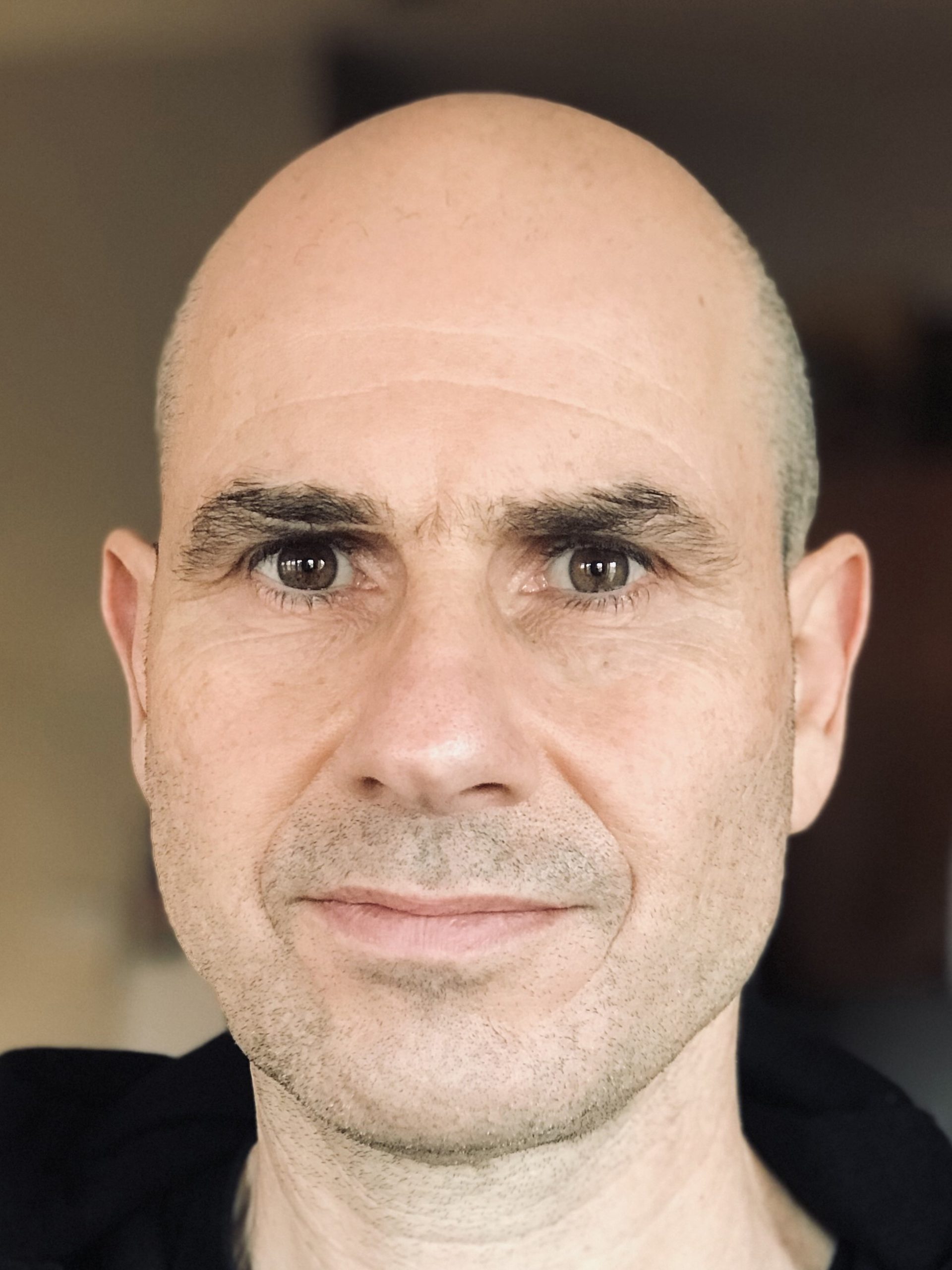

Brandon Taylor’s first book, Real Life, was a campus novel about loneliness and alienation in graduate school, but this sentiment somehow missed the critics. According to him, critics said his novel was about the “scintillating exploration of the harrowing dangers of racism in America.” This interpretation was a surprise to him.
In Taylor’s latest novel, Minor Black Figures, which is deliberately about race, the narrator, Wyeth, who is a painter, is venturing to break away from the Black artists to the racial prism pipeline. But in his attempt, he artistically imprisons himself, trapped in the very framework of identity and representation he longs to transcend.
Are Black artists able to express their art without being subject to the white gaze? Are Black artists considered “Black” if their work is not about Black people? And can Black artists be considered one of the greats if their artworks are not turned into a political gaze? Minor Black Figures is a meditative novel, yet a propulsive force of a book that seeks to grapple with these questions and really shatter the ways we consume and speak about Black artists. This novel takes a brave position. Taylor did not censor the novel’s themes, characters, and the intimate conversations Black artists have with each other.
I was delighted to talk with Brandon Taylor over Zoom about the importance of rescuing Black writers from the archives, how Black writers and artists are subjected to the white imagination, thus imprisoning their art, and the fear of being a minor Black artist who eventually disappears from the public sphere and discourse.
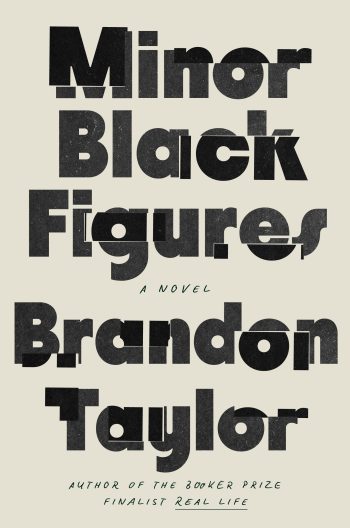
The Rumpus: The title, Minor Black Figures, suggests a multiple layer of minorness: minor artists, minor visibility, and an emerging Black artist’s inability to move into the next stage of their career. What inspired the title?
Brandon Taylor: The book used to have a different title, up until the midway point. It was called Masstone because when you paint, there are undertones that you make by diluting the pigment. But that title was too abstract, and so, I started asking myself, “What is this book really about?” It’s about Wyeth, who is the main character, and his fear of becoming a minor black figure. In many ways, the book is thinking about how an artist becomes minor, and about this Black contemporary artist’s fear that he will be forgotten. Wyeth is fearful that he might become one of those forgotten Black artists who are occasionally rediscovered in twenty or thirty years. Wyeth is a contemporary artist who has had some minor success, but he’s fearful that if he doesn’t make that leap into a sort of broad acclaim, and be ensconced in the capitalist machinery of success, then he’s going to be erased.
Rumpus: The idea of being a minor Black figure is threaded throughout the novel’s themes and symbolism, and Wyeth’s fixation on this arch of being majorly limits his artistic scope and practice because he’s focused on being the next big thing.
Taylor: No artist sets out to be a minor artist. They believe they will be a major artist because they live in their own perception of reality. He wants to get famous, but he spirals about the reasons. Is it because he wants white approval? Should he want white approval? A lot of Black artists get stuck in this spiral where they are trying to figure out the primacy of their work. They are trying to think about Blackness so hard, they end up boomeranging back around to thinking about white people secretly. That’s frankly an absurd set of conditions under which to make art. Earlier on in the book, one of the characters calls it the “art cop”—the self-policing that goes on in the Black artistic imagination.
Rumpus: Let’s dig into that concept of the “art cop” and the self-policing that occupies many Black artists’ imaginations. Even though Black artists are not thinking about the white gaze or imagination, they are subtly thinking about it because they are living inside white culture that continues to frame their world.
Taylor: There are certain Black writers and certain Black artists, especially circa 2020 and 2021, who were very loud in interviews, podcasts, and in their books, saying, “I don’t think about white people. I’m not thinking about white people while I’m making my art.” But it was clear that their presentations of Black life were predicated on the white gaze. They were writing these highly potentiated representations of Black life that they deemed evacuated of the white gaze, but in fact, their writing presupposes a white gaze. It was a fantastical concept. The fantastical is perfectly valid, really beautiful, and a really interesting register, but you can’t do that and say, it’s realism. I wanted to write about this absurdity, the self-questioning, and the self-surveillance.
Rumpus: Speaking about the white gaze and its limits on the Black artistic imagination, the novel deliberately marks white people when they are introduced, commenting on their skin tone, hair color, and eye color, but when it comes to introducing Wyeth’s friends and studio mates, this racial framing is absent.
Taylor: I get so tired of all the sort of trite racial signifiers. In grad school during workshop critiques, all of my classmates were like, “We want to know if your characters are Black on the first page.” And I was like, “Well, I know the characters are Black on the first page. What do you want me to do? Describe their afro?” I’ve come to a place where I don’t like to write about race in a way I find boring. I find that it’s much more interesting to write about race in how its presence is felt in our daily lives. I’m more interested in writing about race in the ways in which society reflects our race back to us, and the way they treat us as a result. When Wyeth is with his friend Bernard, there’s no need to describe their race; they are two biracial boys, and they know who they are. Also, his studio mates are all gay men, and when they are with each other, they’re like, “Oh yeah, I kind of get your deal. I kinda get your bag.” Those racial descriptors are not needed.
Rumpus: In the novel, Wyeth fights against the art world’s subjectivity of Black artists. He believes this fight will set him free and grant him the ability to create art on his own terms— esoteric and racially blind. But his fight sort of imprisons him because his approach is didactic, and encircles him in another form of subjectivity.
Taylor: Wyeth is fighting against the forces of capitalism and the larger systemic structures that want to prefigure Black thought and Black experience, and by doing this, he’s creating a space for his own subjectivity. His art becomes the natural meeting ground of these two things. The figures he paints in these Romero scenes aren’t Black because of his politics; they’re Black because he knows what Black people look like. Black people are the default imagery in his mind because he grew up surrounded by a Black family. But his apolitical painting creates this tension amongst her peers in graduate school and in the art world. He discovers that tension because other artists have said to him, “It’s weird that you’ve painted Black people in this French apartment.” But why is this configuration fraught? In the book, I want to dramatize the reason people feel so weird about his paintings, and he’s figuring that out. Part of how I’m expressing him, figuring that out, is the sort of didacticism.
Rumpus: The novel highlights that Black writers and artists are critiqued ad nauseam, and they are equally subjected to both white and Black gaze, thus leaving them limited room to exist, breathe, and define their own artistic practice.
Taylor: The first book I wrote, [Real Life (Riverhead Books, 2021)] which I thought was about loneliness and alienation in grad school—people told me that that book was about race, and I was the most surprised person to find that out. It’s not that I hadn’t thought about race because I was like, “Oh, I’ve never read a campus novel with a Black person in it, so I want to write a campus novel. I’ll just put Black people in this setting, and then I’ll just sort of write the thing I want to write.” The reaction was quite the opposite. They thought it was a scintillating exploration of the harrowing dangers of racism in America. I was not doing that in my book. Black artists are critiqued based on a set of societal notions that have nothing to do with what they’re making. There’s that whole realm of critique before we even get to the place of the aesthetic and before we get to the place of actual political valences in our work. We first run it through this meat processor of external norms, Black life. I find that really exhausting and troubling. I am teaching creative writing, and my Black students often express these similar anxieties, and I tell them, “You need to understand that your classmates probably love you and want the best for your work, but they don’t know how to read your work, and they never will. White people in this country do not know how to read Black art, and you need to make your peace with that.” I tell my students that they need to develop a rigorous internal compass with their art because all of the critics have the eyeballs of white people and they don’t have the tools to help you think through the complicated knots and tangles about representing Black life in the public. The book highlights that Black artists ultimately have to learn how to value their own subjectivity and defend it rigorously. They should not let Black or white critics force their hand. These critics force Black artists to represent Black life or their own subjectivity in a false way.
Rumpus: Wyeth comes from a poor working-class family, yet he has these very esoteric interests in art and music that some may consider to be elite. What I find fascinating is that he doesn’t have a sense of imposter syndrome when interacting in these toney environments; instead, he has a deep sense of belonging.
Taylor: The challenge of writing this book was to write where all the different perspectives of class are real and exist, but also let Wyeth get on with his life and not get too hung up on class. He doesn’t feel a kind of class anxiety that other characters in his situation might. He doesn’t have any aspirations to be incredibly wealthy; he knows the economy is screwed, and he believes millennials like himself are doomed. His pseudo mobility—being in different milieus—is the strangeness of education. It gives you a certain class fluidity the minute you go to college. The goal of college and education is to reproduce certain potentialities and capacities that allow you to reconstitute the social order to reproduce the relations of capital and labor, and the relations of production. Those institutions spit out the kind of external class trappings of a pseudo-elite person. He’s been shaped to present as elite [more] than he actually is, but then he goes home to a fifth-floor walk-up, and that’s not very glamorous.
Rumpus: Your novel is contemplative. It dwells in interiority, long, beautiful descriptions of people and places. It often meanders, and we are often pulled into secondary characters’ backstories. Your novel reminds me that longer novels matter and should be celebrated more.
Taylor: The books that I love the most create a sense of atmosphere that is immersive and feels lived in. The novel is not a movie, and I wanted to give readers the time to linger and dwell. Also, in my earlier books, the characters had very intense introspections, and the background was sidelined because my characters did not realize the world around them. In New York, you’re walking, and you’re in the background of four different people’s life stories. You are not the protagonist in a New York City street. I just wanted to revitalize the background to bring a little love and primacy because that’s what makes living in this city so exciting and so unpredictable. I also wanted the book to feel like, at any moment, we can tip into another character’s perspective. There are all these moments where it feels like you might end up from their perspective.
Rumpus: In the novel, Wyeth’s part-time work is restoring art, and he was tasked with restoring the lithographs of an unknown Black artist named Dell Woods. Wyeth commented, “Saving Dell Woods from anonymity. Trying to find out about him. The facts of his life. It was a way of holding fast. Meeting the gaze. Saying, ‘you are in the world. I see you.’” How do we continue to maintain the archives so Black artists will not get marginalized and be erased from our historical imagination?
Taylor: The unglamorous answer is that we have to read them and we have to talk about them, and we have to keep their work alive. Three or four years ago, The New York Times did a list of the best books of the twenty-first century, and they had a book or two for every year, but they skipped 2001. I was really frustrated that they left out Edinburgh by Alexander Chee. This book has been critically important to queer writers, queer writers of color, diasporic Asian writers, and queer Asian writers in this country, and it was left off the list. Erasure happens so easily and quickly. When a book like Edinburgh gets left off a list of such magnitude, the book becomes harder to discover, and then that gets compounded every year, until you’re having to dig through the archives to find it. This happened to Ann Petry, a Black writer who wrote this incredible book called The Street. She was the first Black woman to sell a million copies of her book. She’s truly one of the great American geniuses of the twentieth century, and nobody was really reading her books until Tayari Jones started championing her books.
Rumpus: I often loathed these lists because they’re so homogenous and skewed towards white heterosexual men, but you are making a good point that without these lists, many might not know what to read, who to read, and, unfortunately, more queer writers and writers of color might be sidelined.
Taylor: Yeah, I often laugh about these listicles. But I think it’s really insidious the ways Black, queer, and marginal writers get sequestered from reading list culture. Unfortunately, these lists get compounded year over year, and it makes it harder to find these books. We have to read these books, seek them out, and be curious about the gaps in the archives. Go hunt down the writers whose names you’ve heard mentioned in conversation or in passing. It’s crazy, and it frustrates me because I have to go into the archive myself and rely on scholars who are doing the work of excavating these books by Black writers and contextualizing them. We have to read these writers and recommend them to friends.