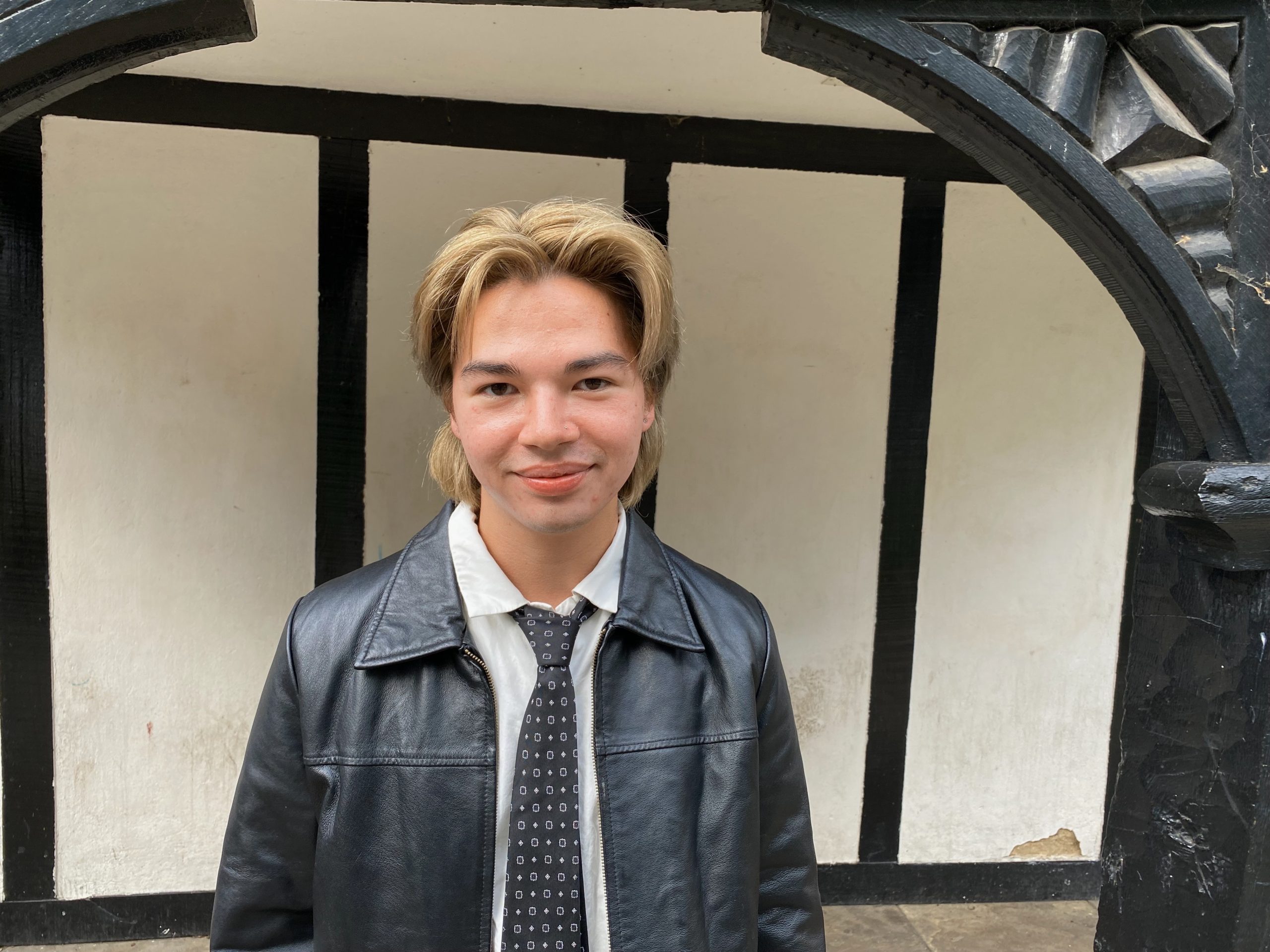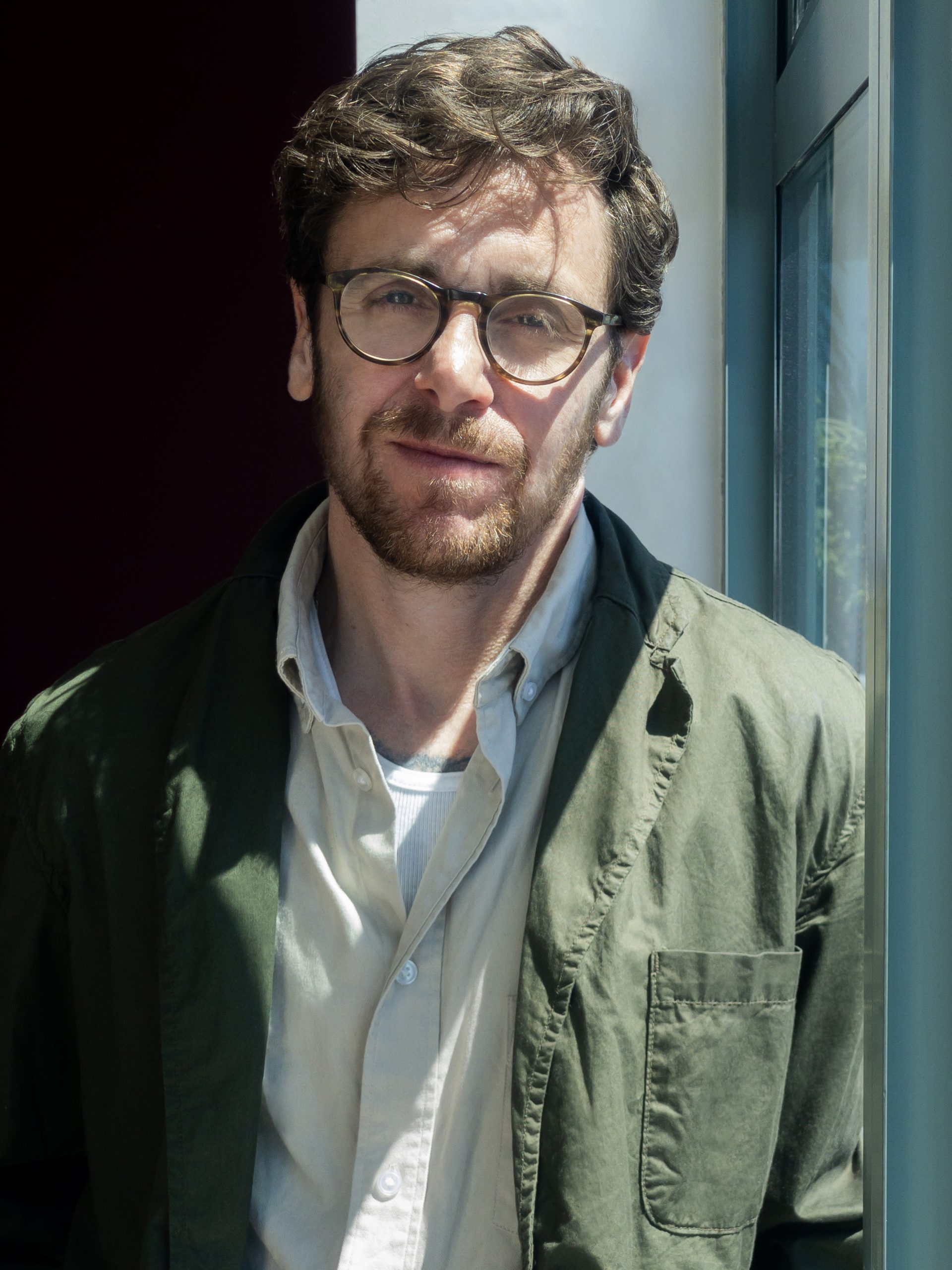

I interviewed Sally Mann in a video conference from her home and studio in Lexington, Virginia, where Mann yelled, “Cut it out!” when her dogs wrestled offscreen. We talked about the pull of being native Southerners, and Mann’s book, Art Work. Illustrated with photographs, journal entries, and letters that bring intimacy to the narrative, Art Work is a forthright portrayal of an artist at 74, and the journey it took to get there, including the unpredictable role of luck, the value of repetition, the challenges of rejection, and the artistic influences that have been a foundation for her work.
Mann has received numerous awards, including NEA, NEH, and Guggenheim Foundation grants, and her work is held by major institutions internationally. In 2001, Mann was named “America’s Best Photographer” by Time magazine. Her bestselling memoir, Hold Still (Little, Brown, 2015), received universal critical acclaim, and was named a finalist for the National Book Award. In 2021 Mann received the Prix Pictet, the global award in photography and sustainability for her series, Blackwater (2008-2012).
I spoke with her about her complex relationship with her land in the South, the nature of transgression in her life and work, and the current political moment in America which makes risk-taking dangerous for artists. This interview has been edited for length and clarity.
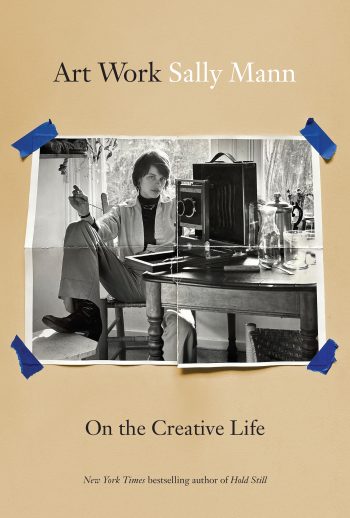
The Rumpus: I found fascinating the inclusions of the receipts, letters and notes in the book, as a way to illustrate, along with your photographs, and I’m wondering if this process of gathering was essential in making the book?
Sally Mann: It started with Hold Still, and I gathered up all the stuff that I needed for the Massey lectures. I don’t know what sent me back up to the attic to just look around, you know? Art creeps up on you, and writing, I mean, the whole creative impulse creeps up on you in a certain way. And once I got up to the attic, I started pulling things out, and then, being relentlessly sort of self-critical, I thought, “Why didn’t I put that in the book?” One thing after another, and then pretty soon I was making lists of things that I should have done. Before long, I was doing them.
Rumpus: You were into it.
Mann: Yeah, I was into it! And I’m so obsessive. Like I say in the book, I’m so blinkered and single-minded once I get started on something. We were off to the races.
Rumpus: The relationship with Ted Orland was one of the threads throughout the book, those nearly lifelong letters you wrote each other. I sense a steady beat of community, and that kind of an artistic love throughout these words that you have for each other, and I’m curious about when you went back to those letters, what did you notice about your life and about your life together as friends?
Mann: Embarrassingly, what I noticed was he was a much more profound thinker than I was. He really thought about art and about the making of art, and he wrote that book, Art & Fear, [with David Bayles] which is just a classic.
Rumpus: One of my absolute all-time.
Mann: It’s a great book. I mean, basically, I just took Art & Fear and rewrote it in artwork. I owe him everything. He would write these profound letters that were just beautifully crafted and so funny. And then I would just chatter away with my mindless little what-I-did-today account. But in a certain way, they counterbalanced each other. I hadn’t even thought about this until it’s coming out of my mouth, as usual, but Art Work sort of became a melding of those two tendencies, right? I mean, I tried to be the thinker that Ted is in Art Work. But also, I wanted to keep some of the truth, or the accuracy of my style of writing and thinking, which is pretty facile, really. I wanted to keep it light, and so I hope that it works in Art Work, because I don’t want it to be too heavy, I want it to have a little buoyancy.
Rumpus: Art Work is exceptional for documenting how it is that we can do those things, how it is that we can set out, even among everything going on… whether that’s parents aging, or children or dogs.
Mann: The onus of those things falls more heavily on women. Historically, that’s the case. Women haven’t been allowed to be artists. I think any young woman has just an extra burden. I think so highly of women, that it’s like a racehorse who’s extremely fast and extremely talented, and they handicap it—they add more weight to the saddle somehow because they’re so talented, they have to even out. Women have these extra burdens, and yet we still make art.
Rumpus: And Orland, it seems like he was always available to you as a truth teller. There was one thing that he said that really struck me, [that he wrote to you]: “You spread your passions too indiscriminately between the things that sustain you and the things that destroy you.”
Mann: The reason I put that line in the book is that that didn’t happen very often. Maybe there were three different times where he said this is what I’m seeing and thinking about you right now. He is just the soul of discretion and kindness and generosity, and he would never want to sort of upend my life in any way. Because those years were really tough. They were difficult, and I didn’t necessarily need him to point it out to me, but I think when he did, it was so significant.
Rumpus: It sounded like it might have been permission for something that you were already thinking, already living in.
Mann: Something that I already knew.
Rumpus: I’m intrigued when you write, “To be an artist means you must declare a loyalty to your art form and your vision that runs deeper than almost any other, even sometimes deeper than blood kinship, and certainly deeper than those trifling laws protecting land ownership.”
Mann: It’s a marriage, almost. If you want to be an artist, you really have to be prepared. To give everything. But you might also have to raise three children, as I did. So, you’re cutting the pie slices so thinly.
Rumpus: It seems to me that in that section where you talk about luck, you’re talking quite often about lucky transgressions, and there’s a piece in you that has real fortitude. As I read these scenes, of taking your authority that led to luck in the work.
Mann: Well, I suppose I should have counterbalanced that with some examples of when I wasn’t quite so lucky, or when I got caught trespassing, or when transgressing hasn’t always worked out. Having become a mother, you don’t want to encourage too much transgression, right? And now, in this political climate. I said to Larry this morning, “I’m scared now, in these interviews to talk trash about Trump.” All the people who are [speaking up], I’m just amazed by them. I think there’s a new level of fear in this country, and transgression of a political or a social kind is not so easy anymore.
Rumpus: There’s a scene that you wrote about Governor Gilmour’s perturbance after the slideshow of “The Three Graces” at the Virginia Museum of Fine Arts. That seems kind of prescient now.
Mann: Is Governor Gilmour gonna come after me now? I mean, he hasn’t disappeared, it’s just that he sort of plummeted to the bottom of the political cesspool. It’s a little scary to be opinionated now. Not publishing the actual “Three Graces” picture in the book just shows what a chicken shit I am. I’m too old for controversy.
Rumpus: And you’re working with Black history as well, with some of your photography that came from, the Blackwater series. I’m curious about if you have thought about the suppression of Black culture in particular, in museums?
Mann: Well, of course I have, and I was profoundly reminded of it when I took those pictures, that it was not my place to take those pictures. I was appropriating someone else’s story, is what it came down to, and I pushed back a little bit on that, because the whole Black culture is so prevalent in the South. Reynolds Price once said something like, we in the South have way more contact with Black people than people in the North, and it’s true. Not that it’s always worked out real well for the Black people that we’ve had contact with, but as a white person, Black people were interwoven in our life in such a profound way. Telling that story is a little bit of my story, too. I can’t not tell the story of GeeGee, because she is in every fiber of my being. She was my other mother. I push back a little bit at the notion that I have no right to tell that story. A lot of people advise me not to push back too hard on that—even my writing, but certainly the A Thousand Crossings show, where there was a whole room that was kind of devoted to the race questions that were being very, stridently and openly discussed. I think it is still a story that I have a right to tell. I think it just has to be done in a very diplomatic and careful way.
Rumpus: Your chapter on rejection is illuminating. One of the first criticisms that you received from someone who said, “You’ll never get anywhere with those,” talking about the “Family Pictures” series, and calling the images “way too domestic.” And I’m wondering if rejection has lost its bite over time?
Mann: Nope, nothing doing, don’t want it. I’m still stung by rejection in all kinds of forms. I’m just a walking, raw nerve. Hurt feelings, in my universe, don’t really go away. I can conjure up exactly how hurtful every single rejection was, and just like I say in the book, anytime I get wonderful response to work, instantly, I say, “Oh, that’s really great, but I got rejected, I got turned down.” You’re overwhelmed by your rejections, and your successes are diminished in a certain way by the rejections, even if there are more successes than rejections, which is true in my case.
Rumpus: There’s a really strong sense in all of your work of attending to the land. Particularly the same land in the South. I’m wondering if you could describe how your relationship with the land has changed with that specific place and changed the way that you see things?
Mann: This piece of land that I am the steward of, is so important. Larry [Mann’s husband] was talking to a friend last night, and they said, “Why did you never go to New York?” I heard Larry say, “She can’t leave the land,” and he’s right. I came right back to this place the first moment I could, which was my junior year in college. This land is profoundly meaningful, and I want to protect it. I’m more worried than ever about what’s gonna happen here. Oh, God, you’ve opened up the floodgates here. I think in the course of human history, pieces of land like this are going to be really important. Children don’t even know what grass feels like under their bare feet. My love for the South is well known, and I’ve talked about that a lot, but when you hone right down, it’s this farm that I live on. We just went through a terrific fight to defeat a pipeline. It was a decade long, and it wouldn’t have impacted our farm particularly, but it would have impacted the county where I live. You can fight those battles, but they’re just gonna keep on coming, wave after wave of insult.
Rumpus: You talk about repetition, and you start with a description of the Ansel Adams workshop, where you met Ted, then sketching out the images, and writing of the ways that those images have been taken, several dozen times over, years.
Mann: And I take the same picture over and over and over again. I’m still doing it.
Rumpus: And you talk about derivation, what gets stolen, or borrowed, but also this phrase that I really love, “the porosity of art and the democracy of it.”
Mann: And discipline.
Rumpus: What did that kind of repetition create in you as a human and as an artist, an activist?
Mann: I’m still taking the picture of the road going over the hill, and when I see the road going over the hill, I screech to a stop and take it. The burden is to figure out the new way to take it. And maybe it’s not even noticeable to anyone but me that fundamentally, many of my pictures employ the same tropes. When I finished that book, I really did have one of those sinking moments where I thought, “What the hell am I gonna do now?” The time is short. I mean, statistically I’m pretty old. I feel a lot of pressure.
As soon as I was done with the book, I just picked up the camera and walked out the door and started taking pictures. Dumb, stupid pictures. And gradually, I found two avenues, completely different—digital color—that I’m shooting. I’m going back down to the Delta, and I’m just having a blast. And then I found a new kind of film that I’m using in 8×10, and I’m taking pictures with that. I don’t know how long it’ll last, but right now, I’m euphoric with ideas and possibility, which I didn’t expect I would be six months ago. All of a sudden, photography is fun again, because I’m not doing some internal calculus as to the expense of it. I’m a natural poor person. And then, it’s even more exaggerated with digital. Those are free! You shoot them, if you don’t like them, you throw them away. If you like them, they didn’t cost you anything. I don’t know if they’re any good, but, it doesn’t matter. At a certain point, if you take enough of them, there’s gonna be a good picture. I’m working through both of them, and occasionally, I’ve got at least a dozen, maybe two dozen good pictures. I pulled myself out of the artistic doldrums.
Rumpus: One of the processes was of the contact prints pushed to the bulletin board. You wrote about getting this vibration of the visuals as you walk past, when your conscious mind isn’t engaged, and you’re getting a sense about what’s working. The body reacts instead of the mind. You also talked about this in terms of extending into understanding what it is that your work is. I’m curious if that developed a kind of confidence in you, or patience for what’s happening underneath?
Mann: It’s actually a little frustrating, that visceral judgment that your body does for you, because a lot of times, I work really hard to get one picture. I’ll take it twenty times, and my body is telling me, “You haven’t got it yet. It’s not working.” But it doesn’t matter, because I’m just so dogged. You have to listen, and you can’t talk yourself into a good picture. There’s other people’s work that I’ve tried, famous people that I’ve tried to talk myself into liking. And because everybody else likes it, and there’s certain things that I just can’t like, because I don’t get what they saw. And you get it with writing, too. You know that, right?
Rumpus: I do a lot of having to have things tactile at a certain point, it’s usually happening in placing scenes, and walking around them.
Mann: When you write a good paragraph, I mean, at least in my case, I’m a two-fingered typer, so I’m typing like crazy! I’m exhausted, breathless. I get it done, and I’m just yee-hawing. It’s almost orgasmic. It’s so physical! It’s right in your bones.
Rumpus: You said the word discipline, that idea of being with it, of being comfortable enough to be with the discomfort, in that process of the gazing over time, and returning to the same image.
Mann: There’s a quality of the repetition there.
Rumpus: It’s not always a delightful, joyous process.
Mann: No, it’s a slog. Nothing good, even though I tried it, like, forty times. Sometimes, when your body tells you it’s not quite right, and you go back and do it again.
Rumpus: I want to get to an image from Life magazine that you saw when you were young, it’s an image of a lynching, and it was influential for you.
Mann: I think it was Life. I’m not sure where I saw it.
Rumpus: You say something here in your artist’s statement for the Blackwater series, you say the fires “were forcing me to trespass past safety barriers, a warning of danger.” And I’m wondering if trespassing, not just in conjunction with this series, but in your work, is one of the themes of your life, one of the ways that you provide witness for the people who can’t have that access?
Mann: I didn’t think of it quite that way, that I’m speaking for other people who didn’t trespass.
Rumpus: There’s these hinge points where barriers aren’t stopping you. You’re looking at it as an entry point and I’m curious if that was a quality of your artwork, of your development as a human, even your childhood when you didn’t wear clothing? There’s a quality of—I don’t know what your game is here, but this is not my game.
Mann: I was very prickly and difficult, at least the way my mother tells it. So maybe it’s just some personality disorder, maybe it’s diagnosable. Maybe it should have been treated. I don’t know why, I’ve just always wanted to push a little bit. And when you get rewarded for pushing, then you push a little bit more. But then you get slapped down. You push too far, and you get in trouble, and I don’t want to get in trouble, so I’m trying to walk a fine line.
And I don’t want to talk very much about the “Family Pictures,” but that’s a perfect example. I wanted to break the norms, the photographic norms around photographs of children. But I didn’t want to either hurt the children, or offend society at large in any really significant way, and not in a way that would put me or the kids in any kind of risk. I appear to be bold and brave, but I’m a little risk averse. Maybe I’m just risk averse enough to save my ass.