
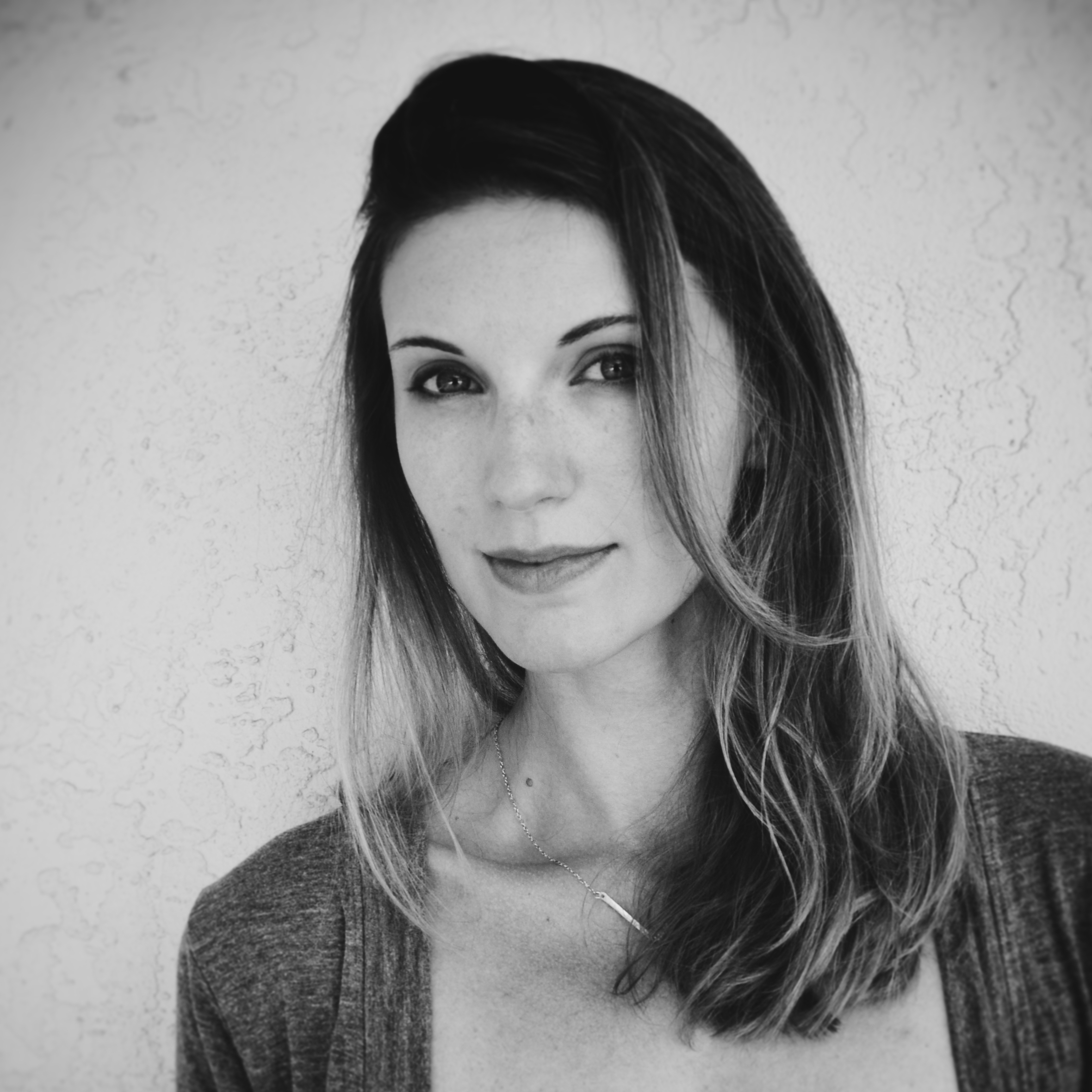
After a little girl goes missing in 1940s Mexico City, the lives of two mothers are changed forever. Blending literary fiction with the conventions of a crime thriller, Brenda Lozano’s latest novel, Mothers reminds us that history has tended to value women primarily for their reproductive abilities, rendering motherhood, in some cases, less a personal choice than a social and cultural obligation. Motherhood never comes without a cost, but for some women, the cost is never too high—and that dangerous, self-destructive fixation is exactly what Lozano’s novel deftly explores.
Mothers is Brenda Lozano’s second book to be translated into English by award-winning translator and writer Heather Cleary. Cleary first translated Lozano’s debut novel Witches (Catapult, 2011), a kaleidoscopic novel that, like Mothers, delivers provocative insights into women’s lives. In addition to her work being recognized by the National Book Foundation, English PEN, the Queen Sofia Spanish Institute, and many others, Cleary was recently long-listed for the 2025 International Booker Prize for her translation with Julia Sanches of Dahlia de la Cerda’s novel Reservoir Bitches.
I spoke with Heather Cleary by phone to discuss various aspects of the translation process, including what draws her to translation, how she works with authors, and the strategies she uses to render the literary effect of a text into a different language. During the course of our conversation, she also discussed the research involved in her projects, including research into Mexico City’s history while translating Mothers. This interview has been edited for length and clarity.
The Rumpus: What first drew you to translating works of fiction?
Heather Cleary: I began my translation career sort of by accident as an undergraduate. I was writing an honors thesis that just wasn’t really coming together. And at the time, I was also working as a receptionist in the department of comparative literature, where I was studying at NYU. I mentioned my troubles to one of the professors there, a translator named Richard Sieburth, and he said, “Why don’t you try translation? I’ll advise you on your thesis.” So, I switched and it completely transformed not only the way I finished that year, but also the way I imagined my professional life taking shape.
From then on, I reorganized myself around the idea of becoming a translator, becoming a literary translator. It actually started with poetry. But then the vagaries of the literary marketplace pushed me toward fiction—I mean, that’s one reason among many. There were also several novels that I was really interested in translating. I began with short stories, and then the first novels that I translated were two beautiful works by Sergio Chejfec. That was the early 2010s, I suppose. And at that point I was just completely hooked.
Rumpus: And what drew you to translating Brenda Lozano’s Mothers?
Cleary: I’ve known Brenda for seven or eight years. We met in New York when she was doing her MFA at NYU and we developed a really lovely interpersonal and professional rapport in those years, and more and more thereafter.
Mothers is the second novel of hers that I’ve translated. The first was Witches, which came out a couple years ago, also with Catapult. And before that, we had worked together on a few essays that she wrote for Frieze Magazine and a couple of other publications. So I began work with her on shorter pieces and then we moved into the translation of Witches a few years after.
Rumpus: How much did you consult Lozano while translating Mothers? What’s the relationship like between author and translator generally, and how does that influence the translation process?
Cleary: It really varies from author to author. I’ve worked with several authors who are very hands-off, very trusting, who subscribe to the idea that the translation is a new text created by the translator. They very generously make themselves available to answer questions, but they don’t really engage with the English text itself.
I also work with writers who have a strong command of English and really want to be participatory in the process. What I usually do in these cases is complete a full draft first, so that I can develop my own philosophy around a particular text, understand its set of rules. Each translated text has its own set of rules that you learn as you go and that you only understand at the end of the first draft. It’s kind of Oulipean in that way. Then you have to go back and make sure you’ve been consistent in how you’re applying those rules. And so I go through that process on my own before having a dialogue with the author, so that I can fully articulate why I made the choices I made.
Brenda falls in the middle. Her command of English is perfect. We discuss specific choices together, but she doesn’t want to read through the whole thing.
Rumpus: What does it mean for each translated text to have its own set of rules? Can you elaborate on that?
Cleary: Translation is an attempt at finding a balance or equilibrium between different elements. And those elements are the tone of a piece, the register, the information that’s being conveyed, the imagery, the rhythm. The way any text creates its literary effect is through a combination of those things. And so in translation, the foundational work is figuring out how the original constructs meaning and constructs effect through the use of language.
That’s what I was referring to as a set of rules. And because the tools that we have in English are very different from the tools the original writer has in Spanish or whatever language the text is coming from, when I translate into English, I think about what the effects are and strategies are, and I try to figure out how to reconstruct those same strategies and effects in English.
Rumpus: In addition to translating Mothers, you have translated several other works of fiction. You are an award-winning translator and your translation of Dahlia de la Cerda’s Reservoir Bitches with Julia Sanches was recently longlisted for the International Booker Prize. What does excellent translation mean to you?
Cleary: I think a good translation is one that understands how the original text is working on a deep level and is able to recreate its foundational gestures in a new language in a new context and make that new text really breathe on its own.
Sometimes that might mean deviating a little bit from a literal translation. The most literal version is not often the most faithful, right, because words carry with them very different contexts and weights and connotations. It’s about being able to see past and under what’s on the page and render something that’s intangible about the text, but also undeniably there when you read the original. This is, of course, very subjective and every translation is a single interpretation made at a specific moment by a specific person. But I think the most successful translations do commit to that interpretation and bring it fully to life.
Rumpus: How do you translate Spanish idioms and phrases that might not have the same resonance in English? How do you make the decision to either leave certain words and phrases in Spanish, or change a phrase all together into something familiar to an English reader?
Cleary: These are questions that translators ask ourselves and each other all the time. And again, it depends very much on the work in question and the function of, say, a colloquial phrase in that particular moment in the text. Sometimes, the significance of the character saying something colloquial is a question of register or a question of demonstrating a level of intimacy with their interlocutor. In which case, the weight of that is greater than perhaps the weight of a specific image being invoked.
Or in contrast, if the content of the idiom bears more weight, then things get a bit more complex. Sometimes a linguistic gesture might need to be spread over more than one moment in order to catch all its angles. But of course, the goal is to find a solution that maps as closely as possible onto the original.
Sometimes, you do get lucky and there are phrases that map onto each other in the original and the target language, but that’s very rare. Often, you’ll have to make a choice.
Rumpus: There are a few chapters in Mothers where the perspective shifts from third-person to first-person, and these characters have very distinct voices. Is it difficult to translate these voices? How do you capture the idiosyncrasies of a character’s way of speaking?
Cleary: Not many people know this about me, but when I was in high school, I acted a bit. When I translate, I always think about that training. There’s no such thing as a text that isn’t voice-driven, even when it doesn’t seem to be, if that makes sense.
The voice can be subtle or strident, and sometimes it can be clearly aligned with a certain genre. In fact, for Mothers, I went back to the norms of 1950s detective novels and noir films, because it has a bit of that tone. There’s a present third-person narrator who sometimes pops in and reminds us that she’s actually a person telling this story to the reader, and then she disappears again. But even when she’s not making her presence known, there’s this overarching tone, a modern, contemporary twist on the detective novel, because she’s telling the story from the present day, commenting on the moment when the events took place. So there is a voice even in the part of the novel that doesn’t seem to have a voice, and then the first person narrations later on have their own linguistic peculiarities.
In terms of difficulty, a well-written text will very much guide the translation and help me find the distinguishing characteristics of each voice. It just becomes what I was talking about before in terms of understanding the rules by which that voice is operating. What is its register and peculiarities in its tones? Is there a phrase that gets repeated? Those kinds of things.
Rumpus: How do you approach regional dialects? For example, if I were writing a character that lives in the Appalachian South versus a character that lives in New York City, those dialects might only be recognizable to English readers, or even American readers. When you encounter a regional Spanish dialect, is there a special approach you take to bring it to life in English?
Cleary: This is another one of those questions that translators talk about all the time. There’s no way, really, to map one regional dialect onto another. I can’t say, “Oh, this is from this neighborhood in Mexico City,” and so it maps onto the Bronx or it maps onto wherever. It really doesn’t work like that.
The notion of standard usage is deeply fraught, but one might consider a “standard language” usage in trying to construct a dialect for these purposes. You can look at what kinds of variations happen, lexically or syntactically, between that regional dialect in the original and what one might see in a style manual or a dictionary for its broader linguistic context, and then try to recreate some of those variations in a non-geographically specific way. That often involves mixing English-language regionalisms within a similar register, so it’s harder for the reader to localize. So it’s not like saying, “Michoacán sounds just like Georgia.”
One of the texts this was most relevant to is Dahlia de la Cerda’s short stories, which Julia Sanches and I have translated together. We just finished a draft of her next collection of stories. And those are very colloquial, very slang-driven and very geographically specific in Mexico. And so we really worked hard on precisely those questions you just posed.
Rumpus: In terms of what you’re drawn to thematically, Mothers is a novel about women’s lives and the ways in which society can drive women to madness. Are you typically drawn to books that explore themes of gender and identity in Mexico and Latin America?
Cleary: Yes. I’m really drawn to works that challenge and explore gender norms and dynamics, and forms of queer desire. I’ve had the opportunity to work with a number of books that I really felt connected with in that sense. I love novels that jostle or challenge the hypocrisies of polite society. There’s sort of a constellation of political gestures that tend to inhabit the novels I’m drawn to.
Rumpus: What does the publishing process for a work-in-translation look like? Does a publisher contact you with a manuscript they’d like translated, or do you typically work with an author first, going out on submission only after pages are translated?
Cleary: I am very fortunate at this point in my career that I don’t need to pitch as much as I used to. It took me about a decade to get here. There are writers I have been working with for years, like Brenda. One way that this happens is that you go out on submission with the first book to find a publishing house in the United States. When the next book comes out, the process is much easier because there’s already a commitment to the work and the team is already assembled. I’m lucky to have several of those situations.
It also depends on where your author is from. For example, it’s not so uncommon for writers working in Spanish to have agents. In many cases, I have relationships with agents who will approach me to do samples and assist them in the preparation of materials to go out on submission. That’s not really common in many languages, so a lot also depends on what the underlying market structure is.
Rumpus: You’ve described translating as “sleuthy,” a form of detective work. What kind of sleuthing did you do while translating Mothers?
Cleary: Every translation project involves research, some more than others. Often a writer spends years working on their manuscript and will become a specialist in certain details of their fictional worlds. But as a translator, you’re dropped into the middle of this world and expected to render a text in a matter of months rather than years. So there’s a lot of information that translators need to acquire relatively quickly in order to rebuild a world in a translation.
In the case of Mothers, I consulted historic photos from that period to help me with tone and imagining these characters moving through certain spaces. This was mainly research into photographic archives of Mexico City in the 1940s. I looked specifically at Lecumberri Prison, where part of the novel takes place, in order to render it as vividly as possible. I looked at what the inmates’ prison uniforms were like, how the space was arranged, and things like that really helped bring to life some of the descriptions. I know that Brenda also did similar research, that while she was writing, she was looking at similar images.
When working with living authors, I love to ask what they were listening to or what they were looking at or reading while they were writing. What they think is relevant for capturing tone and feeling, in addition to what’s on the page.
Rumpus: You currently live in Mexico City, which is also where Mothers is set. How does the place where you live relate to your translation work?
Cleary: The fact that I live in Mexico has been so important in terms of tuning my ear to the colloquial rhythms and phrases. Being able to sense what is a common turn of phrase in a specific locality versus what might be a deviation from the norm—something we’d call a “marked” phrase—is critical for being able to translate a work from that place. The difference in Spanish between Mexico and Argentina is vast, as is the difference in Spanish between Paraguay and Peru. To be attuned to what someone would say in everyday conversation versus a moment when the author is choosing to twist language in a marked way is absolutely essential to being able to render the text.
I tend to focus on areas where I have either lived before or have an extensive connection with. Many translators will specialize in that way in order to not fumble important cultural cues in the work that they’re rendering. This is something that translators, particularly translators of colonial languages, do when there’s more than one place that speaks the same language, but may speak it in different ways.
Rumpus: What do you enjoy most about translating from Spanish?
Cleary: Everything! But what I love most about translation is that it really is both an art and a craft in the sense that it’s a tremendously creative process. Every day that I sit down to work, I feel that effervescence of creative work and the delightful struggle of figuring out the right words in the right order.
It also helps that translation is grounded in an existing text, which is not to say that I never come across a passage that’s really challenging and gets me stuck for a while, but the fear of the blank page isn’t there. And even when the author is not present in any literal sense, I’m always in dialogue with another writer when I’m translating, which is really lovely. So it’s kind of the best of both worlds.
Rumpus: Speaking of the blank page, I know you’ve also published your own writing, including a book on translation. What’s the difference, in terms of the satisfaction you get from the work, between writing and translating?
Cleary: There’s so much satisfaction for me in finishing a translation, but it feels like a much more community-based satisfaction, which does not in any way make it less satisfactory than individual satisfaction. In fact, I think it’s the opposite. When I feel I’ve been able to bring a book into English, in a way that does justice to the creativity and labor of the author and the creative aspect of translation, it’s just amazing. And seeing a book circulate in a new context and reach readers that it wouldn’t have been able to reach otherwise is immensely rewarding.
This is very off the cuff, and I’ll probably regret saying it, but when I feel most satisfied with my own writing is when I look back at what I’ve written and don’t even remember having been able to write it. I feel like I’ve done my best work when I don’t recognize myself in the text anymore. So, kind of counterintuitively, I feel in some ways more connected to the work I do as a translator. Although, of course it feels great to finish writing a book. I’m working on another one now, a novel, so I’ll hopefully have more insightful things to say about this by the end of the process.