Whenever I pick up an author I am unfamiliar with, I consider it a gift. I never know what I might stumble on. For me, reading is always a privilege, you are holding in your hands a story someone has chosen to write down and within that act they are imparting a perspective that prior hadn’t been available.
As I read Melissa Lucashenko’s novel, Edenglassie, I felt like I was taking a deep-dive into a history thus far unknown to me, though one imbued with deep importance and deeper roots. After closing the pages, the heartbreak I walked away with reminded me why books are important—they aren’t just words on a page, but a way in which to teach, talk, and try to get the reader to understand. This will not be my last Lucashenko novel.
Stories like Edenglassie beg to be told. This story is really two stories, crossing vastly different time periods, yet dealing with the same issues—the characters in 1854 and 2024 both must deal with what it means to live in a world in which they are not respected, making choices that have ripple effects for generations. I am always amazed to find an author who can so successfully juggle multiple narratives—Lucashenko does so flawlessly and in a way where you find yourself sinking deeply into both.
Granny Eddie, one of the protagonists in the novel, early on says, “[T]he world was like it always was, and yet different. Hard to put your finger on it. Most things a lot less clear, and yet some things clear as day.” This is how I felt after finishing this book. As I read through Lucashenko’s novel, I recognize my privilege in merely reading these stories rather than living them. As I got to know multiple characters in her book, my heart knew that these characters were stand-ins for those who had really lived and breathed through similar experiences—this may be a work of fiction, but it isn’t made up.
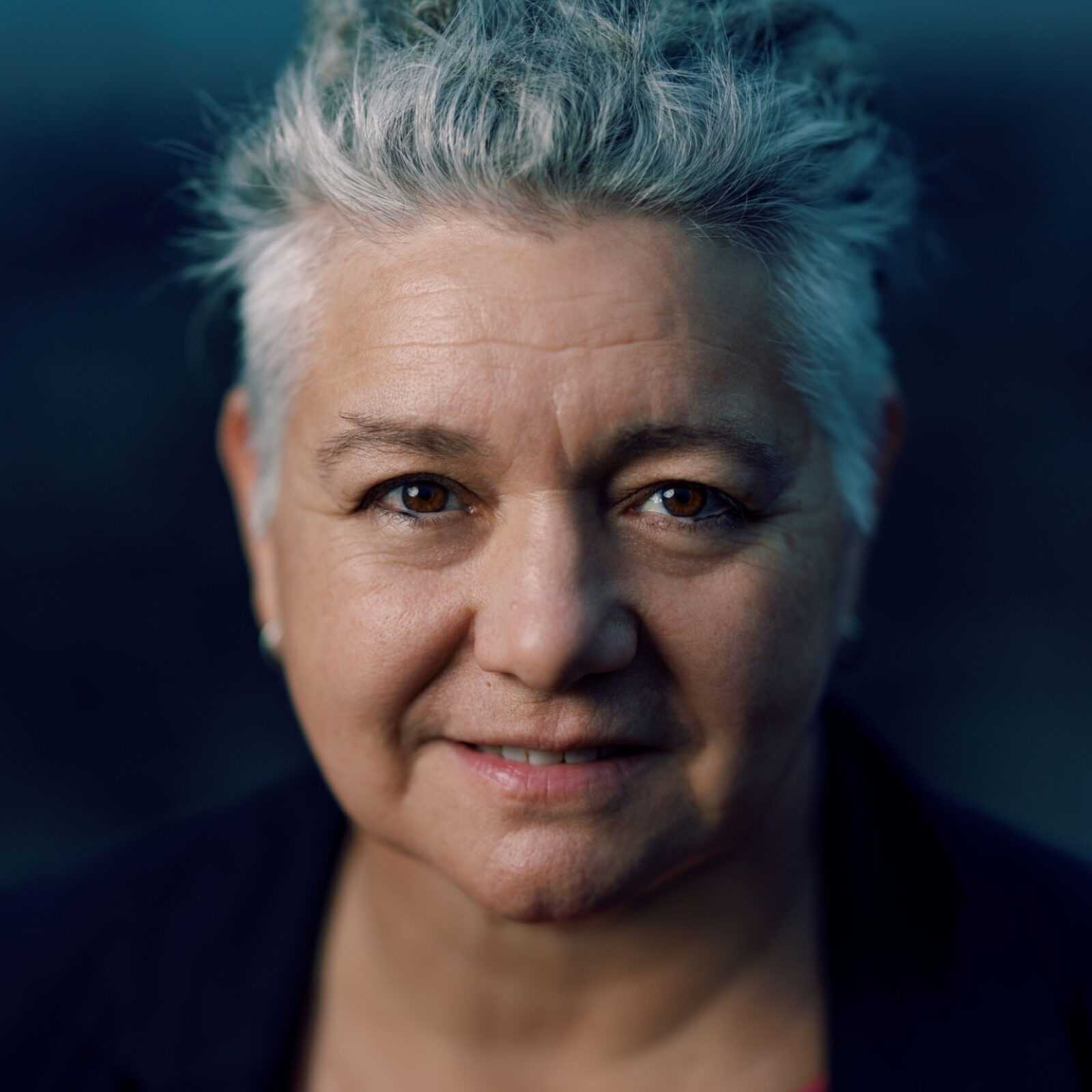
Melissa Lucashenko is the author of seven novels including: Edenglassie (published originally in 2023), Too Much Lip (HarperVia, 2021,), Mullumbimby (University of Queensland Press, 2024), and Killing Darcy (University of Queensland Press 2023). Edenglassie has won eight literary awards including the Victorian Premier’s Literary Award for Fiction and Australia’s $100,000 ARA Historical Novel Award. Of the Goorie people, Lucashenko writes with a personal touch, digging deeper into her Aboriginal background, asking important questions, and working towards shedding light on periods of time often not mentioned in the history books.

The Rumpus: Why this story? What about it demanded to be told now?
Melissa Lucashenko: In the early 21st century the Australian nation is at long last beginning to examine its origin myth. White author Kate Grenville achieved massive success with her novel The Secret River, examining first contact in the Sydney region. But First Nations perspectives of the Australian foundation story are still very few and far between. In writing Edenglassie, I wanted to put it out there that the city of my birth, Brisbane, has a deep and ancient Aboriginal past and a vibrant Aboriginal present.
I also wanted to present the earth-shattering idea that the colonial uber-violence that cost tens of thousands of mostly Aboriginal lives could have been avoided if only the law of the Aboriginal nations were respected, as my character Tom Petrie respected them. Colonisation could have looked very different. The timing’s also about my own age. At 55, I was young enough to have the energy to write an epic novel, but old enough to have the cultural insight and writerly skill it required.
Rumpus: It is clear children like Mulanyin learn right from wrong early on—they aren’t ever given the answer, but forced to find “the meat” of it on their own. At the same time, these answers seem ingrained in them, passed on from other generations. Do you find a striking difference in the Americanized demand of hyper-independence versus the emphasis on community and ancestral roots of the Goorie people? How does that difference shape their youth?
Lucashenko: I’m no expert on any form of American culture (though I’m pretty sure “America” includes Indigenous nations and migrant cultures which are far from individualistic). What our millennia-old Aboriginal traditions teach is how to develop children into civilised adult members of a given society. That includes developing intellectual autonomy—thinking intelligently about the world and finding information and wisdom for yourself rather than expecting it to be handed to you on a plate. But the building blocks of Indigenous community—honesty, generosity, caring for Country, respect for the old and for the young—are certainly ingrained from infancy, today as well as in the dim past.
Our kids are given responsibility for themselves, for younger siblings and for family functioning in some ways, from very young ages. An Aboriginal child of twelve or thirteen or so is in many ways regarded as an adult today, if they show enough maturity. Of course, that then leads to all sorts of problems within the mainstream education system and with white authority, who want to control and infantilise our youth.
Rumpus: “The comforting thumps of bungwall preparation were rhythmic and ever-present but never mechanical,” you write. I like the idea that in routine there is rest. How do the Goorie people remain present and large in a world that would prefer them / pushes them to remain quiet and small?
Lucashenko: Edenglassie is set at a time when Aboriginal people (Goories, we call ourselves in my region) still numbered in the thousands, and equalled the new colonists. So we had numbers on our side in the mid 19th century. Any attempt to completely silence us or render us invisible would have been doomed at that time.
Of course the rot had set in—white men cracked stockwhips at four in the afternoon to clear Blacks from the town, and any rebellion against that would have meant jail, a flogging or worse. But simply by living on traditional lands, with all that that entailed, meant we remained a big presence in Magandjin in 1855. We worked, lived, loved, and died alongside the colonial white society, before we were gradually pushed further and further from the townships in later decades.
Today we still fight for recognition, for respect, and to regain our lands. Colonisation is a process, not an event.
Rumpus: Water is another thread that runs throughout your novel—the call of the water, the sustenance it provides, and the freedom it alludes to. What is significant about Mulanyin’s desire to own a boat especially in the context of those who already do? How can the water be both a metaphor for freedom as much as it might also be a nod to imprisonment?
Lucashenko: Well, you see the Europeans didn’t control the waters of Quandamooka, or Moreton Bay in quite the same way that they tried to control our land. It’s more difficult to steal access to the ocean and its bounty than it is to fence and patrol pastures and forests. So as a saltwater Goorie by birth and upbringing, Mulanyin naturally would have turned to a modified form of his traditional life, living from fishing, using his expertise on the ocean. The sea had always sustained his people, their time being measured not in years but in annual mullet runs. The whaleboat he dreams of is my authorial way of embedding his culture in one specific piece of technology available to him at the time. It would give Mulanyin independence and also a means of escape within the new and unfathomable world of the Colony.
Rumpus: When you write a book with as much historical detail and deeply rooted tradition as Edenglassie, what is your process to ensure nothing is lost in translation? How do you treat what inevitably is?
Lucashenko: I was worried about historical veracity, very worried indeed. The book was decades in the making, and I spent all of 2019 purely on research as well. Then late in the piece I was talking to my friend Professor Ray Evans, a radical historian of Queensland, about European history and getting it right and he said, “Melissa, it’s all fiction.” So then I relaxed a bit. At the same time Elders were telling me to get it all right, because it would be read as if it was history not fiction! A nerve-wracking business. But I am confident that with the blessing of Brisbane’s senior Traditional Owner, Gaja Kerry Charlton, Edenglassie is not too far off the mark. And it is an authentic Aboriginal voice speaking in 2025 with the input of many, many other Goorie voices—so it’s quite unique really.
One of my informants told me a story from his grandfather, who said, “When white people arrived we said, ‘Oh! These people are like the white-skinned frogs, you can see through their arms and legs to the veins below….’” That man’s grandparents had never seen white-skinned people before. So my community memories are pretty close to the time of First Contact. My great grandmother could easily have been the survivor of a colonial massacre, we just don’t know enough about her personal history to say one way or the other.
Rumpus: Winona, one of the present day characters, fights to take up space. The scene when she is at the market and comes across misappropriated music is a powerful one. Winona reclaims her heritage, asking the musician what right he has to take what isn’t his. Did it ever feel difficult for you to separate what was happening on the page versus what is very much happening off? What was so important to you about capturing this emotional exchange?
Lucashenko: It’s funny, in writing a novel, much of the time you don’t know what you’re doing until it’s done. That goes double if your memory isn’t what it might be. So, I researched, drafted and wrote Edenglassie over a period of four years (the bushfires that ravaged Australia, the pandemic, and then awful flooding that nearly cost my daughter’s life). Only when the novel was finished did I finally remember an incident where I myself accosted a fraudulent stall-holder at the West End markets, selling fake Aboriginal artefacts. I was incandescent with rage, and while I didn’t actually attack him with his so-called “weapons” I certainly let him have it verbally. Completely slipped my mind until people started asking about the didge scene! More broadly, we have to fight for our cultural integrity every minute of every day. Theft and fraud come in so many guises.
Rumpus: I found it interesting that Nita was taught her period would harm a man and to never engage in sexual activity on it—women are so powerful in their own right, but interesting that the thing which leads to children (something men often demand or at least expect of their wives), is the thing that could bring harm. How do such myths lead to the continued isolation and disparaging of women?
Lucashenko: Blood is of central importance in connecting all Aboriginal people to Country. Some of our mobs say that all Australian Aboriginal culture is matriarchal, based on women’s capacity as child bearers and thus creators of life. Men also shed blood ceremonially and they do so in imitation of women’s nurturing of the earth with female blood. I can’t say any more than that, but it’s far from a sexist response to menstruation which Mulanyin displays.
Rumpus: It struck me when you wrote, “Davis struggled to explain the complexity of the metaphor,” that the language barrier between the Goories and the whites is quite vast—how does this act as another barrier? How would you define each of the main characters’ mookis (ghosts)?
Lucashenko: As in cultural frontiers all over the world, Aboriginal and colonial individuals learned each other’s languages. But only a few whites learned the deep Aboriginal linguistic and religious meanings given via initiation. Tom Petrie was one and James Davis (Durramboi) who lived 17 years in the bush and fathered Aboriginal children was another. So the understanding was often superficial. James Davis refused to talk to whites of his tribal experiences after returning to white society, “If they want to know, let them go and live with the Blacks for 17 years!,” he is recorded as saying. Perhaps one good indication that language/culture were a gulf too vast to be even understood without years of experience.
In Goorie families today, many adults—especially mothers and grandmothers—struggle under the unfair burden of raising children and grandchildren alone. With so many of our people incarcerated or in the cemetery or nuthouse, functional adults carry lots of weight. Poverty, racism and dispossession mean the beautifully intricate systems of skin names and family relationships no longer operate to nurture everyone like they once did. Winona comes back into a cultural role of caring for Grannie Eddie—but she gets housing and cultural education as a result. Dr. Johnny is accepted by Winona only once he enters into a relationship with another Elder running the Men’s Group. Reciprocity is at the heart of tradition. Aboriginal Law forbids any unequal exchanges and so “burden” is not a word with any cultural meaning traditionally. Winona would see herself as privileged to care for a non-demented Elder like Granny Eddie.
Rumpus: Do you always write with such a witty and often laugh-out-loud tone? I found myself completely beside myself as I read some of your dialogue. Does humor soften the blow?
Lucashenko: I do aim to be funny and writers and booksellers tell me that my work usually is. It’s partly to soften the blow, make the hard facts of history palatable. But just as important—if not more important—is the truth that we Indigenous mobs are human beings, with love and laughter at the centre of our lives whenever we can manage that. Communal societies I think often use laughter as a political strategy.
If patriotism is the last refuge of a scoundrel, maybe humour is the last refuge of the dispossessed. I mean look at the history for god’s sake. They came on convict boats, with poor people dead and dying and diseased, wearing chains, and they said they’d come to bring civilization to the savage. Then they shot and poisoned and “stirrup-ironed” us to death and stole our land—and talked about a Loving God and the Ten Commandments. And then they took our kids off us and put them into institutions to be beaten and molested, and told us we were bad parents. What other response is there but to laugh at the stupidity and hypocrisy of this kind of thing? You’d go mad if you didn’t laugh. Or murder someone, and I prefer to laugh. So far, anyway.