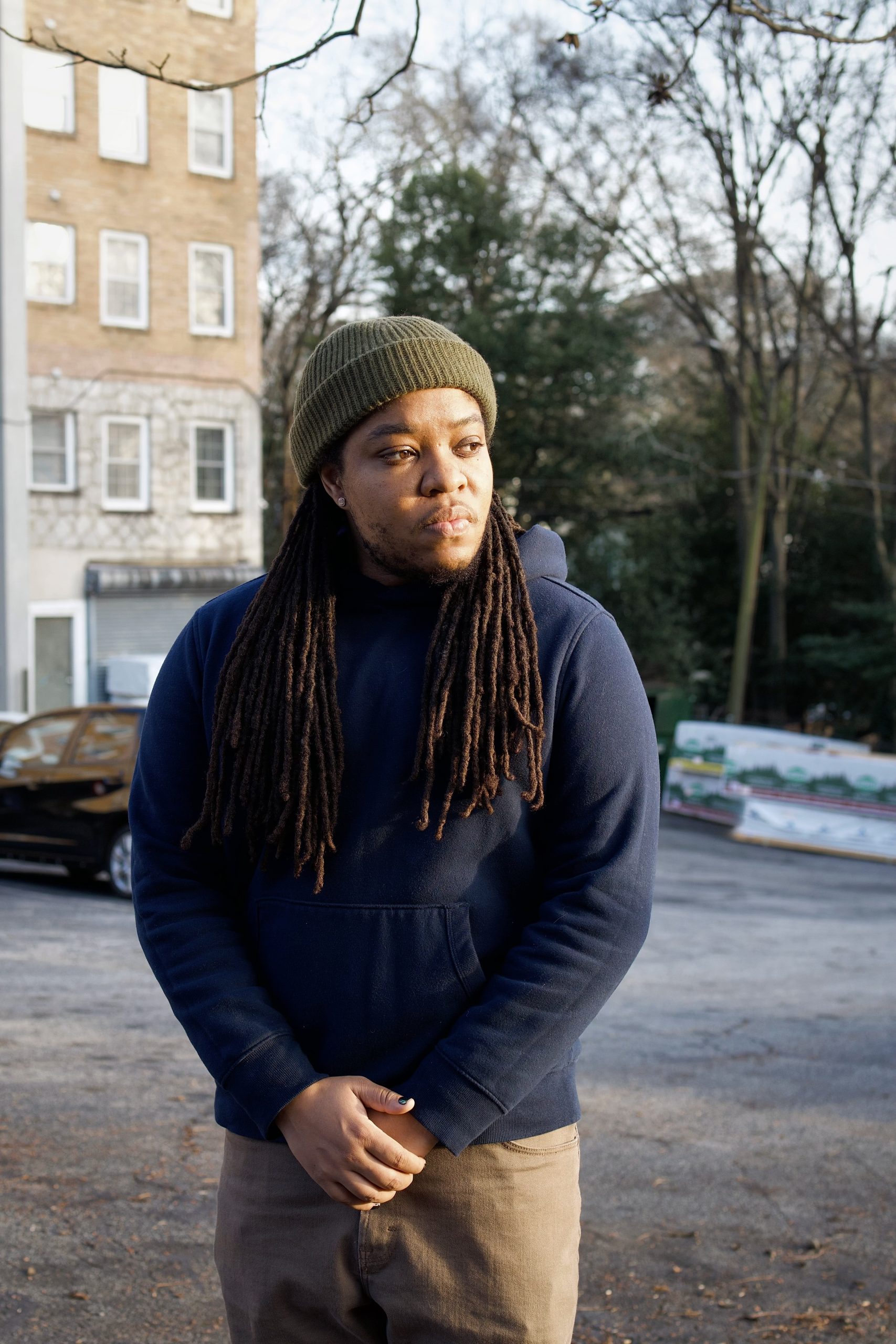
Storytelling is often framed as a performance—something done on stage, under lights, by people trained to hold an audience’s attention. But for Corey Rosen, storytelling is something far more intimate and expansive: a daily practice that shapes how we connect, remember, persuade, and understand one another.
Over the past two decades, Rosen has worn many creative hats: Emmy-winning writer, performer, improviser, teacher, corporate coach and longtime host for The Moth. He moves fluidly between entertainment, education, and leadership spaces. Across each of these worlds, his work returns to a single question: What makes a story feel human?
Rosen’s understanding of story shifted during his first appearance on The Moth when sharing a deeply personal experience before a room of strangers revealed storytelling as a bridge between isolation and connection. Since then, he has helped thousands of people find their voices in spaces ranging from intimate theaters to corporate boardrooms to cruise ships filled with international crews.
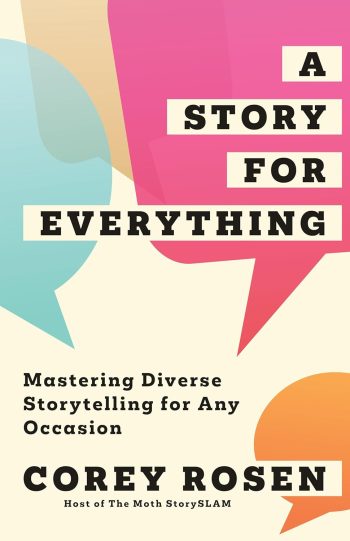
In his newest book, A Story for Everything, Rosen distills these experiences into a practical, accessible guide for using storytelling in everyday life: at work, in families, at milestones, and in moments of transition. Rather than treating story as a specialized talent, he approaches it as a shared language that helps ordinary moments become meaningful.
I’ve had the pleasure of working with Corey Rosen this year and have been continually struck by his ability to connect—across platforms, industries, and audiences—with the same sense of curiosity, generosity, and ease. To accommodate his whirlwind travel schedule surrounding the release of A Story for Everything, this interview was conducted over email. What follows is a conversation that moves fluidly between craft and application, offering readers a preview of how storytelling can enrich not just performance or professional life, but the way we show up in every part of our lives.
The Rumpus: You’ve worn many creative hats. How has moving between entertainment, corporate coaching, and teaching shaped the way you see storytelling?
Corey Rosen: I’ve come to see storytelling as a kind of universal language. It can make a room full of strangers laugh together, help a team rediscover its purpose, or turn a personal experience into something that makes others feel seen. Moving between all those spaces has made me a translator—helping people find the words, tone, and rhythm that make their truth resonate.
The Rumpus: What did your time working in entertainment teach you about the difference between a story that entertains and one that truly connects?
Rosen: In film, TV, or even a live show, you can grab people’s attention with cleverness, suspense, or a great punchline, but those moments fade fast if there’s nothing human underneath. The stories that stick with us are the ones that reveal something true, something that makes the audience recognize themselves, even if the story is wildly different from their own life.
The Rumpus: Do you find creativity translates across those settings, or does each world require a different kind of story?
Rosen: You should always be adapting to where you are. The message you are looking to convey through your story, whether it’s to connect, share an experience, motivate or influence, can be expressed and revealed in a wide variety of ways. And you can prepare and set an expectation for what that will be like. But in the end, the better training for presentation is to get used to things not going the way you expected. When you can pivot and show up in the space as the space needs you to be, then you can find a way to embody and express creativity in a way that feels natural and at home in that place.
The Rumpus: What do you remember most vividly about your first appearance on The Moth stage?
Rosen: I was a longtime listener of the radio show and podcast and had a strong draw to see a live show that might capture that real “escape” I got every time I listened to someone tell a great story. It’s like listening to your favorite song and you are just lost in it.
So I showed up at Rickshaw Stop, a bar and performance space where I’d not long before watched Die Antwoord thrashing around,, but there were no thrashers. There were chairs set up and at the front, the simplest of setups: just a microphone in a spotlight. I went to the show alone and sat on the left side of the room in the last folding chair in a row of four. Everyone around seemed to know each other. They were the San Francisco literary “scene,” from organizations like LitQuake and Porchlight. They all talked to each other while I sat in silence, running the beats of my story through my head.
When I got called up, I remember starting my story about my cousin Norman who had died less than a year earlier, and how when I was going to clean out his apartment in Long Beach, I learned he had a secret. It was a pretty good hook, and I felt like I had succeeded in setting things up before launching into a series of funny side stories about Norman. When I got to the end, and revealed his “secret,” I went back to my seat and sat down. Everyone in the room seemed to turn around and look at me. They said kind things, and thanked me for sharing. And that’s the most vivid memory I have of the whole thing:oing from disconnected to connected, strangers to friends, fellow humans. I was hooked.
The Rumpus:As a longtime host of The Moth StorySlams and GrandSlams, you’ve seen hundreds of people tell their stories. What patterns or truths emerge when ordinary people step on stage?
Rosen: When people step on stage I can usually tell who has done this before and who is really stepping into a new experience: The nerves are there. People flinch at the bright theater lights. They stand a little bit too far away from the microphone. I love when they do that.
When you stand too far away from a microphone and talk like you’re talking into a microphone, people have trouble hearing you. Sometimes the audience is polite and acts like they can hear you, and sometimes they turn on you. Michael Johnson, who does the sound recording for all Moth shows in the Bay Area gives me a little “push” hand signal to have me step up to help the storyteller get closer to the microphone. I don’t want to interrupt their story, so I give them a little soft pressure on their back, and they inch forward so the volume is better. Then the audience is happier, and then the storyteller can relax a bit into what they’re sharing. They feel that people are listening and their confidence builds.
The Rumpus: Can you share a moment when a story from The Moth surprised you? Perhaps something that stayed with you well beyond the performance?
Rosen: Sometimes people come to The Moth knowing exactly what they’re in for: They’ve seen the theme. They’ve practiced their story. They’re sitting in the audience hoping their name gets called. And then there are others who show up not really knowing how the show works. Those are often my favorite moments: the surprises.
I’ve seen both ends of that spectrum. There was one guy who came month after month, always with a burrito from the taco truck parked outside. And for some reason, he insisted on eating the burrito while telling his story, with big, dramatic bites between sentences. I honestly can’t remember a single thing he said, only that I desperately wanted the burrito to leave the stage. (Pro tip: don’t do that).
The moment that really stayed with me was when an audience member put his name in the hat on a whim. He’d never been to The Moth and didn’t really know the format. The theme that night was “Confession.” When his name was drawn, he got up and admitted to the crowd, and to his two daughters, their boyfriends, and his ex-wife, who were all in the audience, that he’d never told this story to anyone.
As a young man, he’d written a travel article about a brothel, and when he walked in, someone there recognized him. The room went quiet. It was funny, awkward, and deeply human all at once.
What’s stuck with me isn’t the shock of the story, but the vulnerability—that moment when a person decides to be fully seen, even if it’s uncomfortable. That’s what makes The Moth magic. The courage to be honest and the shared recognition that we’re all a little messy, a little brave, and still worthy of being heard.
The Rumpus: What’s different about connecting with an audience in such an unconventional environment?
Rosen: My cruise experience this summer was definitely a surprise. I was teaching storytelling and improv to twelve-hundred crew members from over eighty countries, many of whom spoke limited English. When I started, everyone stood pressed against the walls, literally as far away from me as possible. So I scrapped the slides, had them pair up, and told them they could speak in any language they wanted. Within minutes, the room was alive with laughter and connection.
By the end, the organizer in the back was in tears, watching this sea of people from all over the world find common ground through story. That’s when it hit me: it doesn’t matter where you are—a theater, a boardroom, or the middle of the ocean—the language of storytelling is universal.
The Rumpus: Is there a particular “on the road” or “at sea” storytelling experience that captures why you believe story transcends place and circumstance?
Rosen: If stories are about change, then teaching and telling them means you’re constantly watching change happen. It’s like developing a strange superpower: the more you work with stories, the more you start seeing them everywhere.
During the at-sea training, I was part of a large program where different facilitators were teaching everything from leadership to communication to play. The organizers had spent months preparing, but a few days before launch, some senior leaders started voicing doubts. They worried the whole plan was too ambitious and wouldn’t work. You could feel the stress ripple through the team.
Still, the organizers held their ground while making thoughtful adjustments. The training went beautifully and on the final day, something remarkable happened. The head of the company called everyone together and publicly apologized. He admitted he’d been wrong to doubt them, said how proud he was, and thanked the team for believing when he didn’t.
That moment of humility, growth, and shared trust was the story. I went there to teach storytelling, and instead I witnessed one unfold in real time. It reminded me that story transcends place because it’s not about where you are, but the courage to change and the willingness to be seen.
The Rumpus: Your new book breaks storytelling down for everyday life, at work, in schools, and with family. Why was it important to you to make this a practical, hands-on guide?
Rosen: I’ve always believed that everything gets better when it’s told as a story. You can say, “I walked to the coffee shop this morning,” and people will nod politely. But if you tell it as a story with a beginning, middle, and end, suddenly it has life.
My cousin once visited me in San Francisco and decided to head to a nearby café I had recommended. A few minutes later, I got a text from him that read, “The hardest 0.9 miles I’ve ever walked.” Turns out, he’d taken the car route, straight up one of the steepest hills in the city, instead of the flat shortcut locals use. What was supposed to be a quick stroll for coffee turned into an epic endurance test. That’s a story.
That’s exactly what I wanted to capture in this new book: how a story turns the ordinary into something memorable. Every day, we’re pitching ideas, honoring memories, explaining ourselves, or helping someone understand something important. Whether it’s a business presentation, a eulogy, or a bedtime story, the goal is the same: to connect and to be remembered.
Stories make information stick. They give our experiences shape, emotion, and meaning. That’s why I wanted this book to be practical, so anyone can take the tools of storytelling and use them in real life, at work, in school, and at home.
The Rumpus: What do you hope readers carry into their own lives after reading A Story for Everything?
Rosen: My biggest hope is that this book helps and inspires people. I hope people gain the confidence and the tools to tell the stories that matter most to them. It’s designed so you can flip right to what you need, whether that be job interviews, grant applications, eulogies, or wedding toasts, and find practical guidance you can use immediately.
But beyond that, I hope readers discover that storytelling isn’t just for special occasions. It’s something we can practice every day. The more you do it, the better you get.
The book is meant to be used, not just read. I’ve learned over the years that stories don’t come alive on the page; they come alive in the telling. Readers will start to find stories everywhere, and notice how different the reactions are when they share them.
The Rumpus: Can you share one of your favorite exercises from the book that our readers could try right now to find their own story?
Rosen: One of my favorite exercises from the book is something I call “explode the prompt.” It’s designed to help you get unstuck when you’re trying to find the right story to tell. Start with a value or emotion you want to express, like loyalty. Instead of asking, “What’s a story from my life about loyalty?” step back and list all kinds of stories that could show it: a loyal dog, a soldier, a child standing up for a friend, a teammate who won’t quit.
Once you’ve brainstormed widely, look at your list and ask, “Do I have a story like that?” Suddenly, you’re not stuck chasing one idea because you’ve opened up ten new paths. You’ll almost always find one that lights up.
It’s a way to outsmart your inner critic and generate ideas fast so you can discover the story that best reveals your truth.
The Rumpus: You write about storytelling for family occasions, like weddings, bedtime and even eulogies. Why do you think those personal contexts are just as important as keynotes or pitches?
Rosen: I think they might actually be more important.
In business, we tell stories to persuade, inspire, or motivate. But in family life, stories are how we remember. It’s how we honor the people we love and pass along what matters most. Those are the stories that become part of who we are.
A great keynote might land a contract or spark an idea, but a great wedding toast or eulogy can shape how someone is remembered forever. A bedtime story can make a child feel safe, seen, and connected. That’s the foundation for every kind of storytelling that comes later in life.
So yes, the stakes are different, but the purpose is the same: to connect, to be understood, and to remind each other that our lives have meaning when they’re shared.
The Rumpus: Storytelling is often described as universal, but what do you think people still misunderstand about it?
Rosen:I think the biggest misunderstanding is that “storytelling” is something only certain people do—that it’s reserved for writers, performers, or people with “big” experiences. In truth, storytelling isn’t about having an extraordinary life; it’s about finding meaning in the life you already have.
People also tend to confuse storytelling with performance, like it’s about impressing or entertaining. But the power of story isn’t in the polish; it’s in the honesty. The stories that move us aren’t always the funniest or most dramatic ones, they’re the ones that feel true.
At its heart, storytelling isn’t about telling at all. It’s about connecting. It’s a conversation between your experience and someone else’s heart. And when you see it that way, you realize it’s not a skill for a select few, it’s a language we all already speak.
The Rumpus: When you look back at your own journey, what story do you find yourself returning to again and again?
As a parent, I find that so many of my stories come from family life, noticing the little “micro-stories” that happen every day. Lately, my daughter has been working on her college essays, and it’s brought up a lot of reflection for me. Watching her navigate this transition, the threshold between childhood and adulthood, reminds me of my own turning points, the times I had to step into something new and uncertain.
What I love about that connection is realizing that it’s not just her story, it’s ours. Every transition our kids (or friends, or parents, or pets, or…) go through asks us to grow alongside them.
And I’ve come to realize that there isn’t just one story I return to again and again. There are hundreds. Every experience, past and present, is a chance to rediscover meaning. Events by themselves are fleeting; story turns them into understanding. It’s how we make sense of our lives—not just by what happens to us, but by how we remember and share it.
The Rumpus: If you could rewrite the cultural “story” about storytelling, what would you want more people to believe or understand?
Rosen:I’d want people to understand that storytelling isn’t a performance. It’s a practice.
So often, we treat storytelling like it’s something you do once you’ve figured everything out, when the truth is, it’s how we figure things out. It’s not about having perfect timing or beautiful language; it’s about the act of reflection, saying, “This happened, and here’s what I make of it now.”
I’d also love to rewrite the idea that stories belong only to big moments or big voices. The most powerful stories I’ve heard didn’t come from celebrities or polished speakers; they came from ordinary people making sense of their lives out loud.
If we could all see storytelling less as performance and more as connection, we’d listen more generously and share more honestly. The world doesn’t need more perfect stories—it needs more true ones.