cast from Konkani to English
When those crackers started going off, pop!, pop!, pop!, and that thick sandalwood smell of dhoop filled the air, we knew it was beginning: Saibin. Down below, the village ladies—the kind we all had been—sprang into motion, cleaning and cooking, plucking double jasmines or bougainvillea from their gardens to put into skinny vases in their homes.
Whereas in life, we had focused on the most dramatic moments—births, deaths, weddings, funerals—now that we were dead, the more commonplace moments were what held our sustained attention. Watching our descendants spoon up simple bowls of congee mesmerized us. During our lives, we had taken for granted that nourishment, even complained about the sogginess and blandness, maybe because it represented the redundancy and difficulty of the times. Yet, now that we were dead, what we would have given for one spoon of the warm porridge.
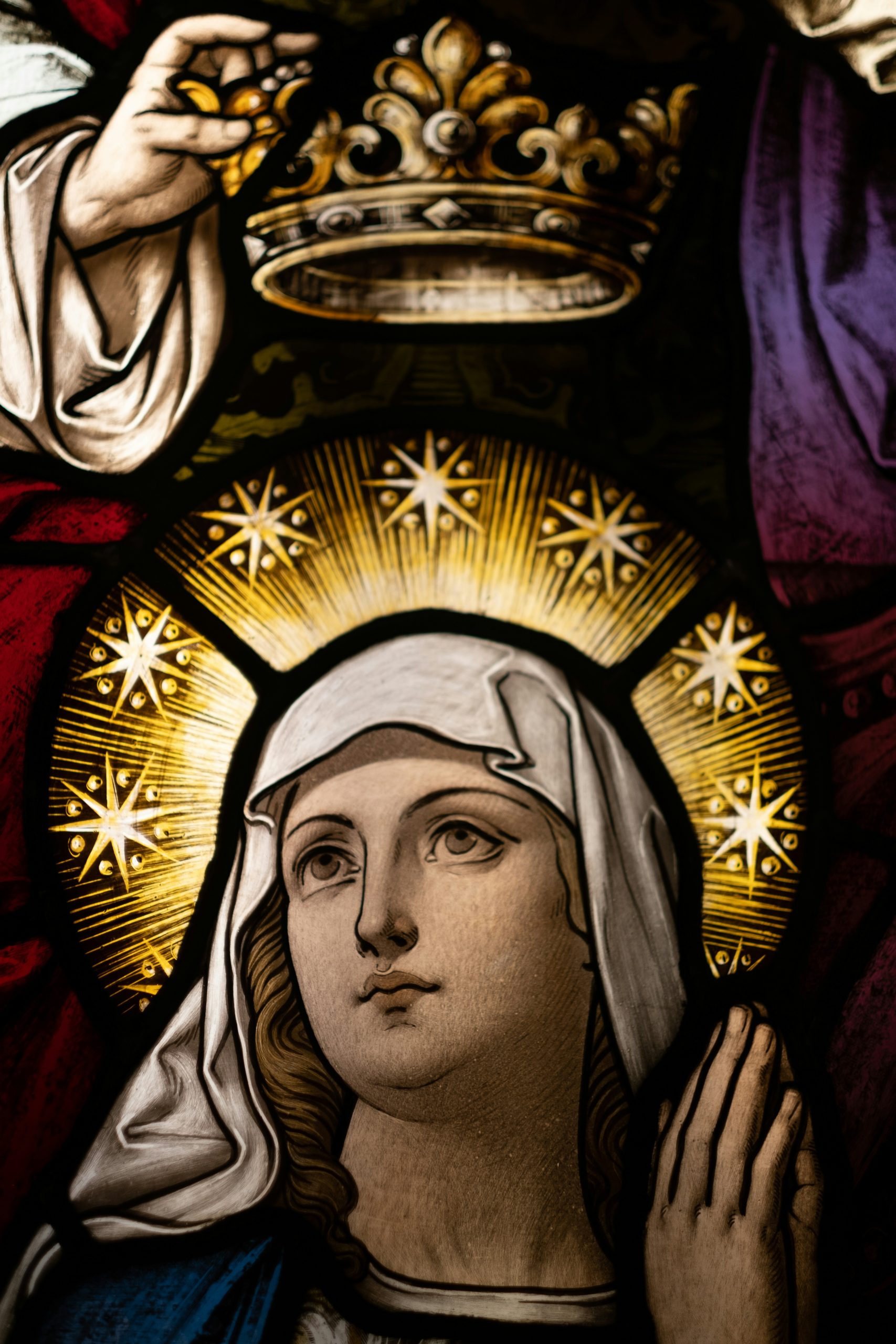
In that way, Saibin was the exception. What other time of the year could we see a whole group of Goan women shine? Each time Our Lady left one home, she was received and welcomed into another by the lady of the house. How lovely. The ritual connected all of us ladies, even after death.
So, yes, we watched Saibin with the same attention that the men at the tiki beach bars give the Brazil games during the World Cup. We had our favorite players during Saibin too, usually those who resembled us. Teodolinda’s great-granddaughter was a spitting image of her— same simmering eyes, same hooked nose. Watching her was like watching our old friend, alive and youthful again. We loved when our descendants spoke of us, like when the grandson of Herculada Gomes offered his seat on that rickety bus to Sister Olive saying, “Please, Sister, take my seat. My grandmother would turn in her grave if she saw me forget the manners she taught.” So right he was. Herculada, had she still the cheeks, would have certainly blushed.
Our Lady’s journey began, as it did each year—even in our time—at the chapel of our village of Arossim, and would move from there to each house in the village. Our Lady was encased in a tiny wooden chamber, for her protection no doubt. We didn’t need to recall St. Francis Xavier’s incomplete remains to understand what can happen when eager hands get too close to the holy.
Among us all, there was not one with good sight. But together, we could peer into the goings-on of the living, those places where Our Lady would stay, the altars in the wealthier homes, or the tables with specially embroidered tablecloths in the more modest ones.
When we were all together, we could hear the holy songs sung during the procession. Though we no longer had lips, instantly some of us attempted to mouth the words to Ave Maria, following the notes rising up from where they were singing so far down below.
Alive, we each had favorite recipes to serve when Our Lady came to our homes: the soaked fruitcake at Imelde’s, or that coconut cake that Thérèse made, batic, that everyone had been fond of. We saw the piles of boiled grams offered to the children to eat, and how the mothers covered their children’s laps with big cloth handkerchiefs to catch the shells before they fell to the floor.
We saw that now the ladies all served the same sweet triangles made of chana dal. Amélia once claimed she started the trend back when she had been alive. Amélia was always believing she was the first in this and that. We wondered if her pride could be the very reason she was not in Heaven above. We harbored suspicions like this about one another to explain our otherwise inexplicable collective condition.
She would stay the whole night when she came to your house, Our Lady would. Often, someone slept in the same room to watch over her. Later, after all the welcoming group prayers, you could come quietly to her and tell her whatever was on your mind. She was the great intercessor of course, and she would listen, she would help. This we still believed. Above all else we prayed for good health, for the rainy season to not bring with it sickness, for endurance when we did not have enough to pay this person or that, for our perpetual physical pains to be eased, the ones we mentioned to no one, took silently to our graves; for our children to fill their heads with knowledge and not mischief, for our husbands to not beat us or the children too badly, and for them to keep away from excess drink, something of course over which we had no control. If Our Lady had interceded to turn water into wine in Cana, surely it was in her power to intercede and turn some of that ghastly feni into water in Goa, no?
When we were alive, we had only noticed the public prayers. That feeling of faith, so solid in the village, was like the very ground under our feet. The sound of holy songs, (Maria Immaculada!) had a particularly reassuring harmony, as did the hum of voices reciting the prayers all together. But now that we were dead, we more often noticed the people with errant eyes looking around when everyone else’s were closed, heads bowed. We felt like priests in the confessionals or maybe something more than priests if there was such a thing (if so, maybe our great-granddaughters would know).
We so desperately wanted to hear what the village ladies wanted. What we wanted was to hear their prayers.
We wondered if Remedios Almeida would have admitted to a priest how she clawed the face of her husband when he tried to touch her at night. He is a monster, she explained to Our Lady, visiting who knows what kind of women from the tourist beaches, and coming home with the smell of whiskey on his breath. Always a good for nothing, that one, Remedios had said, and we agreed. His great-grandfather had been much the same. He had, in our time, been spotted falling this way and that, onto the side of the road.
We sympathized with Magdalena’s story to Our Lady about her uncontrollable adopted child, swinging from the chandelier in the hall. A wild child, Magdalena said, in a sinister whisper, so wild that she felt like cursing the nun who had brought this girl into their house. She will be a good maid, the nun had said, appealing to Magdalena’s sympathies for the vulnerable orphan, but that girl was nothing of the sort—sapping all energy rather than offering help. Our Lady, Magdalena bowed, suddenly contrite after a wave of frustration and anger. Why is this my cross to bear? What can I do? Magdalena lowered her head before Our Lady so prayerful, so absolutely still. Is that how we had looked?
We wondered how Our Lady would respond.
Between us, we knew everyone in the village—some were our sons and daughters, some were our neighbors, some our more extended relations. Even the foreigners, we knew. We didn’t care what language they spoke or where they had set up their own homes. They were ours and we loved them even when we could not at all understand them.
And yet.
The London girl was Odette D’Souza’s great-grandniece, the one who thought she was so high and mighty. We were rapt when this girl in her jean jacket and jeans walked into Our Lady’s room wide awake in the middle of the night, went right up to her, and blew rings of cigarette smoke into her eyes. She stomped her cigarette out in front of a tall cylindrical vase of purple and dark green crotons Mrs. D’Souza had carefully arranged, and left the butt there on the floor in front of Our Lady. Only we and she heard the young woman’s ungracious demands.
We were aghast when two schoolgirls at the Mascarenhas home slinked in front of the altar and painted Our Lady’s toenails a shade they called Coca-Cola red. It was a pretty color, we eventually concluded—no one could say otherwise.
The ayah who later spotted the change, laughed, uncontrollably laughed. That at least lightened our mood. We had never seen her smile showing her teeth (and we had seen a lot of her life). She had always been so serious, scraping the coconut, grinding the spices, cutting the fish, or hanging up the wash. Her work, always a never-ending kind of work. Her toes were gnarled and gray, but what good was it to think of it now, these toes.
If we are being honest, something about this generation’s brazenness, the way they dressed—always inviting trouble— the way they said the kind of things aloud that we had never even thought, sometimes, it made us feel demeaned.
We had noticed a turn towards chalta hai, that kind of anything goes approach that we found distasteful. “Do your own thing,” we heard them say, but that was the very thing we could not understand. If you did your own thing, who would take care of all the other things?
It didn’t dawn on us then that how our descendants were in the world might have to do with how we had been in life and why we were stuck in this place instead of in Heaven, why we were still as anxious and nosy and worried in death as we had been in life. Our earthly bodies were dead and gone, we understood this, but what became increasingly clear was that our most unsettling emotions had been buried alive. And God only knows, might be running through the blood of our descendants.
We watched as the procession of the faithful moved from the toddy-tapper’s home down the dirt road to Amélia’s house, where her great-granddaughter and her husband and their young daughter now lived. The line of people was distant at first, as tiny as a long train of ants leaving their hill. We tried with all our might to see more clearly, to see more closely. Together, if we willed it, we could see like a magnifying glass. Alone, we were blind.
The sun must have been strong because we heard soft pops as ladies opened their parasols one after another. Prayer books were handed out as the queue slowed, and people stood on the steps leading up to the front door of the Melo-Fernandes home, half-covered by the shade of a huge jackfruit tree.
Amélia was in a mood, full of outrageous ideas. Let’s talk back, she said, let’s do it. That is my granddaughter’s granddaughter! She will be able to hear me, I know she will.
We didn’t have to wonder what had gotten into Amélia. We already knew—it had happened to each of us at one time or another. We agreed to try. We could almost see the sunshine shimmer its way through the parasols. We imagined we could again feel the heat of the sun on our skin, our hair in buns or black braids long down our backs. When we lost our bodies, we lost much of our information, and after death, we clung together to glean even the tiniest bits of life.
Later that night, we got our chance. We spotted Amélia’s granddaughter’s granddaughter in her pajamas walking into the room where Our Lady stayed. Looks to be she had a bad dream, the way she kept rubbing her eyes, the way her hair was tangled so. How badly we wanted to comb her hair, get those few pieces from hanging in front of her eyes. Those might cause a squint, was the general consensus, and we pined for a bobby pin or suitable barrette.
That great-great granddaughter with cherub-like cheeks and bright, wide eyes, suddenly smiled and looked up. We were spellbound. Oh, the innocence, we said, and sighed and looked upon her loving face. It seemed like she knew we were there. She’s a dear. You were right, Amélia. So cute! Our dolly, we said. She climbed, like a little monkey, over the furniture and leapt onto the high table of Our Lady. They looked at each other and were the same height, Our Lady and this girl. Something about that struck us as magnificent. This girl is fearless, we thought. This little girl, she really goes for what she wants.
We realized too late what she wanted was to play with Our Lady, that she thought Our Lady was her doll. She tried to free her from her chamber. Stop! we all cried at once. The table shook and Our Lady and this little girl both went tumbling to the floor. It was a great height for a little girl to fall. Was our dolly hurt? Our worry fragmented us. We could no longer see clearly. Amélia, can you see? Can you? But Amélia, now where was she?
When we didn’t hear Amélia, we looked all around. A futile effort. Where had Amélia gone? We questioned Henriqueta who had been close to Amélia in life and in death, who said there was a swish, like a big gulp, a sucking in and then no more Amélia. A swish? Like a chute? Flpp, Henriqueta repeated, making the peculiar sound and then we too repeated the sound as if testing it out, a choir of flpp-ers. Wait, did she go up? Or down? Henriqueta had no idea. She repeated her flpp flpp sounds of the soft swish. And we all did the same, but no answers emerged. There was no way of knowing.
We looked for the little girl again, but she had already abandoned Our Lady and was playing, laughing while rolling a bumpy guava around the room. How did that get in there? Those windows should be shut so no fruit from the tree falls inside, we all agreed.
Her mother rushed in and dusted off her daughter first, and then, Our Lady, while she made the sign of the cross. Neither had a scratch, which we counted as a miracle. But Henriqueta with or without a body suddenly couldn’t contain herself. Sounds emanated from her and when we understood, we gasped. Maybe our dolly being safe wasn’t a miracle. Maybe it was Amélia.
We scrutinized the scene. The girl’s mother put Our Lady back in her designated spot, said a quick prayer as she genuflected, bowed—she was terribly embarrassed. We recognized that feeling at once. She rose, leaving, then quickly returning, giving her daughter a small plate of food, shutting the window and taking the guava with her back to the kitchen.
The little girl turned to us (us!) with an enormous grin. She brushed her hair behind her ears, then held up a triangle of chana dal as she took a bite, crumbs all over her face.
In a flash, we all remembered what Amélia said about the chana, her pride at starting that trend. This little girl—she couldn’t be? Could she be? Amélia?
This time, we disagreed. Some thought Amélia was unseeable, had left us and gone to Heaven, finally. Others believe that she had catapulted herself onto the earth, that somehow the girl alone was not looking up at us, but Amélia was there, now part of her, too. Amélia, back in the village, unscathed and dare we say, proud.
After Amélia disappeared, things changed. We wondered more fervently why we still were here in perpetual purgatory, not in Heaven, not on Earth, unseen by those we loved, unable to see or hear unless our shared feelings were in tune with one another, at a particular frequency, just so. It was a mystery we could not, for the life of us, solve. Just as in life, we were still trying to get some place better. Just like in life, inside ourselves, we thought we had done something wrong.
Amélia had been our amateur Mary scholar, knew all the visions: Lourdes, Fátima. She knew by heart Catherine Labouré’s sighting of Mary, how Our Lady had appeared with rays of light emanating from her hands, shooting them towards the Earth. When asked why some of those rays of light did not reach the Earth—Amélia would recount this part with extra emphasis—Mary replied, “Those are the graces for which people forget to ask.”
So we asked. We asked for consolation in this time of unknown fates. We asked to know why we had not been granted access to life in Heaven. We asked to understand what happened to our Amélia. We prayed to Our Lady fervently for any grace we could think of, for any clue.
Almost immediately we started to see too much. It was like during the coconut harvest, where the coconuts rain down hard all at once. We hadn’t felt we owed anything, but to God, and that is how we lived our lives, according to the rules of our times. Yet, now, those very same rules had shifted beyond our understanding. It was as though we all watched the same crystal ball, but it did not show us the future, only the difficult past, those parts of life we had not looked hard or squarely upon.
Since dying, we had always preferred looking down upon the living, but looking down upon the village during our living was bittersweet, sometimes causing us great shame.
Figures from our past hurled toward us, appearing with alarming speed and intensity. Like Ines Carvalho, that slender young girl who lived by the cemetery. We knew what her father, that lecherous widower, did to her. We all knew, the whole village. When we would walk by to get to the market, we would point out the very house and shake our heads, tch tch tch. A few of us had added her to our prayers, while sitting in a corner late at night, thumbing rosary beads, but for the most part, we did nothing.
Much later, when she was grown and we were dead—we looked down below and saw Ines’s attempt to take her own life. We tried to make it rain, hoping our salty tears would fall on her bruised wrists. But of course, this was futile. We had no eyes, just a collective and increasingly troubling vision.
Our tears could no longer reach her. So we prayed to Our Lady to grant her peace – but, truthfully, maybe it was us we were praying for.
In any case, let the facts show, St. Peter, we did not save her and we do not know what happened to her after she died.
And then our vision changed again. We began to see even beyond what we had previously, not just the past, but alongside it the future too. Sometimes, when the energy was just right, when our collective mood hit a particularly gentle vibration—buzzing like a taut fish wire from a Colva boat out at sea—the visions sprang up in puffs of multi-colored smoke before us, like steam from an ocean.
We saw dozens, hundreds, of things at once, in the same moment, our once-world everted before us. Together we saw: the black sand at Vagator beach and how each grain sparkled; a cut open jackfruit in Navalim as gleaming gold as a shooting star spotted over Vasco; We saw at the lectern of Our Lady of Immaculate Conception, women preaching the homily on Easter Sunday; And we saw twelve young students at the women’s college, protesting their male priest teachers’ inappropriate touches, stand up all at once; We saw a pregnant village woman at the market in Margao, for once not hoping for boy, and beyond her belly swathed in a red and blue sari, we saw the twin daughters who were feeding on her; One would win gold for India at the Olympics, the other would defuse the threat of war through diplomacy; We saw women who had claimed the singular life goal of pleasing their husbands become ferocious, godlike, feared; We saw Pulqueria’s great-great granddaughter, a climate change activist, and how her loud calls to action rang in villager’s ears and eventually their hearts; We saw the complete dissolution of castes; we saw the end of corruption; We saw the end of whitening creams and how faces of every shade became beautiful to all; We saw the glowing feelings of women and how more and more women looked relaxed when relaxed and enraged when enraged, when their outsides and the insides matched better than even Sister Anita Pinto’s hand-stitched socks. We saw women who wanted only to raise phenoms become phenoms themselves; We saw not an extra ounce of guilt in any woman anywhere; We saw the first batch of hog plum jelly made by a widow in Candolim become a worldwide sensation; We saw a moratorium on self-deprecation that eventually led to an authentic, unflappable pride; We saw how women became educated in all parts of the land; We saw the same wrinkled hands that embroidered cards at Santa Monica convent stitch sutures as surgeons in the hospitals; We saw how the women of the village became like the Hindu goddesses we never learned about, feared and wild and imminently strong.
After we had seen all we could, the images appeared for a moment suspended in air before they began losing shape, eventually dissolving into a shimmery mist around us.
No one uttered a word, yet all among us knew what had come to pass—a glimpse at what might have been possible.
Multiple emotions consumed us at the same time, among them a heavy weight, an unbearable absence. We told ourselves in the soothing manner we usually reserved for the youngest of our children, that we simply had not known that changes within us could hasten bigger changes in the village. We simply had not known.
But, hand on the Bible, had we not known? Or did we know, but thought we were never allowed to know? How much secret knowledge would have availed itself if we had only reached out for it?
We had wondered, while alive, why our problems seemed so big—and now knew once dead, that it had to do with thinking our own power small.
Now that we could see in all directions—high, low, near, far, backwards, forwards, and within—we wondered what else we might still be missing.