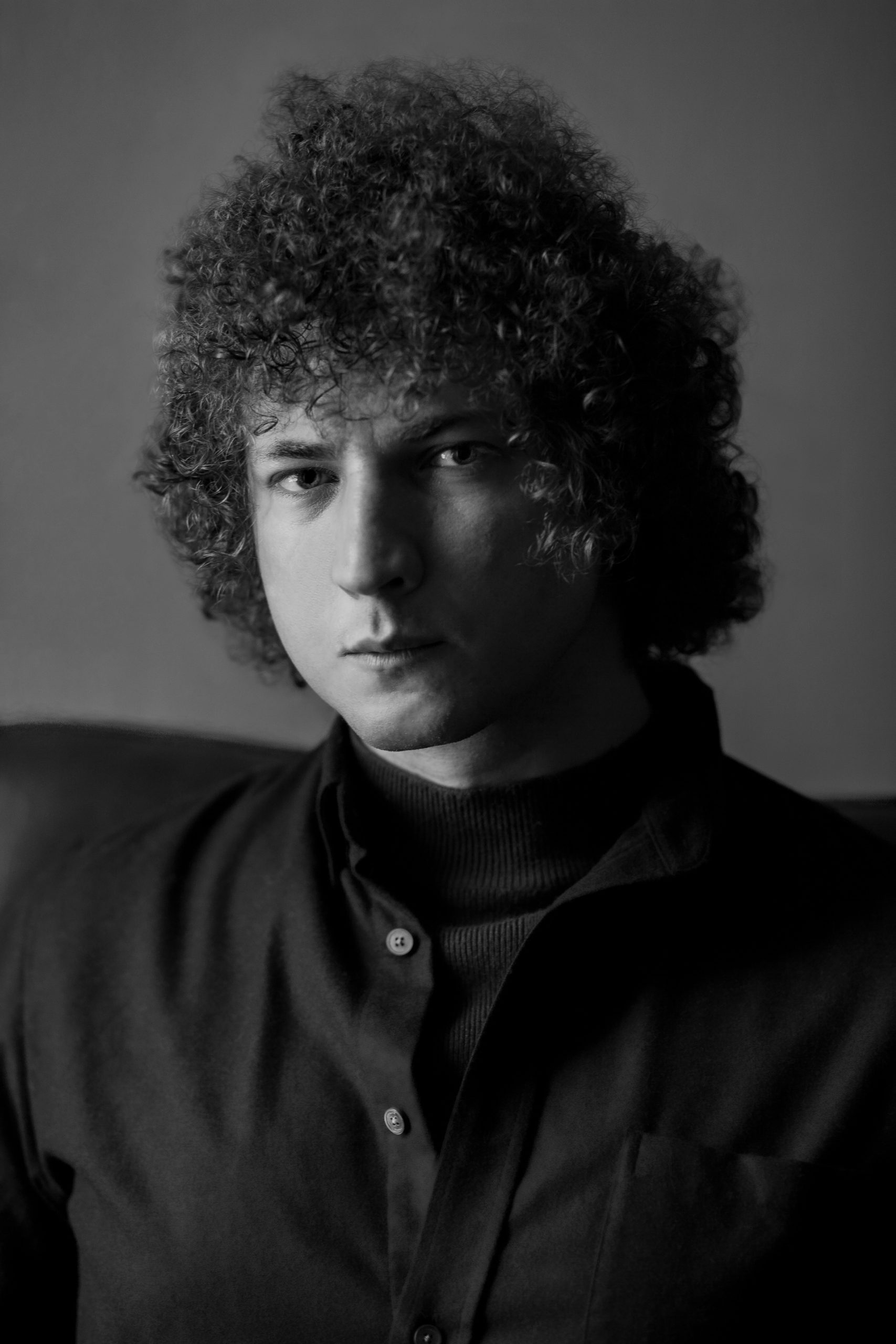

Daniyal Mueenuddin’s This Is Where the Serpent Lives is a series of four connected stories that contrast the lives of servants—two of whom want to better themselves—and the wealthy, Westernized elites they serve. Epic, sweeping, and grand, the action takes place over many generations and decades. The reader gets the full pleasure of being intimately immersed in this world created by the author, which is grounded in a real culture and country, set in the Pakistani side of Punjab, and moves between Rawalpindi, Lahore, Islamabad, the Himalayas, and rural areas.
Here, all the subtleties of daily life, of reading people and knowing how to manipulate them to get one’s needs met, are laid bare: Pulitzer Prize finalist Mueenuddin spares nothing as an author and reveals the dark sides of the human psyche. The characters know that a personal sense of honor and relationships mean more than justice as an abstract concept served through a legal system. Betrayal is the ultimate crime. Many of the cultural and class/caste nuances will be relatable to readers with heritage from the Subcontinent, as well as those who come from countries where there is extreme class stratification, hierarchy, and a wealthy minority who are educated abroad.
The Partition of Pakistan from India in 1947 brought sociopolitical change to the region that still continues today. In the book, Mueenuddin explores the power, religious, caste, and cultural dynamics in the Pakistani side of the province of Punjab (the other half of which is also located in India) which bore the brunt of the Partition.
I was delighted to talk with Daniyal Mueenuddin over Zoom from his home in Oslo. Our interview was over one and a half hours, in which he generously discussed everything ranging from the novel to Pakistani society and politics to our Midwestern and South Asian heritages. These are the highlights from our discussion and this interview has been edited for length and clarity.

The Rumpus: The word that came to me about the novel is operatic. The sense of drama is heightened, the most powerful and base human emotions are the driving forces. There’s lust, murder, greed, revenge, envy, transgression. I suspected, even at the very beginning of the title story (This Is Where the Serpent Lives), that there will be someone in the role of a “serpent,” and there’s going to be something Biblical/Quranic about it, the theme of the Garden of Eden and evil, which proved to be true. What were the fundamental moral questions you were trying to address in this novel?
Daniyal Mueenuddin: Very interesting question with that theme, but I really came at it by thinking about stories and characters. The theme grew up around me as I was writing it. As I was playing around with characters and trying to figure out how to make stories about them, gradually it became clear to me that the aspect of contemporary Pakistan that seemed most critical to their lives was this whole question of power and status. That’s partly because Pakistan is a place where people’s lives are defined by their relation to power and money and status–to a much greater degree than in the West. People in Pakistan live by these questions of status and relative power and hierarchy: it’s everywhere, it’s the air we breathe—these hierarchies and inequalities and strivings.
In America, say, or certainly in Oslo, where I am at the moment, you can be a citizen and not be pushed and pulled and tugged and tripped by others around you who have power and money more than you do. In Pakistan, people live embedded in each other’s lives, and the way in which they operate within that embedded sphere is dependent upon how much power they have, how much money they have, what their status is, what their background is. Those themes kept coming to the fore as I considered these characters, as I infused them with breath and set them walking about in the landscape that I created.
Rumpus: You conceived of the book as stories first?
Mueenuddin: Yes, I wrote each of the “chapters” of the book as a novella; but I always knew that these stories or chapters together would make a book, and from the beginning I wanted the book to be more than a collection of stories. My first book too was a collection of interconnected stories, so this was a structure that I’d thought about a fair amount. This was my second attempt at this structure, and so it’s more carefully developed in this book—this book is much more of a piece than the first one was. From the beginning and then as I wrote the sections, I thought about how they fit together—and wrote them to fit.
Rumpus: You mention characters and power, and there is a quote that I thought really captures the novel well: “You don’t salute the man, you salute the rank.” In the book, I noticed at least eight titles used to address others. I looked them all up, and they indicate very specific nuances and positions.
Mueenuddin: I actually stole that line from a TV series about World War II! But yes, these titles are incredibly important in Pakistan. We have all these very specific titles that are leveraged and used as we converse with each other to help us to establish our status relative to each other. For example, somebody of lower status would not directly call you by name, they would call you the correct title that goes with your position. Or, to give a different example: Urdu has a special causative verb construction, karva dena, to have something done by somebody else. You wouldn’t directly ask someone of high status to do something, you would ask them to have it done. You don’t want to imply that they would get their hands dirty following your directive–it’s gentler. They sit and give a command and the command is obeyed. The hierarchies are embedded in the language.
Rumpus: Speaking of which, a key theme in the novel is that trying to change one’s position is dangerous and to seek a higher status is to court nemesis. Yet, this is what the two main characters, Yazid and Saqib, who are both servants from poor backgrounds, are trying to do. How do each of these characters understand the concept of class mobility? Their choices lead to radically different outcomes.
Mueenuddin: Certainly, that whole question of mobility was right at the fore. Mobility is complicated anywhere, even if you’re moving from Peoria to New York, right? But in Pakistan, it’s even more challenging. For one thing, people live financially so precariously in Pakistan, except for a small elite—and even for them, their lives are defined by that elite financial status, it determines who they are, more than most people in the West. People are much more protective of their position, when they have a position that is constantly being challenged, when nature is so red of tooth and claw, as it is in South Punjab and all over Pakistan. As I wrote the book I was thinking deeply about how these characters were strategizing their lives, both consciously and unconsciously. What did it mean, for them to better themselves, in all sorts of complicated ways? What would that mean for them personally, and what would be the consequences of that?
It’s very difficult in Pakistan to change your status, to rise, to enrich yourself. And yet one of the things I do find about Pakistan is that, just like anywhere, if you’re willing to keep going and keep going and keep going–keep on keepin’ on–if you have enough drive–then you can overcome a lot, including even a lowly position in a landscape as hostile to movement as that one.
Rumpus: Just as Yazid is an orphaned tea stall boy who ends up with a considerable status. And Saqib aspires to be like [Hisam and Shahnaz, the elite landowners who are their employers].
Mueenuddin: Yazid, the tea stall boy, is an unusual and special case. For most people of his background, rising would be to make money, by hook or crook, to have a house and a family that he supports well. It’s an easy metric. He is an orphan and unmarried, however, and his soul is austere, though he loves food and the simple pleasures of life. For him to attain a place of respect and responsibility is more important than having money.
Saqib is unusual in a different way. He too wants more than money—or wants money and then more. Because of his exposure to Hisham and Shanaz and their elite Westernized landowning world, he understands that money is just the beginning of success, that money is what gets you in the door, but money isn’t the final proof of having succeeded. Saqib wants more than to be rich. What he wants, ultimately, is to have a life that in a more fundamental way resembles Hisham and Shahnaz’s. He wants to inhabit their world, not merely to visit it—not to be an onlooker, but to be so comfortable in it that he takes it for granted. Who knows, he may achieve this–perhaps in Houston or Perth or even in Oslo, rather than in Pakistan. That’s another book! Saqib is a man who will grow and change and persevere and probably have considerable success.
Rumpus: He wants to be like them in some very fundamental way.
Mueenuddin: As I say, if I were to continue writing about his life, I suspect that Saqib would end up abroad. A guy like Saqib is probably too smart to stay in Pakistan. To add a twist, he could make a pot of money abroad and then try to return and seize a position in Pakistan that is not simply one of a rich person, but a rich person accepted into the kind of society that Hisham and Shanaz belong to, which is very, very difficult—that’s the Gatsby story. I’ve been witness to some of these Gatsby stories in Pakistan, the rich returnees from the goldfields of London or New Jersey.
Rumpus: That word is really key: acceptance. My impression is that Yazid doesn’t mind that he’s not ever going to be accepted in the same way as one of them. He knows his position. Yet he’s very confident in knowing what he can do—that he is respected—whereas Saqib wants the acceptance.
Mueenuddin: And he will stop at nothing.
Rumpus: To get the acceptance.
Mueenuddin: Exactly, exactly. That is the key difference between them. He’s not going to stop growing as a personality. His landscape will keep increasing, and his view.
Rumpus: Landscape is central to this novel, which spans multiple locations, and land is what makes or breaks someone. We have the land-owning elites, Rustom Abdalah and his relatives, the Atars; a sort of middle class with the Awan family who live in a large house in the city; then this kind of radical situation of the servant boy Saqib managing land but not owning it, nor ever perhaps in a position to own it, standing in place of the owners in the management of it. Characters are rooted in place, and they can’t be separated from that place, because what happens there is vital. Could you please talk a little bit about the importance of landscape/place?
Mueenuddin: In Pakistan, more than in many places, your landscape is your destiny. Where you come from, physically, is so important. Even today in 2025, Pakistan is very much an agricultural society. Therefore, just being where you’re from is also sort of who you are: either you’re a peasant working on somebody else’s land, or you have a little scrap of land of your own, or you have a bigger piece of land, or you’ve got a lot of land. If you are one of those urban people, which means you don’t have land, your identity is always more or less around the whole issue of land and where you come from, not in the city, but outside it. So many of the urban poor, millions of them in the cities, increasingly more—that’s where the great migration is occurring—are still rooted in their villages, having come out of the countryside only a generation back. For example: for Eid, the urban poor and even the lower middle class might return to their villages to celebrate. Also when marrying, they might seek an attachment back where they came from, though it’s becoming less true. Pakistan is becoming more and more urban, and the urban dwellers are increasingly not just removed from the countryside but even unfamiliar with it.
Rumpus: You’ve touched on this a bit already–while [Islam] does inform the culture and the backdrop, it is not of great importance in this novel compared to power, caste, rank. Could you talk about this choice not to make it central?
Mueenuddin: In Pakistan, Islam is always the background context of people’s lives, because no matter how devout or how observant any person is, whether they pray or not, live by religious codes or not–certainly everyone is and is assumed to be religious in a degree that’s no longer the case in the West. Most people are brought up with religious observance, and so they absorb it in their bones; they assume it. To any of these characters, except for Hisham and Shahnaz—to Yazid and even to Saqib—if you represented even the possibility of their being atheist, they would be shocked. They assume that everyone is a believer, certainly most Pakistanis. In Pakistan even today—increasingly today—blasphemy and other expressions of irreligiosity are punishable by death. My characters’ lives are not defined by religion, but it is always present as a sort of a background philosophy. Religion is fundamental to who they are, but it’s mostly not active in who they are.
Rumpus: Let’s focus now on the secular elites, the Atar family and Rustom, their cousin. How do they view their relationship to their servants? For example, though Shahnaz grew up overseas as the daughter of a diplomat, she’s the one who’s able to deal with the servants and understand the dynamics better, because she’s come to it as an outsider. How do the elites combine ideas that they’ve learned from living abroad with life in Pakistan?
Mueenuddin: If it’s hard for Yazid and Saqib, it’s equally hard for their employers, for Hisham and Shahnaz. These are people who are between cultures, in that a lot of what they look to or look up to is in the West: the art, the manners, the clothes, everything. Yet, these people are still entirely bound to Pakistan. They straddle these two worlds, and it’s never very comfortable when you’re straddling. Their place is not in Pakistan, and their place is not somewhere else other than Pakistan, so they’re in a way more unrooted than the other characters are. Even though they own property, their relationship to that property is tenuous. They don’t really understand the souls of the guys out on their farms. They get money from there, but they don’t really get their identity from their property, certainly not in the way that their grandparents would have.
These are people who are sort of internally divided in ways that are very challenging and difficult—who are trying to figure out how to live, because they’re fundamentally decent people. Both Shahnaz and Hisham have their heart in the right place, as do really all the characters in this book—there are no villains. Even when they do wrong, they think themselves at core as meaning well. They are heroes in their own histories, and virtuous there. They want to be good, positive figures, but they don’t quite know how to be. Hisham and Shahnaz, who are more conscious of trying to have an intelligent, moral life in Pakistan than some of the other characters, are in one sense the most principled of my characters.
Rumpus: Yes.
Mueenuddin: Hisham and Shahnaz and the members of their elite succeed less well because they are conflicted, but their hearts are in the right place. These people are trying to figure out how to make decent, productive, useful lives in Pakistan, and this is very hard to do. They suffer from the curse of having too much money and too much time on their hands. Shahnaz and Hisham are not quite engaged anywhere, they drift—and they’re not even representative—most members of the elite landowning class are true rentiers—they live in Lahore and Islamabad and Karachi like fish in an aquarium, among plastic reefs and tiny fake submerged castles, finning in place and regularly fed as their principal recreation, living on their ancestral money.
Rumpus: These social and thematic aspects are crucial in your book. There is another important element as well. The language is striking and noteworthy like it’s from a different era. There’s something very classic and epic about it, as if it sprang from a grand old-fashioned novel. Could you talk about your prose?
Mueenuddin: I read a lot, as you can imagine, so maybe that’s why I sound bookish! But I also have an excuse or explanation for my diction: For much of my life, until I went to the University of Arizona-Tucson for an MFA in my late thirties, I wanted to be a poet rather than a fiction writer. For many years I wrote only poetry—my only prose was the letters I wrote in great numbers, particularly when I was living for years out in the countryside in Pakistan. Some of my poems aren’t too bad, but at some point, I realized that I wasn’t going to set the world on fire as a poet. Even more than fiction, poetry comes from the gods. It’s born in. Nevertheless, I had that training and relationship with language, playing with sounds and rhymes and rhythms as poets do.
When you’re writing fiction, you hide your rhythms and rhymes–but for poets, those temporal structures and sonic patterns are overt and central to what they’re trying to do. I spent many years tinkering with those structures, messing around like some teenager playing with his hot rod, under the hood all day. I’ve had to tone it down writing fiction, but I’m still very conscious of sentence sounds and rhythms and paragraph shapes and all the rest of the prosody. The sound of it is very important to me: the sound of the line, of the sentence, and the paragraph. So yeah, it’s my joy. My kids laugh at me, because I’ll be sitting at my desk writing and muttering to myself, searching for words, trying out cadences.
I think twenty percent of the best part of any really good fiction is in the sound of it and in the echoes. I don’t think it’s something you can really train for, except by many years of writing. I love repetition, for example, which you’re not really supposed to do in fiction. But I love repeating things and having things come around. These are all qualities in writing that are more associated with poetry than with fiction.
Rumpus: That explains a lot, because there is something very poetic about it, a great variety in the sentences, a wide vocabulary, the language is very precise.
Mueenuddin: Precision is essential when you’re writing. You can’t be muddy at all, or it’s not going to work. You’ve got to be precise about sounds, and you’ve got to be precise about descriptions. Precision is a big part of the game.
Rumpus: Would you say that having lived in different Anglophone countries informs your sensibility as well, too—through the Anglophone circles in Pakistan and living in different places in America? Do you find that contributes to a broader use of the language, or a more poetic [sensibility]?
Mueenuddin: Yes, I’ve bounced around, for education and work—I’ve been fortunate to have that exposure. In the various places I’ve lived, in America or Pakistan or elsewhere, English is used quite differently. And because I’ve come at it from the outside in each of these places, I’ve been more aware of these differences than a native would be. I’m probably a little bit more forensic in my approach to English, coming from the outside, than are writers who have lived in one place throughout.
Rumpus: Interesting way of putting it. Each Anglophone environment has a different nature of language. When I studied abroad at Oxford, what struck me was that British prose is a lot more flowery, more ornate compared to our American style, coming out of the ethos of Carver or Hemingway, clipped and direct. And Indian English, as I’ve experienced, is even more ornate, a whole language unto itself.
Mueenuddin: We use the language differently in each place. We’re fortunate to have English as our language, because it’s just such an incredibly rich language, scattered all over and put to use in Baghdad as well as Brooklyn. It is the world language, as Latin once was, or to a lesser degree French. Next, I suppose is Mandarin, and someday English will be studied as a dead language, when humanity is living out among the stars.
Rumpus: Another, language-related question I had was, even starting with the title, there are a number of allusions in the novel. You explicitly mention Jacob and Esau, then, as we see at the beginning of the title section of the novel, immediately my mind went to, “Well, serpent, that’s a trope in the Religions of the Book” [an expression that refers to Judaism, Christianity, and Islam]. I started to suspect things about one of the characters.
Mueenuddin: It’s fun for the writer to throw little breadcrumbs in. A merry little game.
Rumpus: Oh, it’s fantastic! Without giving away spoilers, you refer to that character’s “Adam’s apple was entirely fixed, a rabbit bump in a serpent’s length.” It was fascinating that you have these references, and then throughout [the title] section, there are all the themes of this character creating a garden. Could you talk about the use of allusion or allegory?
Mueenuddin: Allegory I’m not sure about. But, in terms of allusion, one of the most interesting aspects of writing fiction is that there are many parts of the narrative that if you do it right, the reader won’t know why he thinks what he thinks, but he’ll think it. Part of the job of the writer, part of the delight of being a writer, is that in your narrative, you put in all these little clues, bits, rhythms, hints and so on, which the reader senses but doesn’t consciously identify. At the end, there’s going to be a big ta-da, which is going to be the ending, but along the way, you want to sprinkle in all these little delicious little nuggets; some of them are false leads, and some of them are not false leads. The whole thing that makes the richness of the narrative is that at the end, the reader feels satisfied with the resolution, and yet that resolution was not anticipated. It comes together like an elaborate dish, or like a seed that grows into some magical tree. When they look back, they should say, “Now I see that all along it was growing like this, flowers and leaves and all.” Going back to your allegory question–I got a little heavy-handed with the serpent thing, just because I was having fun with it. It’s a little problem for the reader to chew on when the story gets dull–the serpents are all over, everyone has a bit of serpent in them.
Rumpus: No, that was wonderful.
Mueenuddin: This is all useful in creating tension. What you want at the end is for the reader to be completely surprised, both along the way and then at the end. You want them to say, “Wow, of course!” One of the ways you achieve that is by putting in these little clues and hints and having these through lines. All these threads that run through the entire book, the reader should not be aware of the thread until it comes to the end, and then looks back and says, “Yes, this all did fit together.” The jumble coalesces into some marvelously integrated whole, with a rough philosophy underlying it all.
The image I like is that writers do their work, do it well, spend so much time trying to lace together the narrative. Yet, to the reader, it should look like the words just fell on the page, like snow falling on a field. It should not seem that there’s been any effort made, no hint of the sweat put into it. It should look like life itself. Except, of course, it is false in that sense, that it makes sense. Unlike life, the story is intentional, and is wound up with meanings. Life as we live it is mostly without shape or intention, as if a child or a madman were sovereign.