
—For Leeanner
When my doorbell chimed three times in quick succession, I knew it was my next-door neighbor Ed, a mantis-thin octogenarian with webby wisps of silver hair. It was a syrupy April evening and I figured he’d come with his standard request: to store his surplus tubs of ice cream in my freezer. I considered bunkering in my room, but out of a nagging sense of neighborly duty, I answered the door.
Ed’s hands were empty. “My wife asked me to get Mark.” No stammered greeting, no “Sorry to trouble you.” I stared back. He still couldn’t confidently distinguish me from the Other Gay who’d lived here for more than five years, and had to summon me by name for his wife, Leeanner. His eyes twitched in deep sockets. “She needs some help.”
I trailed Ed over the low stone wall between our yards. Inside his house, it was dark, lit by a couple of frilly lamps. A sour funk cut through the usual smells of fireplace soot and rose perfume. It took me a moment to make out Leeanner, Ed’s wife, partially swallowed by her floral couch. Her wig was on the coffee table in front of her; a fedora careened off her head. When she saw me, Leeanner struggled to sit up, one elbow below her, one bony arm pulling at a cushion. I reached for her hand, but she waved me away and shuffled a pillow under her head.
I wanted to rewind the tape and leave Ed on my porch. To let him cross the street to Amanda’s, or call someone else.
I asked Leeanner what she needed.
* * *
I met Leeanner and Ed six years prior when I bought my house in east Austin. I had saved up the down payment working tech jobs I hated, and I was excited to nest. I told myself it was a good investment, that I’d stay for five years, so I moved in with two friends to offset the mortgage. One of my roomies and I decided to bake cookies for all the nearby homes to ingratiate ourselves, play-acting at neighbors.
On some level, I was also offering the cookies as paltry reparations for gentrification. East Austin was predominantly Black and Mexican-American, and I was a 26-year-old white yuppie—from California, to make it worse. I knew I was part of a problem, but I was unwilling to forgo my own satisfaction and prosperity when the issue was so much bigger than me. And I loved the house—especially its space for gardens.
While all the other neighbors mumbled thanks through cracked doors, Leeanner invited us inside and chatted at us for half an hour while Ed puttered in and out of the garage. Leeanner was Black, Ed white. She was stout and glamorous, he was tall and wore jeans and a tee. She was rambling and boisterous, he was jovial but clipped. He was nearly fifteen years older, she said, though I couldn’t pin down her age.
That day, Leeanner told us about her beef with a woman down the street, her health treatments, which neighbors should be having kids by now. I was charmed at first, until I felt the minutes becoming years.
* * *
In the nearly subterranean dark of Leeanner and Ed’s living room, I fingered a white lace crochet throw on the back of the couch where Leeanner lay. Ed sat too close to the TV, eyes vacant, shirt open, sternum branching skeletal and skin pale as bone.
I asked again how I could help.
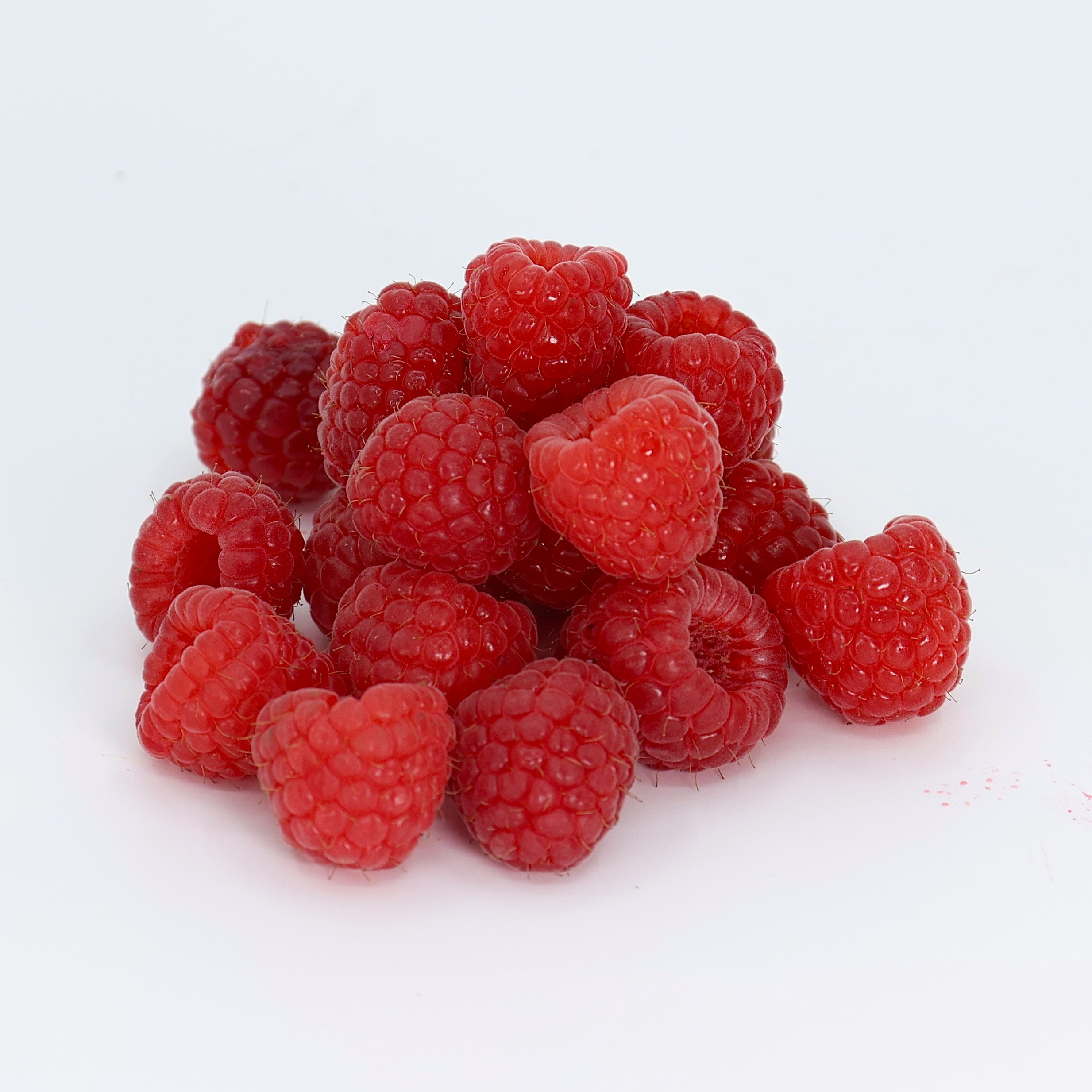
Leeanner told me she hadn’t been able to keep anything down for days. With her chemo treatments, she felt so ill, so bloated—she ran her hands over a solid mass in her gut, under her robe. She sent Ed over to get me because she wanted “that red fruit.” It was the only thing she craved.
“Strawberries?” I guessed, and she shook her head, holding her hat in place. “Raspberries? Apples? Watermelon?” No, no, no. She waved her hand. I worried the last suggestion was racist, then I admonished myself for such a stupid concern while naming red fruits for a sick woman.
“I can picture them,” she said almost wistfully. She pinched her fingers together. “All the little dots. The little bits. The seeds.”
I pulled out my phone and showed her a picture of strawberries, double-checking. I said again, “Raspberries?” and she said, exasperated now, “No, not raspberries,” but just in case I held out a picture of raspberries on my phone and she said, “Yes, those ones!” and pointed at the raspberries. My throat tightened. I had known Leeanner was in treatment since I moved in six years prior, but that was when I started to say goodbye.
* * *
Shortly after moving in, I was out front doing yard work, listening to an audiobook and digging a hole for an agave pup. I looked up to find Leeanner standing over me and speaking. As I took out my earbud, I understood her last few words to be “go to church?”
I quickly sputtered, “Jewish.” Then I paused my audiobook, stood up, and repeated, “I’m Jewish.” I didn’t clarify that I was hiding my atheism under the Star of David, but she seemed glad I hadn’t shouted, “pagan!”
Leeanner went on for a good ten minutes about how she’d worked her way up and was now something called an Ambassador for Jesus Christ. I suppressed the urge to flee.
Then Leeanner thanked me and “my girlfriend” again for the cookies and walked off. Patting dirt around the agave’s roots, I caught spines in my fingers.
Over dinner, I imagined, she and Ed would discuss how their new neighbor was a sodomite Jew in rainbow Crocs. Meanwhile, my roommates and I would wonder when these old fogeys might graduate to assisted living so we could have neighbors our age.
* * *
At the grocery store, I grabbed the raspberries and fresh lemonade and OJ, which I hoped would be curative. I wavered when I saw that the fresh juices cost more than $9 each before snapping to my senses: this could be one of the last beverages of Leeanner’s life.
Upon my return, I tossed the receipt and scratched off the price tags with a polished fingernail, knowing she’d offer to pay me back and that it would be easier to decline with the evidence obsolete. I rifled through Leeanner’s cabinets and drawers for a glass, bowl, and spoon. In the middle of her kitchen was an ironing board, on it a colander with an open sleeve of bacon, forgotten while defrosting. I picked up the colander to move it to the counter, but fat had leaked through the holes and congealed to the ironing board’s fabric cover.
“Is there anyone I can call to help out?” I asked Leeanner as I brought her a glass of lemonade and bowl of berries. I set them beside her wig on the coffee table, and she let me pull her into a seated position. It felt like her arm might pop out of her shoulder joint, bones and muscles loose within her skin. She reached forward and I started to pass her the glass, but she was going for her wallet. I waved her away. “Maybe your sister?”
Leeanner took a sip of the lemonade. “Mmm,” she said, cradling the glass to her chest. “Just delicious.” I felt the need to do something: get her a coaster, encourage her to drink some more, lift a spoon of raspberries to her lips.
When she sat back on the couch her robe slipped open, exposing her breast, marked by a horizontal scar.
* * *
A year after moving in, I swapped out my roomies for a boyfriend. Now, I thought, it was inevitable to have a clash with Ed’s conservatism and Leeanner’s Christian values, even if Ed could never tell us apart.
Leeanner moseyed over while I watered the plants. I paused my audiobook and stifled a groan, then took the earbud out to find her, as usual, already mid-story. She wore a glamorous silk robe with fur-accented edges, leopard print slippers that I hoped wouldn’t get muddy.
“Look at this,” she said, pulling a newspaper from under her arm. She held out an article called “A house divided” from the Austin American-Statesman and I skimmed the first few paragraphs. Leeanner, the story said, was an ardent Democrat, Ed a “die-hard Republican.”
“Wow,” I said. Yikes, I thought.
Leeanner glowed as she told me about the interview, how jazzed she was to have their photo in print. I held the paper still to read it.
“I like your nail polish,” she said, then laughed a heh-heh, big-throated cackle I couldn’t decipher yet.
As I thanked her, I felt my hand curl into a fist to conceal my nails, the way I did any time I drove outside Austin. Following the Jewish conversation, this was insult to injury.
“Good color on you,” she said. “You know.” She turned with a dramatic flourish and headed back to her yard. “I had a friend who’d paint his toenails.” Another laugh, remembering. “I used to let him borrow my wigs.”
I exhaled a breath I hadn’t realized I was holding.
* * *
Over the six years I lived next to Leeanner, the neighborhood changed dramatically. Old houses, like mine built in 1952, were no longer remodeled but bulldozed, replaced by behemoths. In the lot next to mine, where a Black family used to live in a single-family home, a developer is building a 32-unit complex of condos and townhomes.
As the neighborhood changed, Leeanner remained a fixture. Though my boyfriend and I often thought of her as the kooky old lady next door, her presence was a comfort.
Leeanner loved to cook, and every month or so, she brought over dinner, often forgetting (or pretending to forget) I was vegetarian. We could tell from the food’s quality how her health was doing: when she was well she made the most delicious gumbo; if treatments were going poorly the roasted chicken was bone dry. Sometimes she’d add a little extra kick to her food and find me in the front garden later to ask if it was too hot. The food often stayed in our refrigerator untouched.
Every spring, Leeanner barbecued. She delivered her feast of ribs and brisket with a huge smile. She may have been an Ambassador of Jesus, but she took great pride in coaxing me into eating meat.
In all that time, I cooked for her only once or twice. When I made Leeanner and Ed a dish of miso-glazed Japanese eggplant grown in our back garden, she wrote a note in gorgeous cursive script telling me it was delicious. Another neighbor once commented on Leeanner’s beautiful handwriting, and Leeanner gave full credit to the Austin Independent School District.
Despite Leeanner’s kindness, my boyfriend and I often found our interactions with her grating. She and Ed hollered at each other in the front yard, the screams echoing down the street. Leeanner’s treatments affected her mind, and her rambling, circuitous stories were painful to be trapped in. My boyfriend and I treated her visits to our front yard like shift work.
“Your turn,” I’d say, closing the gate behind me and heading to the backyard.
* * *
When my boyfriend left me, Leeanner was the first neighbor to notice the change, likely signaled by the sorry, weedy state of my front yard. As I stared at my computer screen for work and thought abstractly about dying alone, my doorbell chimed (just once; not Ed’s triple trill). I went to the door.
Leeanner was crossing the low wall into her yard. She came back when I waved. “It’s just some leftover Franklin’s. Ribs. Brisket. The fixings,” she said. I should have recognized how poorly she was feeling, ordering out when she loved to barbecue. In less than three months, she would be gone.
I exchanged gossip for sustenance and confirmed my boyfriend had moved out.
“I’m sorry to hear that, honey,” she said. “Well, anyways, I lost the Post-it with his phone number on it.”
Inside my house, I sucked the meat off the bones until my stomach hurt.
* * *
When my friends and I come together to support each other, we call ourselves a “village.” When we coordinated meals for someone depressed and struggling: village. After the breakup, when my friends helped clear the wet leaf litter that collected so deep it had warped the foundation of my house: village. My village wasn’t geographical. It wasn’t the same thing as a neighborhood. My roommates had moved out yet remained part of my village, which was thatched with a text thread.
Only through years of fleeting garden conversations could my love latch on to someone like Leeanner. I didn’t know I needed a nosy and rambling neighbor who made delicious gumbo and who would poke her way into my life, battering my vegetarianism into submission with her barbecue. It was the opposite of the village of friends I had so carefully curated over the years. Only in a neighborhood could a 32-year-old atheist Jewish homosexual and a 69-year-old Black Ambassador of Jesus Christ grow such a wonderful relationship by proximity.
* * *
As Leeanner ate the raspberries, I sat in the silence of her home. Ed had disappeared into a back room. The living room was carpeted and had patterned wallpaper; mine next door had light wood floors and bright white walls. Hers had heavy ornate furniture, mine minimalist midcentury designs. We both loved wildflowers, and the next day, before she was moved to hospice, I’d bring her some from my garden.
Leeanner was revitalized by the raspberries and lemonade. I settled onto the arm of her couch.
“I don’t think I’ll be around much longer,” she said. “I just want to be at peace.”
I stiffened, then offered up the best I could, a hollow warmth. “I hope you can find comfort.”
“I just have to do some dishes. Wash the blankets. That’s all.”
That’s all.
After addressing her mortality head-on, the Leeanner I was used to came back, if a bit sedate. “Did something happen in the relationship?” she asked.
I wished, for her sake and mine, to indulge her. Mostly it was just sad, I said. I gave her as much as I could, six weeks after the breakup, without pulling the scab clean off.
She looked at me. And though she couldn’t tell me what day it was, or what red fruit she craved, she saw me so clearly. “I just want you to be happy,” she said.
It was odd to share those final moments of lucidity with her. I was so undeserving, I thought, as I recalled how I avoided her in the front yard. The way I tossed the meals she cooked for me, even while chemo cooked her brain. Forgot to thank her after.
Before I left her house that day with the raspberries, I felt a flutter of faith sitting beside Leeanner. After two harrowing decades of medical treatments, Leeanner was stoic, accepting, as she stared into the gaping maw of death.
“I love you a lot,” I said.
“I love you, too, sweetie,” Leeanner said back, pulling me into her arms.
In my journal that night I wrote: I don’t think I realized how much I meant it.
* * *
Reading those words now, “how much I meant it” seems at once sentimental and like yet another cruelty. Putting more distance between myself and Leeanner. Refusing to know our neighborly kind of love.
For six years, Leeanner was a fixture of the neighborhood. Only when she was dying did she become real. And while I believed Leeanner was permanent, I thought that I was ephemeral to our street. With Leeanner’s death, part of the neighborhood that had become my community died, too.
I looked up the Statesman article to see a picture of her, and this time I read it thoroughly. Leeanner, it said, remembered “with nostalgia the Austin of the late 1960s and 1970s, of women’s lib and Hippie Hollow.” Hippie Hollow? I thought. As in, the nude beach on Lake Travis? My loopy neighbor, a nudist?
* * *
I wanted to speak at the funeral, but I didn’t. Family members, prior colleagues, and neighbors from farther down the street whom I hadn’t met, filled the room. When Leeanner’s ex-husband spoke, standing just in front of Ed, I was overcome by the uncanny feeling that the person I wanted to share this new neighborhood scuttlebutt with was Leeanner herself.
“She was such a good neighbor,” said Amanda, who’d raised three sons across the street from Leeanner. “She always knew what we needed, sometimes before we did.”
After, I sat down to write about Leeanner. The window at my writing desk faced her house. My eyes welled as I realized: not once, not after six years living next to Leeanner, not after cookies and kindness and cruelties, not after Tupperware barbecue and cursive notes and big throaty laughter, not after eyerolls and neighborly love, not once, no, not even once, did I invite Leeanner inside my home.
* * *
I wouldn’t garden for a year. The weeds would grow so high they’d occlude the wall that bordered our front yards. Eventually, it would be time to prepare the beds anew. I’d go out front and wave to Ed while he bundled firewood. He’d wave back. Before planting, I’d need to clear the weeds.
“If you don’t pull them out right, they’ll come right back,” Leeanner once told me. I’d been yanking straight up. Leeanner encircled a clump with her hand, and with a sharp twist of her bony wrist, pulled out six inches of trailing white root. I looked down at the small hole in the earth. “There.”



Click here to subscribe today and leave your comment, or log in if you’re already a paid subscriber.