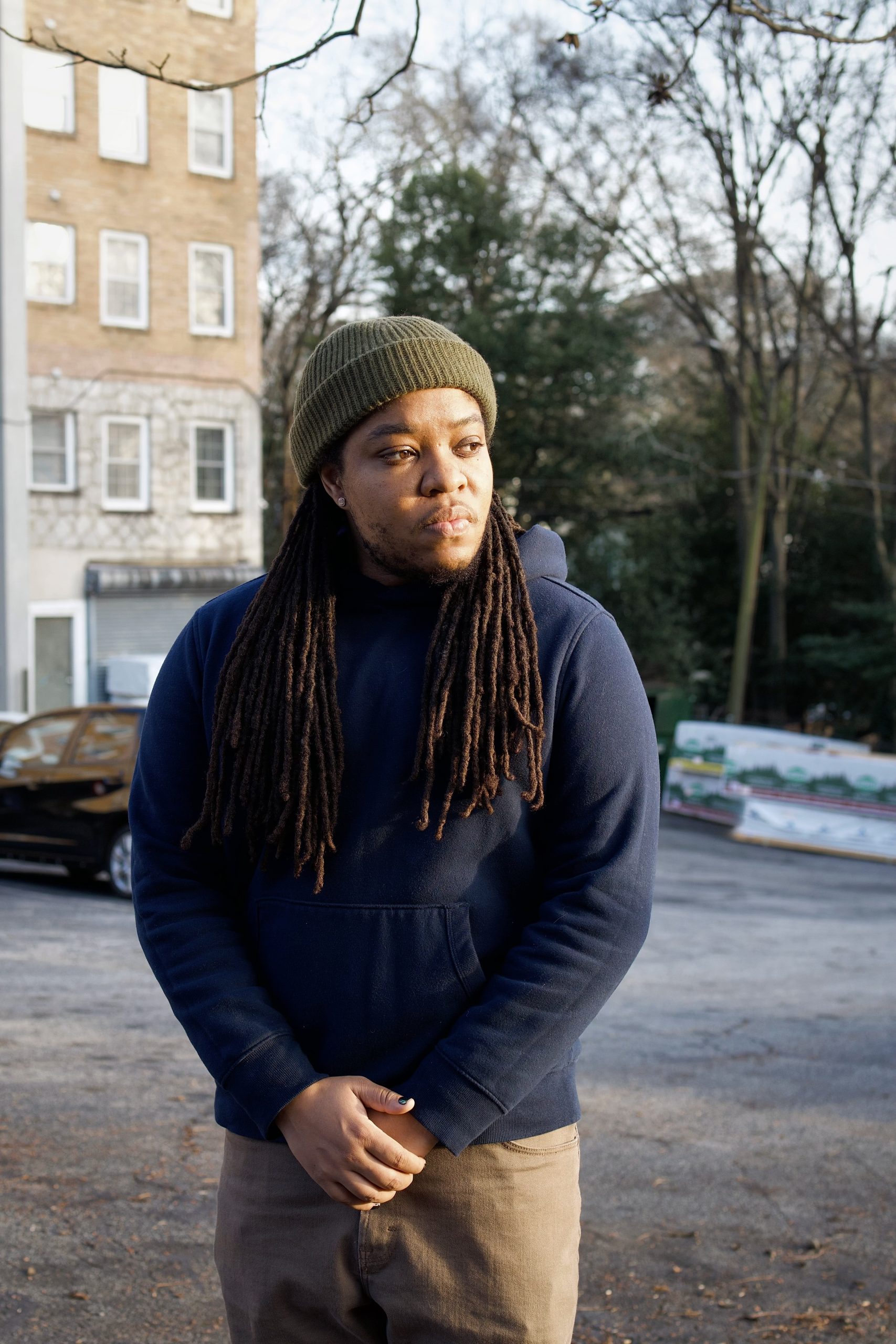

To belong and not belong, to exist like an odd artifact a collector does not quite know where to place: a gay boy in a conservative Catholic household, a newly arrived immigrant aspiring to be a poet, a tourist in your own home. These are the contradictions at the heart of UK-based Argentine poet Leo Boix’s Southernmost: Sonnets. Contradictions that, as a reader, I could not remain insensitive to; at the heart of every piece of luggage I unpack and repack lies a collection of objects reminding me that I, too, will always be an immigrant.
      Like the gargantuan Museum of Anthropology in Mexico City,
      with its Aztec calendar — the Stone of the Sun — and the tomb-
      stone and jades of Pakal. Like the Gold Museum of Bogotá City,
      packed with necklaces, bracelets and trunks, room after room.
      So, my own museum grows every day in this English diaspora.

      - “Sonnet 44" (lines 5 - 9)
In his latest collection of poetry, Boix ushers readers into the halls of his personal museum, inviting us to peer within and peruse the memories and artifacts carefully numbered and ordered into the rhymes and lines of sonnets. From a radio belting boleros in a kitchen in Buenos Aires to a fossil uncovered on the shores of the English Channel, Southernmost: Sonnets is a touching tripartite journey: beginning with the poet’s childhood in Argentina, moving through loss and migration to the United Kingdom, and culminating in the tentative construction of a new kind of home alongside his partner, Pablo.
To set the stage for this wandering, luminous meditation on recollection, migration, and the art of collecting, Boix slips in an extra sonnet, in the guise of a prologue, that transports both reader and writer into reminiscence:
      As a boy in Argentina, I used to collect all sorts of things —
      dried and pinned local insects, Latin American stamps,
      ferns in clay pots, shells from our seaside house, strings
      of various colours, stones, hand-coloured atlases and maps.

      - ”Untitled” (lines 1 - 4)
Once begun, Boix’s poetic enumeration of objects does not cease, flowing from sonnet to sonnet like a murmuring stream. It whispers bits of gossip, prayer, the household artefacts, family rituals, domestic spats, and moments of incomprehension that together constitute “home,” past and present. The poet crafts a strong sense of home that resides not only in the places he reconstructs with care but, more importantly, in the people who inhabit those places with him: his mother, his father, his extended family, and then, in England, his partner.
A chronological curation of Boix’s memory-artefacts loosely structures the collection; however, this order also begins to unravel almost as soon as it is established, swiftly defying the expectations I had only just begun to form upon first picking up the book. Suddenly, pink iguanas, Charles Darwin, and colonial expeditions burst forth, intermingling with soap operas, mate mugs, and utility bills—the everyday objects of the poet’s past and present. Boix pivots constantly, from his family table to the peaks of the Andes or the Galapagos, to reveal a vast network of national, continental, and interoceanic histories that surface and poke through the poet’s personal recollections.
In Sonnet 6, large fields of sargassum seaweed suddenly drift into view. And just like that, we are in the North Atlantic. We are no longer in the Buenos Aires kitchen where the poet’s mother stirs a pot and prepares family dinners at the turn of the 20th century. Boix suddenly transports us across time and space to the Sargasso Sea where: “Christopher Columbus once got caught in its tongs / on his way to the ‘baja mar’, Bahamas, his feeble ships / embraced by the clutching seaweed, like sirens’ songs.” (lines 9 – 11).
Is the poet-collector inscribing himself into a wider history, or is “History,” with all its accumulated weight, impressing itself upon Boix’s burgeoning life? These sudden shifts in time and space, between a familiar room and a bloodied colonial expedition, make demands upon the reader. We are compelled to reflect on the juncture between an individual’s brief life, the longer histories of collectives, and the even longer histories of ecosystems and geologies. Which contains which? Who, ultimately,discovered whom?
From this back-and-forth between monumental History and the intimacy of lived experience, different poetic voices arise and meld within the pages of Southernmost: Sonnets. There is, on one hand, an authoritative voice that cites dates, locations, and classifications as in Sonnet 74: “A long-nose male harlequin frog (Atepolus longirostrex) / whistles in the cloud forest of Ecuador’s tropical Andes.” But like rolling fog, there is also a dreamlike voice of reminiscence that clouds the scientific pretensions of precision. In his ekphrastic Sonnet 86 on Joaquín Torres García’s drawing América invertida, Boix describes his personal encounter with the artwork: “America plays like an inverted guitar / I hear pre-Columbian songs from a distorted instrument, / backward chants to run away from the North.” The poet-collector’s intimate encounter with this work of art, a special artifact, reveals the limits of the collector’s or the scientist’s will to “objectively” classify and systematize the world.
By relentlessly juxtaposing the encyclopedic and the personal, Boix illustrates that History with a capital H, is underpinned by the inherently fallible and vulnerable lives of individuals. Lives like the poet’s own. In effect, here lies one of Southernmost: Sonnets‘ greatest strengths. No matter how far or wide we wander with Boix, the sonnets always guide us back home, whether to the childhood home in Buenos Aires or to the self-made home in England with Pablo. The more I read, the more I felt that the intermittent detours into the distant worlds of the 1700s or the volcanic Galápagos ultimately reinforced the sense that, within a sonnet or two, we would return back home with Boix. Back to that familiar place, that familiar person: a safe harbor, an anchor amid all the tempestuous complexity. All of which makes both the loss of home and its rediscovery all the more deeply felt.
      At lunch, we talked at length about family -
      how everything seems to be disintegrating,
      how being migrants made our forebears weary
      of solitude, abandonment, how by recreating
      a nation at home, they kept their memories portable,

      - “Sonnet 75" (lines 1 - 5)
Just like the sometimes painful transatlantic histories featured in Southernmost: Sonnets, home, too, contains inescapable contradictions for the immigrant and the outcast. Home is the place where Boix’s father gives his mother roses, and where family members twist the necks of chickens. At home, Boix’s mother spoon-feeds him with tenderness. At home, he must also witness her lose her life to a diagnosis withheld from her. Behind the almost deceptive ease of Boix’s poetics of enumeration, loss and grief cast an ever-present shadow. This sense of loss proves to be one of the common threads that ties many of the sonnets together, across time and space: from the kidnapping of two Indigenous Tehuelche men by Ferdinand Magellan to the isolation of a young gay man coming of age in a traditionally Catholic Argentine household.Yet Boix cultivates poetic tenderness and beauty from this loss and its remembrance.
Like the motion of Atlantic waves against a coastline that could be Argentine or English, Southernmost: Sonnets ebbs and flows between horizons: those of collective history and those of Boix’s own life. However, in the end, what surfaces from this push and pull? A flickering but ever-present light that takes the shape of a yellowed photograph of motherly love or a bouquet of red roses in the hands of one’s beloved. In Southernmost: Sonnets, home is that lighthouse we always scan the vast, dark horizon for.