The First Book: Eliana Ramage
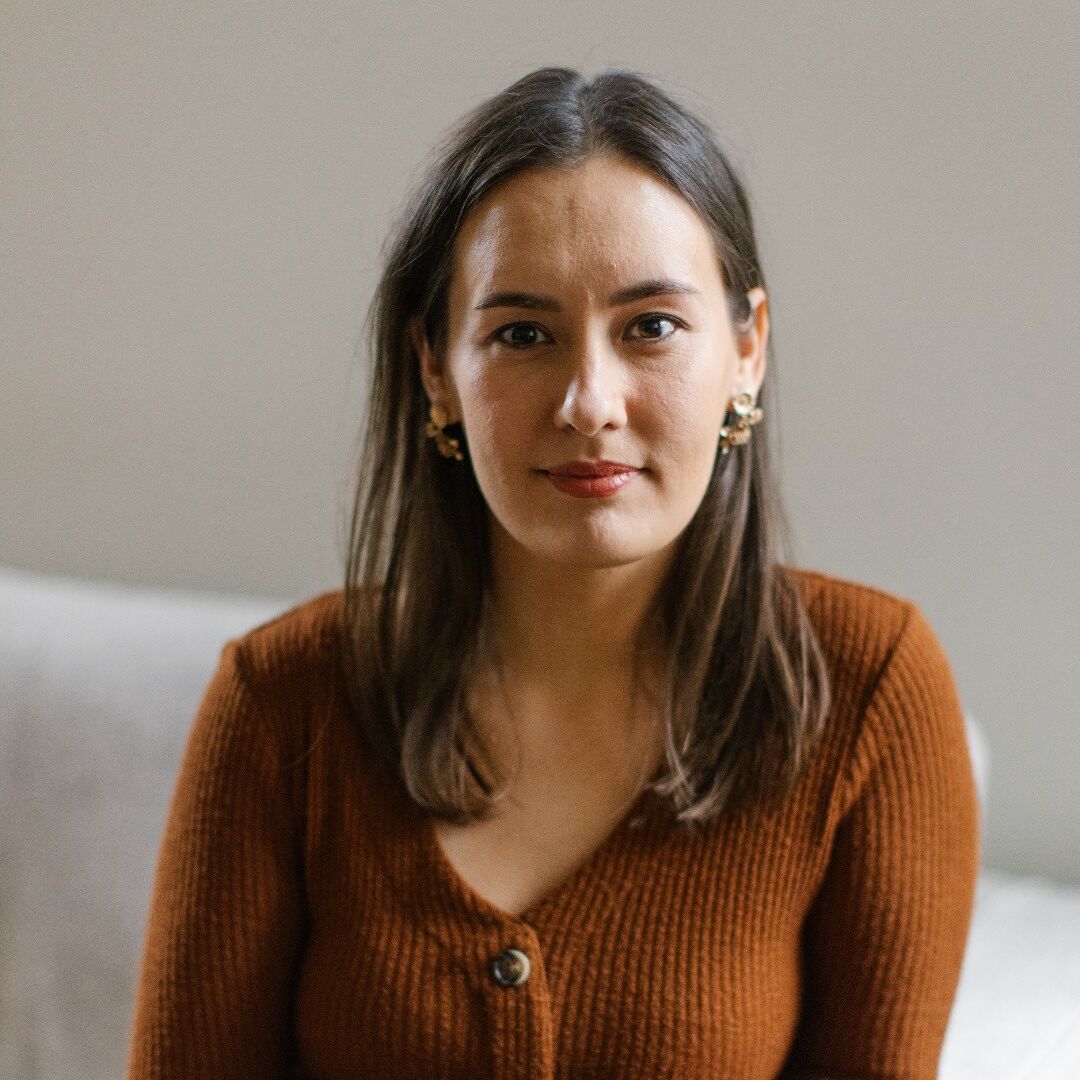
The Author: Eliana Ramage
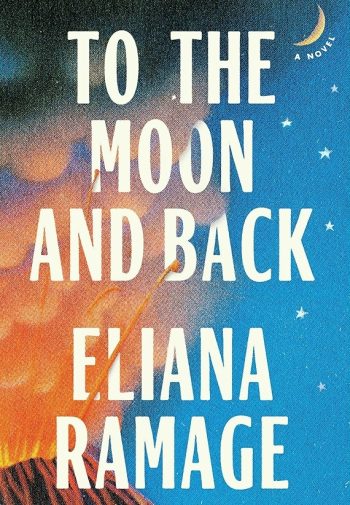
The Book: To the Moon and Back (Avid Reader Press, 2025)
The Elevator Pitch: In 25 words or less, what is your book about?
One woman’s obsessive quest to become the first Cherokee astronaut, and the women she loves best, whose lives are changed by her journey.
The Rumpus: Where did the idea of your book come from?
Eliana Ramage: I was a freshman in college in a Native student organization. At a meeting to workshop individual research projects relating to our different tribal nations, (many of them focused on the past), a sophomore spoke up: “If one of you becomes an astronaut, that’ll be part of the story of your people.” I was young, newly out of my parents’ house and newly into building my own framework for being a Cherokee adult on my own. So that sentence was surprising to me. It was a new framework for who I was and for who we were.
Three years later, I started writing about a group of ten different Native women who were all in the same fictional (but of course inspired by real life!) college Native student organization. It had ten different points of view. None of the characters were astronauts, but two of them (Steph and Della) were Cherokee.
Then a few things happened, all around the same time. I started watching Star Trek again, which I hadn’t done since I was a kid. The Steph character became obsessed with space. I came out as queer. Steph fell in love with Della. From there, I wrote many, many versions of this story. Each time, at least when I was getting started with each new approach, I thought it was the one. It wasn’t, for years! But I’m grateful they got me to this book, a little at a time.
Rumpus: How long did it take to write the book?
Ramage: Twelve years! I started [writing it] when I was in college. The happiest and most ridiculous fact of the novel’s timeline, for me, was that I wanted and needed to get copy edits submitted to my editor before the birth of my child. I was mostly done, but nervous about letting go of something that had followed me through literally my entire adulthood to date!
As these things go, I had a slightly early surprise delivery. I clicked send on the email maybe 30 minutes before I met my daughter. When I think back on all the years I had hoped I would have a child, and had hoped I would finish a book I could be proud of, it’s a wonder to me that both happened that night.
Rumpus: Is this the first book you’ve written? If not, what made it the first to be published?
Ramage: There was a totally unrelated novel in undergrad. After that, there were many different projects I’ll call “proto- To the Moon and Back” novels, in the sense that they were complete drafts of things that weren’t this book, but were related enough to get me a little closer to it: A novel about college students who would all eventually show up in this book. A novel about Steph’s girlfriend, Della, that followed her through middle age. A novel about Steph as a kid with no interest in space. A novel about Steph and Della, teens in love, but they lived in an independent and technologically advanced Cherokee state about two hundred years from the present.
This novel is the most ambitious version of all the previous novels, which is why I kept setting it aside. I thought I’d have an easier time with these other projects that felt shorter or more straightforward, or at least more limited in scope. But not only were they not any easier, they weren’t the story I wanted to tell.
Rumpus: Which authors / writers buoyed you along the way? How?
Ramage: Just one thread of gratitude, out of many, is for three writers who were in my first workshop at Iowa: Afabwaje Kurian, Melissa Mogollon, and Dawnie Walton. Within the first few weeks of grad school, I fell completely in love with their work.
Publishing was a distant idea to me. So distant that, when life and work got complicated and busy, I stopped writing for a couple of years. I focused on teaching, which I love and which felt more real and more achievable to me. Later, as these friends each had incredible books come out, I was so happy. I hadn’t been prepared for how much it would mean to me to hold their books in my hands. Eventually, I returned to my own novel, and kept going.
Rumpus: How did your book change over the course of working on it?
Ramage: I’m going to skip the years of change before querying, for simplicity’s sake. After querying, my agent Meredith Kaffel Simonoff worked with me on revisions for a year. It’s hard to describe a year’s worth of novel drafts, but my overall feeling is that before Meredith, it was a big book of many of the elements it has today, but they weren’t as cohesive. Meredith was able to do what I couldn’t: she stepped back, figured out the internal and thematic and emotional logic of the book, and helped me reorganize it into something more purposeful and resonant. She’s masterful at that, at thinking and talking about the emotional undercurrent in a big project.
Margo Shickmanter and Bobby Mostyn-Owen, my US and UK editors, respectively, spent another year working on—again, like Meredith, everything. But if I had to narrow it down? They were particularly brilliant when it came to pacing and plot. They held me and the book to a high standard, and asked big-picture questions that felt newly hard, like, “What does it mean”, or, “What are you trying to say?” That challenged the way that I’d, in earlier drafts, needed to keep the idea of an audience at a distance. Now I had to think about the reader in a way that, again, involved a lot of organizing work.
One more thing I’ll say about Margo and Bobby is that they’re both very funny people. That made me want to let this book be funnier! Even outside of revisions, I’d do just about anything to make them laugh.
Rumpus: Before your first book, where has your work been published?
Ramage: Two novel excerpts were published in CRAFT and The Masters Review.
Rumpus: What is the best advice someone gave you about publishing?
Ramage: “You will write other novels.” I’m almost positive my editor Margo said that? I find it affirming because (1) it quiets the worry that the first book has to say or hold everything, which no book can or should, (2) the word write.
You never know what will happen when it comes to a writing career, or a word that depends on so many outside factors like publish. But I want to always have a writing life. Lan Samantha Chang has an essay on LitHub called, “Writers, Protect Your Inner Life,” that talks about this. I’ve read it many, many times.
Rumpus: Who’s the reader you’re writing to—or tell us about your target audience and how you cultivated or found it?
Ramage: I don’t think I write to a particular audience, though I know that’s a helpful exercise for a lot of people. Instead, I think about what feels true to me now, or would feel true to a past version of myself. The only rule is that I can’t worry over my future self! I don’t want to revise forever, trying to answer every possible reader. If the ideas in a book don’t resonate with me in ten years, that’s okay. Like Margo said, “You will write other novels!”
Rumpus: What is one completely unexpected thing that surprised you about the process of getting your book published?
Ramage: I’ve been surprised and delighted to learn that publishing is a team sport! Prior to querying the novel, I only knew about agents and editors. I didn’t know what a joy it would be to get to revise with other people over more than two years. My two favorite things to do are spending time with other people and writing, so getting to have basically “art friendships” with Meredith and Margo and Bobby has been a dream.
A second part of this realization is that this team I’m talking about includes far more people than just writer, agent, and editor. I didn’t know enough about the work that’s done across an imprint, in sales, at libraries, and in bookstores. Now, when a book makes its way to me, I’m in awe at all the people who were behind it.