The First Book: Sam Sussman
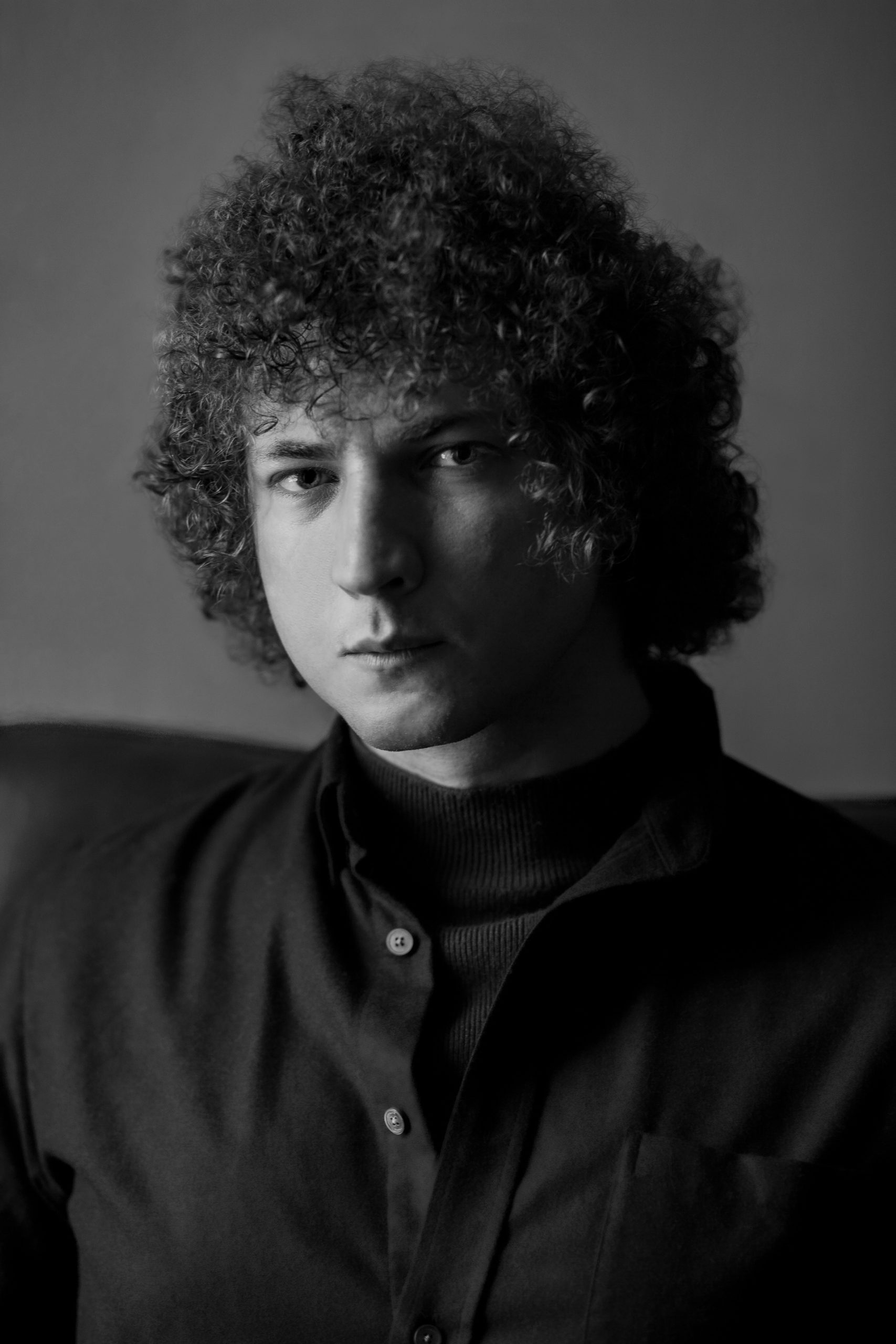
The Author: Sam Sussman
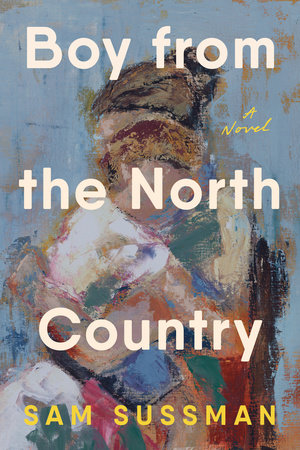
The Book: Boy from the North Country (Penguin Random House, 2025)
The Elevator Pitch: (25 words) A young man returns home from abroad to care for his dying mother and confront the unspoken question of his origins.
The Rumpus: Where did the idea of your book come from?
Sam Sussman: I wrote a memoir essay for Harper’s Magazine a few years ago, “The Silent Type: On (Possibly) Being Bob Dylan’s Son.” The essay tells the story of my mother’s romantic relationship with Dylan, and our experience together at the end of her life. Each writer has formative experiences with which he or she must come to terms, and these were mine.
Rumpus: How long did it take to write the book?
Sussman: Thirty-four years. In all seriousness: Three years. But: Thirty-four years isn’t entirely humor. The novel draws on memories and literary influences that range across my life: The pine trees that swayed just beyond my bedroom window. The books my mother read to me when I was a child (the Harry Potter series has a special place in my novel). The novels that formed me as an adult (one lengthy passage is devoted to the experience of reading Proust for the first time). One third of Boy From the North Country is told from the vantage point of the character based on my mother, June, as she recalls her life in the 1970s New York bohemian art world. The novel is a story of dual origins, hers and mine. I was thinking about these ideas and experiences long before I began to write a novel that intertwined our lives.
Rumpus: Is this the first book you’ve written? If not, what made it the first to be published?
Sussman: The narrator of Boy From the North Country has spent his twenties writing a novel about his life. He knows that it’s not worthwhile, but he can’t say why. He feels that he has never known how to tell his story, not even to himself. He is frustrated personally and artistically. He did what he set out to do when he was a teenager: leave home and pursue a life as a writer. Now he’s returned from his life abroad to be home with his mother and he feels that he’s amounted to nothing. Slowly, he’s realizing that his writing has lacked any moral or spiritual dimension. He’s written from resentment rather than love. He’s beginning to realize that he needs to write a novel drawn from his mother’s wisdom.
I had a similar experience. I used my twenties to write two novels, neither of which were published. Each novel was more interested in intellect than feeling, absence rather than presence, anger rather than love. Boy From the North Country is my debut novel because it is the first novel I have written that tries not only to describe painful experiences, but to redeem those experiences through a story in which the love is greater than the loss.
Rumpus: In submitting the book, how many nos did you get before your yes?
Sussman: I was more formed by the artistic than the professional “nos.” Norman Raeben, the painter who is a significant character in Boy From the North Country, once said, “Every painting is a failure, but the purpose is to make a worthwhile failure.” Many people along the way helped me understand the particular ways in which I was failing artistically. I am grateful for each of these “nos.” I wrote several dozen drafts of this novel. I needed many friends, writers, and teachers to tell me “no” along the way.
Rumpus: Which authors / writers buoyed you along the way? How?
Sussman: On days I was lost, I would call one of my oldest friends, and we would read to one another passages from Amos Oz’s A Tale of Love and Darkness. We would talk about the words. Then we would read aloud the passage with which I was struggling. This of course was a terribly humbling experience. The other writers I turned to in moments of despair were Marcel Proust, Alan Hollinghurst, Knausgaard, and Virginia Woolf.
Rumpus: How did your book change over the course of working on it?
Sussman: I wrote more than twice as much as I published. It’s easy to think that when writing from life, the story is intuitive. That was not my experience. Life is not literature. I had to look carefully at what I had written and ask, “Am I writing this because it happened to me, or because it has earned its place in a novel that is excerpted from my life?” There are many stories of each life. How we choose to tell the story of a life––our life, a loved one’s life, or a character’s life––is an affirmation of what we have come to see as essential to that person. I thought very carefully about which of the hundreds of pages in the early drafts truly composed the story.
Rumpus: Before your first book, where has your work been published?
Sussman: I published a memoir essay in Harper’s Magazine, and a small collection of short fiction and literary criticism in a few other places. Perhaps my favorite was a tiny pamphlet published by an indie bookshop in my grad school town, called The Albion Beatnik.
Rumpus: What is the best advice someone gave you about publishing?
Sussman: In Boy From the North Country, the legendary method acting teacher Stella Adler tells June, the character based on my mother, “The actress is a medium, nothing more. It is a great privilege to serve as that medium. You are part of a tradition that has existed for twenty-five hundred years. It will continue to exist whether you are arrogant, insecure, celebrated, or ignored. None of that should concern you. All that should concern you is achieving your character to the greatest possible extent.” That’s the best advice I’ve ever been given about publishing.
Rumpus: Who’s the reader you’re writing to—or tell us about your target audience and how you cultivated or found it?
Sussman: My mother is the reader I have most in mind. She loved reading, and she gave that love to me. She read widely, and with an open heart. She had studied literature in college and loved Faulkner, Woolf, and Dickens. She loved Barbara Kingsolver and Margaret Atwood. But her favorite books were Harry Potter. More than anything, she loved books with a moral imagination, books of redemption, books of love.
Rumpus: What is one completely unexpected thing that surprised you about the process of getting your book published?
Sussman: I am deeply moved by the trust readers have given to me by sharing their own stories of loss, grief, and complicated families. At nearly every book event, readers share with me a story or memory of a loved one who is no longer alive. Receiving such a story from a stranger is a great privilege. In an age of constant digital disclosure, I am moved that a book can still serve as so sturdy a bridge between the inner life of reader and writer.
Rumpus: What part of the process required way more time and energy than you expected?
Sussman: Language is infinite and stories are interminable. Feeling that we have the language to truly describe our experience, or that we have left our story in the place it deserves to be left––that is a horizon point that, for me, always seemed to vanish as I neared.
After the book had been written, the experience that challenged me the most was reading the audiobook. Like many writers, I was certain that reading my book aloud couldn’t be too difficult. My six days in the studio were extraordinarily demanding. I had to find within me my mother’s voice. I had to conjure the Yiddish accent of Norman Raeben—the Transatlantic clip of Stella Adler—Dylan’s inimitable drawl. My earliest memories of books are of my mother reading aloud to me, so it felt meaningful to be reading a book about her aloud to the reader.
Rumpus: What is the first line of your book?
Sussman: “My mother lived her own life.”