
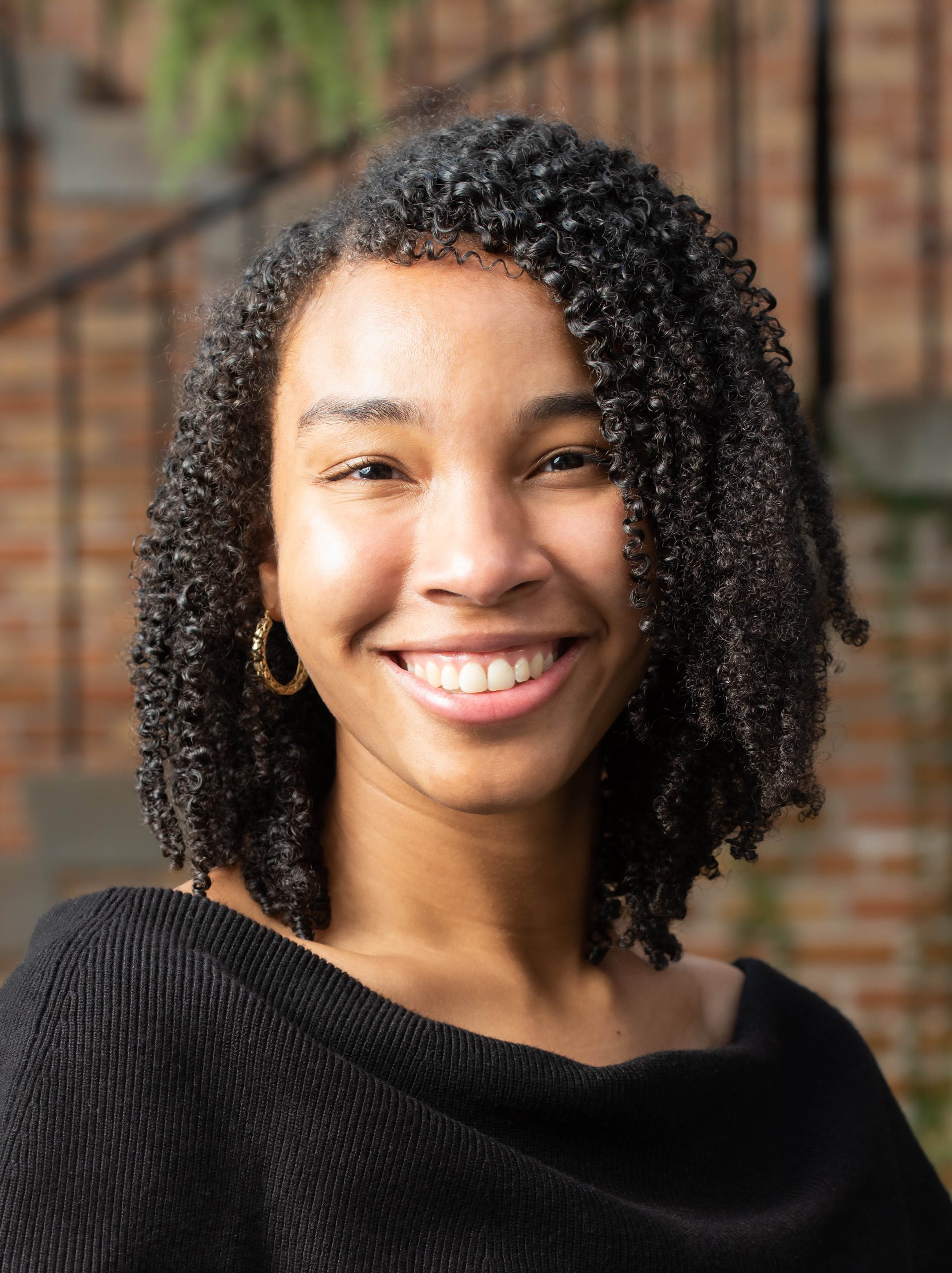
The First Book: Carrie R. Moore
The Author: Carrie R. Moore
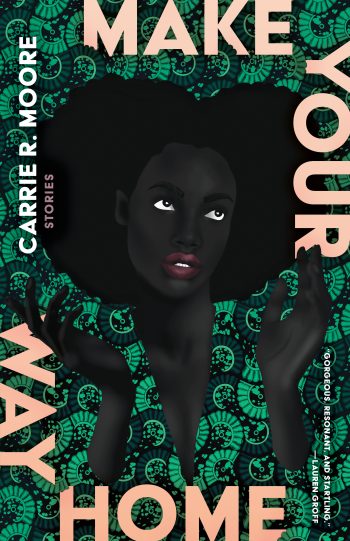
The Book: Make Your Way Home (Tin House, 2025)
The Elevator Pitch: When home doesn’t love you, how do you insist on loving yourself? Make Your Way Home is a collection of stories featuring resilience, romance, and Black intimacies.
The Rumpus: Where did the idea of your book come from?
Carrie R. Moore: I grew up in Georgia, and for so long, all I wanted was to go to college and leave behind what was familiar to me. Then, when I moved to California for my undergraduate years, all I wanted was to go back to the South. I missed my family, the buttery richness of my grandmothers’ cooking, distinct seasons, certain cadences of speech—plus everything that can’t be distilled into such small details. Part of me thinks I became defensive about my home, since, on campus, I was meeting people from all over the world who had this narrow-minded idea of what the South could be.
During those same years, the South kept showing up in my early short stories, which I wrote for my creative writing workshops. Eventually, I wondered: What if the South itself is the structure for a collection? What if I can use different stories to reflect the South’s geographic and cultural diversity, even within Black communities?
Rumpus: How long did it take to write the book?
Moore: Ten years. I wrote the initial draft of the first story, “Cottonmouths,” in 2014. I completed the final draft of the last story, “When We Go, We Go Downstream,” in 2024. If that sounds like a long time, that’s how long the book needed.
Rumpus: Is this the first book you’ve written? If not, what made it the first to be published?
Moore: I suppose I technically finished a draft of my novel before I finished this collection. Still, in some ways, it feels like the story collection was the first project to fully become itself. My novel deals with The Great Migration, and I don’t know that I could’ve turned my attention to that period of history if I hadn’t written so many characters whose ancestors chose to stay in the South.
Plus, I think Make Your Way Home was the first book to be published because it was the most polished. I’m still revising my novel at the moment.
Rumpus: In submitting the book, how many no’s did you get before your yes?
Moore: If my math is right, 14. I’m grateful for all of those polite declines because they gave the book time to reach the right editor. I owe so much to Elizabeth DeMeo for finding and championing these stories.
Rumpus: Which authors / writers buoyed you along the way? How?
Moore: This book is indebted to my first readers, who are also writers: my best friend Hannah, my husband Jonathan, and my writing group, Ana, Caroline, Becca, and Neval. All of them read my early drafts and told me when I was being too subtextual or when my language was trying too hard. We sent stories back and forth via USPS or email, swapping line edits and leaving each other letters.
These stories also benefitted from careful reads from my MFA peers, Brynne, Reena, Rickey, and Stephanie, as well as my professors: Elizabeth McCracken, Deb Olin Unferth, Maya Perez, and Bret Anthony Johnston. They so kindly provided feedback and taught me the balance between trusting your own instincts and knowing when there’s more work to do.
And of course, there are the writers whom I’ve never met. Edward P. Jones gave me permission to let my stories move across time and have the structures they wanted. Toni Morrison modeled how to take my time with language (though she was far better at it than I am).
Rumpus: How did your book change over the course of working on it?
Moore: When I was younger and in the early days of this collection, I falsely believed that it was my responsibility to touch on historical events that everyone knew about: Hurricane Katrina, the Charlottesville riots, African American relationships to swimming pools. Then, as I aged, I wanted to incorporate lesser-known histories, such as the Kingdom of the Happy Land in western North Carolina, the asylum burial grounds in Fondren in Mississippi, Black railroad workers near Naples, Florida. I stopped feeling like there were things I was “supposed” to write about. I gave the stories and characters permission to do what they needed.
Rumpus: Before your first book, where has your work been published?
Moore: Many of the stories were published in literary magazines: The Sewanee Review, One Story, Virginia Quarterly Review, The Southern Review, and others. I’m so grateful for how those editors shaped these stories.
Rumpus: What is the best advice someone gave you about publishing?
Moore: Not every publisher will “get” your book, whether that means understanding your intentions or knowing how to market your work or believing in your audience. Do right by the writing and, with luck, it will reach the person it’s meant to.
Rumpus: Who’s the reader you’re writing to—or tell us about your target audience and how you cultivated or found it?
Moore: I’m writing for readers who love emotional resonance. I’m not writing to teach anyone anything about race or history; instead, my book is for readers who want to see Black people living their lives. My ideal readers can also make space for painful histories and present joys alike.
Rumpus: What is one completely unexpected thing that surprised you about the process of getting your book published?
Moore: I was so shocked by the rapid pace of the process! I always thought it took between two to three years for your book to be released once it had been purchased by a publisher. But from acquisition to publication will have taken exactly one year, in my case.
Rumpus: What part of the process required way more time and energy than you expected?
Moore: Hmm. I don’t know that any part of the process required more from me than I’d planned. My deepest desire was to be edited thoroughly. My editor and I went through more than six rounds of edits together, but that was what I wanted. I probably would’ve done three more rounds if that wouldn’t have been obnoxious.
Rumpus: Was research part of your process? What did that look like for you?
Moore: Absolutely! I talked to historians, took road trips, read books and articles, listened to music from certain time periods, scoured Internet forums, looked up the first appearances of common sayings. Basically, any opportunity I had to learn something, I took it. I tried not to say “no” to any form of knowledge.
Rumpus: What is the first line of your book?
Moore: “In the restaurant’s fading light, he tells the story to his woman.”
Click here to subscribe today and leave your comment, or log in if you’re already a paid subscriber.