
My daughter and I pretend we’re carnival workers one afternoon, hammering at a heavy wooden post until it’s waist-high in the grass, and then we’re carpenters, arranging the box we’ve ordered onto its base, securing the painted shelves onto their joists, but it’s not until we fill up the little Take-a-Book Box with my dead husband’s pornography collection that the neighbors start to notice.
“I’m concerned,” Cassie says.
This is the most my daughter and I have talked since I became a widow, the both of us now surrounded by Florida swamplands and tourists and gin. Inside, the hum of the central air conditioning’s going strong and won’t turn off again until October. We make standing appointments with HVAC repairmen.
Cassie’s draped herself in the one item she requested after her father’s recent passing: a leather trench coat with sheepskin. She perches drunk at the window, looking out at what we’ve built together, dressed in shorts, a tank top, and the coat that goes with absolutely nothing.
“Goodwill won’t take the boxes,” I explain. “Believe me, I’ve tried.”
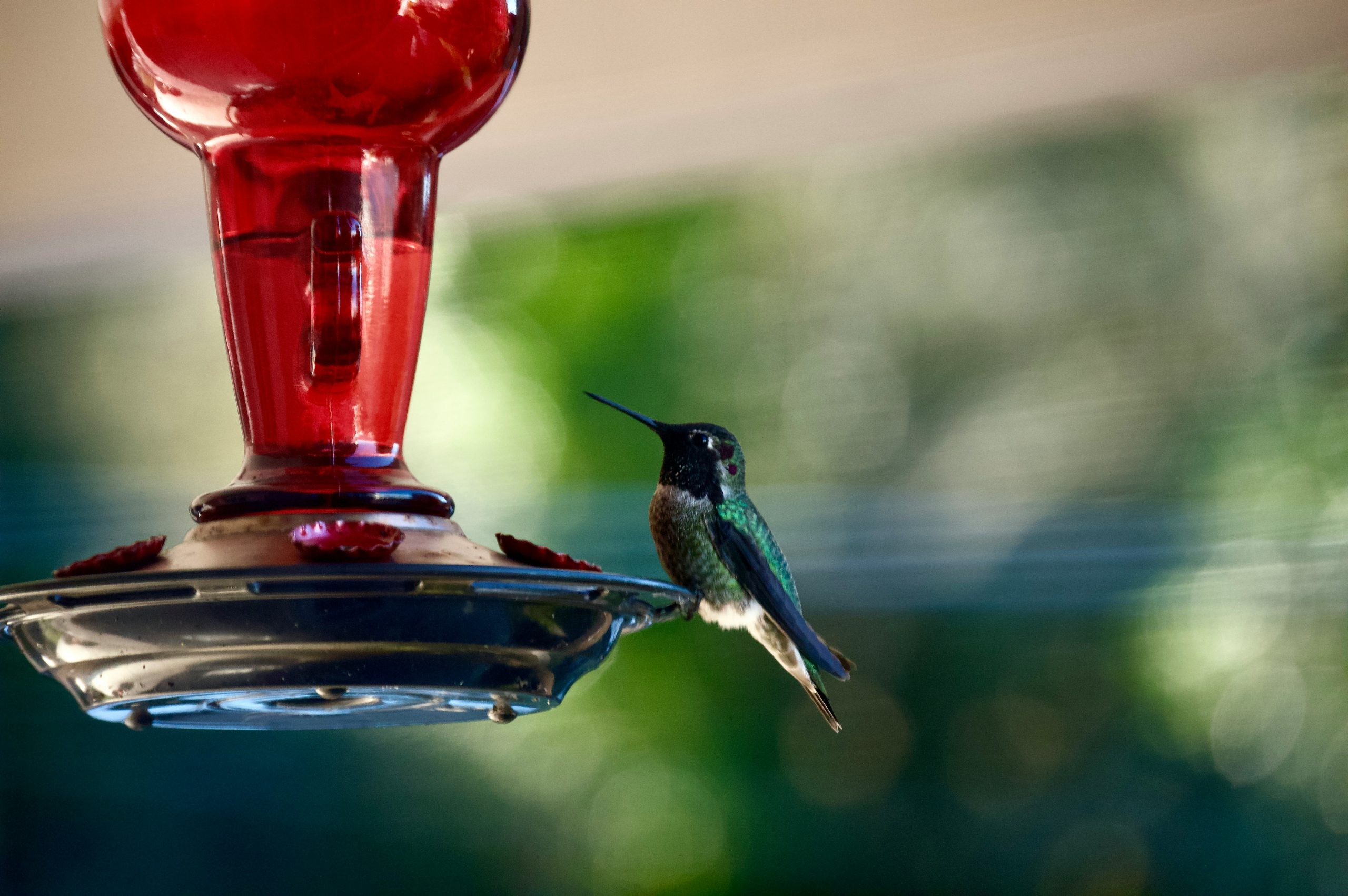
We pass the early afternoon by watching my neighbor, Joyce, as she scrawls the word ‘SMUT’ onto the side of the box closest to the high school, and that’s when we start to get some real traffic out there. She caps her marker, starts back on her chicken strut through the neighborhood. Her graffiti acts like an advertisement, though, draws in the teenagers like hummingbirds to the red syrup of a hanging feeder.
“Something about this is illegal,” Cassie slurs. “I know it’s Florida, but this a misdemeanor, right? Something something distribution to minors?”
“I’ve no idea,” I say, and Cassie slumps to the floor.
We watch the neighbors and the high schoolers as we sip cold gin at the window. There’s the widow from the other side of the loop who chuckles while she takes an old Playgirl calendar and a paperback of Vixens in My Basement. There’s Mr. Jens from down by the inlet, who takes two of the more hardcore Swedish mags with him as he leaves. The daily exodus of cars from the high school starts getting thick at 3:15, and we watch as two linemen in jerseys jump out of a freshly waxed Jeep and browse while they wait for the line of cars to move again. They take a selfie in front of the box and a Tom of Finland hardcover apiece.
“You’d think they don’t have internet access at home,” Cassie says, lying down now.
“If I had to guess,” I say, “it’s the thrill of rooting around in someone else’s trash.” I think of the remaining boxes of my husband’s porn collection in the garage, the piles of the more damning stuff we haven’t opened yet that I’ve stashed in my hatchback. “You can tell a lot about a person that way.”
“Hmm,” Cassie says, dreaming.
Behind me, my own books sit on the shelves in judgment. Mass-market thrillers I haven’t read in years, yellowing Harlequin romances I need to donate, leather-bound pharmacology texts that were outdated the second I purchased them for school. I still read these days, but nothing recent comes to mind. Not since Caleb’s stroke.
“Feels weird watching this in the daylight,” Cassie mutters, drooling.
“Like spying on raccoons at a picnic?” I ask.
My daughter turns her head up toward me, mouth open. “It is!” she exclaims.
Still on the floor, Cassie dials her wife, Shuzhen. She whispers that she’s worried about me, that she’s staying for dinner, and we wait for sunset to sober up and inventory the Take-a-Book Box.
My husband’s Scandinavian mags from the early ’70s are all gone, the models in them all blondes and blonds. The glossy calendars featuring feather-haired, long-dead pinups. The hardcore fetish ‘zines Caleb must’ve ordered through the mail. Tonight, the dollhouse-sized box we’ve posted next to the street is clean, ransacked and emptied out, like we’ve forgotten to fill it at all.
My daughter rises from the floor while I’m poaching trout. “I have a mission now, sweetheart. A compulsion,” I tell her. “I want it all gone by Saturday. Every magazine and DVD and all the books. We’re giving this place an enema.”
It was Cassie who walked in on Caleb as he dangled from a rafter in the garage. Pants down, belt around his neck, both hands flapping uselessly against his thighs, my husband had just climaxed as the stroke hit him. Some clot had finally formed enough of a wall in an important artery, some extra bit of pressure had sealed the vessel shut, and the oxygen running to his brain suddenly stopped.
When I cut him down and laid him on the floor, I remembered thinking: You might not have been trying to commit suicide, old man, but it would’ve been better for us if you had.
Caleb spent the next week in the hospital. We spoon-fed him boiled carrots, unsalted green beans, vulcanized eggs. We slept on our backs, passed out in chairs. Shuzhen even visited a few times. Brought flowers one visit, tubs of Caleb’s favorite Icelandic yogurt the next, and then the hospital transferred him to a rehab center.
For us, the transfer was a gift since we now weren’t allowed to stay with him overnight. For Caleb, it was the beginning of a grueling two-week journey, which was all our insurance would cover. Fourteen days, beginning to end: the facility tried their best to turn my husband from a drooling infant into a semi-ambulatory senior. The hospitalists scheduled him for physical and occupational therapy to cut down on the ataxia that reset Caleb’s motor controls. Daily speech therapy to combat the aphasia, which made him substitute every noun with the word ‘fire.’
“They sure start up the dayshift early here,” I told him. The fluorescents in the cafeteria were already bright when I arrived at the start of visiting hours.
Caleb turned his head, stared at me, his eyes drooping and saggy. He might’ve been ashamed or angry, wishing one or both of us were dead, but I remembered thinking it was nice having his full attention again.
“How’d you sleep last night?” I asked. “Seriously, I want to know.”
He coughed, cleared something wet from his throat.
“Okay,” he said slowly. “Fire kept waking me up to take my fire.” He looked confused, then concentrated. Started again, slower this time. “He–he kept waking me up to take my f-fire.”
“The nurse?” I said. “He kept waking you up to take your vitals?”
Caleb nodded, looked relieved he didn’t have to repeat himself, and I watched my husband scrape applesauce from a plastic bowl up to his mouth with his right hand. His left hung uselessly from his side, over his wheelchair’s armrest. A long time ago, it was his favorite hand to grab my ass with.
A few days into his rehabilitation, he seemed to be doing better. He’d reached the end of his applesauce when he judged the angle of delivery wrong, dumped the entire bowl onto his lap, spoon and all.
“Fire,” he said, hearing himself not say the words he wanted to say. “Fire–no, fire. No.”
It’s nighttime in Clermont, and our daughter snores on the couch, adding to the puddle of saliva she’s been making since we killed the wine. Cassie’s bed from high school sits empty in the corner of her room, used these days more for folding laundry than anything else. Here, everyone’s bedroom is abandoned.
Caleb’s expensive, full-sized mattress has been stripped, its motorized lifts powered down. It sits diagonal to the queen we once shared, the space still littered by open boxes of chucks pads, oxygen tubing, cartons of protein shakes, copies of death certificates, insurance claims for each procedure done over the six months it took him to die. Most nights now, I fall asleep in my husband’s recliner, like I’m trying to reclaim decades of space.
Cassie’s silenced phone lights up every so often with texts from Shuzhen, and, on the 17th ping, I answer.
“Finally!” I hear my daughter-in-law say. “How fucking long is dinner that you can’t—.”
“It’s me,” I say. “Cassie’s asleep.”
Outside, just before the noise ordinance takes effect at 10pm, a neighbor starts up their leaf blower.
“Want to come over?” I ask. This is a stab at repair. “We have more than enough food. It’ll only take a minute to reheat.”
There’s a pause on Shuzhen’s end.
“Have Cassie call me when she wakes up?” she says.
“I can, dear,” I say. “I will.”
My daughter-in-law ends her conversations with dead air. No “bye” or “call you later” to signal the conversation’s over. She and Caleb rarely talked, but it’s a trait they shared. It’s a behavior of my husband’s that I loathed, but one I love now in Shuzhen.
Cassie doesn’t stir as I sneak away from her into the garage, and I’m numb enough now, after the gin and the wine, to get through my checklist. Instead of bathing Caleb and changing my husband’s sheets, my nightly work now consists of cleaning his life out from the house we shared.
Our garage feels like a mausoleum, empty now after my husband retreated there once I couldn’t keep pace with his kinks. My hatchback sits next to Caleb’s coupe, and I know there’s a large cardboard box waiting for me in there. I fill it with things I hope someone else will get good use out of. Torture manuals with instructions on how to inflict pain. Albums of scat and piss polaroids. VHS tapes of mukbangs, vomit fetish compilations. These are the niche items my husband ordered off the internet when other men his age were buying World War II memorabilia.
“I can’t believe dad was into all of this.” Cassie’s told me this before. She’s seen the magazines, but I’ve hidden the more hardcore things from her.
“Your father was eccentric, but these were all made by consenting adults,” I explain. “Perverted, consenting adults.”
Cassie smiles and leaves it at that, and I resist the urge to tell her I’ve burned an old celluloid reel in the fireplace that I’m pretty sure was a snuff film. Ours is the only house in the neighborhood that has a fireplace, and the only use I’ve gotten out of it recently is for burning evidence.
I waddle the box of the hardcore items out to the Take-a-Book house and fill its shelves again, and I listen to the sounds of Lake Minneola around me. Somewhere near the canals, a local wood duck is being eaten by one of the neighborhood alligators. It screams and it screams, and then it doesn’t anymore.
When we first moved to Clermont, only a few miles away from Disney World, we wondered why there weren’t any Mickey Mouse-themed bumper stickers in the neighborhood.
“It’s all the damn tourists,” our new neighbor, Joyce, explained. “Traffic backs up to hell if you get anywhere near Route 50. You’ll see.”
And we did see. During summer, when minivans and kid-stuffed SUVs streamed into Florida, we set alarms so we could drive to Publix in the hour before they closed for groceries. We ate at restaurants on weeknights, canceled plans with friends who dared venture out on the weekends. In the home we planned to retire in, we maneuvered through minefields.
We’d uprooted the family from Pensacola for work, migrated south so Caleb could buy an equity stake in an accounting firm and build up our nest egg. For my part, I was tired of designing drug protocols that patients and their physicians wouldn’t follow, tired of writing clinical trials and compliance reports. I dreamed of working at a grocery-store pharmacy, of clocking in & out, of thumbing capsules into bottles for eight hours and then going home. I dreamed of television.
On one of our evening walks through the new neighborhood, we ventured over by the Minneola’s canals, down where we’d been warned there might be alligators.
“You stay away from there during the day,” Joyce warned us. “Hell, stay away at night, too.”
But maybe we wanted to see one up close. We held hands–we always held hands, from the moment we stepped off the front porch, right up until we didn’t–and we walked towards the concrete-lined locks down by the lake.
“Now what’s this?” Caleb said, shifting direction toward one of the great, branching mimosas.
In the dying orange light, I saw my husband reach down and pull back up a plastic bag.
“Haven’t seen one of these in forever,” my husband mumbled, smiling.
“What is it?” I asked, stepping between the oversized elephant ears to join him.
“Ha!” he said, holding his prize up. “It’s a bunch of girly mags.”
I must’ve looked confused.
“You never found these in the woods or behind the dunes?” he asked, enchanted. “This? It’s almost a rite of passage. A young man’s parents find his porno stash, tell him to get rid of it. Instead of tossing it, though, he’ll take it out to the woods. Leave it for the other kids to find, get them started on their own collections.”
“Seriously?” I said. “This is a thing?”
In grad school, in our pharmacogenetics class, we learned how a cell’s regulatory proteins could be turned on and off. If there were enough amino acids for sustenance, certain promoter or repressor enzymes would toggle, forcing the genes to transcribe DNA in different ways. Or how a healthy cell could butt up against a malignant neoplasm, and then a switch would flip, turning the cell cancerous, and it would metastasize. When I think back to that evening, I don’t know if this was what happened to Caleb. If finding that baggie of someone else’s nudie mags at twilight started up a hunger he couldn’t nourish through me anymore.
“It’s a thing!” he gushed.
He held the dirt-speckled Ziploc up to the light just then, thumbed through a couple of the looser pages in the plastic. And that’s how we walked home that night: Caleb holding the baggie in one hand, my fingers laced in the other.
It’s Friday morning, and I awake to the sound of my daughter screaming.
“Stop!” she yells. “You can’t!”
On the front lawn, Cassie is holding my neighbor Joyce’s arms above her head, the edge of a small hatchet gleaming in the Florida sunshine. Next to them, the Take-A-Book Box looks wobbly.
“Joyce!” I boom. “I will personally kill you if you don’t back away from my daughter!”
Something looks like it clicks in my neighbor’s eyes, and she lets the tiny ax droop and swing. I watch her lurch back out into the street, looking around as though she’s lost.
“This isn’t what they’re for,” Joyce whimpers. “You can’t do this.”
I march right up to her, inches from her face.
“I can do this, Joyce,” I say. “I’m doing this, and it’ll be over and done with by tomorrow night. You can have your hatchet back then.”
I slide the curved handle out of Joyce’s hand, watching now as my neighbor stumbles off into the heat. From behind me, Cassie says, “I’ve made bellinis,” and then everything’s right with the world again.
“Thanks for your help this week,” I tell my daughter once the box has been fixed. “Most children have to bury their parents, but what we’ve been doing these past few days? You’re going to need therapy. I’m sorry.”
“I’m in therapy,” Cassie says.
It takes me a moment. “Oh. That’s right,” I say. “You and Shuzhen. How’s that going?”
My daughter looks at the three unopened boxes of nipple clamps and chastity cages in the kitchen, the ones I’m hoping will fit onto the shelves of the book box alongside Caleb’s hardcover torture manuals.
“Oh, you know,” Cassie says, emptying her glass. “Could be better.”
We make omelets. Out on the lanai, I grow pots of herbs that have overtaken their containers. I reach for the thyme, which has sprouted over the ceramic lip, its flowers so tall that they droop. I pull off a couple of sprigs and, instead of heading back into the kitchen, I stop by the garage.
We’ve made good progress this week. Every DVD or magazine with the word “Sluts” or “Backdoor” or “Creampie” that I’ve put into the Take-A-Book Box has been whisked away. If it’s been hauled off by Joyce or a highschooler or anyone else in the neighborhood, I don’t care. Every dildo or vibrator or cock ring that Caleb decided to use on himself and not me is gone, thrown into the garbage with the kitchen peelings and crumpled paper towels. Every—
“Mom?” Cassie yells from the kitchen.
“Coming,” I yell back. I make it in time to shuck the leaves off the two thyme sprigs and dump them on top of the omelets. The proteins in the yolks and the whites have denatured, turned solid, and so we eat.
“How are things in the garage?” Cassie says. The sunlight streaming in through the bay windows out front is almost painful.
“Slow but steady progress,” I tell her. “All thanks to our curious neighbors.”
Cassie asks, “So is this what all marriages turn into? Just two people happily existing with each other for long enough until one of them veers hard off-course into, you know—.” I watch, then, as my daughter lifts one arm above her neck, places the other into a fist at her crotch, lets her head loll to the side. “Hrrrrkkkk?”
The sound effect alone is enough to make me choke on my prosecco and laugh. “No, kiddo. Not all of them,” I tell her. “That just happened with us. It won’t happen with you and Shuzhen.”
We laugh, we drink, we refill our glasses until Cassie has to lie down. She falls asleep texting Shuzhen, then I make a pit stop in the bathroom on my way to the garage.
I remember hiding in here for those first few minutes after finding Caleb hanging and in the middle of his stroke. I tell myself now that I hadn’t been trying to spy on him in the garage, but maybe I had. The signs were all there–the drooping left half of his face, the slurred mumbling to himself I overheard from the hallway–and then I think I just watched him. As he slid his leather belt out from the loops on his pants, affixing it over the head of a large nail above him. I remember being rooted in the doorway, wondering if I was watching the man I loved removing himself from the world we’d built together. Then I’d crept right back in here and sat on the toilet seat, and I waited. I waited until I heard Cassie screaming, surprised that she’d dropped by without calling first.
The bathroom is quiet and lush with ferns in small pots. Native blanketflowers perch on shelves next to the small shower, and each bud looks like an umbrella from an old movie musical. In here, you can hear everything that goes on in the house.
Almost.
In pharmacy school, they called these events “cerebrovascular accidents.” A patient’s arm or leg or face would go numb, our professors explained. Victims would have trouble speaking, seeing, walking, particularly on one side of the body. A severe headache, maybe, then boom. If they were having an ischemic stroke, they might clutch at their chest while part of their brain starved and died.
I was 23 and living with Caleb in a one-bedroom near campus. While I studied thrombolytics, my fiancé prepped for his CPA licensure. We knew these were the lean years—the microwave pizza nights, the board game parties—and we hoped there’d be money someday.
“You want to fool around?” Caleb would ask, and that’s how we’d spend the hours we weren’t studying or working. Little vacations from the world and everyone else except each other. I’d nod as I walked in the door from class, and my fiancé would take my coat and everything else off me.
“A snack first,” I said one afternoon, pushing Caleb back onto the couch. “But don’t you dare move, mister.”
He watched as I turned, made myself a sandwich in the kitchen. The stretch toward the bread on the top shelf of our pantry, the bend down toward the jar of peanut butter. The knife that gleaned in the afternoon sun, deckled now with marmalade. I took one bite, patted my leg.
“What’d you learn today?” he whispered, zooming into the kitchen, kissing away a smudge of sugar I’d left on my lips for him.
“Well,” I breathed, “we learned that, in the 1920s, there were these cattle in Wisconsin and Minnesota that would bleed out after minor procedures or would die of internal hemorrhaging. The local farmers had no idea why. It was a scourge. Lasted more than a decade.”
I remembered thinking at the time: This is sexy talk?
“What kinds of minor procedures?” Caleb asked. One of his hands slipped into my belt loops. I couldn’t tell which one because my eyes were closed, and I liked not knowing.
“Castration, for one,” I said, grabbing him between his legs, and we laughed, touched lips.
“Go on,” he said, hungry. “Tell me more.”
It felt good to be nourishment.
“Then, during the Great Depression, there was this rancher who brought in some moldy, sweet-clover hay he’d seen one of his bulls eating the day before it died,” I explained. “He told the biochemists at the university’s farm extension what happened, and they started analyzing the hay.”
Caleb sat back, cocked his head at me, confused.
I leaned in, put his earlobe between my teeth, bit down as much as I dared. “The scientists thought it was just the mold causing the hemorrhages,” I continued, “so they told the farmer to get rid of the spoiled hay.”
We kissed then, mouths open, lips wet, and I felt Caleb’s fingers snake through my hair. He grabbed and pulled my head back for a fraction, growling low, “But?”
“But,” I said, unbuckling his belt. He must’ve taken this as encouragement, lifting me and setting me down on the countertop. I could taste the peanut butter on his lips that had been on my tongue moments before. “But then a different farmer, one who got frustrated after losing so many cattle recently, decided to drive in a blizzard up to another agri extension. Brought a dead cow with him and a bucket of its completely unclotted blood.”
I slid my fiancé’s belt out of his loops. The buckle clanged on the linoleum below us.
Caleb stopped for a second, panting, asked, “It should have clotted, shouldn’t it?”
I remembered thinking: If he doesn’t gag, this is love.
“Correct,” I told him, tugging at his waistband. “Turns out there was an investigator at that university who was working on isolating compounds in moldy hay.”
“What did he find?” Caleb asked, his voice low and close.
“He found that when the hay started decomposing with the local fungi, it activated this compound called ‘coumarin’—the thing that makes the hay smell sweet—and turned it into dicoumarol, an anticoagulant. Stops vitamin K production, which we need to make blood clots.”
Caleb pulled back again, growling, a sadness somewhere in there, maybe. “Those poor cows.”
“Those poor cows,” I said, wrapping my ankles around his waist, pulling him close. This was love. “So the scientists got inventive. Started using dicoumarol as a rat poison for decades, until they figured out that we could make a damn good blood thinner out of it, and that’s how we got warfarin.”
“Go figure,” Caleb said, lifting me off the counter toward the bedroom. “My aunt and uncle both take that.”
“Go figure,” I whispered into his ear, leaning into the future, into my fiancé’s appetites, or what I thought they’d be.
* * *
It’s Saturday, finally, and our neighborhood has emptied almost everything from the little Take-a-Book Box. I thought I’d have more trouble with the heavier picture books and the unused toys still in their original packaging, but it’s almost all gone. Just a handful of Polaroids and some wrinkled Japanese comics featuring demons with enlarged penises.
“I think it’s called ‘hentai,’ Mom,” Cassie’s explained. “Say it with me: ‘hen-tai’.”
My daughter’s gone this morning, though, and I’m alone in the house again. I imagine this is what the rest of my life will feel like. And if I’m being honest with myself, I’m relieved.
Once upon a time, there was a pharmacist who lived with her accountant husband in the Florida panhandle. They grew up, had a little girl, raised her. They were happy–they’d been happy–and then what the accountant needed from the pharmacist changed, and that happiness died. Emptied out like the DVD copies of Prison Gangbangs Vols.1-9 from our Take-a-Book box. Gone.
Outside, I hear a car door open then close again. Wooden heels clip down the concrete driveway, pause, then clop back up the stone path to the front porch. I step out from the kitchen, imagining it’ll be Joyce in her sunvisor and fanny pack, ready to demand back her hatchet.
“It’s done, Joyce. Finished,” I yell as I pull on the heavy metal knob. “But if I ever–.”
It’s Shuzhen.
“Oh,” I say. Then again: “Oh. Sorry, dear. Thought you were someone else. Everything okay? Wait, is Cassie okay?”
My daughter-in-law is tall and thin, but she eats like a man. I’ve seen her finish entire plates of steak frites, full racks of ribs. She swears she stays toned because of calisthenics, and, in the morning light, I believe her.
“I’m fine,” Shuzhen says. “Cassie’s not sleeping well, though.”
There’s this awkwardness–a door standing between a host and their guest–and then there isn’t. I open the door, pull back, watch Shuzhen glide in like she’s done each time since the wedding.
“That’s my fault,” I admit, following her into the kitchen.
It’s June in Florida, and the woman my daughter married is wearing a beige cardigan over a sleeveless shirt. She drapes her sweater over the back of one of the island stools, turns, waits for me to finish.
“This week’s been a little overwhelming,” I say. “I thought I didn’t need help with the boxes, just a cheerleader. Or a witness.” My hands search the air for the right thing to say. “To all of this.”
“I get it,” Shuzhen says. She grabs a glass from the cabinet, fills it with tap water. “After mom died, my dad and I spent a weekend filling bags with her clothes for donation. He was in the bathroom for a minute, and I reached up to this shelf in her closet and found her vibrator. I was so embarrassed, but I hid it back up there because he would’ve been more embarrassed if we found it together, you know?”
“Huh,” I say, suddenly thirsty, too. I mimic Shuzhen, fill my own glass. When I turn back, she’s pulling something out of her sweater. A stack of Polaroids featuring naked people. She sets the pile on the kitchen counter.
“Did you look through these?” she asks, fanning the pictures like a deck of cards. “I mean, really look through them?”
I set my glass down a little too hard on the marble, and I flick the photos around with my pinkie. There are men and women I don’t recognize, men with men, women with women, and then. Three snapshots, the white border at the edges a little more aged than the others. They’re of a woman on a familiar couch. Her back is arched, and she’s wearing nothing but heels and a smile.
“This is you, isn’t it?” Shuzhen says. “I thought I recognized that lamp in the corner.” She takes another drink, walks behind me, sets her glass next to the sink. “Can I say something weird? You had some tits to die for. Seriously.”
Something flickers. Years ago, a Friday or Saturday night in an apartment, the end of a bottle of wine. A young couple who couldn’t keep their hands or lips off each other.
“Or to let die for,” I mumble.
My daughter-in-law doesn’t hear me, or she chooses not to. I watch her gather her sweater. She gets in close, hugs me.
“This will get better,” she says, and I hug her back. I resist the urge to sob into her hair.
“Thanks, kiddo,” I say. “Sorry for holding Cassie hostage this week.”
“She’ll be fine,” Shuzhen says, walking back towards the front door. “She’s a big girl.” And like her dead father-in-law, she leaves without saying goodbye.
I peek out the window to watch her drive away, and there’s our Take-a-Book box out by the curb. I think about returning Joyce’s hatchet to her, inviting her over for lemonade, letting her chop the tiny building down like some neighborhood lumberjack. Or I could fill the library up again. It’d be easy to dust off the old romance novels, fill the box with them, both shelves chock full of things I used to love.
The important thing, though, is that there are options.
Here in Clermont, I look at the foyer clock and realize I still have a bit before my shift at Publix. The evening will run exactly as it does every other Saturday. Shoppers will wheel their beer- or wine-stacked baskets back to the pharmacy and stand in line. They’ll flip through glossy, celebrity-interview magazines and bride manuals. They’ll ask about their loved ones’ antibiotics, antivirals, statins, diuretics, calcium-channel blockers.
About pills that will stop their noses from running.
Pills to make their penises erect.
Pills to thin their blood.
Click here to subscribe today and leave your comment, or log in if you’re already a paid subscriber.