
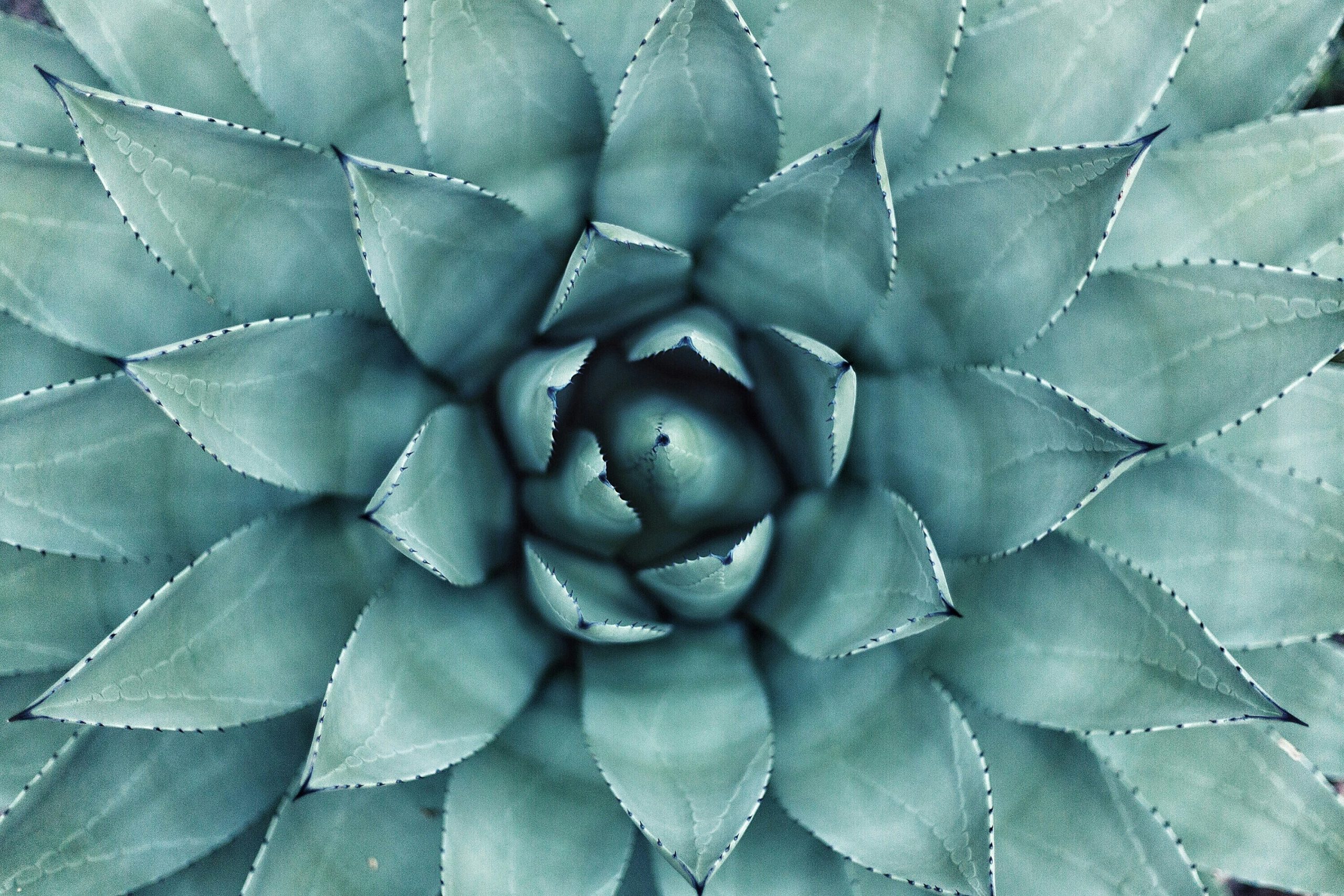
Arthur never told his friends how much the adorable if overpriced new succulents reminded him of the spunky but abhorrent new growths in his own body. The same little tumors, ironically, that had taken Timothy three years before. It was a morbid fascination, yes, but appropriate. He was in a morbid situation. He spent his time between treatments pinching and propagating the new species in Timothy’s garden. His friends disapproved. They said things like, Get out and about. Timothy would have… But they didn’t know what Timothy would have said or done. Timothy’s daughter, the lovely Heather, insisted on driving him to chemo, which left him ever more hard-pressed to identify a single thing worth living for. He thanked his friends for their advice and ignored it. He’d made a decision. He was through. No more fighting. When Heather next appeared at the door, he would calmly and compassionately tell her so. It would be hard. She’d already lost one father. And so on.
The little plants thrived, especially in the bare, rocky places where other plants could not, progressing week by week through a series of morphologies that seemed designed to fascinate. Indeed, they spoke to him in color and form in a way no artwork had ever done. At first mere lobes of cranial grey, they sprouted blood-red buds that lengthened and slimmed into pale orchid petals. For a while these blooms mirrored the placid blue of the English sky, but not long after, they burst forth in a decidedly tropical array of fluorescents. And so the cycles continued, never ceasing to delight.
*
Once we were individuals, with faces and names; now we are one.
*
Shuko had such an imagination, even for a child, that no one paid attention to her remarkably intuitive understanding of the new species, not when she woke up screaming from nightmares in sweaty sheets, and not when she flat-out refused to play behind the house any longer. When her mother caught her trying to rip up the little colony she’d arranged beside the koi pond in the back garden—attacking it with her child-safe scissors and plucking at its waxy lobes, so eerily reminiscent of cranial hemispheres but exactly the same size and shape as the little girl’s thumbs—she was too angry and shocked by her daughter’s misbehavior to notice that her favorite new plants could no longer be permanently removed by any means. The next morning they were back, good as new, but Shuko was undeterred. Every day the plants came back; every day she did her best to obliterate them. Hers was the heart of a warrior. If only there had been more like her, from the beginning.
*
Did they sail a solar breeze, wind of the sun? Were they exhilarated, surfing the occasional supernova, riding a shock wave through the quiet of space? Or did they cling in desperate terror to a galactic filament, sliding hundreds of millions of light years from tip to tail?
*
June was surprised and pleased simply to keep her new plant alive through the heat of the Texas summer. Many a dead begonia, a wilted calla lily, sat neglected on her windowsill, forgotten in the crush of final exams or the excitement of a new love. In fact it was one of those, a young man she met on a sweaty dance floor late one Thursday night, who had given her the thing, nestled in the bottom of an old carton of half-and-half. Triffid, she named it. It never looked quite the same from one day to the next, catching her by surprise out of the corner of her eye. At the young man’s suggestion she set up a web cam and created a time lapse film. They watched it together on the sofa, mesmerized as Triffid swelled, and budded, and sent out a flutter of tiny grey palms that opened into brilliant bloom and closed again, ever so slowly in a day-long pulse.
One sleepy morning June settled on the sofa, idly stroking the plant. She dozed, her coffee cooling on a stack of philosophical paperbacks, until she woke yelping at a half-remembered dream to find a fleshy protuberance wrapped around her pinky. She tried to remove it but found that she couldn’t, not without breaking it, and so she plucked it from the main body and wore it like a ring. It only occasionally occurred to her to wonder why her new adornment never shriveled up or fell away. She grew fond of it and stroked it whenever she needed to call her mother and realized she couldn’t. It was like petting a kitten.
*
We tried to put the newcomers to good use: chopped them into pieces, boiled them, dissolved them in acid, learned they were not of this world but not much else. Did the newcomers mind? It’s hard to imagine they didn’t.
*
Andy was struck by the unusual and, he mused, stylish little potted plant on the bar next to the register. Mostly, though, he was struck by the Malaysian bartender. Her quick, slender arms flashed golden as she worked, pulling taps and flicking foam. He ordered another pint, even though he’d already had one too many. He knew the bartender’s name: Raya. He had to remind himself not to use it, though, because he’d learned it by eavesdropping when she answered her phone. When he left the bar an hour later, fizzing with frustrated desire, she handed him the plant. She’d noticed him staring—every time she caught him looking he’d snapped his eyes back down to the damn plant—and smiled, giving it a little push when he tried to refuse. Take it, she said, in perfect English. I’ve loads more.
*
Were they lucky to reach us when they did? The expansion of the universe is bad news for the interstellar traveler, galaxies spinning farther and farther apart. Imagine getting stuck in space with no more than a sprinkling of hydrogen atoms for company. The soft buzz of cosmic microwave radiation in the background. True emptiness.
*
From the moment he saw the strange little plant, Rafael knew the Lady had sent it to heal him. It was just the sort of thing she would do, hiding her sacrament at the edge of a dirty lot where he played pickup futebol with a group of five or six other favela boys who, like him, should have been in school but rarely were. He kneeled down, favoring his weak right leg as he always had to do, and took a closer look at its soft gray-green lobes, which seemed to be growing even as he watched. Quickly he plucked the little thing and wrapped it in the hem of his shirt, limping home as he waved off the boys shouting him back to the game.
*
We ripped up our gardens. Sent SWAT teams to arboretums, militarized croplands. Set fire to whole cities. Exploded tropical islands with nuclear bombs (again). The wealthiest hid our families in walled compounds and repurposed container ships; the less fortunate bolted our doors and prayed. None of it did any good.
*
Rafael’s mother tried many times to take the plant away from him, even in his sleep, but every time he howled until she returned it. Was she jealous? Did she misunderstand? Now it lay on the bare floor at the foot of his mattress. He’d begged for a pot and a little table, but his mother had unreasonably refused. She didn’t believe. After evening prayers he closed himself in the room he nominally shared with his older brothers, though they were never home. Every morning the plant sent out a new bud, and every morning he plucked it and applied it to the leg that had been injured in a mysterious accident before he was old enough to remember. He’d long ago stopped asking his mother what had happened and whose fault it had been. He suspected the fault had been his. But the Lady didn’t mind. Her gift proved it. Always, she forgave, always. And when the Lady’s gift had done its work, none of the boys would tease him again. He imagined himself tall and mighty on his new leg, untackleable, sending ball after ball just beneath the crossbar. Any day now. He ran his fingers over his skin, tracing the rubbery ladder of gray-green lobes firmly attached to his ankle and shin. Maybe the leg was still too weak to hold his weight properly, but it felt better. In fact his whole body felt better, and more than his body, his soul. He’d never known such calm, such peace. He gazed at the tiny portrait of the Lady above his bed, whispered his thanks, and fell asleep smiling.
*
Now we linger without breathing or eating, walking or speaking.
*
Back in the Singapore flat he’d inherited after the sudden death of his parents, Andy stashed the little pot on a kitchen shelf and forgot about it. When he returned from a London business trip that ran longer than he’d intended, the thing had multiplied exponentially. Every surface of his living space was covered in fingery green tendrils, polka-dotted with buds and snaking towards the light. What was it feeding on, Andy thought to wonder as his briefcase fell to the floor. And then he thought to look for his cat—he only occasionally remembered he owned a cat—and found, not a cat, but the remains of the widowed neighbor he now remembered hiring to feed the cat during his absences and periods of forgetfulness. He tried halfheartedly to clear the plant-matter from her body, uncover something more recognizably human, but her flesh was coming away in ragged, greenish strips that reminded him of his favorite noodles. His stomach heaved, and he did his best to slide his arms beneath her, but there was no bottom to her mass, not anymore at least, and when he tried to pull back something held him fast, something firm and vegetal. He screamed himself hoarse, fell into a fitful doze, woke, and screamed himself hoarse again, but there was no one to hear. And so he remained, crouching like a lover over the body of the widow whose name he would never know, as there was no one left to tell him.
*
In the quiet beneath the stars we wonder if a part of us might survive within the newcomers. Is this the afterlife we were promised? If so, it’s a nasty joke. It doesn’t feel good to be eaten alive, no matter what analgesic compounds the eaters mainline into our nervous systems to keep us from running about.
*
Little Triffid grew and grew. June loved the way its deep, luminous green shaded almost purple in low light. And how it flowered vigorously in different colors every day, showering her carpet in a rainbow of petals each morning. When it started to replicate itself in miniature, putting forth simulacra complete with root systems of their own, she asked her father, a retired professor of horticulture at Texas A&M, whether she should pinch off a few and repot them for friends. Absolutely, he said, and one for me as well. He talked her through the process, and soon she had delivered a dozen or so of Triffid’s offspring to various other windowsills across Austin, saving the prettiest for him. He told her how unusual it was for a succulent to go into a sustained bloom so late in a hot, dry August and to flourish with no water at all. His lady friend, who owned a garden center catering to the wealthy suburbs in the hills northwest of town, asked if she could take some Triffids for her shop. June was happy to oblige. The lady friend charged dearly for them and sold hundreds in the first week. She began planning a trip to Bora Bora to visit a famous tribal artist for a full body tattoo. Ironically.
The hardest thing for June was watching her father mourn all over again. The quick florification of her never-to-be-stepmother struck an echo of the hurt that would never heal, June’s mother’s sudden death by undiagnosed aneurysm the day before June’s nineteenth birthday. As they sat together on the garden bench, her father mute in his new grief, June wondered if this was all that life had to offer: a series of ugly challenges, losses to swallow—a contest, of sorts, to see who swallowed them best. She took her father’s hand. His skin was rough and lumpy in an unfamiliar way. She closed her eyes. Held on tight.
*
On the other hand, we’re still here.
*
Shuko had been prone to eczema since she was a toddler, and this may be why her mother didn’t immediately notice she was suffering some kind of infection. When her mother’s attention finally did fall upon the tiny green lumps erupting like froggy warts from Shuko’s arms and legs, the first thing she did was haul her daughter into the bath for a good scrubbing. It didn’t do any good—in fact it made things much worse. Not only did Shuko scream cataclysmically every time her mother plucked one of the little knobs from her flesh, but each one was immediately replaced by another, longer and more flexible. A shoot. When Shuko’s mother yanked at these, they only grew. Soon she sprouted spines like a cactus, and as Shuko’s mother screamed and sobbed, still plucking and scrubbing at her daughter with bloody fingers, the shoots began to find their way into Shuko’s mother’s body, penetrating her flesh as if it were well-turned soil. Shuko stopped struggling and watched her new limbs grow. Eventually the bathroom fell quiet, and when Shuko, or the thing that was no longer merely Shuko, lumbered back downstairs towards the garden, her mother couldn’t help but stumble after, to all appearances obedient as a well-trained puppy.
*
The newcomers are sending out spores. Or should we call them children? It’s hard to, because they look more like rocks: shriveled, misshapen brown lumps, homely and modest. But their behavior isn’t rocklike. Fist-sized, they float to the sky on gossamer wings that are almost invisible, so broad, so light, so strong. Light enough and strong enough to escape Earth’s gravity? Perhaps, though we hope not. We don’t want to be left behind, not quite alive and not quite dead, forever.
*
Apocalypse, Arthur thought. An “uncovering,” from the Greek. But an uncovering of what? He sat in a leather chair, nursing a cognac and watching a scientist on television answer questions about the bare minimum needed to support life. She tucked her blond ponytail behind her shoulder. It wasn’t much. Water, she said, and an energy gradient. A difference. Melting ice will do, boiling water, the decay of toxic waste. Arthur dozed for a moment, woke. But what is life, the journalist was asking impatiently. The ponytailed scientist replied that biotic material contains carbon and is capable of decay. A living creature is in fact defined by its ability to decay. To die. She was scratching her forearms as she spoke.
Arthur clicked off the television when the first bud pushed through. It only itched a little. He poured himself another drink and picked up his heavy, embossed edition of Walt Whitman, a seventieth birthday present from Timothy. Chicken scratch on the frontispiece: Not bad for an American bugger. Arthur smiled as he thumbed through and read a few lines here and there. Look for me under your boot-soles. Not bad, indeed. The next morning he woke covered in buds, some of them already sprouting spines. He wondered if he would flower, and if so, what color he would be. He tried to set down his snifter, but his hand had wrapped several new green fingers around it during the night. He carried it out to Timothy’s garden and sat beside a rampant cluster. He leaned toward it. It leaned toward him.
Click here to subscribe today and leave your comment, or log in if you’re already a paid subscriber.