
translated from Spanish by Tyler Gebauer
1
My son’s voice came through on the monitor. I waited a second, eyes closed, not losing hope he’d fall back asleep, even though that hardly ever happens. He’s two years old; they say it’s the age of nightmares. Almost every night he wakes two times or more, calling out for me or speaking fearfully in a language I don’t understand, despite the fact that he speaks quite well during the day.
He called out for me again that night. I went to his room and held him in my arms. A short while later, unable to fall asleep, he asked me to sing him a song. Dozing off at that late hour, “Los Padres de San Francisco” came to mind, an old song I hadn’t heard in at least twenty years, which I last sang when I was maybe six years old. This happens to me a lot lately: from the furthest corners of my memory emerge all kinds of children’s songs, from commercial jingles to songs my grandmother used to sing to me. I sang the whole thing, then took a break during which I tried by all means not to fall asleep—when I do, I wake up later on, confused and with a kink in my neck—until I knew from the rhythm of his breathing that he was asleep. I tried removing myself from his embrace without waking him, failed a few times, and on the third attempt, half an hour later, I stood up, trying not to make any noise. I returned to my bed, and, as always, the problem became falling back to sleep. My husband’s noisy breathing distracted me, and I started to think, and once I start thinking I know everything’s gone to hell: I go over the list of chores for the next day; I try fixing a paragraph that’s proving difficult to write, and the minutes go by like this until I get hungry or need to use the bathroom; then hours pass without me falling back asleep, until I hear my son’s voice on the monitor again, calling out to me, and it all starts over.
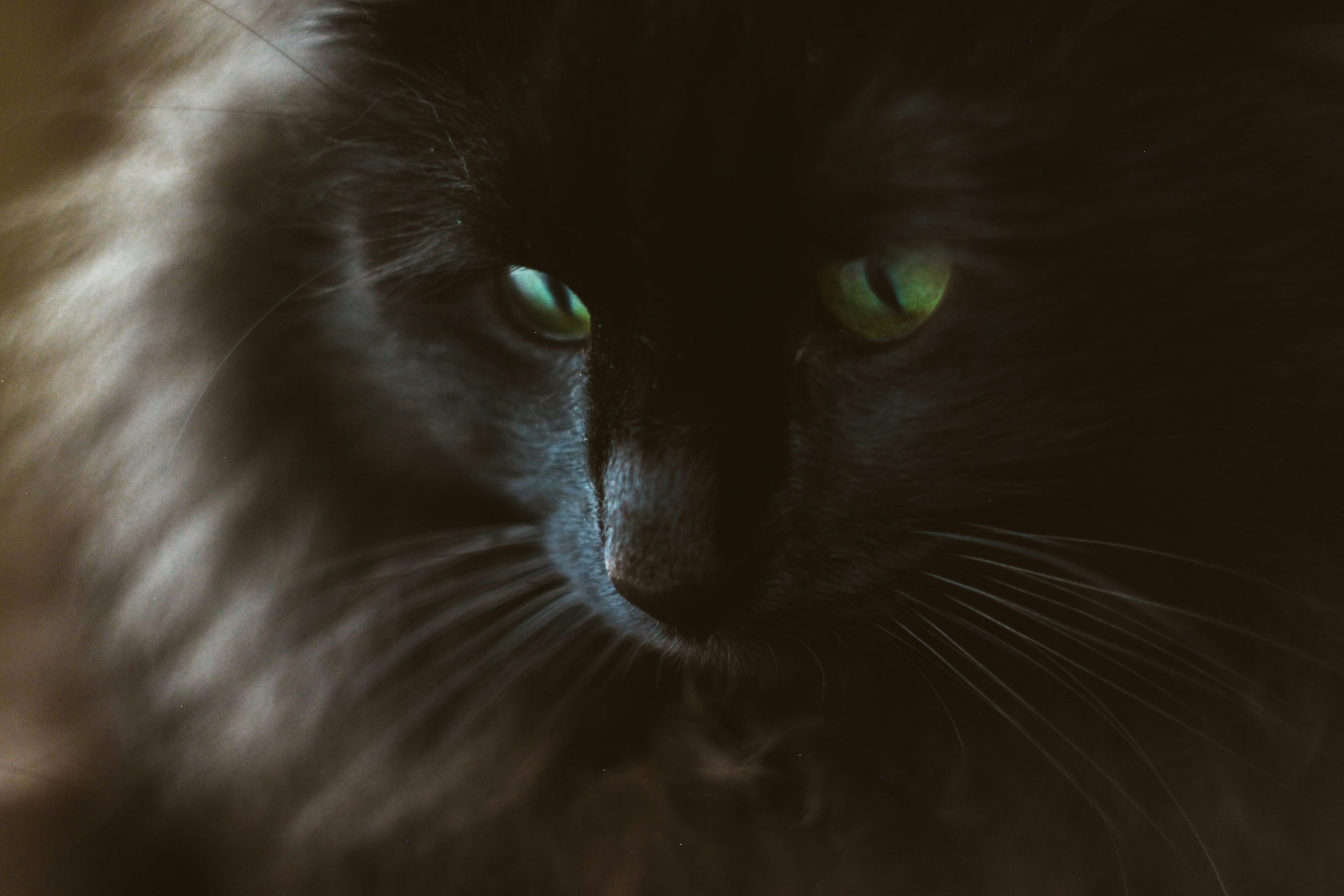
To keep myself from going down that bedeviling spiral, I tried to focus on my breathing. That’s what my mother would tell me when I was a child and couldn’t sleep, “Focus on your breathing,” and most of the time it worked. This time it didn’t work at all, so I resorted to a less orthodox trick: I thought about Mishka, my mother’s cat. Ever since my son was born, since my nights have shattered into pieces, I’ve grown very envious of Mishka. He is a black cat with short hair, green eyes, and a single white paw. My mother lives a few blocks from us and we visit her almost every day. There I see Mishka, always lazing about. He follows the sunlight on the various armchairs in the living room or the garden, purrs, slowly gets up to visit his overflowing plate of food, then heads to my mother’s lap for some petting and to fall back asleep. Unworried, his every need cared for, devoted to pleasure and rest. I want one day—just one—of the life Mishka leads. One day of not thinking about anything, of sleeping to my heart’s content.
One of those sleepless nights the idea of imagining him came to me, focusing on him laying in sunshine, the sensation of the light and the heat on his fur and the softness of the cushioned armchair. His mind a blank, only aware of the sounds of the house, the smallest of sounds, which little by little start to fade away. It became a foolproof technique. That night, too, a few minutes of thinking about Mishka were enough for me to fall asleep.
2
All day long the song was stuck in my head:
The fathers of San Francisco
Planted a patch of yams
The innocent fathers didn’t know,
How many yams would grow.
Ay lere ay lere laila
Ay lere ay lere lo
If you don’t love me, my dear,
You’ll break my heart in two.
Death, who comes for us all,
Pulling his covered cart,
Looks as thin as a shadow,
Dancing on the boardwalk.
Ay lere ay lere laila,
Ay lere ay lere lo.
If you don’t love me, my dear,
You’ll break my heart in two.
The devil, he lost a penny,
The evening of San Miguel,
It was the only money
He had left to lose.
Ay lere ay lere laila,
Ay lere ay lere lo.
If you don’t love me, my dear,
You’ll break my heart in two.
The more it played in my head, again and again, the more it grew on me. I wanted to know who had written it, in what year, who the fathers were, which yams. I couldn’t find anything on the internet about the history of the song.
3
I asked my son, “Who is the devil?”
“Someone with a sword and lots of little soldiers,” he replied.
4
He woke up at three in the morning. I managed to quickly rock him to sleep and returned to my bed. I thought about Mishka curling in on himself, cozying into a circle. I was neither awake nor asleep. Then something different happened: Mishka yawned, and out of his open jaws full of canine teeth came a thunderous sound like a giant wave crashing against the rocks. I awoke with a start, my heart racing in my chest.
There was something odd about that nightmare, which didn’t seem made of the stuff of dreams alone. Or maybe it was what they call a lucid dream, a dream with the remains of wakeful willpower. I thought I was going crazy, that two years of poor sleep were finally wreaking havoc on my brain: I had the vivid sensation that the cat was real, that he wasn’t Mishka; or that he was, but at the same time he was something like a demon.
5
The etymological dictionary says that, for the Greeks and Romans, demons were mediators between the gods and humans. Since Christians were unsuccessful in ending demon worship, they ascribed to them evil and wickedness, and an alliance with the devil.
6
I was thinking about the devil because of the song—it was obvious—but I resisted admitting it.
7
I kept investigating, and this is what I found: according to tradition, on the night of San Miguel—the 29th of September—the devil escapes from hell and hides in people’s homes to avoid getting caught by the Archangel San Miguel. To keep him from entering one’s house, a cross made of a certain yellow flower, known as a Mexican marigold, must be placed over the door. These flowers were used since before the arrival of the Spanish, in a festival celebrated around the same time of year, which was dedicated to the god Tlaloc, the rain deities, and the harvest. The Mexican marigold protected the harvest from the amo cualli Ehecame, the “not good winds.”
“What sort of animal are those Winds?” asks a young person in a Nahuatl story.
“The Winds are not animals; those winds are to be respected,” his father replies.
A coincidence: that day in my calendar was the 25th of September.
8
Andrés is Chilean, and he asked me one time why Mexican children’s songs talk so much about death. I responded by quoting Rosario Castellanos, who says that death is so present in those songs that he becomes a playmate, someone who is easy to ridicule. The same happens with the devil.
9
“You know what dying is, Mom?” asked my son.
“What is it?”
“Sunstroke.”
10
I remembered that passage from The Master and Margarita. Margarita—who, with the help of demons, has transformed into a witch—barges into the room of a frightened child and tries to console and lull him to sleep. She convinces him that she’s part of his dreams, and they have this conversation:
“Where are you, auntie?”
“I’m nowhere,” replied Margarita. “You’re dreaming about me.”
“I thought so,” said the little boy.
“Now you lie down,” said Margarita. “Put your hand under your cheek and I’ll send you to sleep.”
Then Margarita begins to tell him a story.
That night, instead of songs, my son asked me to tell him a story. I invented one on the fly about a little bumblebee, making it as long and boring as possible so he’d fall asleep quickly. It worked. I returned to my bed and took up other methods of avoiding insomnia. Along with concentrating on my breathing, I sang a mantra I’d learned in yoga class, counted mountain goats—I prefer them to sheep—and relaxed each part of my body as if I were playing with the effects of some powerful drug. It was all no use. I went back to imagining Mishka. He was strolling around my mother’s house in the darkness of night. He jumped on an upholstered chair and sat upright, like the statue of the Egyptian cat. I waited for him to settle in, but he didn’t. He stared into my eyes and greeted me with an electric voice like the sound of thunder. I woke up again, terrified, and couldn’t fall asleep the rest of the night.
This morning, while Andrés plays with the child, I decide to confront Mishka, or whatever that cat’s name is. Dead tired, I drag myself to the bedroom, close the curtains, lay down on the already-made bed and cover myself with a blanket. I see Mishka, sitting like a sphinx on the red armchair. I see his green eyes, wide-open, and hold back my fear so I don’t wake up. He opens his jaws. His voice sounds like a storm or a crashing waterfall. He’s singing The Fathers of San Francisco. He’s lulling me to sleep.
***
Tyler Gebauer is a translator from Minneapolis, U.S.A. His translations have been published or are forthcoming in Southwest Review, The Santa Fe Literary Review, and The Southern Review, among others. You can read all of his work at: https://www.tgtranslation.com




Click here to subscribe today and leave your comment, or log in if you’re already a paid subscriber.