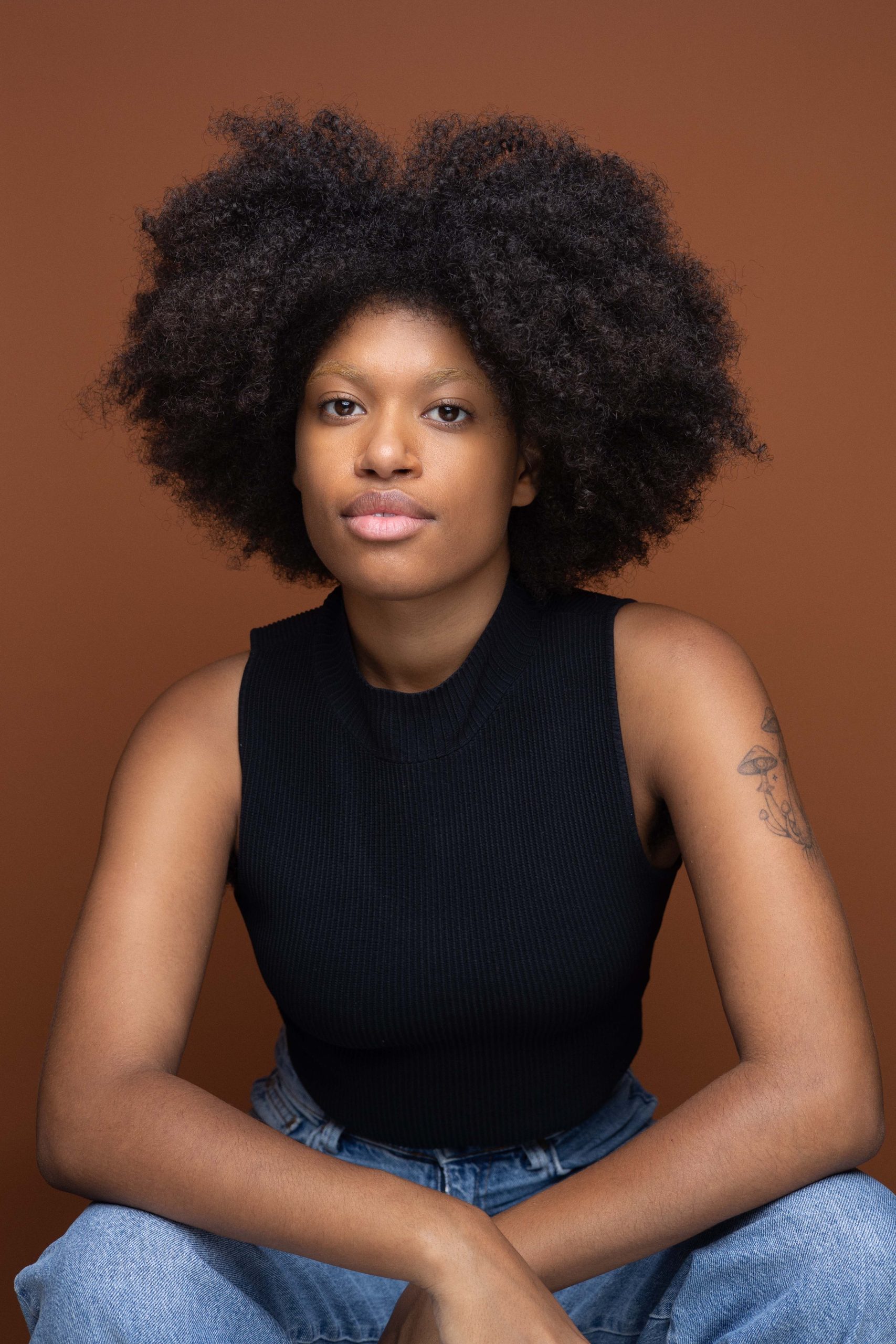

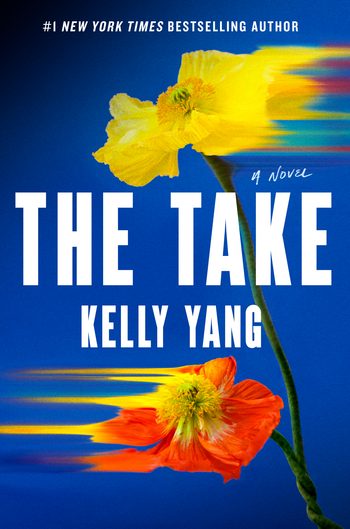
Folklore is full of Faustian bargains that result in bodily harm: the little mermaid gives Ursula her voice in exchange for human legs; a witch steals youth from Rapunzel’s magical hair. Kelly Yang’s novel, The Take (Berkley, 2026), offers a new spin on this mythological plot, exploring what happens when two women’s desires for optimization become physically entangled in a literal blood pact. Through a series of transfusions, Maggie Wang, a young, Asian American writer, agrees to give up years of her youth to Ingrid Parker, a white movie producer, in exchange for Ingrid’s money and industry wisdom. Unfolding through a fast-paced narrative forged amid the pressures of age, race, and success, the novel makes a case for creation in a world that incentivizes exploitation, competition, and gore.
Kelly Yang is a New York Times bestselling author of over 15 books for children and teens. The Take is her first novel for adults. Her books have earned multiple awards, including the Asian Pacific American Award for Literature, the California Young Reader Medal, the Parents’ Choice Gold Medal, and the Strega Prize for literature in Italy.
We spoke over Zoom about age, consumption, optimization, false promises, and nurturing the next generation of storytellers.
The Rumpus: While reading The Take, I often found myself thinking of fairytales that feature similarly sacrificial agreements. What do you think continues to ring true for people about stories like this across time?
Kelly Yang: I think that all of these stories engage with the desire to receive help from someone who has more experience than you and is saying that they can help, and we all want that so badly. However, the cautionary tale is that oftentimes, it’s just too good to be true. This goes all the way to the American dream. [When] my parents came over to this country, it wasn’t a Disney fairy tale, but [theoretical promises] were made: “You will get this great life. You will be safe. You will have all these great new friends and hamburgers and a Cadillac.” These are the things that were told to them. But then once they got here, it was very, very different.
How do you reconcile the reality from the myth? A lot of the time, I think there’s almost a grieving period. You have to grieve that you’ve been duped. Then it’s like how do you then put the pieces of yourself back together and find the courage to make something great out of the situation that you’re in and the hand that you’ve been dealt? A lot of us have not been dealt the best hand. The real joy in the story, for me, is finding ways to push back and to stand up for ourselves.
Rumpus: There is a line in the book that features the book’s title: “There are only two ways to get ahead in this world—you either make something or take something,” you write. I’m curious whether you resonate with this worldview in your own life as a writer and how you navigate or push back against it?
Yang: I think [that line represents] a binary way of looking at the world, which I don’t agree with in my personal experience. I think there are lots of other ways—beautiful ways—to get somewhere in this world and get ahead. You can also give, right? You can give. One of the things that was frustrating when I was growing up, trying to make it as a young writer, was the number of times I was dying for some mentorship or direction or advice, and it wasn’t really on the table, no matter where I turned. I think that is very sad and common. I’m not begrudging all the people that could have helped me or whatever, but I do feel that as we have more and more to offer the next generation, we really need to to take that seriously. [Kate DiCamillo and] I started a podcast, [StoryKind] recently, for young writers and readers. How do you nurture the next generation of storytellers? That’s a really important [question] to me.
Rumpus: The Take explores the potentially cannibalistic nature of mentor-mentee relationships, as they are mediated by age, race, class, status, and a consumer society that offers women a small window of time through which to access cultural relevance, especially in the art and entertainment worlds. What led you to filter the book’s thesis through the form of the novel in particular?
Yang: I’m very frustrated sometimes, because I see the ways in which most of us really want the same things: We want fairness. We want equality. We want all these things, but people are so afraid to sacrifice even a little bit of their comfort to get there. That [fear] is collectively holding us all back. We’re afraid to sacrifice our current position in the patriarchy, which doesn’t actually benefit any of us, but people are worried about what the alternative will look like for them. That’s a very bold statement, and I didn’t know how to really explore it without telling a story.
I wanted the reader to feel true sympathy for [Ingrid in the novel], because she is operating in a tough world where men are ruthless, and they’re going at her, and it’s really brutal to have her job. It’s hard. But you see the little compromises that she makes every day. She believes all the right things—and she does do a lot of good things—but I wanted to show the cost of all of us constantly compromising totally.
Rumpus: Vast structural systems of power are at work in The Take, even while its narrative remains tightly focused on the characters. What was it like to write about power on so many intersecting scales, as it manifested through these characters’ lives?
Yang: I love analyzing power. I was a political science major in college, and I’ve also just always been attracted to noticing how power operates in the background, even when you don’t see it playing a role overtly. Even in my children’s books, [my protagonists] are aware that their situation is different from the people pulling the strings.
In The Take, there was clearly a huge power element, which is that one person is taking another person’s blood, and youth by extension. I wanted to explore the complexities of a relationship like that. There were some genuine moments where Ingrid really wanted to help Maggie, even as she was simultaneously taking so much. In the airplane scene, for example, Maggie and Ingrid were flying first class. There was all this wish fulfillment, and they were really having some genuine moments of connection. But also, there was this underlying tension and guarded sense of “how much should I help this person, and how much should I become friends with this person?” I loved writing the awkwardness and the excitement of that.
Rumpus: Maggie describes her experience as an aspiring writer as characterized by the “cheap trick of capitalism designed [to fill] you with hope without actually feeding you.” This line made me think of several “tricks of capitalism” that often seem to take more than they give: attention-mining apps, weight-loss drugs like Ozempic, or the regimens that transhumanists like Bryan Johnson sell as methods of averting old age and death. While writing, were you thinking of the story as a sort of allegory for products of late-capitalism that promise optimization?
Yang: I had been reading about the biohacking that is happening now within Silicon Valley. There was an early episode of Silicon Valley, the show, where one of the tech bros would walk around with his little transfusion partner. Real people have been trying this out, and I thought it would be interesting to look at through the lens of [female characters]. A lot of women feel like we’re constantly being squished into boxes because of our age, like we’re either too young for something or too old for something, and we’re constantly being judged before we even open our mouths. I wanted to see how that [social] element would change a power dynamic where one person is exploiting another person biologically.
I think that one of the things we need to understand is that we can’t actually trick death or escape aging. All these gimmicks that we keep coming up with to make our lives better—including AI—are actually not actually going to. I think they’re going to leave us disappointed. In The Take, [Ingrid’s attempt to reverse her age, ultimately] does mean that she skirts some bullets, but it takes a lot from her too, in a way that I don’t think she necessarily could have foreseen. This stuff is already happening and it’s not going to stop, until we decide that there are certain elements of humanity that you can’t buy.
Rumpus: I’m curious about the lines between consumption, exploitation, and transformation in the book. How do these forces interact and overlap?
Yang: There are all these stories that we’re fed, which tell us certain things will fill us up and make us happy. I fall victim to this all the time, like, I just got that jacket that I wanted, or whatever. But really, if you think about it, that’s not a huge step away from what we were talking about earlier with the myths. [Material consumption] doesn’t actually help too much to change what you’re feeling inside. Ultimately, I think Maggie always had all the tools, but she needed to get there. You can’t buy your way there, and I don’t think you can really sell your way there, either. Both of the women in the book think they can have this quick fix solution, but in reality, the solution is much more complicated. But it’s also much simpler too, because it’s within all of us to own our own existence, which I think is what those two both ultimately wanted.
The simpler path involves reckoning within [oneself] to stop seeking permission. I think it’s common when you’re younger too—you want somebody to give you permission, because it’s so scary to put yourself out there. What I’m trying to say in the book, and hopefully it’ll resonate, is that you’re the only one who can give yourself that permission. You have to go through your own internal struggle in order to get [where you want to go].
Rumpus: Did you listen to music while writing the novel? If the novel had a soundtrack to go along with it, what would it include?
Yang: I didn’t listen to music while writing the novel, but I was very influenced by the songs “Vampire,” and “The Grudge” by Olivia Rodrigo. Both of those songs are about trying to get over a wrong that happened to you. And I think one of the lines in “Vampire” says, “Girls your age know better.” That really resonated with me, because there is [also] such an additional amount of pain when [harm comes] from another woman. We don’t always talk about that because we want to believe that women will want to help other women. We want that so badly, that a lot of stories and experiences get swept under the rug, because they don’t fit neatly with the narrative.