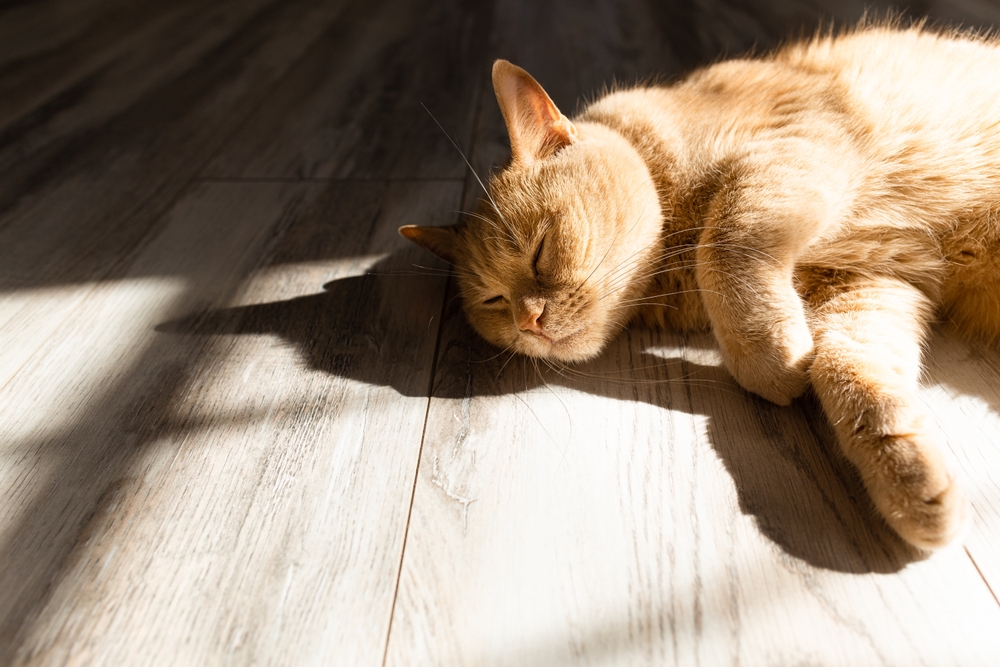
Full freedom is a beautiful thing to watch, in action, when you are close enough to observe it. I am thinking of my cat, who is free to wander the house and make her own choices of when to eat, where and when to lie down and go to sleep. Her freedom exists within constraints imposed by me—for instance, she can’t leave the house. Yet she does not seem to be aware of those constraints and is thus not oppressed by them. The three cows I used to watch across the road were also free to roam their pasture, eat when they liked, lie down in the grass or snow, or take shelter in their barn. They, too, did not seem oppressed by their constraint, which was their boundary fence, and were unaware of their larger constraint, which was their limited future. Birds seem to enjoy their freedom. It is harder to tell with insects, who, free to come and go, persist in carrying out their various purposes as long as their little lives continue. Many of us humans have a limited freedom within the constraints we impose on ourselves or that are imposed by our situation, which we either chose or did not choose. Our constraints are many—financial, social, health-related, the sometimes suffocating binds of habitual behaviors—but we often bear them lightly, because some of them have been chosen by us or by someone we love, or we have a great fund of tolerance. But many more people in the world live within such tight constraints, unchosen and unwanted constraints, that they chafe more painfully under the constraints than they enjoy the small modicum of freedom within them. And some, some with no power at all in the face of cruelty, are in fact locked up, bodily, usually unjustly, and have no freedom at all. This is the very painful reality of the present situation in the U.S., as we’re all aware. We are also very aware, here and now, of the very wealthy in this country, who are also, often, or even always, the very powerful. We may think the very wealthy live in complete freedom, without constraints, but aside from the constraints they share with the less wealthy—social, familial, health, the tight bonds of their own bad or monotonous habits, etc.—they, or at least the unprincipled among them, who are the most conspicuous, are also constrained by the narrowness of their vision of humanity, their lack of fellow-feeling, the rigidity of their self-interest. The very wealthy are very much on our minds, these days, because they are wealthier than ever before. We wish the wealth to be shared. We may wish all we want. Maybe we will become Communists in reaction. At least we can be sure the rich will not be admitted to Heaven, or rather, that it will be more difficult for them, or rather, more difficult, or impossible, for the unprincipled among them, and that is some solace. Still, true freedom, for us, for the rest of us, would mean we do not even wish them ill, that we are free of anger, just as true freedom, for them, even if they do not abandon their wealth, might be, in the case of the greediest of them, to abandon their excessive greed, and in the case of the most unfeeling among them, to abandon their cruelty, but for all of them, as for us, to leave the prison of their self-interest, which is also the prison of their endless and insatiable desires, to return to the perfectly acceptable and comfortable condition of having few needs, like my cat, who is at present sleeping on my legs but soon will stand up, have a good stretch, and make the rounds of the house again in search of another comfortable place to sleep.