The car picked us up from Logan Airport, and we were now driving into Cambridge. My mother sat in the back seat, asking about gas prices, toilet cleanliness, and if she could visit the Statue of Liberty. I told her that the Statue is in New York City, but Boston has the Freedom Trail. She asked me if there’s a landmark about freedom in every American city, and I didn’t have an answer.
While the car was almost parked on Alewife Brook Parkway, inching through traffic, she crossed her legs, shoulders squeezed inward, and placed one hand under her slightly elevated left thigh. I thought maybe she needed to use the restroom. So I pointed to my apartment building around the corner and said, “Just bear with me for a minute. We are almost there.”
At the time, I didn’t know what I was asking her to bear. Whenever I returned to that moment, I tried to forgive myself by thinking about how preoccupied I felt then, with the secret I carried.
***
Three months earlier, my mom decided to visit me in Boston in June. She planned to fly from Chengdu via Abu Dhabi to Boston, a 26-hour trip against the jet stream. Locked into the same position in a standard economy seat would make the trip feel even longer. But she insisted on traveling this way, because she didn’t want to “waste money.” She said she could “handle the suffering.” Or, in her exact words, she could “吃苦 (chiku),” “eat bitterness.” Being able to endure a great deal of pain is considered one of the highest virtues in Chinese culture, something I didn’t expect to inherit.
I saw all the women before me live through that bitterness. My grandmother on my father’s side raised seven children with an absent husband, and at the age of 80, after shattering her hips, she tried to hide it because she didn’t want to trouble anyone. My grandmother on my mother’s side endured her pain, too. Being separated from my grandfather during the Cultural Revolution, she buried her firstborn, alone, in Laogai (labor camp), hiding the news because of guilt. Now my mother, a lady in her fifties. While I was reluctant to put her through the international red-eye on a chair that barely reclines, she said I was too pampered, that I underestimated her perseverance: “You think I couldn’t handle a little hardship?”
I worried that she had handled it too well. I’ve seen her caring for my father post-surgery, while also taking care of me. I was eight. I didn’t know what an intracranial hemorrhage was, or that out of the 0.02 percent of people who suffered from it, only half survive. I didn’t know this because my mother hid it from me. She’d metabolize all that bitter truth—about disease, death, aloneness—into tenderness every night, when she gently scratched my back to put me to sleep before she drove to the hospital. For years, she only talked about how lucky we were to pull through as a family. It was luck for my father and me, I think, to be the survivors of 0.01 percent. But what was it for her, when she was sleeping on the sunken hospital cot next to a man in a coma, while worrying about a little girl tossing herself off the bed at night?
Perhaps this tendency to hide, to bear, to endure was just a mother’s instinct, something I eventually came close to learning about.
***
My mother stayed with me and my cat. She never liked pets, but she still let my cat cozy up in her suitcase while she went for a shower. Half of her suitcase was for me. Snacks, kitchen gadgets, and five rolls of small garbage bags made in China. She didn’t understand why I needed them, but she brought them anyway. I folded her clothes and stacked them on my desk, trying to recall whether I had cleaned my toilet thoroughly or whether my mother would sniff out something in my trash.
This habit of hers started my sophomore year of high school, when she came home a little early once, and I was smoking in my room. I threw the burning cigarette into my trash can while the sound of her footsteps approached—it set the garbage bag on fire. I explained later, while burning a piece of tissue paper on my desk, that whatever she smelled was my chemistry homework.
She might never have believed me. She might have started inspecting my junk long before I was in high school. And maybe all mothers do this: sift through their children’s trash for cigarette butts, used condoms, shredded photos, or syringes. I wondered more often, as I grew older, if my mother would love another child with the same paranoia. She wondered about it often, too, as sometimes, in the middle of our FaceTime, she would apologize for something ridiculous that had happened years previous and tell me that she could’ve done better as a mother a second time around. I tried to step into her shoes sometimes to see what I could’ve done as a mother, but I couldn’t picture it. Motherhood is a practice, not an imagination.
When my mother walked out of the bathroom, she had put on a face mask and hand-washed all her dirty clothes, which were drying on the shower-curtain rod.
“Are you on your period?” she asked, hands rubbing her hips, eyes staring at the ice water in my hand. One shouldn’t drink anything cold during menstruation, as it would throw their qi (overall energy) off balance and cause cramps.
“I know, I know.” I put down my glass. “My period was a little irregular this month.”
She shook her head and walked into the kitchen, replacing my drink with a cup of warm water.
“Bathroom etiquette, remember,” she added, while cautiously climbing into my bed. “Always fold your pads neatly before tossing them away.”
She tilted her body to the right while continuing to rub her left hip. I asked if she was feeling sore after sitting on the flight for too long. She smiled and nodded, but kept nagging about personal hygiene, and I only looked away, pretending to reorganize my closet.
I didn’t want her to catch me lying. She’s fairly good at it.
I wasn’t on my period, and I didn’t know if I was ready to face myself or to face her when she faced my pain.
***
In May, about three weeks before my mother arrived, I realized I had missed my period for the second month. My PCP told me it was caused by stress, as “it’s not possible to get pregnant when you’re on birth control pills.” So when only one red line appeared in the circle on the stick, I was relieved. I was thinking about his medical advice, thinking it was like a COVID-19 test: One line means you don’t have it. Then I read the instructions again. For this testing brand, one line in the circle indicated positive results. There’s an exception to all kinds of designs.
I sat quietly on the sofa for hours, then sat quietly in my boyfriend’s car the next morning, smoking one cigarette after another. According to Planned Parenthood, if one were to take the tiny pink pills every day around the same time, the chance of pregnancy would be as low as nine percent. I was never lucky enough to be in the rare nine percent of anything. Was I too lucky this time? Or, did I miss a dose sometime in March, while planning my mother’s trip, while persuading her to take better care of herself? I couldn’t remember.
But it didn’t matter now. Sweating in that miserable smell of nicotine, all I could remember was how much my mother loves children, and how much my dad wanted to be a grandfather. At least they would be pleased with me having a baby.
But I had recently quit my job, so it would be impossible to afford childcare or medical bills. I was twenty-five. I still wanted to explore selfhood before motherhood. If I wasn’t ready to be a mother, but I became one anyway, would I be able to swallow all future discontent, frustration, and unfulfillment, rather than blaming the child?
I barely felt like an adult.
Eventually, we agreed to terminate this pregnancy. We both sighed in relief, as it was the more hopeful choice. But somehow that relief felt empty, as my mouth started to taste bitter after half a pack of Camels, as my boyfriend murmured, “I’m not ready for a family,” as the smoke finally dispersed into a vacant view of the parking lot. I rubbed my belly and felt a misaligned moment of aloneness.
I had no time to overthink; the most imminent issue at the time was to determine how far along I was and if I was still allowed to have an abortion. I read about women all over the country being denied care because of various abortion bans. There was a woman in Texas who was sent home with an ectopic pregnancy, another woman in Louisiana who couldn’t access care with the fetus having acrania, meaning it was developing without a skull. Some states have a 6-week ban, some 22-week, and some states do not allow abortion care whatsoever. In Massachusetts, although there is a gestational limit of 24 weeks, abortion is allowed. I thought I was at least lucky enough to have a choice.
One of the nurses at the hospital agreed with me that I was lucky. As I waited for the blood and urine results, two nurses helped me book an ultrasound. The younger one, upon learning about my situation, kept mumbling “Oh My God” nervously to herself. She sat me down next to her, counting weeks on the calendar.
She said it’s a scary situation, but I was probably between 10 and 12 weeks, which meant I was within the legal limit. She proceeded to make phone calls for an emergency ultrasound, because if I were within 11 weeks, I would have the choice for a medical procedure, instead of a surgical one. The surgical abortion, also called a D&C, is a procedure where the doctor expands the pregnant person’s cervix to scrape the uterine lining with a curette, like scraping the bottom of a soup bowl with a metal spoon. Unlike a bowl, the person would probably feel something.
While she was busy making calls, the older nurse took the time to congratulate me on my pregnancy, saying that every child is a gift. I could feel the younger nurse’s side eye trying to hush her, but I didn’t feel offended. I was interested because, in the past 24 hours, she was the first person to be delighted by my unplanned pregnancy.
She asked me if I knew the baby’s sex; I said no. She then taught me an “old midwife’s trick”—if the left side of my abdomen felt bloated, then it’s likely a boy; if it’s the right side, a girl. I said my left side was cramping a couple of weeks earlier, and her face lit up. I explained that my situation was less than ideal and that I didn’t want a baby. She comforted me in the gentlest and kindest voice possible, “I didn’t plan to have my daughter either. But she’s twenty-seven now, and I’ve never been happier. God has a plan.”
I didn’t tell her that God was a stranger in the place I grew up. China is an atheist country. Their only guiding principle in dealing with reproductive issues was practicality. Because of the population boom in the 1970s, the Chinese government issued the Family Planning Policies, which initially advocated that each couple have fewer than two children. In the ’80s, when the population reached 1 billion, the government pushed for couples to “Marry late; Give birth late” and to have only one child. When the policy didn’t work, they introduced punishment. For example, if you are a public servant and have more than one child, you will be laid off.
My parents are good citizens. They got married in their late twenties and had me in their thirties. My mother also responded to the government’s “Mandatory IUD policy,” a rule that requires women who have given birth to implant an intrauterine contraceptive device. Her copper IUD would later lead to a terrible infection, but I was too young to remember what that was like for her. Infection associated with an IUD is generally lower than 1 percent, but when I contemplated inserting one, she told me how the infection almost took away her reproductive organ. She didn’t say how much it hurt.
My mother has a way of downplaying pain in her stories, like how giving birth to me was as easy as lying down, like how she barely felt the uterine fibroids clogging inside her, like how abortion was slightly more uncomfortable than labor, because she was emotionally drained. When she first told me, “You could’ve had a little brother,” she just casually dropped the line in between stories, like a misplaced em dash.
To have a second child during the One-Child Policy clampdown would’ve made our lives more difficult. She made the more practical and hopeful choice to terminate it. Yet not once did she mention the pain in her D&C, or the pain of being denied the right to be a mother again. I’d only see her mournful face once, about ten years after her procedure, when the government suddenly realized it needed more people, and pushed for the “Two-Child Policy.”
***
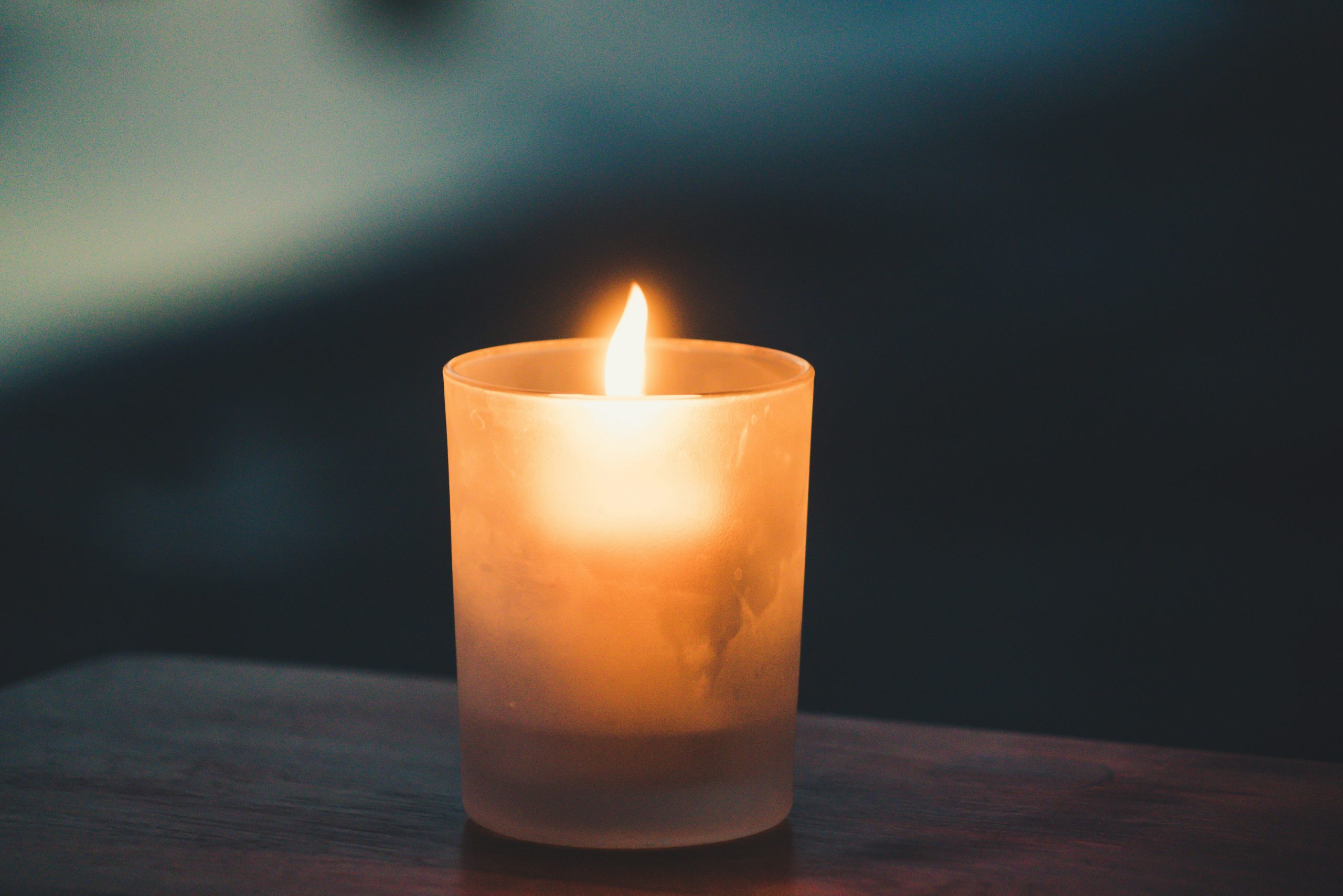
I lit an orange-scented candle in my room and dimmed the lights. My mother tried to sit up to read something on her phone, but she was clearly unable to stay still. I asked her again what really happened and whether she was injured. She waved her hand and said in a dismissive tone that she felt better. She was only lightly bruised from a fall. I lifted up her shirt. The bruising covered the left side of her body like a blanket of hurt. She explained it was only an insignificant accident—she had slid backward on a two-story-high escalator in Chengdu because her backpack was too heavy. Without telling anyone, she sat on those bruises for almost 30 hours flying across Asia and then the Atlantic. It was the “bitterness” she could “swallow,” she told me. “Your mother’s tougher than you think,” and besides, “There’s nothing you could’ve done.”
“I could have upgraded your seat so you could lie down on the plane,” I said.
She didn’t talk back. Her eyes looked around the room while her fingers played with the ruffles on her pajamas, like a kid feeling guilty for breaking a family heirloom. She complained a little more quietly that it would have been too expensive to upgrade. I told her I have adult money now; I could take care of her.
I placed an order from a nearby pharmacy, got her a bag of frozen peas, and lectured her on the danger of hiding one’s injury. She should’ve been more honest, less stubborn, more trusting, and less concerned. She shouldn’t have felt ashamed to share her pain with me. I said all that while withholding my recent abortion.
On May 20th, I had waited about three hours for the radiologist’s call.
In the early 2000s, when my mother went to get her ultrasound, did she also have to wait, so endlessly, for the result? But I guess she and I might feel differently about the wait. Childbirth for her was a painless act because she once said, “Love is like anesthesia.” What about confusion and despair, or the absence of love? Does one’s willingness dictate what we define as joy, how much we can afford to bear?
Also, how did my mother know it was a boy? She wasn’t permitted to keep the baby. I couldn’t figure out if she asked about the baby’s sex or if the state hospital informed her. Maybe it was easier to mourn when she could give the baby a pronoun other than “it.” Or maybe, she never told me it was a boy, but “it could’ve been a boy,” and I had just fabricated most of the memory after my left abdominal pain.
If I started looking for baby names, would I change my mind?
I thought of the cows I saw roaming the lawns of Christ Church College a few years ago. I was in a tutorial meeting, and the professor told me that those cows were admired, photographed, but never named, because they were doomed to become the entree for formal dinners.
Then my phone rang, it was a woman’s voice on the other end. She sounded professional yet discreet. She told me the good news first, which was that the fetus was at ten weeks and five days, which meant a medical abortion was permitted.
“However.” She took a breath. “Ordinarily, the fetus develops a heartbeat around week six; we didn’t detect one.”
It’s called a silent miscarriage, estimated to occur in about 1 to 5 percent of all pregnancies, where the pregnancy failed but the pregnant person’s body did not expel any tissues. I was never 1 percent of anything.
I asked her when this happened. She said probably a week earlier, probably that morning. I asked her what the cause might be. She said it’s unclear or hard to say. I asked her what I should do next. She said I could either wait until the bleeding naturally occurred or discuss other options with an OBGYN.
“My mother’s coming to visit me in two weeks,” I said.
It was silent on the other side of the phone.
“Sorry,” I added.
“I’m very sorry,” she said, and that she hoped I had a good night.
I collapsed into my chair.
I didn’t cry when I found out about the pregnancy, or when I decided to get rid of it, but I cried then. Was it tears of relief, regret, helplessness, or lament, or was it merely a hormonal response with no particular meaning? I haven’t figured it out yet.
Later, a cousin of mine explained, “Maybe it’s because the baby knew you didn’t want it, so it made a choice for you.”
I wanted to call out her superstition, but then I remembered she’s a mother.
***
Two days after that call, I received the medication for an at-home procedure. I was instructed to take two kinds of pills, Mifepristone and Misoprostol. The first one stops your body from producing progesterone, the pregnancy hormone. Then the second pill helps clear the contents in your uterus. I took the Mifepristone on a Wednesday; on Thursday afternoon, as suggested, I pushed the Misoprostol into my vagina. I lay down on my bed, staring at the ceiling, trying to imagine the pills dissolving in my body, cleaning the inner lining of my organs like nano-Roombas. And I waited.
I napped, stood up to stretch, played a horror video game, and sat on the toilet until I couldn’t feel my legs. The doctor said that if I passed a blood clot the size of a lemon, it would mean the medication was a success. But there is also a 20 percent chance it might fail. I had been 20 percent of something before. There are many 20 percenters in the world. About 20 percent of the world’s population is Chinese. About 20 percent of kids in the United States are only children. About 20 percent of reproductive-aged women (360 million) live in countries that allow abortion to save the life of the woman. About 20 percent of the U.S. states & DC have no restrictions and no gestational limits on abortion.
I shouldn’t be so “lucky” this time, I thought, and then it happened. It started like a period cramp, only warmer, more explosive. and progressed quickly. I tried to lie down again, but the severe cramps made it impossible to even curl up. It felt as if someone was knitting my muscles together; it felt as though I was a dough being overstretched and about to be torn apart. I felt like a deflating soccer ball. I didn’t know my body could feel the different shapes of pain. I was gasping, angry, and then I was crying. I reached my nightstand for another ibuprofen. As soon as I swallowed it, a stomach reflex shot me out of my bed and had me kneeling by the toilet and retching.
I wasn’t thinking very much when all I felt was the sweat on my back and spasms all over my body. But I was searching my memory for a safe place to anchor myself. I thought of the movie Pieces of a Woman, which I watched a few months earlier. The movie was about a woman who was ready to be a mother but who lost her baby at birth. That place wasn’t safe; I felt unkind, ashamed, and sinful. Then I thought of comedies: Modern Family and Friends. There were a lot of kids in those shows, and Rachel had a baby, right? I wanted to escape my mind. I tried not to think about my mother or how to keep her away from my pain, my filth, my shame, my sorrow, my carelessness, and my guilt. I tried not to think about how I was alone in my room, accompanied only by the curious gaze of a cat.
Then I remembered how the mother in Pieces of a Woman liked the taste of apples because it reminded her of her baby’s scent. And all of a sudden, I smelled something metallic and waxy, and my mouth tasted bitter and dry.
***
I applied some ointment to my mother’s bruises and tucked her into bed. She flipped onto her right side, and a few minutes later, I heard suppressed snoring.
Maybe it was in the dream I had that night, or maybe I imagined it. I saw my mother waiting in line for a number at the OB-GYN registration window, and then waiting some more outside the family planning operating room for a quick procedure without anesthesia. I saw her hobbling to wait in the post-op observation room, clenching her teeth while watching the bright sunlight bounce off the white and blue plastic chair and the red flag next to Chairman Mao’s portrait.
What kind of mother could she have become if she had another chance? What kind of life will I live now if I didn’t have a choice? Will it break her heart to think of my pain, and will it hurt her again if she’s reminded of the second child she really, really wanted to have? I don’t know. I guess this, for now, is my bitterness to swallow.