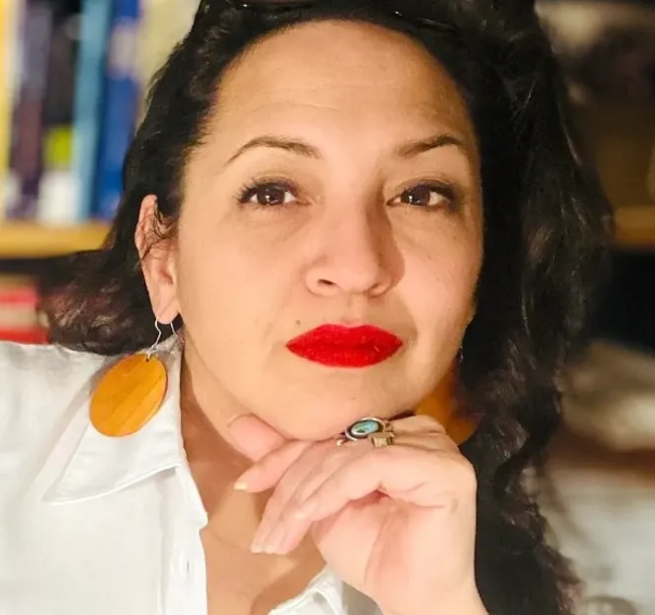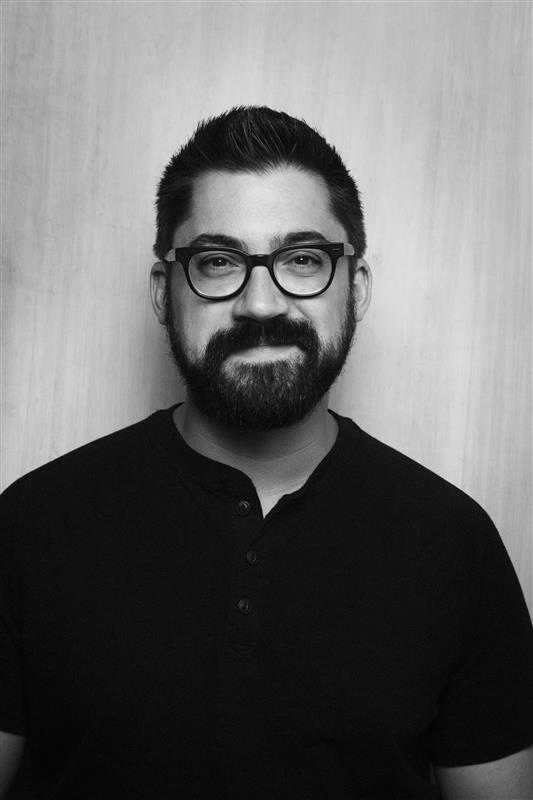
For nearly twenty years Austin Kleon has been writing about the creative process. His affable style and calm approach to overcoming the resistance to engaging with our artistic selves has earned him a following of readers looking for a reason to pull out a brush or pen and get to it. Making something simply because it excites you is a consistent theme in Kleon’s work.
His latest, Don’t Call it Art, is the fourth in his series of discernable square-shaped books that teach readers how to better hone their artistic impulse. The first, Steal Like An Artist (Workman, 2012), established Kleon’s inspirational use of quotes and ideas from a range of artists and introduced his distinctive black-and-white drawings that complement the text and encapsulate his belief that creative work doesn’t have to be complicated. Show Your Work! (Workman, 2014) followed with advice on getting creative work into the world, and Keep Going (Workman, 2019) encouraged readers to break through the noise and enjoy the process. What makes Don’t Call it Art different is the way it circles back to the idea that we were all once kids, so why not act like it? Or at least try to. As a father—and someone who hasn’t been in an office since the pandemic—it was refreshing to read something that reminded me that creativity and work are always worth my time, even when I’m not sure why.
We spoke in May about kids, creativity and middle age, and why we try to find the tragic in so many things. Our conversation started on the passing of time and the idea of work.
This interview has been edited for length and clarity.

The Rumpus: How did you think of this book at the beginning?
Austin Kleon: What you can do with the day is an important question. I wanted the book to be something longer, something that was more like time in the macro sense, more about seasons, rotations, and years. I think it’s where we’re in a post-industrial age and you’re forced to think of time as these individual modular units, but there’s nothing like that in nature.
Rumpus: It’s a challenge to not worry about time passing. But time will pass regardless, so why should our days be dictated by the clock?
Kleon: Right. The day for me is this magical unit. My friend, Oliver Berkeman, who wrote Four Thousand Weeks and Meditations for Mortals, does this amazing thing where he writes self-help books for people who hate self-help. And he has this great question: “What will it look like to be done today?” I love that because there’s always more to do. What would it look like for me to finish this day and believe I’ve got a good thing and I did my best? I like to start the day with that because it’s about lowering your expectations just enough. It’s also the magic for parenting—not only lower your expectations, but maybe don’t have so many.
Rumpus: Absolutely. Lowering expectations in the job of parenting helps keep your head in check. This book definitely helps get you started with that process.
Kleon: The trick with this book was thinking about the traditional way of thinking about being a dad and an artist. They’re in opposition, like the Cyril Connolly quote about kids and work, “There is no more sombre enemy of good art than the pram in the hall.” But I got really lucky and early on I had good role models of artists whom I admired and who also happened to be parents. The book started with dads and eventually I became interested in studying artists who are also mothers. Part of that was intentional, and the other was that there were so many good mother/artist memoirs that have come out in the past fifteen years. But I’ve never felt like having kids and making art were that different because you don’t know where any of it’s going. There’s this vast uncertainty to it, and you show up every day and there [are] these variables that are always changing with you.
Rumpus: This book feels like a coda to the others. How does Don’t Think Like An Artist continue where Keep Going left off? Or do you think they’re completely different?
Kleon: What’s interesting about Keep Going is that I was trying to write Don’t Call it Art, what I thought of as my “art and kids book” around 2016. Then the world went nuts. It was just so grim and I watched many of my peers struggle. And then by 2018 it felt like there needed to be a book that addressed what you do when making art is hard and the world is the way it is. I used a lot of material that I thought was going to be in the art and kids book that ended up being Keep Going. Then the pandemic happened and at the time I decided that I couldn’t write this book about kids while I’m still having adventures with my own, so I still got those magical early days when they were at their peak creativity. The book got pushed off more and more until finally I had to do something with this material. Don’t Call it Art is about what happens on the inside when you’ve lost that lovin’ feeling and you can’t really remember what it was that made you start out.
Rumpus: I especially felt that in the section where you write about the world being more magical when it’s viewed through kids’ eyes. Of all the ideas in your book, that’s the one I felt like it’s easiest to get to in middle age.
Kleon: It’s fun that you bring that chapter up because that’s my wife’s favorite part of the book as well. She’s more or less my first reader and the editor of this book. She really deserves co-credit. And it’s interesting you mention middle age, because the unspoken thing about this book is that it’s my middle age book and the idea that we hit an age at which we need to return to the people we were before we started building all this armor to survive and become adults. The question for me with this book was how can the book appeal to more people? I’m always pushing myself because all of the books come from my own struggles. They come from my own studies and my own problems. And in the work that I’m doing, I’m always trying to make sure we’re including as many people as possible. How can I make sure that the book speaks to as many people as possible and not just sad middle-aged dads (laughs)?
Rumpus: How do you do that? It seems like a difficult part of writing the book is walking that line between writing for aspiring creative readers while also appealing to a general audience.
Kleon: I think one way is through framing. One of the things we really worked on with this is asking how much is this a parenting book and how much of this is a creativity book. I wanted to make sure that someone who didn’t even like kids, who didn’t even want to read about kids, could get something out of it. And I also wanted a young dad or young mom to see this as a kind of parenting book in disguise. This was absolutely the hardest book to conceptualize because my favorite books aren’t one thing or another. So, framing came from asking the question, “How would you like to create like a kid again?” It’s this idea that we all were in touch with this thing when we were younger and of finding a way to go back to it. This one is a book I wish I had before I had kids, but it’s also the book I wanted now. I struggle with all these things. I’m mid-career. I’m someone who’s been publishing books for sixteen years. I’ve been trying to be a writer for twenty years, half my life.
Rumpus: Why do you say, trying to be a writer?
Kleon: (Laughs) Because I’m still trying every day! It’s funny because I would guess that my readers think that I’m a very confident person. But I don’t know a single decent writer who doesn’t question whether they’re any good. I think you know how much better you could be all the time because you have heroes. I was reading War and Peace when I was finishing up this book and I’m like, “I’m not Tolstoy.” I’m always keeping my limitations in mind.
Rumpus: That seems healthy. You set a reasonable expectation and get it done without killing yourself over it.
Kleon: You’re also not particular and you’re open to suggestions. The older I get, the more I want to be edited. I just want the work to be good. I don’t care as much about the how of it. I’m more willing to kill my darlings. I like the term Elisa Gabbert came up with which is about saving your darlings, that you don’t have to kill them, just move them somewhere else in your work. With my books, I’m always thinking about the reader and all the other books they could be reading, so at the very least I have to be fast and fun and there need to be pictures. I want the reader to feel like they’re having a good time. One of my favorite comic strips is Nancy by Ernie Bushmiller. The joke about Nancy is that it’s easier to read than not to read. That’s my MO with my books because I want it to be easier for you to keep reading than to stop.
Rumpus: In this book you write that it seems as if no one is having fun any more! It felt like an expansion of an idea you explore in Keep Going where you quote James Baldwin on losing touch with ourselves and experiences: “Something very sinister happens to the people of a country when they begin to distrust their own reactions as deeply as they do here, and become as joyless as they have become.” Why do you think this is happening now?
Kleon: I think people are taking on too much. One of the things about contemporary life is you’re asked to do everything. You have to make a community. You have to recycle. You have to be fighting injustice. The individual, it’s all on your shoulders. I have a friend who, when he was young, was really influenced by the Smokey the Bear ads where he’s pointing at you like Uncle Sam saying, “Only you can prevent forest fires.” As an adult you think you probably shouldn’t throw your cigarette into the forest. But my friend, as a kid, thought that only he could prevent fires. It was all on him. He would go to bed freaked out because he thinks he’s the only one that could prevent forest fires. It’s a funny story but it’s also kind of what’s happening to us. You as an individual are supposed to solve it all.
Rumpus: In an interview you said, “I take what angers me and do the opposite.” What’s your advice on channeling things out in order to get into the creative process?
Kleon: I hate “dad” stuff, like Father Knows Best, and dad websites and the word “dad” and the word “father.” I always itched against that. This idea that dads have all this wisdom to pass on to their kids—it doesn’t mean that I don’t think they’re good or have value; it’s just that I personally don’t like them. So I ask myself, “What would the opposite thing be?” For me, that would be learning from your kids and presenting yourself as a fellow learner. Another example is something from Keep Going. I hate the optimization culture and what’s the opposite of that? Gardening. Instead of attacking something you don’t like directly, you can find its opposite. I’m a reactive person. I like to have something that I can mess with or I find irritating and I figure out how I can deal with that in a positive way.
Rumpus: This book feels more like a flow of advice, like take a deep breath and reset. How did that come to be?
Kleon: I think reset is a great word. People think of kids as an energy suck and they are to a certain extent, but they can also be a wonderful catalyst and they can unlock something in you. I think a lot about energy in books. I’m obsessed with the idea that an author takes all this energy and inserts it all into the text and the book becomes this inner substance. It sits there and doesn’t really unlock itself until the reader brings their own energy to the book. Sometimes the energies don’t match. But I think the best a book can do is transmit a kind of energy because that’s what my favorite books do. When I read a Lynda Barry book, it’s like plugging into a battery or something. I just get so juiced by her stuff and, for any of my other favorite writers and artists, when you’re around their stuff, it fills you up.
Rumpus: In other words, they all pass your idea of the “vampire test,” identifying when someone is taking your creative energy.
Kleon: Totally. I have a neighbor, Hank, who’s seventy-seven and he’s been one of the great intergenerational friendships of my midlife. We used to ride bikes together but after he had a wreck, we drink cognac once a week in his backyard. And you realize that the older you get, the less time you have for stuff that doesn’t juice you. It’s a no-bullshit, not-suffering-fools-type thing. It’s liberating. I remember being in college and thinking to myself, “I haven’t seen a baby or an elderly person in three months.” I remember thinking that it is so weird that we’ve coordinated ourselves so that I was only hanging out with eighteen- to twenty-two-year-olds and my professors. That’s another thing I wanted the book to be, a case for intergenerational hanging out.
Rumpus: I felt that. The other books you hope to read or give to someone in their twenties and thirties, while this one feels like it wraps its arms around everyone.
Kleon: I hope you’re right. That’s one cool case for middle age, that you’ve got your foot in both worlds. You’re trying to raise these younger people and you’re also taking care of aging parents or neighbors. I think that’s why it’s a stressful time for people, but it can also be an incredibly fruitful time too. Brian Eno talks about this idea of import/export and taking an idea from one field and using it in another field. Reading about architecture and then bringing those ideas into the music studio. I also think you can do that with age. There’s something rich about spending time with an older person and then switching to a younger person. It stretches you in this interesting way. You want to hear them. You want to know what they’re thinking. You’re curious about what life is like for them. I was thinking about how the phrase “the kids are all right” can be a belief. You can just choose to believe that most kids are fine and they have a lot to teach you. That’s actually a much more fruitful, more engaging way of thinking about the world than it is thinking the kids are all stupid, like they need to be taught, they need to be corralled, they need to be kept under control, stuff like that.
Rumpus: You reference author and ecologist Joseph Meeker and his idea that comedy is a natural narrative model while tragedy is a construct that we decide to live out. Why do you think we do that? Why does a structured, negative view of the world dominate our stories?
Kleon: That was what was so cool about reading Meeker’s book, which I found through Mandy Brown, a terrific writer and editor. She wrote about Meeker’s book [The Comedy of Survival] and it was exactly what I’d been looking for, because it ties in with “scenius” and genius that I’ve written about in Show your Work, this idea of creativity being the provenance of the lone individual while creativity is actually something that happens from one mind connected to other minds. What Meeker talks about is that most of Western civilization is built on this tragic model of the individual person swashbuckling their way through adversity and shaping the world into their own vision, versus the idea of a typical person working with other people and playing and improvising and figuring out a structure. His feeling is that nature has a comic model where it’s not about the individual fighting the world as it’s more about a collective thing happening. When people set out on creative work the story they borrow is that they have to make themselves a special person, a genius figure fighting through the world. The other way to go about it is treating each day like improv where you put yourself around people and situations and see what happens.
Rumpus: Is this book going to be square?
Kleon: Yes! I just got to hold the actual physical copy. Everyone says this about every book, but this is the most beautiful object I’ve ever published. It’s the first time one of my books is in hardcover and it’s got a really nice feel with heavy paper. It’s substantial in the hand and just a really pretty book. The thing I know about square books is the design problem they present. The nice thing about a form that you’ve worked with before is that you can really try to perfect it as much as you can.