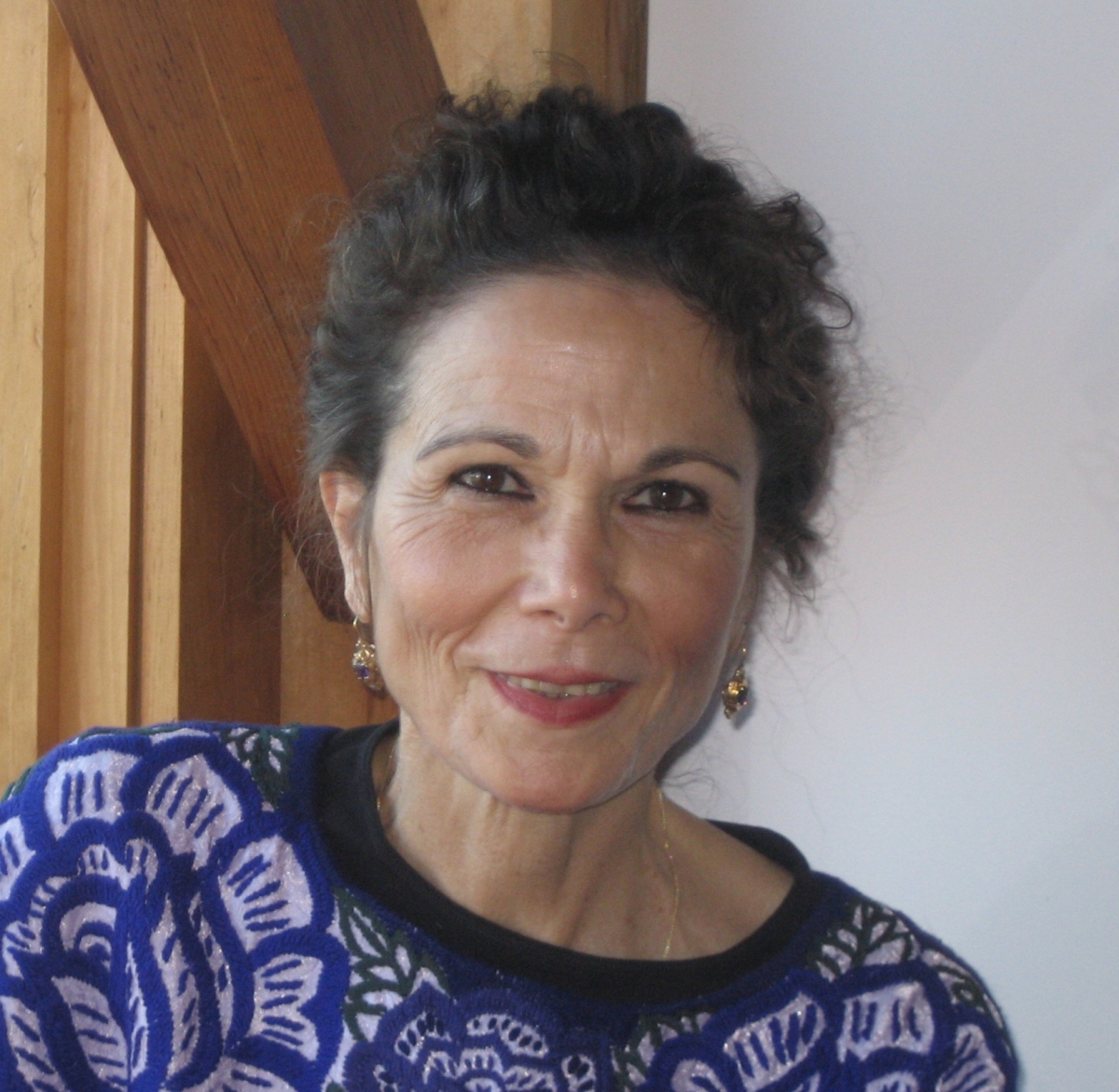
In the collection Visitations (Knopf 2026), legendary writer Julia Alvarez returns to her first love, poetry. She revisits familiar subjects in this beloved form: love, loss, her childhood in the Dominican Republic and the influence of her tías and sisters, fleeing the Trujillo regime and the challenges of moving to the United States, then building a life as a woman and an immigrant. But the perspective she offers now contains the voice of wisdom gleaned from her career and the poems are intimate confidences that sparkle with revelations. It’s as if the kaleidoscope of Alvarez’s world has shifted and blooms with fresh insights.
Alvarez is the author of numerous works of fiction, nonfiction, and poetry, including the novels How the Garcia Girls Lost Their Accents (Algonquin, 1991) and In the Time of the Butterflies (Algonquin, 1994). Alvarez’s many honors include the Latina Leader Award in Literature from the Congressional Hispanic Caucus Institute and the Hispanic Heritage Award in Literature. She received the National Medal of Arts from President Barack Obama.
She joined me by phone to discuss what it means to write about the living and the dead, what she refers to as “deCatholicization,” and reclaiming the term muse.
This interview has been edited for length and clarity.

The Rumpus: Visitations is your fourth collection of poetry. How do you consider writing in your life? As a career, a calling, something else entirely? And what keeps you coming back to it?
Julia Alvarez: Writing for me has been a way of life, a way of practice. Some of my friends are meditators. Some are runners. Writing is my practice, my way of integrating, of knowing things. Publication is punctuation. It’s also a distraction, but it’s necessary because you want to close the circle.
When you’re a storyteller or a writer that puts the work out there, having a listener, someone who receives it, completes it and really enlarges it. Like in that poem about citing the muse in Matanzas. I think of this little woman who has carried this poem throughout her life, and when she swayed with it, and recited it with such passion, it just had been words she has carried through her whole life. Was it any good? Who wrote it? It suddenly didn’t matter. It had found this person who was hungry and was fed by those words. That is why I write, why I read, and what poetry is really about. It connects to that whole thing of visitations, that metaphor of Mary and Elizabeth [the mother and aunt of Jesus Christ in the Bible, respectively], the babes in their womb sleeping, Mary suddenly coming up with this beautiful poem that she says [was] inspired by the so-called Holy Spirit. But just that when a poem quickens that in you, or something you’ve written quickens that in another, oh my goodness!
Rumpus: In the poem about Matanzas, you refer to the woman who recites for you as a muse. It made me think of how, as writers, we showcase experiences with folks that go below the surface to a deeper level. Do you remember when you first started recognizing those experiences, and how and when you started defining the muses in your life and writing?
Alvarez: That’s such a good question. Let me say that in the moments that it happened, I didn’t give it that name, “muse.” By giving it that name and recognizing it, I was decolonizing the whole idea of muse. I was raised on the canon, the traditional framework of the inspired poet. Women were mostly the inspirations, not the writers, and they took on male names like George Eliot in order to disguise themselves. When I wrote my first book of poems, [Homecoming (Penguin, 1996)] where I really felt like I found my voice, I realized that my voice didn’t sound like those guys. My voices were the women in the kitchen, the tías tasting the sazón to see if the sofrito was just right, or Mamí showing me how to hang a line of wash.
My first group of poems were the housekeeping poems, using ironing, sweeping, making their clothes, naming the fabrics, decolonizing the whole idea of subject matter. Something that happened to you in everyday life could stir that same impulse in you, it didn’t have to be academic, and it didn’t have to be just for the literary, that it was out there everywhere.
Advice that I got from my teachers, including what Henry James told his young writers: to be him “on whom nothing is lost,” to pay attention, or she on whom nothing is lost, or they on whom nothing is lost—but that the first step in writing is to be alive to the world around you, to pay attention to those moments. They don’t have to be interactions with humans, they can be any sort of thing, but to feel something stir in you, then to find the words that don’t squash it or colonize it or flip its wings, but let it fly. That’s what I love about poetry. Fiction is about something else, but poetry abuts on the silence, almost mute, and yet finds the words for what can’t be put into words. It takes my breath away when I read a poem that does that.
I think of the poems as scouts. They go out into unknown territory, they push up against what we don’t know. Once they come back and report, the wagons come in, and the people—the families, and the kids that need a dentist, and the hula hoops, and the bubble gums, and neighborhoods, and people gossiping and making bread—it’s all humanity, but that first voice out there pushing and pushing.
Rumpus: Reading the “Sobre Mesa” part of your collection, I was struck by how you use Catholic imagery. I don’t want to say that you are decolonizing it, but I’m not sure what the word is.
Alvarez: DeCatholicizing. (laughs) It’s claiming those stories, and in many cases, those women, the Mary Magdalenes, the Veronicas. She’s the one that goes up to this Jesus on the cross and wipes his face. She’s not trying to get religion from it. She’s just trying to take care of him, and she ends up with his image on her kerchief. When I’ve had to say the “Our Father” [prayer], as an adult, I say, “Our Mother, who art here on earth.”
Rumpus: One section of Visitations is devoted to your sisters, who you’ve written about for the span of your adulthood. What was it like to write about them at this stage of life, especially about your older sister who is recently deceased?
Alvarez: She’s still a presence. The older you are in life, nearing that liminal crossing over, so many have gone ahead of you. All the tías, those figures from childhood, and adolescence, all gone. You lose a whole village. As you could hear from that poem, I was struggling to find differentiation, because I always think of us as the four girls. When we came to this country, there weren’t that many Dominicans around, and one of the saving things is there were three others. We were not mirror images, because we were each so different, but they were my own little coven. I am drawn to that sisterhood, and maybe that reinforced my need to find sisters in literature. When I wrote How the García Girls Lost Their Accents, I was reading a lot of immigrant memoirs, and they were all male. I also love Little Women, and there were four sisters there, too. We thought that was pretty spooky. They had the same initials in the same birth order as we did. If you pay attention, maybe, just maybe, the universe is talking back to you.
Rumpus: Do you think that that is something that unites all writers, that we have what could be described as a sixth sense, that we can intuit when moments in life represent something much deeper?
Alvarez: I know writers who sign contracts for three books at a time, and I think, “Oh my god, that would kill me.” The mystery would start to run away because I’d be in a panic. The skin of artists tends to be a little porous. Maybe they’re more sensitive, and maybe that’s why they retreat to books in childhood because they need a protective skin. It’s the same way that women who have been mothers have this acute hearing. When I was younger and friends would have babies, we would be gathered together, the babies in another room, sleeping on coats. One would cry, and the mother whose baby it was would respond. It’s that sense of detail that you develop because it’s at the cellular level.
When I joined a meditation group, I kept thinking, “Wait a minute, I’ve never meditated, why is this not a mystery to me?” When I’m working, it’s a form of that deepening and widening of things. I think of those moments, which I’ve deCatholicized, as sacramental moments.
Rumpus: You’ve navigated questions of identity and belonging throughout your career. How has your writing life shaped the way you think about legacy?
Alvarez: Each book has to teach you how to write that book. I love to follow a writer who I admire, even through their so-called “fail” books. I’m interested in what they’re doing, not in the polished product. I’m in a relationship, not with a writer, but with the work. I’ve followed writers that most of my writing friends have abandoned. When I go on tours, and there’s students with their kids who are reading my children’s books, I have this sense that this is what I get instead of having children.
Rumpus: When I was reading your poems that had to do directly or indirectly with Trujillo, I wondered what it was like for you dealing with our current political situation in the United States.
Alvarez: At the end of his life, Stanley Kunitz said that sometimes he feels abashed and upset with himself that he didn’t write more political poems, and then he realized that to live as a poet in the modern super state is a political act. Periodically in my writing and in my life, I enter a kind of turbulence where I have tiny pieces of string, and I can’t find the narrative to weave together the way forward. The current atmosphere is creating a turbulence of all the pieces I thought were laid to rest but weren’t. It reminds me of my poem, “American Dreams”: coming to this country, being told that we were coming to the land of the free and the home of the brave. We would turn on the TV, and people are being hosed, having dogs attack them, and I confronted Papí. “Pero Papí, aren’t these Americans too?” And he didn’t have an answer for me. The kid at the end of “American Dreams” said she didn’t know yet that dreams still needed fighting for, and they still need fighting for now.
I wrote an op-ed, The New Yorker turned it down, The Atlantic turned it down, about what we, from your banana republics, can teach you about dictatorship. We see it coming here now and here’s what we’ve learned. By the way, I’ve always been upset by that store [Banana Republic]. I used to go into the brick-and-mortar up in Burlington and say, ”Don’t you realize that the name of the store is an insult?” And the young sales clerks would say, “We have nothing to do with this, lady. Here’s the corporate office to write to.”
Visitations’ last poem about turning off lights, talks about what spark can I keep, which is to not give up trying to find it in life in those moments and interactions, or in the work. So, even though I feel like I don’t know where I’m going next, I sit down and I spend that time writing and looking for those threads, those sparks of joy. Doing the practice is like the pilot light left on. It’s affirming this [spark] will not go out.
I was just in New York City at the Dominican Writers Conference. It started with a group of older women singing songs and incantations that were once labeled superstition and pathology and moving their lived-in bodies. They came out in the audience and pulled people up to dance and sing, and I thought, “This is what we do. Maybe we’ll go down temporarily, but we’ll go down singing, and we’ll rise up singing,” and I felt such hope. This president, whose name starts with T just like Trujillo, has he had a poet in the White House? Has he had a poet at his inauguration? Who did he have there? The writing on the wall is now being written in verse and short stories and music and painting, and it’s writing that we have to keep doing.
Rumpus: How did you think about the structure of Visitations?
Alvarez: These are poems written over forty years or so. This is where an editor really comes in useful. My first editor is my agent Stuart, who’s a really sensitive reader. He’s been getting poems from me, and certain poems have been published here and there. After the last novel, he said, “Well, what about your poems? You always say you start the writing day with poetry. Poetry is your first love.” I started gathering them, and I sent a whole bunch, and he said, “I see some threads here.”
John Freeman at Knopf ended up taking the book, and he is a poet himself and he saw connections and threads and made suggestions. Then I started to see it. This is the thing that a good editor can help you with. They see connections that, because you’ve been so immersed, you’ve been in the trees so you don’t see a forest or how things are connected. The more you work with that, the metaphors start to work in your head, and you see, “Oh yeah, this, beside this one, these all together,” and you work with some kind of structure that you’re seeing. That’s the best kind of editor you can get, not just someone who comes at it from the outside, but gets into the work itself and begins to be intuitive.
Rumpus: How do you think about this latest collection in terms of your work? What does it mean to you, or are you still figuring that out?
Alvarez: Angie Cruz was my conversationalist at the Dominican Writing Conference. She asked me about the poem about waiting for my father to pick me up at the library, specifically, “Was this a poem I could have written even ten years ago?” And I thought, “Oh, that’s part of this collection.” There’s a perspective that I didn’t have when I was the little girl looking in the three-way mirror at my mother changing faces in her vanity. Ruby Sales, who marched with Martin Luther King Jr., she’s an old woman now, too, and she says old age stinks. Everything hurts. You’re losing your sight and your hearing. You can’t walk very far, very fast, but you’ve got this new vision: You got hindsight. You got foresight. And, you got insight. That’s 360 degrees. It’s a bigger perspective, which also makes it harder to write, because you see so much. When you write a novel, when you write a poem, you put your arms around only some of it. That selection is a lot of the revision, and so is staying with it for as long as it takes.
Rumpus: How has your writing practice changed over the course of your life? Is it more related to revision than when you were younger?
Alvarez: Someone once asked me when I was a younger writer, “What’s your writing process?” and I said, “To keep one sentence ahead of the Furies.” The Furies are all the things that tell you you can’t make it. Oh, you know, someone’s gonna get mad, or you can’t say those things. You can’t outrun them all the time, but you have to keep one sentence ahead of them. When you’re my age, they overrun you sometimes. So you say, “Okay, slow down, take your time,” but then the hell of it is that there isn’t that much time left. The clock is ticking and you hear it. On the other hand, the writing says, “I will come in my own time.”
This is also where an editor, a writing group, comes in handy. I was stuck for many years after the last novel. I had this story, I was going round and round, and at that time I was seeing a therapist. Every week, I’d bring my anguish about it, and this went on for a couple of years, until she said, “Why don’t you share [it] with someone? You’re so alone with this.” I sent it to a former editor, and she was very positive about it. I was thinking so hard on it I was not letting it flow. Whatever we’re going to make is probably going to be messy and flawed. I love poems and novels that are a little bit feral, not too tidy or too resolved. The mystery isn’t figured out. It stirs in you.
Rumpus: What are you working on now, and what’s next for you?
Alvarez: I go down to the study, and I am its servant. I have been circling and circling this incident, this event, these characters, but I don’t know yet how or where it might be going. I don’t want to push it where I want it to go, because that will not be the mystery. I want to listen, and so my way of listening is to go down and write, and sometimes it lets me work on a passage here or there. More poems, more stories will come. It’s devotion. It gives meaning and beauty to life when all around there seems to be so many horrors, and so much unkindness, and so much not seeing each other. It’s a practice in seeing and saying.