Twenty-two years of tinnitus. Eleven different medications. Acupuncture is the only thing that works, and I don’t believe in acupuncture.
I lie face down on a folding table covered with a beach towel that has faded from blue to grey. My right cheek presses into the plastic, my left arm hangs off the side because that’s where Jaume told me to put it the first time I came, two years ago, and I haven’t changed the position since. The towel smells of detergent. Underneath, the table smells of older men.
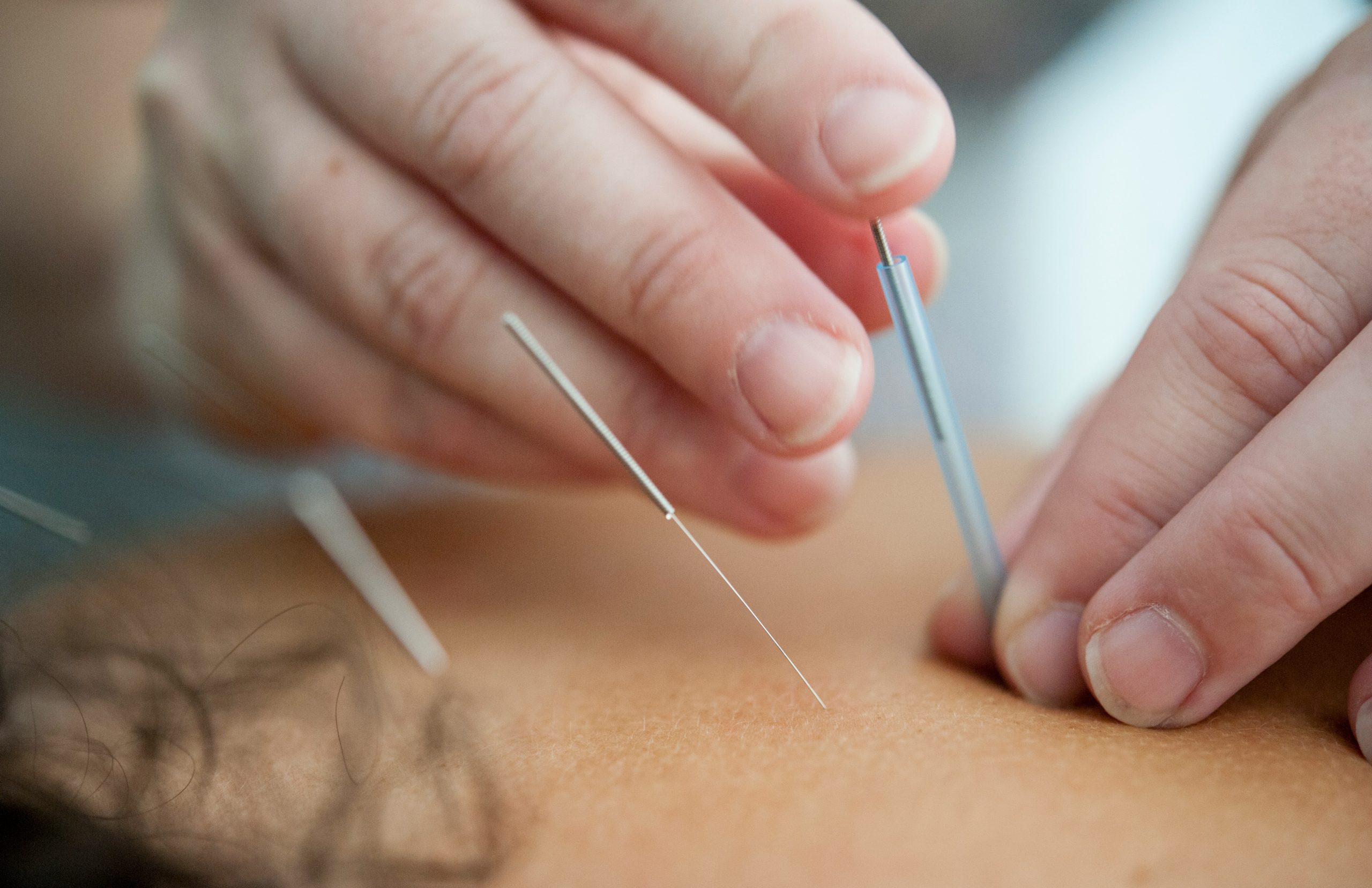
Jaume works behind me. I cannot see him. I hear his breath—nasal, measured, slightly congested. I hear the click of the lighter when he relights the incense. I hear the small dry sound of a needle leaving its paper sleeve. I do not hear him think, but I sense it: the pause before each insertion, the calibration of a man who learned this from a weekend course in Castelló fifteen years ago and has been pretending ever since that the diploma he printed himself was issued by someone serious.
He charges thirty euros per session, cash only.
The flat is on Carrer del Crist, second floor, no plate on the door. His mother’s flat, kept exactly as she left it in 1991. Curtains the color of weak tea. Above the sofa, the Sacred Heart on oil-on-board, the kind no one buys now and no one throws out. A pharmacy calendar from 1987 by the kitchen doorway. December. The page has never been turned.
I have been listening to a high-pitched tone in my ears since I was nineteen. Around 5,500 Hz, the audiologist said, the year I bought my first pair of expensive headphones. The tone has a slight wobble in the right ear, a steadier signal in the left. It does not stop. It never softens. It does not respond to medication, silence, alcohol, sleep, or the thirteen relaxation techniques the public health system tried before discharging me.
It responds to Jaume.
A man at the bar told me about Jaume two and a half years ago. He had used him for sciatica and could walk again. He didn’t say acupuncture. He said: He knows where to push. He gave me a number written on a paper napkin and looked over his shoulder as he passed it across, as if even the napkin embarrassed him. I called from the car the next day, parked outside my own building.
I do not know why. I have a degree. There is no mechanism by which a man with no medical training can, by inserting a needle into a specific point on my body, switch off the sound that has accompanied me for two-thirds of my life. And yet, every time, the tone fades. Around the eighth or ninth needle, it begins to grow quieter. When he inserts the last one—the one in the small toe of my right foot, which he always saves for the end, and which he twists clockwise twice—the sound disappears.
I would say I lie here for that moment. For the silence. But it would be more accurate to say I lie here because the silence has become my only certainty, and certainty, when you have been disqualified from it for half your life, is worth thirty euros and one hour of immobility on a stranger’s mother’s folding table.
He is on the fifteenth needle now. Lower back. I feel the cool wipe of alcohol, then the small dull pressure, then nothing—it is in.
I count my own breath. The needles in my chest forbid deep inhalation. They forbid most things. They forbid scratching, swallowing too vigorously, shifting weight, turning the head, sneezing. There is one in the web between the thumb and forefinger of my left hand that pings when I shift weight. There is one above the bone of my left hip that I cannot feel at all, and this absence of feeling worries me more than the others, because I do not know whether it has met a nerve or has met empty space. The first time I came, I asked Jaume what would happen if I needed to use the bathroom. He laughed and said: People who need the bathroom shouldn’t drink three coffees before coming. I did not drink coffee that morning, and I have not drunk coffee on the morning of a session since.
There is a small ceramic heater on the floor near my feet. Chinese, from the bazaar on the corner. The kind whose plastic casing has the brand name scratched off. It runs on a thermostat that doesn’t work, so Jaume leaves it on the highest setting and turns it off when he remembers. The room is small enough that the temperature climbs quickly. He likes the patient warm. He read somewhere that the meridians open with heat.
The heater makes a sound like a small dog being slightly choked. Chk. Chk. Chk. Then a longer hum. Then chk again. I have been listening to it for forty minutes.
Jaume moves around to my feet. I feel his thumb on my ankle, the familiar pressure, looking for the bone he wants. Cold alcohol. Then the needle. Then nothing. He works his way up the arch, then to the side of the foot. Then to the small toe.
He pauses.
I hold my breath.
The needle goes in. He turns it once, twice, clockwise.
The sound stops.
There is no other way to describe it. The high tone, which has been the constant background of my existence since I was nineteen, simply ceases. I want to cry. I have wanted to cry every time, for two years, and I have not, because Jaume is in the room.
He does not speak for a moment. He never does. He understands this part, at least, even if he does not understand why what he does works. He moves quietly back to the head of the table and adjusts the towel under my cheek. Then he says, the way he always says it:
“I’ll be back in a few minutes. Don’t move.”
I hear his slippers on the hallway floor. The kitchen door. The chair he pulls back. He will smoke one cigarette at the kitchen window. He always does. Then he will come back. He will remove the needles in reverse order. The sound will return the moment the last one leaves my foot. I will pay him thirty euros for the forty minutes the silence has lasted. It is the only deal I have been offered in twenty-two years.
But today, when his slippers reach the kitchen, I don’t hear the chair.
I hear nothing for a moment.
Then I hear his voice on the phone. Low. Cordial. Speaking in the slightly higher register he uses for older clients.
“Yes, tía Pepica. Yes. Of course. Half past five. Yes.” A small laugh. “Of course.”
I cannot turn my head. I lie with twenty-two needles in me—I have counted, over time, the standard number for my treatment—and listen to Jaume reassure tía Pepica about her appointment. The heater clicks. The incense is half-burnt. I can smell it changing: The first hour is sandalwood, the second hour is a thinner, sourer smoke as the stick burns down to its bamboo core.
I think, without meaning to: If there were a fire, how would I get out?
Fifteen metres to the front door. Six to the room’s. A hallway. With twenty-two needles in me, with my right arm asleep, with nothing on but a sheet across my hips.
Carrer del Crist has no traffic on Wednesday mornings. There is a bar on the corner that opens at eleven, but it is ten fifteen. The neighbour on this floor is an old man who is deaf. The flat above is empty since the man who lived there died in March. No one in this building would hear me if I shouted.
I am beginning to feel the warmth from the heater on the soles of my feet. It has been on for forty-five minutes now. The plastic must be hot. I have not, until this moment, considered the plastic.
Jaume finishes the phone call. The chair scrapes. The lighter clicks. He smokes. I hear the long inhale, the slow release. Three more inhales. Then he taps the cigarette out on the windowsill, the way he always does, and his slippers come back down the hallway.
He enters the room. He stands by my head. I cannot see him but I can smell the tobacco on his fingers. He places one of those fingers on my temple, gently, the way he does to check whether the patient has slipped into sleep. I have not.
“I’m going to try something new today,” he says.
I say nothing. There is nothing to say. I am held in place by twenty-two thin steel rods and the silence of the disappeared tone, and the only certainty I have left in the world is that this man, for reasons no one can explain, can do this to me.
“I’m going to add a little reiki,” he says.
He says it the way other people say a little salt. The way they say a touch of milk.
I hear, in my left ear, the high tone return.
It is not gradual. It is not a fade-in. It is the sound switching back on, at exactly the volume it had before Jaume’s last needle, with the slight wobble in the right ear and the steadier signal in the left, and it fills the room I have just been able, briefly, to hear without it.
Jaume’s hands hover over my back. I cannot see them but I feel the air move. He hums quietly. He has, I realise, been planning this. Reading something. Or told by a cousin, by a man at a fair in València, that the cure could be deepened.
He stops humming. He rests his palms on my shoulder blades. He breathes audibly through his nose. He believes the silence was his hands. He has decided to be of further use.
The smell I could not place is plastic.
It is not the warm-plastic smell of a heater on too long. It is a different smell, sharper, blacker. The heater is two meters from my face, and I cannot see it. It is melting plastic. I have known the smell since I was a boy.
I do not move. I cannot move. There are twenty-two needles in me, one of them in the small toe of my right foot, Jaume has not yet removed it.
Jaume hums again. He has not noticed the smell. He is breathing through his mouth now, in the slightly performative manner of a man who has read that breath is important. His palms move down my back toward the small of it, hovering an inch above the skin.
I hear, very quietly, a sound that is not the click of the heater. A faster sound. A rustle.
There is a curtain by the heater. The curtains the color of weak tea. The hem of the curtain on the left side of the window, the side near the table, has been brushing the top grille of the heater for two years. I have never thought about this. Jaume has never thought about this. Jaume’s mother, presumably, thought about it once in 1991 and then thought about other things.
The rustle is the curtain.
The heat from the heater on my feet is no longer warm. It is uncomfortable. I am alone in a room with my back to the only window and twenty-two needles in me and a man behind me with his palms in the air, humming.
The question, the one I never asked, comes back. Sharp. Specific. Practical.
From here, how do I get out?
I cannot turn my head. But I can move my eyes. I shift them as far left as they will go, until they hurt, and I see, at the very edge of my vision, the lower corner of the curtain.
The first flame is the colour of an old wedding ring.