
In 1985, Lily loses her right eye to a strand of barbed wire.
In 1986, she begins burying her teeth.
I watch her from the kitchen window. She digs with her hands, pulls the tooth from her pocket and places it in the earth. The sun catches her glass eye so that it sparkles from her face like the light on a modem.
In 2024, it’s Lily who drives out to let me know Dad died. She stands on the front porch of my doublewide, hands in her jacket.
“Get packed. We’ve gotta get to Grand Forks,” she says.
“Mom’ll need help with organizing everything,” she says.
“Are you okay? Are you still here? Say something,” she says.
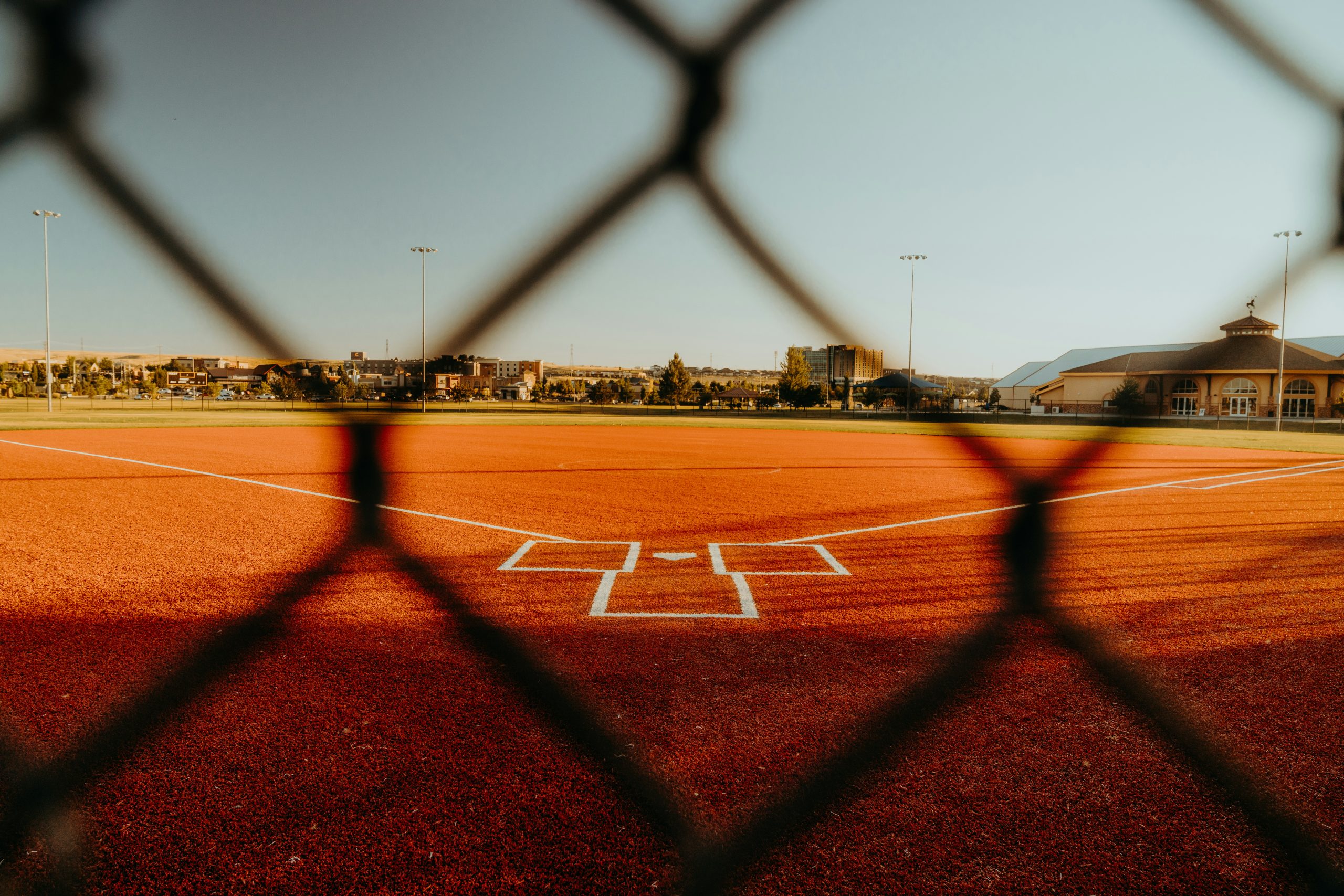
In 1996, I strike out Bernie Williams to win the second consecutive World Series for the Atlanta Braves. I become the third youngest player to win a series, and the youngest pitcher to do it. The dugout empties and I’m buried beneath the weight of my teammates, beneath the noise of forty-two thousand screaming fans, beneath the cool October sky.
In 1989, Mom meets Dad at the front door. She’s in tears telling him how she found Lily in the bathroom with blood leaking from her mouth. Dad takes Lily into his office, cradles her in his arms, tells her stories, talks about why she’s pulling her teeth. I hear it all from the hallway.
In 2024, it’s a stiff reunion. Nearly half a decade stands between me and everyone else, a chasm of my own making since developing the HRs and what Dr. Vaughn has explained is scopophobia. But grief closes the gap, offers itself on the altar of conversation, and the afternoon is pulled toward evening in a flash flood of sharing memories and recounting stories.
Dad’s brother, Kent, is wheeled to a spot in the kitchen by the sliding glass doors where he can watch the tree line that frames the backyard. Everything outside is covered in thick snow, an erasure of the world. I’m startled by the midwest winter. Startled at the resetting of things, the quiet violence of it, the subtlety of surrender. I think of the Anne Beattie story my dad used to read every winter.
Kent has Dad’s eyes and he looks up at me with them and smiles with recognition, but I see in the pupils that he doesn’t know me.
“You struck that Albert Belle out in ’95,” he says. “Caught him chasing.”
“That’s right,” I say, reaching out to take his hand.
“My nephew plays ball,” he says. “I wonder, if you’ve got the time, I’d like to have you sign something for him. If you’re keen.”
“Sure thing,” I tell him.
In another room Lily’s voice raises to a near shout, “How can we not have the funeral?”
In 1987, there’s a funeral for Mom’s parents. During the service, Lily pushes at a loose tooth with the tip of her tongue until it finally tears away and she spits it into her open palm.
“I’m going to bury it,” she says, a little too loud. “For Nana.”
“What about Grandy?” I whisper.
“You pull your tooth,” she answers.
“I don’t have a loose one.”
“It doesn’t have to be loose, you just push on it.”
“It doesn’t work that way,” I tell her. “My teeth are permanent.”
Dad looks down the pew with an expression that quiets us.
A few moments pass and then, timidly, Lily whispers in my ear, “Nothing is permanent.”
Later, outside the church, I watch her kneel down beside a hydrangea bush and pull the earth toward her with her hands. From a pocket in her dress she retrieves the tooth, and I see it flash in the sunlight before it disappears into the ground.
In 2009, someone sends me a YouTube link from the 1996 World Series and I watch myself strike Jim Leyritz out for the second time. For the next five hours I watch myself on the mound. It’s the first time it happens: a feeling like electricity behind my eyes. A dull throb at the center, as if caught between like poles of a magnet. Some invisible weight pushes through me and I feel the room slip, feel the world reset with the sticky breeze of a late summer night, the volume on my computer replaced with the sound of aluminum bats meeting baseballs, and then it all whirls into place: Greenville, SC, the AA affiliate and its 142 game season, the MLB strike that made the minor leagues feel like a colossal waste of time.
I have the conversation with Dad again about Lily and the pain meds. We talk about the grueling season and low-budget motels the league puts me up in for housing. I know what each of us will say before we say it, but nothing changes. We say it all again.
“She’s in pain though,” I tell Dad.
“I know,” he says.
“But it’s more than just that,” he says.
“She’s feeding the pain,” he says, again.
In 2011, I explain to Dr. Vaughn the HRs.
“It’s like this,” I tell her, “I’ll be sitting on the couch, or I’ll be in line at the grocery store, or I’ll be at a red light, and suddenly the world dissolves and I’m somewhere else. Like, in an instant. Take yesterday, while I was on the phone with my sister. Mid-sentence and I’m on the mound again. I can feel the grit of the sand on my pitching hand, can taste the tobacco in my cheek. I hear the hum of the crowd waiting to erupt. I’m there, like really, actually there. Not just remembering, transported.
And Javy’s giving me the signals from behind the plate. I nod at a fastball, start the windup. Belle chases it and strikes out swinging. And the stadium erupts. It’s all brand new but happening again, like I can see what’s going to happen right as it’s happening. The dugout empties, I’m dogpiled.
And then Lily’s asking me if I’m okay, if the line’s been cut, asking me what happened.”
“You believe you’re actually there. That it’s not just a moment of unconsciousness,” Dr. Vaughn says, and I’m not sure if it’s a question or an observation, but I answer her anyway.
“I go somewhere else. I do some other thing, relive the exact moment exactly as I lived it, and when I come back I’m just as exhausted. Sometimes even more.”
She taps a pen on her chin, nods, says, “And you call them HRs? Which you say stands for Hard Resets?”
I nod.
“And not home runs?”
In 2024, Kent walks out into the snow in only his undershirt and briefs. I find him wandering the backyard, leaving a chaotic trail in the snow. I bring him inside and wrap his feet in towels. For a moment, as he looks down at me, I see the small glimmering thread of a memory that ties us together. But then it’s gone again. Mom told me when it happened that the dementia set in fast, told me how it began with Kent misremembering things and then all at once lost everything. Kneeling at his feet and watching him disappear, I think about what Lily said all those years back, how nothing is permanent.
He pats my head and tells me I’m kind, says he saw something in the woods behind the house, a baseball he needed for his nephew, Mickey Mantle’s ball out there floating among the trees.
In 1985, when we get to her at the next farm over, Lily has pulled herself up to the trunk of a sycamore. Her knees are curled to her chest, face in her hands, blood running through her fingers and down her legs, diluting in the water, staining her socks pink. The creek behind her is still violent with the flood’s current and I think it’s a miracle she pulled herself from the water at all.
She stays overnight in the hospital. They’ve wrapped her head in gauze, her face ripped apart and hidden beneath the white fabric. She’s buried under three white hospital blankets, and I watch her chest rise and fall as she breathes. Lily erased, becoming something new underneath all that white, iterating into herself.
We’re all in the hospital room, but Mom can’t look at me. Dad says he needs a coffee and brings me with him out into the labyrinth of hospital hallways. He tells me it’s not my fault, that I can’t blame myself, that we’re all fortunate the afternoon didn’t go any worse.
“No one blames you,” he says.
“You did good getting us as quick as you did,” he says.
“It’s all just exposition. We’re a long way off from endings, just yet,” he says.
In 2024, Lily and Mom have it out about the funeral. I sit with Kent by the sliding glass doors while it happens. It feels like a moment in narrative, like some anchor point or what Mrs. Revan, all those years back in junior year, called the turning point. Dad always said narrative moved like a flash flood: slowly toward something and then all at once, and there was only the story’s current, wild and violent and accountable to nothing but itself.
Mom makes no concessions. Her parents had died in a boating accident and their bodies were never found, so for her their funeral had been as hollow as the caskets lowered in the ground that afternoon. She wouldn’t hold another service that ended with another false burial. She’d wait, have the funeral once the ground thawed, once she’d be able to put him in the ground for good. Until then, he’d sit on ice at the morgue.
Lily’s rebuttal goes that leaving him there for however many months it’d take for the ground to thaw would be irreverent, would be equal to forgetting him, or worse yet: ignoring him. She says Mom is refusing to move forward, to move on. She says that this is just, in her own way, Mom choosing to die with him.
I try to mediate, but even I can hear the lack of conviction in my voice, so I eventually resign myself to the glass doors with Kent and let their conversation take us where we all knew we were headed: no agreements, no common ground, no resolution.
I spend the early hours of morning in my childhood bedroom fingering the small archive of myself: a picture of the family at Rushmore, a signed Dick Allen card, one of the books Dad edited with all the creased pages from the many times I’d read it, a cast iron turtle with a shell that hinges open to reveal my collection of skipping stones I pulled from the creekbeds on my grandparents’ farm, the collection of pocket knives I started on my sixth birthday and gave up by my eleventh. There are trophies from my early years on the mound, a Tiger Electronics BASEBALL game Lily gifted me for Christmas in ’91, a toy camera that printed out pixelized photos on receipt paper. Behind all of it, tucked away where I’d hidden it decades ago, is the small wooden box I’d made one year at a summer camp. I pull it out and can hear the familiar rattle of its belongings. I look for the key to open it, but can’t find it anywhere. Not in the drawers of the writing desk, not hidden in a trophy or under any of the electronics that crowd the shelves. I pull books from the bookcase and spread their bindings, making them dance to let loose anything tucked between the pages, but no key.
Finally, I go to the pocket knives and look for one with a blade hefty enough to pry the box open. I’m at the precipice of something, can feel the magnitude of this, slipping the blade into the space between, looking for the perfect leverage point… and then something catches my eye.
A flash across the glass of my bedroom window. I leave the knife where it is in the box and look out to see a small ball of light hovering just inches from my face between the glass panes. I squint to draw it into focus, to see what its source might be, but then it suddenly zips away, down the backyard, toward the woods that frame my parents’ property, and there it hovers just inside the tree line.
I feel my feet carry me out of the room, down the stairs to the kitchen, toward the sliding glass door that’s been left slightly ajar. A small line of snow has drifted in and melted into a puddle that soaks my socks. Jarred from the reverie for a moment, I pull my boots on and loosely tie them, and then, again, I’m pulled out into the night, toward the light now blinking in and out view as it floats through the firs.
There’s a scratch of electricity behind my eyes, that familiar vertiginous sway, but I don’t disappear. I stay right here in the snow, moving toward the light, caught in an orbit that tugs me into the woods. I’m almost running now, chasing the light as it dances in and out of sight. The tree limbs tug at my shirt, create labyrinths to navigate, reach out like arms holding me back. In my hurry a low branch catches my face, leaving a thin scratch across my right brow.
The light bounces ahead and I feel a colossal significance married to it. A kind of promise that if I were able to reach out and grasp it, hold it in my hand, I could finally get back to a particular moment, to that anchor point that sent things in the direction they’ve been hurtling toward for so many years now. If I could catch it I could peer into it and see my life laid out plain, every step and misstep, and there’d be an opportunity for surgery, an excision, a righting of wrongs.
That light ahead of me, moving just out of reach. And me stumbling toward it, certain now of its meaning. The future is a long exhalation. It becomes a prism now and in it I see God, my father, myself, fractals of light creating new light and everything caught up in it. I see a cascade of machines falling down from the heavens with the blinking eyes of Lily looking up where she’s knelt over the grave of a buried tooth.
It’s closer now than ever and I reach out further, lean into it, give myself to gravity. When my hand finds it I’m shocked at the way it feels soft, like flesh, and when my fingers close around it the light whips quickly toward my head and I feel the impact crack against my skull and the light goes out.
In 2001, I have a root canal. The anesthesia doesn’t set in and I feel every moment of it.
In 2014, Kent’s memory goes.
In 1987, Mom loses her parents.
In 2012, I move into a doublewide on top of a bald hill surrounded by trees in middle Tennessee and I log off completely, using what’s left of the money I’d earned in my three year stint in the majors to effectively disappear for good.
In 1997, I get the call in the bullpen to relieve John Smultz in our opener against the Astros. Dad and Mom and Lily are here in the stands behind home plate. From the infield I can make out where they’re sitting, the stadium lights glinting off Lily’s eye.
Before taking the mound, I begin my ritual, picking up a blade of grass from the infield and sliding it between my teeth. I bring both hands up to my face, my pitching hand tucked into the glove on my other. I wind up, bringing my left knee to my forehead before extending my foot toward home plate, toward Javy who’s just signaled for a fastball. My pitching arm makes its elliptical arc, beginning behind me and ending at my left ankle, the ball released somewhere in that motion screams 88.9 mph away from me. It should cross the plate and hit Javy’s glove with a crack, it should be a blur to the batter and to the fans watching, it should go where I sent it. But a shock of light blinds me at some point in that motion and the ball sails up into the net behind the umpire.
In 1993, my wisdom teeth are removed. Lily buries them in the backyard and I don’t know why it angers me. I dig them out of the ground and lock them away, hiding the key somewhere in my bedroom. I tell her to grow out of it.
In 1985, my five-year-old sister follows me into the deepest part of the creek behind our grandparents’ farm. It’s raining and we’ve been caught in it for almost an hour now. It’s just a little rain, I tell her, but she’s ready to go back to the house. Go then, I taunt her, knowing she’d never journey back through the cedar groves and tangled food plots on her own, and I want to make it to the place where the creek forks and the water is deeper. You followed me, I say when she threatens to tell our parents that I wouldn’t bring her back home. Without thinking I pull a rock from the ground and hurtle it into the water just inches from where she’s standing. She stops, fear in her eyes. A feeling manifests, like control, and I pick up another, hurtling it toward the same exact spot. And then another, and another. The accuracy of each throw emboldens me, feeds a growing certainty: where I want to send something, there it goes.
Lily is caught between it now, me and the certainty of myself. She steps toward me to follow up the bank and out of the water, and I hurl a rock at the place where her foot would land. She stands there, trapped between me and the rising water. Her eyes well up with tears, but whatever it is behind them isn’t sadness or fear. And I can’t see it anyway. My attention is on the target where the next rock will land. I pull another from the bank and begin to take aim.
In 1999, the Steve Blass disease permanently ends my career in the majors.
In 2009, I get my first HR.
In 2024, blood drips from my temple into the snow. Kent shuffles away from me, the orb of light now dancing frenetically in his right hand where holds the Maglite.
I chase him down, reassure him everything is fine. There was someone in the woods, he tells me, someone he knew, someone he recognized called after him. He had to find him.
When I bring him up the backyard and through the sliding glass doors, relief washes over Mom and Lily’s faces. Anne appears from the other room and drops the phone from her ear, rushing to Kent and wrapping her arms around him, sobbing with relief. I see it happen in his eyes, my Dad’s eyes, like a doe emerging from the forest. He’s Kent again, in the room with us, apologizing, kissing his wife’s head and saying, “I’m sorry, Anne. I’m sorry. I saw him and I thought I could follow him. My brother’s out there in the cold. I’m sorry.”
She pulls back and looks at him, her eyes wide and red. She moves to take his face in her hands, but he’s gone again. He startles, flinches away from her and turns to run. In the action, the Maglite whips around and catches me again, this time on the jaw. Blood fills my mouth and I feel something separate.
On my knees, I assure everyone I’m okay. There’s a scuffle to calm Kent and take the Maglite from him. I look over and see Lily crouching down to inspect something on the floor. Before she has a chance to reach out and pick it up, I already know what it is.
The tooth is in my palm. We’re sitting on the floor in my bedroom, our backs against the twin bed. The dim light of sunrise spills into the room. Between us, on the floor, is the wooden box. I’d managed to finally pry it open, and now Lily examines its contents: twenty-six teeth, each with flecks of dirt still speckled on them from when she’d buried them.
“Why?” Lily asks me, fingering the teeth inside the box.
“I don’t know,” I answer her. “I didn’t like that you were already putting parts of yourself in the ground. I guess it felt like you were getting a head start or whatever.”
She stays quiet, looking at the parts of herself I unearthed and hoarded away.
“ I felt responsible, ” I manage, “like maybe if you hadn’t lost your eye that day in the creek you could’ve kept yourself whole.”
She looks up from her teeth, her glass eye rolling and looking beyond me, the gaze fixed somewhere else. With the other she looks into mine and says, “You know that’s not how it was. How many times did I tell you not to blame yourself? We were kids.”
She reaches out and pushes my fingers over my own tooth, squeezing tight and rubbing the back of my hand with her thumb.
“Why’d you do it, then?” I ask her.
“It felt good to feel the missing parts of myself. I’d tongue the gums where the tooth had been and know that I’d changed, become new again.”
“And burying them?”
“That made it matter to me. I didn’t want to just go through some transaction. A piece of me for a piece of change or whatever, no envelopes beneath the pillow. It went beyond that.”
We’re quiet for a moment and then Lily snaps the lid shut on the box, gathers it under her arm, and stands up. She offers me her free hand and pulls me to my feet.
“I have an idea,” she says.
But I already know before she explains it.
Click here to subscribe today and leave your comment, or log in if you’re already a paid subscriber.