
depression
-

Mind Over Genre
Over at Lit Hub, Jennifer R. Bernstein confronts the disciplinary rift that has grown between psychology and literature to show how the two are linked, even nested inside one another in our studies of self and pain: For these authors…
-
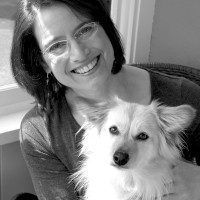
The Rumpus Interview With Brenda Miller
Author Brenda Miller discusses the lyric essay, her “poet self” who always bleeds through, and what she’s writing about next.
-

The Sunday Rumpus Interview: Anne Enright
Anne Enright, author of, most recently, the novel The Green Road, talks with Elizabeth Isadora Gold about motherhood in reality and in fiction, and writing beyond labels and easy definitions.
-

Eating in Purgatory
I always say the last time was the last time, and I always mean it, but I’m scared I’ll relapse again.
-

The Rumpus Book Club Chat with Zoe Zolbrod
The Rumpus Book Club chats with Zoe Zolbrod about her new book The Telling, pushing against victim narratives, how the conversation surrounding sexual abuse has evolved, and the melding of research with memoir.
-
Self-Reflection
At Lit Hub, Kathryn Harrison discusses her relationship with her reflection and the asymmetry in her face as she ages: Time passes, months, then years, and that bathroom mirror loses its power to frighten me. Still, I find it mysterious,…
-

The Rumpus Interview with Amy Sohn
At the end of the day, all we have to hold onto, really, is other people’s stories. And that’s how Alizah Solario’s series “Writers on Wheels Getting Tea” was born. The first interview features author Amy Sohn.
-

The Rumpus Interview with Meghan Daum and Elliott Holt
Meghan Daum, the anthology’s editor, and Elliott Holt, who contributed its penultimate essay, discuss Selfish, Shallow, and Self-Absorbed.
-
Are We All Our Own Vanishing
We will never be an exclamation point, an ellipses, a question mark. We must all leave with this: a period—solid, and utterly irrefutable.
-
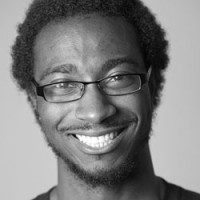
The Rumpus Poetry Book Club Chat with Phillip B. Williams
The Rumpus Poetry Book Club chats with Phillip B. Williams about his new book Thief in the Interior, form in poetry, and balancing editing work with one’s own.
-

The Sunday Rumpus Essay: A Finished Brain
In her twenties, the author was criticized for showing too much emotion. Decades later, having learned to compartmentalize, she’s accused of not being able to feel. Is this depression, or contentment?
