
history
-

Forgotten Females
Jillian Cantor explains what drew her to the women in history, Margot Frank and Ethel Rosenberg, that she wrote her two novels on. Cantor is intrigued by women in history whose stories are lost or forgotten, and uses her writing…
-
Charlotte Bronte’s Letters
Laura June writes for Pictorial at Jezebel on the epistolary life of Charlotte Bronte. June covers Bronte’s later years, showing that the significant portion of what we know about Charlotte Bronte comes from her correspondence with her best friend, Ellen…
-

The Rumpus Interview with Jessa Crispin
Jessa Crispin talks about The Dead Ladies Project and The Creative Tarot, founding Bookslut, why she has an antagonistic relationship with the publishing industry, and her estrangement from modern feminism.
-
Mary Somerville: Journalist, Scientist
Matthew Wills revisits the life and career of Mary Somerville, a 19th century scientist, translator, and a popular science journalist. Somerville also has a notable place in linguistic history: the word scientist was first used in a review of her…
-
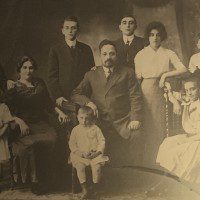
What They Never Told Me, What I Never Asked: Reflecting on Roots and Writing
[T]he questions pile up, never to be answered.
-
Before Virginia Woolf, There Was Lola Ridge
At The New Republic, Terese Svoboda discusses “the forgotten feminism of Lola Ridge,” a radical poet who she says paved the way for feminist writers like Woolf with her 1919 speech “Women and Creative Will.”
-
The British and American Henry James
The memorial in Chelsea Old Church tactfully describes him as “a resident of this parish who renounced a cherished citizenship to give his allegiance to England in the first year of the Great War”—the “cherished” insisting from the grave that James…
-
Archives for the Future
Preserving information and data archives in the digital age presents a new kind of challenge. Physical books may degrade over time, but even a book in poor condition can be taken down off a shelf and read. Digital storage devices, however,…
-
Poetry and Plants
A tour through Rumphius’ work is a masterclass in the poetry of the concrete noun. His shells bear names like Little Dream Horn, the Prince’s Funeral, Peasant Music and the Double Venus Harp. Atlas Obscura tells the story of Georg Everhard Rumphius (no…
-
Fingerprints, Racism, and Sherlock Holmes
Fears of mistaken identity and unconscious slips were crystallized in the literature of detection but emerged from a broad range of hermeneutic practices across the era, at a time in which those in power considered the borders of empire and…
-
Origins of the “Fantasy North”
E.R. Truitt writes for Aeon on the long history of the “Fantasy North,” the lands, people, and culture at the top of the world that have fascinated pop culture for centuries. Truitt also marks the points in history when the…
-
The Eden of the Surveillance State
Participation in our own surveillance was the price of entry into heaven. In the Winter 2016 issue of Lapham’s Quarterly, Amanda Power writes on the history (real and mythological) of the Western surveillance state, whose roots can be found in…