 It’s the Internet, where I am plying my trade here, and it’s meant to be the Wild West—unregulated, unruly, unpredictable. Still, I have resisted, in the twenty-four columns I have already posted here, singing (as it were) the praises of musicians I actually play with myself and know well despite the fact that I believe them to be some of the best in New York City. With this in mind, I have decided to throw the ethical reservations switch into the off position, and talk about these musicians I know best and the projects they are working on, in the hopes that at some point you will invest some time and energy in listening to this music. Beyond that, what is the point? The point of a column entirely devoted to nepotism is that it is a column in which language is uniformly employed in praise of a certain things, and I like criticism best when it is describing what the critic approves of and why. The complaint about Lester Bangs, in the old days (c.f. Psychotic Reactions and Carburetor Dung), was that he wrote best about things he disliked. Yet I happen to love Bangs’s essay on Astral Weeks, a record he adored, which is the first in his posthumous collection, and I often hold it up as a model for the kind of music writing that I try to undertake myself, criticism that is risky in terms of interpretation, various in terms of its methodology, linguistically ambitious, and passionate. Especially this last quality is essential. Writing on music in the Wild West of the Internet is often jaded, hasty, low-affect, approving mainly of the writer’s street cred, which is to say that this writing is mostly posturing, as though this were the one essential quality of a music writer, his posture, while the music in these cases is guilty until proven innocent. The world is so full of disappointment, so full of cultural products unworthy of attention, that when you find something you actually care about, assuming you actually can, and are not too high or too cool to care, you should give everything you have to it, in terms of celebrating it, and attempting to make others aware. So, for today, I put aside my feeling that I shouldn’t write about the nearest and dearest, that I will be incapable of seeming sufficiently evaluative about the work, because I care about the players. It’s precisely because I care about the players that I’m going to write about them, and having done so, I will return to writing about things that I know as a more casual listener for future bulletins—i.e., the regularly scheduled programming.
Nina Katchadourian, Marfa Jingles
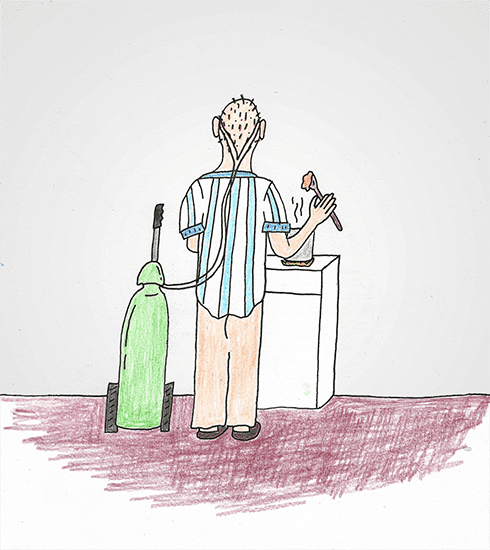
 In The Wingdale Community Singers, the band I play in, Nina Katchadourian is the jack-of-all-trades. She serves, somewhat, the role that Mike Heron served in the original Incredible String Band, that is, she strums, whereas most of the rest of us are trying to finger pick. In part, that’s because Nina loves rock and roll, and isn’t shy about her love. She also plays some percussion, some accordion, some recorder, and sings a lot. Her voice is sort of a smoky alto that is low enough that sometimes I sing a higher harmony line than she does. She also contributes songs, as on our most recent album. However, The Wingdales have a sound and a mood, and Nina’s own songs are sometimes more whimsical, and more upbeat, in general, than the dour Wingdales fare, and therefore she has always found other venues for her songs, or, more accurately, she has her own career path apart from us, a path that includes both traditional singer-songwriter fare, and then more unusual, specialized songs, of which the above album is one great recent example. Marfa, TX, many of you will know, is a sort of an art tourist destination these days, owing much of its celebrity to the massive site specific works there of Donald Judd and some of his friends, works made possible by the largesse of the Dia Art Foundation. (I have made the trip there myself, and it was one of the best writing months of my life.) Nina went there recently, and as part of a fellowship, wrote and recorded “jingles” about local businesses in Marfa. Of these “Marfa Public Library,” available on her My Space site, is really great, is especially notable for the conventional way the voice and the guitar work, and the way the words undermine the conventionality of the jingle idiom, leading you elsewhere, into a sort of singer-songwriter subterfuge. “Food Shark” has a sort of punk rock aspect, and features a rhythm section comprised of musicians from the Marfa area, who pinch hit on other tracks, as well. But perhaps my favorite song on the album is the “Jingle for the Marfa Lights,” which is a song about an unexplainable phenomenon, certain ghostly lights that hover in the middle of a prairie just outside Marfa. Marsh gas! Some people say. Teenagers! say others. The big chorus and the wall of backing vocals here display a genuine wish for the lights to be more than the naysayers say, and this is a good indication of Katchadourian’s great songwriting chops. She has also written jingles for a market on the Lower East Side of Manhattan, and for Roosevelt Island (masquerading with a few other geniuses, including Brian DeWan and Meg Reichardt, as the Patient Island Singers). I hope one day I’ll be able to sing the virtues of a genuine Nina Katchadourian solo album, which has been in the works for a while, of which a couple of tracks have been recorded so far, but in the meantime the Marfa Jingles will serve. They are funny, sly, clever, and frequently moving.
Hannah Marcus, From English Planes
 I’ve been talking about this album long enough now that I’m sure some imagine I’m making the whole thing up, but in fact Hannah Marcus, solo artist, and mainstay of The Wingdales (the band was formed by Hannah and myself sometime in the early 2000s), is almost done with her new album. It’s all recorded in fact, and is mostly mixed, but just needs to be mastered. I have heard many layers of this project, its earliest songs, up through the more recent recordings, and feel about it sort of the way one feels about one’s sibling taking up action painting. One believes entirely. And: action painting, it’s so difficult. The first layer of the album was older material that happened to coincide, in my interpretation, with Hannah being newly in love, and so From English Planes may or may not have been about the nationality of the love object. The best song, back then, was “A Sweeter Way to Say Goodbye,” which was both a love song and a farewell to love songs, to the consolations of love songs, and it has the best bridge, really. The very best bridge of a love song in a long time. Hard to imagine that this song would not be some kind of gigantic world wide monster hit, hoarded jealously by everyone who cares about songwriting. The sound, as with much of the rest of the album, suggests a calliope being reimagined from inside of a Meth lab, or Tom Waits’s band on holiday at four in the morning, exchanging instruments, and most of this sound was provided by A Silver Mt. Zion, the Godspeed! splinter project, at their most mournful and non-orchestral. It’s like jazz in hell, or like folk on bad acid. I could fashion some more similes, but similes are cheap. One song, “Eric,” has the chorus “I want to be a neutron star,” and that’s because Hannah Marcus likes interstellar imagery (she’s working on an entire suite of things set to lectures by Richard Feynman, the physicist), and because people in love can be subsumed into interstellar phenomena, and that’s why all the later John Coltrane albums have ethereal imagery in the titles. There was also on Hannah’s album a song called “Hey Goldminer!” that sounded like Tom Waits until people leaned on Hannah a little, and then it morphed in the second layer of recording into a bereaved country song. In this second layer, there was a ravishing, band version of a song called “So What?” which composition (also recorded by the Wingdales, in a folkier arrangement) is sort of central to where Hannah is and what she believes in. The words are a free retelling of a passage from an Andy Warhol diary entry: “I was walking down the road/when I came upon a bunch of people/having a good time/and I realized a friend of theirs they really liked had just died.” The rest of the song concerns the proper reaction to death and trauma, which is all embodied in the words “So What?” You might ask what Hannah is so traumatically rueful about, and it could be new love, and the difficulty of new love, or the failure of new love, or the failure of the idea of new love, as new love becomes adolescent love, or even senescent love, or it could be that “So What?” is here addressed to the song form itself, or to the idea of songwriting. So what? You might ask the song, or songs in general? Why bother to listen to you? As usual with Hannah, the most sad and woebegone compositions are given ravishing arrangements, with the backing vocals coming in for almost baroque treatment, most of them performed by Hannah, but also by some others, by a microtonally virtuosic choir. This album is really great, is the best unreleased album that I know about, and it’s passing into being five years old now, and still isn’t finished, mainly because the artist has moved and is buying a new car, and it’s always something, but eventually it will be done, and we can remember why she is the best not-well-enough-known singer in all of Brooklyn, if not all of New York City, which means the best singer, or one of the best singers in the land, one film soundtrack song from being the Leonard Cohen of this time, now. I really mean it.
One Ring Zero, Planets

I have played with, recorded with, written lyrics for this band for more than ten years now, and I find them always surprising, unpredictable, inventive, funny, unpretentious, and impervious to sadness. They have little in common with a conventional rock band of the present, in most ways, but they kind of keep trying, though they are far more creative than a rock band is supposed to be. The sound leans on Eastern European music in some ways, on Klezmer, and also on cabaret, and it’s for these reasons that One Ring Zero repel routine classifications. Then there are the flourishes in arranging. They use a theremin regularly, and they are probably the only band these days using a claviola, which is sort of a plastic clarinet fused onto an accordion, and there’s the Thomas organ, which sounds like a organ that your cousin the mad scientist might play in the basement. The most famous One Ring Zero album is As Smart As We Are, whose title comes from a song about cockroaches, which album features a lot of very smart writers composing lyrics, some of whom are entirely effective as lyricists. The sheer pluck of As Smart As We Are is really winning and did in fact win over many. The revelation of the album, notwithstanding the lyrics, was the singing, because the band had hitherto been known mostly as instrumentalists. Joshua Camp is the better singer; in fact, he’s a great singer, but Michael Hearst has a sort of heartbroken whimsy to his voice which works very well, and they sing great together, usually an octave apart, sort of like the Kinks. After As Smart As We Are, they made a studio album, Wake Them Up, which was a punk rock album in look and feel, although a very smartly arranged one, and which had no thoroughgoing concept, except good songs, many of which were great indeed and are now in evidence in the live set. Since it didn’t have famous lyricists, Wake Them Up wasn’t as splashy, but it should have been. Planets tries something more risky, at least in the sloppier-than-thou indie rock underground: a prog album. One Ring Zero has genuine bona fides here, because I believe that Josh Camp played in a Genesis cover band, at one point, or was it a Rush cover band? I can’t remember. But he knows more about classic Genesis than anyone I know, and can talk about it in a lighthearted and head-scratching way: what was I thinking? And Mike is extremely knowledgeable about Geddy Lee. One time I was in Mike’s company when he talked to a guy near St. Mark’s Church who he thought was Geddy Lee, but who was not at all. I watched from a safe distance. The subject matter of this One Ring Zero prog effort is, of course: space. There’s one song for each of the planets, one for Pluto, one for the “exoplanets,” and a fancy little introductory number. The songs feature a lot of prog touchstones—tricky middle sections that shift time signatures, orchestral passages (there are lots of horns and strings throughout), wicked fancy keyboard parts, instrumentals, key changes, you name it. There are even some synthesizers, thought they aren’t played in the Rick Wakeman style exactly. The Planets is a ridiculously confident and polished recording, even though I think most of it was recorded in Mike’s office. The instrumental charts are nearly as sophisticated as Van Dyke Parks or that glamor boy of indie rock string arrangements, Nico Muhly. There are enough prog borrowings the keep any music fiend amused (some Pink Floyd references, some ELO references, some Yes passages), but the most important point here is that these are really great pop songs. They are moving, they are tousled, they are endearing, and they are very, very well written. Obviously, I’m going to say that I think the best lyrics here are on “Uranus,” which is the song I was born to write, and I sing on it too (I am part of the wallpaper of background vocalists), but that is less important than the fact that I was born to write a prog rock song about Uranus, one that features a big drum fill, and a guitar solo, and having done so, I can now set aside the better part of my prog rock childhood and move onto better things (although I did see Rush play recently, and “Tom Sawyer” was really good).
David Grubbs, Onrushing Cloud (Blue Chopsticks)
 I am really lucky to play music with David Grubbs, who is the “lead guitar” player in The Wingdale Community Singers, and who is many more important things besides: a member of the Red Krayola, of Gastr del Sol, and of Squirrel Bait (the excellent Louisville hardcore band), and of the proto-Tortoise math-rockish outfit called Bastro, in which he played through and transcended total noise; he is also, recently, a maker of many solo albums of songs (on Drag City), as well as an architect of lots and lots of experimental music. As regards the songs, I was lucky enough to collaborate on some lyrics with David on two records, Rickets and Scurvy and A Guess at the Riddle, and in the process to grow to love the guitar stylings of the man, whom I consider at the forefront of the instrument these days. His playing reminds me of Glenn Mercer of the Feelies or maybe Richard Lloyd in that he has, just by dint of playing and loving playing, become a complete individual as a guitarist. You will never mistake a Grubbs part for anyone else’s, and we can speak of certain tendencies: absolute rhythmical perfect, for one, understatement, and a tendency to prefer timbre and texture to playing fast, a tendency to avoid pedals and effects unless they are really doing something important, which they only infrequently are, and a love of chord voicings that are often closer to jazz than to rock and roll. He always heads for chords where there are a lots of notes suspended. His voice, too, to me is a perfect instrument, laconic, Southern, and full of vulnerability. Even when the lyrics are abstract, nearly painterly, there is that emotional openness to the voice that really makes the lyrics stick. But having said all this about the songs (and a fine recent example is An Optimist Notes the Dusk, which features the trumpet playing of Nate Wooley, of whom I also wrote recently), what I really like is the furthest out experimental iteration of Grubbs, in which he often collaborates (with people like Mats Gustafsson, Loren Connors, Tony Conrad, the aforementioned Wooley, and many others), often plays harmonium, and in which he goes far afield indeed. He has, I happen to know, an analogue synthesizer in his storage unit in Brooklyn. He has mixed entire albums on earbuds in his apartment, and made entire albums while his son was sleeping. Which is sort of like Nabokov writing novels in the bathroom so as to avoid waking Dmitri. Of the really experimental stuff, I have in the past noted my appreciation of Two Soundtracks for Angela Bulloch, but I also love Act Five, Scene One and Banana Cabbage, Potato Lettuce, Onion Orange. All of the more abstract pieces are incredibly rewarding, especially as you listen to them over time. I was therefore very excited to hear of a new collaborative album coming out in vinyl (though my own turntable is one of those not terribly good ones that is housed in a faux-antique chassis, in general I think the return to vinyl, which is sweeping the indie world recently, is a step in the right direction; even though recent digital audio mastering sounds lots better than it used to sound in the eighties and early nineties, there’s still something terribly artificial about making all those sound waves uniform and bumping everything up to the same excessive volume—vinyl is, as the commonplace suggests, warmer, and even on my low-class close-and-play turntable things sound warm, and I enjoy the requirement to turn the disc over, as I did through my teens), this time with Andrea Belfi and Stefano Pilia, both Italians with experimental and avant-garde rockist tendencies, the whole being entitled, as shown above, Onrushing Cloud. This is a great title, and it suggests the sound of the whole, which is made from electric guitars (Grubbs and Pilia) and percussion/electronics (Belfi), excepting a tiny bit of piano and singing by Grubbs on the title track. The whole starts slow, and builds toward some agreeable wall of interdependent syncopations, in which the lead instrument is more often Belfi’s electronics than it is the guitars, and that is consonant with Grubbs’s other efforts along similar lines. The lyric for the one “song”—though this is a misnomer in that the album proceeds through its five cuts without interruption and is therefore continuous—is great too. It has a Bashoesque allusiveness, including the presence of rats, where rats ought not to be. Most often, these days, David Grubbs is somewhat overworked by his job at Brooklyn College where he teaches electronic music and composition and other things, and it might be to the detriment of those who love his songs, but still, despite his heavy schedule, he manages to fit in these beautiful semi-improvised collaborative albums, likewise his pieces for art installation and film, and the fact is that that these pieces teach as well, as Grubbs often does generally; he is nothing if not a thinker, an intellectual, and a person of subtle but enthusiastic passions, and even the most recondite and obscure of his passions always includes lessons (easy pieces, to speak in the Feynman mode) on how to listen and to appreciate, and Onrushing Cloud is a perfect example.
Rick Moody, The Darkness Is Good (Dainty Rubbish)
 It is especially embarrassing to speak of myself here, but since I have mentioned everyone else in my band, and some other friends besides, I will say that I have in fact recorded a solo album, and that it is probably coming out at some point soon, on a brand new record label owned and operated by the novelist and teacher Nelly Reifler. If it were not for Nelly and a few other very encouraging people, this album would never see the light of day. And it may yet be a while before it does. When it comes down to it, one of the qualities I most admire in music and art is vulnerability, as I have said about David Grubbs’s voice above, e.g., and in trying to make my solo album, my model was the very early Palace Brothers records; The Madcap Laughs, by Syd Barrett; Weed Forestin’ by Sebadoh; and the recent releases of Gene Clark’s demos. In fact, Gene Clark has been a very important recent influence. Some of you will know his sad tale (left the Byrds at the pinnacle of their popularity because of his inability to fly without crippling anxiety, prompting Roger McGuinn to quip: “Gene, you can’t be a Byrd if you can’t fly,” after having written some of their most memorable tunes—“Eight Miles High,” e.g.—to embark on a very spotty solo recording career, marked by great albums made at the wrong time, and alienating and unprofessional behavior at the right time, culminating in an early death from addiction and related medical problems), but fewer of you will know his work, which certainly merits more attention (I suggest The Adventures of Dillard and Clark, and White Light). What I like about Clark is the nakedness, and so I tried to produce some nakedness myself. Whether it is possible for a middle-aged guy in comfortable middle-age who is some decades from his last period of excess and more or less serene in domestic life to make music like an addict and phobic with a lot of skeletons in the closet, I do not know, and furthermore, I will never sing as well as Clark (though I may ascend to the heights of his somewhat untutored guitar stylings), nor write songs as indelibly. But one’s record has to sound like something. So mine sounds like it was made by a slightly desperate person who could not find anyone to collaborate with, though I am surrounded by reasonable collaborators, as shown here. I play guitar and some piano and sometimes sing unaccompanied. All songs by me, except for one lyric by Jonathan Lethem. There is also some harmony singing by Nina Katchadourian, who has always made me sound better than I am. It may be that this record is in fact never to be released, and that would be all right with me, but if some of you want to hear a song or two in anticipation of its release or non-release, just ask, and I will send one along.
John Wesley Harding, “Uncle Dad”
 His musical name is a pseudonym, borrowed (of course) from a certain R. Zimmerman album, and I know him better as novelist Wesley Stace, with whom I sometimes perform in a folkish cover band that specializes in two-part harmony, and thus he qualifies to be on this nepotistic list. I first met him when he was living in Seattle with a writer friend of mine. He had green hair then. We went out to dinner and he sent me his album from that time Confessions of St. Ace, which I recommend to any lover of songcraft. To me it sounds like a Squeeze album from 1982, which was sort of a great moment for Squeeze, and for songcraft generally. My favorite song was “People Love To Watch You Die,” which I think was, in my interpretation, about how hard it is to continue to perform in public, especially in “mid-career,” the hardest time of any artist’s life. But there were many other great songs on that album (“Goth Girl”) and those albums that followed, which included Adam’s Apple, and the recent Who Was Changed and Who Was Dead (this last featuring the excellent “Top of the Bottom”). My favorite Stace compositions have been the world-weary numbers. Because melancholy and undue self-consciousness are not really in his repertoire (he’s a first-rate entertainer, and that’s how he goes about his artistic business), when he bends ever so slightly in those directions (“Sussex Ghost Story,” from Adam’s Apple, e.g) the songs really lift off. I was really lucky, therefore, to hear a composition from among the demos he has on hand (and which he will be recording, I am told, with the Decemberists in the Pacific Northwest sometime later in the year) called “Uncle Dad,” which concerns that most twentieth century of predicaments—the dad who, after the divorce, no longer behaves like a dad. The song may have some resonances with Stace’s own biography. It certainly has some resonances with mine, and with many acquaintances of mine from the seventies. The built-in poignancy here enables him to pursue the material with the vengeance that it deserves, though this is not to say that the song is anything less than the great midtempo pop song with amazing chorus that is Wes’s stock in trade. He likes a big chorus. Perhaps it is the lot of some musicians to be first of all great professionals, and Wes is this. He’s shockingly well-connected (counts Springsteen, Rosanne Cash, Dave Pirner, Tom Robinson, Grant Hart, everyone in R.E.M., the Young Fresh Fellows, and most of the original Throwing Muses as friends), and most people really enjoy spending an evening with him. His music is the same. But it also frequently brushes up against the most lasting greatness, and this song, “Uncle Dad,” as well as others among the recent compositions (“Captain Courageous” is also especially lasting) is an example of the damn-the-torpedoes approach, and it seems like if this is the sort of song he’s recording this fall, and therefore he will be making a really great album, and album that isn’t simply about great songwriting, but is also something emotionally dense and complex and paradoxical, which are moods that have more recently come to the forefront in his novels (Misfortune and By George are the two I have read, but his third has come out in England and is imminent here), moods in which the manifest content and the latent content are at variance, and what seems like mere entertainment is something altogether more painful and dark. I like this sort of thing. I admire it. And so this is what we have to expect from what comes next, at least according to the demos that I have heard—an album of songs eagerly to anticipate.
Other Friends

Other friends include The Walking Hellos, whose two albums (The Walking Hellos and Because I Wanted to Know) I know well of, because The Walking Hellos include Myla Goldberg, the novelist (best known for Bee Season, and a number of other equally great works besides), and who therefore sit squarely with The Wingdale Community Singers on the ship of Lit Rock. We played with them not long ago, opening for the Golden Palominos on behalf of Electric Literature, and they put on a great show. For me there are not only the voices in the band—most often Myla, but also Rose Thomson, the bass player, and potentially everyone else—there is also the especially amazing drummer, Heather Wagner, who is sort of the feminine analogue for Keith Moon, and the electric guitar player Val Opielski, who plays a double-necked guitar occasionally (the second one is baritone, not twelve-string) and who had the temerity to suggest casually that we, The Wingdales, might play louder. The Walking Hellos do the Pixies-esque loud-soft-loud dynamic variation thing very well, and their lyrics are great. And: Adam Simmons is a wind instrumentalist from Australia, who was ringleader at Music Omi, when Nina Katchadourian and I were there in 2006. He plays jazz, sure, but he plays nearly everything else besides, including noise and new music and punk, and there doesn’t seem to be an instrument on which he doesn’t have proficiency. I can think of few players I know of who are as gifted and as receptive to collaborating and working with other musicians. Though he has played plenty of serious music, he also fields, occasionally, an ensemble called the Adam Simmons Toy Band, whose album Happy Jacket involves a lot of made-in-China plastic geegaws that he must have stolen from his kids’ nursery, but which are, on the recording, employed in completely novel ways. This band is, to my ears, completely sublime. The compositions have a bit of Rahsaan Roland Kirk about them—they aren’t hard bop, they are harmonically accessible jazz pieces, but the soloing is brave and electrifying, and the same is true on Simmons’s most recent album, an album of solos simply entitled Adam Simmons. (One of Simmons’s collaborators on the Toy Band project, I should note, was Nadje Noordhuis, a young trumpeter and flugelhorn player who has also played on a few Wingdales dates. She’s possessed of a most beautiful tone ((and perfect pitch)), and while she hasn’t finished her first album yet, her web site is worth a visit for a few examples of her efforts). And: I want to give the final spot to one of the most spectacular productions I have heard recently, namely Dan Carlson’s album Aviary Jackson, an album of ballads heavily influenced by British pop of the mid-sixties—with a dash of Harry Nilsson and Brian Wilson thrown in. The production is by Michael Leonhart, who has worked with Steely Dan and Yoko Ono, etc., and it’s absolutely stunning. Leonhart and Carlson did the arranging, and there are walls of backing vocals, without a hair out of place, and synthesizers burbling in the rear of the acoustic space, and acoustic guitar and piano seated in positions of prominence. The songs are mostly interiors, melancholy and allusive, and the arrangements go a long way toward allowing each to stand out. Also the album makes the most of a couple of uptempo numbers, including the first song (which is nearly a Motown-style single), “The Innocents,” and an almost-dance track composed (it seems to me) from the drums up, “Downtown Again.” Throughout, Carlson’s voice has a Brian Wilson-esque mournfulness, like he’s trying to talk himself into being happier than he really is, but the perfection of the arrangements and the sound of the album prove indisputably that the melancholy of the songs themselves does not lead inevitably to clinical diagnosis. Carlson worked his ass off on the record and it shows. It’s an album made entirely of drive and tenacity, and it’s admirable for this, as well as for its no-hair-out-of-place tonalities. And that does it for a column of embarrassing partisanship for my friends and acquaintances who play music, and this embarrassing duty now discharged, I will return to music by people I know far less of. It’s August, and if you have to bend the rules once in a while, August is when you bend them.