<?xml version="1.0" encoding="UTF-8"?>
<rss version="2.0"
	xmlns:content="http://purl.org/rss/1.0/modules/content/"
	xmlns:wfw="http://wellformedweb.org/CommentAPI/"
	xmlns:dc="http://purl.org/dc/elements/1.1/"
	xmlns:atom="http://www.w3.org/2005/Atom"
	xmlns:sy="http://purl.org/rss/1.0/modules/syndication/"
	xmlns:slash="http://purl.org/rss/1.0/modules/slash/"
	>

<channel>
	<title>The Rumpus.net &#187; Bruce Snider</title>
	<atom:link href="http://therumpus.net/author/bruce-snider/feed/" rel="self" type="application/rss+xml" />
	<link>http://therumpus.net</link>
	<description>Books, Music, Movies, Art, Politics, Sex, Other</description>
	<lastBuildDate>Fri, 25 May 2012 15:14:43 +0000</lastBuildDate>
	<language>en</language>
	<sy:updatePeriod>hourly</sy:updatePeriod>
	<sy:updateFrequency>1</sy:updateFrequency>
	<generator>http://wordpress.org/?v=3.3.2</generator>
		<item>
		<title>Denying Epiphany</title>
		<link>http://therumpus.net/2009/06/denying-epiphany/</link>
		<comments>http://therumpus.net/2009/06/denying-epiphany/#comments</comments>
		<pubDate>Tue, 30 Jun 2009 21:00:52 +0000</pubDate>
		<dc:creator>Bruce Snider</dc:creator>
				<category><![CDATA[books]]></category>
		<category><![CDATA[Original Content]]></category>
		<category><![CDATA[reviews]]></category>
		<category><![CDATA[rumpus original]]></category>
		<category><![CDATA[Bruce Snider]]></category>
		<category><![CDATA[Paul Otremba]]></category>

		<guid isPermaLink="false">http://therumpus.net/?p=23644</guid>
		<description><![CDATA[Otremba’s are poems of rigorous looking. In most, a speaker coolly observes a work of art, a person or animal, the poems’ tensions emerging in part from the speaker’s struggle for knowledge and connection. “One doesn’t need to enjoy the thing, only mean it,” writes Paul Otremba in “Offices,” a poem from his debut collection, [...]]]></description>
			<content:encoded><![CDATA[<p><a href="http://www.powells.com/partner/33625/biblio/1884800890 "><img class="alignleft size-full wp-image-23647" title="the-currency" src="http://therumpus.wpengine.netdna-cdn.com/wp-content/uploads/2009/06/the-currency.jpg" alt="the-currency" width="106" height="163" /></a><strong>Otremba’s are poems of rigorous looking.  In most, a speaker coolly observes a work of art, a person or animal, the poems’ tensions emerging in part from the speaker’s struggle for knowledge and connection. </strong><span id="more-23644"></span></p><p>“One doesn’t need to enjoy the thing, only mean it,” writes Paul Otremba in “Offices,” a poem from his debut collection, <a href="http://www.powells.com/partner/33625/biblio/1884800890 "><em>The Currency.</em></a> It’s a line that expresses the split between feeling and knowing, two of lyric poetry’s central concerns.  In this way, Otremba locates himself squarely within the lyric tradition, his work exploring the self in all its extreme interiority, attempting to, as Harold Bloom has said, “enlarge a solitary existence.”  In <a href="http://www.powells.com/partner/33625/biblio/1884800890 "><em>The Currency</em></a>, however, the relationship between feeling and knowing is a fraught one; no easy Keats-ian epiphanies here.  In fact, Otremba’s poems more often explore the uncertainties of observation and apprehension, the destabilizing effects of perspective and the derangements of feeling.</p><p>As an instinctive observer, Otremba has a natural interest in visual art: paintings, sculpture, film, even tattoos.   These subjects unify the book, as do his formal control and emotional composure.  Otremba’s are poems of rigorous looking.  In most, a speaker coolly observes a work of art, a person or animal, the poems’ tensions emerging in part from the speaker’s struggle for knowledge and connection.  For Otremba, “looking” is a form of knowing, or at least an attempt at it, and the observer is as much a part of the subject as what’s observed.  Consequently, the watching “eye” haunts the book.  As he writes, “How can I know/ the eye without its names?” (“Gray Windows”), or “as when my father/ handed me the knife (my eye/ floating dimly in the stains)” (“Cleaning-House”), or “…its orange light skimmed, my eye/ snagging against the surfaces” (“The Birds”).  The eye, an organ of perception, is usually described separate from its body, the source of all feeling.  As an image, therefore, the disembodied “eye” not only makes concrete the book’s obsession with looking, but also foregrounds the speaker’s inability to “feel” the world as clearly and deeply as he “sees” it.</p><p>This tension plays itself out dramatically in “Rest Stop,” one of the book’s few narrative poems.  Here, Otremba tells the story of a disenchanted couple (“Our anger had become just another thing we couldn’t commit to”) who pull into a rest stop where another couple have stopped.   A woman in the parking lot looks on while “the serpentine, tattooed arms of her boyfriend” probe their car’s overheated engine.   Initially, the speaker registers apathy, but when the woman’s son goes missing, the speaker is quickly drawn into the unfolding drama:</p><blockquote><p><img class="alignright size-full wp-image-23652" title="otremba1" src="http://therumpus.wpengine.netdna-cdn.com/wp-content/uploads/2009/06/otremba1.jpg" alt="otremba1" width="126" height="155" />When we heard their voices becoming clearly<br />a name, we knew it was a mother</p><p>and father calling, what we all fear.<br />These were the kind of people who could lose<br />a child: frantic, almost chiding the boy,<br />who must only be playing a child’s trick.</p><p>Behind a tree, he became the tree, and his face<br />contained all faces of children emptying<br />from sedans.</p></blockquote><p>Here, the missing child humanizes the couple.  The woman is now a mother like all mothers, her son’s suffering the suffering of all children.  This, in turn, leads to a complex recognition that brings together the mother in the parking lot with his traveling companion:</p><blockquote><p>and when I looked from the mother to the woman<br />I was with, what looked back was inconsolable.<br /><em>Trickster, not the boy but the angel,<br />don’t come to make good on your promise,</em></p><p><em>your dark reprimand.</em></p></blockquote><p>The above turn unites the couples and mythologizes their pain, which now takes on Biblical connotations, human suffering as scriptural punishment, God and the fallen angel.  It’s a classic lyric strategy, the inflation of human experience through story and myth.  Significantly, however, this inflation is quickly reversed:</p><blockquote><p>….There was no angel.<br />And the boy was found down by the dog park.<br />Over the small, round rise of her stomach,<br />he rested his arm, the inked coils of a snake.</p></blockquote><p>Paradoxically, “Rest Stop” denies the speaker’s epiphanic moment even as the final image—the boyfriend’s tattooed arm over the woman’s seemingly pregnant stomach—invokes the serpent and, thus, the fall of man and the birth of human suffering.  In this way, the poem both refutes and extends its Biblical conceit.  The grammatical ambiguity of the final “he,” allows the reference to operate on several levels, referring to the boyfriend but also to the woman’s son and the trickster Angel.   It’s an ambiguous move, denying the myth’s literal truth but affirming its figurative power.  In the end, the narrative provides a sophisticated map of the speaker’s psychological drama, a failed struggle for connection as he attempts to access intense feeling.</p><p>This struggle takes on even more explicit religious dimensions in “Surfing for Caravaggio’s <em>Conversion of Paul</em>,” in which the speaker searches online for a painting depicting the moment when Saul of Tarsus, on his way to Damascus, hears Christ’s voice and is struck blind by divine light.  Significantly, it’s a moment of religious transformation, one from which the speaker remains distant.  The speaker informs us that he’s looking up the painting because he’s been “reading a poem/ about a poem about a Caravaggio”.  The degrees of separation here are important as, once again, the speaker struggles to bridge the vast distances between knowing and feeling.  Although he announces,” “I don’t have to go to Italy/ to stand in line for a conversion,” he also quickly reaffirms his skepticism:</p><blockquote><p>Are the brushstrokes authentic, or the light?<br />Or the <em>salvation</em> (which doesn’t share<br />a root with “salivate” or “salve”),<br />something saintly?  No, he’s still<br />only Saul.</p></blockquote><p>Despite the painting’s power, the speaker remains unconvinced by Saul’s transformation, so he searches online for another version:</p><blockquote><p>…But Caravaggio painted<br />another version, and in this frame here,<br />nowhere near Santa Maria del Popolo,<br />it’s over, and the new convert weeps—<br />out of shame? because his shirt’s torn<br />open exposing his loose breasts?—<br />or he isn’t weeping at all behind his hands.</p></blockquote><p>The new version, however, leaves the speaker in the same quandary.  What’s the truth of religious conversion?  How does one pierce the mystery to understand and even experience it oneself?  As he concludes:</p><blockquote><p>If I were closer, I wouldn’t understand<br />more about why he covers his eyes,<br />because with a <em>click</em> it’s a throttled Isaac<br />staring out, ignoring both knife and canvas.</p></blockquote><p>With a click of the mouse, the speaker replaces Caravaggio’s Saul with Caravaggio’s Isaac as portrayed in his painting “The Sacrifice of Isaac.”  An image of religious conversion is replaced with an image of religious sacrifice, rebirth with death, salvation with victimization.  The shifting image captures the contradictory impulses of religious experience, reintroducing Otremba’s recurring images of blindness and sight, looking and not looking.  The speaker cannot understand the transformative experience of faith, “because” he cannot reconcile its destructive impulse as embodied in the victimized Isaac.  Notably, this experience is mediated by the computer, a tool of modern science, of the skeptical mind, a tool for thinking, not for feeling.</p><p>In some ways, it’s tempting to think of Otremba as a failed ecstatic poet, a man who longs for but can never fully experience transformative feeling.   In the end, however, what’s remarkable about <a href="http://www.powells.com/partner/33625/biblio/1884800890 "><em>The Currency</em></a> is that it provides such a vivid record of this inner struggle.  While it’s true that at times Otremba indulges too readily in the use of conventional lyric images—bruised light (Vigil), a “blossom-heavy” branch (Icarus)—these moments are almost always tempered by an equally precise and unsentimental gaze.    In fact, it’s easy to wish sometimes that the poems would drop their veneers of composure to express the feeling held at bay by the observing eye or to at least dramatize the reach for feeling more dynamically.  But perhaps it’s that restraint that most convincingly embodies the poet’s struggle.  Ultimately, the book presents an at times bleak but always complicated vision of the mind struggling to apprehend the world that contains it.  And the reader is left with, if nothing else, the chance to engage the expressive power of art, “a small grace” (“The Currency”), Otremba tells us, but a grace nonetheless.</p><p><a href="http://therumpus.net/2009/06/recitation-by-paul-otremba/">Read &#8220;Recitation,&#8221; a new poem by Paul Otremba in Rumpus Original Poems.</a><br /><h3 class='related_post_title'>Related Posts:</h3><ul class='related_post'><li><a href='http://therumpus.net/2012/05/all-past-was-once-now/' title='All Past Was Once Now'>All Past Was Once Now</a></li><li><a href='http://therumpus.net/2012/05/why-did-you-leave-me-open-like-that/' title='Why Did You Leave Me Open Like That?'>Why Did You Leave Me Open Like That?</a></li><li><a href='http://therumpus.net/2012/05/eyes-open-to-the-shifting-sky/' title='Eyes Open to the Shifting Sky'>Eyes Open to the Shifting Sky</a></li><li><a href='http://therumpus.net/2012/05/my-mouse-field-was-a-triumph/' title='My Mouse Field Was a Triumph'>My Mouse Field Was a Triumph</a></li><li><a href='http://therumpus.net/2012/05/why-should-anything-be-inappropriate/' title='Why Should Anything Be Inappropriate?'>Why Should Anything Be Inappropriate?</a></li></ul>]]></content:encoded>
			<wfw:commentRss>http://therumpus.net/2009/06/denying-epiphany/feed/</wfw:commentRss>
		<slash:comments>0</slash:comments>
		</item>
		<item>
		<title>The Best Music is Made of Subtraction</title>
		<link>http://therumpus.net/2009/05/the-best-music-is-made-of-subtraction/</link>
		<comments>http://therumpus.net/2009/05/the-best-music-is-made-of-subtraction/#comments</comments>
		<pubDate>Sat, 16 May 2009 21:00:18 +0000</pubDate>
		<dc:creator>Bruce Snider</dc:creator>
				<category><![CDATA[books]]></category>
		<category><![CDATA[Original Content]]></category>
		<category><![CDATA[reviews]]></category>
		<category><![CDATA[rumpus original]]></category>
		<category><![CDATA[blues]]></category>
		<category><![CDATA[Diana Ross]]></category>
		<category><![CDATA[Janis Joplin]]></category>
		<category><![CDATA[jazz]]></category>
		<category><![CDATA[Jericho Brown]]></category>
		<category><![CDATA[Please]]></category>

		<guid isPermaLink="false">http://therumpus.net/?p=18044</guid>
		<description><![CDATA[Like the Jazz, Blues, and R&#38;B music Brown references, these poems are born of heartbreak, explorations of love and violence, connections and disconnections, the vast complications of body and heart.In his debut collection, Please, Jericho Brown returns poetry to its roots in song. Organized in sections entitled REPEAT, PAUSE, POWER, and STOP, Please uses the [...]]]></description>
			<content:encoded><![CDATA[<h5><a href="http://www.powells.com/biblio/1930974795?&amp;PID=33625" target="_blank"><img class="alignleft size-full wp-image-18046" src="http://therumpus.wpengine.netdna-cdn.com/wp-content/uploads/2009/05/please_cover.jpg" alt="please_cover" width="103" height="146" /></a>Like the Jazz, Blues, and R&amp;B music Brown references, these poems are born of heartbreak, explorations of love and violence, connections and disconnections, the vast complications of body and heart.<span id="more-18044"></span></h5><h5><img class="size-full wp-image-18450 alignright" title="brucereviewimage" src="http://therumpus.wpengine.netdna-cdn.com/wp-content/uploads/2009/05/brucereviewimage.jpg" alt="brucereviewimage" width="300" height="256" /></h5><p>In his debut collection, <a href="http://www.powells.com/partner/33625/biblio/1930974795" target="_blank"><em>Please,</em></a> Jericho Brown returns poetry to its roots in song. Organized in sections entitled REPEAT, PAUSE, POWER, and STOP, <em>Please</em> uses the modern music album as its structuring trope, with poem titles like “Track 1: Lush Life,” “Track 8: Song for You,” and “Idea for an Album:  Vandross, the  Duets.”  He even calls his final notes section, “Liner Notes.”  This playfulness, however, doesn’t extend much past its surface conceit.  Like the Jazz, Blues, and R&amp;B music Brown references, these poems are born of heartbreak, explorations of love and violence, connections and disconnections, the vast complications of body and heart.</p><p>As you might expect, in <a href="http://www.powells.com/partner/33625/biblio/1930974795" target="_blank"><em>Please</em></a>, everyone sings: Diana Ross, Janis Joplin, Dorothy’s companions from The Wizard of Oz.  A series of persona poems provide a chorus against which the book’s more personal poems resonate.  Wisely, Brown doesn’t segregate these personas from the rest, choosing to let the different threads rub against and complicate each other, public and private voices joining together in one great choir, the family poems informing the love poems informing the Tin Man’s broken speech.  When Janis Joplin says, “My voice, I mean,/ Ain’t sweet.  Nothing nice about it.  It won’t fly” [“Track 5:  Summertime”], she prefigures the silence described in “Herman Finley Is Dead,” which comes just two pages later:  “The birds know a day/ Made for defeat./ Not one of them sings.” The elegy speaks for both the private death of Herman Finley as well as the more public death of Joplin.  It’s an important union, equalizing human suffering regardless of social sphere.</p><p>It’s in the more personal poems, however, that Brown’s subject matter truly comes to life.   In “Again,” the speaker moves back and forth in time to recount a dispute between his father and mother. It’s a complex poem, weaving together the poet’s writing of the poem with his family’s past and present.  The father is a source of potential violence, the mother leaving with her young son, the poet, only to return moments later.  As Brown writes, “My mother loves her husband/ And his hands/ Even if laid heavy against her.”  Significantly, the hand that strikes the mother is on the same arm that “landed/ In the same place around her/ Most of thirty years.”  This seeming contradiction is the poem’s true starting point, the irritant the poet worries into a poem.  The poem, however, doesn’t indulge in cheap sentiment or pat psychologizing, allowing the poem’s refrain, “Give a man a minute,” to interrupt and enact the poem’s tensions.   It’s a refrain that simultaneously refers to the mother’s patience with the father as well as the poet’s management of time in his retelling of the scene.  The past informs the present, which in turn redefines the past.  In the end, the poem is as much about the shifting nature of memory as it is about the paradoxes of human love.</p><p>These same paradoxes reveal themselves in new ways as the familial gives way to the erotic, the father to the lover.  Significantly, these are love poems between men. The dangers embodied by the father’s hand in the family poems become the dangers of disease in the love poems.  As he writes in “Pause”:</p><blockquote><p><img class="alignright size-medium wp-image-18045" title="jericho" src="http://therumpus.wpengine.netdna-cdn.com/wp-content/uploads/2009/05/jericho-207x300.jpg" alt="jericho" width="150" height="216" />Pause for the condom,<br />Elastic ache against death<br />Heavy in his hand,<br />And something our fingernails couldn’t reach<br />Itching out a song…</p></blockquote><p>Ironically, the flesh is both the means of connection here, as well as the source of separation.  “Pause” finds the lovers’ song is simultaneously a song of imprisonment and liberation:</p><blockquote><p>I want to ask<br />if they ever heard of slavery,<br />The work song—the best music<br />is made of subtraction,<br />The singer seeks an exit from the scarred body<br />And opens his mouth.</p></blockquote><p>Here, as in the other poems, music is part of the subject, the lovers’ song threaded through the language itself.  As the poem concludes:</p><blockquote><p>Poor Willie, whistling around my last name,<br />Wrapping his gift in safety.  Poor me, thinking,<br />If the man moves inside me<br />I must be empty, if I hide<br />Inside the man I must be cold.</p></blockquote><p>It’s partly the ending’s subdued music that gives the poem its punch, the use of repeated conjunctions to emphasize supposition (“if….if”) paired with faint internal rhymes and strategic line breaks to create intensity and suspense.  Brown’s restrained use of these effects allows him to sustain the poem’s intimate address even as they quietly embody its subject.</p><p>If the poems falter occasionally, it’s because they fail to maintain this musicality or do so unconvincingly.  At times, the language flattens out, most noticeably in the poems that employ longer lines—“Detailing the Nape” and “Track 5:  Summertime”—perhaps because Brown is most skilled using the shorter line to create interruption, hesitation and suspense, working the relationship between line and sentence to deftly play off the reader’s expectations.  Regardless, these slack moments are brief skips in the record.  In the end, Brown is more than at home with the musicians he honors.  While the tensions explored are not new, what makes <a href="http://www.powells.com/partner/33625/biblio/1930974795" target="_blank"><em>Please</em></a><em></em> impressive is Brown’s ability to marry intimate revelation with subtle musicality, the voice direct, even simple, but always nuanced and startling.  He riffs and sings with the best of them.  And it’s a pleasure to just sit back and enjoy the show.</p><p><a href="http://therumpus.net/2009/05/elegy-by-jericho-brown/" target="_blank">Read &#8220;Elegy,&#8221; a new poem by Jericho Brown, in Rumpus Original Poems</a>.</p><p>Art by <a href="http://amyletter.com">Amy Letter</a><br /><h3 class='related_post_title'>Related Posts:</h3><ul class='related_post'><li><a href='http://therumpus.net/2011/07/the-last-poem-i-loved-rick-by-jericho-brown/' title='The Last Poem I Loved: &#8220;Rick&#8221; by Jericho Brown'>The Last Poem I Loved: &#8220;Rick&#8221; by Jericho Brown</a></li><li><a href='http://therumpus.net/2010/04/national-poetry-month-day-29-cain-by-jericho-brown/' title='National Poetry Month: Day 29. &#8220;Cain&#8221; by Jericho Brown'>National Poetry Month: Day 29. &#8220;Cain&#8221; by Jericho Brown</a></li><li><a href='http://therumpus.net/2010/01/the-professor/' title='The Professor'>The Professor</a></li><li><a href='http://therumpus.net/2009/05/elegy-by-jericho-brown/' title='&#8220;Elegy&#8221; by Jericho Brown'>&#8220;Elegy&#8221; by Jericho Brown</a></li></ul>]]></content:encoded>
			<wfw:commentRss>http://therumpus.net/2009/05/the-best-music-is-made-of-subtraction/feed/</wfw:commentRss>
		<slash:comments>0</slash:comments>
		</item>
		<item>
		<title>Rediscovering the West</title>
		<link>http://therumpus.net/2009/02/rediscovering-the-west/</link>
		<comments>http://therumpus.net/2009/02/rediscovering-the-west/#comments</comments>
		<pubDate>Thu, 19 Feb 2009 21:15:35 +0000</pubDate>
		<dc:creator>Bruce Snider</dc:creator>
				<category><![CDATA[books]]></category>
		<category><![CDATA[Other]]></category>
		<category><![CDATA[reviews]]></category>
		<category><![CDATA[rumpus original]]></category>
		<category><![CDATA[Bruce Snider]]></category>
		<category><![CDATA[Cecily Parks]]></category>
		<category><![CDATA[Field Folly Snow]]></category>

		<guid isPermaLink="false">http://therumpus.net/?p=8127</guid>
		<description><![CDATA[As much as these poems tap into a mythic story of the West, they are not linear narratives, but circuitous maps of anxiety and desire, a portrait of an inner world masquerading as meditations on people and place.]]></description>
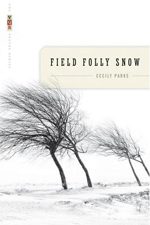
			<content:encoded><![CDATA[<p><a href="http://www.powells.com/partner/33625/biblio/0820331171 "><img class="alignleft" src="http://farm4.static.flickr.com/3645/3288876223_b8cfa2ed2a_o.jpg" alt="" width="90" height="135" /></a>Using the American West as its central conceit, Cecily Parks’ debut volume, <a href="”http://www.powells.com/partner/33625/biblio/0820331171“"><em>Field Folly Snow</em>,</a> explores the shifting intersections of fear, desire, geography, and history. <span id="more-8127"></span> These are poems populated by horse breakers, saddle thieves, pistolsmiths, widows, and wayward women. One series in the book, “Letters of a Woman Homesteader,” takes its language almost entirely from the real letters of Elinore Pruitt Stewart, a homesteader living at the turn of the twentieth century.</p><p>“Most women wouldn’t have been afraid,” Parks writes, locating the book as part of a larger literary attempt to re-imagine the West in feminist terms. It’s a revisionist effort, recasting a traditionally masculine world as a female proving ground, a place of bleakness, beauty, danger, and endless imagination.</p><p>As much as these poems tap into a mythic story of the West, however, they are not linear narratives, but circuitous maps of anxiety and desire, a portrait of an inner world masquerading as meditations on people and place. In “Our Despised and Unhistoric West,” Parks writes, “So much ardor in this interior,” simultaneously describing the inside of a hotel and the emotional tenor of the speaker. This is one of Parks’ signature strategies, locating the reader in time and place even as she obscures the boundaries between place and feeling.</p><p>In “Letter to the Pistolsmith,” she writes:</p><blockquote><p>…We met once. You talked of metal, wood<br />and mother-of-pearl, but I was distracted with my death. What<br />I mean to say is that I never knew your name, but I understood<br />the thing you said about happiness, what it meant, even tempo-<br />rarily, like an oyster with a pearl. I am certain you meant the<br />gun, but I was distracted because I wanted to be a mother. In<br />your workroom the rain was made of metal. I was being hit by<br />triggers. Your workroom limned by barrels black as a river a cow<br />dies beside. What was that thing you said about the body? I am<br />certain you meant the gun, but I was distracted because I wanted<br />description and the gun had already been described.</p></blockquote><p>Although this is a poem about the pistolsmith, it’s also about the speaker’s state of mind, the elliptical structure foregrounding her obsession with the gun. The outer world grows more strange and ominous as the speaker’s inner world emerges through associative leaps from gun to death to motherhood, then back again. Many of the book’s best poems move in this manner. Often, what saves them from solipsism is their clear attempt to assert worlds of feeling, the self struggling against narrative closure and the limitations of language.<br /><a href="http://www.powells.com/partner/33625/biblio/0820331171 "><img class="alignright" src="http://farm4.static.flickr.com/3149/3288876249_89fb7c5c43_o.jpg" alt="" width="200" height="207" /></a><br />In several of the poems, the drifting consciousness of the speaker is both resisted and accentuated by a skillful management of form, lines and stanzas yoking the poems together even as they help blur the distinction between idea and thing. In “Dear William, the Cottonwoods Are Letting Go,” the form does essential work:</p><blockquote><p>As they ought to.<br />Catkin, bit</p><p>of cotton. Each<br />rib spindly,</p><p>astral, petal,<br />auroral, arboreal.</p><p>Aural, oral,<br />fluff. Falling</p><p>generosity, fertile<br />interstices. Seed</p><p>pods seeping<br />in doorways, altering</p><p>hallways, aleatory.</p></blockquote><p>Here the couplets act as containers for the spilling language, the sharp enjambment complicating the meaning as the short lines neaten the poem on the page. Line bleeds into sentence: “fluff. Falling” becomes “Falling//generosity,” and sound drifts into sound: “Aural” into “oral,” “altering” into “aleatory.” Again, the outer world blends with an inner one, both coming together and breaking apart only to come together again. The poem ends: “announcing ripeness/ whitely. I have// been thinking:/ A warm snow.” Even without the notes at the back, which tell us the poem references William James’s writings on human consciousness, we can sense the subject in the form as it erases the boundary between the physical and the conceptual, using image, line, sound, and sense, a drifting intelligence vividly remaking the world.</p><p>If occasionally the poems are marred by self-consciousness, or if some grow too cryptic or self-enclosed, it seems an understandable and perhaps even inevitable risk of the larger aesthetic project, and any snags are quickly glossed in the book’s larger sweep. What makes <a href="”http://www.powells.com/partner/33625/biblio/0820331171”">Field Folly Snow</a> such an exciting debut is its simultaneous commitment to feeling and mystery, the record of a restless mind at odds with the world around it. It’s a revisioning of the American West that is also a portrait of the self, unknowable and untamable, the one true last frontier.<br /><h3 class='related_post_title'>Related Posts:</h3><ul class='related_post'><li><a href='http://therumpus.net/2012/05/national-poetry-month-day-31-machine-song-by-bruce-snider/' title='National Poetry Month Day 31: &#8220;Machine Song&#8221; by Bruce Snider'>National Poetry Month Day 31: &#8220;Machine Song&#8221; by Bruce Snider</a></li><li><a href='http://therumpus.net/2009/06/denying-epiphany/' title='Denying Epiphany'>Denying Epiphany</a></li></ul>]]></content:encoded>
			<wfw:commentRss>http://therumpus.net/2009/02/rediscovering-the-west/feed/</wfw:commentRss>
		<slash:comments>0</slash:comments>
		</item>
	</channel>
</rss>