<?xml version="1.0" encoding="UTF-8"?>
<rss version="2.0"
	xmlns:content="http://purl.org/rss/1.0/modules/content/"
	xmlns:wfw="http://wellformedweb.org/CommentAPI/"
	xmlns:dc="http://purl.org/dc/elements/1.1/"
	xmlns:atom="http://www.w3.org/2005/Atom"
	xmlns:sy="http://purl.org/rss/1.0/modules/syndication/"
	xmlns:slash="http://purl.org/rss/1.0/modules/slash/"
	>

<channel>
	<title>The Rumpus.net &#187; Joe Cervelin</title>
	<atom:link href="http://therumpus.net/author/joe-cervelin/feed/" rel="self" type="application/rss+xml" />
	<link>http://therumpus.net</link>
	<description>Books, Music, Movies, Art, Politics, Sex, Other</description>
	<lastBuildDate>Mon, 13 Feb 2012 11:43:19 +0000</lastBuildDate>
	<language>en</language>
	<sy:updatePeriod>hourly</sy:updatePeriod>
	<sy:updateFrequency>1</sy:updateFrequency>
	<generator>http://wordpress.org/?v=3.2.1</generator>
		<item>
		<title>Mike Tyson in Five Acts: A Rumpus Consideration</title>
		<link>http://therumpus.net/2009/07/mike-tyson-in-five-acts-a-rumpus-consideration/</link>
		<comments>http://therumpus.net/2009/07/mike-tyson-in-five-acts-a-rumpus-consideration/#comments</comments>
		<pubDate>Wed, 15 Jul 2009 22:00:28 +0000</pubDate>
		<dc:creator>Joe Cervelin</dc:creator>
				<category><![CDATA[film]]></category>
		<category><![CDATA[rumpus original]]></category>

		<guid isPermaLink="false">http://therumpus.net/?p=24790</guid>
		<description><![CDATA[IMike Tyson doesn’t seem full of it, but sometimes it seems full of him. Each persona gets taken to an extreme. Think Gollum in Lord of the Rings, if he moved up a few weight-classes; or Hamlet on protein shakes.According to director James Toback, who has known Tyson since 1985, the former undisputed (and youngest) [...]]]></description>
			<content:encoded><![CDATA[<p><a href="http://peskyhumans.com"><img class="size-medium wp-image-24891 alignleft" title="img_5669b" src="http://therumpus.net/wordpress/wp-content/uploads/2009/07/img_5669b-300x253.jpg" alt="img_5669b" width="144" height="122" /></a></p><p style="text-align: center;"><strong>I</strong></p><p>Mike Tyson doesn’t seem full  of it, but sometimes it seems full of him. Each persona gets  taken to an extreme. Think Gollum in <em>Lord of the Rings</em>, if he  moved up a few weight-classes; or Hamlet on protein shakes.<span id="more-24790"></span></p><p>According to director James  Toback, who has known Tyson since 1985, the former undisputed (and youngest)  world heavyweight champion does indeed have multiple personalities,  along with a photographic memory which allowed him access to high-sensory  reflections in Toback’s new documentary, Tyson. (The Rumpus interview  with the director can be found <a href="http://therumpus.net/2009/05/the-rumpus-interview-with-james-toback">here</a>.)</p><p>The film builds its portrait  of Tyson by intercutting a new feature-length interview with classic  footage of the champion. Straight out of rehab, with that twelve-step  sense of vulnerability and analytical clarity (in the vein of <em>Celebrity  Rehab with Dr. Drew</em>), the peak of Tyson’s self-knowledge is now.  &#8220;It&#8217;s like a Greek tragedy,&#8221; he says.  &#8220;Only I&#8217;m the subject.&#8221;</p><p>The subtleties of <em>Tyson</em> may surprise the viewer, whether they know Mike’s timeline or just  the more sensational moments, such as his ear-biting incident during  a 1997 title bout with Evander Holyfield. This film is the single closest  entity to contain the whole force of Tyson, whose strong spirit overflows  even his impressive incarnation. It may reinforce what you know, but you will surely  experience some nouvelle Tyson.</p><p>We explore his vulnerable moments: as a little boy in Brooklyn he kept pigeons on the roof and got bullied; as a teen, before his first  amateur match, he slipped downstairs to shake off the pre-fight jitters  and considered jumping on the subway train rattling by the building.</p><p>The ferocious moments unveil  a man’s desperation of being backed into a corner, as Tyson, in a  more lucid state, explains his fear of never again wanting to be disempowered  and reduced to that helpless little boy. He feared being “dominated  in the streets.” Or as Tyson put it another way, during his pre-fight  press conference with Lewis in 2002, after a scuffle between entourages  , yelling at the reporters he felt were antagonizing him: “I’ll  eat your asshole alive, you bitch.  Nobody in this room can fuck  with this man… You can’t last two minutes in my world… I’ll  fuck you til you love me, faggot.&#8221; Onstage, there’s a grisly aura  to Tyson’s freestyle slam poetry, charged with incarceration-infected  alpha machismo, ironically homoerotic. No doubt he’s immersed in this  persona… for that moment.</p><p>With a thematic twist worthy of Joseph Campbell, Tyson provides a progressive inversion of expectations.  Cut to the post-fight. During an interview in the ring, a sweaty and  battered Tyson gives Lewis full credit as a warrior athlete, and says  they’ve been friends for a long time. Tyson attributes the scuffle  they had at the press conference to the likeness of pigeons being fed,  every creature for themselves when the breadcrumbs are at stake. In  this moment, he conducts himself as a sportsman, classy in his defeat.  These successive contradictions add to the overall portrait, ever shifting.   The bigger picture is elusive and in-your-face. Breadcrumbs,  indeed.</p><p>We see a particularly sensitive  moment when Tyson gets choked up while discussing Cus D&#8217;Amato, his former  trainer, mentor, and unspoken father figure, who passed away in 1985.  The camera stays on Tyson for a ten-count as he struggles to finish  his sentence. Cus is the one who encouraged Tyson to scrap his teenage  delinquency and focus on competition. Until this time, Tyson’s newfound  killer instinct had mostly  manifested in street crime and aggression; but now he could pour all  of himself into the role of the boxer. Cus treated Tyson like family  and helped instill confidence and a warrior-spirit in the kid.</p><p>Tyson got beat up during his  first spar audition. The bloody-nosed teen was eager to demonstrate  his toughness. He wanted to get out of the ghetto. Tyson’s transition  to laser beam focus took time; he still reverted back to street crime  (and today most of his childhood peers are in jail or dead). His first  thought in the Catskills: “I could rob these white motherfuckers.”  But Cus D’Amato extended trust and support, and Tyson knew there was  something there worth more than any of the material objects in the room.</p><p>Tyson immersed himself in the  sport, both in practice and history. At night, he watched old reels  of the classic fights from the early days of boxing. He studied the  fighters and memorized their moves. He knew the stats and held himself  in this canon, both empowered and humbled by the knowledge that every  streak must end.</p><p>Early training footage captures  Tyson’s unlimited potential and natural athletic ability: speed, power,  precision, and intensity. The fight clips are awesome – the kid was  a predator. The explosive agility, the calm aggression – if  he doesn’t finish you with this uppercut, how about this one, or this  one? – bobbing and weaving, a pendulum of muscle and bone, ticking  down the seconds.</p><p>The film offers a bonus commentary  track within the feature, as Tyson voices moody interiority for some  of the archive footage, ranging from insightful to inadvertently humorous.  He talks about his pre-fight rituals, his mentality once he enters the  ring, how he keeps eye contact from across the canvas, and once his  opponent looks away he knows that he’s already broken the man’s  spirit. During one of these psych-outs, with Tyson pacing and frowning,  we learn that he was suffering from gonorrhea – burning the candle  at both ends, so to speak.  Then he won the belt from Trevor Berbick  and became the youngest heavyweight champ ever.</p><p align="center"><strong>II</strong></p><p>During a press interview upon  the film’s premiere at the Cannes Film Festival in May 2008, Tyson  said it was difficult to watch James Toback’s portrait of him: “I’ve  always been objective and a hard critic of myself,” Tyson said, discussing  his constant striving for perfection. “Even if someone thinks something  is great, I see the non-perfection in it.” Properly  channeled that attitude was a recipe for success,  but these days it borders on tragic. His adamancies are still evasive;  it’s hard to decipher what he means. Tyson didn’t appear to be embarrassed  or regret discussing his less flattering moments, including the rape  allegation, street violence, and so forth. Perhaps this perfection is  a reference to the fight footage itself, or one of the archetypes he  embodies in the film; only Tyson, if anyone, knows.</p><p>During this Cannes interview,  Tyson said, “Always believe in yourself and keep fighting; never let  people put you down and limit you; this is what makes life worth living  and fighting for.” That’s a more inspiring moment, but otherwise,  Tyson appeared more exhausted and uncomfortable doing media for the  film, than he does in <em>Tyson</em>. That achievement of relative clarity  and tranquility is clearly not the final word, though it feels like  it. After the film premiere, a reporter asked in a toned-down, condescending  way how Mike has been since the film – the unspoken question, “Have  you gone crazy again yet?” Mike appeared defensive and, reminiscent  of the Bob Dylan’s Don’t Look Back media conferences in 60s  San Francisco, said, “How are YOU?”</p><p>Due to all the media attention  and cameras, Tyson felt overwhelmed and intimidated at the Cannes Festival,  though he put a lot of faith and trust into Toback’s vision. According  to Tyson, he got called by Toback on his way to AA, and he thought the  film would just become “some bootleg,” and he could make a few bucks.</p><p>Director Toback describes Tyson  as “an American hero under dark circumstances.” Toback has been  obsessed with boxing since he was four or five, and became a boxer himself  in “misguided attempt to see if I could ever last with someone who  was good for more than thirty seconds.” He said, “I found Mike to  be light years more interesting than any of the others, more articulate,  and symbolically more significant, because there is an iconographic  status that Mike has achieved, and in fact, had almost from the beginning.”  He spoke of Mike’s “speed, accuracy, craft, and power,” his “mystique,”  and even more so than Muhammad Ali, consider Mike the “representative  iconic figure of that profession.”</p><p align="center"><strong>III</strong></p><p>Tyson and Ali appeared together  on the Arsenio Hall Show in 1989 with respect and admiration for one  another. They both were sure that the other would win if they both fought  in their prime. Ali said about the reputed bad boy, “He can be modest,  humble, and nice.” The entire segment was touching and hilarious,  and Arsenio fell back on the cough, laughing.</p><p>An ESPN special, Ringside  Tyson, archives more of his early interview footage, his visions  of grandeur meshed with a foresight of inevitable downfall. The special  chronicles Tyson’s career to his first professional loss against Buster  Douglas in Japan (Tyson’s personal life was in public turmoil at that  time, under the spell of Don King, and his team so underestimated Buster  Douglas that the corner team did not bring all their medical gear from  the locker room). Douglas who had been deemed a manqué his whole career  had dedicated that match to his recently deceased mother and he fought  like a true champion for one night.</p><p>According to Teddy Atlas, who  co-hosted the Ringside special, Tyson’s grand character flaw  is his inability to deal with adversity. Tyson had learned how to charge  through his opponents, and how to charge through life, but whenever  he met anything that could stop him in his tracks, he didn’t know  what to do.</p><p><img class="alignright" src="http://therumpus.net/wordpress/wp-content/uploads/2009/05/tyson_face_rumpus.jpg" alt="" width="316" height="322" />Atlas, who grew up rough himself,  as notated by the prominent knife scar on his face, recognized Tyson’s  potential and also his instability, early on, but his concerns went  largely ignored, and caused controversies in D’Amato’s camp in the  80s. Meanwhile Cus, elderly and ill, went on television and claimed  he was only alive to that day because of Mike. After Cus’s death,  and Mike’s exploitation by grand pimp, Don King, Mike’s professional  and personal life began going down the tubes.</p><p>Here’s the Dynamite Kid,  who can be seen in his early fights picking up his opponents after he  knocked them out, asking if they’re ok, kissing them on the head,  with real eager sportsmanship.</p><p>Years later, in 1997, Atlas  made a broad accurate prediction that something would happen during  the Tyson-Holyfield rematch. He saw the desperation and fear (which  Cus had helped mold into Iron Mike, but now that the once unbeatable  kid was feeling this again, full-circle it was simply dangerous). The  way Tyson acted in the days preceding the fight, Atlas predicted there  would be something dirty: “He&#8217;ll bite Holyfield. He&#8217;ll butt him. He&#8217;ll  hit him low. He&#8217;ll do something if he don&#8217;t get him early with a lucky  shot. I know this guy. He&#8217;s got this all set up in his mind. That&#8217;s  the only way he can face it. That&#8217;s what this is all about.&#8221;</p><p align="center"><strong>IV</strong></p><p>Tyson has spoken about himself  as a tragic hero, a powerful being that brought about his own doom.  Others may consider him an antihero, with the flaws always outweighing  the greatness (and these opinions have changed over the years). Or maybe he’s a villain  seeking redemption.</p><p>Part heroic and admirable,  part ruthless; both kind and nasty. Who is the man?</p><p>He’s at least two-headed.  In a post-fight interview, after his very last bout, with Kevin McBride,  Tyson said that he only fought for the money, and that his heart wasn’t  in it anymore. There’s an honesty there, a cruel truth; he knows he’s  finished, losing to “that caliber of fighter.”  Yet, a few  seconds later, he also praised McBride and wished him the best. These  manners may be a lip service afterthought, or a another persona, or  just a façade, but Tyson seems to embrace this. He fills the  role.</p><p>Tyson is larger than life,  almost as if our conceptions of him can only comprehend so many angles;  this town ain’t big enough for the entire Tyson, maybe; and with that  said, he isn’t sure either. As he said in an early 80s interview,  almost bragging: “No one knows Mike Tyson.”</p><p>Why the fascination in our  pop mythology? What can Tyson teach us about ourselves?</p><p>Is it possible that Tyson,  with however many heads he has, the trickster hydra, is only a reflection  of us?  not just our vampiric obsession with celebrities, our fickle  love and hate, sucking them dry, and composting them as retro novelties  on VH1 and other media cameos; no, just us as everyday human beings,  in the awkwardness, in the glory?</p><p>He is the supersized version  of our strengths and weaknesses, our superpowers and mortal coil frailties,  orbiting around issues of power and dominance. That EPIC inner-conflict,  the 300 Spartan battle of the psyche. He embodies our contradictions  and earnest hypocrisies. It’s all there.</p><p>Instead of backpedaling, Tyson  goes kamikaze into the vanishing point. He is what we fear and what  we want to be, our vicariousness, our voyeurism, our goal, our nightmare.  He is the spark of friction between ambition and attrition. Tyson  is the part of us that eats well and exercises; he’s the part that  says screw it, what does it really matter, I’m gonna die anyway, I  should just take it easy and have fun; he’s the part that says well  that isn’t even possible without taking care of the body. The shaky  borders of victory and self-defeat. The multitudes of the collective  neuroses, ancient and modern. A caricature of the human mind and spirit,  intertwined with Gordian knots and feedback loops.</p><p>But enough about us.</p><p align="center"><strong>V</strong></p><p>There are many ways to skin  the words and actions of Tyson. In Toback’s Black and White,  filmed about two years before the Lewis fiasco, Tyson does some improv  with Robert Downey Jr, Brooke Shields, and others.  Downey’s  character keeps bothering him at a gangster soiree, while Tyson explains  that he’s trying to have a peaceful moment. He improvs to the effect,  “I’m on parole c’mon,” and later tells Shields’ character,  who is trying to film him, “I’m not an animal.” Of course, in  a comedic moment, he slaps Downey Jr., all part of the improv. (Ironically,  it was his admiration of Downey Jr that first brought Tyson to Toback’s  film set where they met in 1985). Even here, in the scene not found  in Toback’s Tyson, the man is an embodiment of contradiction…  an intersection of a conundrum that is occasionally at equilibrium but  sometimes wriggles as if it is going to explode.</p><p>Might there be a future industry  in Tyson-chic?  Should the man have his own talk show? How about  Tyson figurines with accessories and mood rings?</p><p>In Todd Philips’ new comedy,  The Hangover, Tyson sings Phil Collins, carvinalesque, self-imposed  inversion of iconography. Or, esoteric hysterics aside, it’s just  funny. It’s a sight gag that tickles something about our culture.  It gets the same laugh that his commentary about gonorrhea does.</p><p>The scene plays mostly uncomfortable, with a little funny. Tyson seems  awkward and weathered.  In one brief moment, with a John Lequizamo collegiate  inflection, he says “NICE,” impressed by footage of the characters  stealing a cop car during their Vegas shenanigans. The protagonists  get caught up in all kinds of things, such as stealing Tyson’s tiger  and mock-humping it in front of the surveillance camera. This clearly  irritates him, but beyond sending one of the fellas out of the room  he is remarkably patient. With a world weariness, Tyson says on the  couch, “People do dumb shit when they’re fucked up,” and everyone  onscreen and in the theater seems to agree.</p><p>**</p><p><em>top image of Tyson fighting by <a href="http://peskyhumans.com">Christian Wiseman</a></em>.<br /><h3 class='related_post_title_no'>Related Posts:</h3><ul class='related_post_no'><li>No related posts&#8230;</li></ul>]]></content:encoded>
			<wfw:commentRss>http://therumpus.net/2009/07/mike-tyson-in-five-acts-a-rumpus-consideration/feed/</wfw:commentRss>
		<slash:comments>2</slash:comments>
		</item>
		<item>
		<title>Joseph Cervelin: The Last Book I Loved, The Informers</title>
		<link>http://therumpus.net/2009/07/joseph-cervelin-the-last-book-i-loved-the-informers/</link>
		<comments>http://therumpus.net/2009/07/joseph-cervelin-the-last-book-i-loved-the-informers/#comments</comments>
		<pubDate>Tue, 07 Jul 2009 20:09:01 +0000</pubDate>
		<dc:creator>Joe Cervelin</dc:creator>
				<category><![CDATA[books]]></category>
		<category><![CDATA[Brett Easton Ellis]]></category>
		<category><![CDATA[Choose Your Own Adventrue]]></category>
		<category><![CDATA[The Informers]]></category>
		<category><![CDATA[the last book i loved]]></category>

		<guid isPermaLink="false">http://therumpus.net/?p=25191</guid>
		<description><![CDATA[Brett Easton Ellis offers social observations, morbid humor, and compounding degrees of separation and decadence. If his story cycle The Informers were a Choose Your Own Adventure book, here are some outcomes:- You take your disenfranchised son to Hawaii, lust his girl, and cock-block him at dinner (your treat). Your son goes off to self-medicate. [...]]]></description>
			<content:encoded><![CDATA[<p><img class="alignleft" src="http://farm3.static.flickr.com/2543/3690528631_5a47f36ec6.jpg?v=0" alt="" width="72" height="113" />Brett Easton Ellis offers social observations, morbid humor, and compounding degrees of separation and decadence. If his story cycle <a href="http://www.powells.com/biblio/1-9780679435877-5"><em>The Informers</em></a> were a Choose Your Own Adventure book, here are some outcomes:</p><p>- You take      your disenfranchised son to Hawaii, lust his girl, and cock-block him at      dinner (your treat). Your son goes off to self-medicate. You slither up to      your crush and fail at sugar-daddery.</p><p>- You go      rafting while your expensive Egyptian lizards get fed poisoned      cockroaches. You cheat and get cheated on.</p><p>- You crash      your car. You die. Your friend removes the joint from your pocket before      the cops come and smokes it.</p><p><span id="more-25191"></span><br />- You join a seven-degrees,      Hellenistic chain of bisexual adultery. Then you watch music videos.</p><p>- You are a      vampire in LA (whether genuine or a knockoff Nosferatu). You suffer the inconvenience      of a friend dropping by and interrupting a bloodletting. He&#8217;s always      imposing, that party animal.</p><p>- You wake in      Japan and call room service to remove the children.  You pray these young prostitutes have      vanished before you step out of the shower. You peak out of the bathroom, first      anxious, then relieved.</p><p>- You are      dazed on pills by the pool. You talk to your Alzheimer-ailed mom on the      phone, while she tells you about the photographs from a New York Christmas      when you were twelve.  She has been finding      those photos every day for the past two weeks.  You barely remember the trip, except the      sounds of broken glass and yelling.       You smoke a cigarette and keep this to yourself: &#8220;But the thing I      remember the most, the thing I remember with a clarity that makes me      cringe, is that there were no photographs taken on that trip.&#8221;</p><p>- This is      your life: &#8220;Danny is on my bed and depressed because Ricky was picked up      by a break-dancer at the Odyssey on the night of the Duran Duran      look-alike contest and murdered. It seems that Biff, Ricky&#8217;s current      lover, called Danny after getting my number from someone at the station      and told him the news. I walk in and all Danny says is &#8216;Ricky&#8217;s dead.      Throat slit. All of his blood drained from his body. Biff called.&#8217;&#8221;</p><p>**</p><p>Infused with guilty pleasure, this is a perfect <a href="http://baynature.org/articles/jul-sep-2008/the-beach-as-office">beach read</a>, watching these characters navigate their numb rampages and vacant glamour.</p><p>This is the literature that comes to mind during long holiday BBQ binges, in the sun, say after Bay to Breakers. It&#8217;s your buoy, staggering home under awnings all the way across San Francisco to avoid the sun, or so I&#8217;ve been told.  Not that these characters would do that &#8211; they&#8217;d go to the sleep in the gutter or flag a cab.</p><p>Interconnected, these tales extract the beauty and spirit of depravity, not because of the same ol&#8217; sex drugs rock n roll, but because of that drive, that urgency: to confront, escape, live, die, relax, shake things up.</p><p>It&#8217;s not the staggering Burroughskowski circus&#8230; but a kindred soul, slumped in a lawn chair. These characters aren&#8217;t going to wake up on skid row, and they&#8217;re not worried about their next meal; but they do have to line up their next indulgence, these causalities of disoriented ambivalence. They must watch their backs, riding that gray area, somewhere between tanning and burning.<br /><h3 class='related_post_title'>Related Posts:</h3><ul class='related_post'><li><a href='http://therumpus.net/2012/01/leanna-moxley-the-last-book-of-poetry-i-loved-the-cow/' title='Leanna Moxley: The Last Book (of Poetry) I Loved, &lt;em&gt;The Cow&lt;/em&gt;'>Leanna Moxley: The Last Book (of Poetry) I Loved, <em>The Cow</em></a></li><li><a href='http://therumpus.net/2012/01/patrick-pineyro-the-last-book-i-loved-ulysses/' title='Patrick Pineyro: The Last Book I Loved, &lt;em&gt;Ulysses&lt;/em&gt;'>Patrick Pineyro: The Last Book I Loved, <em>Ulysses</em></a></li><li><a href='http://therumpus.net/2012/01/rhona-cleary-the-last-book-i-loved-big-sur-and-the-oranges-of-hieronymus-bosch/' title='Rhona Cleary: The Last Book I Loved, &lt;em&gt;Big Sur and the Oranges of Hieronymus Bosch&lt;/em&gt;'>Rhona Cleary: The Last Book I Loved, <em>Big Sur and the Oranges of Hieronymus Bosch</em></a></li><li><a href='http://therumpus.net/2012/01/traci-dolan-the-last-book-i-loved-the-stone-virgins/' title='Traci Dolan: The Last Book I Loved, &lt;em&gt;The Stone Virgins&lt;/em&gt;'>Traci Dolan: The Last Book I Loved, <em>The Stone Virgins</em></a></li><li><a href='http://therumpus.net/2012/01/kavita-das-the-last-book-i-loved-the-all-of-it/' title='Kavita Das: The Last Book I Loved, &lt;em&gt;The All of It&lt;/em&gt;'>Kavita Das: The Last Book I Loved, <em>The All of It</em></a></li></ul>]]></content:encoded>
			<wfw:commentRss>http://therumpus.net/2009/07/joseph-cervelin-the-last-book-i-loved-the-informers/feed/</wfw:commentRss>
		<slash:comments>1</slash:comments>
		</item>
		<item>
		<title>War Is Peace, Freedom Is Slavery</title>
		<link>http://therumpus.net/2009/05/war-is-peace-freedom-is-slavery/</link>
		<comments>http://therumpus.net/2009/05/war-is-peace-freedom-is-slavery/#comments</comments>
		<pubDate>Wed, 06 May 2009 21:00:00 +0000</pubDate>
		<dc:creator>Joe Cervelin</dc:creator>
				<category><![CDATA[books]]></category>
		<category><![CDATA[Original Content]]></category>
		<category><![CDATA[reviews]]></category>
		<category><![CDATA[rumpus original]]></category>
		<category><![CDATA[1984]]></category>
		<category><![CDATA[Catch-22]]></category>
		<category><![CDATA[Homer Simpson]]></category>
		<category><![CDATA[Jim Knipfel]]></category>
		<category><![CDATA[kafka]]></category>
		<category><![CDATA[surveillance]]></category>
		<category><![CDATA[Unplugging Philco]]></category>

		<guid isPermaLink="false">http://therumpus.net/?p=17164</guid>
		<description><![CDATA[With echoes of 9/11, the protagonist of Jim Knipfel&#8217;s novel flees the ubiquitous surveillance of a not-so-futuristic government.Despite its demolition of pop-culture groupthink, Jim Knipfel’s Unplugging Philco fluctuates between satirical insights and longwinded detours.Wally Philco is a second-rate Homer Simpson, a near-future everyman schlep, struggling to find his place in the world—or escape from it. [...]]]></description>
			<content:encoded><![CDATA[<p><!--StartFragment--></p><p class="MsoNormal"><span><a href="http://www.powells.com/partner/33625/biblio/1416592849"><img class="alignleft size-medium wp-image-17165" src="http://therumpus.net/wordpress/wp-content/uploads/2009/05/n304384-194x300.jpg" alt="" width="104" height="162" /></a></span></p><h4>With echoes of 9/11, the protagonist of Jim Knipfel&#8217;s novel flees the ubiquitous surveillance of a not-so-futuristic government.<span id="more-17164"></span></h4><p class="MsoNormal"><span>Despite its demolition of pop-culture groupthink, Jim Knipfel’s<a href="http://www.powells.com/partner/33625/biblio/1416592849" target="_blank"> </a><em><a href="http://www.powells.com/partner/33625/biblio/1416592849" target="_blank">Unplugging Philco</a></em></span><span> fluctuates between satirical insights and longwinded detours.</span></p><p class="MsoNormal"><span>Wally Philco is a second-rate Homer Simpson, a near-future everyman schlep, struggling to find his place in the world—or escape from it. He risks his life with a decision to ‘unplug’ from the government’s far-ranging surveillance system and gets recruited by an underground group that dwells in abandoned sections of the New York City subway system. </span></p><p class="MsoNormal"><span>The novel’s opening sections are an intriguing shadow-puppet dance of narrative tension, but eventually Knipfel’s story shifts toward vague melodrama; the story picks up, revived by more interesting tidbits, then flat-lines again. Philco’s internal dread is duly belabored—but is there some deeper purpose to a three-page description of his office supplies, following a three-page anxiety attack over why he buys the same mediocre coffee? Is this a groggy homage to <em>Office Space</em></span><span>? Following a minute account of a subway wait and train ride, the story’s blips and bleeps and surveillance monitors start to feel more like bells and whistles. Allegedly noir, the narrative clanks wry understatement against neurotic hyperbole, making for a rather sluggish journey. The reader waits for a wink from the author, some between-the-lines justification, but it never comes. </span></p><p class="MsoNormal"><span>At its best, <em>Unplugging Philco</em></span><span> unveils hip observations about totalitarian control of the population by hi-tech consumer tracking. In Philco’s world, there is no separation of market and state; the media are embedded in a government that manipulates technology and terrorism, a plausibly frightening scenario dealt with in the novel’s most engaging sections. A <em>1984</em></span><span>-inspired monitoring system is upgraded here to something like Dystopia 2.0: imagine modern dictators buying out Google and Amazon, replace Big Brother with a shopping cart icon, then proceed to check out.</span></p><div id="attachment_17167" class="wp-caption alignright" style="width: 250px"><img class="size-medium wp-image-17167" src="http://therumpus.net/wordpress/wp-content/uploads/2009/05/3363520264_43e6b20395-300x168.jpg" alt="Jim Knipfel" width="240" height="134" /><p class="wp-caption-text">Jim Knipfel</p></div><p>It’s “a plan straight out of Machiavelli, Hitler, and <em>The Outer Limits</em><span>. Which doesn’t mean it’s a <em>bad</em></span><span> plan, mind you.” Government control is leveraged by fear and paranoia after that ol’ bait-and-switch: a terrorist attack, the footage playing on a 24/7 loop—accompanied, of course, by TV commercials—to remind pedestrians of the imminent danger. Consumerism and commie-scare tactics merge when doctored footage is produced with CGI effects to show additional attacks, the media’s marketing, production, and design departments working in sync. Citizens are harassed by smiley-faced robots about their semantic choices: damned if you do, damned if you don’t. <em>See also: Kafka-esque bureaucracy, </em><a href="http://www.powells.com/partner/33625/biblio/0684865130" target="_blank">Catch-22</a></span><span><em>.</em></span></p><p class="MsoNormal"><span>One of the ruthless masterminds in <em><a href="http://www.powells.com/partner/33625/biblio/1416592849" target="_blank">Unplugging Philco</a></em></span><span> wanted to be a lawyer, “but he wasn’t the best student, so he ended up suing his way through grade school. Sued the teachers, sued the schools. Sued the school board, even, demanding that he be allowed to move on. Then he sued his way through high school and college, then law school. Sued every one of his professors first year… Harvard opted to settle out of court and just gave him a damn degree. But after that he went straight into intelligence work.” It’s the kind of in-joke that’s clever and provocative for a sentence or two, but eventually grows tedious. It’s culture criticism with a sledgehammer, and Knipfel’s irony cuts both ways. After all, the novel’s first chapter can be found at <a href="http://www.amazon.com/Unplugging-Philco-Novel-Jim-Knipfel/dp/1416592849/ref=sr_1_1?ie=UTF8&amp;s=books&amp;qid=1241175267&amp;sr=1-1" target="_blank">Amazon.com</a></span>, <span>a site that utilizes more than a few of the profiling factors (your personal cache of ‘recently viewed items,’ recommendations, account details) that, in Wally’s world, have mutated to total surveillance and dictatorship. What all this technology still can’t determine is if readers would rather sate their post-9/11 palettes with a double-screening of <em>Idiocracy</em></span><span> and <em>Zeitgeist the Movie</em></span><span>.</span></p><p><!--EndFragment--><br /><h3 class='related_post_title'>Related Posts:</h3><ul class='related_post'><li><a href='http://therumpus.net/2011/10/an-enduring-paradox/' title='An Enduring Paradox'>An Enduring Paradox</a></li><li><a href='http://therumpus.net/2011/08/nypdcia-scandalous-surveillance/' title='NYPD/CIA Scandalous Surveillance'>NYPD/CIA Scandalous Surveillance</a></li><li><a href='http://therumpus.net/2011/07/whats-the-catch/' title='What&#8217;s the Catch?'>What&#8217;s the Catch?</a></li><li><a href='http://therumpus.net/2011/07/famous-for-the-wrong-book/' title='&#8220;Famous for the Wrong Book&#8221;'>&#8220;Famous for the Wrong Book&#8221;</a></li><li><a href='http://therumpus.net/2011/06/kafka-ish/' title='Kafka-ish'>Kafka-ish</a></li></ul>]]></content:encoded>
			<wfw:commentRss>http://therumpus.net/2009/05/war-is-peace-freedom-is-slavery/feed/</wfw:commentRss>
		<slash:comments>0</slash:comments>
		</item>
		<item>
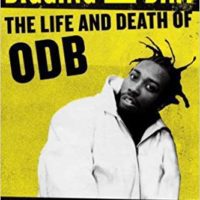
		<title>&#8220;Digging for Dirt: The Life and Death of ODB,&#8221; by Jaime Lowe</title>
		<link>http://therumpus.net/2009/01/digging-for-dirt-the-life-and-death-of-odb-by-jaime-lowe/</link>
		<comments>http://therumpus.net/2009/01/digging-for-dirt-the-life-and-death-of-odb-by-jaime-lowe/#comments</comments>
		<pubDate>Mon, 12 Jan 2009 13:15:58 +0000</pubDate>
		<dc:creator>Joe Cervelin</dc:creator>
				<category><![CDATA[books]]></category>
		<category><![CDATA[music]]></category>
		<category><![CDATA[reviews]]></category>
		<category><![CDATA[rumpus original]]></category>
		<category><![CDATA[cocaine]]></category>
		<category><![CDATA[ODB]]></category>
		<category><![CDATA[overdose]]></category>
		<category><![CDATA[rap]]></category>
		<category><![CDATA[Wu-Tang Clan]]></category>

		<guid isPermaLink="false">http://therumpus.net/?p=4155</guid>
		<description><![CDATA[“A nigga don’t come out of jail and get his toes done,” ODB is quoted in a new biography, as he pointed out the earth-tones and the feng-shui waterfall in a manicure parlor. “How are the kids gonna feel about this?”Prior to Russell Jones’s fatal cocaine overdose (and possible suicide) in November 2004, his hype [...]]]></description>
			<content:encoded><![CDATA[<p class="MsoNormal"><span><a href="http://www.powells.com/partner/33625/biblio/0865479690"><img class="alignleft" title="Digging for Dirt" src="http://images.barnesandnoble.com/images/34360000/34369112.jpg" alt="" width="89" height="132" /></a></span>“A nigga don’t come out of jail and get his toes done,” ODB is quoted in a new biography, as he pointed out the earth-tones and the feng-shui waterfall in a manicure parlor. “How are the kids gonna feel about this?”<span id="more-4155"></span></p><p class="MsoNormal"><span>Prior to Russell Jones’s fatal cocaine overdose (and possible suicide) in November 2004, his hype man and best bud, Buddha Monk, joined him on drug binges and divvied up the doses to prevent him from OD-ing. By the end Jones, known as Ol’ Dirty Bastard, was fractured and burnt out on fame, questioning his own authenticity.</span></p><p class="MsoNormal"><span><span>Jaime Lowe, author of <em><a href="http://www.powells.com/partner/33625/biblio/0865479690" target="_blank">Digging for Dirt: The Life and Death of ODB</a></em><em>,</em></span><span> witnessed Ol’ Dirty Bastard’s spirit-crushing “comeback” show in New York in 2003, at which the rapper appeared drugged and severely mentally ill. Buddha Monk did more than backup ODB’s vocals; he essentially performed the show himself, karaoke-style.</span></span></p><p class="MsoNormal"><span><span>Grown out of an assignment for <em>The Village Voice</em></span><span>, Lowe’s biography explores the notion that ODB, one of the founders of the Wu-Tang Clan, suffered from untreated mental ailments, possibly schizophrenia. His wild man/trickster persona masked the need for diagnosis: “Rock stars acting crazy is like a banker counting money… These are the performers who define their product by drawing outside the lines… The job of the clown, after all, is to disguise tragedy with a real good juggling trick.” ODB’s delusional braggadocio, accounted in erratic speech patterns, was encouraged by his peers. They shrugged it off: “Ah that’s just <em>Ol’</em></span><span> <em>Dirty</em></span><span>.”</span></span></p><p class="MsoNormal"><span><span><img class="alignright" title="Ol Dirty" src="http://i.rollingstone.com/assets/rs/53/6512/images/64742_lg.jpg" alt="" width="168" height="207" />In his prime, Ol’ Dirty Bastard was a rapper who appealed to people who didn’t even like hip hop. His voice and attitude were as much punk rock and soul as they were rap: “Each song is infused with urgency and hilarity and <em>him</em></span><span>. That’s why hip-hop misses ODB so goddamn much: he put all of himself into his work. So much so that there wasn’t much left over.”</span></span></p><p class="MsoNormal"><span>As a boy, Jones was brought up with the teachings of the Five Percent Nation (a sect of the Nation of Islam that believes that “the black man is God”) and moved through various personas, absorbing the previous ones along the way. He began as Ason Unique, literal incarnate of God, then morphed into Ol’ Dirty Bastard and, later, more fractured characters (Osiris, Big Baby Jesus, Dirt McGirt, etc).<span> </span>In the end, he tired of his image and wanted someone else to take over the job<em>.</em></span></p><p class="MsoNormal"><span><em><span style="font-style: normal;"><span>Lowe recounts many amusing tales, such as ODB accidentally entering the Los Angeles studio where Pras (from the Fugees) was recording the soon-to-be hit single, “Ghetto Superstar,” for the <em>Bullworth</em></span><span> film soundtrack. ODB was due in NY that day – but his coastal confusion was serendipitous, and led to him adding vocals on the now-legendary track. His work with Mariah Carey, playing the charismatic buffoon to her squeaky clean persona and operatic range, is also duly noted.</span></span></em></span></p><p class="MsoNormal"><span><span>Equally amusing, but more disturbing, is the account of stuntman and trained clown Steve-O’s official tribute to Ol’ Dirty, and Wu Tang protégé Raekwon’s livid response to it: Steve-O (of <em>Jackass</em></span><span> and <em>Wildboyz</em></span><span>) entered the stage naked with his penis between his legs and did a backflip. Raekwon demanded that Steve-O return to the stage and apologize, lest he face physical repercussions. Not everyone knew how to share ODB, dead or alive.</span></span></p><p class="MsoBodyTextIndent">Like a thriller, Lowe’s narrative moves tensely toward its subject’s impending demise. A stint in jail after his second album appeared to have crushed the spirit and soul which had infused Jones’s music. On the run from the law for various minor offenses, he made a famous incognito cameo at a Wu-Tang show, dressed up in a yellow parka “like Kenny [from <em>South Park</em><span>],” but while giving out autographs at a fast food drive-in, the gathering crowd drew attention to him, leading to his capture.</span></p><p class="MsoBodyTextIndent">Lowe provides smart and fair accounts, not beating around the bush when discussing the brutality of the Dannemora, NY prison where ODB was held. While she waited for a tour of the facilities, she overheard correction officers betting over how many stitches an inmate received after a knife attack; Lowe points out that such apathy to violence is encouraged and perhaps required to survive in prison, even for the employees.</p><p class="MsoNormal"><span><img class="alignleft" title="Wu-Tang Clan" src="http://media.timeoutchicago.com/resizeImage/htdocs/export_images/146/146.x600.music.wutang.rev.jpg?" alt="" width="151" height="196" />Lowe recalls how she first got into the Wu-Tang Clan’s music to impress the boys in her high school. But her interest soon became genuine, enabling her to give astute analysis of the group’s appeal: “The foundation of Wu-Tang is in its lore, its urban mythology, its appropriation of kung fu, chess, Buddhism, Islam, bible studies, cartoons, comics, Staten Island; anything they came across was woven into an intricate web of culture and identification and a constructed community that bordered on cult. They made themselves a world when the projects didn’t provide. And they sold that world to this other world (a primarily suburban one) in rhymes.”</span></p><p class="MsoNormal"><span><span>Her own career arc gets woven into <em><a href="http://www.powells.com/partner/33625/biblio/0865479690" target="_blank">Digging for Dirt</a></em></span><span>, including her early days working on the O.J. Simpson story for <em>Hard Copy</em></span><span>. She includes a touching interview with attorney Robert Shapiro, who defended Simpson but also, less noted, defended ODB. The interview speaks to drug addiction and Shapiro’s views of it as a <em>disease</em></span><span>, not a crime. (Shapiro’s son overdosed in 2005.)</span></span></p><p class="MsoNormal"><span><span>Occasionally Lowe’s biography bogs down in digression; but her interviews, analyses, and commentaries are always engaging and often bittersweet, as when she discusses the public’s fascination with celebrities and its accompanying <em>schadenfreude</em></span><span>: “There’s a small explicit thrill, envy almost, in watching public figures self-destruct, particularly when it involves sex, drugs, and creativity, because it represents what we want, what we wish we could do.”</span></span></p><p class="MsoNormal"><span><span>Prior to his incarceration, Ol’ Dirty Bastard knew what he wanted – as a musician, marketer, and businessman. This account of his final days draws a painful picture of a very sick man who needed help but only found exploitation.</span> </span></p><h3 class='related_post_title'>Related Posts:</h3><ul class='related_post'><li><a href='http://therumpus.net/2009/12/science-saturday-16/' title='Science Saturday'>Science Saturday</a></li><li><a href='http://therumpus.net/2009/12/morning-coffee-247/' title='Morning Coffee'>Morning Coffee</a></li><li><a href='http://therumpus.net/2009/08/a-new-take-on-the-movable-feast/' title='A New Take on the Movable Feast?'>A New Take on the Movable Feast?</a></li><li><a href='http://therumpus.net/2009/04/small-town-gothic/' title='Small-Town Gothic'>Small-Town Gothic</a></li><li><a href='http://therumpus.net/2009/01/somali-emcee-on-american-gangsta-rap/' title='Somali Emcee on American Gangsta Rap'>Somali Emcee on American Gangsta Rap</a></li></ul>]]></content:encoded>
			<wfw:commentRss>http://therumpus.net/2009/01/digging-for-dirt-the-life-and-death-of-odb-by-jaime-lowe/feed/</wfw:commentRss>
		<slash:comments>0</slash:comments>
		</item>
		<item>
		<title>The Way I Am, by Eminem</title>
		<link>http://therumpus.net/2008/12/the-way-i-am-by-eminem/</link>
		<comments>http://therumpus.net/2008/12/the-way-i-am-by-eminem/#comments</comments>
		<pubDate>Tue, 30 Dec 2008 20:15:39 +0000</pubDate>
		<dc:creator>Joe Cervelin</dc:creator>
				<category><![CDATA[books]]></category>
		<category><![CDATA[music]]></category>
		<category><![CDATA[reviews]]></category>
		<category><![CDATA[rumpus original]]></category>
		<category><![CDATA[eminem]]></category>
		<category><![CDATA[proof]]></category>

		<guid isPermaLink="false">http://therumpus.net/?p=2919</guid>
		<description><![CDATA[Eminem’s memoir, The Way I Am, borrows its title from his 2000 single about the over-the-top trappings of fame, in which he vents: “I&#8217;m racin’, I&#8217;m pacin’, I stand and I sit/And I&#8217;m thankful for every fan that I get/But I can&#8217;t take a shit in the bathroom/Without someone standin’ by it.”The book explores the [...]]]></description>
			<content:encoded><![CDATA[<p><!--StartFragment--></p><p><a href="http://www.powells.com/partner/33625/s?kw=Eminem%20The%20Way%20I%20Am"><img class="alignleft" title="The Way I Am" src="http://cache.daylife.com/imageserve/00MZgRPcz86JP/340x.jpg" alt="Dutton Adult Books" width="91" height="113" /></a></p><p>Eminem’s memoir, <em><a href="http://www.amazon.com/Way-I-Am-Eminem/dp/052595032X/ref=pd_bbs_sr_1?ie=UTF8&amp;s=books&amp;qid=1230662016&amp;sr=8-1" target="_blank">The Way I Am</a></em><span>, borrows its title from his 2000 single about the over-the-top trappings of fame, in which he vents: “I&#8217;m racin’, I&#8217;m pacin’, I stand and I sit/And I&#8217;m thankful for every fan that I get/But I can&#8217;t take a shit in the bathroom/Without someone standin’ by it.”<span id="more-2919"></span></span></p><p class="MsoBodyTextIndent">The book explores the rapper’s childhood and teenage years in Detroit, his underdog struggle as an emerging musician and young father, his rise to unexpected levels of success and fame, the methods and serendipity behind his songwriting process, and the reconciliation of his family and musical future. Recalling his early struggles, Eminem catalogues how he risked physical harm and ridicule to hone his craft and build his reputation; now, a decade later, he is essentially a recluse, staying out of the public eye because people react to his celebrity as if he were the “Loch Ness Monster.”</p><p class="MsoNormal"><span><em>The Way I Am</em></span><span> opens with a eulogy for Proof, best friend and rap partner, who was murdered in 2006. “He was the only reason I stopped getting my ass whipped. I’m not going to sugarcoat it—he was my ghetto pass. I don’t know if anybody realizes it; that’s why I’m saying it now. He didn’t give a fuck about being called an Uncle Tom for being down with me. He stuck up for me like we were literally brothers[…] He was a brilliant cat who saw things in me that I didn’t see yet, and I guess I was smart enough to understand that he was the dude who could somehow save my life.”</span></p><p class="MsoNormal"><span><img class="alignright" title="Eminem" src="http://eminem.celebden.com/wp-content/uploads/2008/02/eminem.gif" alt="" width="147" height="171" />This satisfying opening chronicles Eminem’s practice fist fights with Proof; they partook in rhyming and improvisation exercises immediately after punching each other in the face, to stay sharp and on point. <span> </span>Here he lets his guard down, so to speak, but the promise of intimacy is not fulfilled elsewhere in the book. Marshall Mathers (a.k.a. Eminem, a.k.a. Slim Shady) briefly considers his role in Proof’s death, but drops the issue without providing any factual context or following his ponderings to any conclusions. Many other key biographical issues – drugs, his ex-wife, his mother, his father – are similarly alluded to without the full exploration we ravenous readers demand, making several chapters read like filler.</span></p><p class="MsoNormal"><span>Concrete details and emotional explanations are slim pickings, as if the text were comprised of posthumous discoveries. But Mathers is still alive! Maybe the photo-rich coffee table packaging is responsible for disrupting the text (and for the $40 sticker); <em><a href="http://www.amazon.com/Way-I-Am-Eminem/dp/052595032X/ref=pd_bbs_sr_1?ie=UTF8&amp;s=books&amp;qid=1230662016&amp;sr=8-1" target="_blank">The Way I Am</a></em></span><span> is a fickle memoir, rendered in broad strokes. The tone is conversational, like smoothed-over transcripts and journal entries, with much of his vernacular maintained (such as his shoplifted winter jacket having “mad pockets”).</span></p><p class="MsoNormal"><span>The memoir ends with a meditation on mentoring the next generation of rappers and musicians, a discussion that echoes the intimacy of his relationship with Proof. Elsewhere, Eminem flashes occasional insights on fatherhood and fame, but always holding back or downplaying the authentic personal details, so that in the end, the memoir’s title comes to read not as a promise of accuracy and self-analysis but as an opaque copout, a shrug.</span></p><p class="MsoNormal"><span>Eminem’s career-long expressiveness and provocation are both a gift and curse. His lyrics and interviews have always been so informative that we don’t learn much new information in <em>The Way I Am</em></span><span>, and readers may prefer his previous book, <em>Angry Blonde</em></span><span>, in which he discusses the origin of many of his songs.</span></p><p class="MsoNormal"><span><em><img class="alignleft" title="Slim Shady" src="http://i74.photobucket.com/albums/i263/myspaceye/bandwallpapers/eminem/Eminem-Myspace-Background.jpg" alt="" width="177" height="133" />The Way I Am</em></span><span> includes a DVD, stuck in the back like the gum inside a pack of trading cards. In the “mini-documentary” it contains, Eminem talks about being a father before a rapper (he is the father or custodian of three adolescent girls). But it could have included new footage, some live clips, or shots of Eminem in his home studio, and the book itself might have included timelines or third-party accounts from the media to clarify still-vague accounts of events many readers will already know about.</span></p><p class="MsoNormal"><span><span> </span>On the other hand, Proof does manage to slap the camera man (usually Eminem) upside the head a handful of times, giving us a glimpse of the quick jab that taught Mathers how to fight.</span></p><p class="MsoNormal"><span>This largely vague memoir is written “with” Sacha Jenkins (<em>Ego Trip</em></span><span> and <em>Piecebook: The Secret Drawings of Graffiti Writers</em></span><span>), and many sections relate to art and the creative process. But despite including photos of Eminem’s visual artwork, and a dozen or so original lyric sheets with annotations, readers don’t get much inside scoop. Discussions like the following analysis of Eminem’s “slant rhyming” are all too rare:</span></p><p class="MsoNormal"><span>“[I’ve been praised for] putting together words that weren’t supposed to rhyme—where I flipped the way I was enunciating them. For example, ‘Look at the store clerk, he’s older than George Burns.’ ‘Store clerk’ and ‘George Burns’ don’t rhyme, technically… Some cats in the game have really picked up on that.”</span></p><p class="MsoNormal"><span>Neil Strauss, who assisted Marilyn Manson with his disturbing memoir, <em>The Long Hard Road out of Hell</em></span><span>, might have been better equipped to coax readable content out of the rapper. Pain and hardship may be a valuable source of Eminem&#8217;s rage and energy as a performer, but in a memoir clogged with repression it just gets frustrating.</span></p><p><!--EndFragment--><br /><h3 class='related_post_title'>Related Posts:</h3><ul class='related_post'><li><a href='http://therumpus.net/2009/06/bruno-activist-or-stereotype/' title='Bruno: Activist or Stereotype?'>Bruno: Activist or Stereotype?</a></li><li><a href='http://therumpus.net/2008/12/fond-memories-of-2004/' title='Fond Memories of 2004'>Fond Memories of 2004</a></li></ul>]]></content:encoded>
			<wfw:commentRss>http://therumpus.net/2008/12/the-way-i-am-by-eminem/feed/</wfw:commentRss>
		<slash:comments>4</slash:comments>
		</item>
	</channel>
</rss>