<?xml version="1.0" encoding="UTF-8"?>
<rss version="2.0"
	xmlns:content="http://purl.org/rss/1.0/modules/content/"
	xmlns:wfw="http://wellformedweb.org/CommentAPI/"
	xmlns:dc="http://purl.org/dc/elements/1.1/"
	xmlns:atom="http://www.w3.org/2005/Atom"
	xmlns:sy="http://purl.org/rss/1.0/modules/syndication/"
	xmlns:slash="http://purl.org/rss/1.0/modules/slash/"
	>

<channel>
	<title>The Rumpus.net &#187; Joey Connelly</title>
	<atom:link href="http://therumpus.net/author/joey-connelly/feed/" rel="self" type="application/rss+xml" />
	<link>http://therumpus.net</link>
	<description>Books, Music, Movies, Art, Politics, Sex, Other</description>
	<lastBuildDate>Wed, 22 May 2013 16:45:42 +0000</lastBuildDate>
	<language>en-US</language>
	<sy:updatePeriod>hourly</sy:updatePeriod>
	<sy:updateFrequency>1</sy:updateFrequency>
	<generator>http://wordpress.org/?v=3.5.1</generator>
		<item>
		<title>&#8220;Bender: New and Selected Poems&#8221; by Dean Young</title>
		<link>http://therumpus.net/2012/12/bender-new-and-selected-poems-by-dean-young/</link>
		<comments>http://therumpus.net/2012/12/bender-new-and-selected-poems-by-dean-young/#comments</comments>
		<pubDate>Wed, 12 Dec 2012 15:00:21 +0000</pubDate>
		<dc:creator>Joey Connelly</dc:creator>
				<category><![CDATA[books]]></category>
		<category><![CDATA[Poetry]]></category>
		<category><![CDATA[reviews]]></category>
		<category><![CDATA[Dean Young]]></category>
		<category><![CDATA[Joey Connelly]]></category>
		<category><![CDATA[poetry]]></category>

		<guid isPermaLink="false">http://therumpus.net/?p=108759</guid>
		<description><![CDATA[<p>I would be in trouble if I had to choose a favorite Dean Young poem. I remember when I stood in a bookstore reading Elegy on Toy Piano, before I knew or cared anything about contemporary poetry, and I remember hating it.</p>]]></description>
				<content:encoded><![CDATA[<p>I would be in trouble if I had to choose a favorite Dean Young poem. I remember when I stood in a bookstore reading Elegy on Toy Piano, before I knew or cared anything about contemporary poetry, and I remember hating it. I remember being angry when I read the first poem, “Thrown as if Fierce and Wild,” because I didn’t understand it. But I kept reading. I read the entire book, despite disgust and frustration. And then I bought the book. I had a similar reaction to his next book Embryoyo, but by then, I understood how to appreciate what Young was after. I plowed through his surrealism, learning as I went how to fall in love with the language, the joke that knows it isn’t funny, the poetry that cloaks itself in poetry. Dean Young was my gateway drug, addicting me to hard and interesting poetry, introducing me to the dragon I have wasted years chasing. I owe him a thank-you note.<span id="more-108759"></span></p><p><a href="http://www.spdbooks.org/Producte/9781556594038/bender-new-and-selected-poems.aspx"><em>Bender</em></a>, Young’s latest collection of new and selected poetry, comes a year after his book Fall Higher, a brilliant collection. In it, Young deals with his immediate mortality as his terminal heart condition loomed large in his life and work. I am not one who wants to know the personal life of his poets, but in the case for Fall Higher, the context helps understand the book. As the poems represent the fragmented, distracted, staggered mind of the writer, just as Young’s poems always have, it also allowed for great tenderness. Young’s work has always been advanced, but in Fall Higher, he reaches his full poetic maturation. “Scarecrow on Fire” shows this best. The poem stands as a gorgeous meditation on mortality in a concrete, not abstract, way, but the final lines say everything so simply:</p><p style="padding-left: 30px;">Maybe poems are made of breath, the way water,<br />cajoled to boil, says, This is my soul, freed.</p><p>In <a href="http://www.spdbooks.org/Producte/9781556594038/bender-new-and-selected-poems.aspx"><em>Bender</em></a>, we readers get to see all of it, the first poems we read but didn’t appreciate, the poem that changed our mind about Young, and the poem made us read it three times before we began to understand. Even for readers unfamiliar with Young, this book is worth reading. Young’s aesthetic is unique, but it changes, softening and bending, over time.</p><p>What strikes me as most interesting in this collection, since a good number of the poems are familiar to me, is how these are grouped. Instead of compiling the poems chronologically, showing the reader the main idea of each book, the poems in <a href="http://www.spdbooks.org/Producte/9781556594038/bender-new-and-selected-poems.aspx"><em>Bender</em></a> are alphabetized. The idea of alphabetizing poems is a dangerous one. Other poetry collections have tried this, most recently the hugely disappointing effort from the great Mary Ann Samyn in Beauty Breaks In, and almost every time, the alphabetizing idea fails. The poems are forced into an order that serves no purpose to the poems. A poetry collection benefits from how the poems are grouped, the idea of one poem bleeding into the other. The combination can be dynamic when ordered thoughtfully.</p><p>Young, though, weights his poems with the beginnings and endings carrying the heavy work. The final images of one poem add such texture to themselves and the collection as a whole when positioned next to the beginning lines of the next poem. The poems blend. This interaction between poems is exactly what a book of poems should be. We can read all of Young’s brilliant poetry anywhere, including online, but only in a full collection can we see track the colored lights of the changing kaleidoscope. For example, take the end of “Even Funnier Looking Now” and the opening of “An Excitement of Windows”:</p><p style="padding-left: 30px;">I broke my hand.<br />Your light meter was in my glove box.</p><p style="padding-left: 30px;">It is fun to break stuff.<br />I broke a Plymouth once although<br />that was not as satisfying<br />as breaking a refrigerator shelf<br />which set off a cataclysm<br />then a profound stillness<br />whereas the car produced a raspy<br />whirl then a leaky resignation.</p><p><a class="lightbox"  title ="dean Young" href="http://therumpus.net/?attachment_id=108761"><img src="http://therumpus.wpengine.netdna-cdn.com/wp-content/uploads/2012/12/dean-Young.jpeg" alt="" title="dean Young" width="192" height="263" class="alignright size-full wp-image-108761" /></a>The syncopated lines of one poem blend perfectly with the longer lines of the next, and the idea of breaking flows through both. I could offer many examples of where alphabetizing these poems paid off in surprising and wonderful ways, especially with the poems “My Work Among the Insects” and “The New Optimism,” but the strongest and most splendid blending of images from one poem to the next on the alphabetical list is the connection between “Revolutions Tend toward Orthodoxy” and “The River Merchant, Stuck in Kalamazoo, Writes His Wife a Letter during Her Semester Abroad”:</p><p style="padding-left: 30px;">Daffodils are getting ready in their dirt.<br />The Prelude is getting ready but not until<br />Wordsworth’s death, the dedication removed.</p><p style="padding-left: 30px;">We were looking forward to being alive.</p><p>The death and life juxtaposition is not a new or interesting contrast, but for mortality to bridge both poems, and how waiting for death in the first poem stands before the excitement of being alive in the second reverses the expected, which was always Young’s strength.</p><p>My delight and discovery of these poems, even the ones I have long loved, was thrilling. I was not expecting it. I did not think that a collection that followed Fall Higher could deliver on the promise and emotion of that book, and by most measures, a best-of collection shouldn’t deliver. This one does. Someday I may learn not to be surprised by Young, to expect what he delivers. I hope I never do.<br /><h3 class='related_post_title'>Related Posts:</h3><ul class='related_post'><li><a href='http://therumpus.net/2012/09/letters-from-robots-by-diana-salier/' title='Letters From Robots by Diana Salier'>Letters From Robots by Diana Salier</a></li><li><a href='http://therumpus.net/2012/07/long-division-by-alan-michael-parker/' title='Long Division by Alan Michael Parker'>Long Division by Alan Michael Parker</a></li><li><a href='http://therumpus.net/2012/03/drinking-a-glass-of-light/' title='Drinking a Glass of Light'>Drinking a Glass of Light</a></li><li><a href='http://therumpus.net/2012/02/a-halfway-house-where-no-one-leaves/' title='A Halfway House Where No One Leaves'>A Halfway House Where No One Leaves</a></li><li><a href='http://therumpus.net/2011/10/observe-as-meat-falls/' title='Observe as Meat Falls'>Observe as Meat Falls</a></li></ul>]]></content:encoded>
			<wfw:commentRss>http://therumpus.net/2012/12/bender-new-and-selected-poems-by-dean-young/feed/</wfw:commentRss>
		<slash:comments>0</slash:comments>
		</item>
		<item>
		<title>&#8220;Thrall&#8221; by Natasha Trethewey</title>
		<link>http://therumpus.net/2012/11/thrall-by-natasha-trethewey/</link>
		<comments>http://therumpus.net/2012/11/thrall-by-natasha-trethewey/#comments</comments>
		<pubDate>Wed, 21 Nov 2012 15:00:20 +0000</pubDate>
		<dc:creator>Joey Connelly</dc:creator>
				<category><![CDATA[books]]></category>
		<category><![CDATA[Poetry]]></category>
		<category><![CDATA[reviews]]></category>

		<guid isPermaLink="false">http://therumpus.net/?p=108038</guid>
		<description><![CDATA[<p>In many ways, Natasha Trethewey continues in <a href="http://www.powells.com/biblio/1-9780547571607-0"><em>Thrall</em></a>, her newest collection of poems, themes and ideas started in Native Guard, her previous Pulitzer Prize winning book. In both collections, she examines identity and race. What is remarkable about Trethewey’s approach to these issues is the emotional distance she maintains from the incredibly personal subject matter.</p>]]></description>
				<content:encoded><![CDATA[<p>In many ways, Natasha Trethewey continues in <a href="http://www.powells.com/biblio/1-9780547571607-0"><em>Thrall</em></a>, her newest collection of poems, themes and ideas started in Native Guard, her previous Pulitzer Prize winning book. In both collections, she examines identity and race. What is remarkable about Trethewey’s approach to these issues is the emotional distance she maintains from the incredibly personal subject matter. She deals with what it means to be a biracial woman in Mississippi through filters and layers, which in the end deliver a more emotional punch than if she addressed her experiences directly.<span id="more-108038"></span></p><p>The need to record runs through so much of Trethewey’s work. Where Native Guard worked to erect a monument to her mother, <a href="http://www.powells.com/biblio/1-9780547571607-0"><em>Thrall</em></a> tries to construct a memorial to her father. She dedicates “Elegy,” the book’s first poem, to him. She describes the two of them, daughter and father, fishing for trout. The poem stands as a testament to the need to record moments like those for posterity. She begins sentences with such imperatives as “You must remember how…” and “Perhaps you recall… ” She explains, “… I can tell you now //that I tried to take it all in, record it / for an elegy I’d write — one day —//when the time came. …” This idea is a theme of the collection, showing up in poems like “Miracle of the Black Leg,” where she writes, “…—in words / or wood or paint—is a record of thought.”</p><p>Given Trethewey’s drive to record moments, it makes sense that she relies so much on ekphrastic poetry that responds to photographs and paintings, still image of captured moments. She uses them in <a href="http://www.powells.com/biblio/1-9780547571607-0"><em>Thrall</em></a> to study the mixing of races and genders from history, seeking to identify and highlight the inherent hierarchies. In “Kitchen Maid with Supper at Emmaus, or The Mulata,” which responds to a seventeenth century painting by Diego Velazquez, she describes this kitchen maid by identifying objects and colors around her: “his white corona, her white cap.” This sonnet lists what the woman is, “the mortar / and the pestle at rest in the mortar…” and:</p><p style="padding-left: 30px;">the stack of bowls<br />and the bulb of garlic beside it, the basket hung<br />by a nail on the wall and the white cloth bundled<br />in it, the rag in the foreground recalling her hand.</p><p>How perfect the double meaning of the verb “recalling,” how telling to the poem and the collection. The poem ends, “Listening, she leans / into what she knows. Light falls on half her face.” The words light and half hold further significance, knowing from the title of the painting that the kitchen maid is of mixed race, knowing from her own description and exploration that the author is as well, give this incredible poem layers of meaning and impact.</p><p>Through these pieces of art, Trethewey couches her own, making her experience and wisdom transcend her time and her place. In “Help, 1968,” part three of a series called, “The Americans,” Trethewey examines a Robert Frank photograph of the same name. She writes, “…That year, // when my mother took me for walks, / she was mistaken again and again / for my maid.” She then writes that when her mother corrected strangers, telling them the child was her daughter, the strangers gave money, as if she couldn’t otherwise survive. I lingered on this point for a long time. The part of the country that identifies itself with an almost militant Christian, the South, only felt charity was necessary if a white child was involved. I still linger on this, even as a life-long Southerner. “Help, 1969” ends,</p><p style="padding-left: 30px;">…How<br />like the woman in the photograph<br />she must have seemed, carrying me<br />each day—white in her arms—as if<br />she were a prop: a black backdrop,<br />the dark foil in this American story.</p><p>With this conclusion we see how Trethewey is describing her own search for identity in the photographs, but beyond that, she sees our collective history and identity.</p><p>Though <a href="http://www.powells.com/biblio/1-9780547571607-0"><em>Thrall</em></a> and Native Guard share similarities, Trethewey’s work continues to evolve and grow. The most noticeable difference between the two volumes is the length of her poems. Most poems in Native Guard were consigned to one page, often ending each poem succinctly and cleanly. In <a href="http://www.powells.com/biblio/1-9780547571607-0"><em>Thrall</em></a>, though, she keeps writing past what feels like natural endings. For instance, in “Enlightenment,” she describes a visit to Monticello with her father. The poem feels like it is closing, like a poked clamshell, after a fellow tourist asks a question about Sally Hemings. The tourist asks,</p><p style="padding-left: 30px;">How white was she?—parsing the fractions</p><p style="padding-left: 60px;">as if to name what made her worthy</p><p style="padding-left: 30px;">of Jefferson’s attention: a near-white,</p><p style="padding-left: 60px;">quadroon mistress, not a plain black slave.</p><p>To me as a reader, I feel she establishes all she needed to in the poem at that point; she discusses how the relationship between daughter and father has changed, how different the experience must be for a biracial daughter and her white father to hear a history that favored the white male over the woman whose “whiteness” could be questioned and debated, and what all of this would mean to listeners in different situations. The poem feels complete. However, Trethewey writes on, making a joke to diffuse the tension, and the poem culminates with the gorgeous tercet, “I’ve made a joke of it, this history / that links us—white father, black daughter— / even as it renders us other to each other.”</p><p><a class="lightbox"  title ="Natasha Trethewey" href="http://therumpus.net/2012/11/thrall-by-natasha-trethewey/natasha-trethewey/"><img src="http://therumpus.wpengine.netdna-cdn.com/wp-content/uploads/2012/11/Natasha-Trethewey.jpeg" alt="" title="Natasha Trethewey" width="160" height="236" class="alignright size-full wp-image-108039" /></a>Trethewey renders us to ourselves as well, showing how the search for identity of one woman can represent our American search for identity. Trethewey’s literary lineage is long and important. Since before the Civil War, Southern authors have struggled with identity in a part of the country that has historically been xenophobic at best and violent at its worst. Many authors have composed around this tension, like Tennessee Williams exploring Southern homosexuality, Zora Neale Hurston describing the moment when she realized her race in “How It Feels to be Colored Me,” and Tino Villanueva remembering how a film showed him what it meant to be Mexican in Texas in Scene from the Movie GIANT.</p><p>Perhaps because I am Southern and understand how to love and hate a place at the same time, and perhaps I understand more than I care to about how hateful and violent some parts of the South can be toward anyone different, but I feel a particular kinship with Trethewey’s work. I understand it. I understand how hurt and fear can be tied to geography, but the land itself is so lush and giving and forgiving that direct hatred and anger seem impossible. To me, Trethewey’s use of emotional restraint are necessary. To deal with the complicated issue of what it means to be different in a homogenized space is too hard to do directly without the emotion and pain to cloud insight. Her choices and distance are masterful. She employs no direct righteous indignation, lectures, blame, or self-pitying. Not here. Instead we are given art, like Williams, Hurston, and Villanueva before her, that shows us a specific situation, how difficult finding and maintaining one’s identity in a malicious environment can be. What is amazing about Trethewey’s poetry is not that her poetic project remains always focused on the struggle for identity. What is amazing is how she somehow manages to keep the poetry interesting and impactful. American poetry is incredibly lucky to have her.<br /><h3 class='related_post_title'>Related Posts:</h3><ul class='related_post'><li>No related posts&#8230;</li></ul>]]></content:encoded>
			<wfw:commentRss>http://therumpus.net/2012/11/thrall-by-natasha-trethewey/feed/</wfw:commentRss>
		<slash:comments>0</slash:comments>
		</item>
		<item>
		<title>Letters From Robots by Diana Salier</title>
		<link>http://therumpus.net/2012/09/letters-from-robots-by-diana-salier/</link>
		<comments>http://therumpus.net/2012/09/letters-from-robots-by-diana-salier/#comments</comments>
		<pubDate>Fri, 07 Sep 2012 14:00:30 +0000</pubDate>
		<dc:creator>Joey Connelly</dc:creator>
				<category><![CDATA[books]]></category>
		<category><![CDATA[Poetry]]></category>
		<category><![CDATA[reviews]]></category>
		<category><![CDATA[Diana Salier]]></category>
		<category><![CDATA[Joey Connelly]]></category>
		<category><![CDATA[poetry]]></category>

		<guid isPermaLink="false">http://therumpus.net/?p=105239</guid>
		<description><![CDATA[<p>I am not impressed with writers who refuse to use punctuation or capitalization; that gimmick has been famously used already, so now it comes across as lazy and unoriginal. Also, I have no patience for unspecific second person singular or plural.</p>]]></description>
				<content:encoded><![CDATA[<p>I am not impressed with writers who refuse to use punctuation or capitalization; that gimmick has been famously used already, so now it comes across as lazy and unoriginal. Also, I have no patience for unspecific second person singular or plural. Without a clear antecedent, “you” in poetry feels confrontational, like the poet is addressing the reader, and I find this, except in deft hands that have earned trust, insipid and confusing. I do not like poetry that tries to hard to fit into the zeitgeist. Because of my biases, I am not Diana Salier’s ideal reader. Despite all of this, I found quite a bit of strong, insightful, and impactful lyric poetry in Salier’s collection, <a href="http://www.powells.com/biblio/1-9780984084227-1"><em>Letters from Robots</em></a>.<span id="more-105239"></span></p><p>Disconnection as a theme in any postmodern or contemporary art is not a new idea, but Saliers manages to write to that idea without sounding like she is trying too hard. In “holy shit i have been so lonely,” she writes, “remember when we spent / saturday drinking tea / downloading porn / on the free wifi / at the café / below your apartment” These details are presented with detachment. Two people connect over sex but pornography instead of real person-to-person sex. The literal connection here is internet connection, and can’t be connected at home; it has to be connected for free among strangers.</p><p>The collection remains focused on this idea of disconnection, and though all references to it is in a romantic love context. The first poem in <a href="http://www.powells.com/biblio/1-9780984084227-1"><em>Letters from Robots</em></a>, “this will be a good year, i’m promised,” is also her strongest. The poem establishes the ideas that everything else will center around. The first stanza encapsulates the irony that we now have many means to communicate but almost none to connect. She writes, “we sign off all transmissions / ‘cheers’ / instead of ‘love.’” She follows this idea in the second stanza with,</p><blockquote><p>i’ve been thinking a lot about outerspace<br />i’ve been thinking about how<br />everyone is deadandnotdead<br />at the same time</p></blockquote><p>As evidence, she describes walking in skeleton socks to meet her lover. Later, she asks to meet her lover in a “jungle motel.” To me, a motel, a place designed for transience, is a perfect metaphor for the lack disconnect she is ultimately describing. We are conditioned to move on quickly. Immersion in antithetical to our contemporary existence and mindset, an idea further evidenced by the end of the poem: “i’ve never written a poem / about a girl i loved / while i still love her” The poem is beautifully compressed, lyrically powerful, and a fitting beginning to the collection.</p><p>The title poem, which comes ten poems in, is also incredibly strong. In a masochistic twist to the theme of loneliness and disconnect, she writes, “i stay up doing nothing / because it makes me / feel alone”The poem ends,</p><blockquote><p>i think some days<br />you just want someone<br />to write home about you<br />just want someone<br />to help you with<br />your oxygen mask<br />before putting on<br />their own</p></blockquote><p>This idea is simple and deceptive. Once unpacked, it shows more layers than it first seems, which is what allowed me to forgive an earlier line that uses the poetic cliché of comparing the world to a snow globe. This poem is one of the few that does not specify that the longing for another person is the longing for a romantic partner. But what is the speaker longing for? The directions of putting on your own mask before helping another is aimed at parents and children. But the speaker can’t want a parental figure since the lines before mentioning wanting someone to write home about “you.” Whom else would you write home to if not parents? I can’t tell if these lines are ambiguous or just confused, but they fascinate me nonetheless. Ordinarily, I would want clarification. Muddy poetry is weak poetry. Here, though, the confusion seems to reinforce the content, the struggle of a speaker who wants to connect to someone enough that the person puts the speaker’s safety before her own, yet the speaker also stays awake doing nothing to feel alone. The speaker is conflicted, like the poem, like the human condition she is describing. It all works for me, and I very much appreciate it.</p><p><a class="lightbox"  title ="Diana Salier" href="http://therumpus.net/?attachment_id=105240"><img src="http://therumpus.wpengine.netdna-cdn.com/wp-content/uploads/2012/09/Diana-Salier.jpeg" alt="" title="Diana Salier" width="225" height="225" class="alignright size-full wp-image-105240" /></a>However, if cohesion to her theme of disconnection is the book’s greatest strength, filler poems must be its weakness. Salier can craft a compelling poem. So many poems in <em>Letters from Robots</em>, however, do not live up to the promise of the first poem. <em>Letters from Robots</em> should be an amazing chapbook instead of a full volume with so many less than stellar poems. Sometimes a weak poem can add significant value to a volume since the weak poems add contrast to make the strong poems even more sterling. This is not the case here. For example, the poem “love love” takes a painfully obvious and overused tennis pun and tries to fashion it into poetry. The entire poem reads:</p><blockquote><p>on the tennis court<br />everyone is a loser<br />who has<br />love</p></blockquote><p>As a young tennis player, I once had a t-shirt that said this same idea with less subtlety. It read, “Love Means Nothing.” I wore it on dates because I was an unbelievable jerk in high school. The point remains, though, that these lines and this idea are not poetry, and Salier proved many times in the collection that she is capable of more finesse and depth. This is beneath her, and it isn’t the only poem in the collection that offers a few lines instead of thought instead of craft. She makes another groan-worth pun in the poem “i lose all my faculties,” which reads in its entirety, “sometimes i’m like a deserted high school / where all the teachers have left for the summer / or gone away on strike.”</p><p>In the end, despite the many reasons that I personally should not care for <a href="http://www.powells.com/biblio/1-9780984084227-1"><em>Letters from Robots</em></a>, I found some of the poems incredibly interesting and impactful. Salier offers a unique voice with timely insight, such as when she uses the Mayan prophesy for the end of the world this December as an excuse to make more love and to party. What elevated this collection above what normally I classify as poetry deal-breakers is Salier’s genuineness. I believe her voice. I believe she is, above all else, sincere. I would remove all but twenty poems in this collection, but those twenty are inspired and brilliant enough to make the entire thing worthwhile.<br /><h3 class='related_post_title'>Related Posts:</h3><ul class='related_post'><li><a href='http://therumpus.net/2013/01/wikipedia-says-it-will-pass-by-diana-salier/' title='Wikipedia Says It Will Pass by Diana Salier'>Wikipedia Says It Will Pass by Diana Salier</a></li><li><a href='http://therumpus.net/2012/12/bender-new-and-selected-poems-by-dean-young/' title='&#8220;Bender: New and Selected Poems&#8221; by Dean Young'>&#8220;Bender: New and Selected Poems&#8221; by Dean Young</a></li><li><a href='http://therumpus.net/2012/07/long-division-by-alan-michael-parker/' title='Long Division by Alan Michael Parker'>Long Division by Alan Michael Parker</a></li><li><a href='http://therumpus.net/2012/03/drinking-a-glass-of-light/' title='Drinking a Glass of Light'>Drinking a Glass of Light</a></li><li><a href='http://therumpus.net/2012/02/a-halfway-house-where-no-one-leaves/' title='A Halfway House Where No One Leaves'>A Halfway House Where No One Leaves</a></li></ul>]]></content:encoded>
			<wfw:commentRss>http://therumpus.net/2012/09/letters-from-robots-by-diana-salier/feed/</wfw:commentRss>
		<slash:comments>3</slash:comments>
		</item>
		<item>
		<title>Long Division by Alan Michael Parker</title>
		<link>http://therumpus.net/2012/07/long-division-by-alan-michael-parker/</link>
		<comments>http://therumpus.net/2012/07/long-division-by-alan-michael-parker/#comments</comments>
		<pubDate>Wed, 04 Jul 2012 14:00:50 +0000</pubDate>
		<dc:creator>Joey Connelly</dc:creator>
				<category><![CDATA[books]]></category>
		<category><![CDATA[Poetry]]></category>
		<category><![CDATA[reviews]]></category>
		<category><![CDATA[Alan MIchael Parker]]></category>
		<category><![CDATA[Joey Connelly]]></category>
		<category><![CDATA[poetry]]></category>

		<guid isPermaLink="false">http://therumpus.net/?p=102976</guid>
		<description><![CDATA[Parker’s voice is so singular and strong that I don’t question it, even when it relies on wit, and in return, Parker rewards me for following him when I least expect it.]]></description>
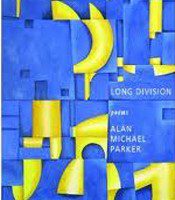
				<content:encoded><![CDATA[<p>Alan Michael Parker makes me a liar. I love things about Parker I fault in other poets. Parker’s voice is so singular and strong that I don’t question it, even when it relies on wit, and in return, Parker rewards me for following him when I least expect it.<span id="more-102976"></span></p><p>I do not think wit should have a place in poetry. Poetry can be playful and light, but not witty. To me, wit and rhyming are two devices too heavy for a good poem. I am very vocal about this. I have criticized poets far more famous and successful than I may ever be for relying on wit instead of making a strong lyric statement. There are, however, exceptions. Parker is one of them because he doesn’t employ wit for a cheap laugh or hollow rhetorical point. He does it to disarm readers to that the other lyric moments are more impactful. Underneath everything, Parker’s emphasis is sadness over wit. Look at the title of his latest book of poems, <a href="http://www.spdbooks.org/Producte/9781932195422/long-division.aspx"><em>Long Division</em></a>. We first think of math with we hear long division, and math and poetry are mutually exclusive, though Parker strives to remedy this by making math a theme of the collection. Beyond the math association, though, the title holds a different connotation, one with an undercurrent of loss and slow deterioration of some kind of relationship where people are divided. The longer I think, the more somber the title becomes.</p><p>The first poem of the collection sets absolutely this feeling of sadness, but as always with Parker, it is done cleverly. “A Christmas Letter” presents just that, a letter at Christmas that a reader doesn’t realize is a letter, despite the title, until the end. The poem ends, “Love —“ but even this raises questions. Is it the closing of a letter or a fade out, a pause to ruminate on love with the familial context that he supplies in the preceding couplets? The poem moves, like much of Parker’s work, by creating and resolving tensions between discursive metaphors and stark, direct observations. To wit:</p><blockquote><p>We never know what to feel.<br />We go to the gym to go</p><p>to the beach, where erosion rules.<br />We reward ourselves with a movie.</p><p>Our food glistens in plastic,<br />kind of like our bodies.</p><p>Who can be alone?<br />This year, so many people died,</p><p>and last year, and more next year:<br />we’re unable to be surprised.</p></blockquote><p>The instant recognition we all must feel over the idea of going to gym before going to the beach to the gorgeous observation that our bodies are glistening in our own plastic, like our Christmas dishes before and after the meal, are placed squarely with blunt truths. We never know what to feel, even on Christmas when feelings seem simple and clear. This year, so many people died. We are unable to be surprised. “A Christmas Letter” is a clever conceit that holds a deceptively simple poem that has a strong emotional punch under everything.</p><p>In <em>Love Song with Motor Vehicles</em>, an older Parker collection, he includes a series of poems devoted to gods of small things, like god of draperies and god of brooms. The section is absolutely brilliant, but I often wondered why he kept all of the poems together. I thought they would be more engaging and effective if they were woven through. I mention this only to show my delight that his two series from <a href="http://www.spdbooks.org/Producte/9781932195422/long-division.aspx"><em>Long Division</em></a>, a series of fables and a series of lists, are woven through, and the effect is spectacular. Both series are masterful and almost perfect.</p><p>Many poets have attempted to write or rewrite fables, from Anne Sexton to Angela Chase. Parker is no exception, except that he, like Sexton, focused on the emotion instead of the narrative. In “A Fable, Upside Down” Parker writes, “Maybe he was lonely—there were leaves / and sticks / and worms at night. // In time the future made sense to him, / for he knew each ending was the same.” Such lovely ideas and lines. The rest of the poem, like the other fable poems in the book, are fanciful, whimsical ideas and concepts that anyone who has read a book of Parker’s has come to expect and appreciate, but they also each contain at least one of these small, wonderfully surprising , visceral, emotional connection to lines and their ideas.</p><p>This happens even without what we might normally call lines of poetry. In the series of lists that punctuate the book, they still have these deep, profoundly felt moments. They are mainly designed for wit and humor, but they transcend. He writes so many list poems, with titles such as “Twenty-two Reasons to Return to the Store,” “Eighteen Ways to Consider a Neighbor Whose Holiday Lights Stay Up All Year,” and “Sixteen Ways Old People Terrify the Young,” and all these poems are heavy on wit but also inclusive of real, solid emotional work. More in <a href="http://www.spdbooks.org/Producte/9781932195422/long-division.aspx"><em>Long Division</em></a> than any of his previous books, Parker will break your heart. In “Eight Unfinished Elegies,” he writes,</p><blockquote><p>1. To the bird outside the hospital window, I have lost my<br />mother dying.</p><p>2. My mother is a window through which I see the sky.</p><p>3. The small sounds of the machines keep my mother dying.</p><p>4. A bird flew into the glass: don’t touch.</p><p>5. As though on the window, I band my body.</p><p>6. Machines keep my mother dying: the sky is a machine<br />keeping my mother dying.</p><p>7. The machine of the body dying.</p><p>8. Fitted in one hand, the body of my mother.</p></blockquote><p>This emotional punch occurs with more frequency than in previous Parker collections. Here, every poem it seems drips with emotion. In “Poetry, Inc.,” he brings back this image of a window, saying: “Look out the window: beauty. Now place one hand on the glass. Now sell what you feel.” He also includes the idea of a poem in the last poem of the collection, “Feeding a Poem to the Horse.” The conceit of this poem, and what ultimately redeems all possible bruises collected from the emotional punches of all the deeply impactful lyric moments that came before the last poem, is that better things should be found to sustain the horse, but he feeds him poems anyway, “So we both might gallop / wild and away.” I guess in this situation I am the horse, grateful to be fed these poems. <a href="http://www.spdbooks.org/Producte/9781932195422/long-division.aspx"><em>Long Division</em></a> is exactly what I expect a book of poems to be: sincere, despite the wit, entertaining, impeccably crafted, and emotionally resonate, galloping wild and away.<br /><h3 class='related_post_title'>Related Posts:</h3><ul class='related_post'><li><a href='http://therumpus.net/2012/12/bender-new-and-selected-poems-by-dean-young/' title='&#8220;Bender: New and Selected Poems&#8221; by Dean Young'>&#8220;Bender: New and Selected Poems&#8221; by Dean Young</a></li><li><a href='http://therumpus.net/2012/09/letters-from-robots-by-diana-salier/' title='Letters From Robots by Diana Salier'>Letters From Robots by Diana Salier</a></li><li><a href='http://therumpus.net/2012/03/drinking-a-glass-of-light/' title='Drinking a Glass of Light'>Drinking a Glass of Light</a></li><li><a href='http://therumpus.net/2012/02/a-halfway-house-where-no-one-leaves/' title='A Halfway House Where No One Leaves'>A Halfway House Where No One Leaves</a></li><li><a href='http://therumpus.net/2011/10/observe-as-meat-falls/' title='Observe as Meat Falls'>Observe as Meat Falls</a></li></ul>]]></content:encoded>
			<wfw:commentRss>http://therumpus.net/2012/07/long-division-by-alan-michael-parker/feed/</wfw:commentRss>
		<slash:comments>0</slash:comments>
		</item>
		<item>
		<title>Gaze, by Christopher Howell</title>
		<link>http://therumpus.net/2012/05/exiled-in-the-far-north-of-longing/</link>
		<comments>http://therumpus.net/2012/05/exiled-in-the-far-north-of-longing/#comments</comments>
		<pubDate>Wed, 02 May 2012 14:00:17 +0000</pubDate>
		<dc:creator>Joey Connelly</dc:creator>
				<category><![CDATA[books]]></category>
		<category><![CDATA[Poetry]]></category>
		<category><![CDATA[reviews]]></category>
		<category><![CDATA[rumpus original]]></category>
		<category><![CDATA[Christopher Howell]]></category>
		<category><![CDATA[Joel Connelly]]></category>
		<category><![CDATA[poetry]]></category>

		<guid isPermaLink="false">http://therumpus.net/?p=100597</guid>
		<description><![CDATA[<p>In the opening poem of Christopher Howell’s Gaze, “Home Stretch,” he concludes with, “Receive me. Here are my silver / wings, in accordance with custom. Inside of them / leaves have been falling all these years.” And as readers, we do receive him, trusting Howell’s confident voice.</p>]]></description>
				<content:encoded><![CDATA[<p>In the opening poem of Christopher Howell’s Gaze, “Home Stretch,” he concludes with, “Receive me. Here are my silver / wings, in accordance with custom. Inside of them / leaves have been falling all these years.” And as readers, we do receive him, trusting Howell’s confident voice.</p><p>Howell’s voice works very subtly. After the first few readings, I was ready to declare Gaze unremarkable, which is not at all true. Howell surprises by not trying to surprise at all. His language and imagery do not draw attention to themselves. His leaps are not what we postmodern readers have been conditioned to expect. Once a reader takes these poems on their terms, the poems become really intricate and beautiful.</p><p>In “Long Arm of the Lake,” my favorite of the collection, Howell tells a simple and cliché story of a family fishing trip from the speaker’s childhood. The poem operates, just as most of his poems, by behaving exactly as you would expect a mediocre poem to behave, capable yet pedestrian. The second half of the poem, without drawing focus or announcing its shifting, hinges on the word “terror.” After, the poem is about religious fear, “too tired to care / about whatever version of the Devil / my hook had caught.” The speaker’s version of the Devil is a five-pound bass, “flopping and miraculous,” which the speaker will take “and beat its brains out on the stern,” just as he’d been taught. The possible interpretations to this idea and Howell’s wording show his deft handling of complicated subject matter in disarmingly simple ways.</p><p>Throughout the collection, Howell sustains the image of crows. In “Long Arm of the Lake,” he writes, “I thought it might be a kind of crow, one of the gods / of hatred …” This connection permeates all mentions of crows that follow. Section three has a subtitle of “The Inner Life [With Crows].” These gods of hatred show up everywhere. “The Refusal to Count Beyond Seven” begins:</p><blockquote><p>There were seven crows inside her<br />gibbering and flapping, emitting<br />the occasional squawk, much more<br />like a suddenly discovered moon than language.<br />Sometimes she hopped around<br />because of this.</p><p>At sunset we would find her on the roof<br />looking for the rest of her clan<br />or for that Nebraska corresponding<br />to a crow’s curious need for endlessness.</p></blockquote><p>Seven gods of hatred live inside her. They have a curious need for endlessness. Without the earlier connection, this poem would be lovely but easily dismissed. With the earlier connection, this image has a beautiful relatability. Who doesn’t feel gods of hatred sometimes? Who doesn’t understand the “curious need for endlessness? Later, in “The Wind off the River Asks if I’ve Seen Myself Lately and, if so, Do I Remember the Name,” he ends,</p><blockquote><p>Suddenly, in answer to the wind, I see myself<br />exiled in the far north of longing. Forsaken</p><p>by the crows, I have bought only one book<br />and I read it again and again.</p></blockquote><p><img class="alignright" src="http://farm8.staticflickr.com/7129/7131992365_51abf63b94_m.jpg" alt="" width="180" height="240" />Somewhere, the curious need for endlessness gave way to forsaking. What comfort to be found in this far north of longing. All of these descriptions alone are entirely forgettable, but if a reader remembers the small, subtle line that links crows and gods of hatred, then every reference is made complicated, beautiful, human.</p><p>After the first reading of Gaze, everything in me wanted to dismiss the collection as underwhelming and unimaginative. I looked to poems as proof, such as the word “jaunty” to describe a hat in “Long Arm of the Lake” (has that word ever in the history of our language described anything other than a damned hat?) and the poem “Checkers,” in which a game between Jesus and Buddha allows for cheap and dull religious platitudes. Every time, though, I couldn’t do it. This collection is one that is so different from most of poetry, from the Modernists on, where the flashiest and most clever poems receive the highest reward. Instead, what Howell has given us is a quiet collection that gets to you, that stays with you. It isn’t a book of poems that behave like we expect poems to behave, but more than that, these poems live with you beyond the experience of reading. This is gazing at a fire so that the after image is with you, for a little bit at least, every time you close your eyes.<br /><h3 class='related_post_title'>Related Posts:</h3><ul class='related_post'><li><a href='http://therumpus.net/2013/05/skin-shift-by-matthew-hittinger/' title='&lt;em&gt;Skin Shift&lt;/em&gt; by Matthew Hittinger'><em>Skin Shift</em> by Matthew Hittinger</a></li><li><a href='http://therumpus.net/2013/05/rise-in-the-fall-by-ana-bozicevic/' title='&lt;em&gt;Rise in the Fall&lt;/em&gt; by Ana Božičević'><em>Rise in the Fall</em> by Ana Božičević</a></li><li><a href='http://therumpus.net/2013/05/desolation-souvenir-by-paul-hoover/' title='&lt;em&gt;Desolation: Souvenir&lt;/em&gt; by Paul Hoover'><em>Desolation: Souvenir</em> by Paul Hoover</a></li><li><a href='http://therumpus.net/2013/05/forty-one-jane-does-by-carrie-olivia-adams/' title='&lt;em&gt;Forty-One Jane Doe&#8217;s&lt;/em&gt; by Carrie Olivia Adams'><em>Forty-One Jane Doe&#8217;s</em> by Carrie Olivia Adams</a></li><li><a href='http://therumpus.net/2013/05/easy-math-by-lauren-shapiro/' title='&lt;em&gt;Easy Math&lt;/em&gt; by Lauren Shapiro'><em>Easy Math</em> by Lauren Shapiro</a></li></ul>]]></content:encoded>
			<wfw:commentRss>http://therumpus.net/2012/05/exiled-in-the-far-north-of-longing/feed/</wfw:commentRss>
		<slash:comments>2</slash:comments>
		</item>
		<item>
		<title>Drinking a Glass of Light</title>
		<link>http://therumpus.net/2012/03/drinking-a-glass-of-light/</link>
		<comments>http://therumpus.net/2012/03/drinking-a-glass-of-light/#comments</comments>
		<pubDate>Fri, 23 Mar 2012 14:00:26 +0000</pubDate>
		<dc:creator>Joey Connelly</dc:creator>
				<category><![CDATA[books]]></category>
		<category><![CDATA[Poetry]]></category>
		<category><![CDATA[reviews]]></category>
		<category><![CDATA[rumpus original]]></category>
		<category><![CDATA[Joey Connelly]]></category>
		<category><![CDATA[Michael McGriff]]></category>
		<category><![CDATA[poetry]]></category>

		<guid isPermaLink="false">http://therumpus.net/?p=99341</guid>
		<description><![CDATA[<h4><a href="http://www.spdbooks.org/Producte/9781556593840/home-burial.aspx?rf=1"><img alt="" src="http://farm7.staticflickr.com/6106/7006239703_6fb56cce87_o.jpg" class="alignleft" width="80" height="120" /></a>The emotional theme of the volume, the nostalgia and death that is announced in the book’s title and reaffirmed in almost every poem to some extent, is what I know I will carry with me for a long time.</h4><p><span id="more-99341"></span></p><p>Michael McGriff begins his second collection of poetry, <a href="http://www.spdbooks.org/Producte/9781556593840/home-burial.aspx?rf=1"><em>Home Burial</em></a>, with what will be the strongest virtue of the collection: his imagery.</p>]]></description>
				<content:encoded><![CDATA[<h4><a href="http://www.spdbooks.org/Producte/9781556593840/home-burial.aspx?rf=1"><img alt="" src="http://farm7.staticflickr.com/6106/7006239703_6fb56cce87_o.jpg" class="alignleft" width="80" height="120" /></a>The emotional theme of the volume, the nostalgia and death that is announced in the book’s title and reaffirmed in almost every poem to some extent, is what I know I will carry with me for a long time.</h4><p><span id="more-99341"></span></p><p>Michael McGriff begins his second collection of poetry, <a href="http://www.spdbooks.org/Producte/9781556593840/home-burial.aspx?rf=1"><em>Home Burial</em></a>, with what will be the strongest virtue of the collection: his imagery. It seems to me at times that lyricism and strong, emotionally evocative images are no longer valued in contemporary poetry, but then I stumble on a book like <a href="http://www.spdbooks.org/Producte/9781556593840/home-burial.aspx?rf=1"><em>Home Burial</em></a> to restore my faith in images that are used to elicit something other than banal, stock shock over sex and violence.</p><p>“Kissing Hitler,” the first poem in <a href="http://www.spdbooks.org/Producte/9781556593840/home-burial.aspx?rf=1"><em>Home Burial</em></a>, offers a series of scenes that tell of growing up in Oregon without any of the sentimentality that usually accompany scenes that tell of growing up somewhere. Instead, we have nostalgia and death entwined, which will become a theme throughout the collection. This nostalgia/death can be seen in the lines, “The last time I saw him / he sat on the edge / of his father’s girlfriend’s bathtub, / bleeding and laughing hard into a pink towel.” The most interesting stanza comes immediately after those lines:</p><blockquote><p>I can’t remember—<br />maybe it was a birthday party.<br />Maybe we’d climbed in<br />through the living room window,<br />looking for a bottle or some pills,<br />at the same moment the adults stumbled in<br />from the Silver Dollar, hardwired<br />to liquor and crystal.</p></blockquote><p>The image of a birthday party, the ultimate childhood experience when everything for an entire day was about the child, to adolescence when stealing some verboten beverage or pill was paramount, to the often unfortunate reality of adults stumbling in. Instead of “kissing Hitler” with huffing gas rags, the examples of maturity were “hardwired” to alcohol and meth.</p><p>The tension between fondness for a specific landscape, Oregon, while acknowledging the pain of place haunts the book in the most gorgeous, elegiac ways. McGriff’s lyricism, his metaphoric flourishes, convey exactly the emotions he needs them to. In “In February,” he writes:</p><blockquote><p>Her son’s been dead<br />nearly a year, and yesterday<br />while driving to the feed store<br />she braked suddenly<br />and threw her arm<br />across the rib cage<br />of his absence.</p></blockquote><p><img alt="" src="http://farm8.staticflickr.com/7137/7006239735_8c19c072a7_o.jpg" class="alignright" width="160" height="240" />What could easily be bald sentimentality in lesser hands works here, and the last two lines are, for me, what lift the image above cringe-inducing sap. The lines say what by now we know is coming, buy McGriff phrases the act in an unexpected way, which makes the image all the more satisfying. And again we see this idea of nostalgia mixed with death.</p><p>Not all of the nostalgia and death are so obvious as that image; most are much more subtle, and most only imply death. Even without specific claims to it, the mournfulness and remorse are present in each poem, even the small poems that in lesser collections would be filler, the baby’s breath in the roses. “Note to My Former Self,” one such poems, is here in its entirety:</p><blockquote><p>I’ve seen a group of farm kids<br />hypnotize a rabbit<br />by pinning it on its back<br />then stroking its neck.</p><p>This is what I think of<br />when I see you in the night—</p><p>not the tick,<br />but the distress call<br />we manage to send out<br />while we are pinned<br />to our stillness.</p></blockquote><p>McGriff manages to sustain these entwined themes while also juggling motifs of other images, but the referent in his metaphor changes. He uses horse images in every possible way, from mentioning the horse skull over the home door to describing something so intricate that it could only be painted with a single stroke of a horsehair brush to describing being thrown “from your uncle’s horse” to mentioning Saint Luis, Protector of Horse Thieves. He similarly makes multiple crow references work to his full advantage. The frequency and necessity that the images appear and reappear, though never twice in the same capacity, feels masterful every time it occurs.</p><p>Despite some poems’ lines being shorter than my particular aesthetic, McGriff’s collection strikes me as an almost perfect volume. The images are concise, surprising, and effective. These are images that linger long after reading. My favorite, though it won’t seem as impactful out of context, comes from a poem called “Drinking at the Rusted Oyster”: I’m terrified of old acquaintances. / I’m eating Angels on Horseback. / I’m drinking a glass of light.” The emotional theme of the volume, the nostalgia and death that is announced in the book’s title and reaffirmed in almost every poem to some extent, is what I know I will carry with me for a long time.</p><p><a href="http://wp.me/po1to-pQl"><em>Read &#8220;Winter Lottery,&#8221; a Rumpus Original Poem by Michael McGriff</em>.</a><br /><h3 class='related_post_title'>Related Posts:</h3><ul class='related_post'><li><a href='http://therumpus.net/2012/12/bender-new-and-selected-poems-by-dean-young/' title='&#8220;Bender: New and Selected Poems&#8221; by Dean Young'>&#8220;Bender: New and Selected Poems&#8221; by Dean Young</a></li><li><a href='http://therumpus.net/2012/09/letters-from-robots-by-diana-salier/' title='Letters From Robots by Diana Salier'>Letters From Robots by Diana Salier</a></li><li><a href='http://therumpus.net/2012/07/long-division-by-alan-michael-parker/' title='Long Division by Alan Michael Parker'>Long Division by Alan Michael Parker</a></li><li><a href='http://therumpus.net/2012/02/a-halfway-house-where-no-one-leaves/' title='A Halfway House Where No One Leaves'>A Halfway House Where No One Leaves</a></li><li><a href='http://therumpus.net/2011/10/observe-as-meat-falls/' title='Observe as Meat Falls'>Observe as Meat Falls</a></li></ul>]]></content:encoded>
			<wfw:commentRss>http://therumpus.net/2012/03/drinking-a-glass-of-light/feed/</wfw:commentRss>
		<slash:comments>0</slash:comments>
		</item>
		<item>
		<title>A Halfway House Where No One Leaves</title>
		<link>http://therumpus.net/2012/02/a-halfway-house-where-no-one-leaves/</link>
		<comments>http://therumpus.net/2012/02/a-halfway-house-where-no-one-leaves/#comments</comments>
		<pubDate>Wed, 08 Feb 2012 15:00:32 +0000</pubDate>
		<dc:creator>Joey Connelly</dc:creator>
				<category><![CDATA[books]]></category>
		<category><![CDATA[Poetry]]></category>
		<category><![CDATA[reviews]]></category>
		<category><![CDATA[rumpus original]]></category>
		<category><![CDATA[Joey Connelly]]></category>
		<category><![CDATA[poetry]]></category>
		<category><![CDATA[Rob Griffith]]></category>

		<guid isPermaLink="false">http://therumpus.net/?p=97228</guid>
		<description><![CDATA[<h4><a href="http://powells.com/biblio/9781936370474?&#38;PID=33625"><img class="alignleft" src="http://farm8.staticflickr.com/7160/6836225699_9e7a4fd0be_o.jpg" alt="" width="80" height="120" /></a>In three very different but equally gorgeous sections, Griffith guides us through every poetic form from sonnet to villanelle, all while examining the idea of what it means to be in one place instead of all others, what it means not to know your own momentum and position at the same time, to never see the moon from every window.</h4>]]></description>
				<content:encoded><![CDATA[<h4><a href="http://powells.com/biblio/9781936370474?&amp;PID=33625"><img class="alignleft" src="http://farm8.staticflickr.com/7160/6836225699_9e7a4fd0be_o.jpg" alt="" width="80" height="120" /></a>In three very different but equally gorgeous sections, Griffith guides us through every poetic form from sonnet to villanelle, all while examining the idea of what it means to be in one place instead of all others, what it means not to know your own momentum and position at the same time, to never see the moon from every window.<span id="more-97228"></span></h4><p>Rob Griffith, in <a href="http://powells.com/biblio/9781936370474?&amp;PID=33625"><em>The Moon from Every Window</em></a>, attempts many things at once, which isn’t surprising from a poetry collection. What surprises, though, is how well he accomplishes them. In three very different but equally gorgeous sections, Griffith guides us through every poetic form from sonnet to villanelle, all while examining the idea of what it means to be in one place instead of all others, what it means not to know your own momentum and position at the same time, to never see the moon from every window.</p><p>In the first section, Griffith deals with domesticity, sharpening his poetry on everyday ideas. The collection opens with “The War at Home,” where a dog, “a boxer mix,” wages war on a springtime hydrangea by habitually using the bush as his toilet, but try as the dog may, he can’t win the war and kill the flower. What does this mean for the dog? For us, who may be trapped in similar wars at home that we will never win? Through the course of the section, Griffith explores a relationship falling apart. In Griffith’s world, we all become chained to monotony, even the undead. In “When the Zombies Come,” what is interesting is not that zombies descend; it is that the zombies quickly become us. The poem concludes:</p><blockquote><p>I like to think they’ll mill and stare, then bend<br />to take up our uniforms, our jobs<br />and lives—a zombie checkout boy who sacks<br />the bread and eggs; the zombie line ref<br />who shambles downfield to make some bad calls;<br />and zombie teachers gurgling out declensions<br />for lie and lay. And at a desk, paused<br />with pen in hand, a zombie poet writes<br />a zombie sonnet for his sonnet love. He sings<br />of flawless gray skin, of eyes like curdled milk.</p></blockquote><p>Here we see how Griffith shines. His exquisite verb choice (“mill,” “gurgling,” “paused,” “shambles”), his intriguing line endings (to pause on the word “pause” is at once obvious and effective), and his ability to make everything mundane (even a zombie invasion) show Griffith’s attention to language and the discipline of poetry.</p><p>The most notable and obvious evidence of his devotion to detail is his pervasive use of poetic forms. Like Natasha Trethewey in Native Guard, Griffith employs poems that adhere to forms at random, causing the reader to constantly ask, “Is this poem a form I don’t know?” Usually I am unimpressed by neo-formalism since form usually trumps content, but Griffith manages to utilize form without sacrificing what he has to say. “Heisenberg to His Wife” is a sonnet, “Patchwork Garden” is a haiku (and like all haikus, it is too short to be effective), and other poems show an impressive penchant for blank verse, as seen in this opening line from “For a Party at a Friend’s House,” “Not everything is elegy, thank God…” And this wordplay shows another of Griffith’s strengths: humor. Like the zombies, Griffith’s poetry does not take itself too seriously, even when it wanders into heavy physics.</p><p><img class="alignright" src="http://farm8.staticflickr.com/7163/6836225783_32066f067c_m.jpg" alt="" width="180" height="240" />The second section of the book focuses on two seemingly random and unrelated thinkers, Werner Heisenberg and Jonathan Edwards. In the first poem of the section, “Heisenberg’s Love Song,” Griffith begins with an epigraph from Heisenberg: “The momentum and position of a particle cannot / both be known at the same time. Knowing one will disrupt / knowing the other.” The section explores the idea of our inability to know where we are and where we are going. This builds off the collapsed domesticity of the first section. “Heisenberg’s Love Song” ends: “Are you moving toward me or away?” The final stanza of the second poem in the section, “Heisenberg to His Wife,” reads:</p><blockquote><p>And nearly everywhere at once, it jumps<br />From state to state, absorbing and emitting<br />All those quanta—a light switch off or on,<br />No in-betweens. It’s here we are finally stumped.<br />Like love, the change is total, and I’ll admit,<br />The trouble lies in telling when it’s gone.</p></blockquote><p>We cannot know our position and momentum, Griffith seems to say. Instead, as he declares in “Heisenberg in Old Age,”</p><blockquote><p>each moment is simply a kind of waiting<br />for the next, a halfway house where no one leaves.<br />He wonders what it’s all for, a world<br />where the present is myth and nothing exists<br />but memory and anticipation.</p></blockquote><p>Griffith, with all his deft wordplay and formal skills, is most impressive with his consistency to his poetic project. <a href="http://powells.com/biblio/9781936370474?&amp;PID=33625"><em>The Moon from Every Window</em></a> meditates on the Heisenberg principle, that a particle’s momentum and position cannot both be known, and how it relates to people. By introducing the idea in the second section makes a reader rethink the first section, which is thrilling. With only a few exceptions, like “Ruth’s Alexandriad” which lacks impact, the poems in this collection succeed. The third section, with multiple poems about fishing, show a speaker on the move, either hitchhiking in Tennessee or finding his Chinese doppelgänger, showing a man now aware that where he is and where he is going cannot both be know, so he focuses only on where he is. The final lines in this strong, intriguing collection, in a poem called “Disappearing,” read: “…I’d just be gone, / like stars swallowed by the mackerel-light of dawn.”</p><p><em>Read <a href="http://wp.me/po1to-pig">&#8220;Disappearing,&#8221; a Rumpus Original Poem</a> by Rob Griffith.</em><br /><h3 class='related_post_title'>Related Posts:</h3><ul class='related_post'><li><a href='http://therumpus.net/2012/12/bender-new-and-selected-poems-by-dean-young/' title='&#8220;Bender: New and Selected Poems&#8221; by Dean Young'>&#8220;Bender: New and Selected Poems&#8221; by Dean Young</a></li><li><a href='http://therumpus.net/2012/09/letters-from-robots-by-diana-salier/' title='Letters From Robots by Diana Salier'>Letters From Robots by Diana Salier</a></li><li><a href='http://therumpus.net/2012/07/long-division-by-alan-michael-parker/' title='Long Division by Alan Michael Parker'>Long Division by Alan Michael Parker</a></li><li><a href='http://therumpus.net/2012/03/drinking-a-glass-of-light/' title='Drinking a Glass of Light'>Drinking a Glass of Light</a></li><li><a href='http://therumpus.net/2011/10/observe-as-meat-falls/' title='Observe as Meat Falls'>Observe as Meat Falls</a></li></ul>]]></content:encoded>
			<wfw:commentRss>http://therumpus.net/2012/02/a-halfway-house-where-no-one-leaves/feed/</wfw:commentRss>
		<slash:comments>0</slash:comments>
		</item>
		<item>
		<title>Their Faces Blur in Every Mirror</title>
		<link>http://therumpus.net/2011/12/their-faces-blur-in-every-mirror/</link>
		<comments>http://therumpus.net/2011/12/their-faces-blur-in-every-mirror/#comments</comments>
		<pubDate>Wed, 28 Dec 2011 15:00:13 +0000</pubDate>
		<dc:creator>Joey Connelly</dc:creator>
				<category><![CDATA[books]]></category>
		<category><![CDATA[Poetry]]></category>
		<category><![CDATA[reviews]]></category>
		<category><![CDATA[rumpus original]]></category>

		<guid isPermaLink="false">http://therumpus.net/?p=94271</guid>
		<description><![CDATA[<h4><a href="http://powells.com/biblio/9780983700104?&#38;PID=33625"><img class="alignleft" src="http://farm8.staticflickr.com/7142/6582815747_9588c5a14b_o.jpg" alt="" width="80" height="120" /></a>Darling writes with incredible crispness, but the world she describes remains cold, stark, upper class, and difficult to relate to.<span id="more-94271"></span></h4><p>Recently, I attended a wedding of a couple I didn’t know very well. The decorations were beautiful, the food was delicious and elegantly catered, and the music was tasteful and appropriate.</p>]]></description>
				<content:encoded><![CDATA[<h4><a href="http://powells.com/biblio/9780983700104?&amp;PID=33625"><img class="alignleft" src="http://farm8.staticflickr.com/7142/6582815747_9588c5a14b_o.jpg" alt="" width="80" height="120" /></a>Darling writes with incredible crispness, but the world she describes remains cold, stark, upper class, and difficult to relate to.<span id="more-94271"></span></h4><p>Recently, I attended a wedding of a couple I didn’t know very well. The decorations were beautiful, the food was delicious and elegantly catered, and the music was tasteful and appropriate. Everything was exactly as it should have been, but when I left, I had a strong sense of things that should have satisfied me, but I never felt actual satisfaction. I missed the most important part of the ceremony, which was an emotional connection with the couple.</p><p>I feel this way about Kristina Marie Darling’s <em><a href="http://powells.com/biblio/9780983700104?&amp;PID=33625">The Body is a Little Gilded Cage: A Story in Letters &amp; Fragments</a></em>. The book contains many gorgeous images and lines, and much about the book impressed me. Darling presents innovative narrative techniques, like footnotes to a missing text, letters between lovers or almost lovers, and glossaries of terms, but what is missing is any connection between the reader and the subject. I’m not entirely sure what the subject is, even after numerous readings and sincere attempts to get past the attempts at structural innovation. In trying to tell a story in letters and fragments, Darling emphasizes the letters and fragments, leaving a shadow of a story, a bride and groom whom the audience cannot see well enough to recognize.</p><p>This is what I know of <em><a href="http://powells.com/biblio/9780983700104?&amp;PID=33625">The Body is a Little Gilded Cage: A Story in Letters &amp; Fragments</a></em> from repeated readings: 1. The first section of prose poems centers on a couple who attend a rich, fancy party. 2. Images from the party are possibly expanded upon by a series of appendixes, but the appendixes do not refer to the text, possibly creating a metanarrative, a hipster’s make-believe postmodernism, where we have footnotes that indirectly expand on images from the first section of prose poems. 3. The book, in part, is a biography of H.D., the great modernist poet. (I only know this through the author’s note at the end and a few Internet searches on Darling. I in no way learned this through Darling’s poetry. Beyond the book’s epigraph, H.D. is not mentioned.)</p><p>Still, <em><a href="http://powells.com/biblio/9780983700104?&amp;PID=33625">The Body is a Little Gilded Cage</a></em> contains many gems. “Soirée (III),” the strongest of the strong first section, reads:</p><blockquote><p>The music begins &amp; we watch dancers stumble beneath dim<br />chandeliers. Their faces blur in every mirror &amp; I imagine us adrift<br />among the hall’s towering pillars. My heart a room opening inside a<br />darkened room. Now each balustrade glitters with empty crystal &amp;<br />the guests can only murmur. The phonograph keeps turning &amp; soon<br />the night is a pearl I’ve locked away with a silver key —</p></blockquote><p><img class="alignright" src="http://farm8.staticflickr.com/7008/6582815785_3eef9efb0f_o.jpg" alt="" width="155" height="114" />She describes small details of a larger encounter, noting such things as satin inlays on coats. She reports on every button she sees. When describing a cathedral in “City Walk (II)”, she offers, “Our eyes adrift along their beveled iron trim.” Later in “Aviary,” “The night has been opened like a box of exotic blue canaries &amp; I’m brushing feathers from my long dark sleeves.” Darling employs strong ears and a penchant for strong images. These images reflect a world with over the top in bourgeois opulence, which I assume is where the biography comes in. Darling writes with incredible crispness, but the world she describes remains cold, stark, upper class, and difficult to relate to.</p><p>Darling expands images this first section of prose poems through appendices. She takes images or something that was mentioned in the first section and offers a history, a glossary of terms, or other images that change how we view the first image. She also, in this process, gives us new ideas that she masterfully weaves through the miscellanea, such as a gorgeous exploration of lilies. In “Footnotes to the History of the Corsage,” the tenth note reads, “When she unpinned the lilies, a quiet upheaval. The most startling numbness in each of her fingers.” She goes on to say in “Notes of Fin de Siècle,” “In winter months, lilies continue to bloom under glass. Her insatiable interest in hermetic methods of preservation.” What she does, Darling does very well. So much of what can be found in this spare collection is beautiful, such is the sixth footnote of “Footnotes to the History of the Chandelier”: “Every house in the province contained a hidden staircase, which was lit by the most exotic chandelier. At night she would lie on her back and count the endless tiers of Bohemian crystal. The ominous smoldering of the candles.”</p><p>As lovely as the description is, and it truly is, I’m not sure what to do with it. I cannot decide how to assemble any meaning from the text, and it isn’t from lack of trying. It isn’t because I don’t understand how to read innovative texts. Both of the main techniques Darling uses, the fragmentation and the footnotes to missing texts, I have read and understood fully when I have encountered them before, namely in Anne Carson’s translation of Sappho, If Not, Winter, where Carson leaves Sappho’s fragments in tact, and Jennifer Boulley’s The Body: An Essay, which does the same thing Darling does with orphaned footnotes. The problem isn’t that I am not sophisticated enough as a reader. The problem is that I am given beautiful imagery and hints at a sound emotional connection in the work. However, like those strangers whose wedding ceremony I witnessed, I do not have enough emotional connection to the missing story or an intellectual connection to why Darling chose the poetic structures that she uses. For all of Darling’s obvious talent and power in her images, I know I could be satisfied with the book if I were only given something substantial to hold onto.</p><p><em>Read <a href="http://wp.me/po1to-owz">&#8220;A History of Melancholia: Glossary of Terms,&#8221;</a> a Rumpus Original Poem by Kristina Marie Darling</em>.<br /><h3 class='related_post_title'>Related Posts:</h3><ul class='related_post'><li>No related posts&#8230;</li></ul>]]></content:encoded>
			<wfw:commentRss>http://therumpus.net/2011/12/their-faces-blur-in-every-mirror/feed/</wfw:commentRss>
		<slash:comments>0</slash:comments>
		</item>
		<item>
		<title>Observe as Meat Falls</title>
		<link>http://therumpus.net/2011/10/observe-as-meat-falls/</link>
		<comments>http://therumpus.net/2011/10/observe-as-meat-falls/#comments</comments>
		<pubDate>Fri, 21 Oct 2011 14:00:18 +0000</pubDate>
		<dc:creator>Joey Connelly</dc:creator>
				<category><![CDATA[books]]></category>
		<category><![CDATA[reviews]]></category>
		<category><![CDATA[rumpus original]]></category>
		<category><![CDATA[Joey Connelly]]></category>
		<category><![CDATA[Kevin Simmonds]]></category>
		<category><![CDATA[poetry]]></category>

		<guid isPermaLink="false">http://therumpus.net/?p=89775</guid>
		<description><![CDATA[<h4><a href="<a href="><img class="alignleft" src="http://farm7.static.flickr.com/6156/6263388749_0c4465e174_o.jpg" alt="" width="80" height="120" /></a>This collection is not kind or nice, but the brutality of his honesty, the blunt force of his handling of subject matter, and most importantly, his emotional transparency, make this strong collection incredibly effective and worth reading and rereading. <span id="more-89775"></span></h4><p>The epigraph to “Bad Catholics” in Kevin Simmonds’ <a href="http://powells.com/biblio/9781907056826?&#38;PID=33625"><em>Mad for Meat</em></a> quotes The Montreal Gazette and tells us, “Results from a McGill University study, released yesterday, suggest that people—men, anyways—become less aggressive at the sight of meat.” This idea of meat runs throughout the book, an extended metaphor that keeps changing.</p>]]></description>
				<content:encoded><![CDATA[<h4><a href="<a href="><img class="alignleft" src="http://farm7.static.flickr.com/6156/6263388749_0c4465e174_o.jpg" alt="" width="80" height="120" /></a>This collection is not kind or nice, but the brutality of his honesty, the blunt force of his handling of subject matter, and most importantly, his emotional transparency, make this strong collection incredibly effective and worth reading and rereading. <span id="more-89775"></span></h4><p>The epigraph to “Bad Catholics” in Kevin Simmonds’ <a href="http://powells.com/biblio/9781907056826?&amp;PID=33625"><em>Mad for Meat</em></a> quotes The Montreal Gazette and tells us, “Results from a McGill University study, released yesterday, suggest that people—men, anyways—become less aggressive at the sight of meat.” This idea of meat runs throughout the book, an extended metaphor that keeps changing.</p><p>The book’s cover shows a crucified Christ, sections outlined like the famous picture from <em>The Joy of Cooking</em> that show where from the cow each piece of beef is found. Simmonds follows that, though never with direct ideas of cannibalism and Christianity, by continually exploring religious ideas. The best and most successful example is in “Bad Catholics.” He opens the poem, “We kept the butcher’s block bloody / through Lent” to place us squarely in the religious frame of mind. The poem then discusses his mother, who knows enough about men to watch the butcher, and the poem concludes with</p><blockquote><p>whenever dad made the trip alone<br />to bring home the lamb</p><p>swaddled in white paper<br />&amp; marked</p></blockquote><p>The lamb always invites comparisons to Christ, and swaddled is a verb I have never heard unless also mentioning a manger. White and the idea of bringing home are heavy with resurrection, even without the context of Lent, though the mention of Lent makes the connection astoundingly clear. With the imagery and the epigraph, the body of Christ becomes the body of Christ, bloodying the butcher’s block. Is this the meat that the very sight should make men less aggressive?</p><p>Simmonds walks such a wonderful line between the religious and the physical, between reverence and renouncement, and as someone whose bio mentions assembling an anthology of poetry that marries spirituality and homosexuality, this makes absolute sense. At the end of “Sermon,” he writes, “The body doesn’t know religion but begins its every motion as a god.” This tension between body and not-body, typified usually by contrasting his absent father and his attentive mother, drive the more successful poems in the book. In “bouquet of scalpels,” he writes,</p><blockquote><p>a father unforgivably christian<br />&amp; Jamaican<br />fine without my call<br />on father’s day</p><p>sure-handed</p><p>i could castrate him<br />he who led me to doubt<br />black men could love</p></blockquote><p>The only word he capitalizes in the entire poem, not I or Christian or Father’s Day, is Jamaican. I am not sure of the significance, but I am intrigued nonetheless. This is just another example of a bold choice in a series of bold choices. He juxtaposes ideas and images just to see what will come of them.</p><p><img class="alignright" src="http://farm7.static.flickr.com/6112/6263388781_04ee8656f0_o.jpg" alt="" width="160" height="116" /> One two facing pages, Simmonds pairs a poem called “Little Dolly Parton” with one titled “Tenor.” Bringing back the religious theme, he compares Dolly’s childhood vision of the town prostitute as her source of fashion inspiration to his own childhood heroes, a choir director and a Jesuit. The poem makes a powerful statement of a man whose sexuality did not conform to the judgments of religion. He writes “as I rang the bells in my white robe / altar boy full of shame.” He, like Dolly, concludes that it is love that makes us find our hallelujahs in ourselves. “Tenor,” however, paints a different picture, yet the picture is still a view of religion. If his father stands for Our Father, absent and unloving, then it seems clear what he is doing with the humiliation and sexuality. The poem is very sexually graphic, though the symbolism keeps the writing from being exploitative. “A father needs to be seduced / at the urinals / sure you’ll swallow / after the fuck / even the shit at the end.” The juxtaposition of the graphic imagery and with Dolly Parton, the woman whose music focuses on butterflies and clear blue mornings, adds layers of meaning, some potentially disturbing, to both poems.</p><p>Of the juxtapositions, Simmonds leans toward shock. Not all of these poems are for the faint of heart. He includes a poem called “Rosebud,” a term that I admit I had to look up and that has now forever ruined <em>Citizen Kane</em> for me. While I understand and appreciate what he is doing with these descriptions, the moments overpower and linger for me more than the other brilliant moments in the book. In “Tornado,” he writes of a sexual exchange with a brother in a moment of crisis. I believe these uncomfortable moments, the ones offering intimate moments of anonymous sex or the ones with titles like “An Old Man Carrying His Catheter Bag,” unite us all on a base level, reminding us yet again how we are all, underneath everything else, meat.</p><p>Simmonds knows when to shock and when to avoid sensationalism. In “Bayard Rustin,” a prose poem that is also one of the collection’s best poems, presents facts with gorgeous clarity. He writes of being imprisoned for “sexual perversion.” He identifies how the bias and struggles of African Americans for basic human rights are different from the bias and struggles for gay people. He writes, “The rights I don’t possess because I’m a Negro certainly come before those I yearn for as a homosexual. Homosexual. Such an antiseptic sound to it. Yet I rather that to other names, names I’m called between teeth.”</p><p>Though there are many effective poems in <a href="http://powells.com/biblio/9781907056826?&amp;PID=33625"><em>Mad for Meat</em></a>, the strongest bring back the meat image directly. From “ bouquet of scalpels,” after the above lines that call for his father’s castration, he writes,</p><blockquote><p>observe him without seed<br />his rightful &amp; clean erection<br />observe as meat falls<br />there would be no lesson in that</p><p>instead<br />i take cover<br />in another man’s body<br />as he takes cover<br />in mine</p></blockquote><p>Elsewhere in the poem, in another allusion to the idea that we are all meat, he writes, “come rot with me,” my favorite line in the book. In “Inheritance,” he writes of his mother’s passing and his stepfather calling him a “faggot” and concludes with the lines, “leave me toothless / mad / for meat.” The poem is incredibly powerful, a true testament to Simmonds’ range and immense talent. Like many of his other poems, “Inheritance” demonstrates a poetic dexterity that leaves the reader deeply unsettled yet deeply moved.</p><p>This meat, this flesh. Simmonds uses this extended metaphor to unite all, reducing us to meat both physically and emotionally. This collection is not kind or nice, but the brutality of his honesty, the blunt force of his handling of subject matter, and most importantly, his emotional transparency, make this strong collection incredibly effective and worth reading and rereading.<br /><h3 class='related_post_title'>Related Posts:</h3><ul class='related_post'><li><a href='http://therumpus.net/2012/12/bender-new-and-selected-poems-by-dean-young/' title='&#8220;Bender: New and Selected Poems&#8221; by Dean Young'>&#8220;Bender: New and Selected Poems&#8221; by Dean Young</a></li><li><a href='http://therumpus.net/2012/09/letters-from-robots-by-diana-salier/' title='Letters From Robots by Diana Salier'>Letters From Robots by Diana Salier</a></li><li><a href='http://therumpus.net/2012/07/long-division-by-alan-michael-parker/' title='Long Division by Alan Michael Parker'>Long Division by Alan Michael Parker</a></li><li><a href='http://therumpus.net/2012/03/drinking-a-glass-of-light/' title='Drinking a Glass of Light'>Drinking a Glass of Light</a></li><li><a href='http://therumpus.net/2012/02/a-halfway-house-where-no-one-leaves/' title='A Halfway House Where No One Leaves'>A Halfway House Where No One Leaves</a></li></ul>]]></content:encoded>
			<wfw:commentRss>http://therumpus.net/2011/10/observe-as-meat-falls/feed/</wfw:commentRss>
		<slash:comments>0</slash:comments>
		</item>
		<item>
		<title>The Last Poem I Loved: &#8220;Hardware Store in a Town Without Men&#8221; by Laura Kasischke</title>
		<link>http://therumpus.net/2011/06/the-last-poem-i-loved-hardware-store-in-a-town-without-men-by-laura-kasischke/</link>
		<comments>http://therumpus.net/2011/06/the-last-poem-i-loved-hardware-store-in-a-town-without-men-by-laura-kasischke/#comments</comments>
		<pubDate>Mon, 13 Jun 2011 18:00:55 +0000</pubDate>
		<dc:creator>Joey Connelly</dc:creator>
				<category><![CDATA[Other]]></category>
		<category><![CDATA[The Last Poem I Loved]]></category>

		<guid isPermaLink="false">http://therumpus.net/?p=80915</guid>
		<description><![CDATA[<p>It feels strange to claim that &#8220;Hardware Store on a Town Without Men&#8221; is the last poem I loved, since I have loved it for some time now. A fairer term would be to call it The Last Poem I Loved Continuously.</p>]]></description>
				<content:encoded><![CDATA[<p>It feels strange to claim that &#8220;Hardware Store on a Town Without Men&#8221; is the last poem I loved, since I have loved it for some time now. A fairer term would be to call it The Last Poem I Loved Continuously. Of the ideas she tackles in the poem, the most obvious and perceptive are her thoughts on aging and male/female relationships. It was first published in American Poetry Review, and you can also <a href="http://www.thefreelibrary.com/Hardware+Store+in+a+Town+without+Men+%26<br />+Clock+Radio.+(Two+Poems).-­‐a091821267">find it here.</a></p><p>Poems rely on images, which we all know, but usually when we think of images, we think of sight or sound. Rarely does an image in a poem make you conjure smells. The thought of some things make you feel like you can smell them, like Christmas trees or barbeques, but Kasischke accomplishes engaging the nose in her title. When I think of a hardware store, the first thing I think of is the distinctive smell. A combination of paint, wood chips, and other things I can never quite place, the stores smell in a disgusting yet comforting way. LIke the ideas of the poem itself, the smell of a hardware store is one that stays with you long after you leave it.<span id="more-80915"></span></p><p>Like most of Kasischke&#8217;s work, her words have an elegiac undercurrent to them without ever being sensational or dramatic. She begins</p><blockquote><p>I found myself in a story<br />without suspense, only<br />with one deaf falcon circling deafly, and that<br />wild college girl next door</p><p>screaming at her mother on the phone.</p></blockquote><p>A story without suspense. Any fiction writer will tell you that conflict drives everything, but here we have none. Just a deaf falcon circling deafly (though I have no idea how that is possible) and a girl screaming at her mother on the phone. It is important, I feel, for a girl to scream at her mother. NO men are needed in that scenario, yet the interactions are not flowery and loving. Women, Kasischke seems to say, are capable of a different kind of violence to one another.</p><p>Before she comes to her conclusion that a town of women would never need to lock a door, would in fact not need doors of separation at all, she makes other references to what can typically be thought of as women&#8217;s work or men&#8217;s work. She says that after turning forty, she spent her time cleaning hair from drains (another image so tactile that I can feel it, wet hair caked in soap at my shower drain) and raking leaves from gutters. Clearing blockages wherever they may be, making sure things keep moving. In a way, we can think of a door as a block, like leaves or hair, to stop the ebb and flow of daylight life. Women, in the world of the poem, are who clear the dams, and men are the ones who insist on barriers.</p><blockquote><p>Oh, I recognizes my agony right away.<br />The howling dog of daylight life, the years of lust<br />had opened up<br />a permanent inn for phantoms in my brain.</p></blockquote><p>Her poetry constantly surprises. What feels like a borderline banal stanza about lost loves or almost loves and the ache of lust becomes something entirely different with the word phantoms. Like &#8220;Me heart, a golden lobster, a star / in a grave, some / hot blood running underground&#8221; her metaphors can haunt in vague ways. I could and I have parsed these phrases until I found satisfying answers, but that satisfaction was lost the next time I read it. I don&#8217;t understand, but I don&#8217;t need to understand. I feel the heavy death implications of both sections. I feel the weight. And I love it.</p><p>The most intriguing phrase for me is &#8220;howling dog of daylight life.&#8221; I take it to mean the constant stream of pressure, the necessary things I must do between hitting snooze on the alarm clock to when night falls and the world stops wanting anything from me. But is that what it is saying? After all, don&#8217;t dogs bark at everything but only howl at the moon? And at night, when sleep comes, &#8220;the sweet / rolling water if its e&#8217;s&#8230;&#8221; is that when we are allowed to dream of a town without men, with its useless hardware store with &#8220;Whole // shelves devoted to wrenches, gleaming // and no reason to lock the door&#8221;?</p><h3 class='related_post_title'>Related Posts:</h3><ul class='related_post'><li><a href='http://therumpus.net/2012/06/the-last-poem-i-loved-faults-by-sara-teasdale/' title='The Last Poem I Loved: &#8220;Faults&#8221; by Sara Teasdale'>The Last Poem I Loved: &#8220;Faults&#8221; by Sara Teasdale</a></li><li><a href='http://therumpus.net/2012/01/the-last-poem-i-loved-the-devil-and-billy-markham-by-shel-silverstein-2/' title='The Last Poem I Loved: &#8220;The Devil and Billy Markham&#8221; by Shel Silverstein'>The Last Poem I Loved: &#8220;The Devil and Billy Markham&#8221; by Shel Silverstein</a></li><li><a href='http://therumpus.net/2011/07/the-last-poem-i-loved-rick-by-jericho-brown/' title='The Last Poem I Loved: &#8220;Rick&#8221; by Jericho Brown'>The Last Poem I Loved: &#8220;Rick&#8221; by Jericho Brown</a></li><li><a href='http://therumpus.net/2011/07/the-last-poem-i-loved-bolt-from-the-blue-by-gregory-orr/' title='The Last Poem I Loved: &#8220;Bolt from the Blue&#8221; by Gregory Orr'>The Last Poem I Loved: &#8220;Bolt from the Blue&#8221; by Gregory Orr</a></li><li><a href='http://therumpus.net/2011/06/the-last-poem-i-loved-somewhere-i-have-never-travelledgladly-beyond-by-e-e-cummings/' title='The Last Poem I Loved: &#8220;somewhere i have never travelled,gladly beyond&#8221; by E. E. Cummings '>The Last Poem I Loved: &#8220;somewhere i have never travelled,gladly beyond&#8221; by E. E. Cummings </a></li></ul>]]></content:encoded>
			<wfw:commentRss>http://therumpus.net/2011/06/the-last-poem-i-loved-hardware-store-in-a-town-without-men-by-laura-kasischke/feed/</wfw:commentRss>
		<slash:comments>2</slash:comments>
		</item>
	</channel>
</rss>